-
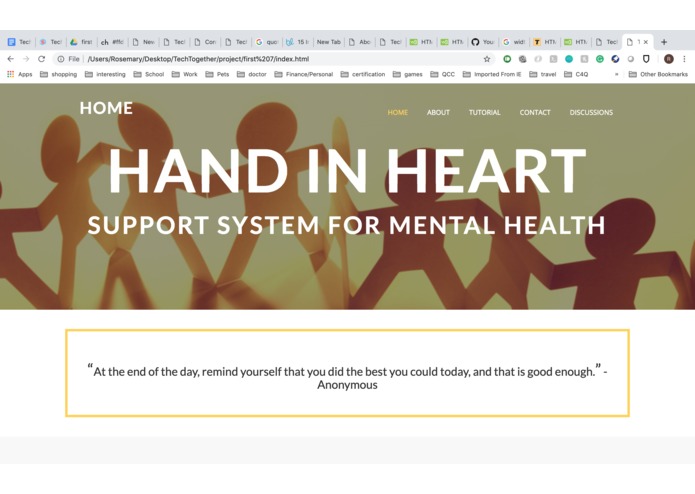
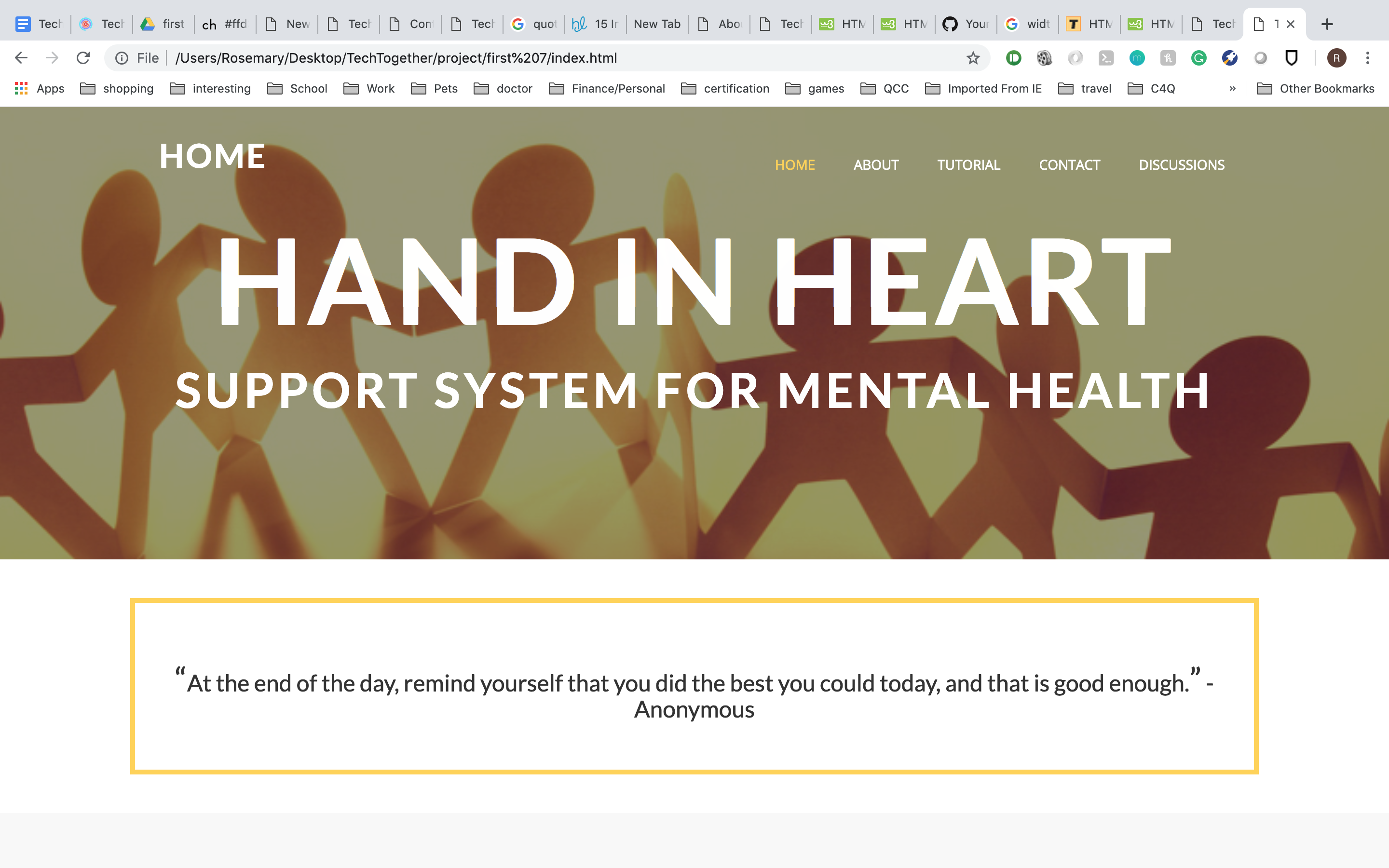
Homepage
-
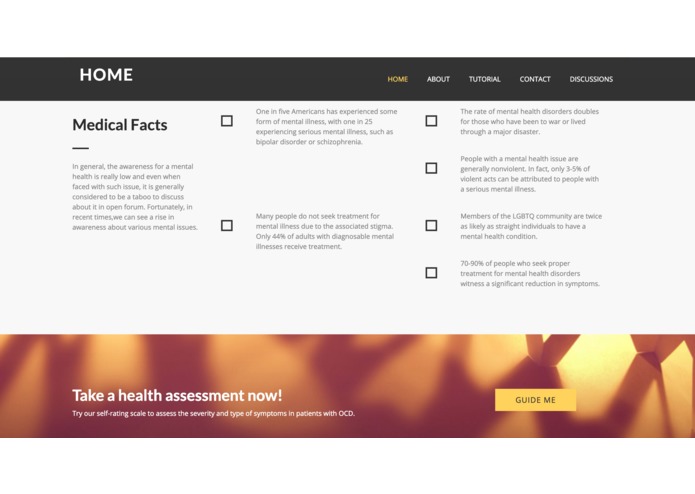
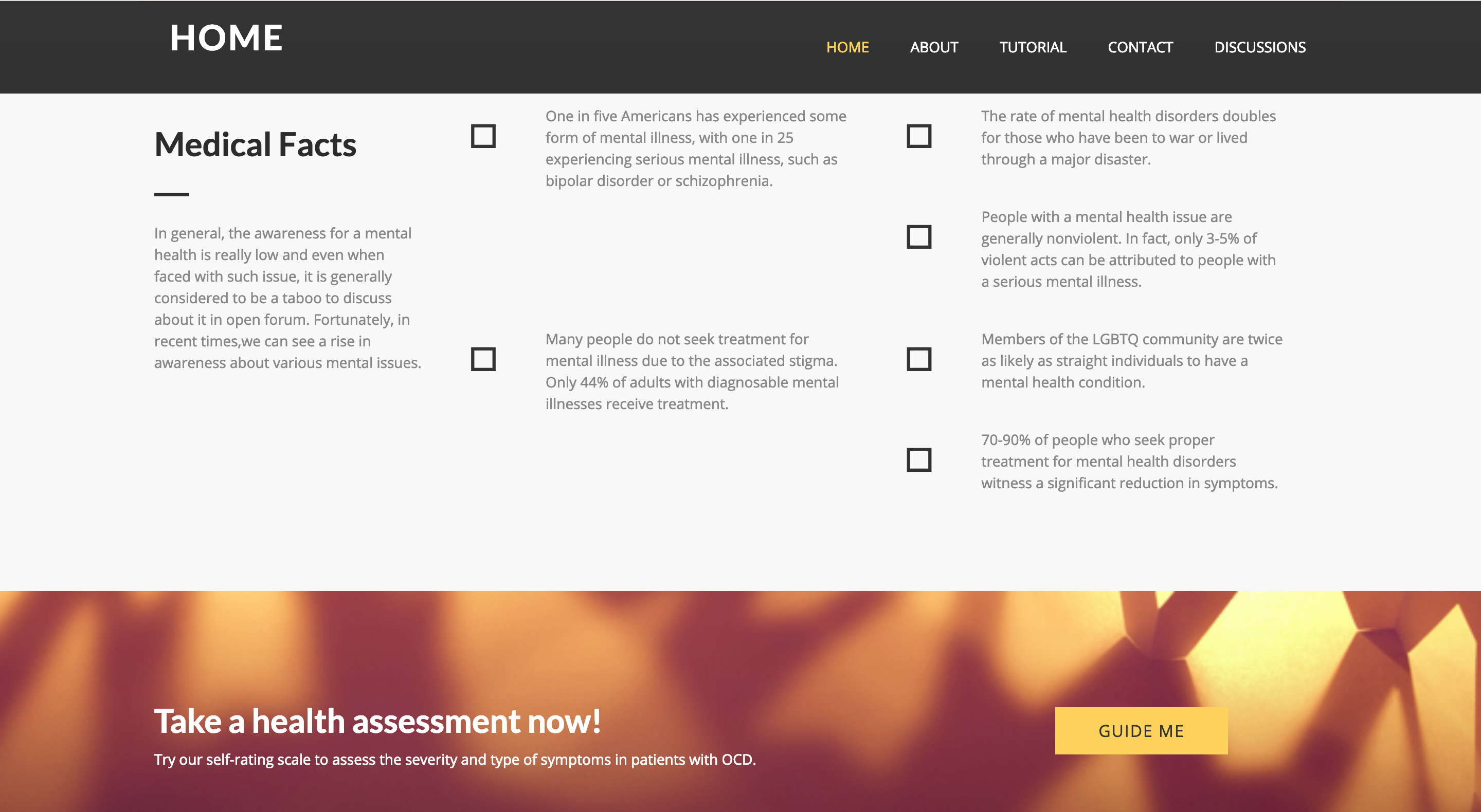
General facts
-
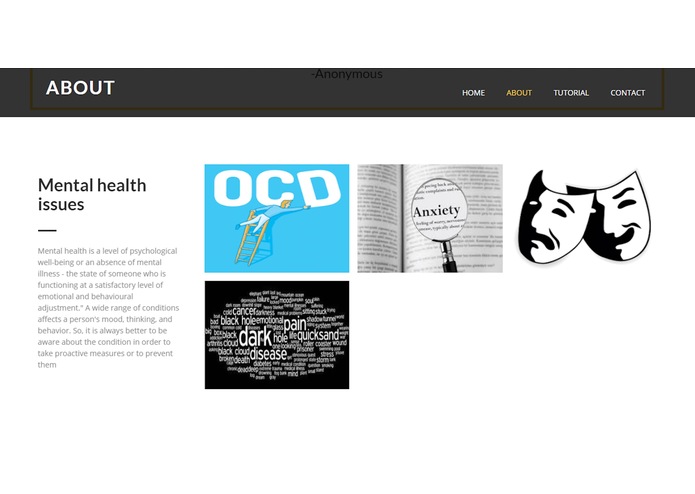
About
-
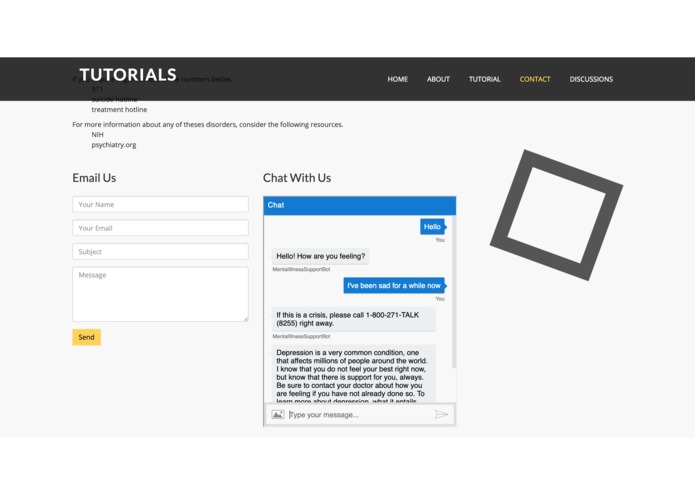
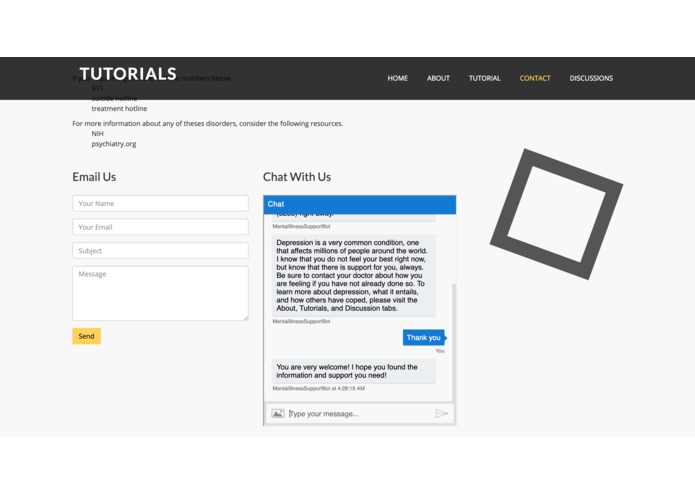
Chatbot
-
-
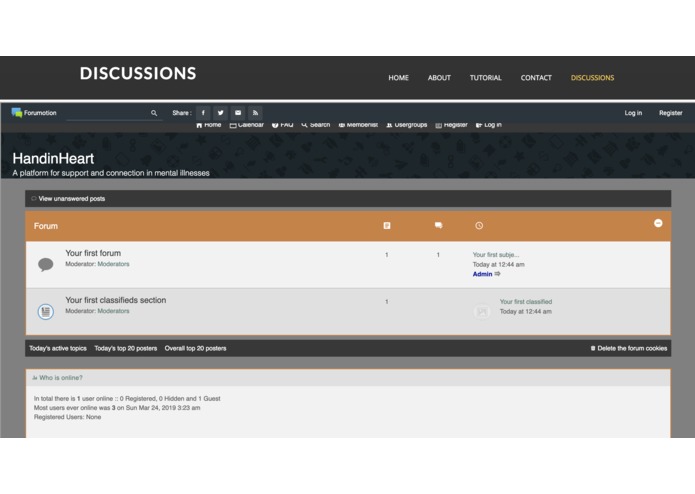
Forum
Inspiration
Those dealing with mental health issues are stronger than you think While brainstorming ideas for our hack, we all realized that we were passionate about helping others overcome obstacles associated with mental health diseases. Especially since entering college, we realized how important of an issue mental health was and how little resources were out there to both educate the general public as well as provide a community to support those facing mental health obstacles. Recognizing that there was a need for such a community, we figured that making a website such as Hand in Heart would be a great way to combat this issue, allowing online interaction to bolster the confidence and sense of security of mental health patients.
What it does
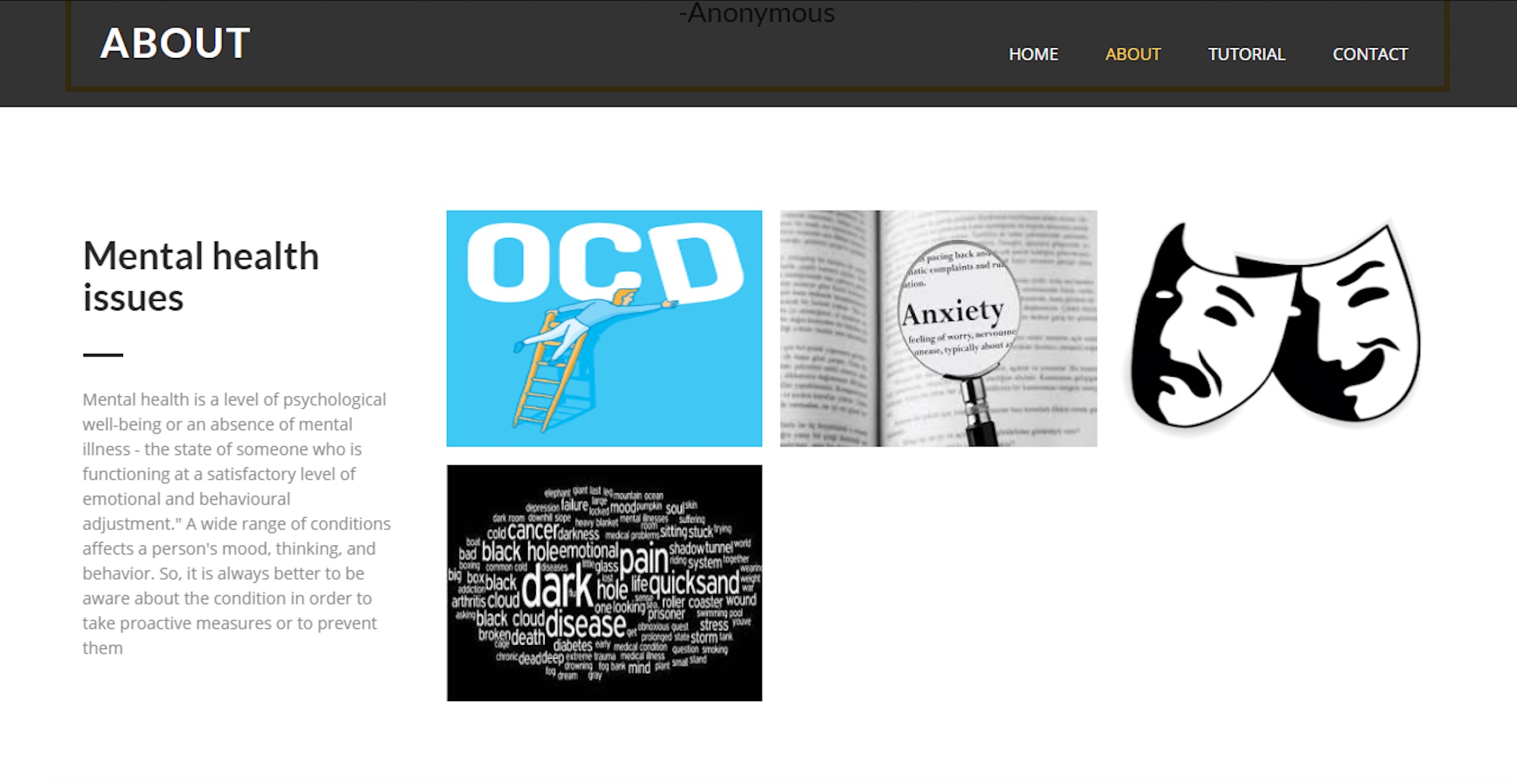
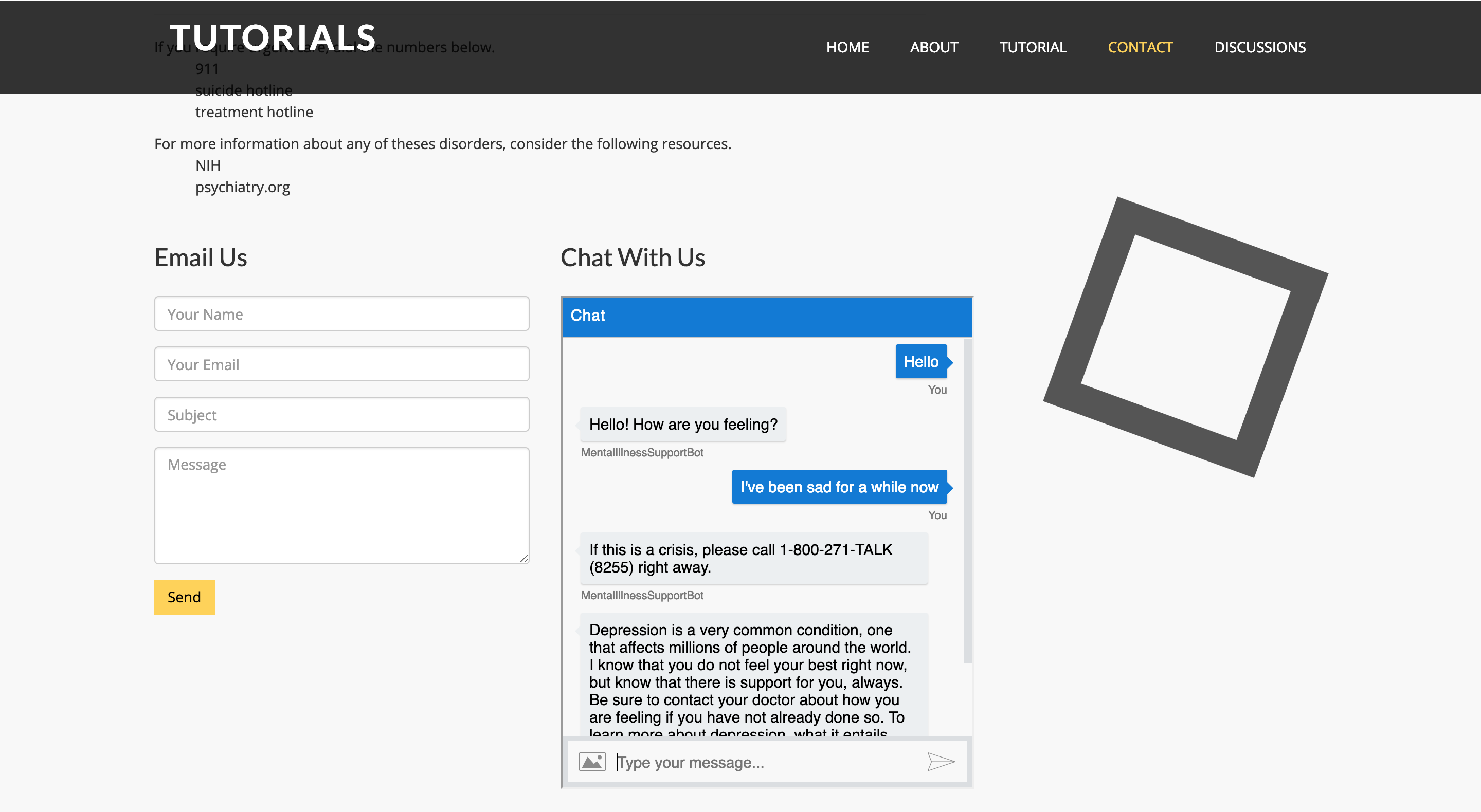
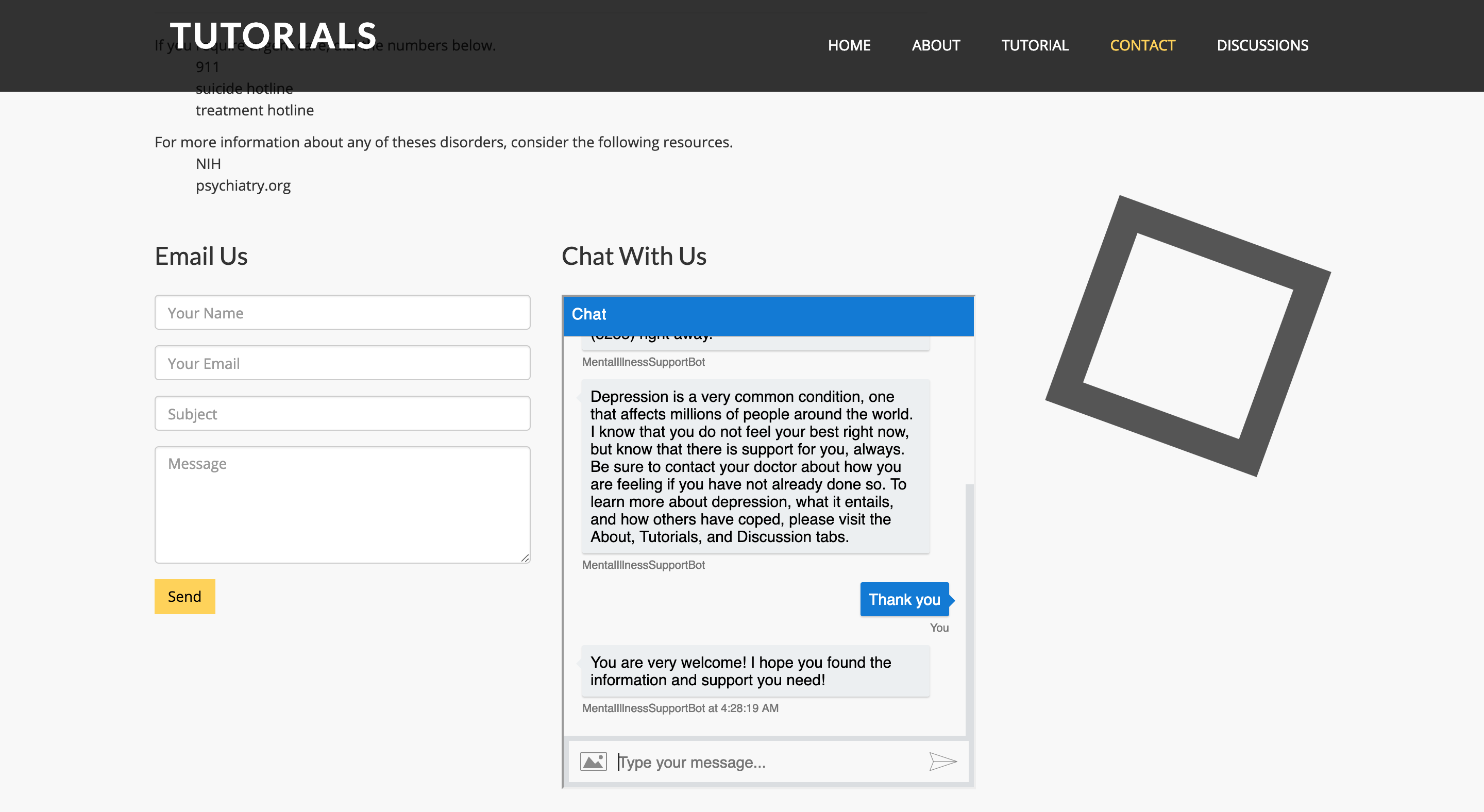
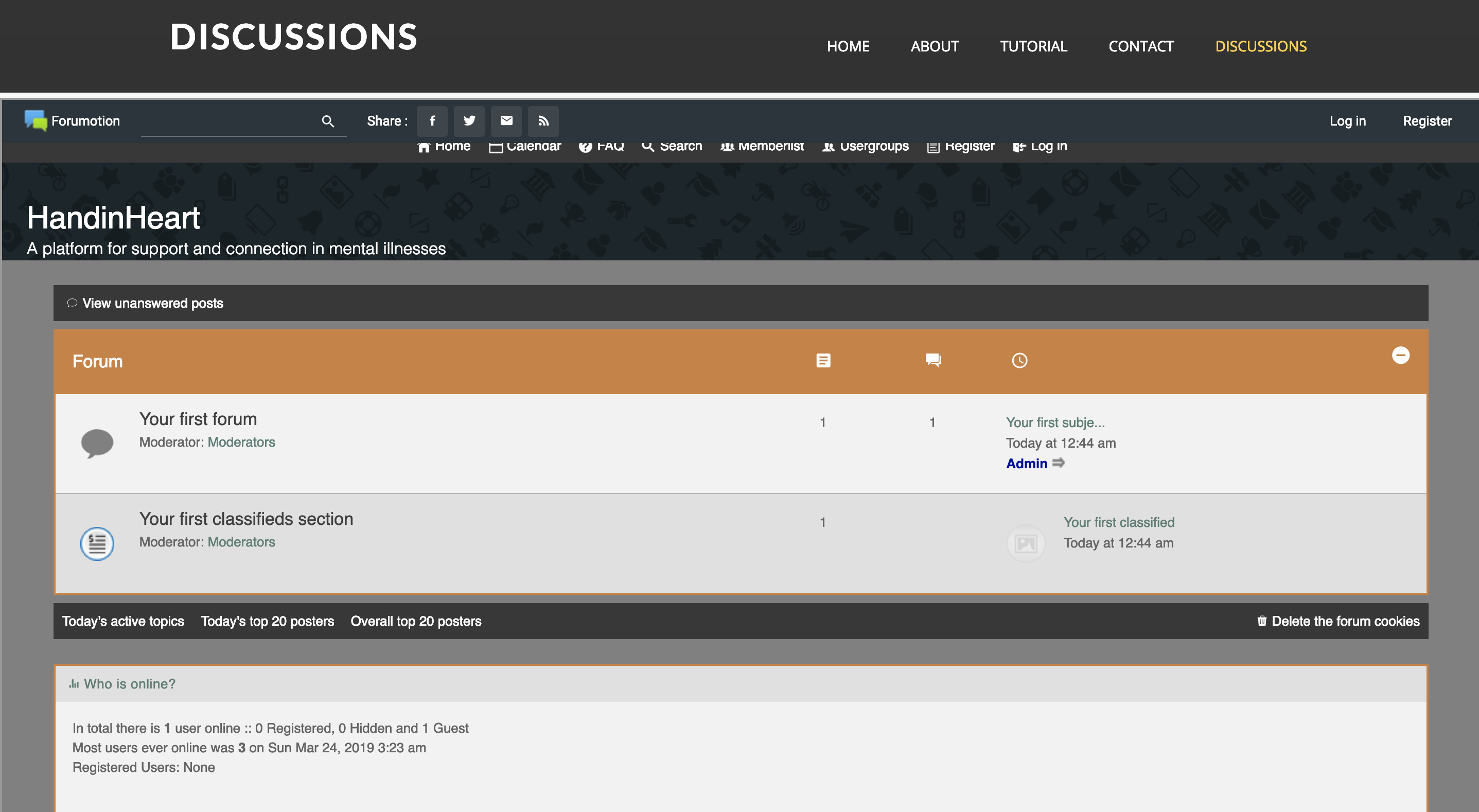
Forming a community for those who need it Hand in Heart has two major goals: educate the public/raise awareness about mental health, and form a community of support through the development of an online forum. The website features "About" pages for four major mental health illnesses, including Anxiety, Bipolar Disorder, Depression, and OCD. For those who want to learn more, Hand in Heart also features a "Tutorials" tab to advise users on how to better cope with the disease and fully understand underlying mechanisms. Other tabs on the website include "Discussions", a forum page that allows users to discuss with and support one another regarding mental health, and "Contact", which allows the user to contact us to provide feedback and suggesting to grow the website to better suit their needs. The page also features a ChatBot, which allows the user to describe how they are feeling to receive general advice based on their input as well as directions to pages with more information (again based on their input).
How we built it
HTML, CSS, JavaScript, and Microsoft Azure Website content and formatting was all implemented using HTML, CSS, and JavaScript. The ChatBot service was implemented through Microsoft Azure - using LUIS, we first developed intents that helped identify user feelings and match them with a plausible mental health issue. We then used Microsoft's Web App Bot to link the LUIS to a chat bot and then edited the code within the Web App Bot (using JavaScript) to open dialogues based on intent matches and give appropriate reactions.
Challenges we ran into
It was definitely tough... Half of our team members never coded in anything but Java, so we had quite a learning curve in figuring out web design as well as Azure. At one point our chatbot also wasn't linking properly, so we had to spend a lot of time researching how to deploy our bot and embed it in our website - turns out it was fairly simple in the end, but it took a lot of time, effort, and reading Microsoft guides on our part!
Accomplishments that we're proud of
The entire 36 hours Three out of four of our members learned HTML and CSS for the first time and were able to implement it successfully through this project. None of us ever used Microsoft Azure before, and implementing something as cool as a chatbot was definitely exciting! We also had some problems with team formation, so the fact that we finished this project in such little time also makes us really proud. Finally, it was great to be a part of a female hackathon, and seeing everyone learn and accomplish so much was absolutely incredible!
What we learned
We definitely learned A LOT - from scratch! We learned a lot of technical skills - most of members had to pick up multiple new programming languages as well as learn to use tools in Azure. We also realized the importance of splitting up work but also collaborating, supporting one another, and also how much more we can learn about technology in the future.
What's next for Hand in Heart
A vision for the for the future In future iterations, we are going to implement a user login as well as a mental health assessment - this way, users can track their mental states and emotions over time and save the data within their account. We will also provide a more complex forum discussion with multiple threads and categories, as well as a more developed ChatBot that responds to more wide and varied inquiries and performs closer to how a trained professional would give advice.

Log in or sign up for Devpost to join the conversation.