Inspiration
Cardiovascular diseases are a major health concern worldwide. We wanted to explore how Artificial Intelligence and 3D visualization could make cardiovascular risk predictions easier to understand. This inspired us to build CardioVision AI, an educational prototype combining machine learning with interactive heart visualization.
What it does
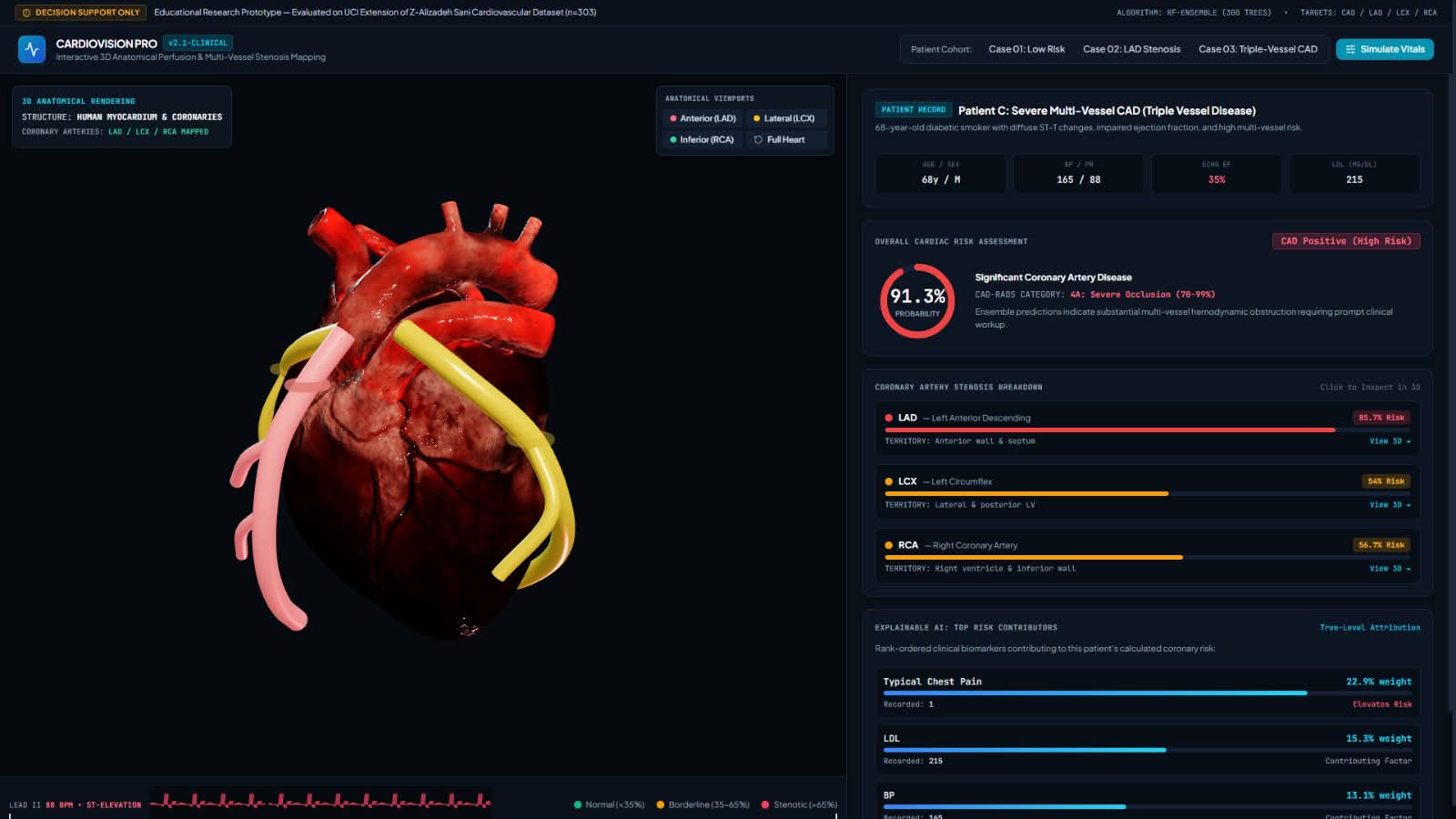
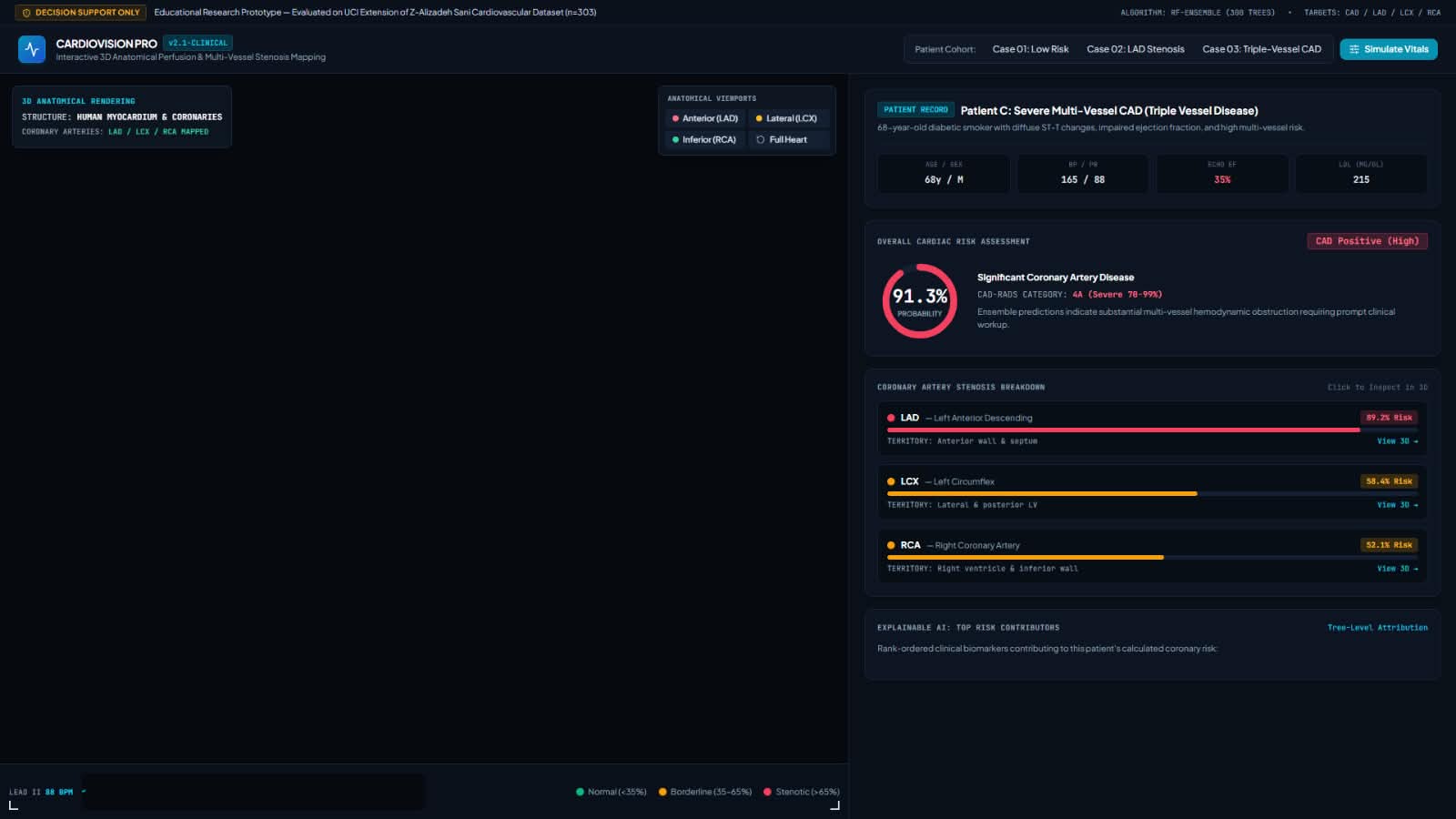
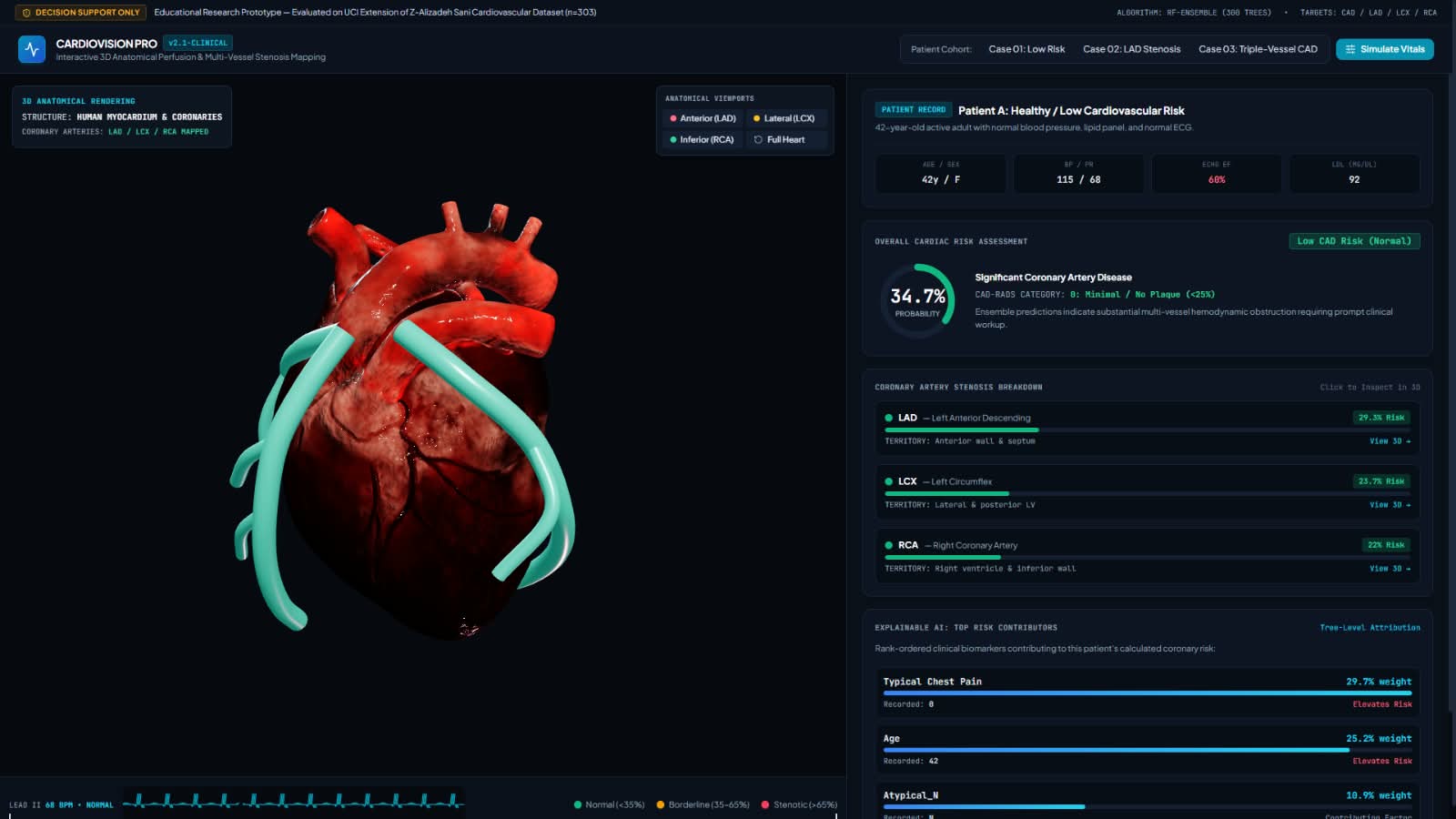
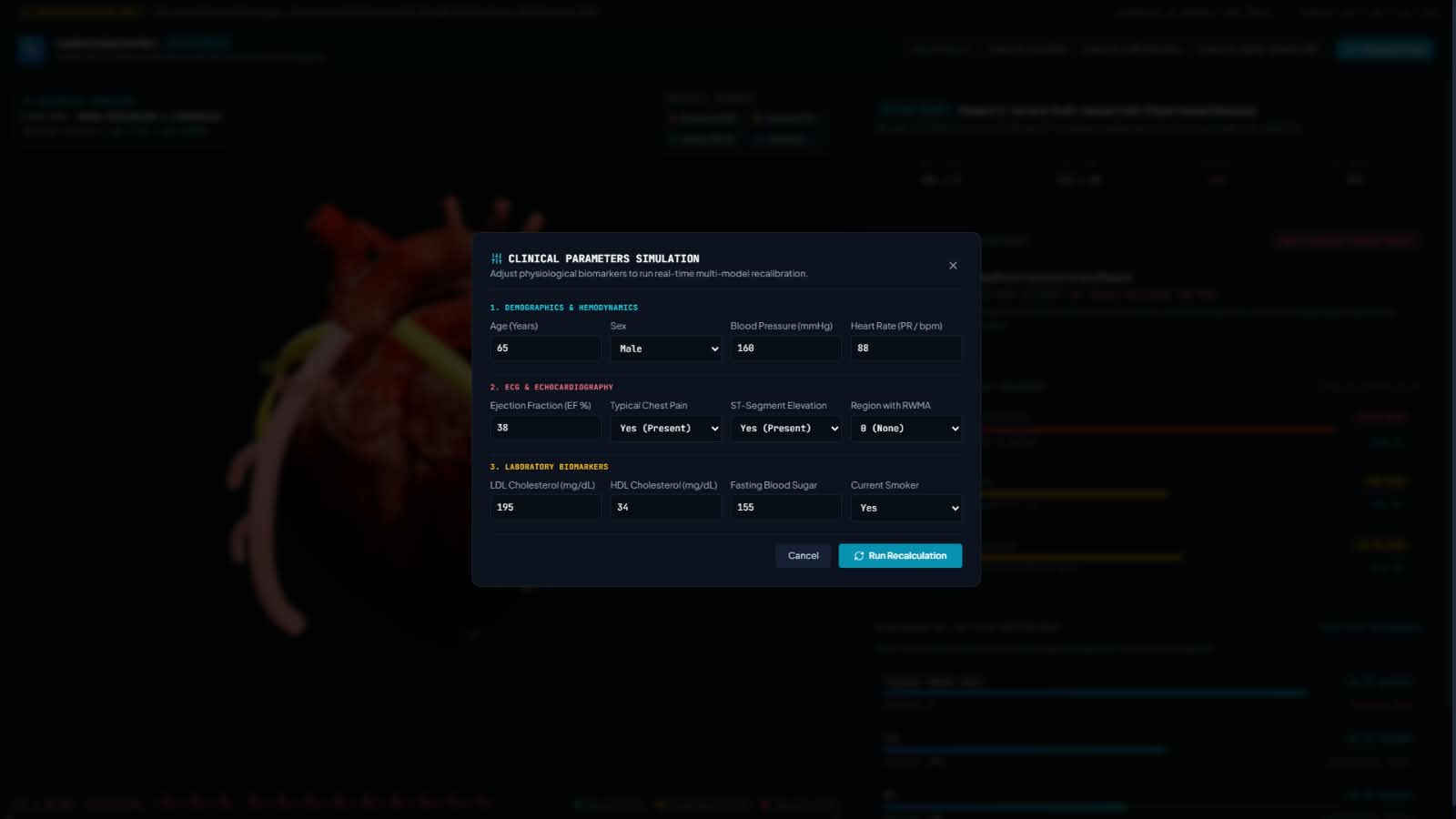
CardioVision AI predicts the likelihood of Coronary Artery Disease (CAD) and estimates stenosis risk in three major coronary arteries: LAD, LCX, and RCA. It uses colour-coded 3D heart visualization to represent predicted artery risk levels. Explainable AI (SHAP) helps identify features influencing the model's predictions.
How we built it
We used Python, Pandas, NumPy, and Scikit-learn to process data and train machine learning models. FastAPI provides the backend APIs. SHAP supports model explanations, while the frontend provides an interface for displaying predictions and 3D heart visualization.
Challenges we ran into
As beginners, we faced challenges in data preprocessing, model training, connecting the backend with the frontend, and integrating SHAP explanations. Debugging dependencies and testing API endpoints also required patience and teamwork.
Accomplishments that we're proud of
We developed machine learning models for CAD and coronary artery risk prediction, implemented cross-validation, explored explainable AI, and built a backend to support our visualization system. We are proud of turning our idea into a working educational prototype.
What we learned
We learned about machine learning workflows, data preprocessing, model evaluation, API development, explainable AI, and the importance of teamwork. We also learned that model predictions must be interpreted carefully, especially in healthcare.
What's next for Heart sync
We aim to improve model reliability, enhance the interactive 3D visualization, strengthen patient-specific explanations, and improve the overall user experience. We also plan to validate the system more rigorously before considering any real-world clinical applications.
Disclaimer: CardioVision AI is an educational prototype, not a clinically validated diagnostic tool. Its predictions should not replace professional medical evaluation.

Log in or sign up for Devpost to join the conversation.