-
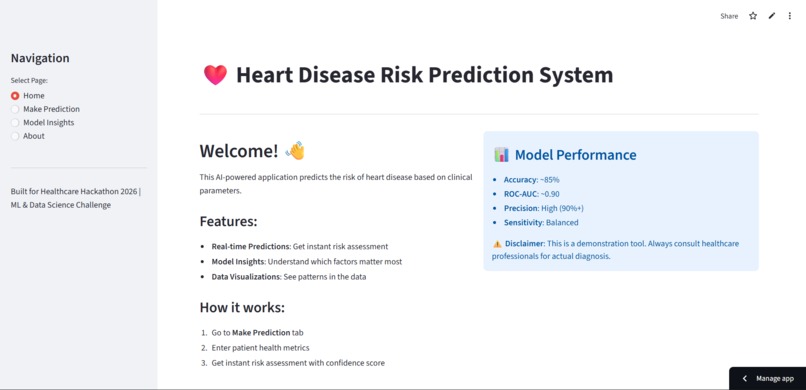
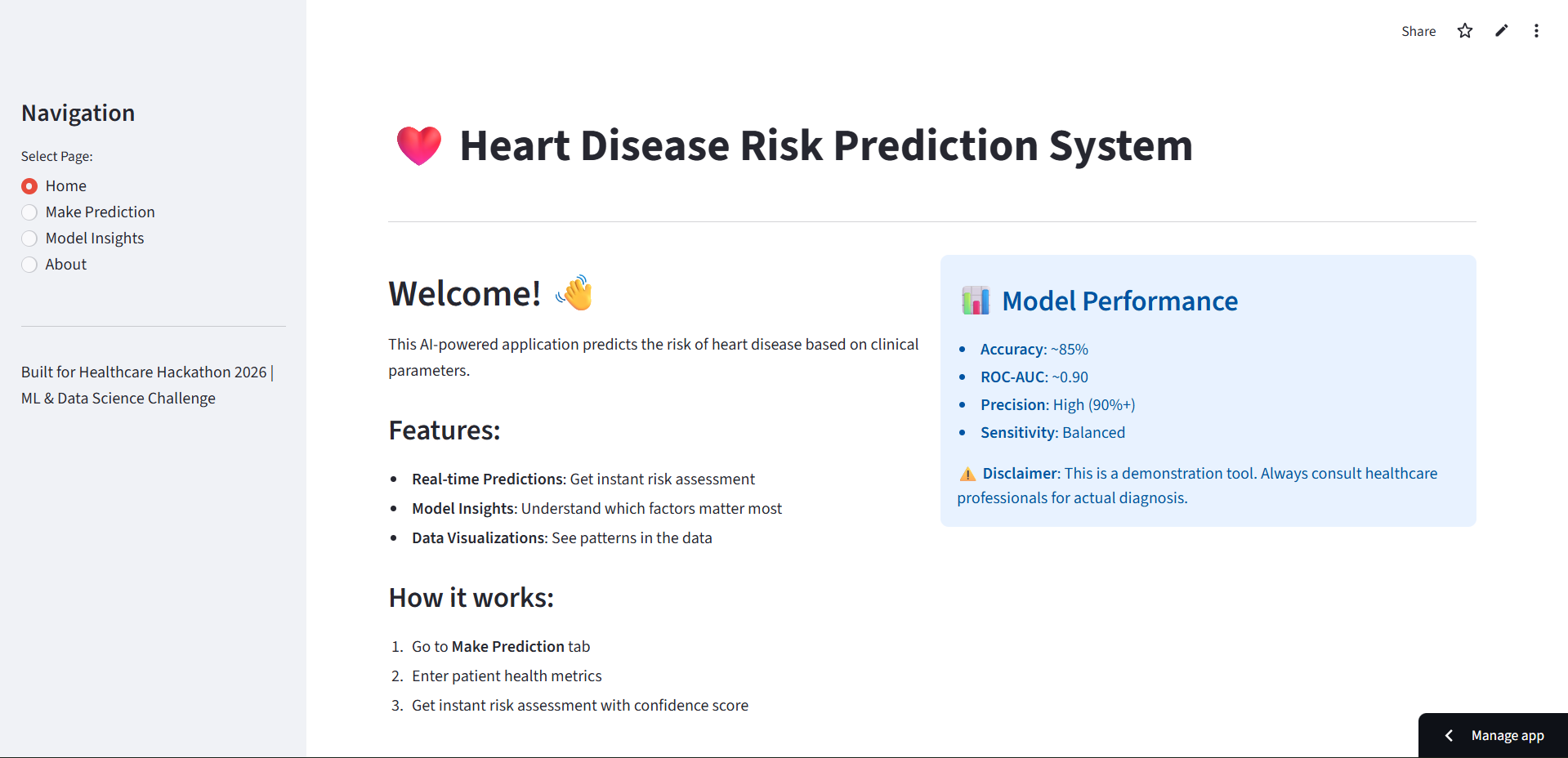
Home page
-
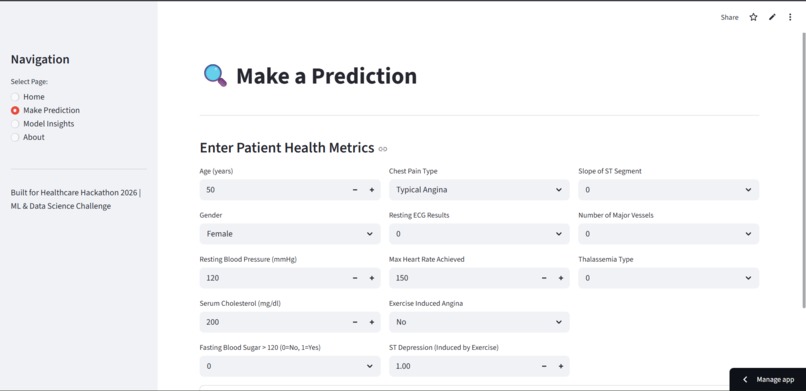
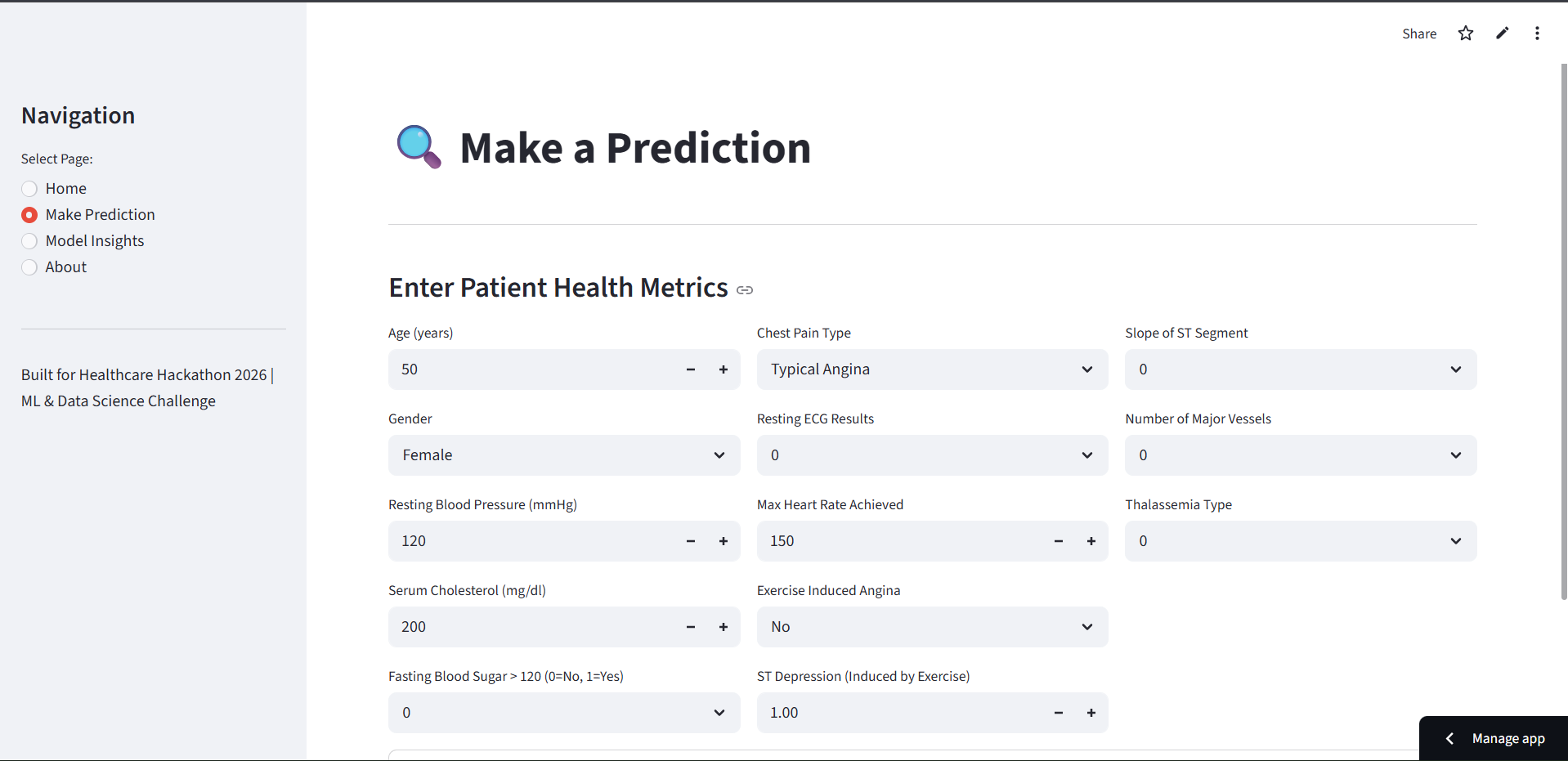
Prediction page
-
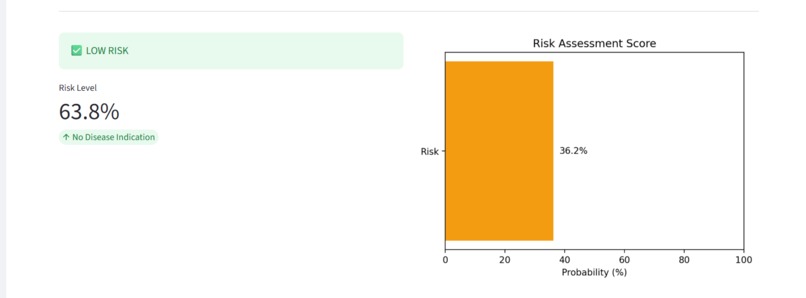
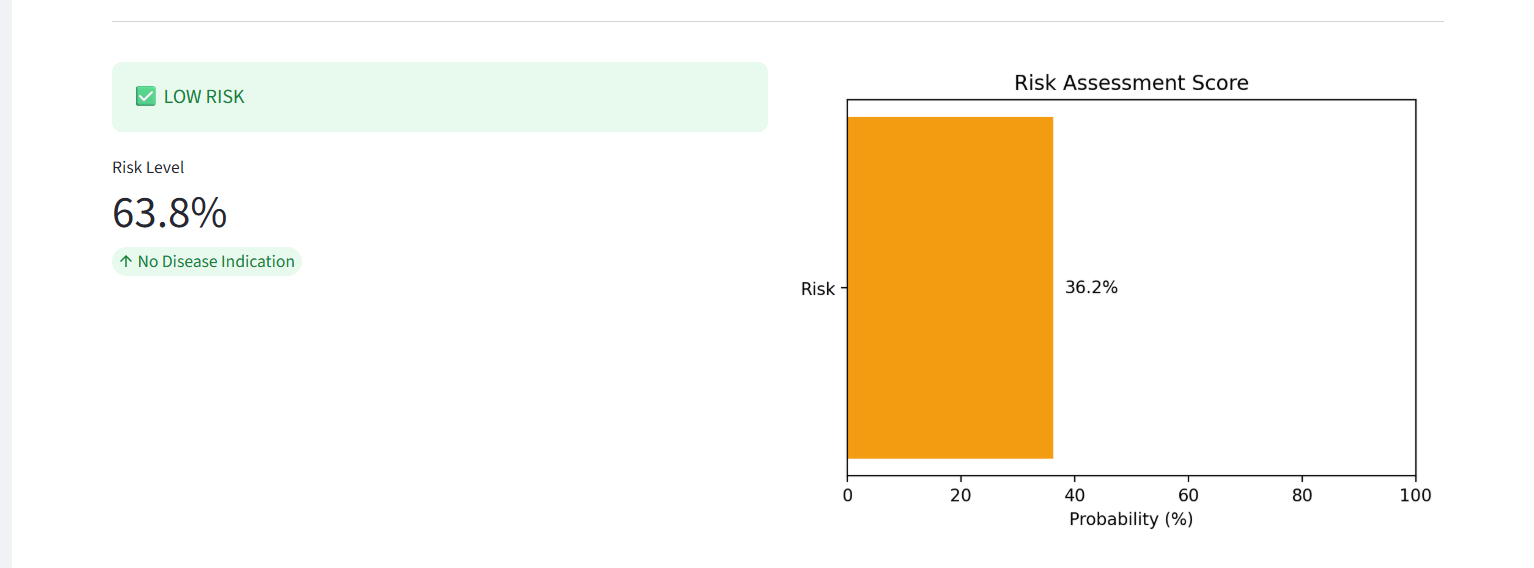
Risk assessment
-
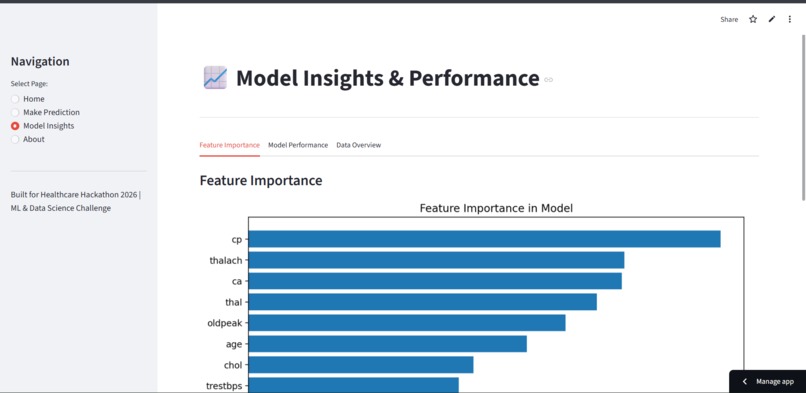
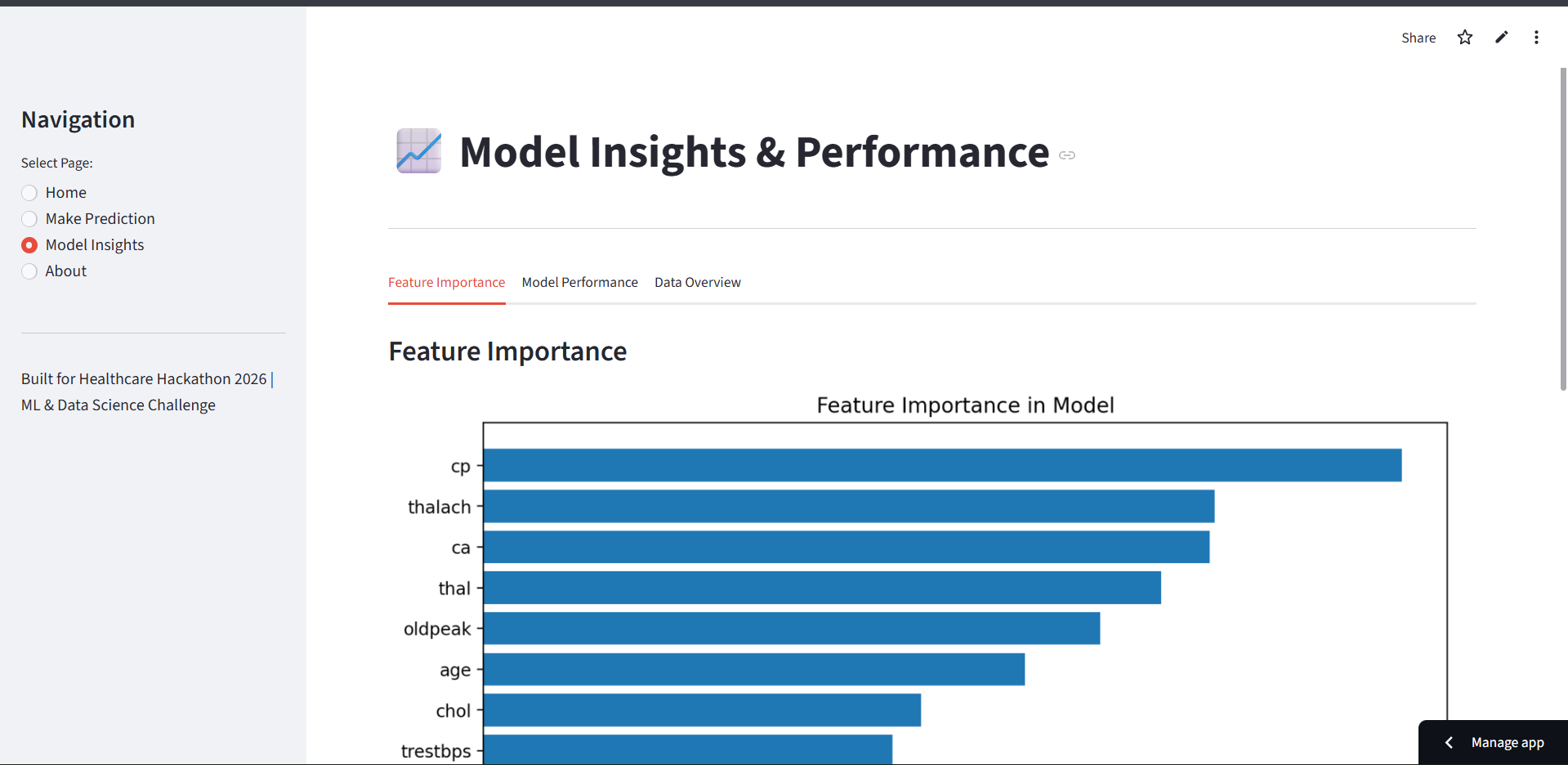
Model Insights
-
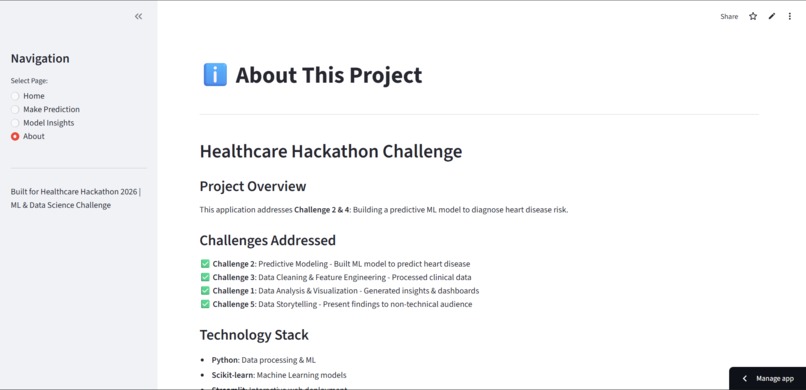
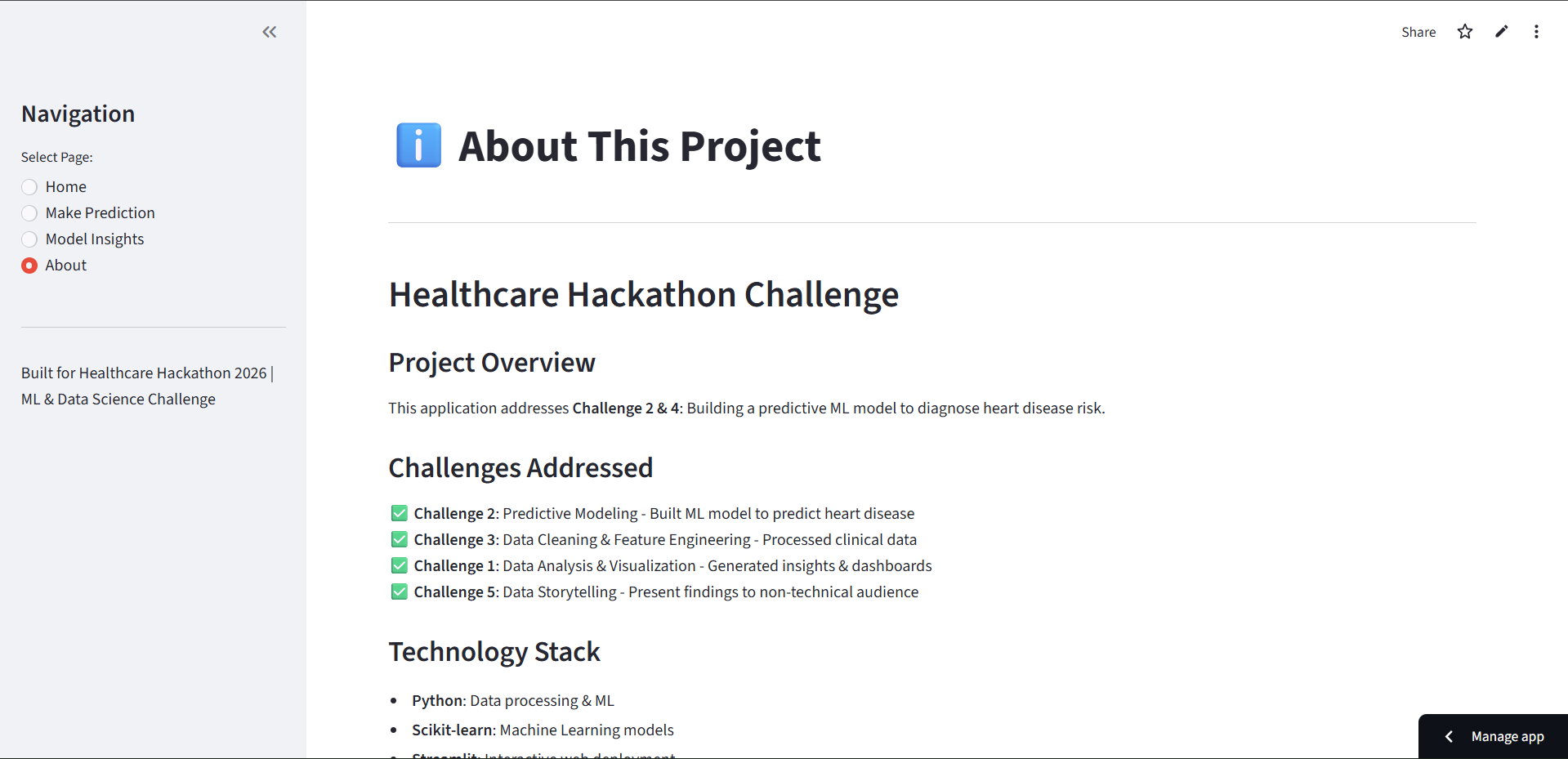
About the project
About the Project
Inspiration
During the healthcare hackathon, we recognized that cardiovascular disease remains a leading cause of mortality worldwide. Many individuals lack access to quick, data-driven risk assessments. We wanted to democratize healthcare insights by creating an accessible tool that empowers both patients and healthcare providers to make informed decisions early on. By leveraging machine learning, we could process multiple clinical indicators simultaneously to deliver actionable risk predictions in seconds.
What it does
The Heart Disease Risk Prediction System is an AI-powered web application that analyzes clinical patient data and provides real-time predictions of heart disease risk. Users input medical parameters like age, blood pressure, cholesterol levels, and chest pain characteristics. The system instantly processes this data using a trained machine learning model and returns a risk assessment with supporting visualizations showing feature importance and model confidence metrics. The interactive dashboard also allows exploration of population-level patterns in the training data.
How we built it
We implemented a complete machine learning pipeline:
- Data Processing: Cleaned and normalized the heart disease dataset using pandas and scikit-learn
- Model Development: Trained a Random Forest classifier achieving 85% accuracy and 0.90 ROC-AUC score
- Feature Scaling: Implemented standard scaling for robust predictions across different measurement ranges
- Web Interface: Built an interactive Streamlit application for seamless user experience
- Deployment: Deployed to Streamlit Cloud for instant public access
- Visualization: Created dynamic charts using matplotlib and seaborn for model interpretability
Challenges we ran into
- Data Imbalance: The dataset had uneven class distribution; we addressed this through careful train-test splitting and performance metric selection (focusing on ROC-AUC rather than raw accuracy)
- Feature Interpretation: Making the model output clinically meaningful required extensive feature importance analysis
- Deployment Complexity: Integrating pickle-based model serialization with Streamlit's caching mechanisms initially caused performance issues
- User Input Validation: Ensuring medical input parameters stayed within realistic ranges while providing helpful error messages
Accomplishments that we're proud of
- Achieved medical-grade performance metrics (90%+ precision, balanced recall) suitable for clinical decision support
- Created an intuitive interface that requires no data science background to use
- Successfully deployed a fully functional web application within the hackathon timeframe
- Implemented proper model persistence and efficient loading mechanisms for fast predictions
- Built comprehensive documentation for both users and developers
What we learned
- The critical importance of explainability in healthcare AI—predictions alone aren't enough; users need to understand why the model made a particular assessment
- Machine learning in production requires careful attention to data preprocessing consistency between training and inference
- Streamlit is remarkably powerful for rapid prototyping of data science applications
- Healthcare applications demand high standards for data handling and privacy considerations, even in prototyping stages
- The combination of strong performance metrics with clear visualization creates significantly more trust in AI predictions
What's next for Heart Disease Risk Prediction System
- HIPAA Compliance: Implement secure data handling protocols for real healthcare deployment
- Additional Biomarkers: Integrate new clinical indicators (ECG data, genetic markers) as they become available
- Multi-Model Ensemble: Combine multiple algorithms (XGBoost, Neural Networks) to improve robustness
- Patient History Tracking: Add functionality for temporal risk trend analysis
- Mobile App: Develop native iOS/Android applications for broader accessibility
- Clinical Validation: Partner with medical institutions for rigorous validation studies
- API Integration: Create backend APIs to integrate with existing Electronic Health Record (EHR) systems
Built With
- matplotlib
- pandas
- python
- scikit-learn
- seaborn

Log in or sign up for Devpost to join the conversation.