Inspiration
❤️ Heart disease remains the leading cause of death globally, yet early detection can significantly improve survival rates. 📊 Inspired by the power of data science to turn raw health metrics into actionable insights. 💡 Aim to create a simple, accessible, and free tool that anyone can use — no medical background required. 🚀 Wanted to combine machine learning with a clean web interface to demonstrate how AI can help in preventative healthcare. 🏆 Perfect project to showcase practical ML deployment skills for the hackathon.
What it does
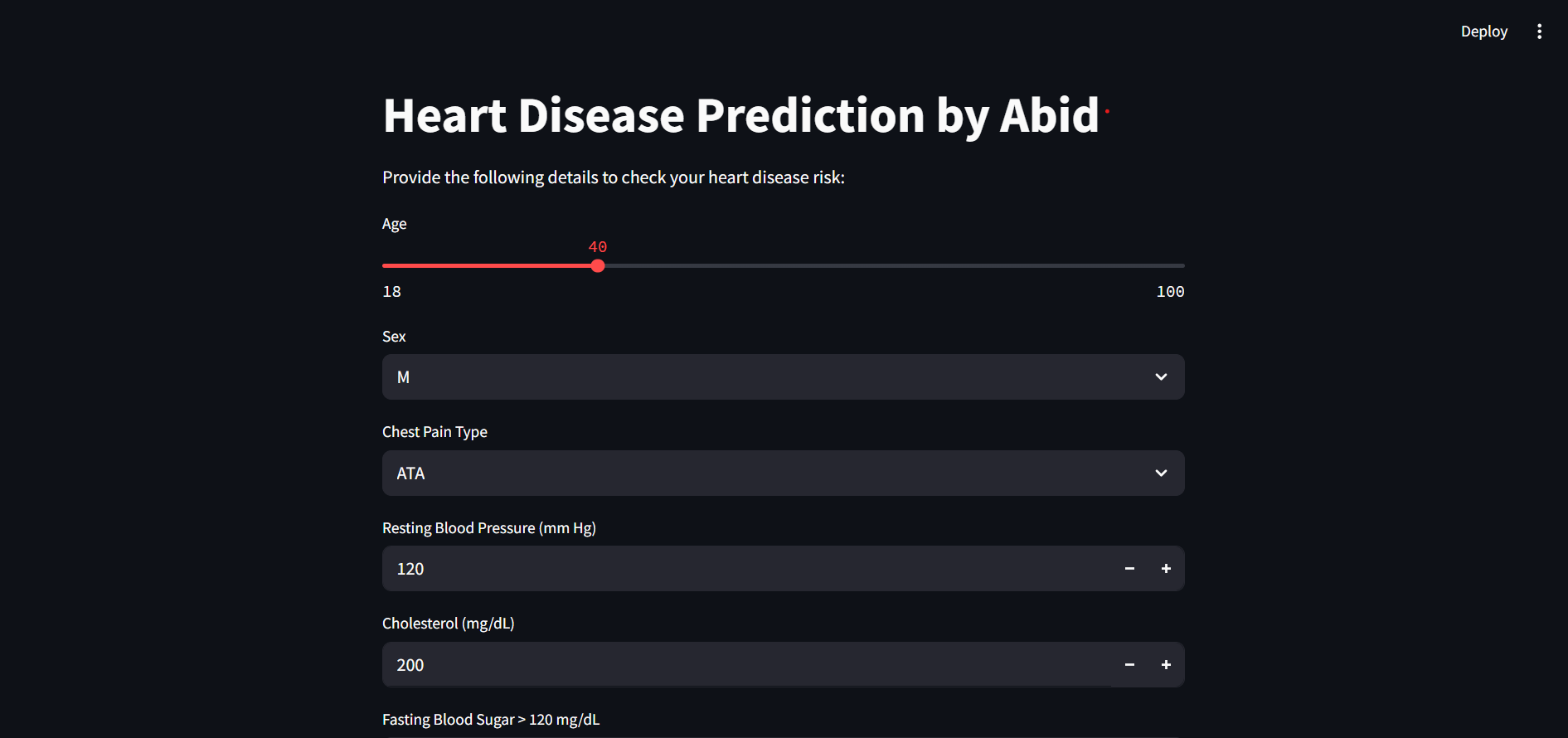
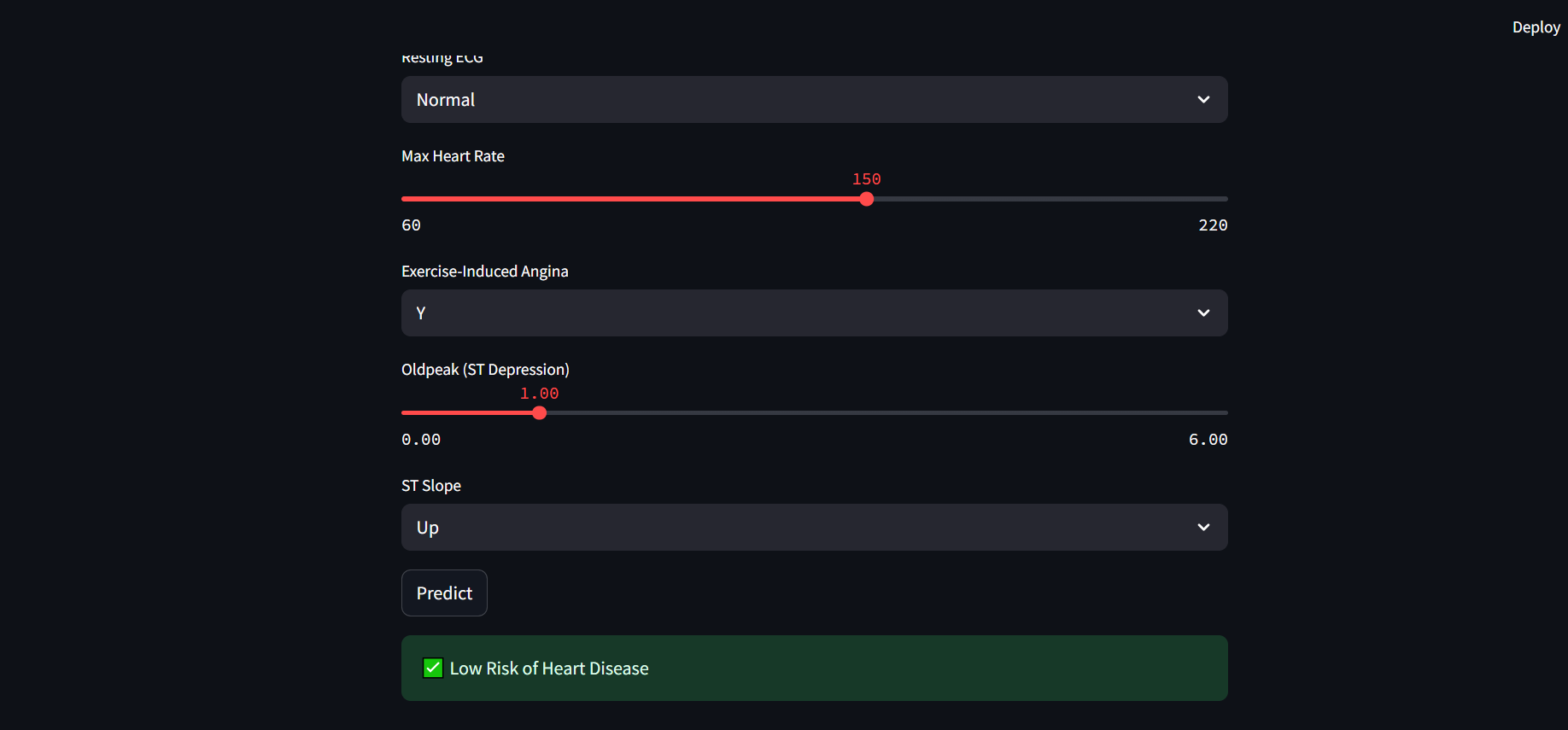
Predicts a person’s risk of heart disease based on health metrics. Processes user input through a trained Logistic Regression model. Displays results instantly as High Risk or Low Risk. Provides a simple, accessible tool for early risk awareness.
How we built it
🐍 Python for the entire backend and machine learning workflow. 📊 Pandas & NumPy for data cleaning, manipulation, and preprocessing. 🤖 Scikit-learn for building and training the Logistic Regression model. 📉 Matplotlib for exploratory data analysis and visualizations. 🖥 Streamlit for creating the interactive web application and deploying it online. 💾 Joblib for saving and loading the trained model, scaler, and feature set.
Challenges we ran into
Finding a balanced dataset to ensure fair and accurate predictions. Handling data preprocessing and one-hot encoding for categorical variables. Ensuring feature scaling was applied only to relevant numerical columns. Deploying the ML model with Streamlit while keeping performance smooth. Making the interface both user-friendly and technically accurate.
Accomplishments that we're proud of
Achieved over 90% prediction accuracy with the trained model. Successfully deployed a fully functional Streamlit web app. Created a clean and intuitive user interface for quick risk assessment. Implemented a reliable ML pipeline from data preprocessing to deployment. Showcased the practical application of AI in healthcare awareness.
What we learned
How to apply machine learning to real-world health datasets. The importance of data preprocessing for accurate predictions. Best practices for feature scaling and handling categorical variables. Deploying ML models using Streamlit for public access. Communicating technical results in a clear, user-friendly way.
Built With
- machine-learning
- matplotlib
- numpy
- pandas
- python
- seaborn
- streamlit


Log in or sign up for Devpost to join the conversation.