Inspiration
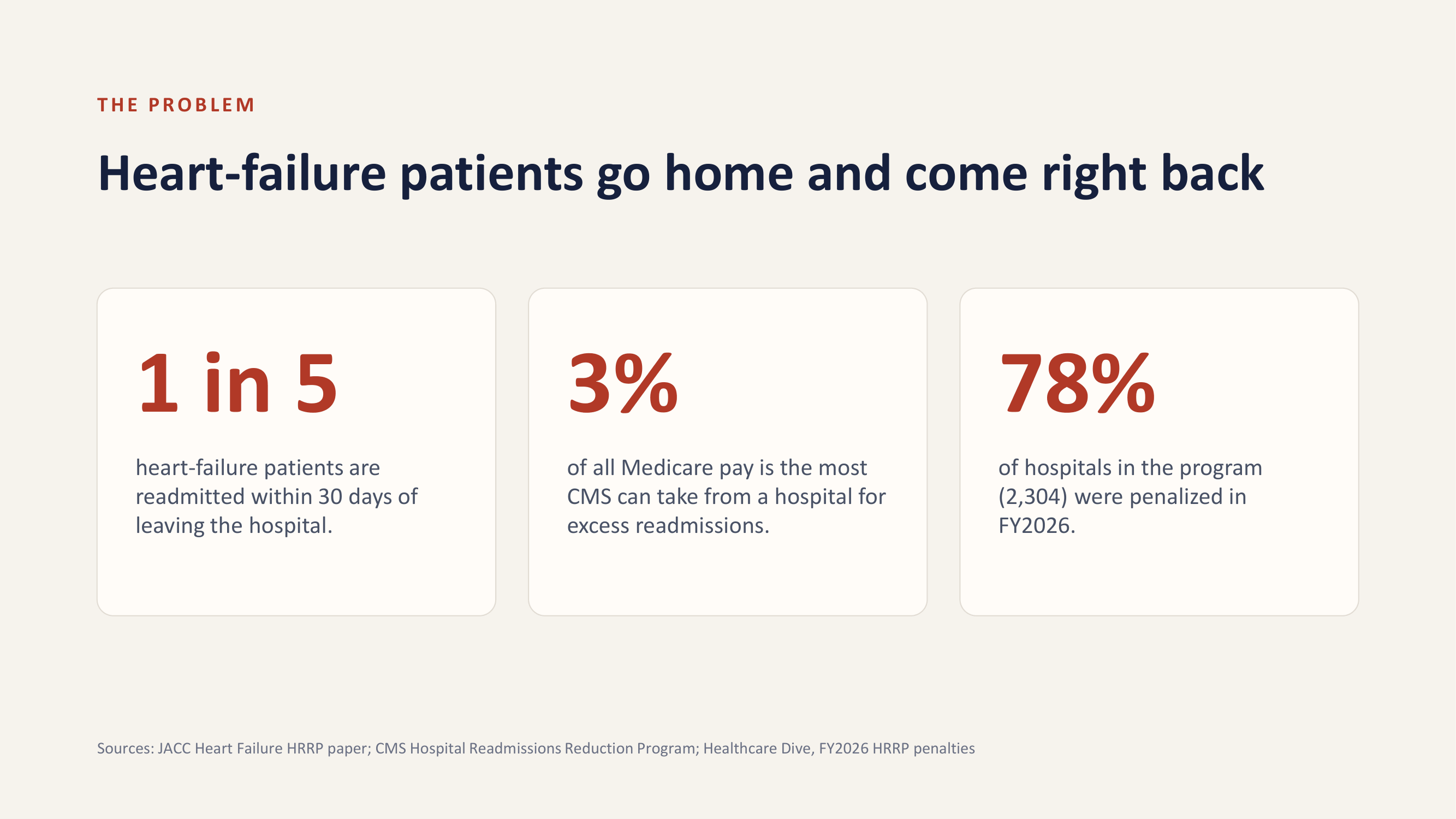
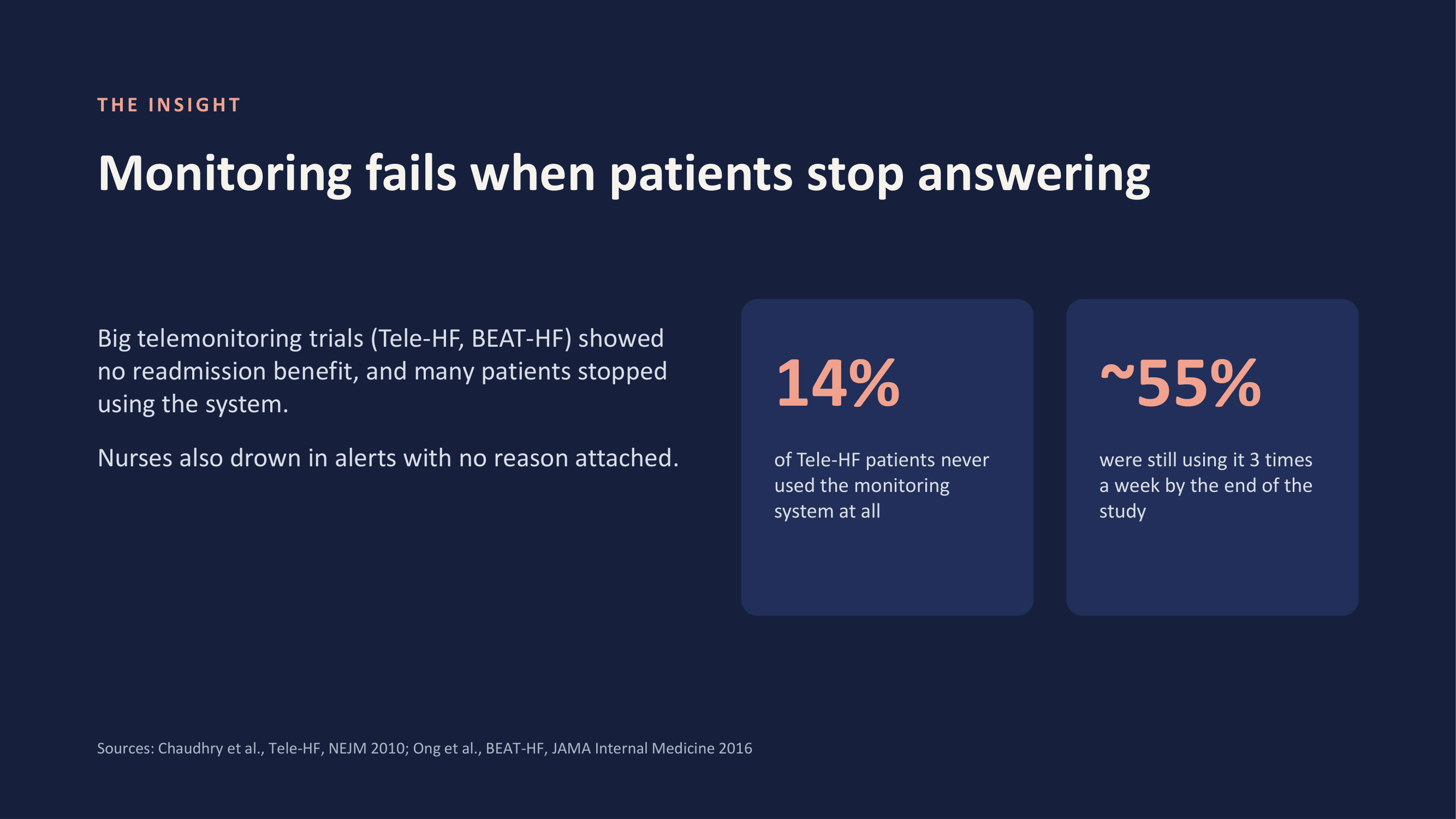
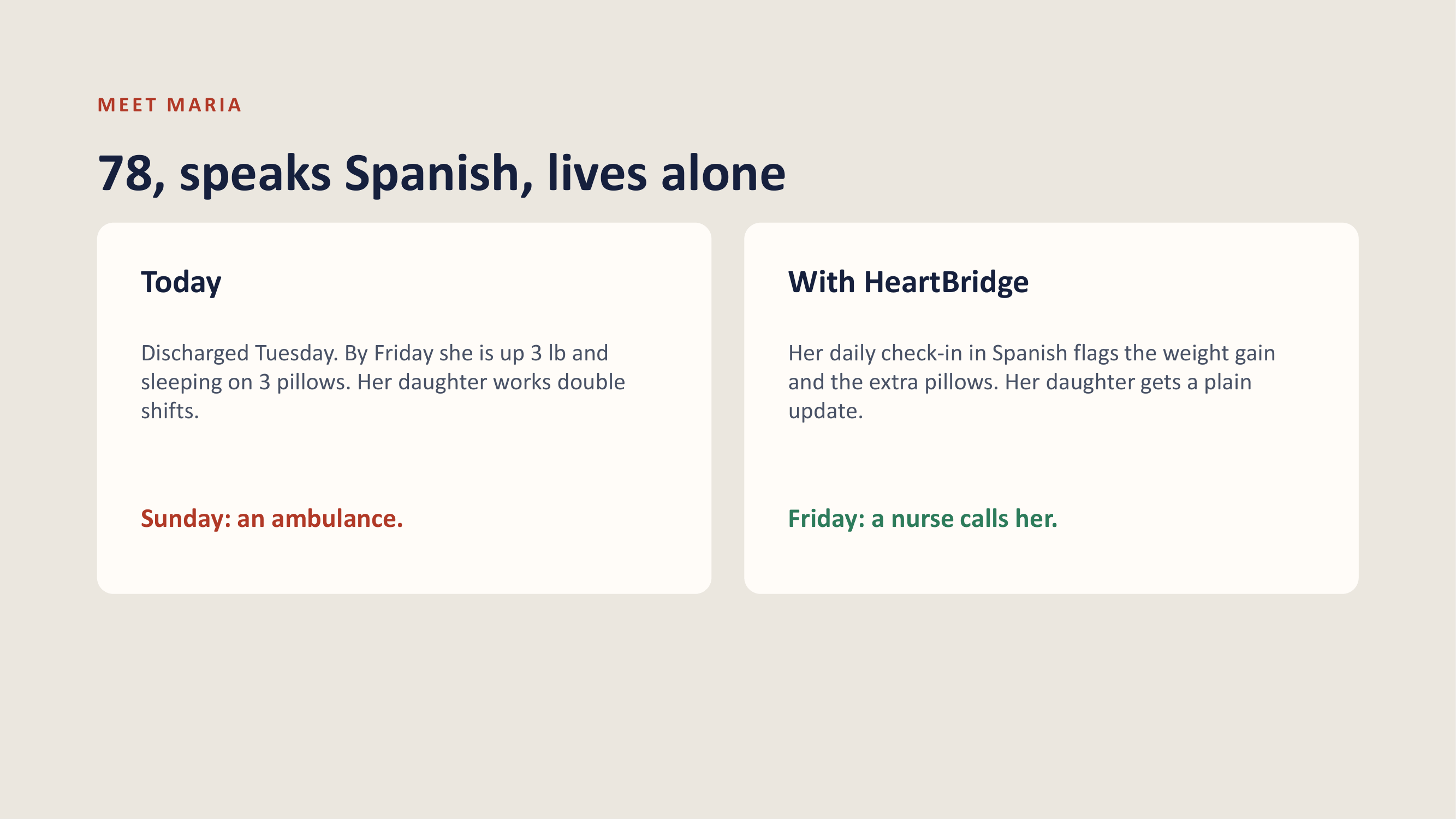
About 1 in 5 patients diagnosed with heart failure have to be readmitted to the hospital due to unreported weight gain, which indicates early warning signs of worsening health. Many remote monitoring systems require users to access computer-based portals or equipment that most elderly and/or non-English speaking patients cannot afford to purchase. HeartBridge is designed to monitor patients via a low-cost message service application available in their first language. In addition, HeartBridge provides nurse practitioners with a prioritized list of tasks based upon patient responses during the daily check-in process.
What it does
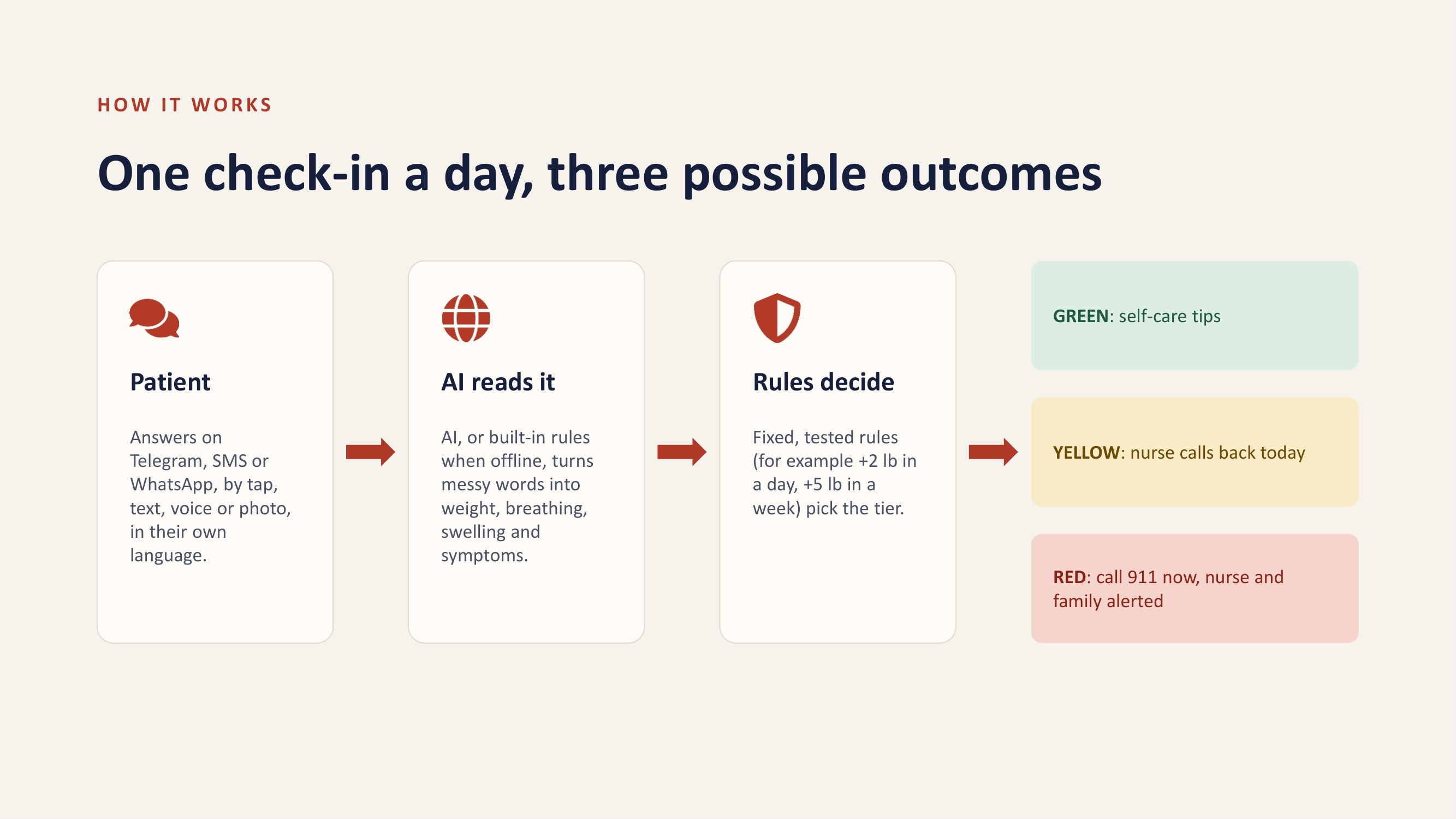
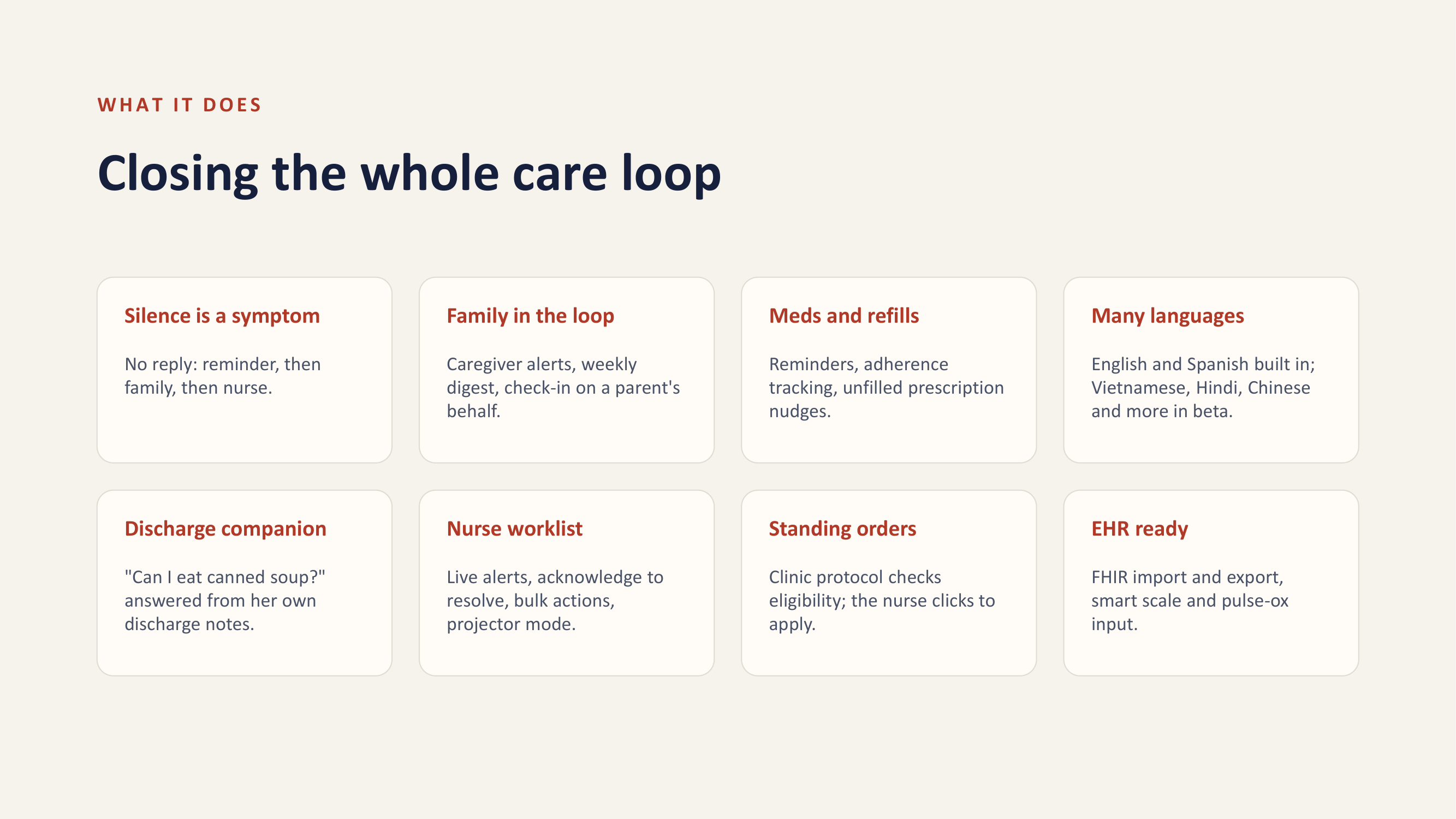
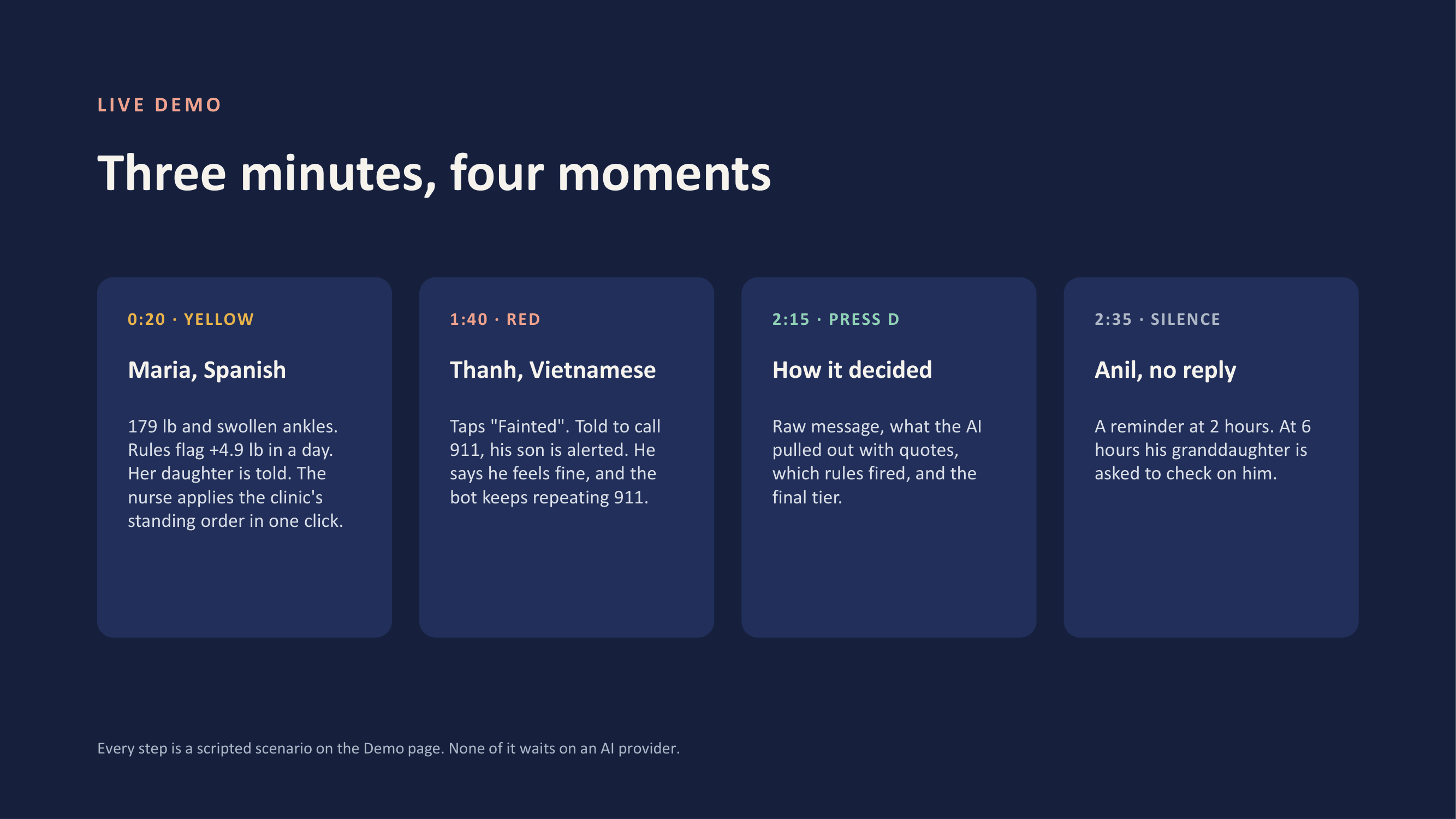
HeartBridge monitors patients' vital signs through a series of seven questions asked each day. This includes tracking changes in body weight, breathlessness (orthopnea), swelling (edema), red flag symptoms indicating potential danger, whether or not patients take prescribed diuretics ("water-pills"), and oxygen saturation levels (SpO2). When patients respond, their answers are translated into English for nursing staff; if patients show warning signs, notifications are sent to family caregivers via text. Alerts generated by HeartBridge are categorized into three levels of severity: Green, Yellow, and Red. Each level has a corresponding timer showing how long since the last update was received. Additionally, HeartBridge allows nurses to view graphs illustrating trends in body weight measurements taken by patients throughout the duration of the study. Nurses can also determine whether or not patients have been taking their medications as directed by reviewing medication administration reports. Finally, HeartBridge allows nurse practitioners to easily enroll eligible patients into studies using an Electronic Health Record (EHR).
How we built it
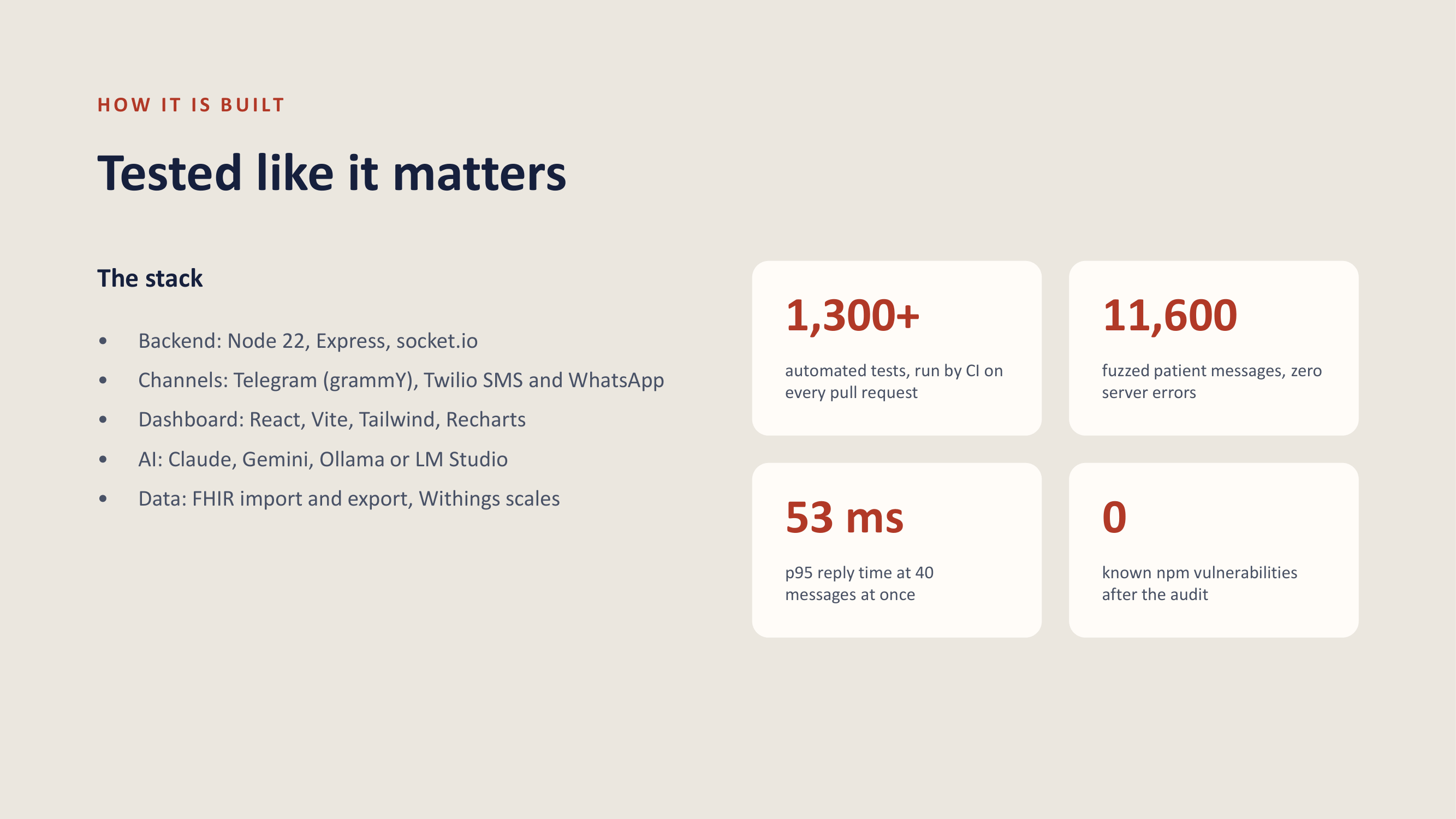
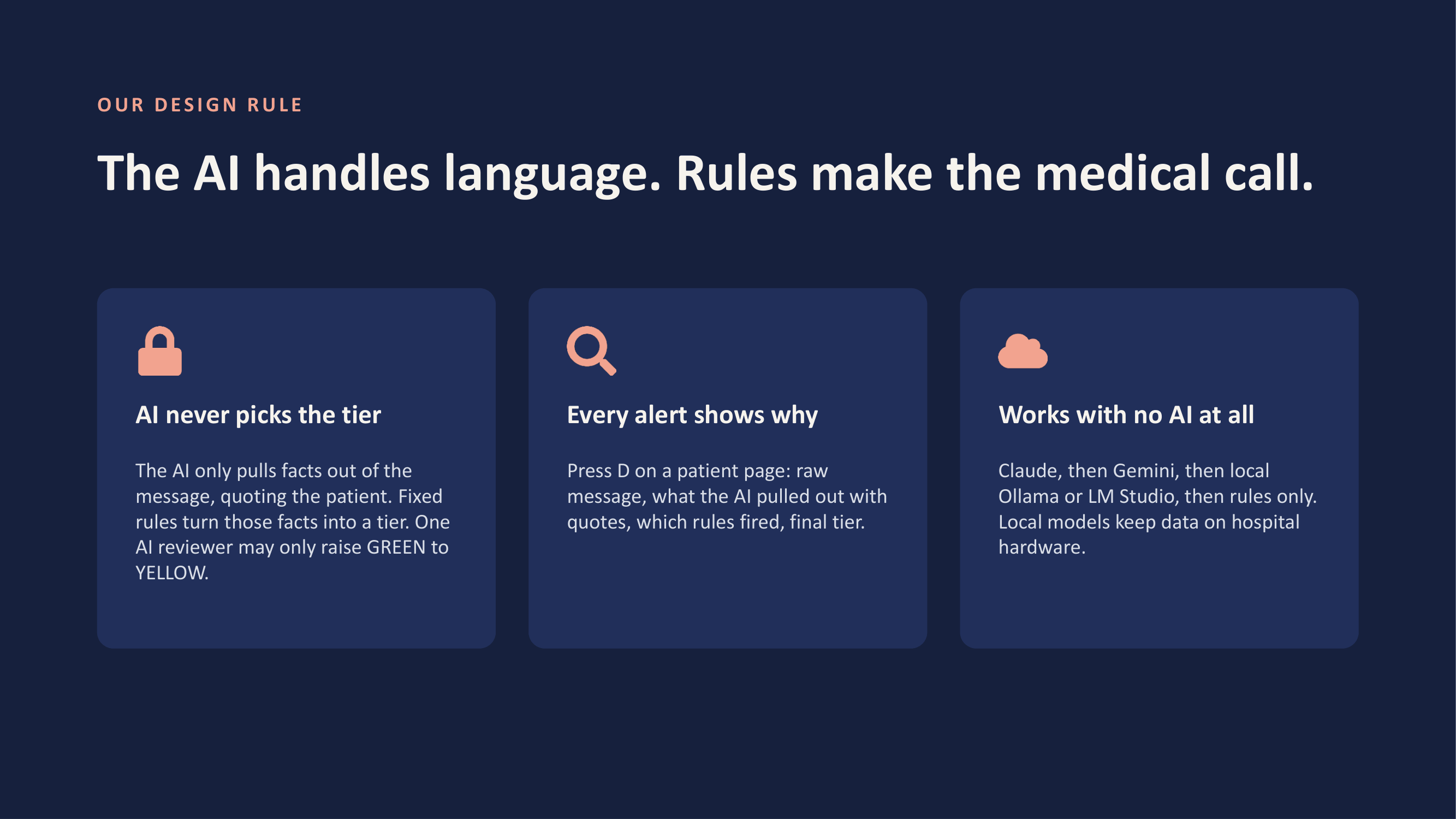
The development of HeartBridge utilized React 19 as the primary framework for developing its user interface. For server-side functionality, the developers chose Node.js and used Socket.io to enable the system to provide real-time updates to both the patient and the nursing staff. To utilize Natural Language Processing (NLP) technology, the developers chose to use Gemini (Gemini-Flash-Latest) and employed deterministic algorithms to classify patient responses into either high-risk or low-risk categories. Deterministic coding was also used to convert different units of measurement. If a patient indicated that they were experiencing life-threatening symptoms such as difficulty breathing, severe chest pain, etc., 911 would immediately be contacted. Patient medical histories stored in an EHR system were retrieved using HAPI FHIR Sandbox.
Challenges we encountered
Obtaining acceptable performance from both the Large Model (LLM) and HeartBridge's state machine required extensive testing. Initially, there were issues regarding how the LLM interpreted patients' responses; for example, it initially incorrectly identified "I slept just fine on my regular two pillows tonight" as an indicator of possible orthopnea and then attempted to automatically correct a "2000" lb (approximately 907 kg) reply into "200" lb (approximately 91 kg). There were also difficulties related to delays ranging from 8-20 seconds in receiving free-form patient responses and ensuring that the chat remained locked onto providing instructions for emergency contact services (i.e., calling 911) after a Red Alert was issued.
Things that we accomplished that we are particularly proud of
While the system prevented successful attacks utilizing injected prompts that caused false positives (e.g., identifying fainting or chest tightness as being present within casual weight replies), HeartBridge successfully detected emergencies. We are especially proud of the multilingual chat feature that displays English translations below both Spanish and Vietnamese messages. Furthermore, we believe that our transparent and traceable audit log that explains why a patient's risk tier changed represents another significant accomplishment.
Lessons we learned
In developing AI solutions for healthcare applications, we learned that the LLM should only capture data and deterministic programming should generate clinical decision-making rules. However, we also learned that even though deterministic programming may generate decision-making rules, those rules need to be reviewed by additional coding logic to verify accuracy.
On the user experience side, we found that displaying red colors for baseline "High-Risk" patients as well as active "Red-Triage" emergencies resulted in instant alarm fatigue among nursing staff.
Future plans for Heart Bridge
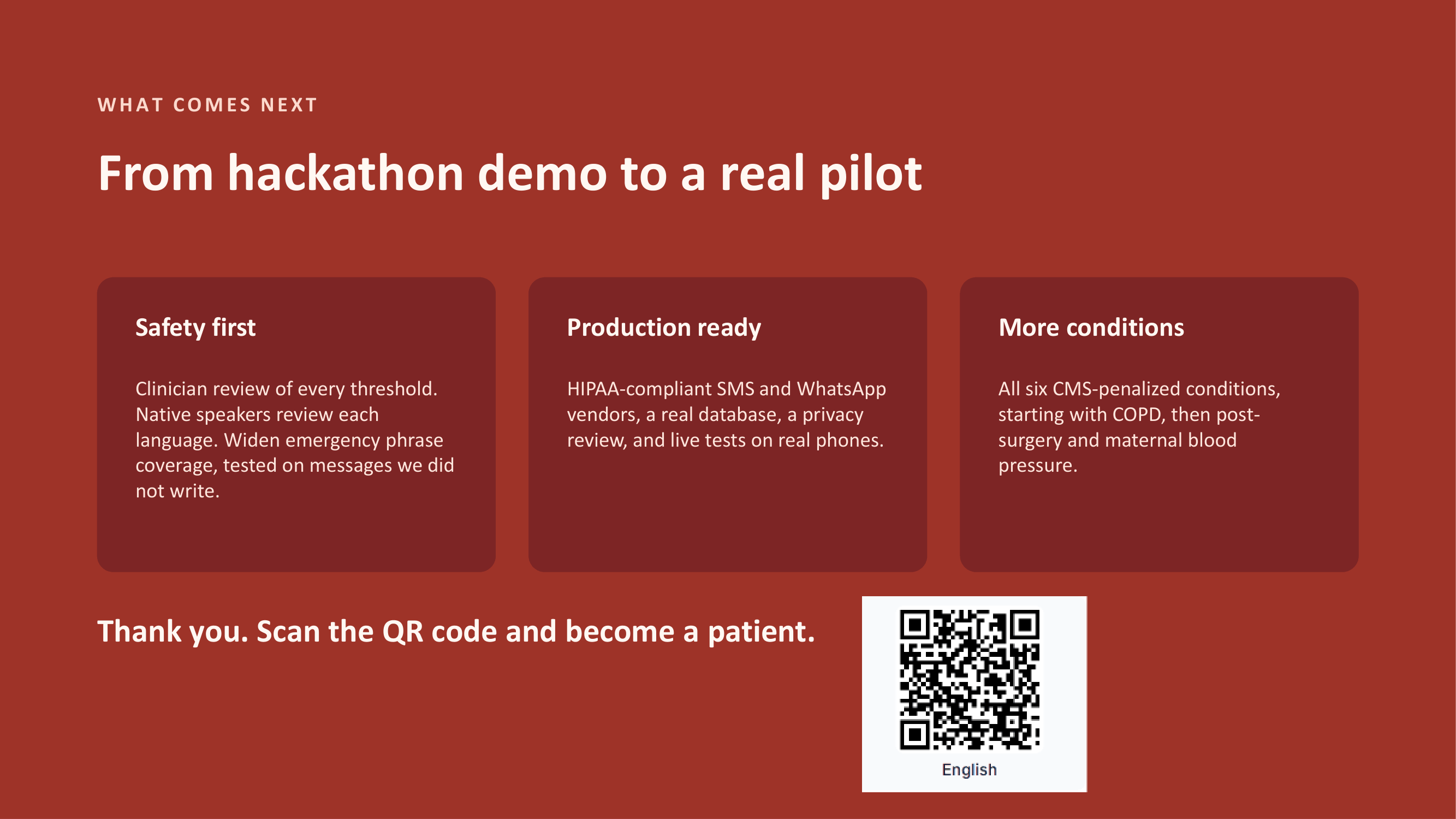
Firstly, we plan on integrating a one-click standing diuretic order card that will allow nurse practitioners to implement clinic-approved water-piller dosages directly from yellow fluid overload alert conditions. Secondly, we wish to include a fast regex filter prior to sending patient responses to Gemini to detect emergency indicators within milliseconds of receipt. Lastly, we want to include the ability for patients to upload photos of their bathroom scales into the web simulator.


Log in or sign up for Devpost to join the conversation.