Inspiration
Cardiovascular diseases remain the leading cause of death globally, claiming nearly 18 million lives each year. What inspired me most was a personal realization: many of these deaths could be prevented with early detection and timely medical intervention. However, in many under-resourced healthcare settings, doctors often lack the tools to quickly identify high-risk patients.
As an Artificial Intelligence student, I wanted to use my skills to create something that could genuinely help people. The Byte 2 Beat hackathon provided the perfect opportunity to combine healthcare and machine learning into a meaningful solution. The idea of building a model that could potentially assist doctors in predicting heart attack risk motivated me throughout this journey.
What it does
This project is a machine learning-based system that predicts a patient's risk of experiencing a heart attack using clinical health data. The model analyzes key medical parameters including:
- Age
- Cholesterol levels
- Resting blood pressure
- Maximum heart rate achieved
- Chest pain type
- Other critical health indicators
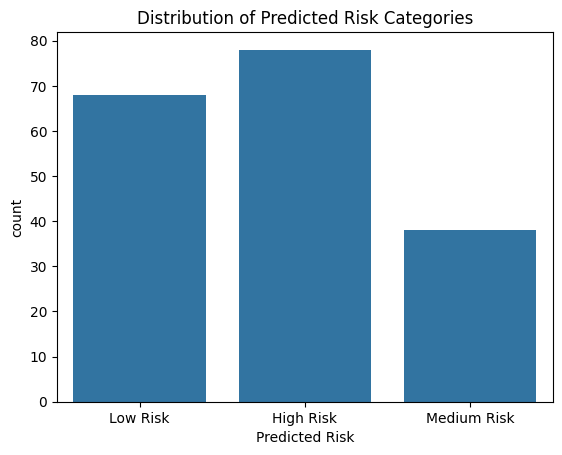
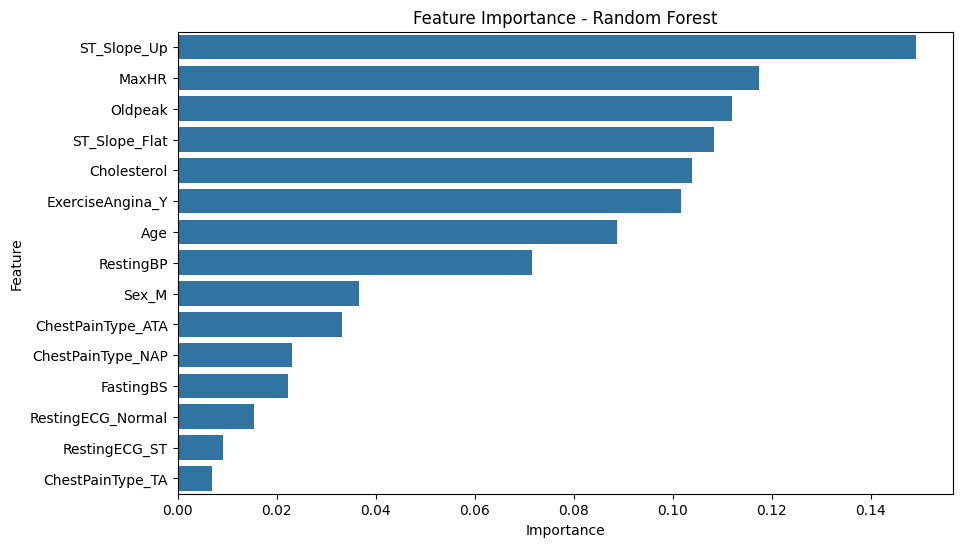
The system classifies patients into two categories: at risk of heart attack or not at risk. Additionally, it provides probability scores and categorizes risk into Low, Medium, and High levels, making the output more interpretable for real-world healthcare applications. Feature importance analysis also reveals which factors contribute most significantly to the prediction, offering valuable clinical insights.
How we built it
I built this project entirely using Python in Google Colab. The development process followed these steps:
Data Processing:
- Loaded and explored the dataset using Pandas
- Handled missing values and encoded categorical variables
- Applied feature scaling using StandardScaler
- Split data into training (80%) and testing (20%) sets
Model Development: I implemented two machine learning models for comparison:
- Logistic Regression – as a simple, interpretable baseline
- Random Forest Classifier – as a more powerful ensemble model
Evaluation & Visualization:
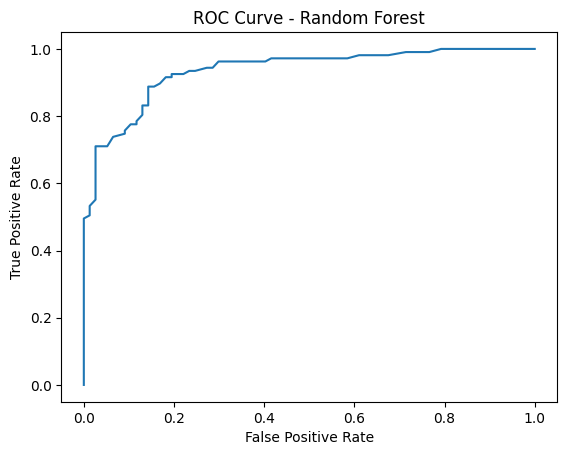
- Used accuracy, precision, recall, F1-score, and ROC-AUC for evaluation
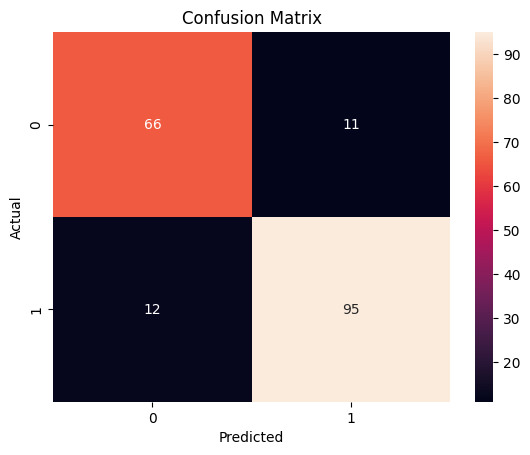
- Plotted confusion matrices and ROC curves
- Generated feature importance graphs
- Added risk categorization (Low/Medium/High) based on probability thresholds
Tools Used:
- Python, Pandas, NumPy
- Scikit-learn for ML models
- Matplotlib & Seaborn for visualization
- Google Colab for development
Challenges we ran into
As a beginner in AI and healthcare ML, I faced several challenges:
Understanding the Medical Data: Initially, interpreting clinical features like cholesterol types and chest pain categories was confusing. I had to research basic medical terminology to understand what each feature meant.
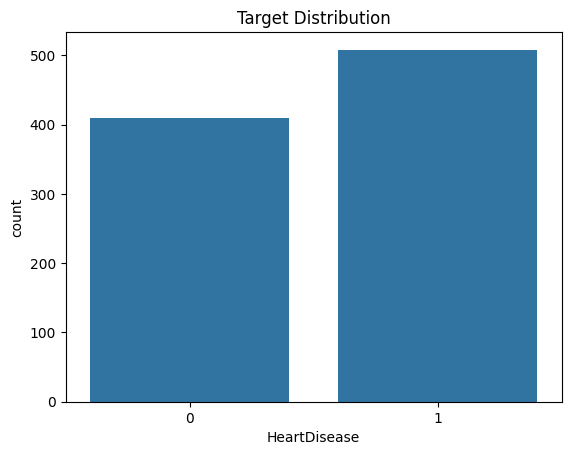
Handling Class Imbalance: The dataset had some imbalance, which affected early model performance. I learned to focus more on recall rather than just accuracy, since false negatives are dangerous in healthcare.
Model Interpretability: Making the model explainable was challenging. I spent extra time implementing feature importance and risk categorization so the results would be useful to medical professionals.
Time Management: With 27 days and a full-time study schedule, managing time was difficult. I followed a strict roadmap: Week 1 for EDA, Week 2 for modeling, Week 3 for improvements, and Week 4 for documentation.
Accomplishments that we're proud of
- Achieving 87.5% accuracy with the Random Forest model
- Maintaining high recall (0.89) for the heart attack class, minimizing false negatives
- Successfully implementing risk categorization (Low/Medium/High) for practical use
- Building a fully reproducible, well-documented notebook
- Learning to interpret medical data and translate ML results into meaningful insights
- Completing my first end-to-end healthcare ML project independently
What we learned
This project taught me invaluable lessons:
Technical Skills:
- How to preprocess and clean real-world medical data
- The importance of evaluation metrics beyond accuracy (especially recall in healthcare)
- How to implement and compare multiple ML models
- Techniques for model interpretability and explainability
Soft Skills:
- The importance of understanding the problem domain before coding
- How to manage a long-term project with strict deadlines
- The value of documentation and presentation in hackathons
- Why error analysis matters in real-world applications
Healthcare Insight:
- Early detection can literally save lives
- ML models should assist, not replace, medical professionals
- False negatives are far more dangerous than false positives in medical diagnosis
What's next for Heart Attack Risk Prediction Using Machine Learning
This project has strong potential for future development:
Short-term Improvements:
- Hyperparameter tuning to further improve model performance
- Testing on larger, more diverse datasets
- Adding more advanced explainability techniques like SHAP values
Medium-term Goals:
- Develop a simple Streamlit web application where users can input their data and get instant risk predictions
- Integrate additional clinical features like ECG data for more comprehensive analysis
- Collaborate with medical professionals to validate the model's clinical relevance
Long-term Vision:
- Publish findings as a research paper or case study
- Contribute to open-source healthcare AI tools
- Explore deployment in real-world clinical settings as a decision-support system
The journey doesn't end here. This project has sparked my interest in healthcare AI, and I plan to continue learning and building in this impactful field.
Built With
- confusion-matrix
- featureimportance
- github
- google-colab
- jupyter-notebook
- logistic-regression
- matplotlib
- numpy
- pandas
- python
- random-forest
- roc-auc
- scikit-learn
- seaborn
- standardscaler
