-
-
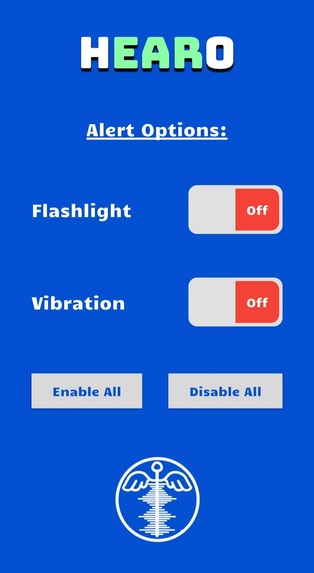
both alerts off
-
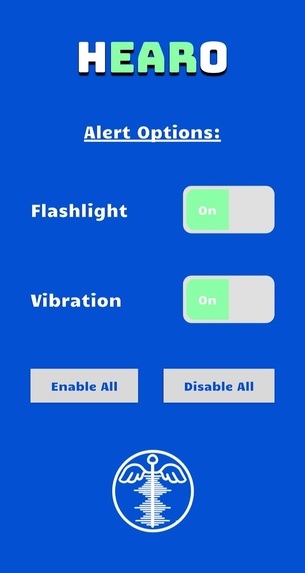
both alerts on
Inspiration
The devastating LA fires made us think about how crucial it is to receive emergency alerts in time to evacuate. But for people who are deaf or hard of hearing, traditional alarms can be ineffective in emergencies like fires, earthquakes, or floods. Missing these alerts can be life-threatening. We wanted to create a solution that ensures everyone, regardless of their hearing ability, gets the critical notifications they need. That’s why we built Hearo— A hero for those who can’t hear alarms! It is an AI-powered app that provides visual and tactile alerts (vibrations and flashlight) directly on smartphones. By making emergency alerts more accessible, we’re improving safety and inclusivity in high-risk situations.
What it does
Hearo continuously listens for fire alarms in the background. When it detects an alarm, it instantly notifies the user through their preferred alert method—phone vibrations and/or flashlight activation—so they can take action and evacuate.
How we built it
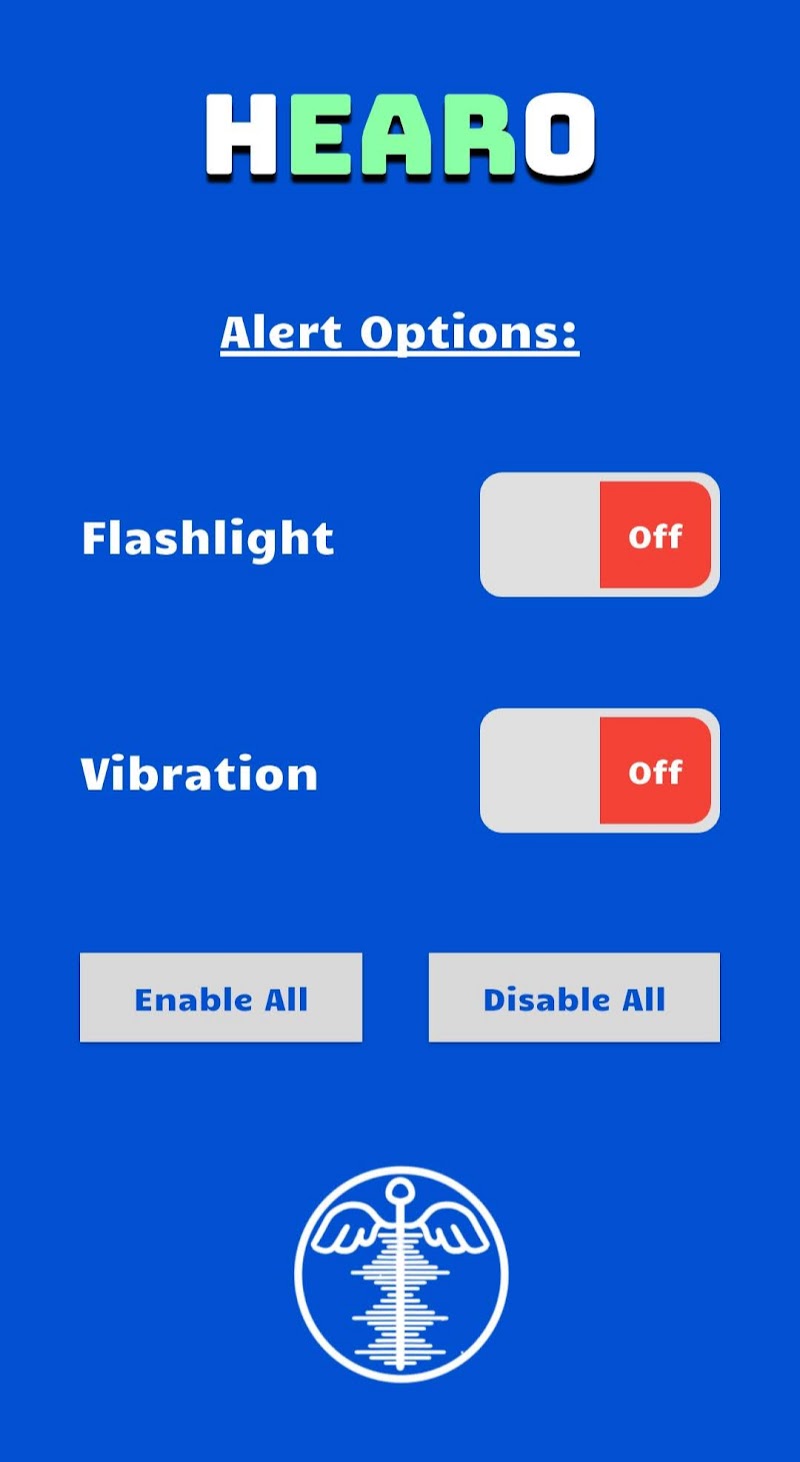
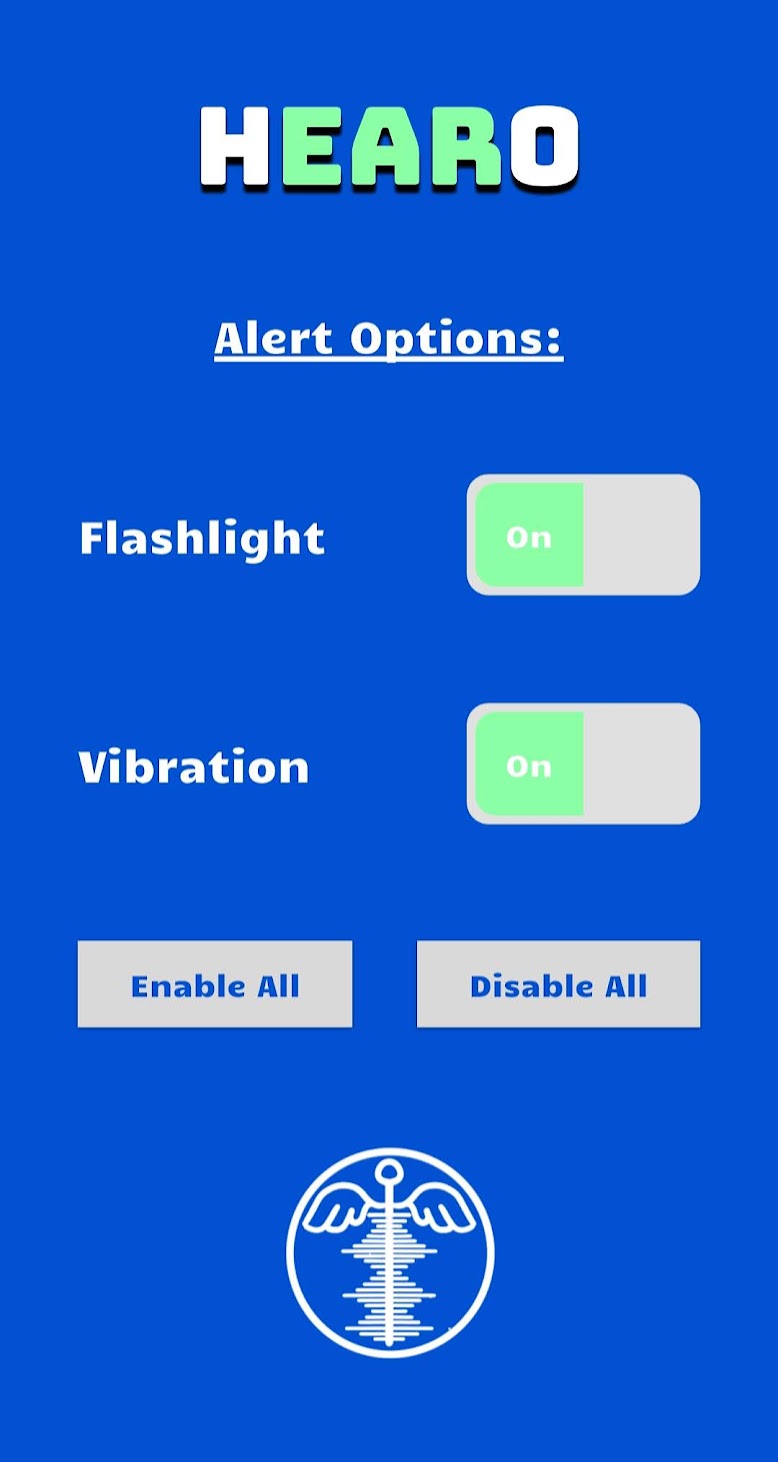
We trained an AI model to recognize fire alarm sounds with high accuracy. The app itself is built using Flutter, allowing it to run in the background, process audio input, and trigger real-time alerts. Since smartphones have limited processing power, we offload computation to a computer acting as a server. The phone sends encrypted audio data to the server, where it is analyzed by our AI model. After processing, the server sends back an alert signal if an alarm is detected. To ensure privacy, all recorded audio is encrypted before transmission and immediately deleted after processing—nothing is stored. We also developed a customizable interface where users can choose their preferred notification method. The backend, powered by Flask, manages encryption, decryption, and AI inference to ensure fast and secure detection.
Challenges we ran into
AI Overtraining: Our model initially achieved 100% accuracy but struggled with real-world data. We had to fine-tune it to improve generalization. Background Functionality: Running continuous audio detection in the background posed challenges on mobile devices, as most smartphones restrict background processes. Data Privacy: Since the app processes audio, we needed to implement encryption to protect user data. We ensured that all recorded data was encrypted before transmission, decrypted only for analysis, and immediately deleted. Hardware Limitations: The number of available devices constrained testing, making it difficult to validate vibration and flashlight triggers across different smartphones. Server Processing: Since mobile devices couldn’t handle AI inference efficiently, we had to set up a computer as a server to process data in real-time.
Accomplishments that we're proud of
Successfully integrating AI with real-time alerting on mobile devices. Overcoming background process limitations to improve usability. Implementing end-to-end encryption to ensure user privacy. Designing a user-friendly interface that allows seamless customization.
What we learned
How to build and train an AI model for real-world sound recognition. Advanced Flutter techniques for background functionality. Audio processing using Fourier transforms, fast Fourier transforms (FFT), short-time Fourier transforms (STFT), and mel frequency spectrograms. Implementing secure encryption and decryption methods for sensitive data.
What's next for Hearo
We plan to expand Hearo’s capabilities to: Support additional alarm types (e.g., carbon monoxide detectors, flood warnings). Enable alerts on other connected devices beyond smartphones. Expand on different types of alerts, such as screen notifications, to allow more user flexibility. Improve energy efficiency so it can run seamlessly in the background. Optimize server-side processing to reduce latency and enhance responsiveness.


Log in or sign up for Devpost to join the conversation.