-
Page 2
-
Page 5
-
Page 4
-
Page 1
-

Page 3
-
Page 6



Inspiration
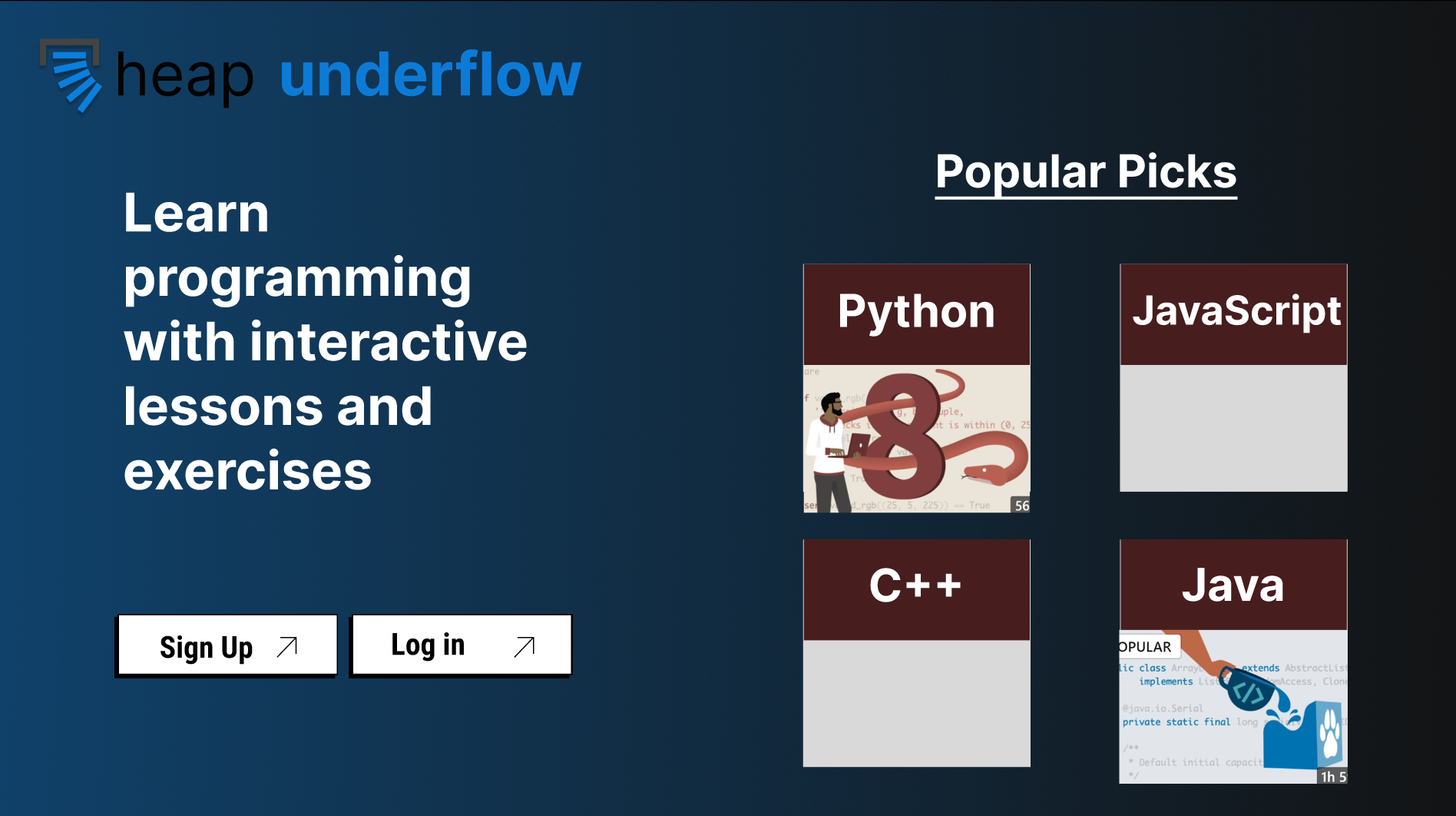
Our group attended a workshop about Figma, a collaborative web application for interface and graphics design, and were highly intrigued about its features, functionality, and the projects it could produce. Combined with ideas for wanting to create an attractive visual design and a platform that contributes to education, we decided on making a concept website called _ Heap Underflow _, a creative inverse of the existing website _ Stack Overflow _.
What it does
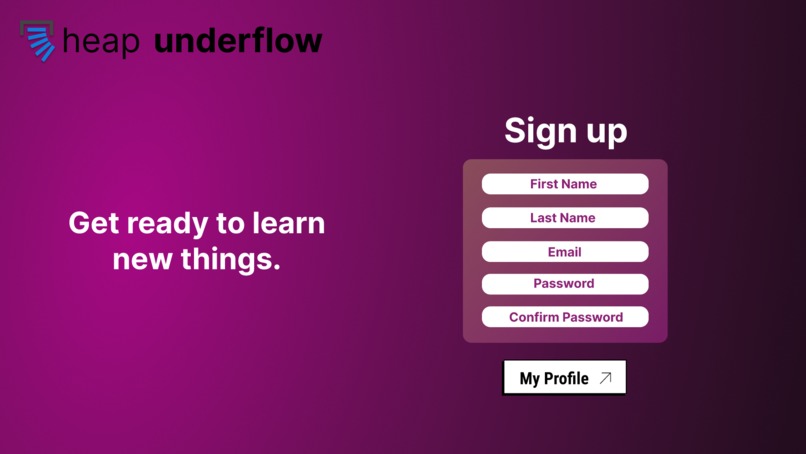
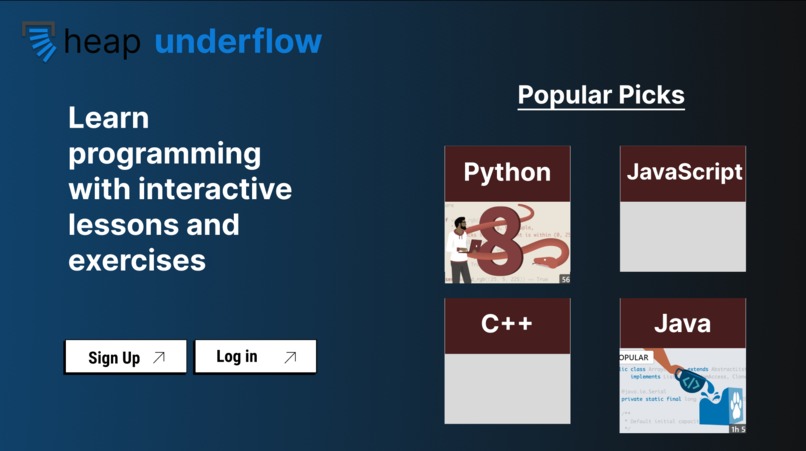
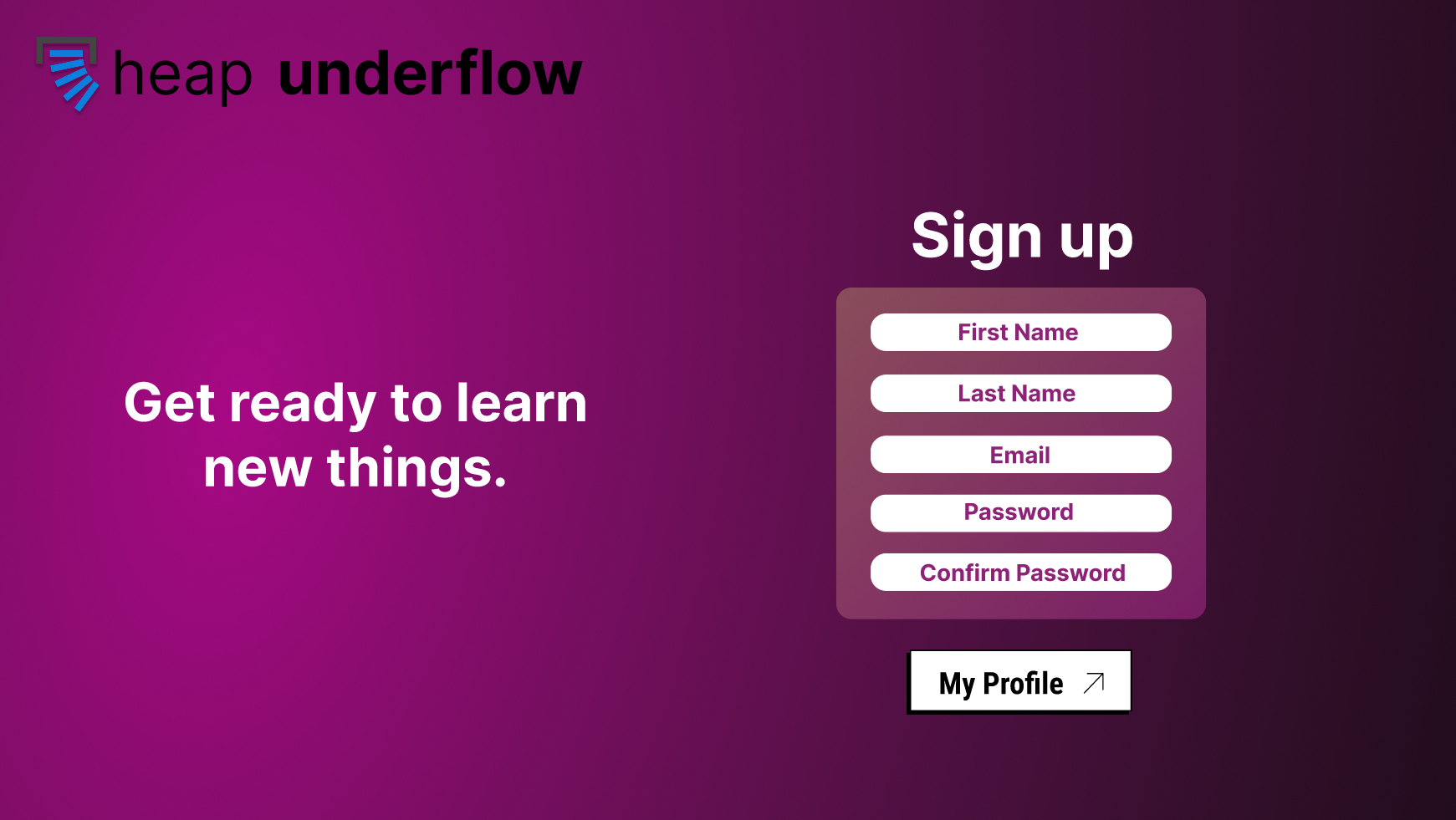
The website serves a similar purpose to Stack Overflow in how it bring together a community of programmers who can communicate with each other, share work, and ask for help. However, our website intends to function as a larger platform for more types of audiences such as students and job seekers. As such, the website includes two new sections:
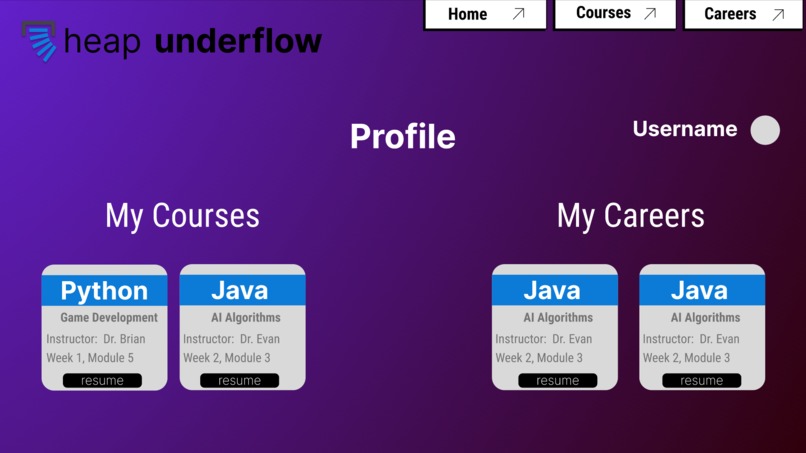
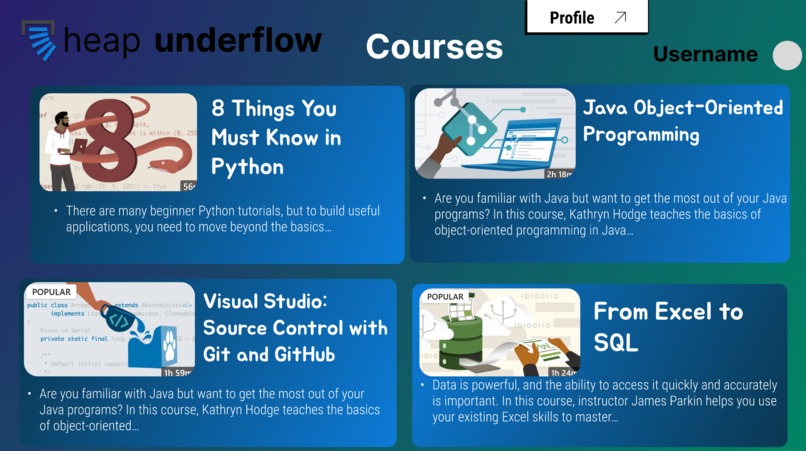
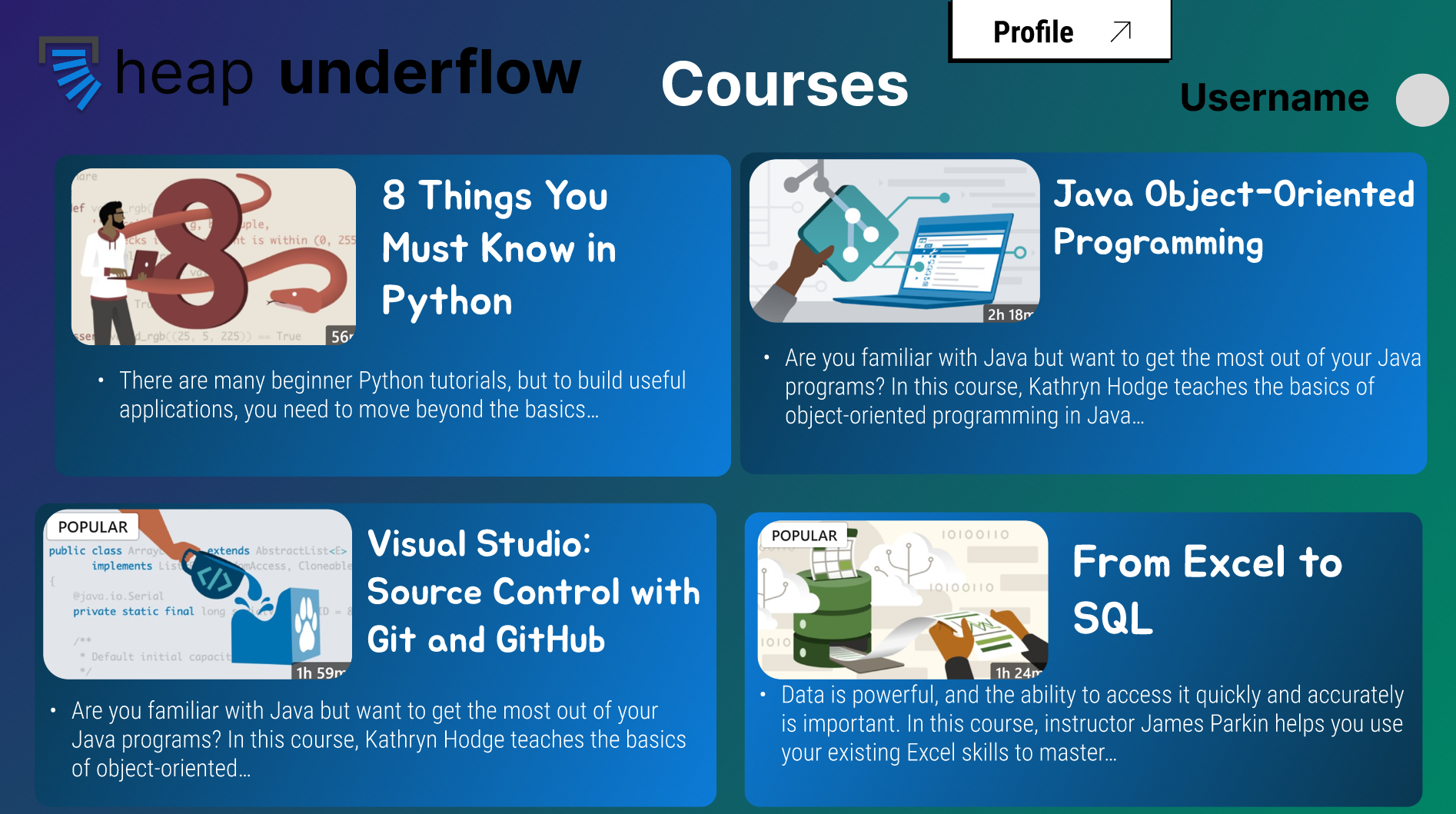
1. Courses - Similar to LinkedIn Learning, Heap Underflow has videos and online courses made by users and certified workplace professionals. They are intended to teach newcomers and programmers of any amount of experiences new skills and knowledge. This can range from learning a new language such as Python to studying more complex concepts such as object-oriented programming in JavaScript.
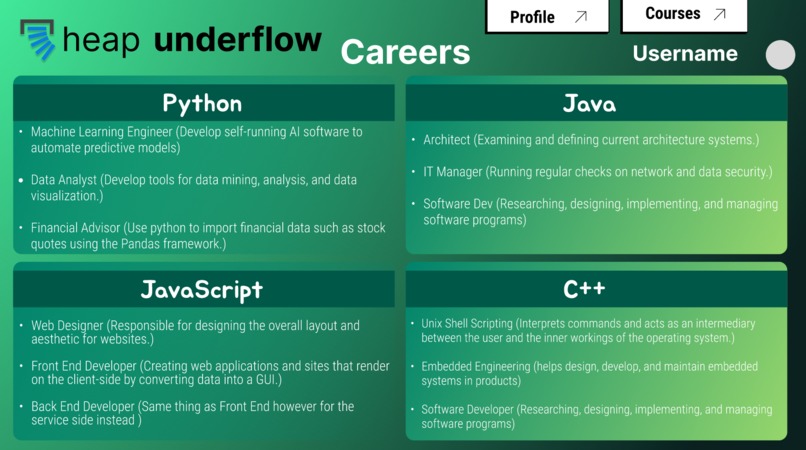
2. Careers - Heap Underflow also functions as a mini job board. Hiring managers can post software jobs within their company on the website, as an additional way to advertise their company and gather applicants. Of course then, job seekers can use Heap Underflow to find jobs tailored to their preferences on the website, similar to LinkedIn.
We want Heap Underflow to be a new leading global platform for bringing together programmers worldwide.
How we built it
The website was built completely from Figma.
Challenges we ran into
The main challenges we faced lied within learning how to fully utilize Figma. With our group having never previously used Figma, the learning curve proved very steep initially, which severely hindered progress of the project and prevented us from adding all the features and functionality as originally planned. Attractive and innovative features and aspects such as transitions, animations, and an overall more appealing and modern feel were all compromised in some way. As a result, the website is a mere concept or shell, only with static graphics and working buttons and links taking you to different pages.
Accomplishments that we're proud of
Despite the challenges we faced, our group is still proud of the project we produced in the end. Learning something new in a short time can prove difficult and tantalizing, but we prevailed and managed to create something that demonstrated a mixture of each group member's greatest strengths and competencies. We are also proud that we worked together smoothly without conflict having never previously worked together on a common project or goal.
What we learned
Apart from of course learning how to use the features of Figma for web development, we also learned valuable lessons on how to work together in a group setting, and how to work efficiently during a Hackathon. During the first day, our early obstacles led us to be unproductive to the point where new project ideas were being considered. No matter what challenges are faced, the group should always stick to the original project plan. Tasks should be split according to each member's strong areas (such as programming or graphic design) and time should also be taken before the start of the Hackathon to brainstorm ideas and consider categories/themes to incorporate into the project.
What's next for Heap Underflow
The project's life will come to end, and it will remain as a simple concept. However, each group member will aspire to continue learning Figma and use it for their own personal endeavours in the future.
Built With
- figma


Log in or sign up for Devpost to join the conversation.