Inspiration
Most wellness apps force users to choose a single focus: track your sleep or log your mood or count your steps. This fragmented approach misses the holistic nature of human health. We were inspired to build Healyo—a warm, non-clinical wellness companion that unites physical, mental, and emotional tracking into one beautifully designed, continuous journey. We wanted an app that doesn't feel like a medical chart, but rather a responsive companion that grows with you.
What it does
Healyo is an all-in-one wellness companion that gamifies and guides your daily health journey.
| Core Feature | Description |
|---|---|
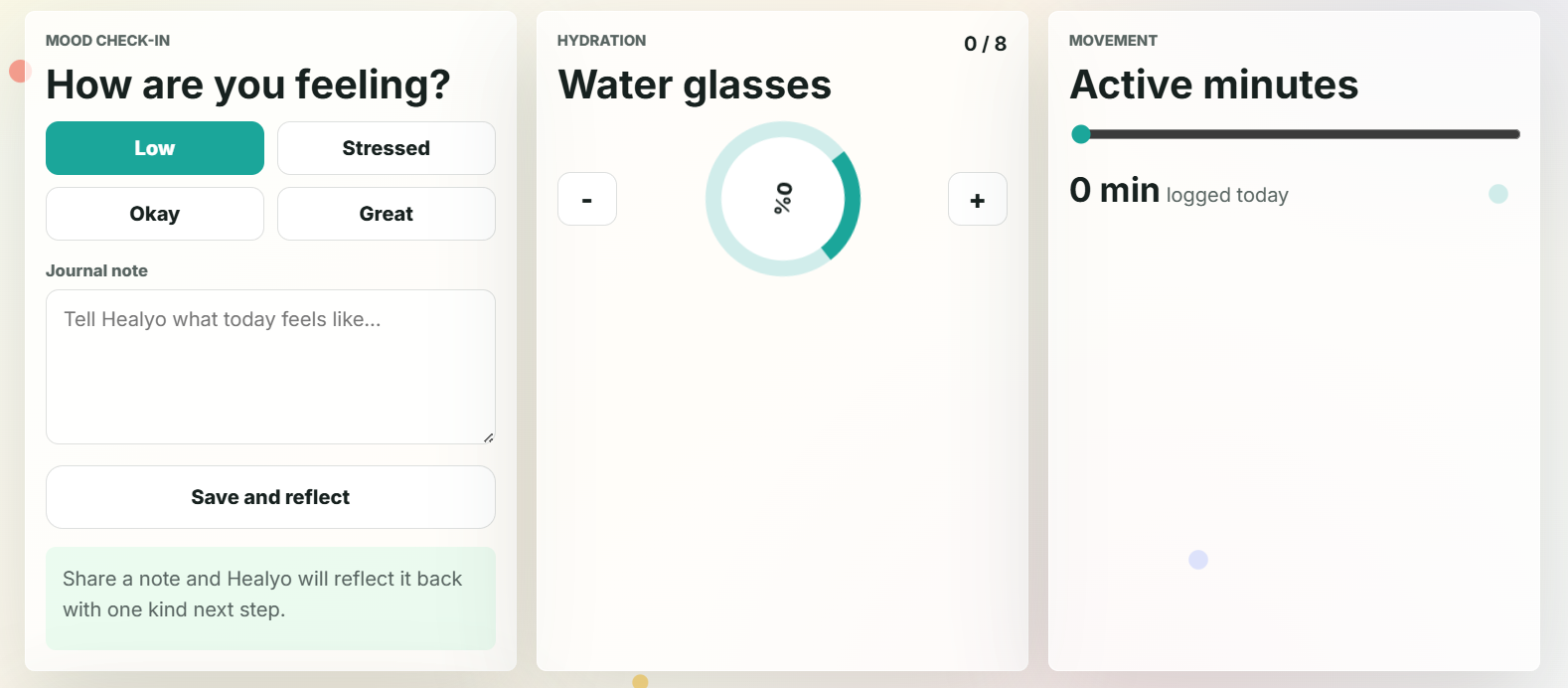
| Holistic Tracking | Log your daily mood, symptoms, medication, and hydration in seconds. |
| Virtual Pet | A dynamic companion that evolves and visually reacts to your consistency. |
| AI Agent Ecosystem | Specialized AI personas that provide tailored, non-clinical guidance. |
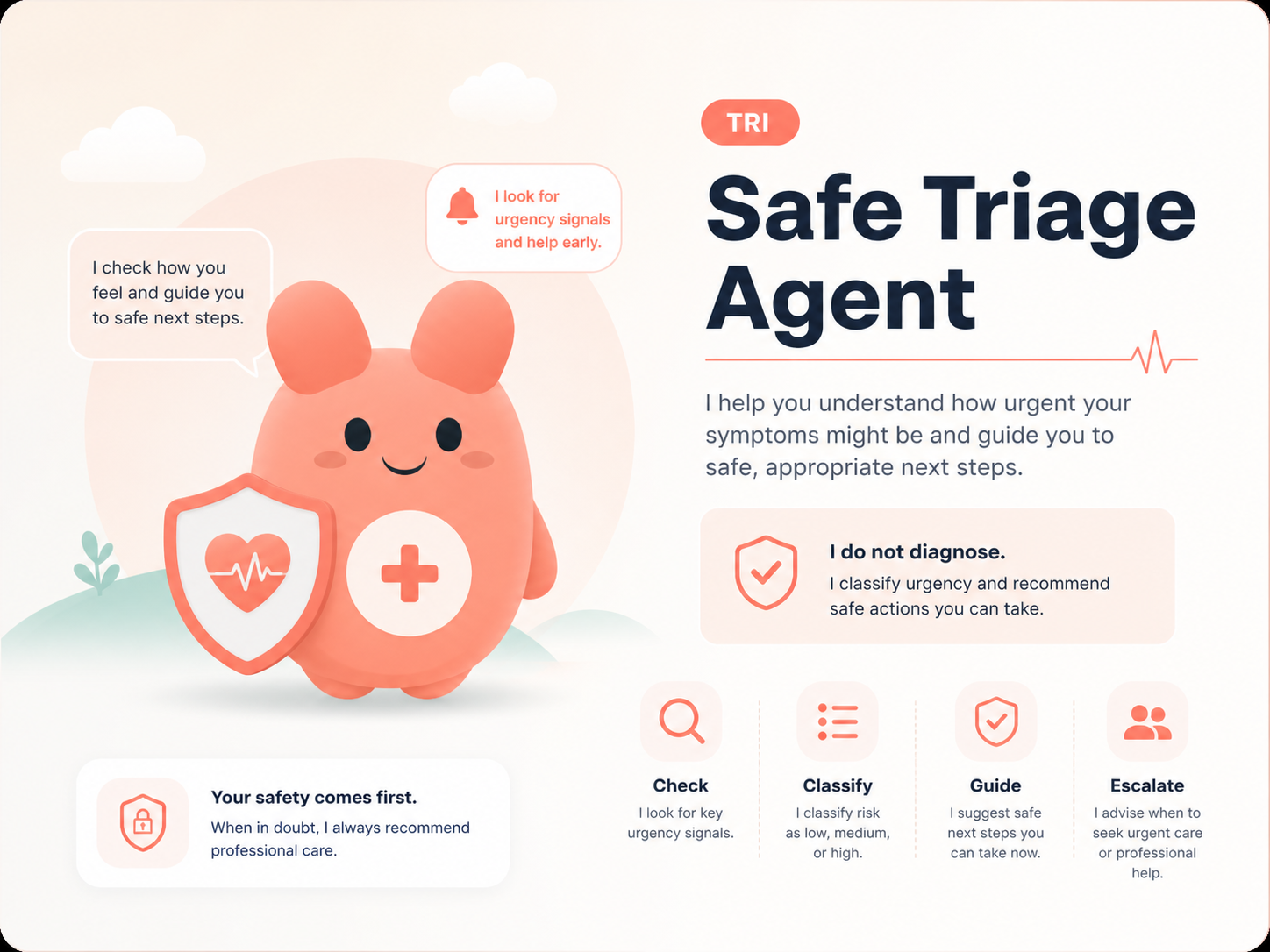
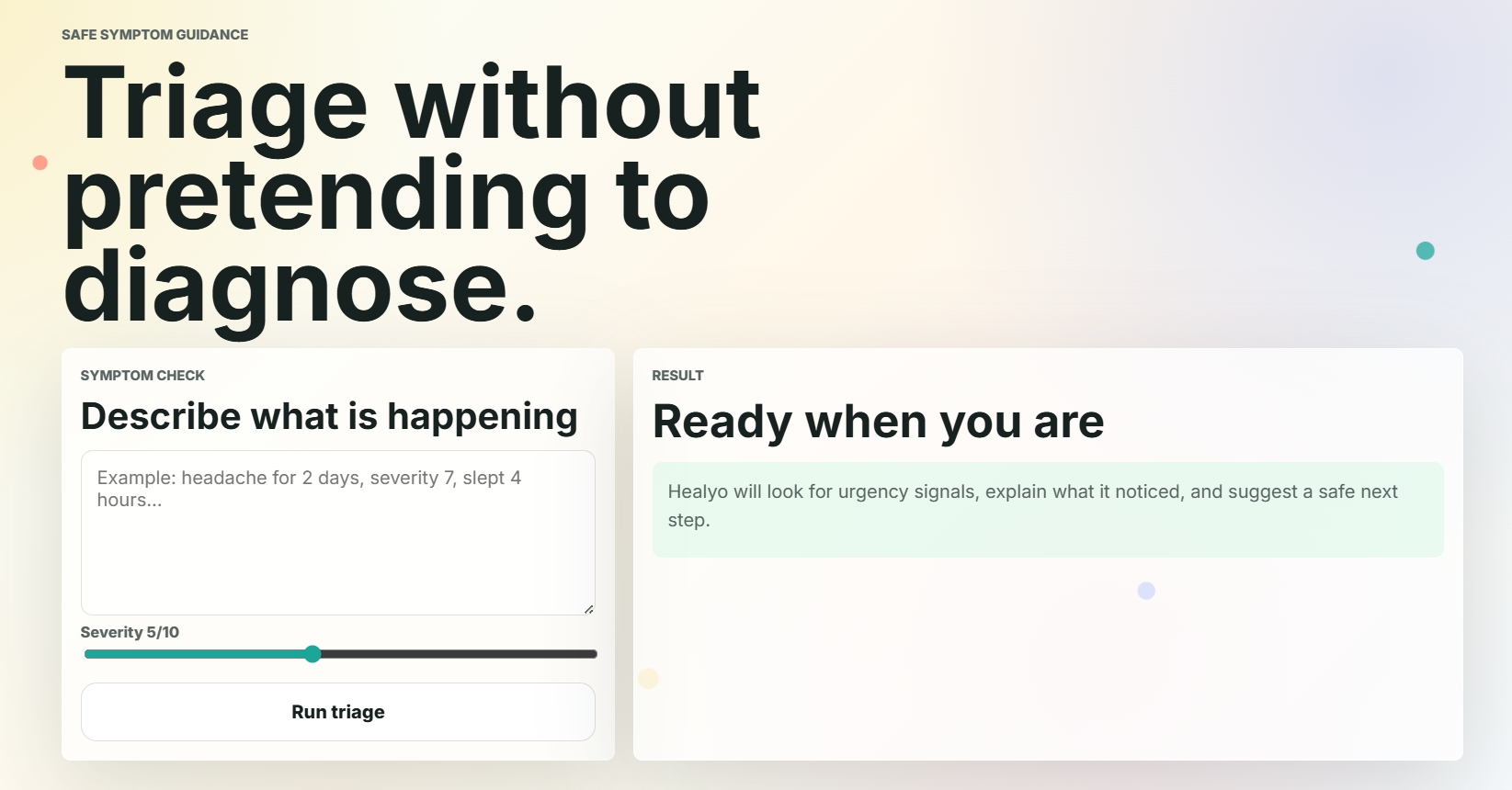
| Safe Triage | Instantly evaluates symptom urgency and suggests safe next steps without diagnosing. |
The Agent Node Structure
Healyo delegates specialized tasks to a network of Gemini-powered agents:
[ROOT] Healyo Core System
│
├── [NODE 1] Safe Triage Agent  (Checks urgency signals)
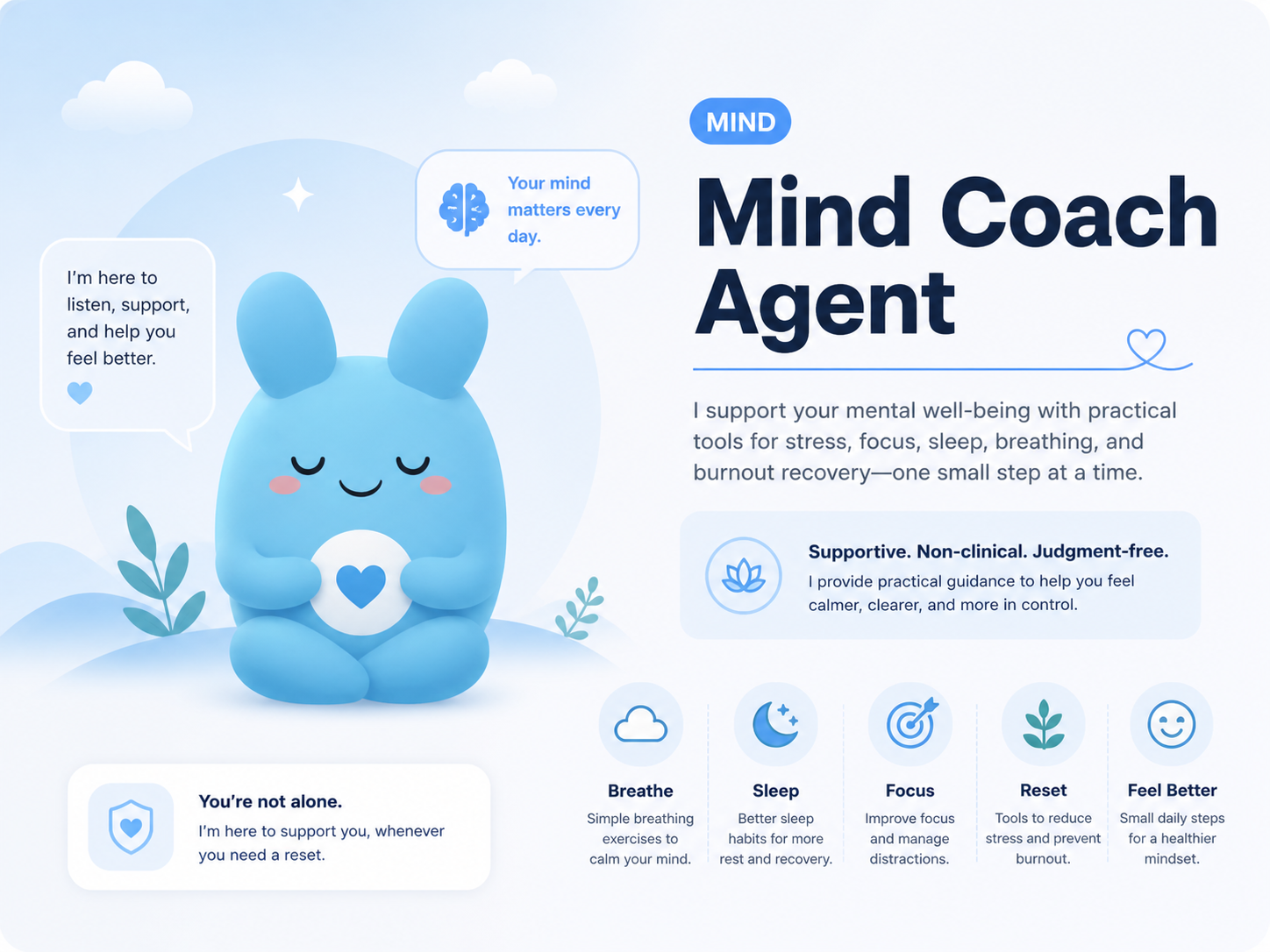
├── [NODE 2] Mind Coach Agent   (Supports stress & focus)
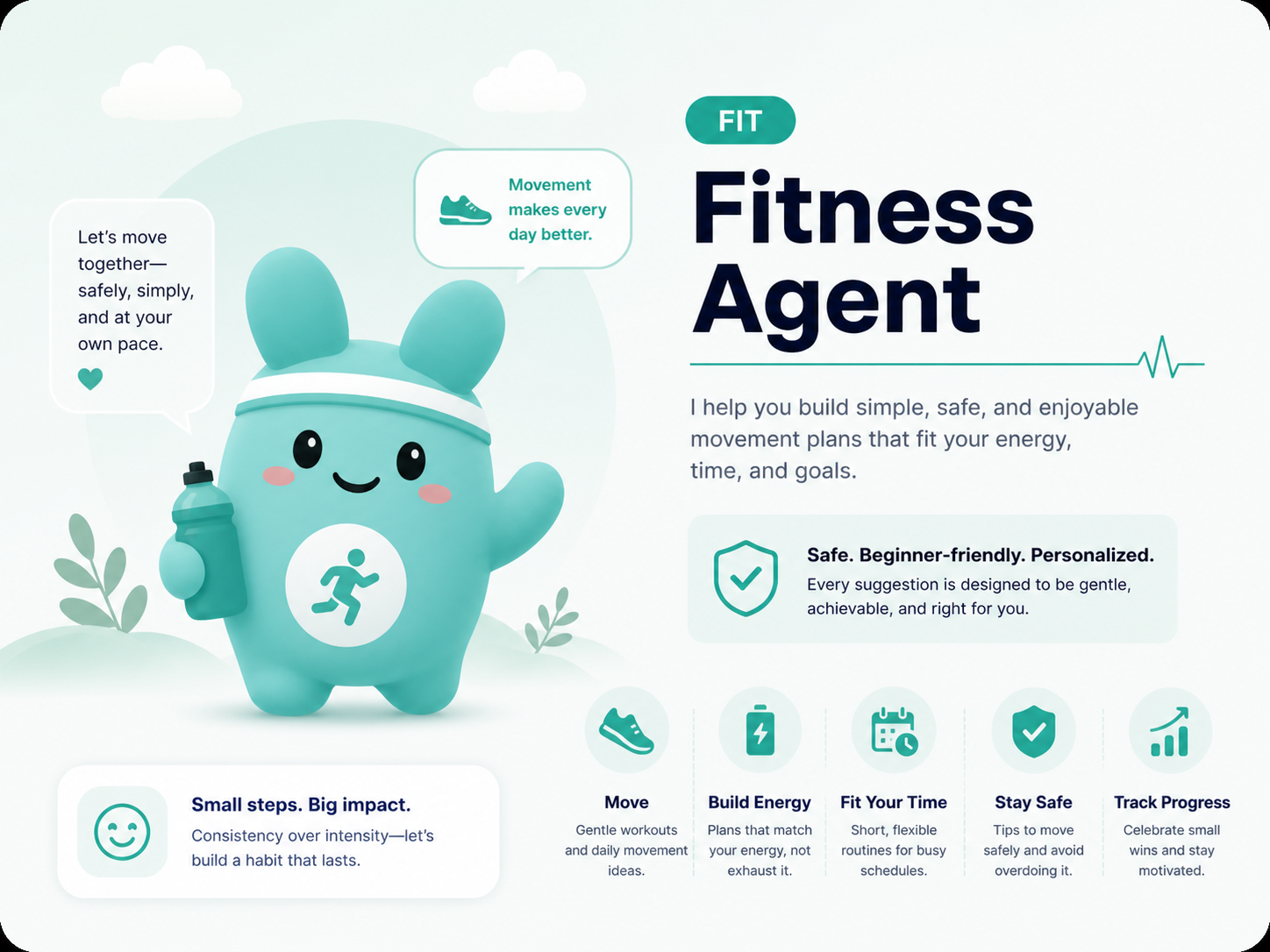
├── [NODE 3] Fitness Agent      (Builds safe movement plans)
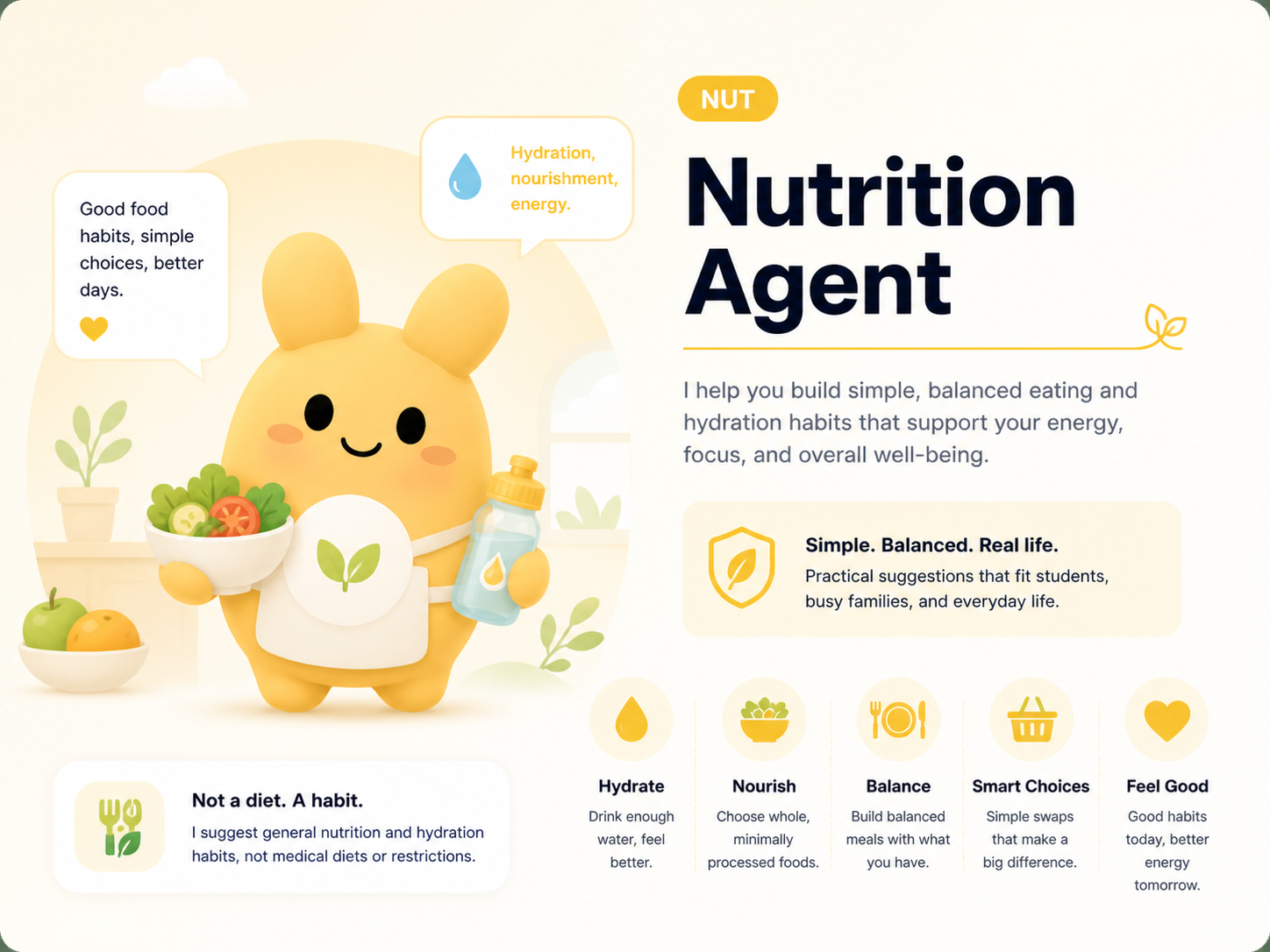
├── [NODE 4] Nutrition Agent    (Suggests hydration & food habits)
├── [NODE 5] Medication Agent   (Reviews adherence patterns)
├── [NODE 6] Caregiver Agent    (Summarizes logs for loved ones)
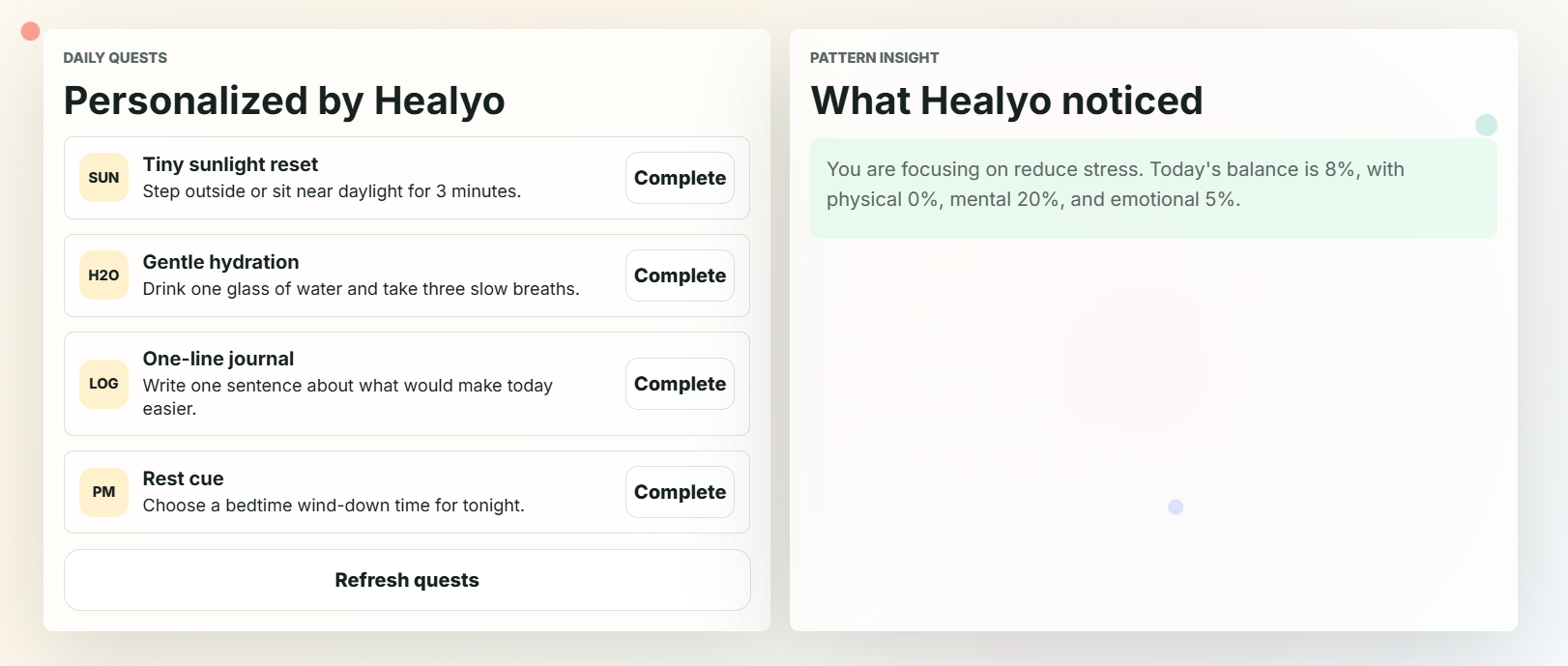
└── [NODE 7] Insight Agent      (Detects cross-functional patterns)
How we built it
We built Healyo with a focus on speed, beautiful aesthetics, and seamless AI integration:
- Frontend Interface: Built with pristine Vanilla JS, HTML, and CSS. We implemented a custom glassmorphism design system with responsive CSS animations (like the evolving pet) to keep the app lightweight and fast.
- Backend API Gateway: A Node.js server acts as the central router, managing the prompts and securely handling API keys.
- AI Engine: Powered exclusively by Gemini 2.5 Flash for ultra-low latency generation.
- Deployment: Containerized and deployed seamlessly on Google Cloud Run for scalable, serverless execution.
Challenges we ran into
1. AI Safety & Boundaries:
We faced significant challenges ensuring the AI did not overstep into medical diagnosis. Solution: We engineered a strict system instruction architecture where the Safe Triage Agent was dynamically injected with non-conversational, clinical-style constraints that override the app's default warm tone.
2. Asynchronous UI Management: Waiting for AI responses can break immersion. Solution: We implemented local fallback logic and optimistic UI updates (e.g., immediate local triage classifications) while the backend queried Gemini for refined explanations in the background.
3. API Token Truncation:
We initially encountered bugs where the AI's markdown responses were being abruptly truncated. We had to carefully optimize our maxOutputTokens configuration to ensure complete, parseable JSON responses from the Gemini API.
Accomplishments that we're proud of
- Zero-Framework Frontend: Achieving a highly interactive, fluid, and premium UI without relying on heavy frameworks like React or Vue.
- Agent Orchestration: Successfully designing a system where 7 distinct AI personas can seamlessly analyze the same user data through different lenses.
- Aesthetic Excellence: Creating the CSS-only virtual pet and ambient background gradients that make the application feel truly alive.
What we learned
- Prompt Engineering is Contextual: We learned that a single global prompt isn't enough for a multifaceted app. Dynamically switching system instructions based on the user's immediate context (e.g., switching from "Mind Coach" to "Safe Triage") drastically improves response accuracy.
- Latency is UX: We learned the importance of model selection. Utilizing Gemini 2.5 Flash over heavier models was the key to making the AI feel like a snappy companion rather than a slow search engine.
What's next for Healyo
The journey doesn't stop here. Here is our roadmap:
- Wearable Integration: Automatically syncing steps, sleep data, and heart rate via Apple Health and Google Fit APIs.
- Community Nodes: Allowing users to link their profiles to share milestones with friends or trusted caregivers.
- Expanded Pet Ecosystem: Introducing more visual biomes and interactive mini-games for the virtual companion based on long-term wellness streaks.


Log in or sign up for Devpost to join the conversation.