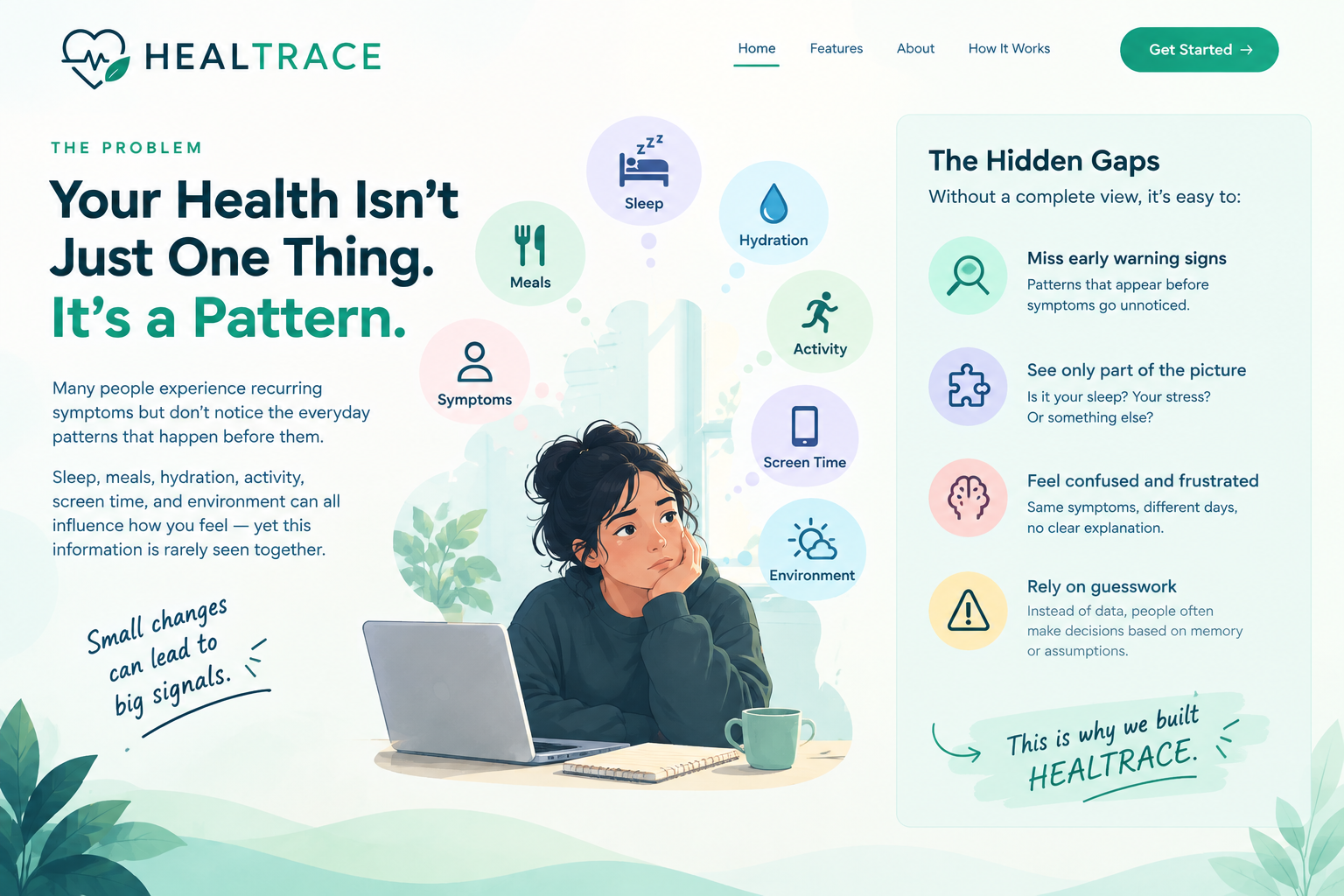
Inspiration— HEALTRACE was inspired by us to see the health problems faced by most of the people in daily basis. People experience recurring symptoms, but they do not notice the everyday patterns that occur. Sleep, eating habits, water consumption, physical activities, and environmental conditions differ day by day, yet this is never viewed together. Now because of this, we wanted to see whether, with the help of technology, we can discover these patterns without attempting to diagnose them.
What we learned— The biggest lesson from this project: you can't just point AI at a healthcare problem and call it done. It has to be explainable, it has to respect privacy, and it has to work within the real limits of medical data. Along the way we also picked up a lot about temporal data analysis, pattern recognition, user-centered design, and why correlation and causation need to stay clearly separated.
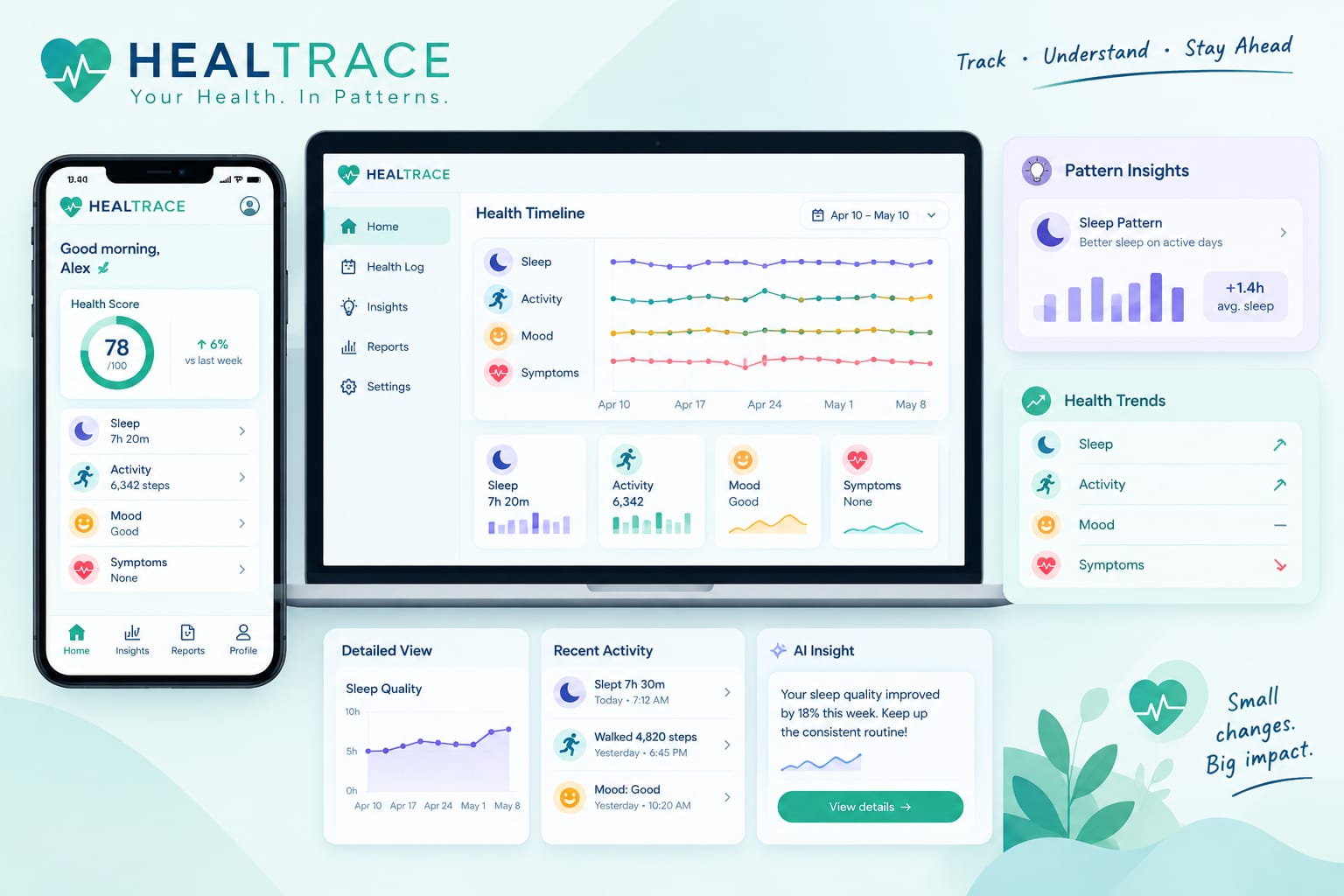
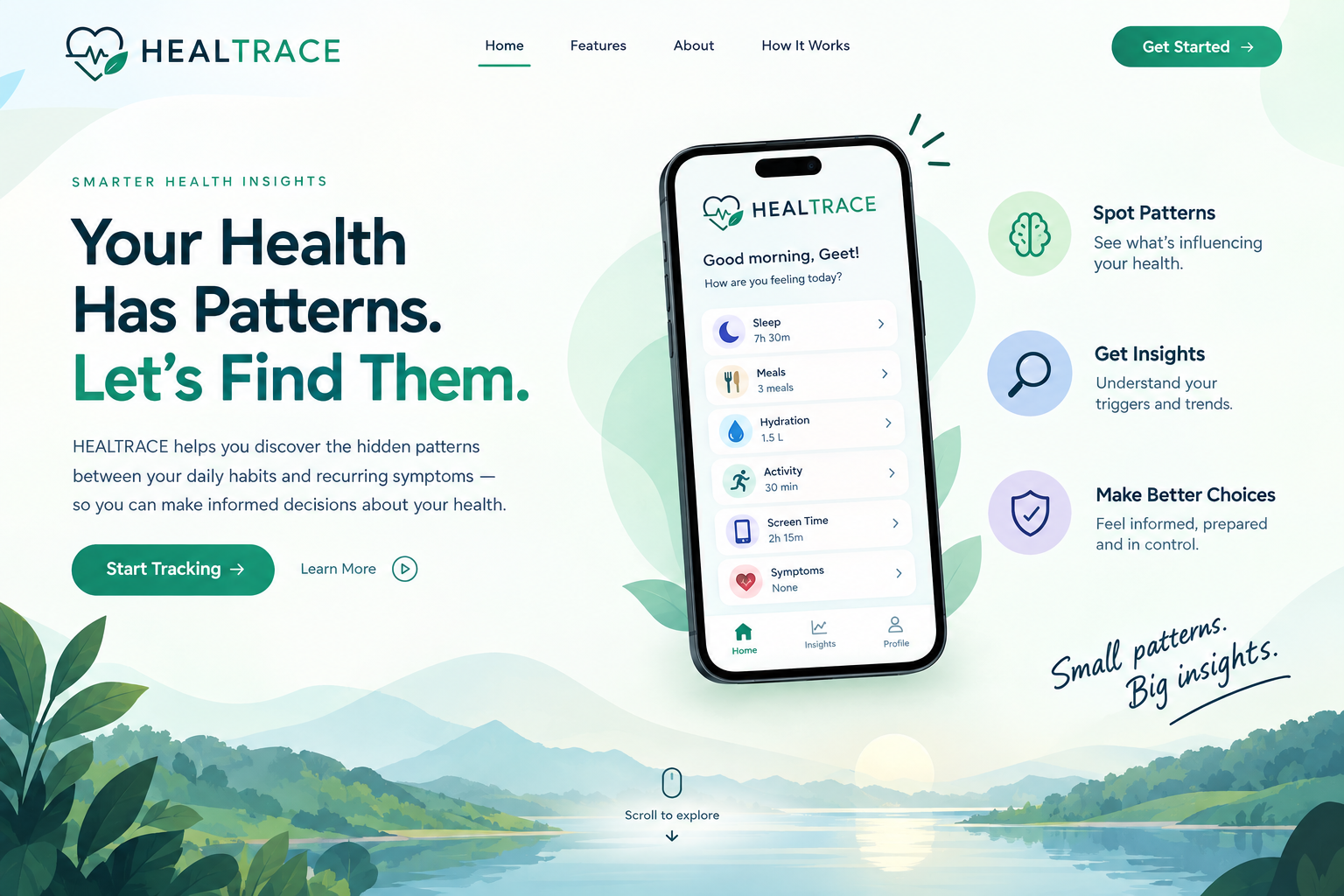
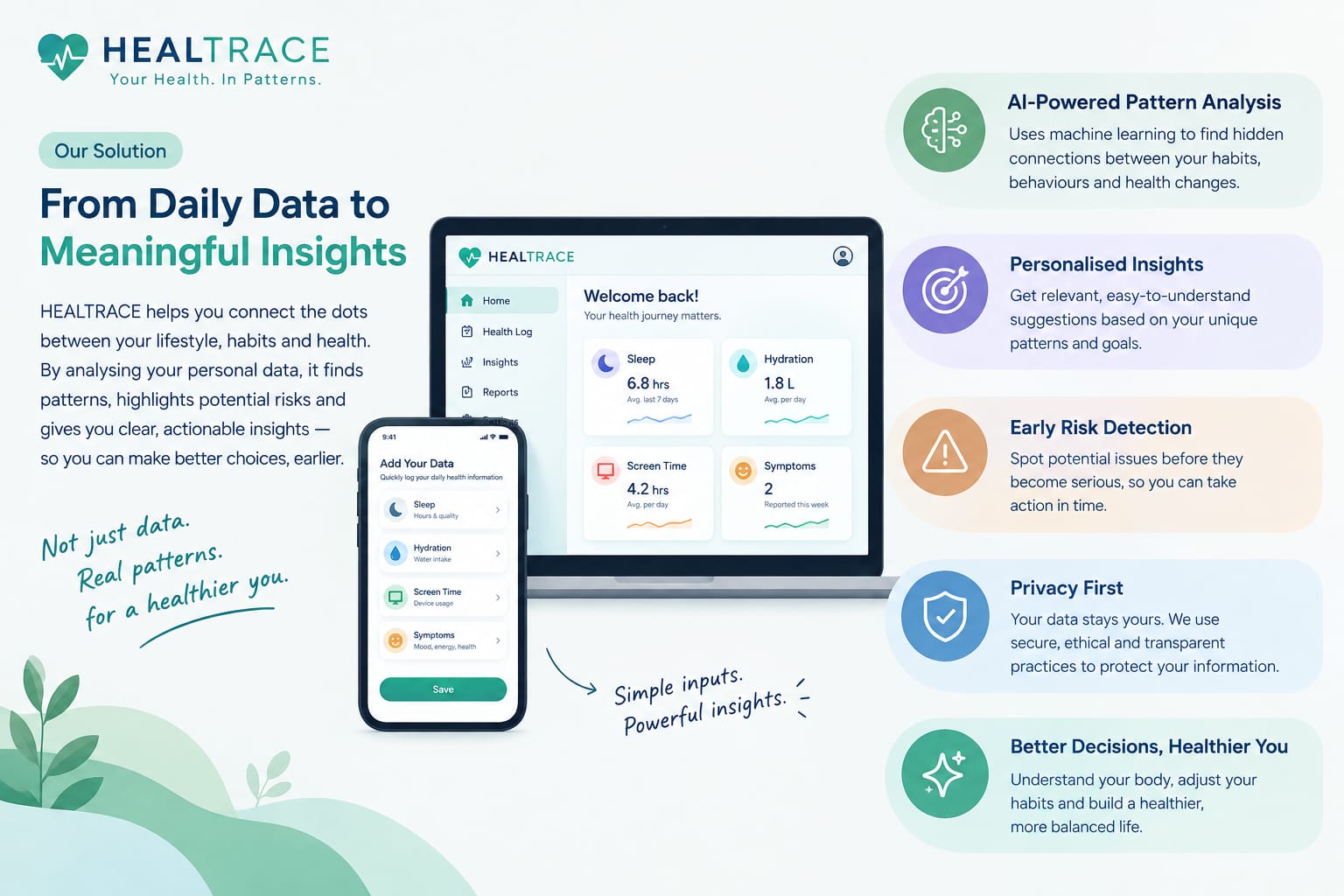
How we built our project— HEALTRACE is a system for spotting personal health patterns. It collects health and lifestyle data people choose to log—sleep, meals, hydration, activity, screen time, environmental conditions, and symptoms—and lines it up chronologically and uses data analysis and machine learning to find what tends to show up before a symptom hits. The interface then shows those associations on a simple timeline. It doesn't diagnose anything, and it's built to be clear about why it's flagging what it's flagging.
Challenges we faced— The hardest part was staying useful without overstepping—HEALTRACE needed to surface associations without ever sounding like it was diagnosing something or claiming causation. Beyond that, we had to deal with messy, incomplete user data, figure out which factors actually mattered, build a visualization people could actually read, and handle personal health information carefully. Working through all of that is what turned HEALTRACE from an idea into something more practical and responsible.
Built With
- ai
- analytics
- datascience
- healthcare
- healthtech
- machine-learning
- prevention


Log in or sign up for Devpost to join the conversation.