-
Healthy Habits™ Logo
-
Google Places API
-
Homepage
-
FitnessPage
-
MySQL
Inspiration
Our inspiration comes partially from Drive Safe and Save™, as well as encouraging people to be more active and live healthier lifestyles. The general concept of Healthy Habits is intuitive to help extend life expectancy and at the same time increase quality of life. This way, the general public can care more about their daily fitness while also saving money on their StateFarm life insurance.
What it does
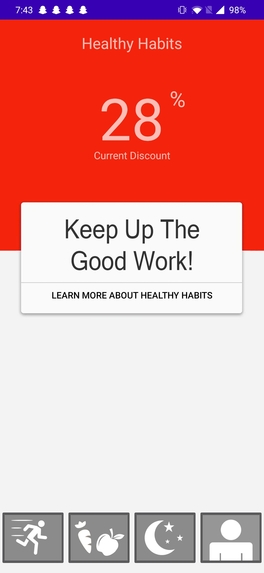
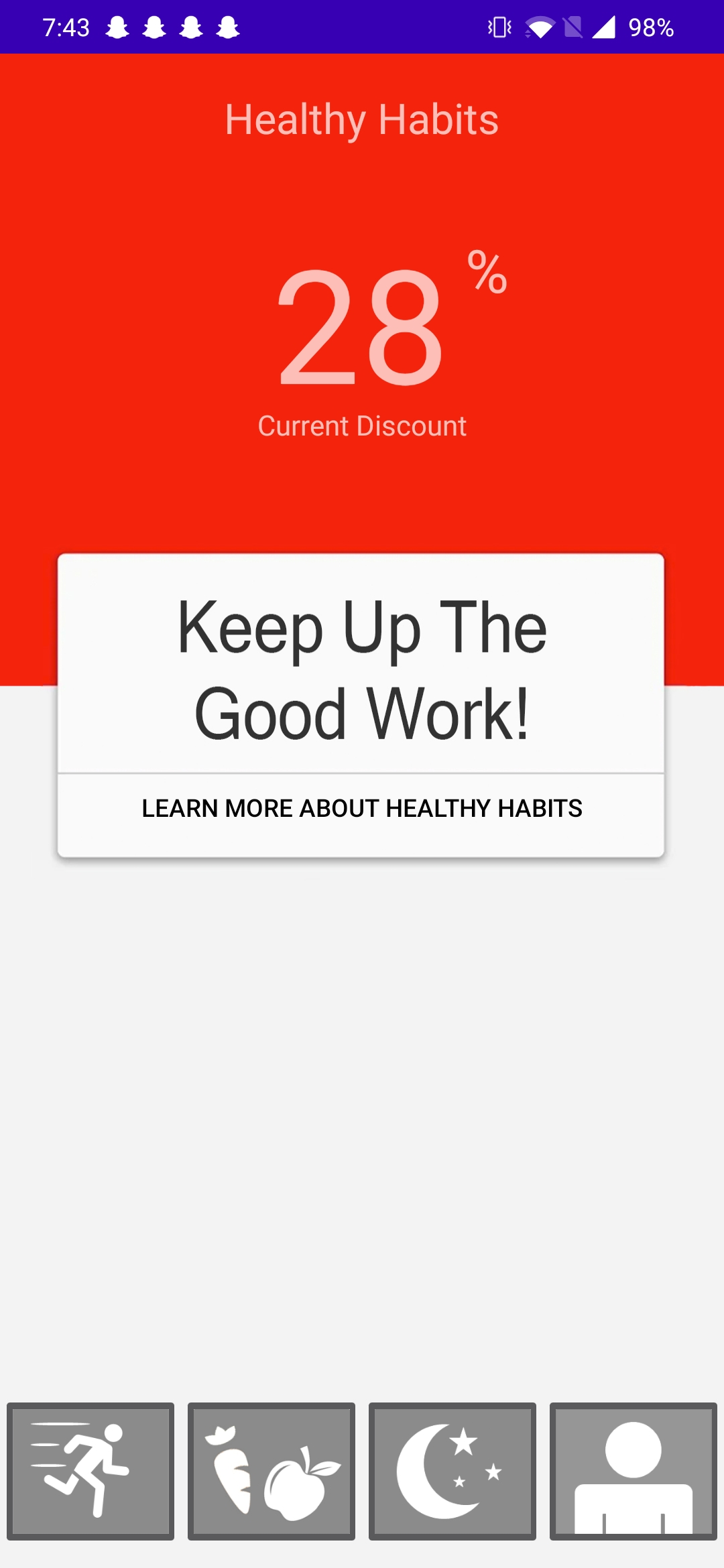
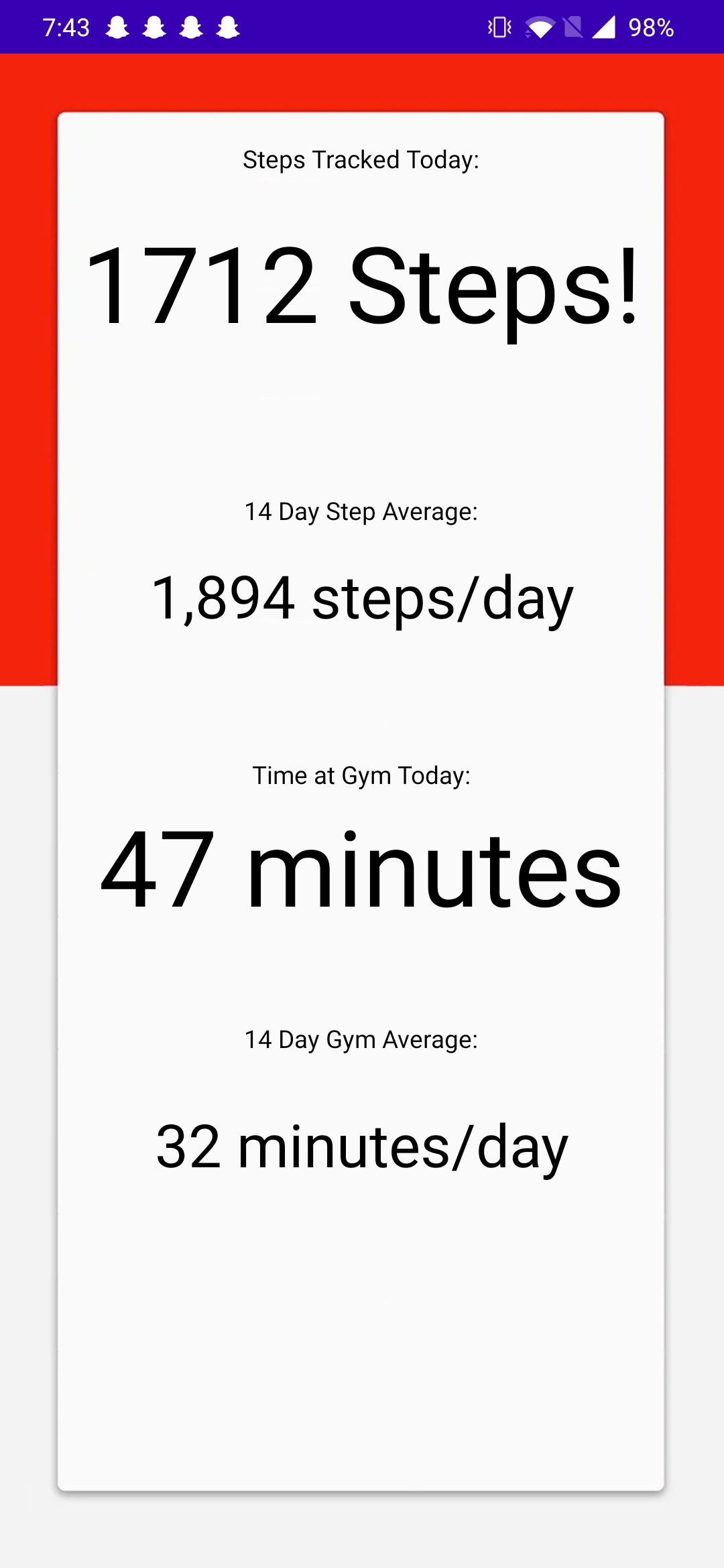
We created a sibling app to Drive Safe and Save™, StateFarm's current telematics app that track users driving behavior to saves them money. Our app, Healthy Habits, does a similar range of tracking user voluntary data to help them save money on life insurance. We track a number of quantitative factors known to decrease a person's risk of death, including average daily step count, time spent in a gym, nutrition value of food, and a consistent sleep schedule. We run these factors through an algorithm that determines approximately how healthy the individual's lifestyle is and how much it could decrease their rates. The theme of the app is, if the user provides us with their data, we can provide them with discounts. This way, the information collected (location, step counter, medical history) has an incentive to be honest with the insurance provider.
How we built it
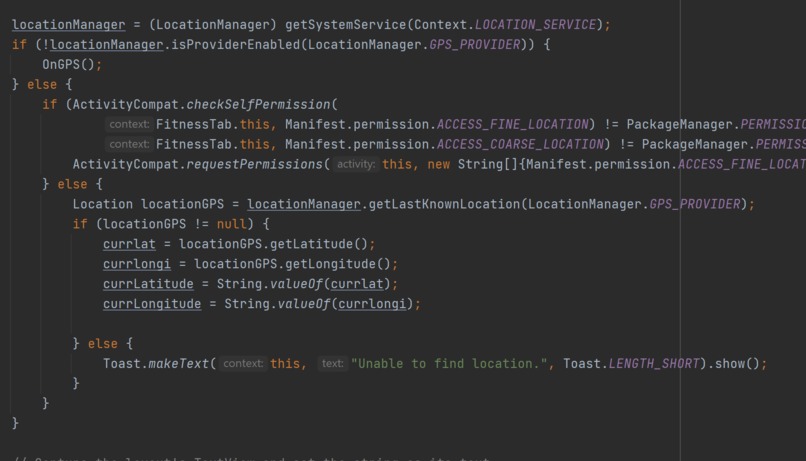
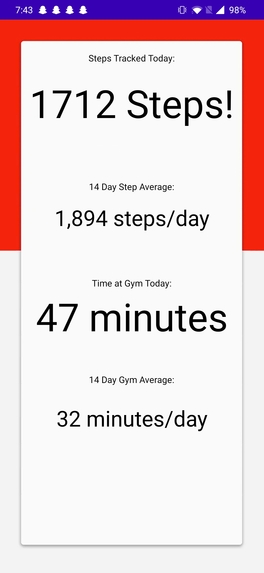
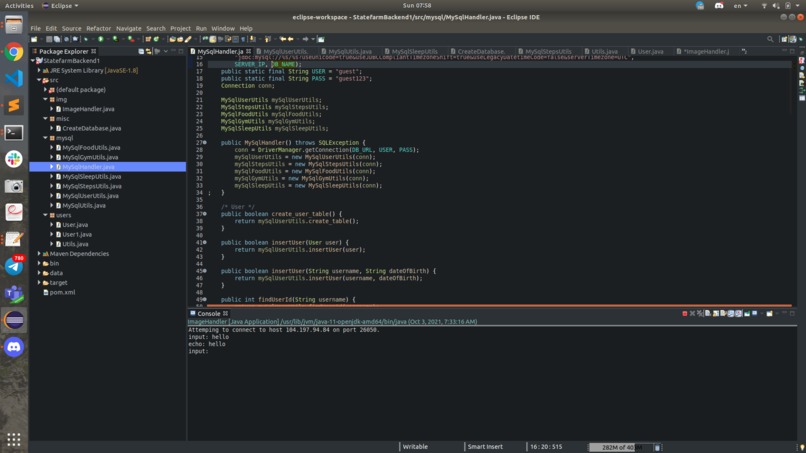
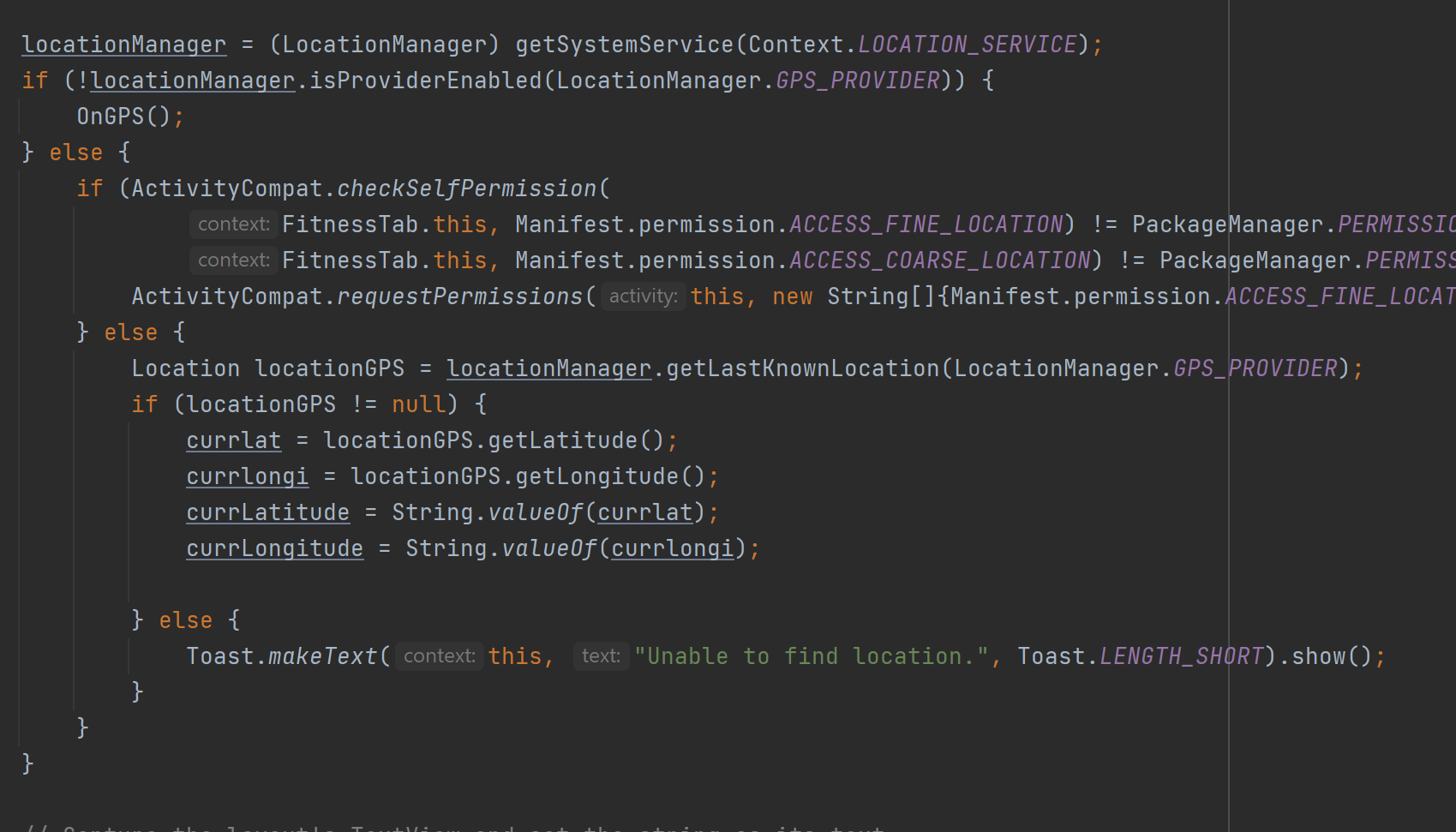
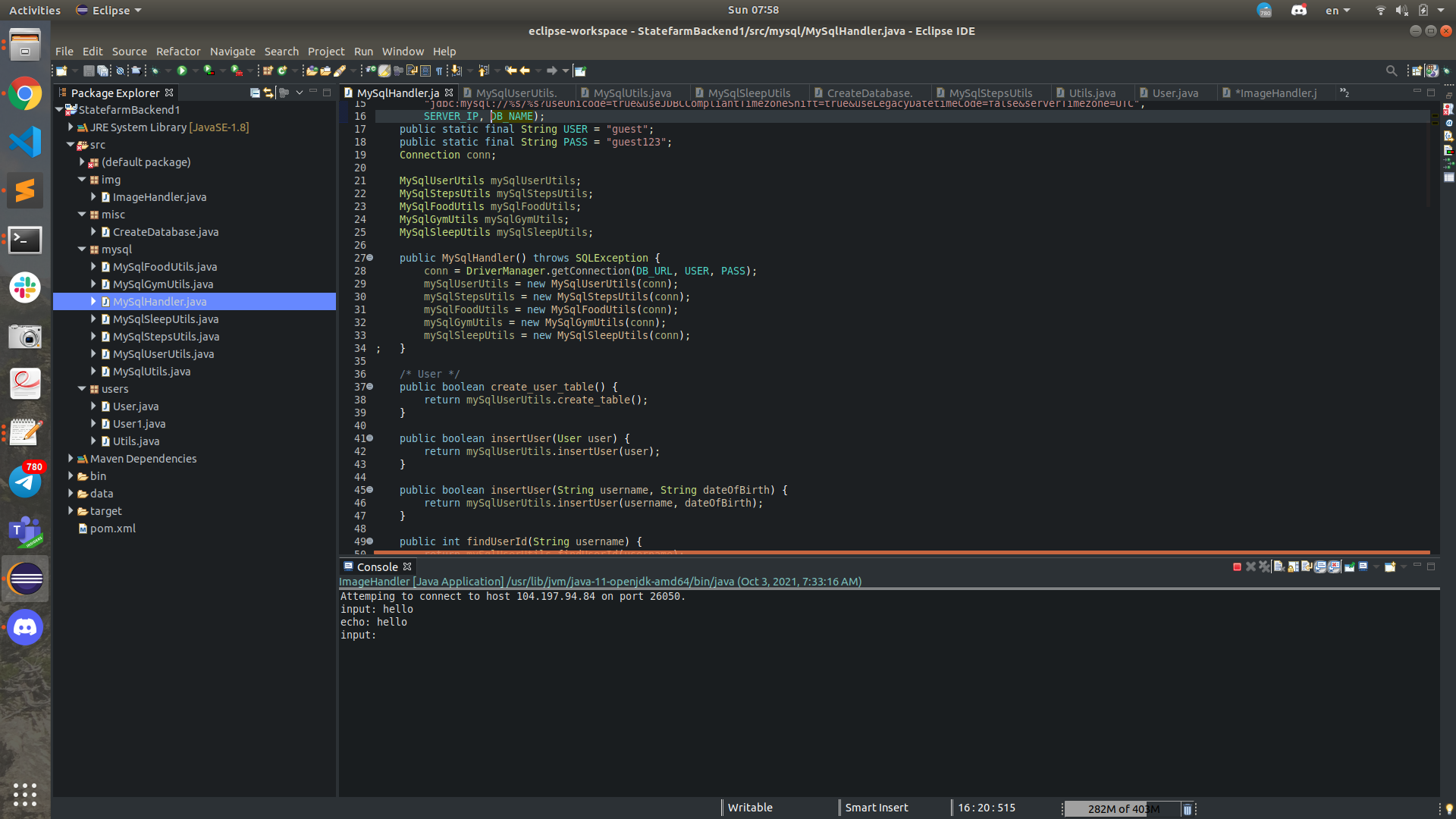
Healthy Habits is built entirely on android studio from scratch, and our demo machines run Android 10 and 11. Figma allowed for our initial creative UI/UX prototyping, and finalized pages were fleshed out with functionality by different team members on Android Studio. The fitness tab includes a pedometer step tracker as well as a location comparator via Google Places API to determine if you are close by or inside of a gym. The food tab has a camera module that allows users to take pictures of their food, Google's TensorFlow lite uses object classification to identify the food, and if it is healthy positively assess their overall well-being. The sleep tab tracks phone inactiveness to determine if the user is asleep. This determines their nightly sleep time, which, if is between 6-8 hours a day, can help their health score. We built a MySQL database that contains unique users as well as their daily tracked values of sleep amounts, gym amounts, step counters, and stores the photos of the food they upload.
Challenges we ran into
This was the first time anyone in our team has used Android Studio, our first choice was React Native, but toggling between IOS and Android virtual devices leads to issues when using React Native. We wanted to make our product scalable, so switching over to Android Studio for solely Android support in the short term allows us to efficiently scale the application as user demand increases. Adapting to Android Studio's nuances and how to use it were a struggle for us. We had some troubles improving the overall application aesthetic, without sacrificing function. We believe this is due to the clunky design of Android Studio when compared against React Native. Another major challenge was the climate conditions of the venue, our team, and likely many others suffered from the intense cold. During the later hours, the combination of both our body temperature naturally dropping and the extremely low ambient temperature made operating very difficult (About 50F, confirmed by a FLIR thermal camera).
Accomplishments that we're proud of
We are proud of learning how to use Android Studio to build a functional app. Our application of Android Studios development software allowed us to create an appealing application while providing great value to State Farm. We are proud of being able to integrate industry-standard practices, such as Google Places API, Google Sleep API, and the built-in Android pedometer. Finally, we're proud of getting a MySQL database that can contain many customers' individual information and attributes that help us calculate their Healthy Habits Score.
What we learned
We learned how to use Android Studio, as well as how to divvy tasks between a team and help optimize what people are good at. For example, we split into an even 2 on frontend, 3 on backend, which helped us complete the app on time. The teams each worked well with each other as well as collaborated with the other team when it came to the integration steps, which was a success.
What's next for Healthy Habits
If we had more time to improve Healthy Habits, we could improve a lot of functionality and make the app better for the users. Some actionable steps include partnering with gym organizations like Anytime Fitness or Planet Fitness to actually track scans into the gym, connecting with hardware such as Apple Watches or FitBits, retrieving patients medical histories, and possibly syncing with StateFarm's login to further integrate Healthy Habits into the StateFarm ecosystem.
Built With
- android-studio
- figma
- java
- kotlin
- mysql


Log in or sign up for Devpost to join the conversation.