-
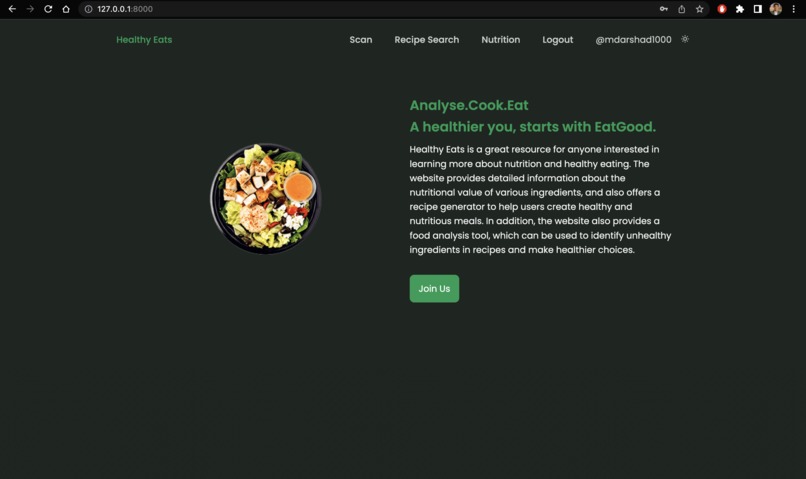
Home Page
-
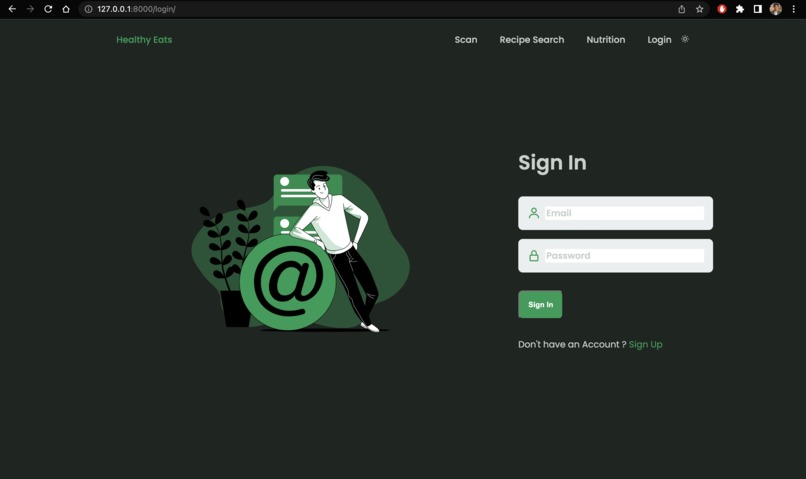
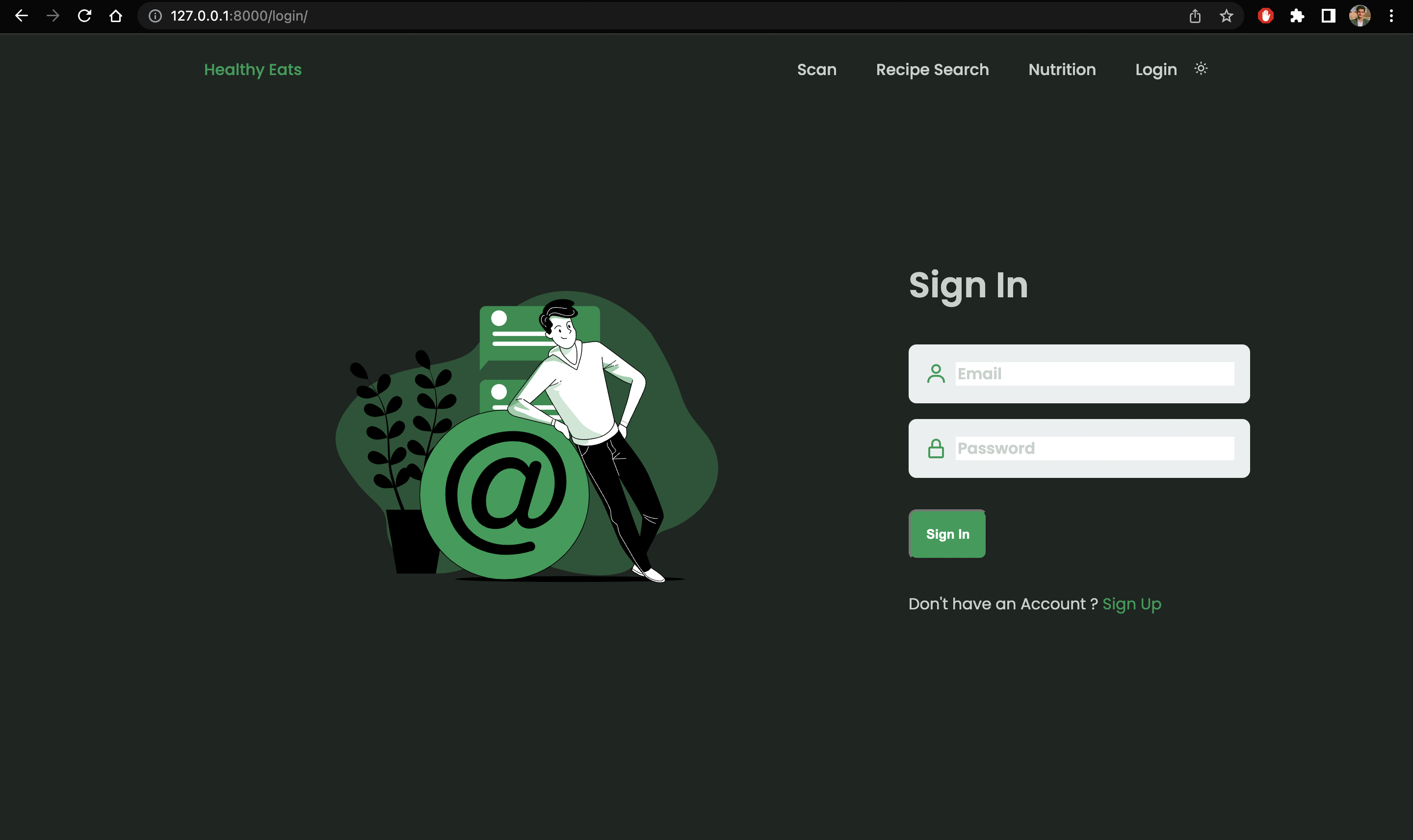
Login Page
-
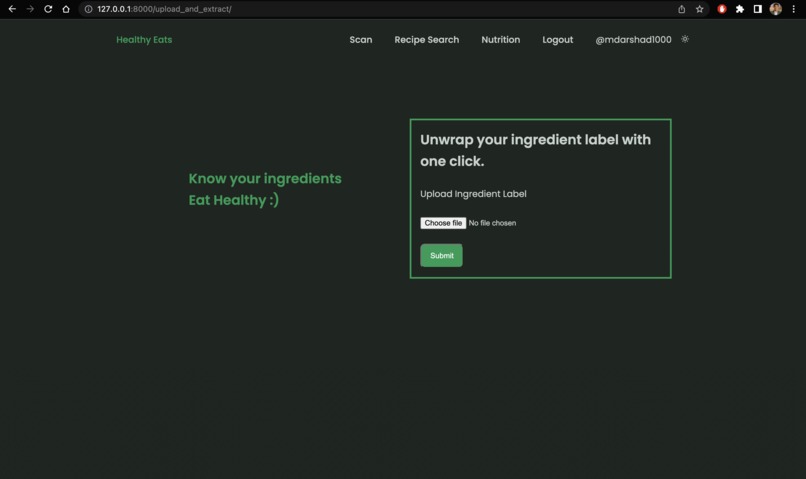
Scan Ingredients
-
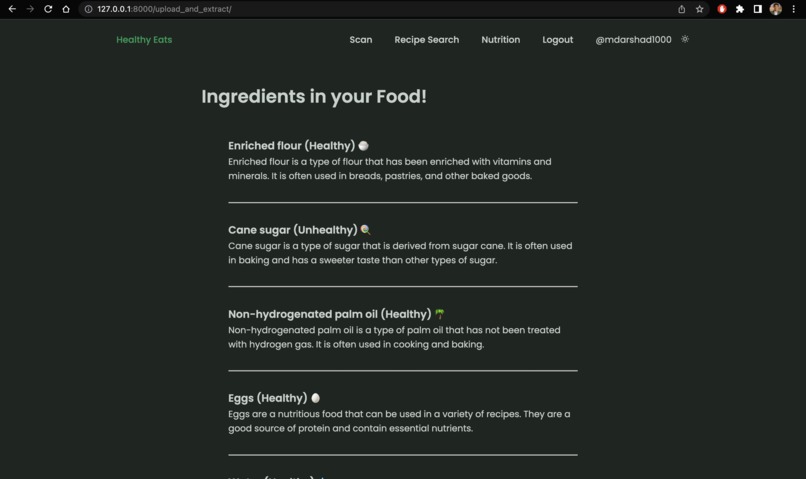
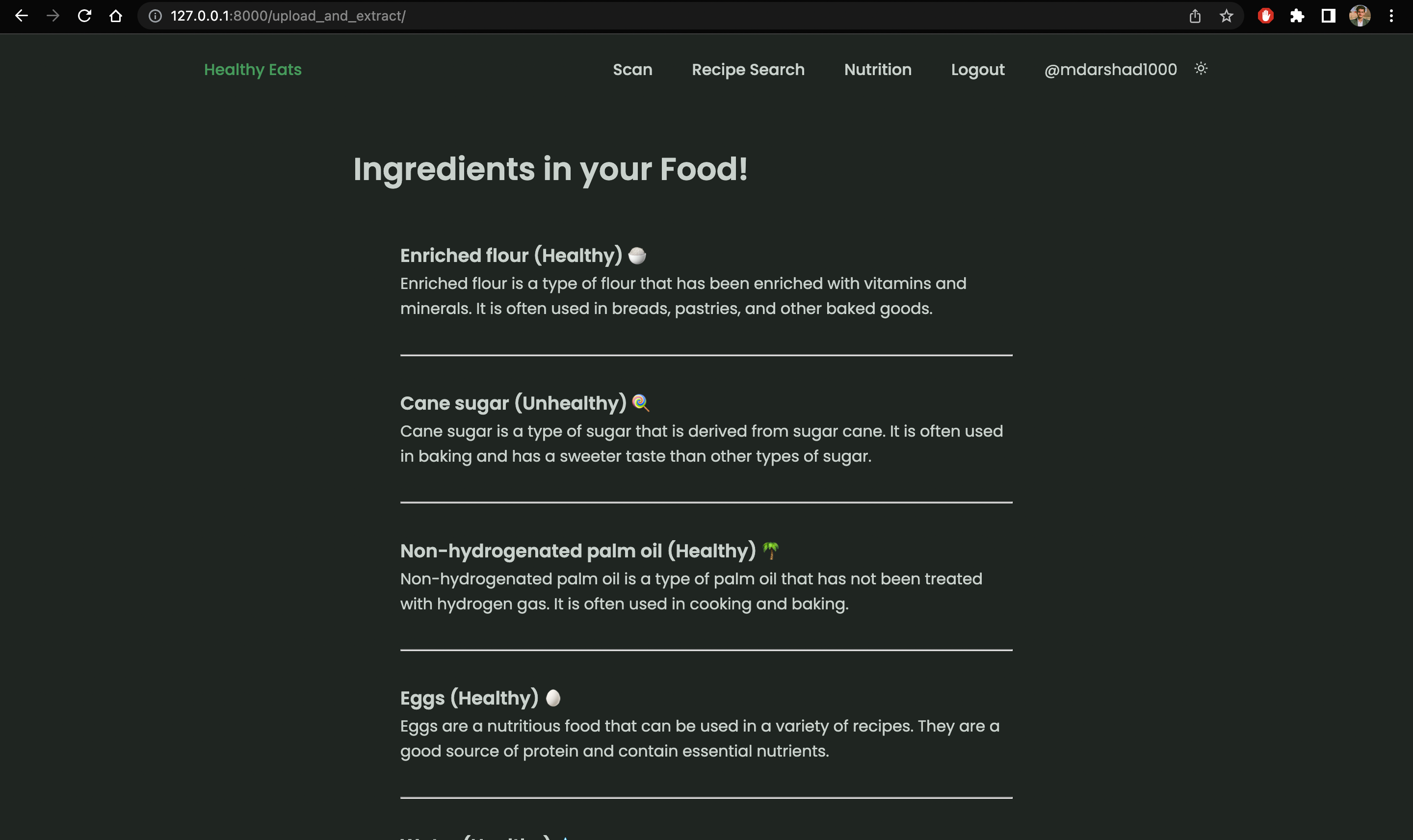
List of Ingredients
-
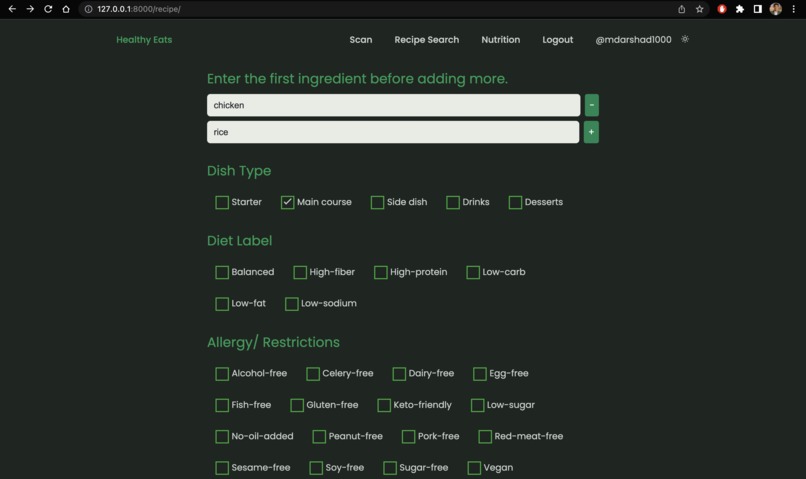
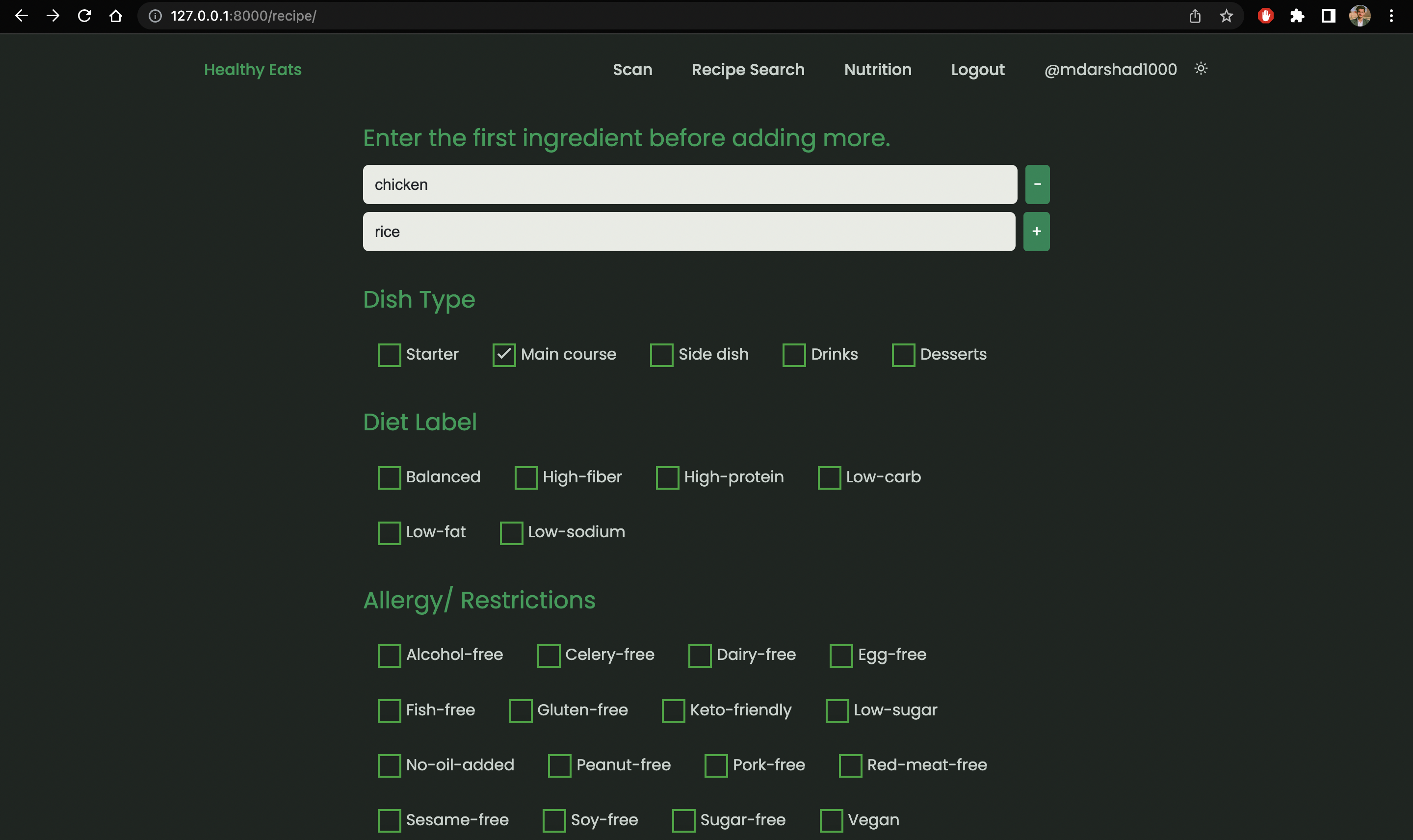
Recipe Search
-
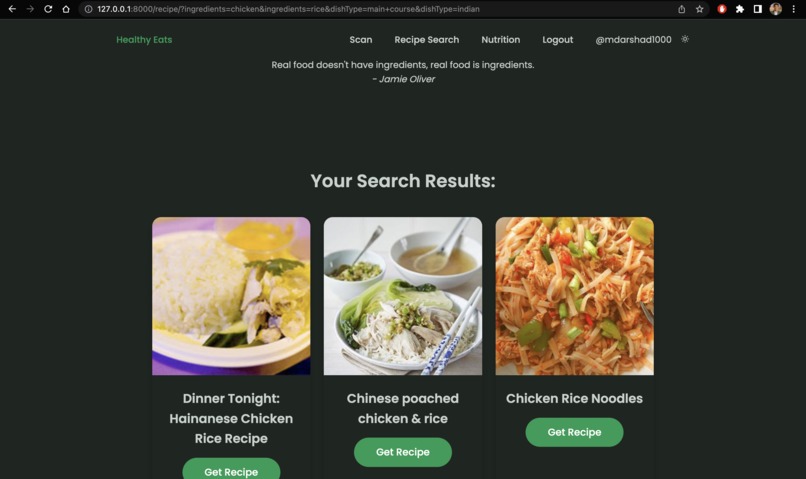
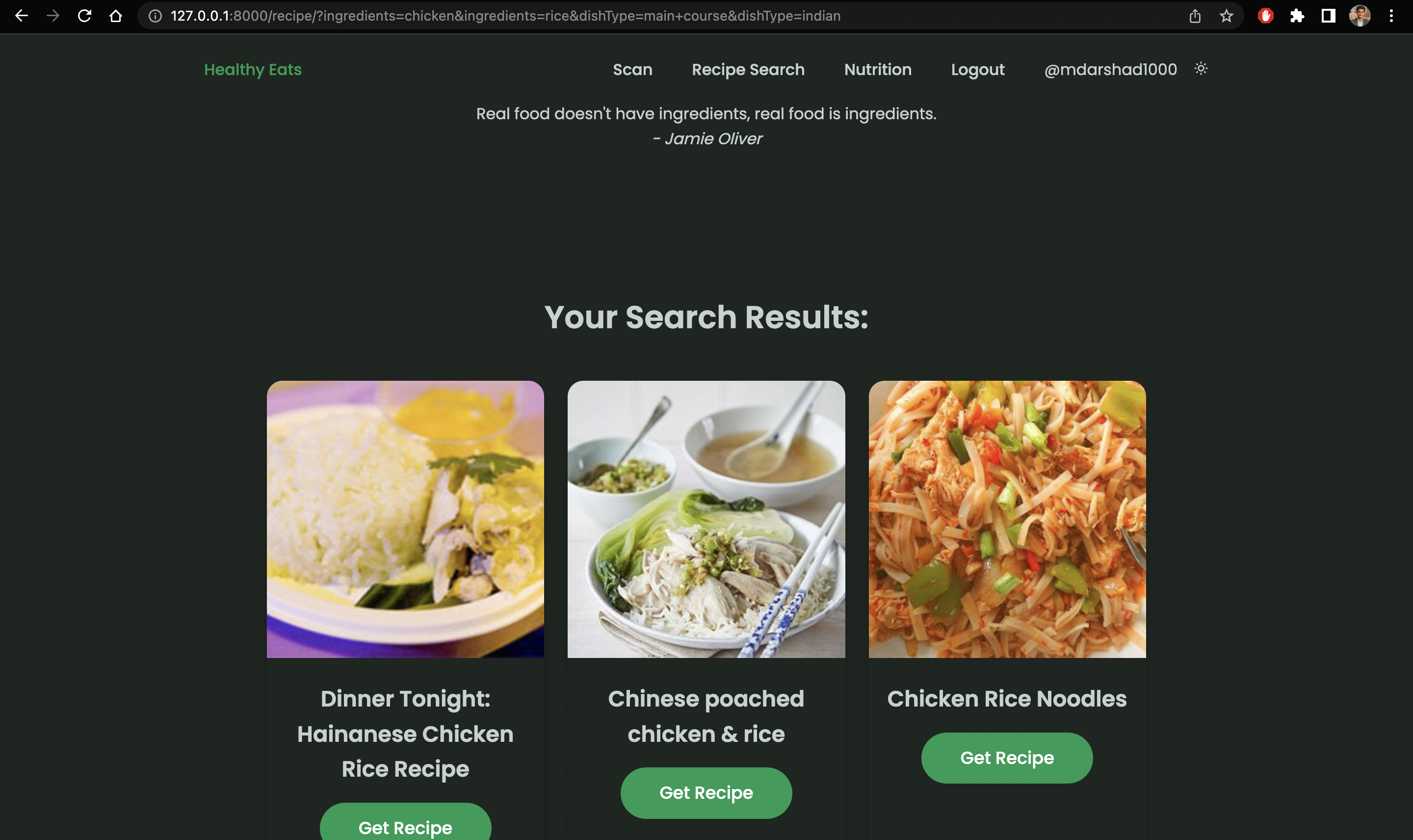
Recipe Result
-
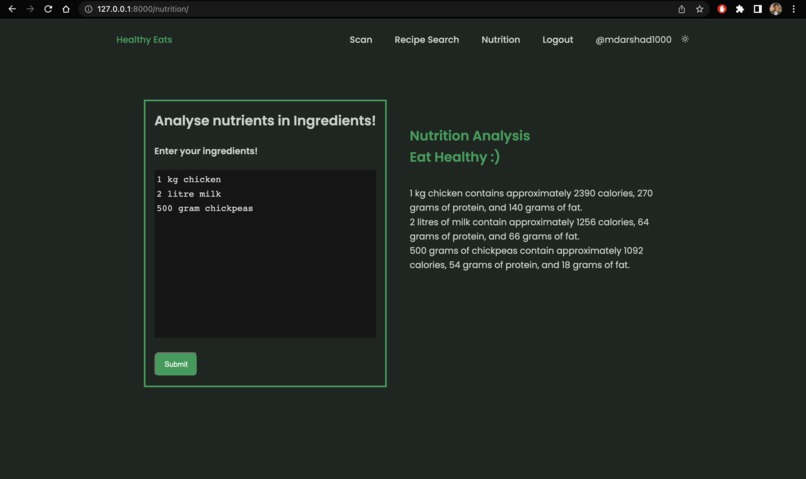
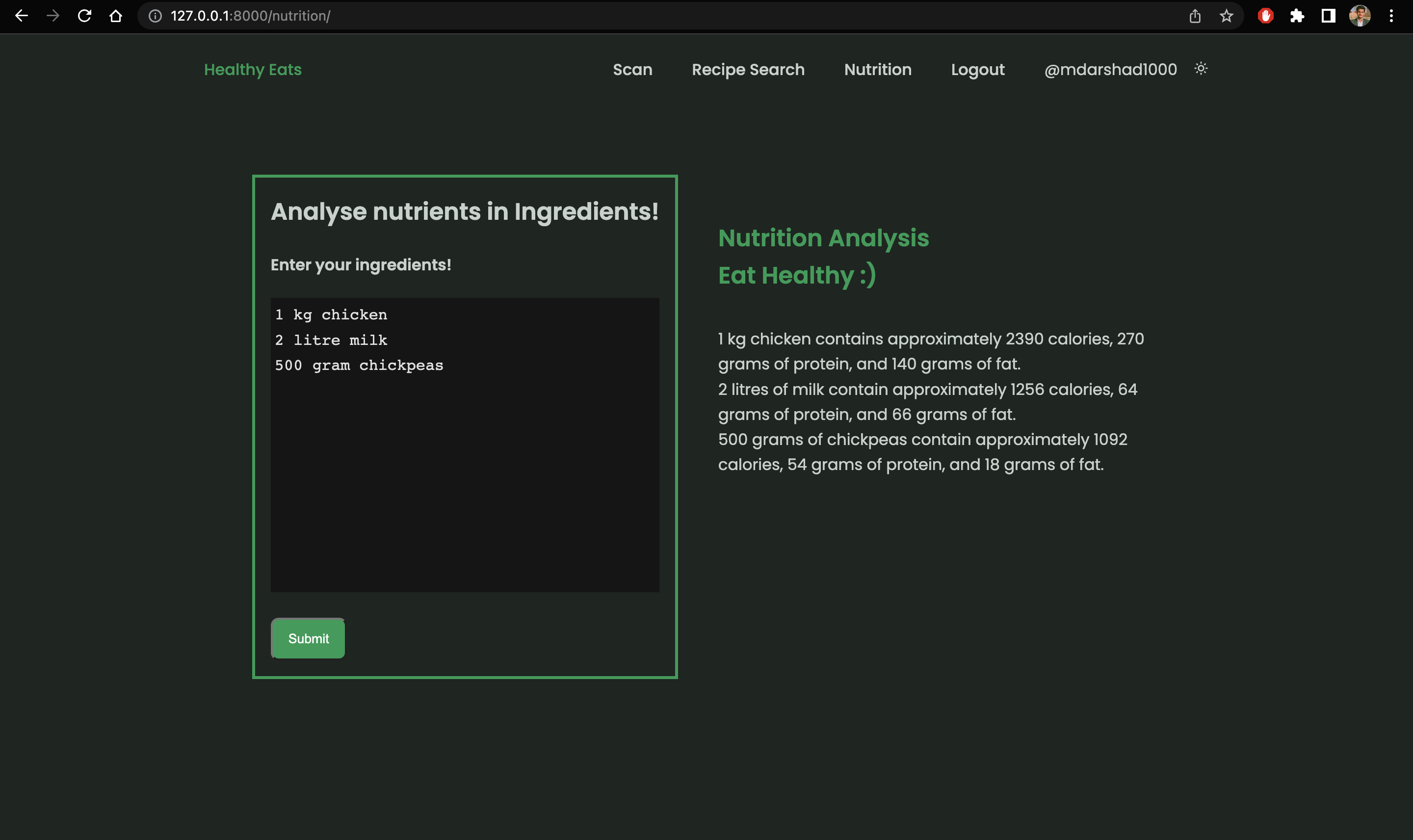
Nutrition Analysis

Inspiration
This app was inspired by the thousands of people that have allergies and diet restrictions and usually, people have little to no information about the food that they are consuming. Also, we haven’t come across a platform where we can find recipes that only include the ingredients we have and simultaneously take care of our diet restrictions and allergies. We have also come across many situations where we don't know the ingredients mentioned on food labels and are curious about whether they are healthy or not. So as to understand our ingredients and food better as well as to provide a place where we can find recipes that perfectly fit our preferences, we developed Healthy Eats
What it does
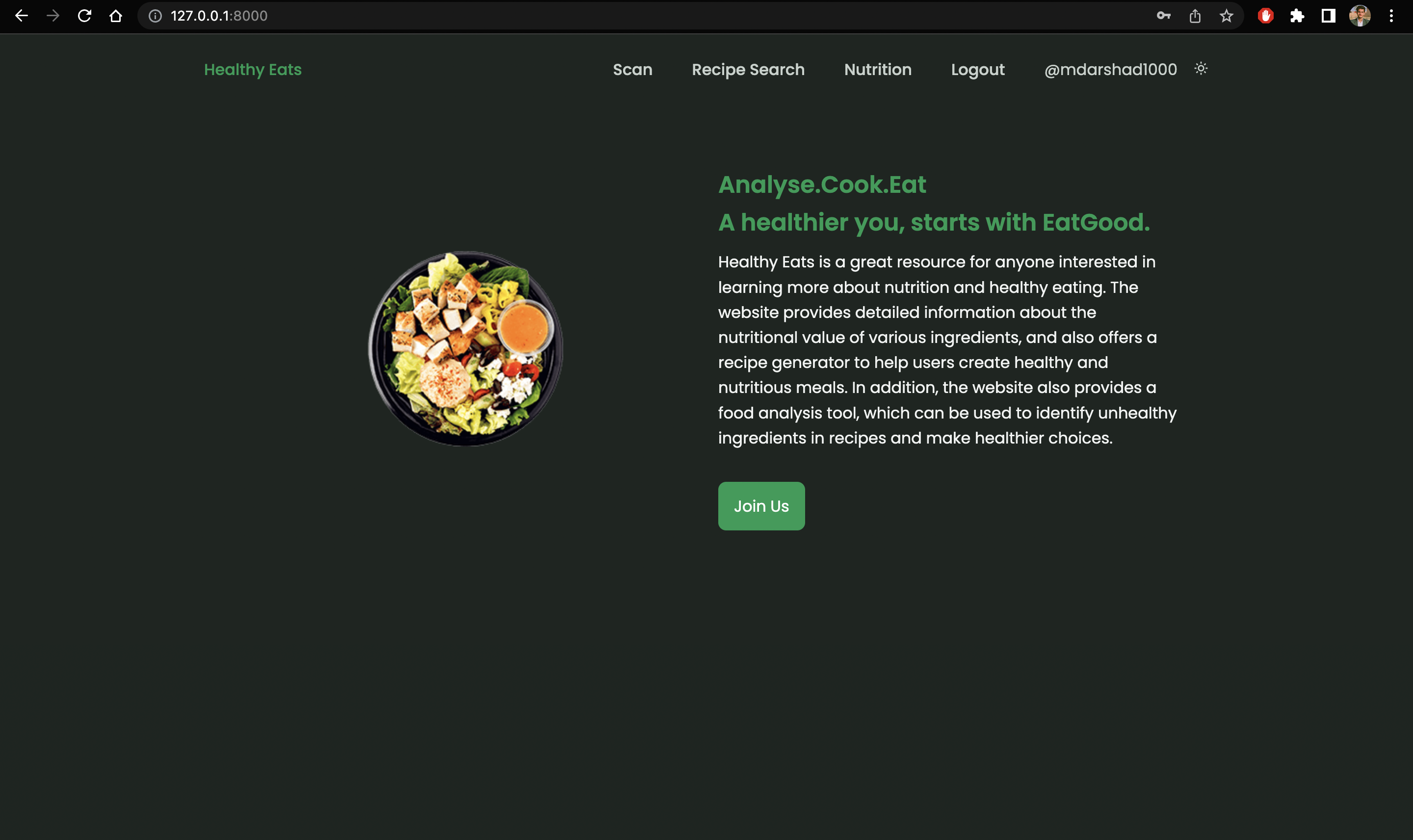
- Healthy Eats is a great resource for anyone interested in learning more about nutrition and healthy eating.
- It allows users to enter their allergies, diets, preferences, and dislikes to generate a recipe that's perfect for them. By using this app, users can stay safe and healthy by finding recipes of their favorite ingredients that accommodate their allergies and diets.
- This web app provides detailed information about the nutritional value of various ingredients.
- In addition, the website also provides a food analysis tool, which can be used to identify unhealthy ingredients in recipes and make healthier choices. It converts pictures of food ingredient labels into researched descriptions about each specific ingredient in an intuitive and readable format.
How we built it
We built this app using HTML, CSS, and Javascript for the front and used Django in the backend and SQLite as the database. We leveraged Open AI's gpt-3 natural language model and fine-tuned it iteratively to develop the various features of our application. We also used Edamam’s API for recipe search.
Challenges we ran into
The most difficult part was to implement the pipeline where we had to extract the text out of the food image label using Pytesseract and pass the text (which had lots of unnecessary data) to the gpt-3 model, and then train the model in order to filter out only the required text(ingredients) and simultaneously categorize the ingredients as Healthy/Unhealthy and assign an emoji as well on the go. We also had to take care that this process doesn't end up taking more time than it would've been feasible.
Also, integrating the gpt-3 model into our web app was daunting, as the model worked fine separately but ran into errors and didn't fetch results when integrated into the web app.
Working with Edamam' API was challenging initially as we couldn't find the suitable endpoints
Accomplishments that we're proud of
Proud to have completed a fully-fledged application in a relatively short duration of time.
What we learned
We learned some new soft skills in time management, and also some technical skills in databases, backend development, and a lot about GPT-3.
What's next for Healthy Eats
Next for Healthy Eats we hope to implement a “Gallery” feature where users around the world can share pictures of the recipes they’ve made using Healthy Eats recipes and inspire others to cook. We also hope to add an “add recipe” feature so users with unique diets and allergies can add their own special recipes and share them. These features will encourage the community of people on Healthy Eats to keep cooking and eating healthy options! We also would like to add a “favorite” section so users can bookmark their favorite recipes.
Built With
- css3
- django
- gpt3
- html5
- javascript
- openai


Log in or sign up for Devpost to join the conversation.