Inspiration
Understanding basic health information can be difficult for people without a technical or medical background. I wanted to create a simple tool that could make health-related information easier to understand while also exploring how data analysis, machine learning, and generative AI can be combined in a healthcare application.
What it does
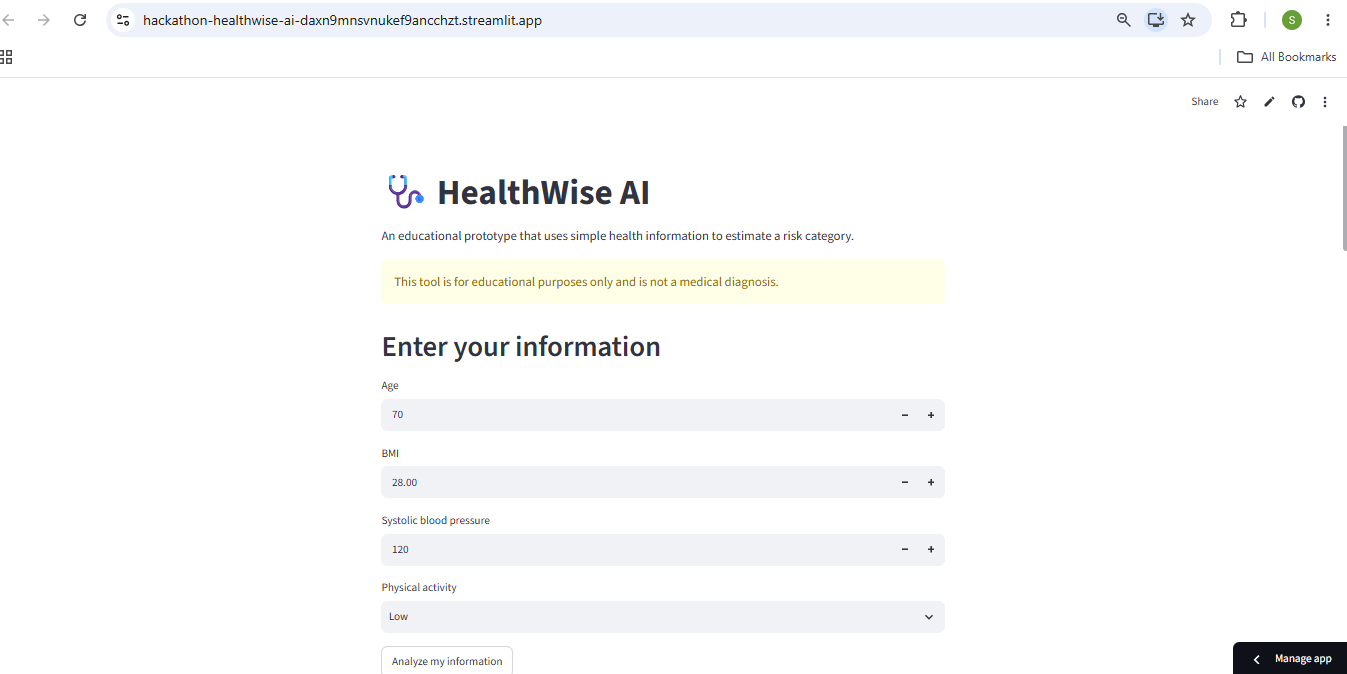
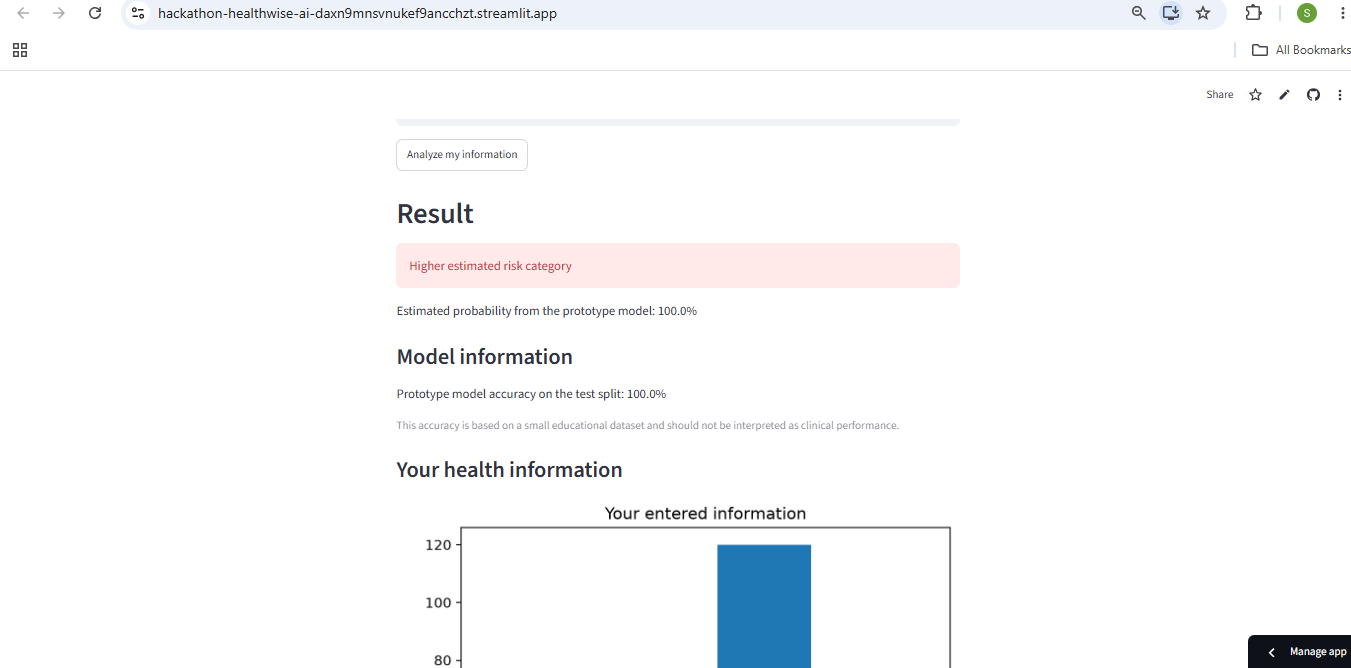
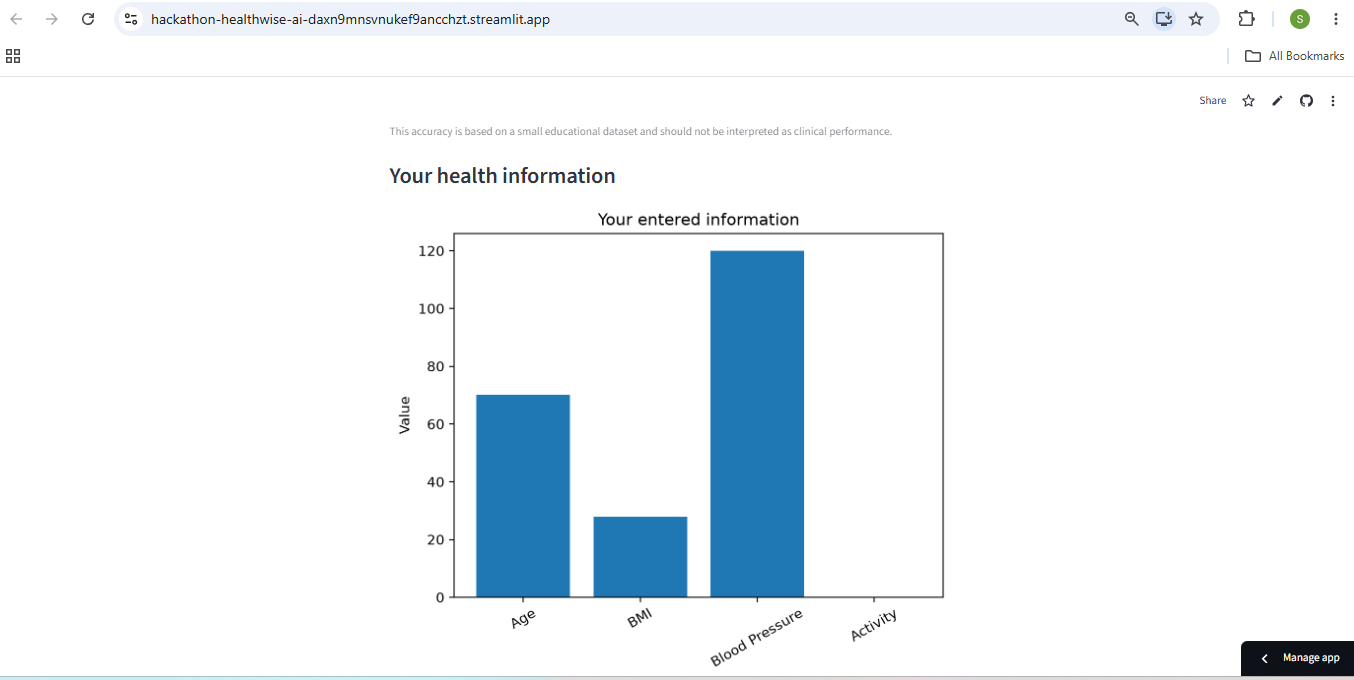
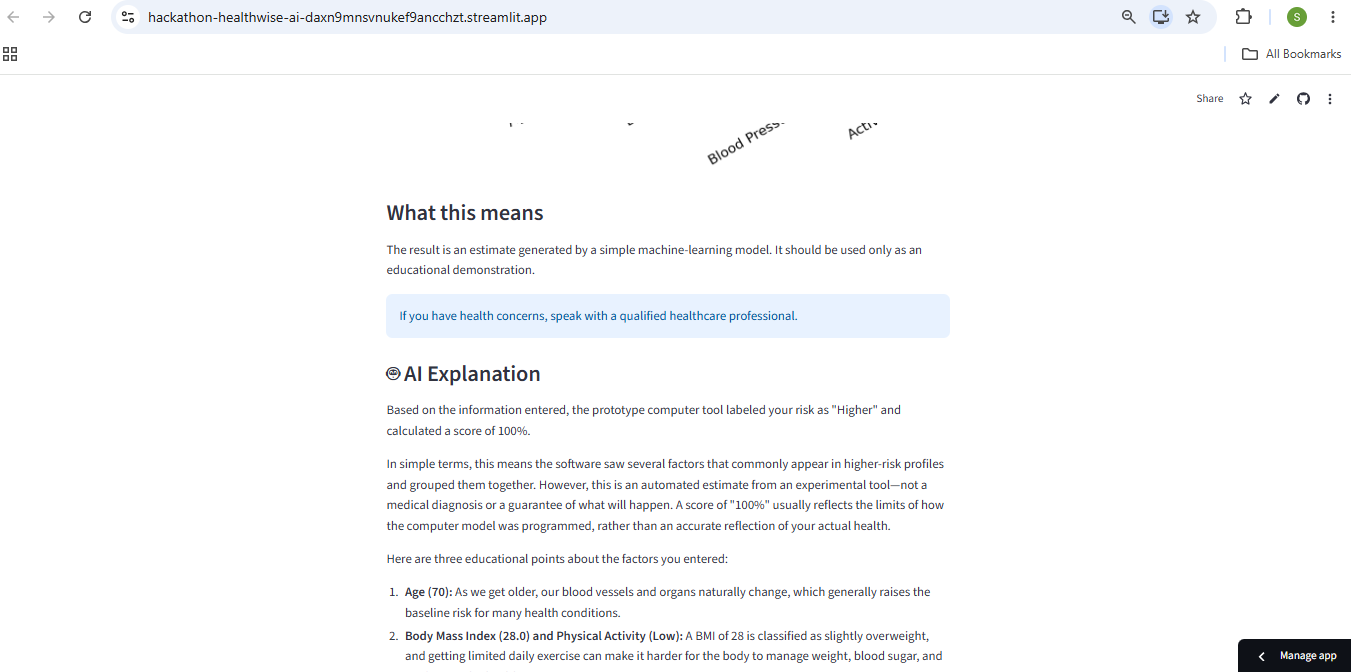
HealthWise AI is an interactive educational prototype that accepts basic health information such as age, BMI, blood pressure, and physical activity level. It uses a simple machine-learning model to produce an estimated risk category, visualizes the entered information, and uses generative AI to explain the result in simple language.
The project is designed for educational purposes and is not intended to provide medical diagnosis or replace professional medical advice.
How we built it
I built HealthWise AI using:
- Python
- Streamlit
- pandas
- scikit-learn
- matplotlib
- Gemini API
Python was used for the main application logic and data processing. pandas was used to work with the dataset, scikit-learn was used for the machine-learning model, and matplotlib was used to visualize the user's information. Streamlit was used to create the interactive web application, while the Gemini API was used to generate simple educational explanations.
Challenges we ran into
One of the main challenges was working with a small dataset while trying to create a meaningful machine-learning demonstration.
I also faced technical difficulties while setting up the Python environment on Windows, including DLL-related errors and package installation problems. Resolving these issues helped me understand more about Python environments, dependencies, and troubleshooting.
Another challenge was integrating the Gemini API while keeping the API key secure and making sure the application could still work when the key was not configured.
Accomplishments that we're proud of
I am proud that I was able to turn a simple healthcare idea into a working interactive prototype as a solo participant.
The project combines several technologies into one application rather than using AI as a standalone feature. It includes data processing, machine learning, visualization, and generative AI in a single workflow.
I am also proud of overcoming the technical setup and dependency issues I encountered during development and successfully getting the application running and deployed.
What we learned
Through this project, I learned how different parts of a data and AI application work together.
I gained practical experience with Streamlit and learned how to turn Python code into an interactive web application. I also learned the basic workflow of training and evaluating a machine-learning model using scikit-learn.
Working with the Gemini API helped me understand how generative AI can be integrated into an existing application rather than building an AI model from scratch.
Most importantly, I learned that building a project involves a lot of debugging and problem-solving, especially when working with unfamiliar tools and technologies.
What's next for HealthWise AI
The next step would be to improve the project by using a larger and properly sourced healthcare dataset and evaluating the model more thoroughly.
I would also like to improve the user interface, add more meaningful visualizations, and make the AI explanations more personalized while keeping them educational and safe.
In the future, the project could also explore additional health factors and more robust machine-learning approaches, while ensuring that any healthcare-related predictions are properly validated before being used for real-world applications.
Built With
- api
- gemini
- matplotlib
- pandas
- python
- scikit-learn
- streamlit

Log in or sign up for Devpost to join the conversation.