About This Project
What Inspired Us
Dress for Success does extraordinary work. But when we looked closer at how they operate day-to-day, we saw something that stopped us: the people dedicated to empowering others were being held back by spreadsheets.
Volunteer rosters in one file. Referral intake in another. Enquiries scattered across inboxes. Every hour spent reconciling these systems was an hour not spent on the women they serve.
That felt wrong — and fixable.
What We Built
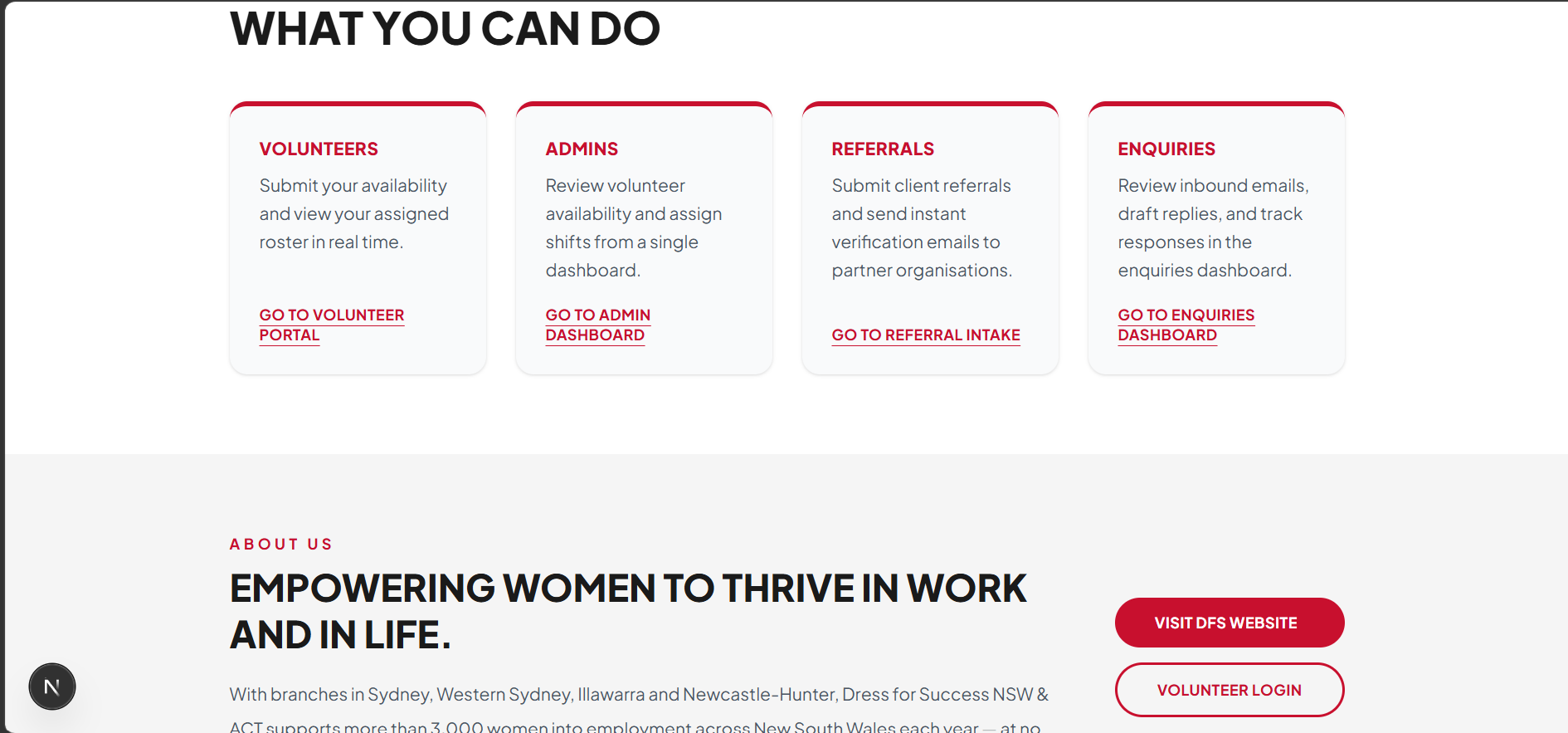
We built a single, simple platform that brings it all together:
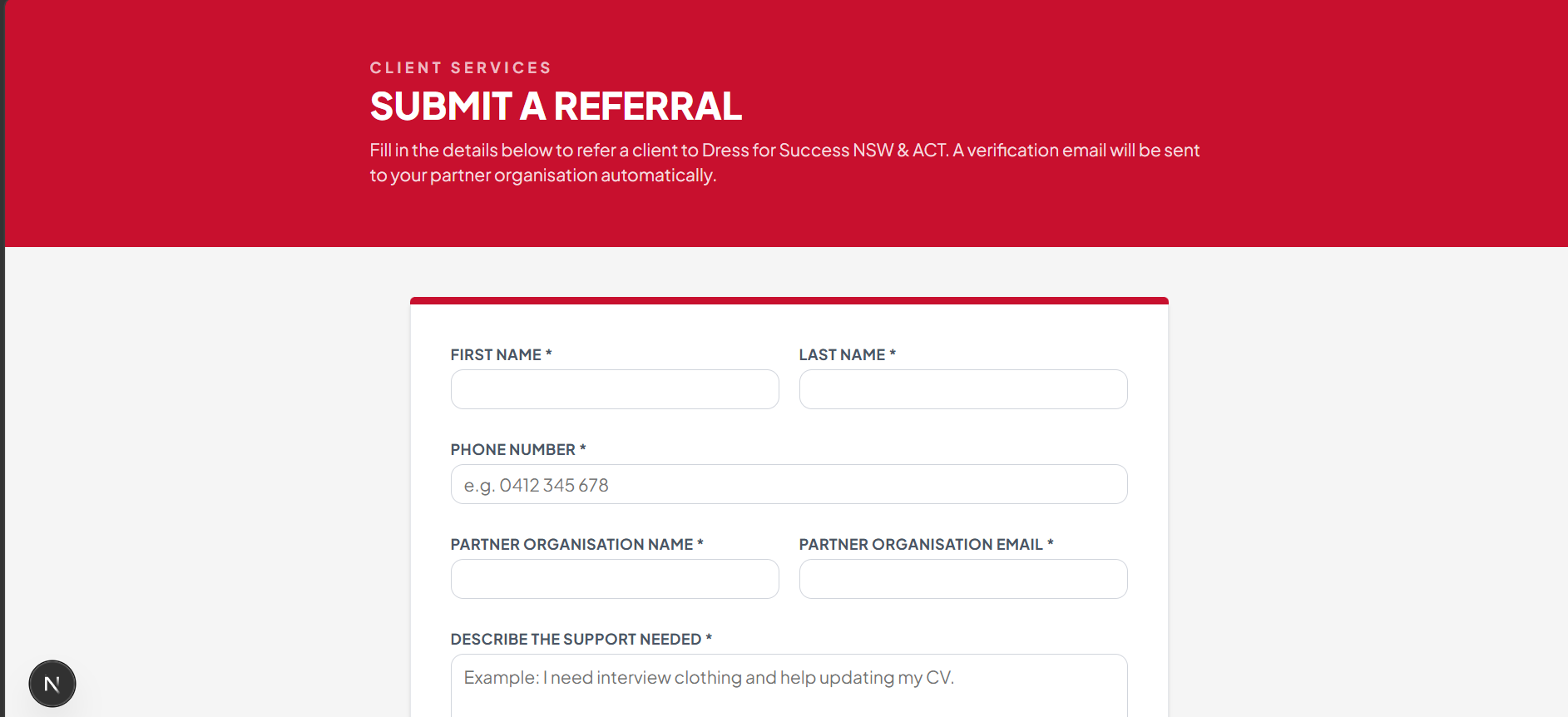
- Referral management — Structured intake forms with real-time status tracking, so no referral falls through the cracks
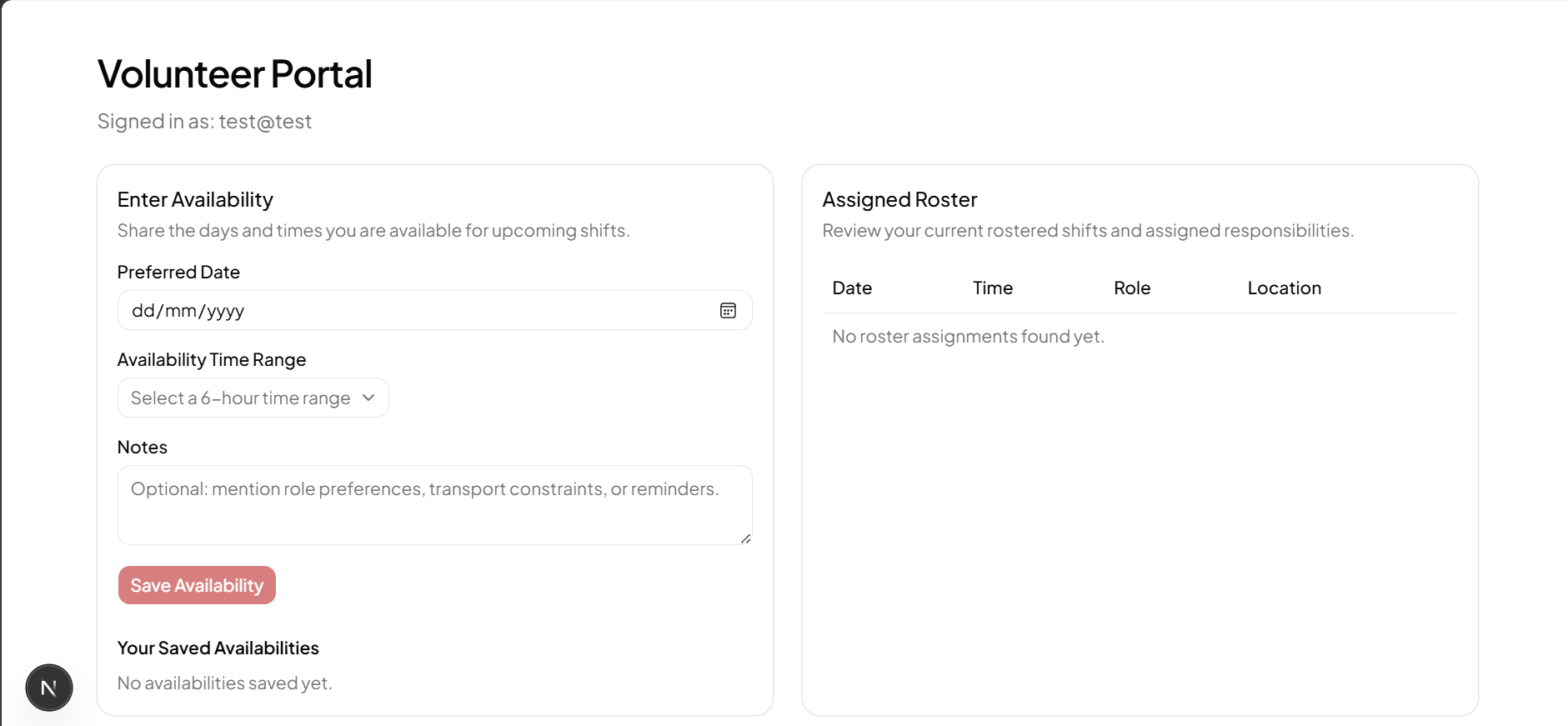
- Volunteer coordination — Clear visibility into who's available, assigned, and needed
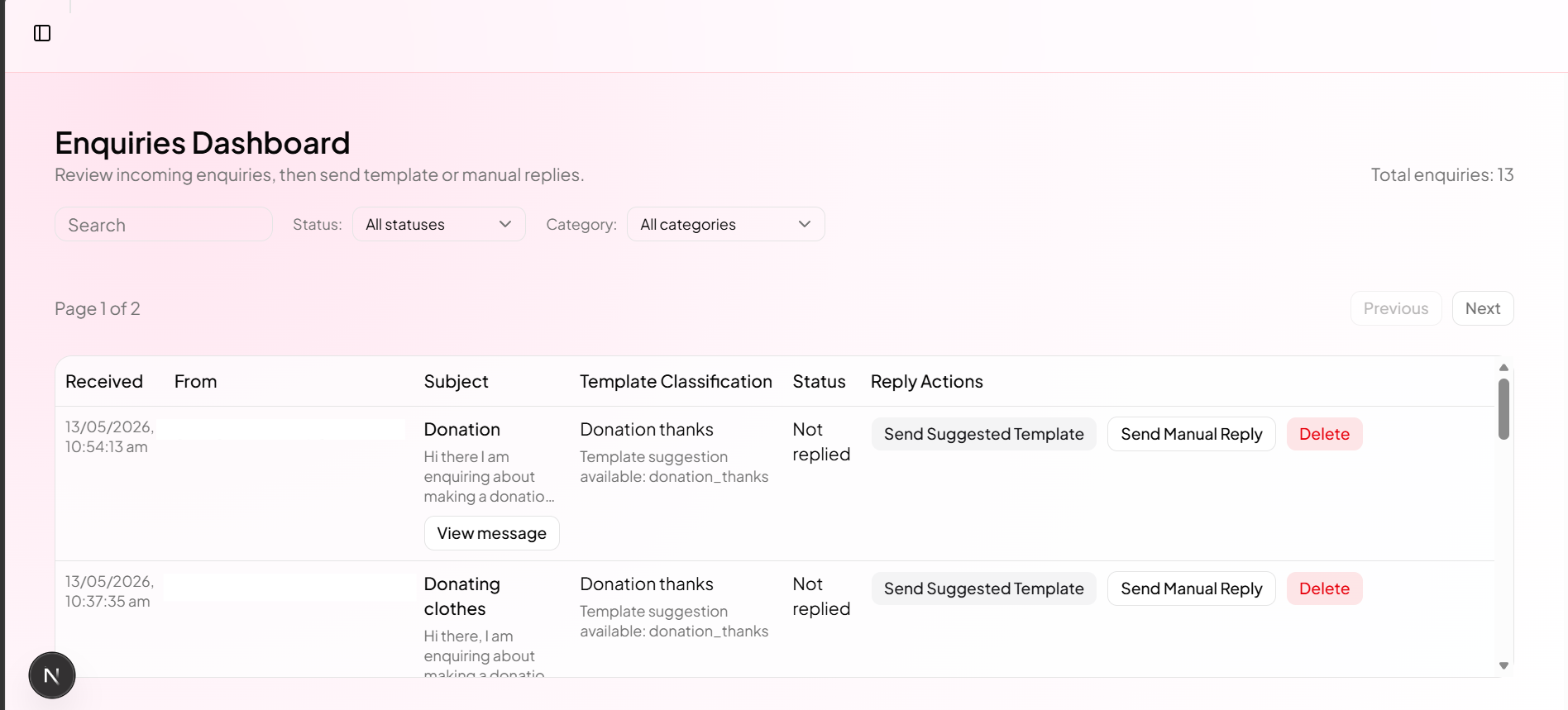
- Enquiry handling — One shared inbox, no more chasing threads
- Admin dashboard — A calm, unified view of everything happening across the organisation
The goal wasn't to build something impressive. It was to build something useful — something a busy staff member could open on a Monday morning and actually trust.
How We Built It
This was a genuinely cross-functional team effort. Developers, business thinkers, and AI-assisted development — primarily GitHub Copilot — working in close collaboration throughout.
Our stack was chosen deliberately for longevity and maintainability, not just speed:
- Next.js with the App Router — fast, scalable, and production-ready
- React with server components — performant without complexity
- TypeScript — catches problems before they become bugs
- Tailwind CSS + shadcn/ui — consistent, accessible design out of the box
- Supabase — a backend that scales without needing a dedicated DevOps team
Copilot helped us move faster — scaffolding components, generating queries, surfacing edge cases — but every line shipped was reviewed, understood, and owned by the team.
What We Learned
AI amplifies good teams. Copilot wasn't a shortcut — it was a collaborator. The best results came when we brought clear thinking to it: specific prompts, critical review, and genuine understanding of what we were building and why.
Real constraints clarify priorities. A hackathon forces honesty. We cut anything that wasn't directly relieving a pain point for staff or improving the experience for the women Dress for Success serves. That discipline made the product better.
The best features came from listening. The workflows we built weren't invented — they were drawn from understanding how the organisation actually operates. Technology should follow people, not the other way around.
Challenges We Faced
Time. Hackathons are humbling. We made hard calls on scope early and stuck to them, which meant some ideas stayed on the whiteboard — but what we shipped works.
Building with AI responsibly. Not everyone on the team had deep experience with AI-assisted development. We learned quickly that the discipline matters as much as the tool: review everything, understand what you're shipping, and never treat a suggestion as a solution until you've interrogated it.
What Could Come Next
This is a prototype — but it's a prototype built on a real foundation, for a real problem. With further development:
- Live authentication and role-based access for staff and volunteers
- Automated email updates for referral status changes
- Reporting and insights to help leadership make informed decisions
- Mobile-first design for coordinators working on the go
A Final Word
We didn't come into this weekend wanting to build an app. We came in wanting to give Dress for Success back something they're losing every week to admin overhead: time.
Time to make more referrals. Time to support more volunteers. Time to focus on the women walking through their doors who need them.
If this platform can do even a fraction of that — it was worth building.
Built With
- expo.io
- gemini
- nextjs
- react
- supabase
- tailwind
- vercel
- visual-studio

Log in or sign up for Devpost to join the conversation.