-
-
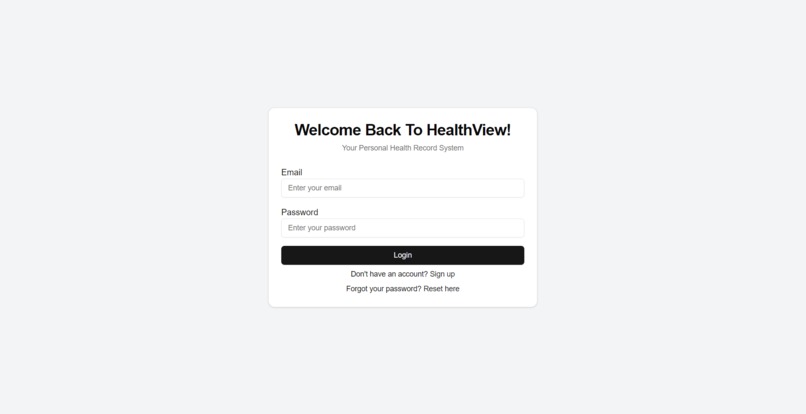
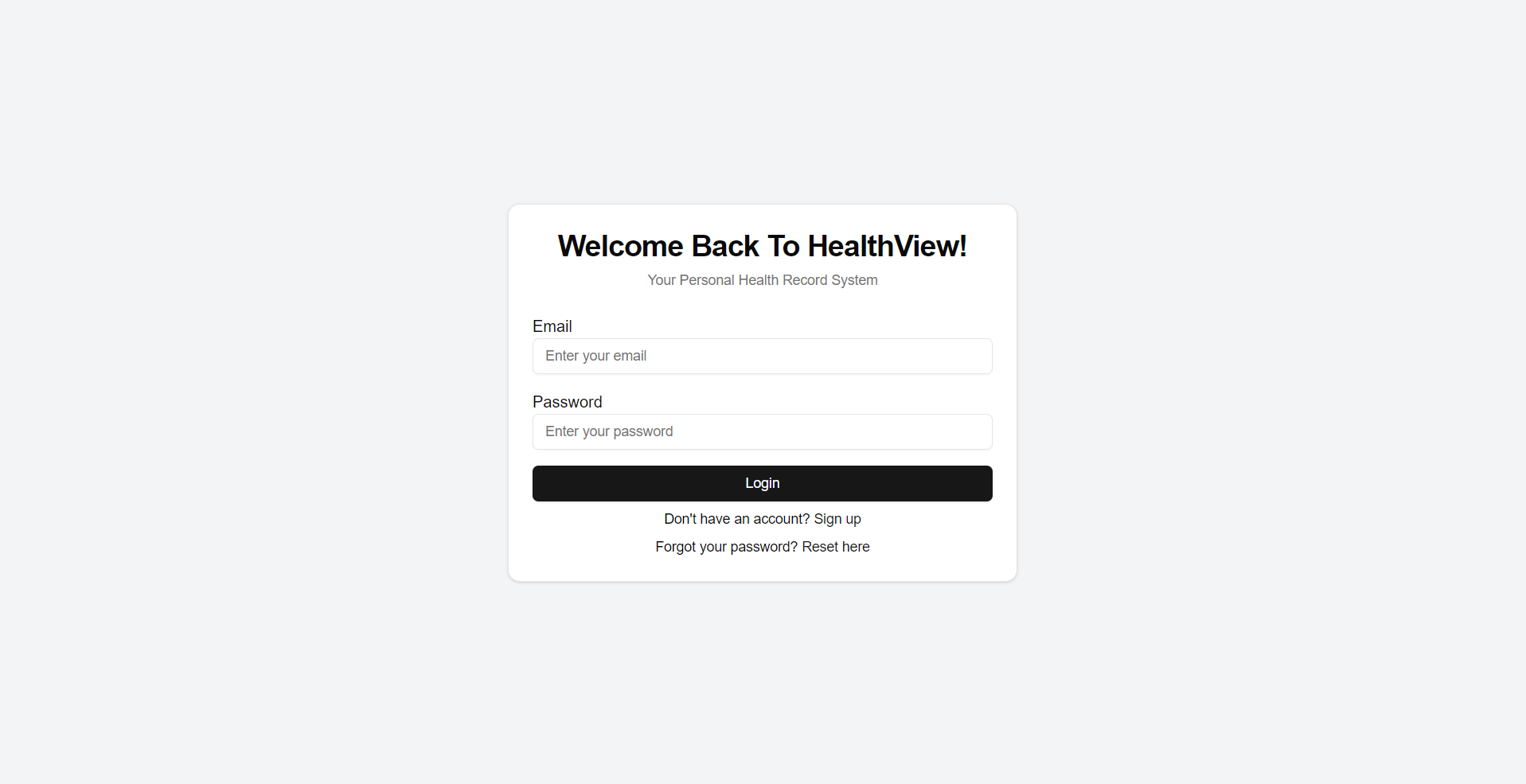
Login
-
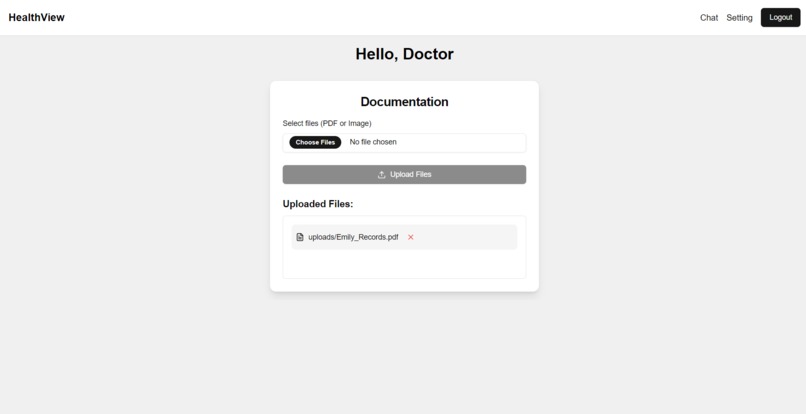
Upload File
-
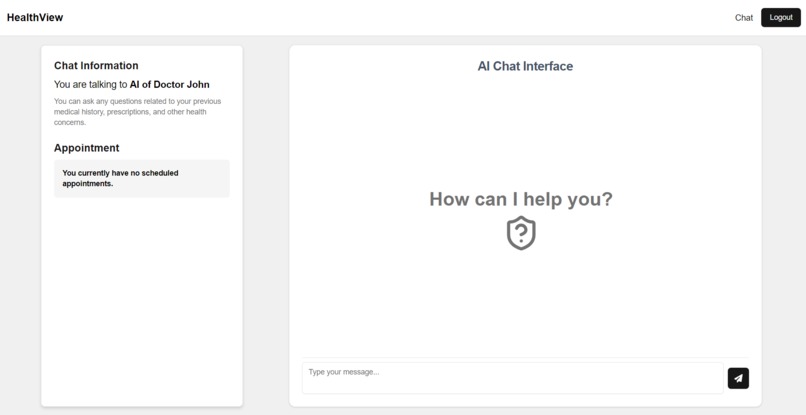
Chat Box
-
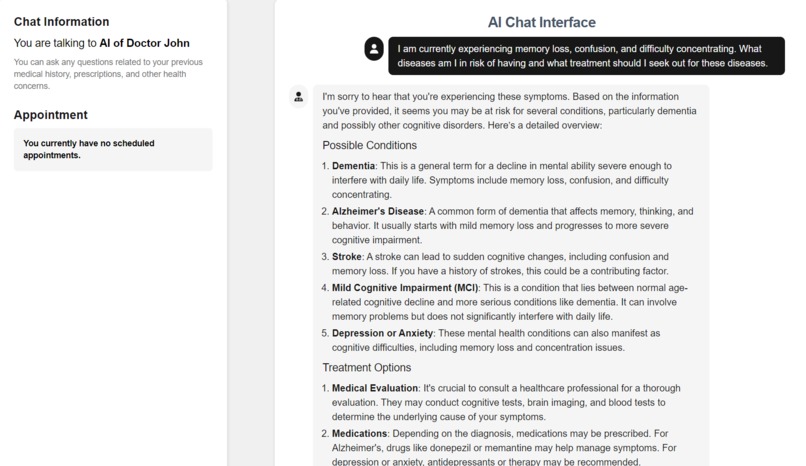
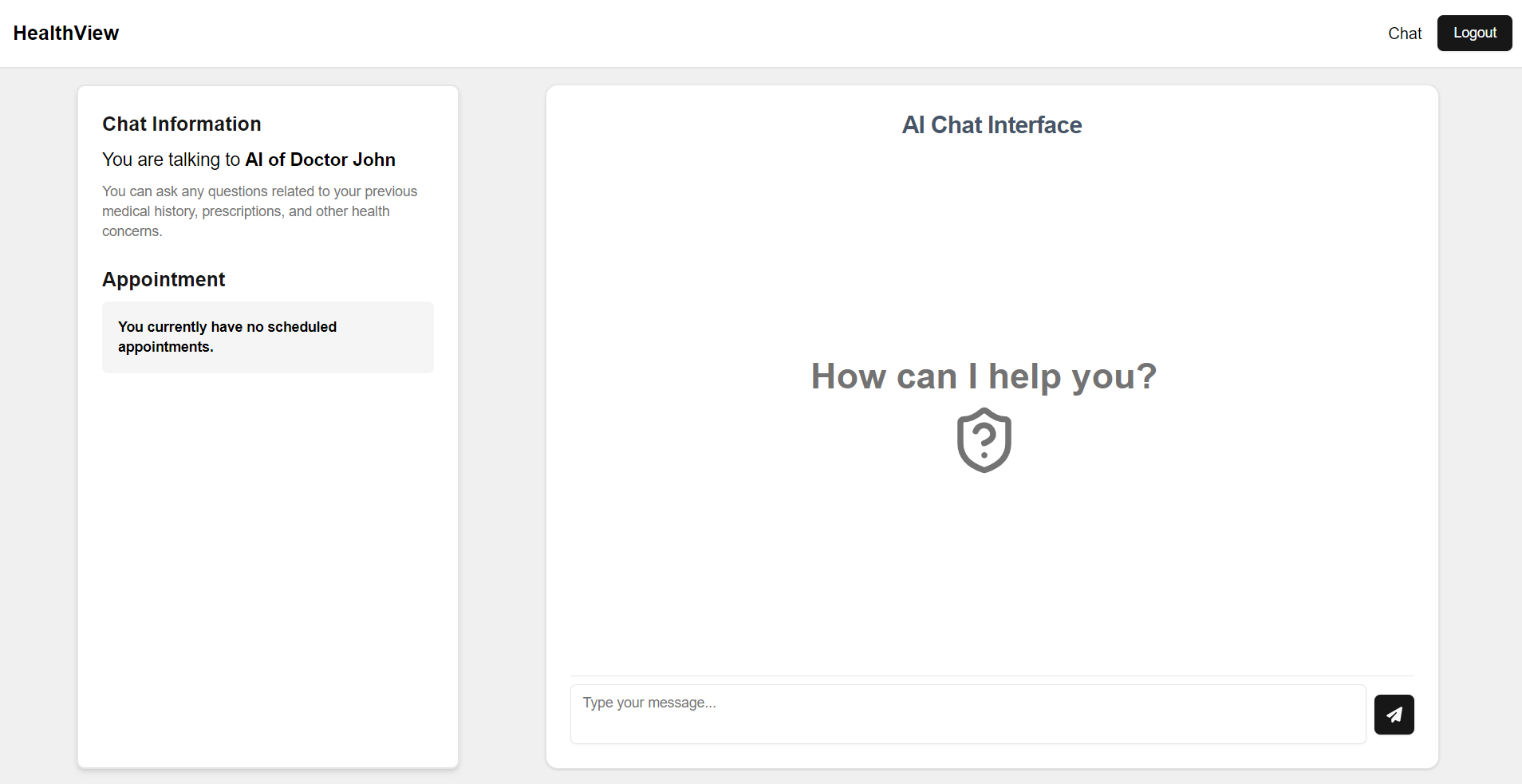
Chat AI


Inspiration
Our inspiration for HealthConnect stemmed from recognizing a critical gap in the healthcare ecosystem. Through extensive research and conversations with patients and medical professionals, we discovered a persistent disconnect between healthcare providers and the individuals they serve. Patients often struggle to manage their medical records and find appropriate care, while doctors face challenges in efficiently accessing and updating patient information. We envisioned HealthConnect as the crucial link between these two worlds. By creating a secure platform where medical professionals can input and update patient records, and where AI can intelligently retrieve and analyze this data, we're fostering a more connected and efficient healthcare experience.
What it does
Our app serves as a digital bridge, enabling seamless information flow between providers and patients, while leveraging AI to offer personalized insights and recommendations. This empowers patients with better access to their health information and equips healthcare providers with more comprehensive and readily available patient data, ultimately leading to improved care outcomes and a more integrated healthcare journey.
How we built it
We utilized NextJS as our full-stack platform, where we can create API and page routes in one developer tool. We leveraged Supabase as our database, using Postgresql as our SQL language, which handled the user authentication and secure data storage easily with interactive UI. Next, we integrated LangChain for advanced natural language processing, allowing our AI-powered chat interface and document analysis. We utilized pdf-parser to parse the text contents inside of the uploaded pdf file, which are turned into vectors, and then they are inserted into a vector database, thanks to Supabase. The app's core functionality includes PDF parsing for medical records, implemented using the PDFLoader from LangChain. We created a custom appointment scheduling system linked to user profiles, ensuring a seamless experience for both patients and healthcare providers.
Challenges we ran into
- Extracting structured data from diverse medical PDF formats proved more complex than anticipated. We faced issues with inconsistent layouts and varying data representations across different healthcare providers, so we stuck with a more consistent data presentation.
- We encountered "NextRouter has not mounted" errors when implementing protected routes, which required us to rethink our approach to client-side routing and authentication checks.
- Supabase Authentication Flow: Integrating Supabase authentication with our Next.js frontend presented challenges, particularly in managing session persistence and handling logout scenarios securely.
- Creating a flexible yet efficient database schema that could accommodate various types of medical records while allowing for quick retrieval and analysis was challenging, we had to go through many trials and errors with fixing our tables multiple attempts.
- Implementing a secure system for uploading, storing medical documents, and preventing unauthorized access was technically demanding
Accomplishments that we're proud of
We've accomplished all of the main goals that we set out the day before. These are:
- Authentication functionalities with protected routes to prevent security leakages.
- Upload Documents and Parsing the Data.
- Convert the contents inside of the pdf to vectors and store them in a vector database.
- Generates suggestions for patients, such as what to do in a medical condition, as well as provides records of data that doctors input.
- Appointment scheduling system through AI.
- Authentication access between doctor and patients, patients cannot have access to uploading files.
What we learned
- Understanding of the complexities involved in handling sensitive medical information, as well as the disconnection between healthcare systems and their patients.
- Integrate AI technologies like LangChain for natural language processing and document analysis, opening up new possibilities for intelligent health data interpretation.
- Techniques for efficiently extracting and processing information from PDF documents, a critical skill for digitizing medical records.
- Managing complex application states and data flows, especially in the interconnection between data of a healthcare system.
- Implementing APIs that facilitate smooth communication between different parts of the application and external services.
- Collaborative skills, using version control effectively and coordinating efforts across different aspects of the application.
What's next for HealthView - Personal Health Record System
- Integration of GoogeMapAPI, where the patient can have access to a better recommendation for hospitals.
- Telemedicine integration, where the patient can remotely contact a doctor.
- Refining the AI model that we already have.
- Turning this into a Mobile Application would be extremely beneficial.
Built With
- machine-learning
- nextjs
- openai
- supabase


Log in or sign up for Devpost to join the conversation.