Inspiration
Health information arrives through portal messages, PDFs, laboratory reports, visit summaries, prescriptions, insurance documents, and conversations that are difficult to remember. The information exists, but the coherent story often does not.
I built HealthView OS to explore what a personal health operating system could be: private, visual, local-first, and grounded in the user's own records instead of a generic chat conversation.
What it does
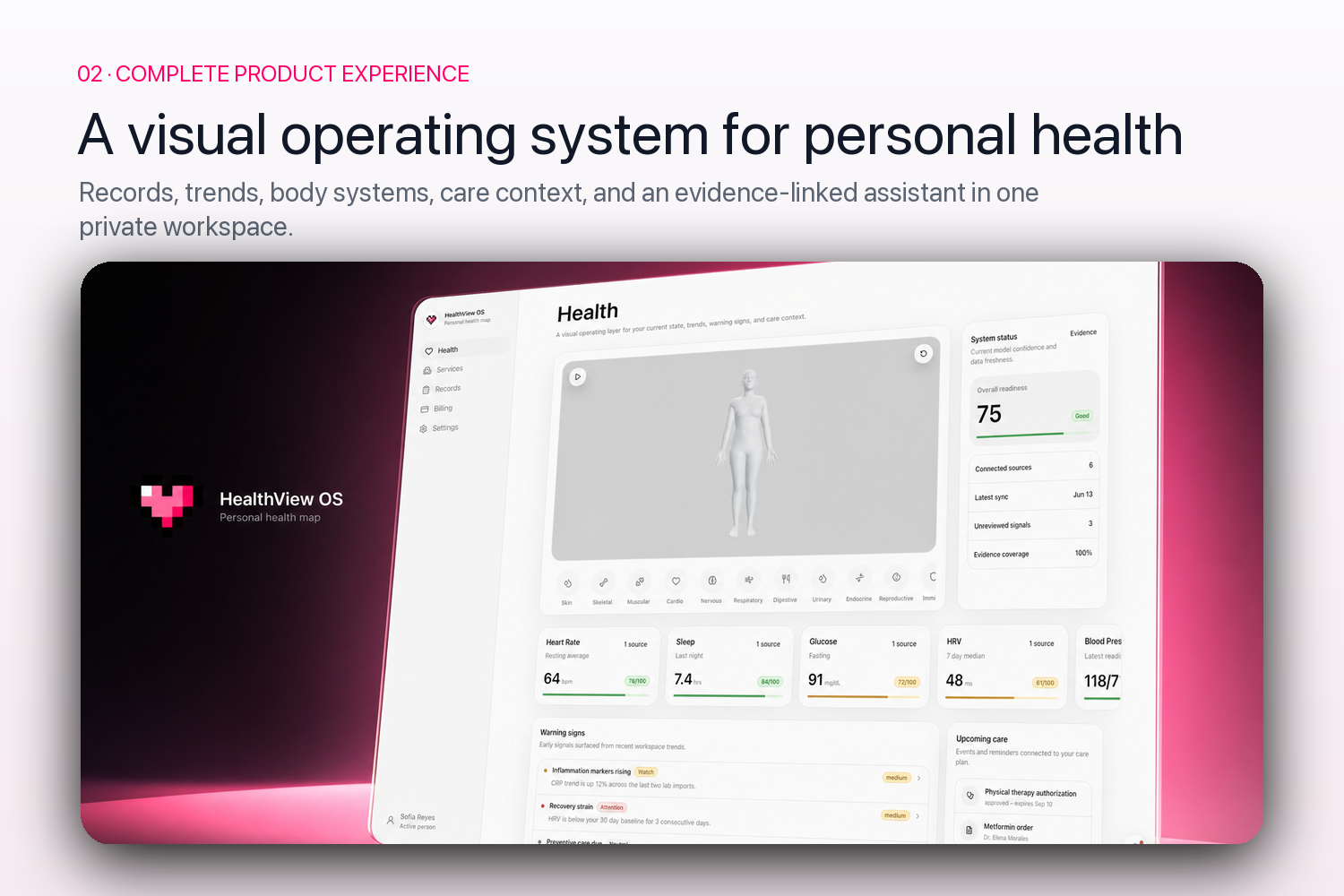
HealthView OS creates an explorable, evidence-linked view of a person's health information.
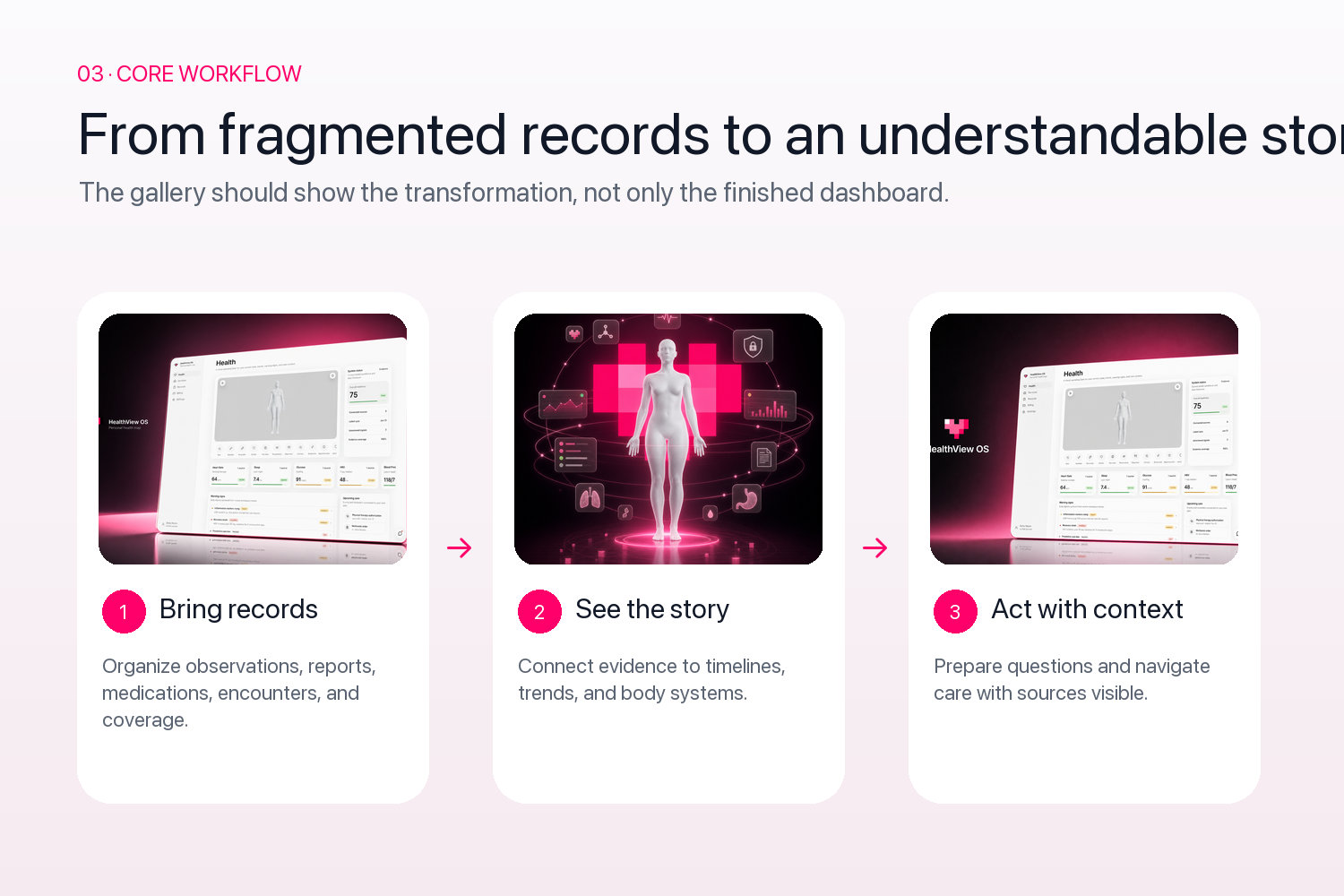
It organizes records, conditions, medications, allergies, observations, encounters, diagnostic reports, providers, locations, coverage, claims, bills, payments, and authorizations. It can turn those records into timelines, trends, body-system views, warnings, and grounded summaries.
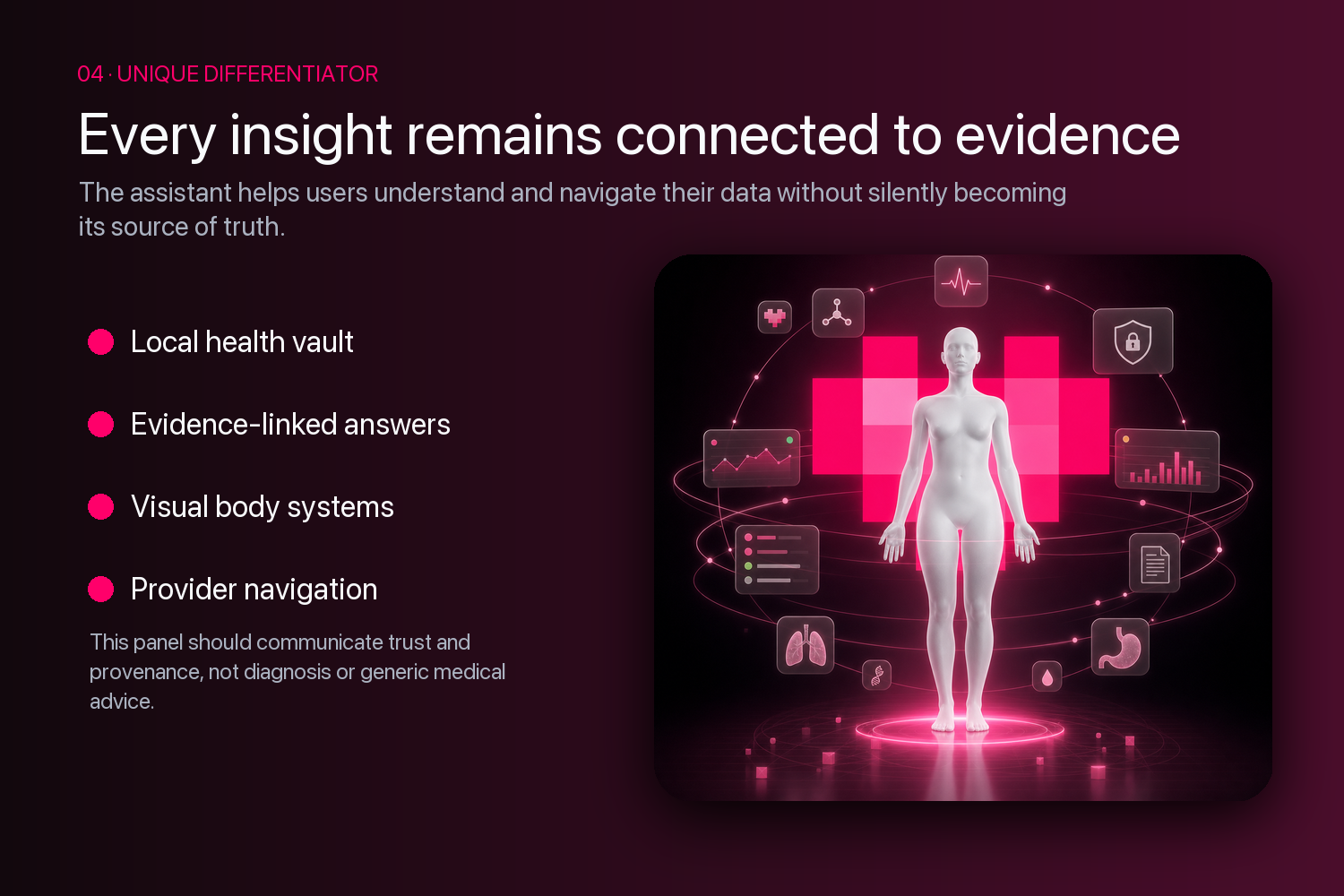
The assistant helps users understand unfamiliar terminology, locate relevant records, compare changes over time, prepare questions for a healthcare professional, and navigate providers or services. Supporting information remains visible so users can understand where an answer came from.
HealthView OS is designed for organization, understanding, and preparation. It is not a replacement for professional medical diagnosis or treatment.
Privacy and architecture
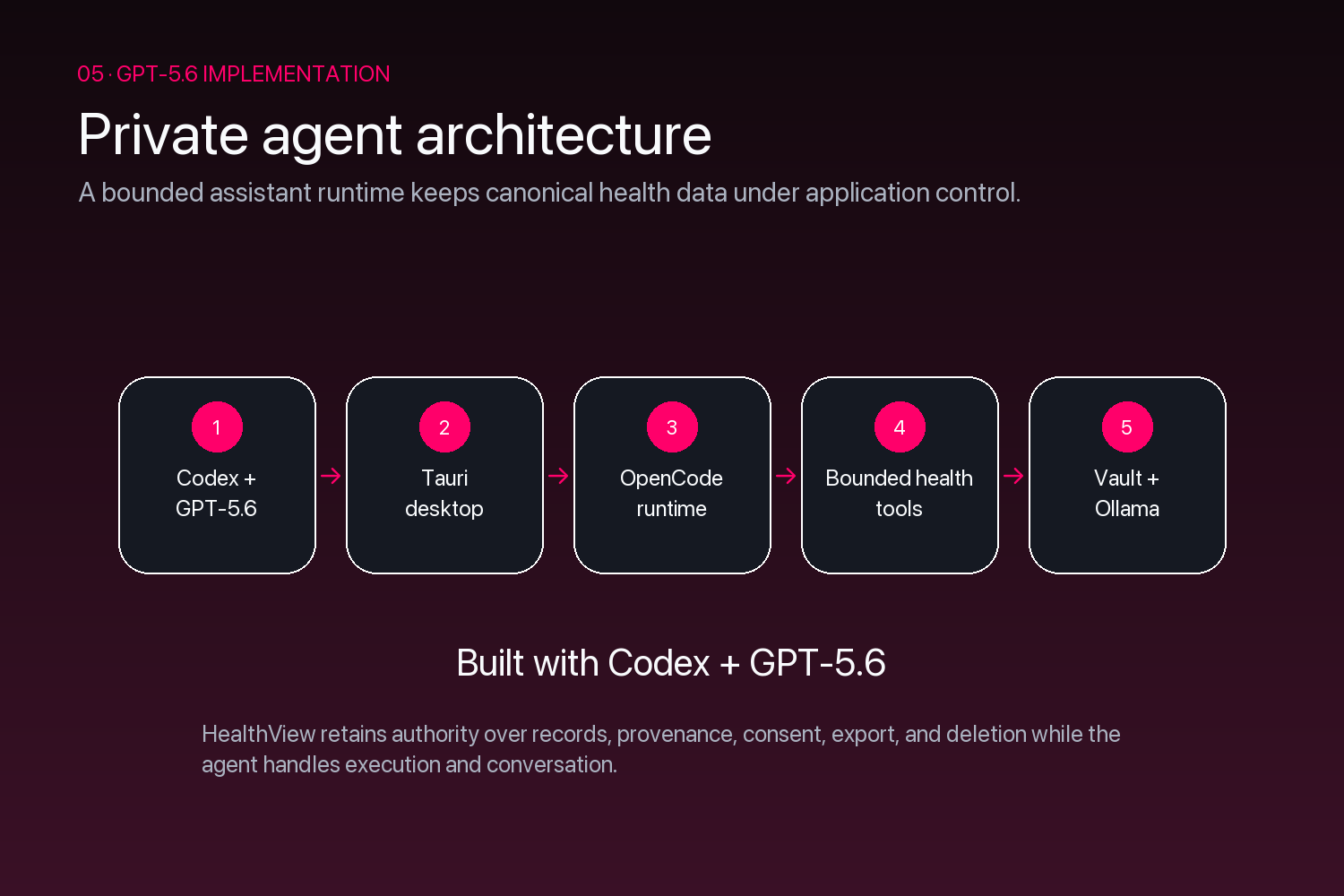
HealthView OS is a local-first Tauri desktop application with a typed health workspace and local vault.
Its assistant runs through a bundled, authenticated OpenCode runtime. Instead of giving the agent unrestricted filesystem or shell access, the application exposes narrowly scoped health tools for approved record retrieval, navigation, and visualization.
An app-managed Ollama engine supports private on-device models. HealthView retains authority over canonical records, evidence, provenance, consent, export, deletion, and future health-data mutations.
Built with Codex and GPT-5.6
I used Codex and GPT-5.6 to develop the desktop agent architecture, local model workflow, private health tools, conversational workspace, visual interface, tests, and privacy boundaries.
The project documentation will identify the primary and supporting Codex sessions used to build the submitted experience.
Challenges and lessons
The central challenge was preserving the benefits of a capable agent without confusing conversational context with durable medical memory.
Health records, evidence, consent, and provenance must remain application-owned data. The agent can help interpret and navigate that information, but it should not silently become the source of truth.
What's next
Next steps include broader record imports, stronger provenance displays, provider and service integrations, and more visual ways to understand changes across time and body systems.
Built With
- codex
- gpt-5.6
- mcp
- ollama
- openai-api
- opencode
- react
- rust
- sqlite
- tauri
- typescript

Log in or sign up for Devpost to join the conversation.