-
-
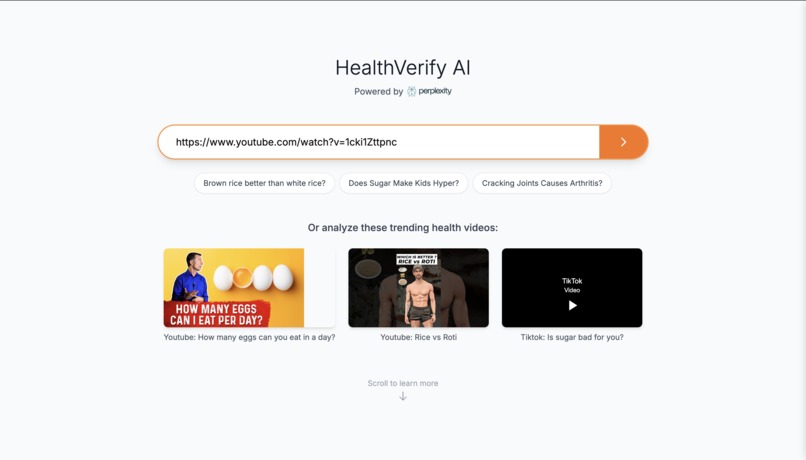
HealthVerify AI
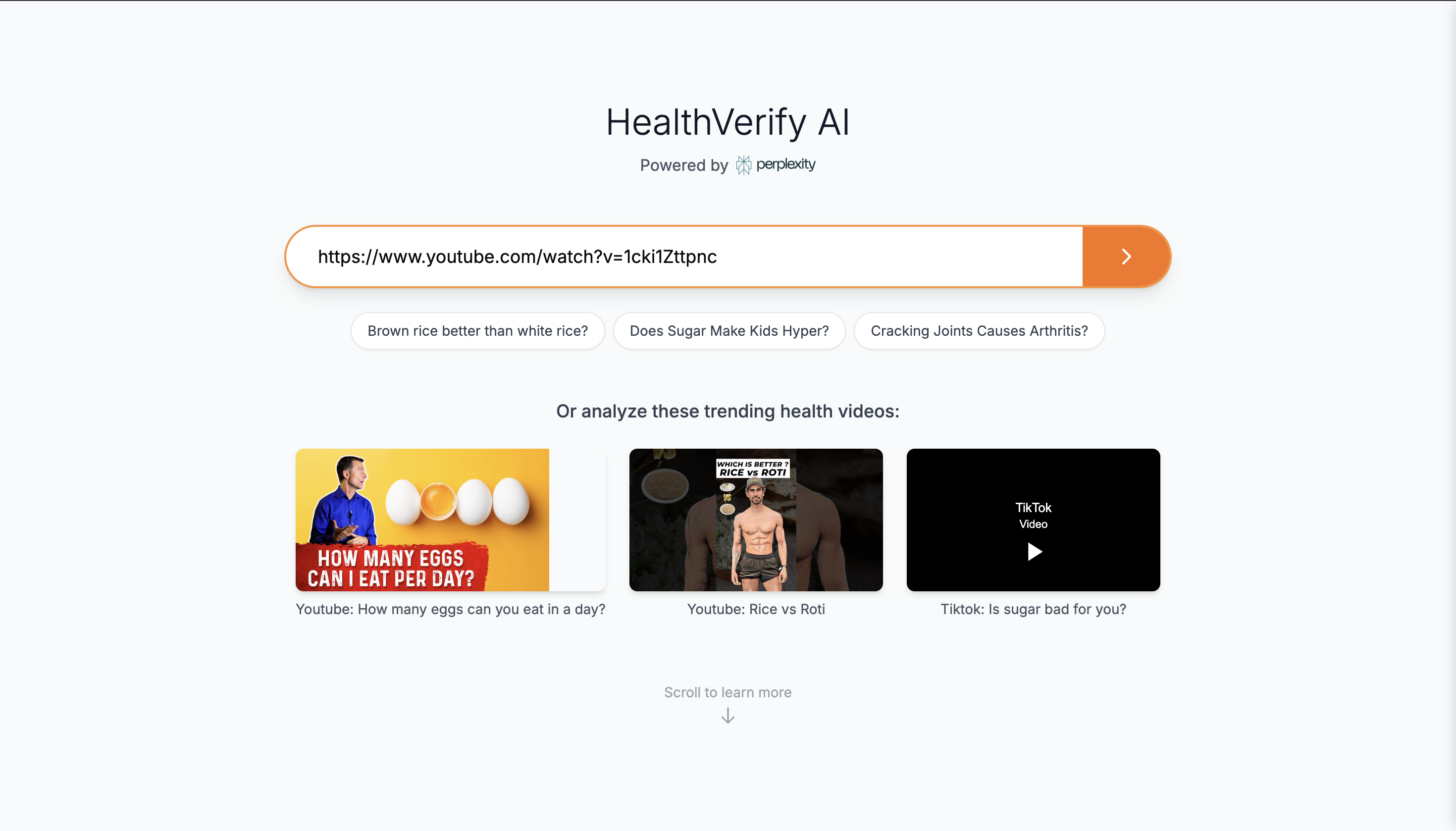
Inspiration
I’m currently trying to lose weight, and like most people, I’ve been turning to YouTube and Instagram for advice. But the more I scrolled, the more confused I got — one video would say "white rice is terrible for you," and the next would claim "white rice is better than brown rice." It was the same for everything: intermittent fasting, carbs, sugar, even drinking water at certain times.
I realized there’s just way too much conflicting health advice online, and most people don’t have the time or background to dig through research papers to figure out what’s actually true. So I decided to build HealthVerify AI — a tool that can quickly fact-check health claims from social media and text using the Perplexity API
What it does
1 . Paste a YouTube, Instagram, or TikTok link, and it’ll extract the health claim and check if it’s true.
- Enter a health-related statement or question, and it’ll give you an AI-powered fact-check with sources.
- Get clear answers, backed by reliable evidence with citations — so you can decide what’s real and what’s not.
How we built it
- I used Python for the backend, with FastAPI to serve the endpoints.
- For video processing, I used tools like yt-dlp to grab captions and audio.
- I used Whisper (Served by Groq) for speech-to-text when subtitles weren’t available.
- The main engine is powered by the Perplexity API, which does the real-time AI research and response generation.
- Next.js 15 with App Router and React 19 Server Components, Tailwind CSS and Shadcn UI for responsive design
Challenges we ran into
- Prompt Engineering - To get accurate answers from various scientific sources.
- Complex integration with different video platform APIs
- Handling various video URL formats and edge cases
Accomplishments that we're proud of
- Created an elegant, mobile-first interface
- Implemented seamless multi-platform video support
- Made evidence-based health information accessible to everyone
What we learned
- Perplexity API use cases and benefits over regular text to text LLM API's
- Complexity of fact-checking health claims
- Importance of citing reliable medical sources
What's next for HealthVerify AI
- Browser extension for instant fact-checking
- Mutiple language support
- API access for third-party integration

Log in or sign up for Devpost to join the conversation.