The Inspiration Behind HealthTrack NG
My journey began with a stark realization: in rural Nigeria, a simple paper file can be the difference between life and death. I was inspired by the millions of Nigerians, like Amina, a 28-year-old mother from Kano, who face a precarious healthcare reality. Her story of losing a treatment card and having to restart the process highlighted a system failing its most vulnerable. I was driven by the staggering statistics and their human cost:
- An estimated 47% of paper-based patient records are lost or damaged.
- It takes up to 21 days to detect a disease outbreak, allowing it to spread needlessly.
- Community Health Workers (CHWs), the backbone of rural health, face a 55% burnout rate due to inefficient manual workflows.
- Mothers in rural areas face an alarmingly high maternal mortality rate—814 deaths per 100,000 births, compared to 395 in urban areas.
- Vaccination for 20% of children is delayed due to lost or inaccessible records. My inspiration was to build a tool that serves Fatima, the CHW in Sokoto, as much as it serves Amina, her patient.
What I Learned
This project was a profound learning experience, teaching me that a tool is only as good as its understanding of the user's world. -Empathy is the Core Spec: I learned that the most critical features aren't always the most technologically advanced. For my target users, the ability to work offline is a necessity. A user story like, "As a CHW in Sokoto, I want Hausa voice input to avoid typing with shaky hands," taught me that accessibility and local language support are non-negotiable for adoption. -Prioritization is Everything: I adopted the MoSCoW method to ruthlessly prioritize the features. This forced me to distinguish between what the app must have versus what it should or could have. It became clear that for the first version, I had to focus on the absolute essentials: Digital Patient Records, Multilingual Voice-to-Text, Offline Sync, Disease Surveillance, and Patient QR Codes. -Plan for the Real World: I learned to design for the environment I'm deploying in. This meant specifying an app that could run on a low-end Android device with a minimum of 1GB of RAM and a 2000mAh battery, reflecting the reality of technology access in rural Nigeria. It also meant proactively identifying risks like device theft, power outages, and cultural resistance, and building mitigation strategies for them from day one.
How I Built It
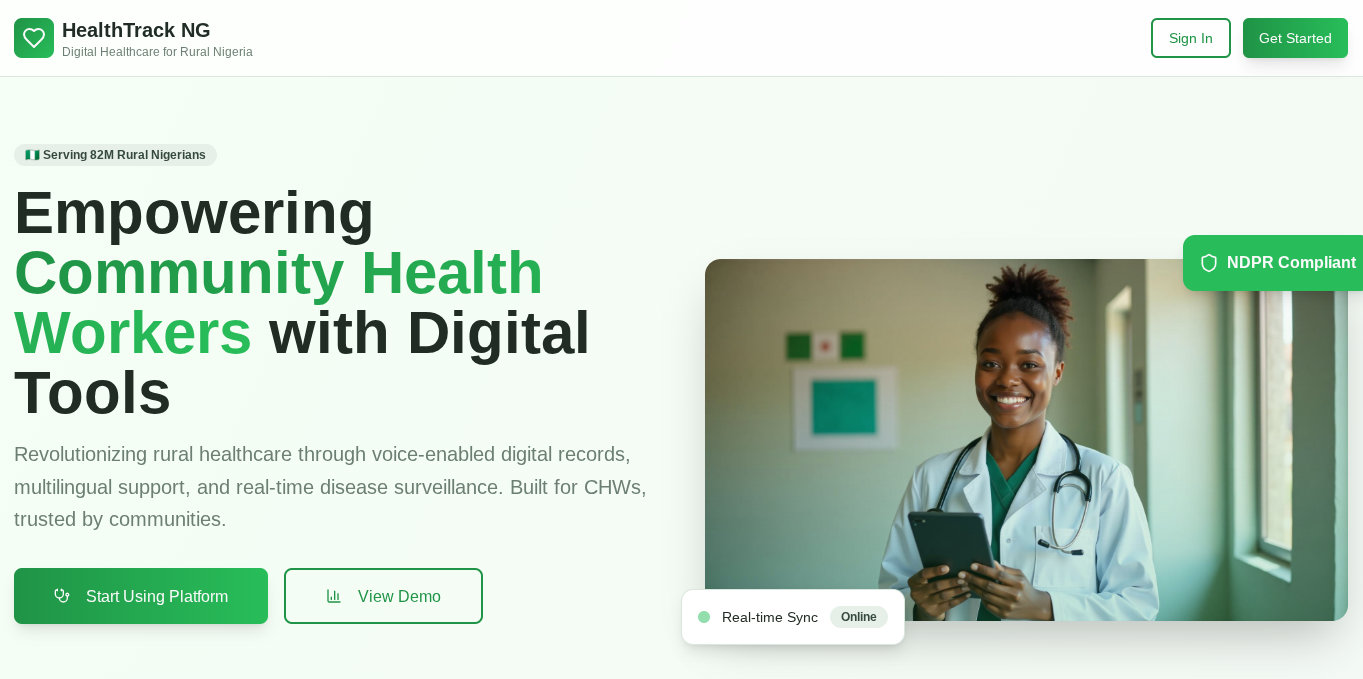
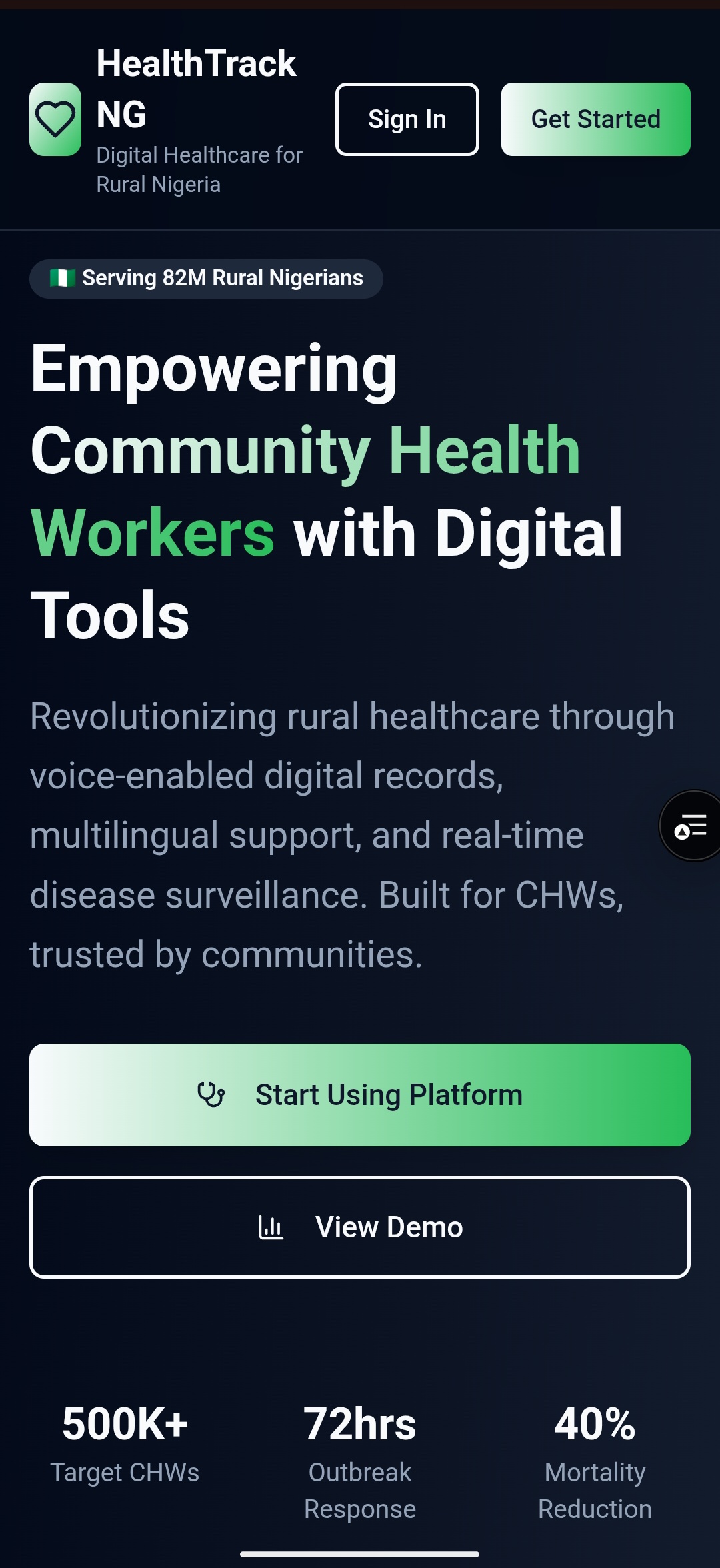
My vision was clear: "By 2027, HealthTrack NG will empower 500,000 Community Health Workers (CHWs) across rural Nigeria, contributing to a 40% reduction in preventable deaths". To achieve this, I architected a solution built for resilience and accessibility.
Core Features I Implemented:
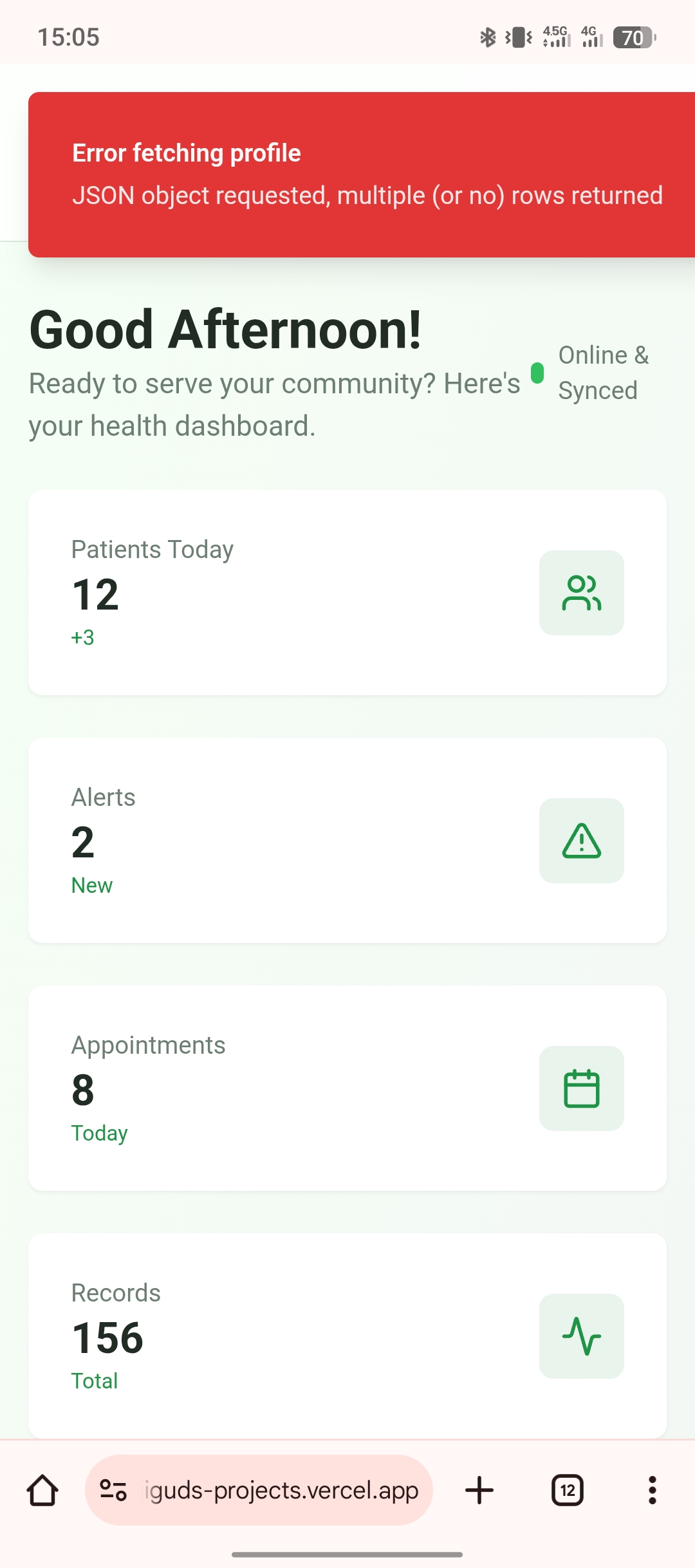
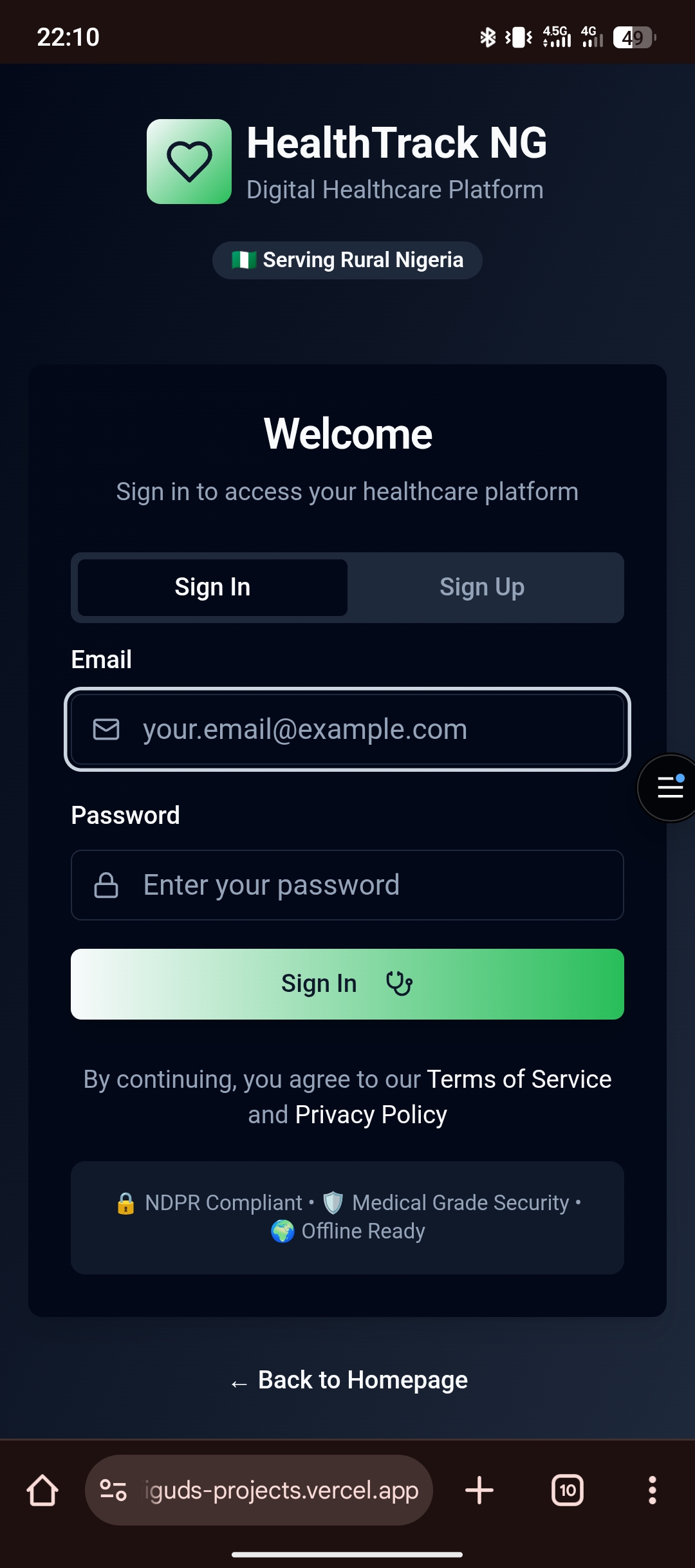
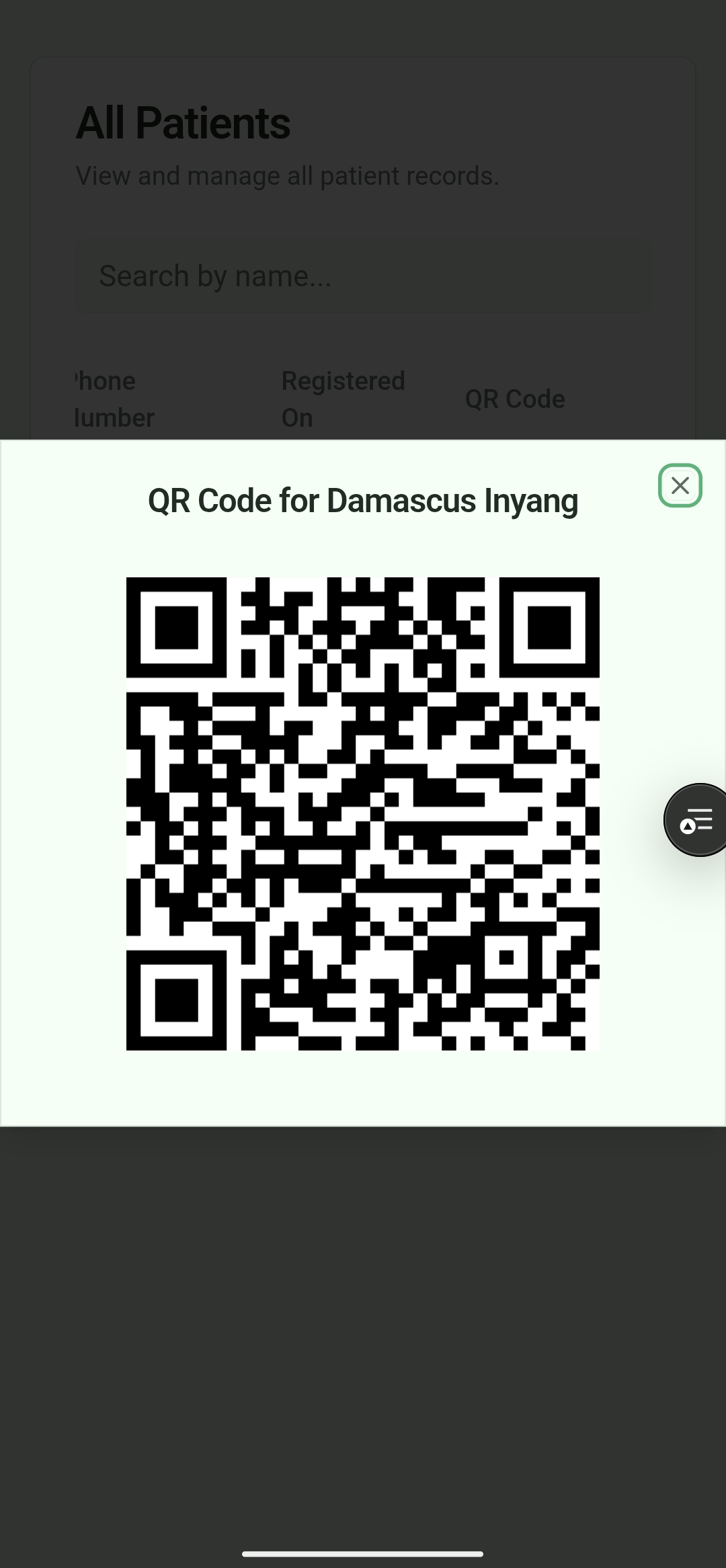
-Digital Records & QR Codes: I replaced paper files with secure digital records. Every patient receives a unique QR code for reliable identification and instant access to their health history. -Offline-First Sync: The app saves data locally on the CHW's device and automatically syncs with the central database when connectivity is restored. -Voice-to-Text Data Entry: The app allows CHWs to dictate patient notes in their native language, aiming to automate 80% of paperwork and overcome literacy barriers. -Instant Outbreak Alerts: By analyzing symptom data in real-time, my system can detect outbreak patterns and send immediate alerts, cutting the response time from 21 days to a target of ≤72 hours.
Challenges I Faced
Building for rural Nigeria meant confronting unique and formidable challenges head-on. -The Certainty of Power Outages 🔌: This is a critical risk. Challenge: How does a CHW use a digital tool when they can't charge it? Solution: I made battery efficiency a core requirement, ensuring the app could run for 8 hours of continuous use. My mitigation strategy involves establishing partnerships with solar energy providers. -The Nuance of Language 🗣️: Standard language models often fail with local dialects. Challenge: How to ensure a CHW is understood by the app? Solution: I identified this as a high-impact risk. The strategy is to develop a crowdsourced audio corpus for dialect training to improve the model's accuracy. -Cultural and Social Trust 📿: Technology can be met with suspicion. Challenge: What if communities resisted the app as "digital juju"? Solution: This is a high-likelihood, high-impact risk. My mitigation strategy is to partner with respected community leaders like the Sultanate Council for community engagement and endorsements to build trust from the ground up.
Built With
- react
- shadcn
- tailwind
- typescript
- vite

Log in or sign up for Devpost to join the conversation.