-
-
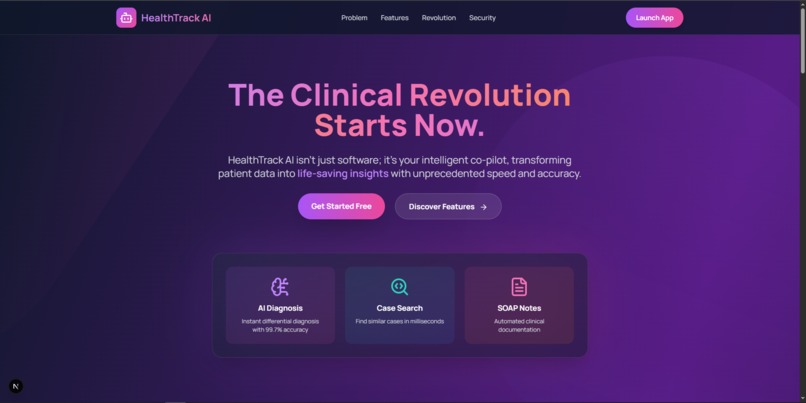
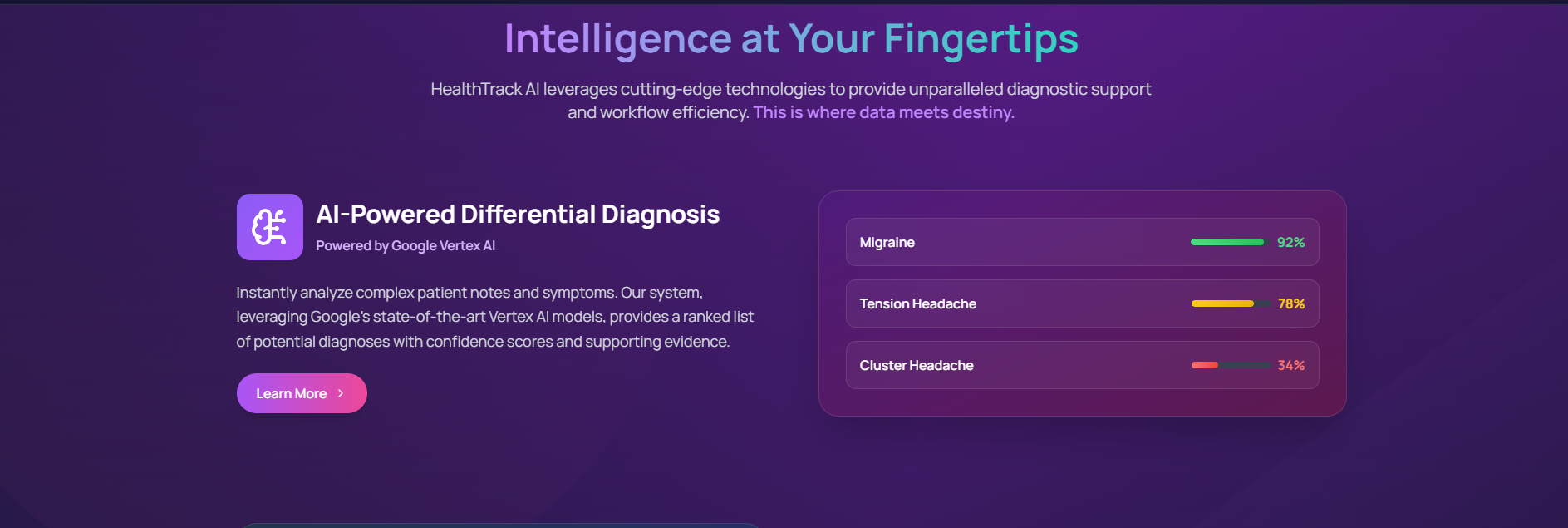
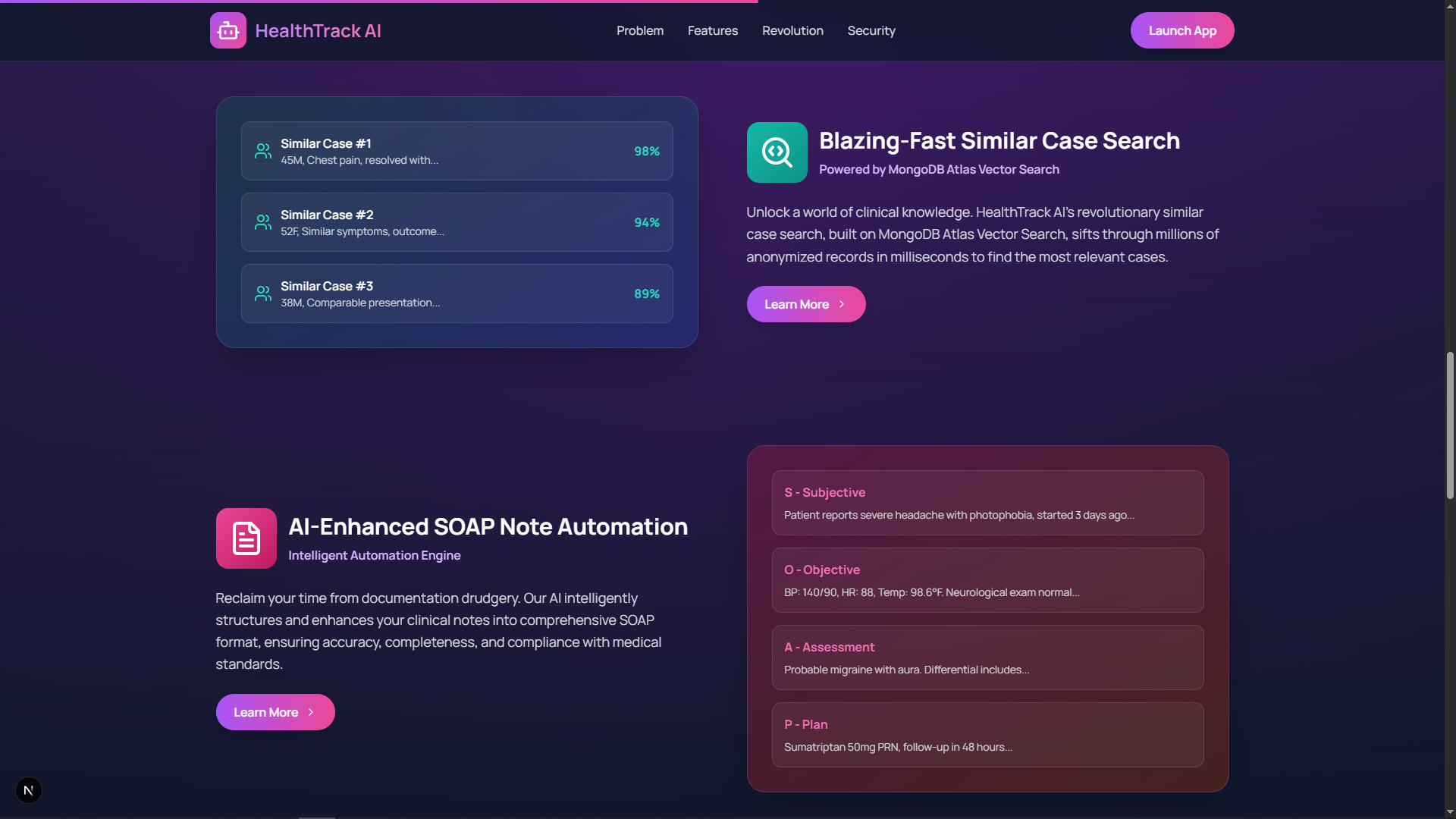
Landing Page
-
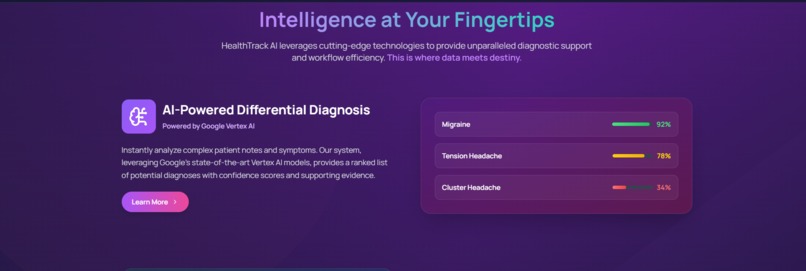
Landing Page
-
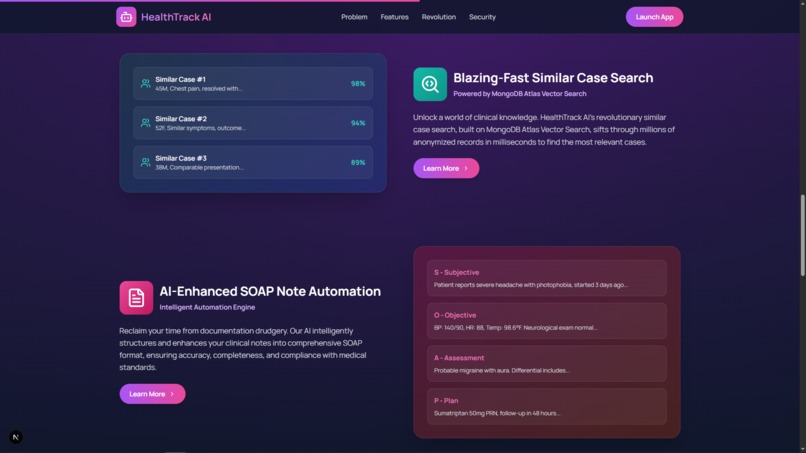
Landing Page
-
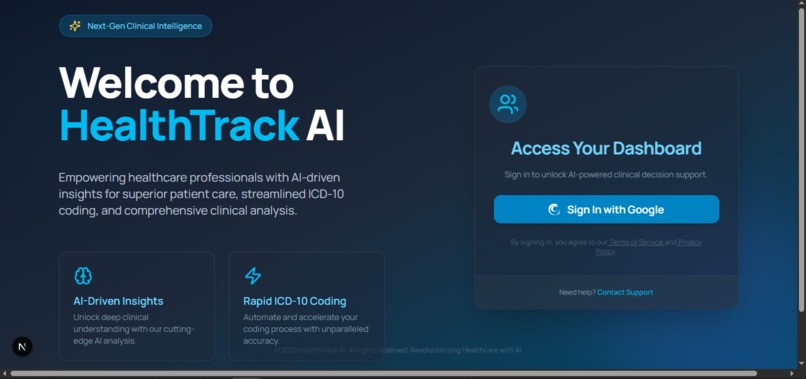
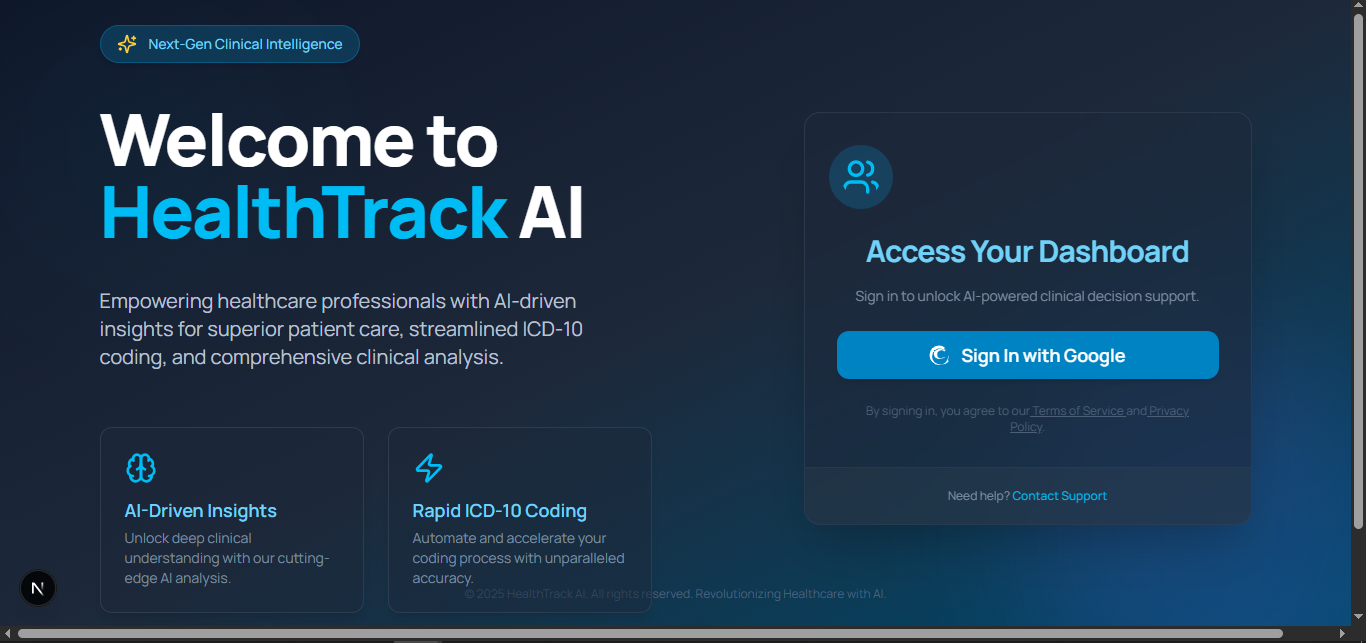
Login Page
-
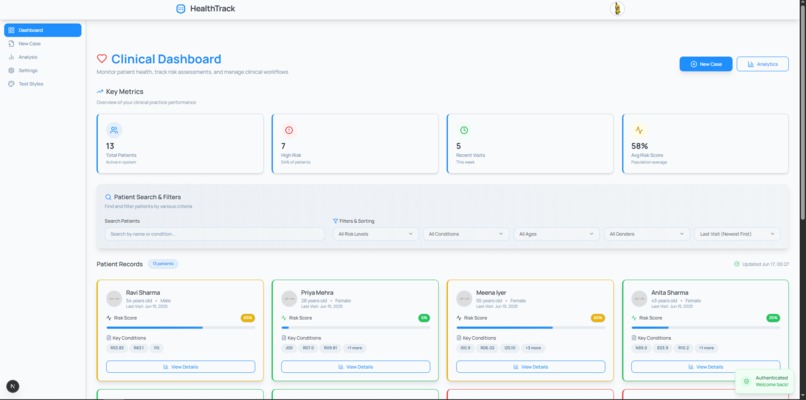
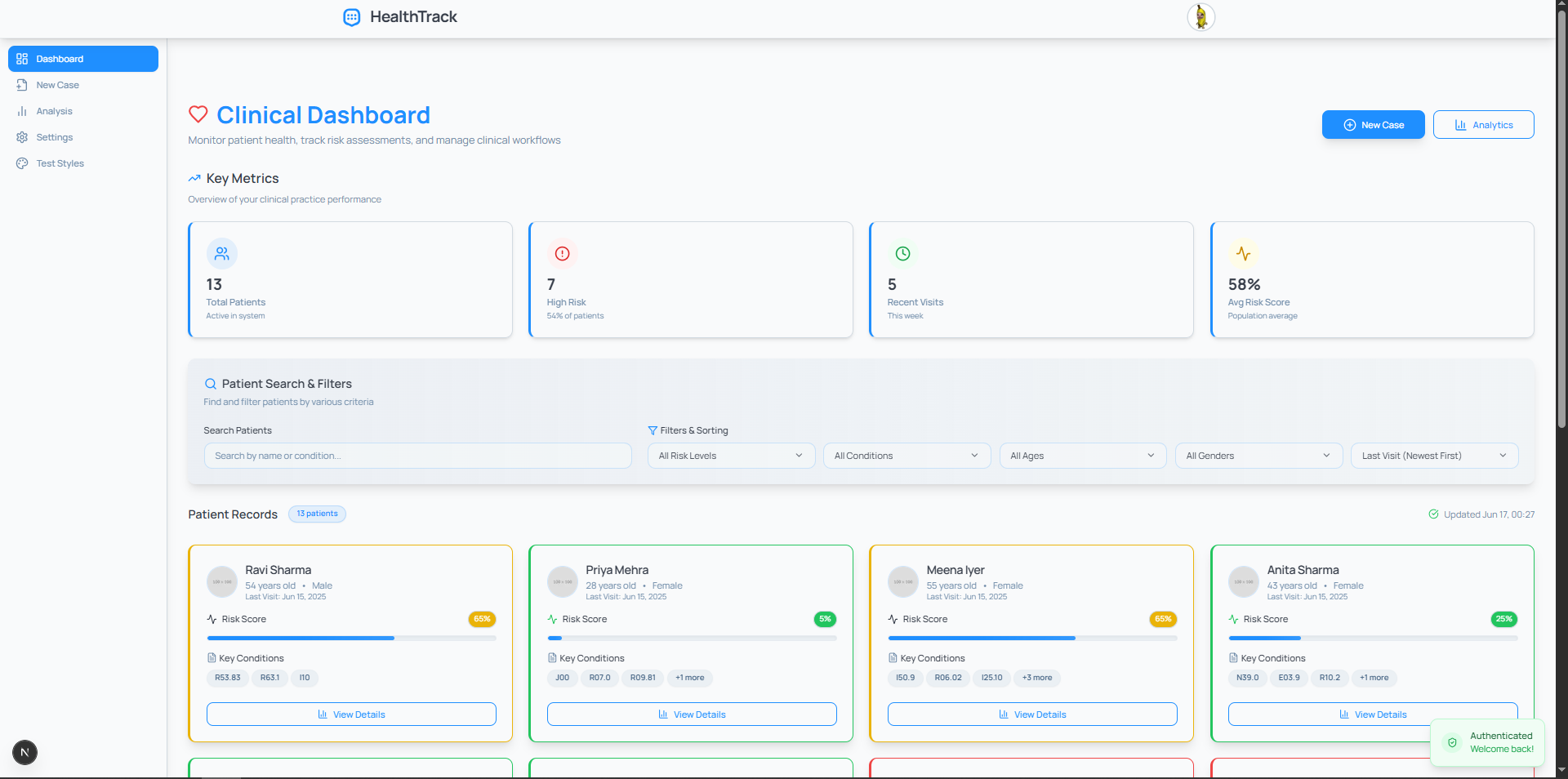
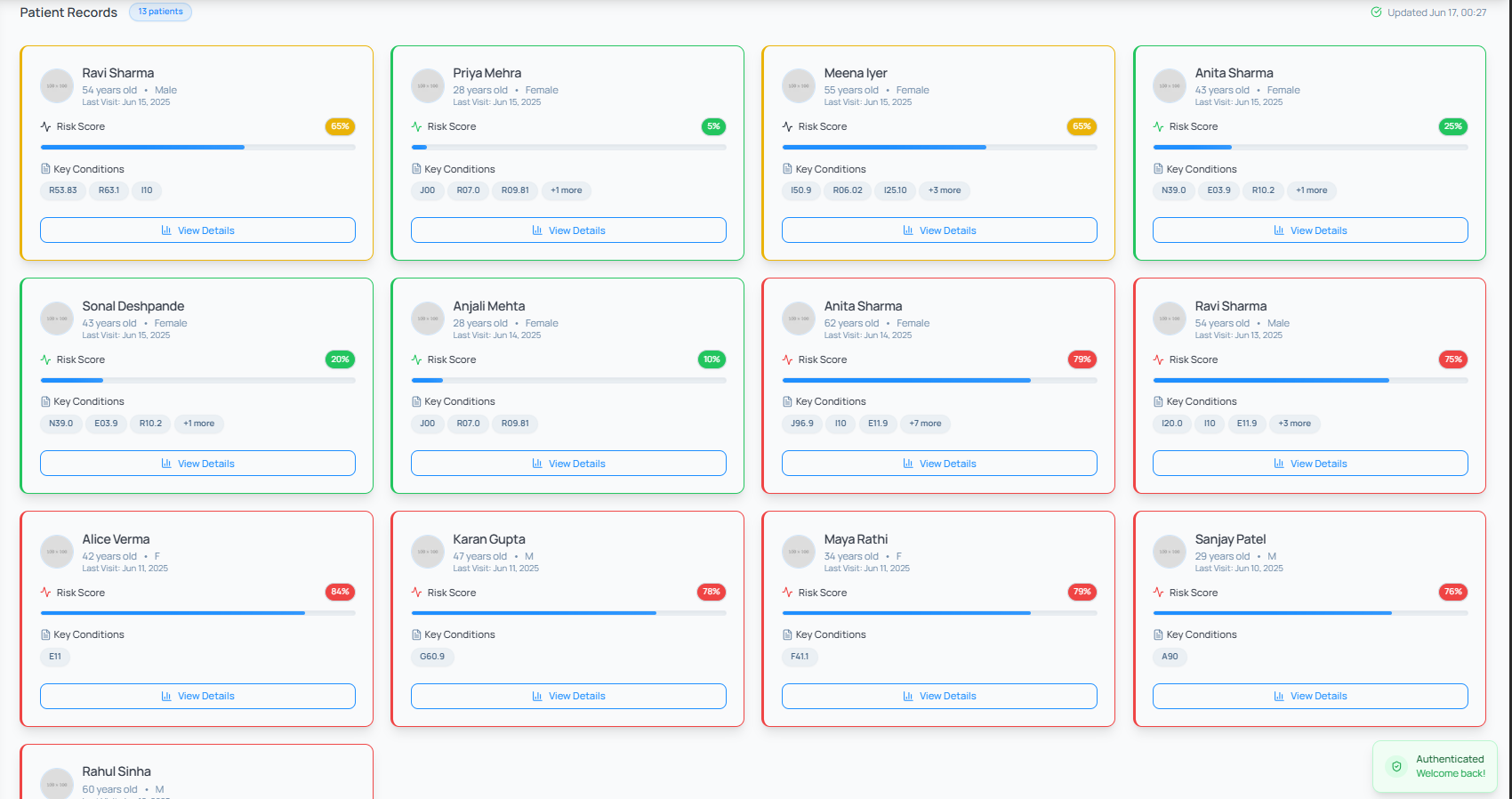
Dashboard
-
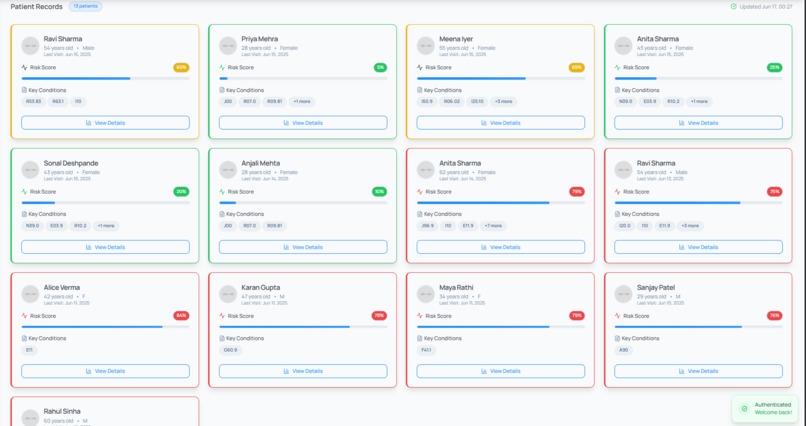
Dashboard
-
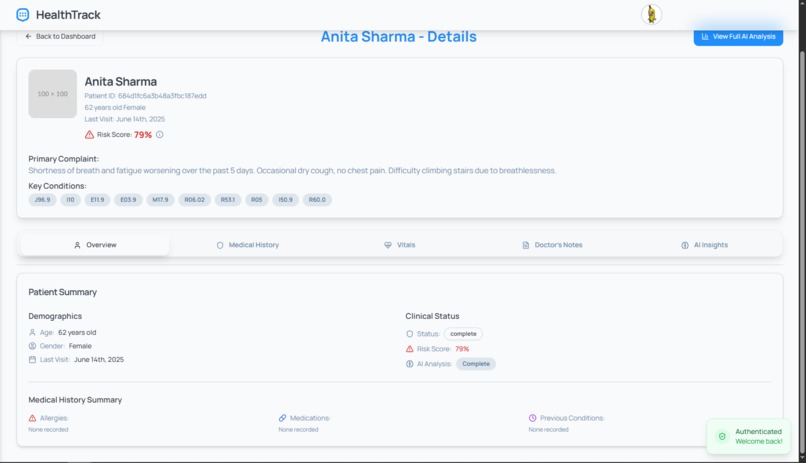
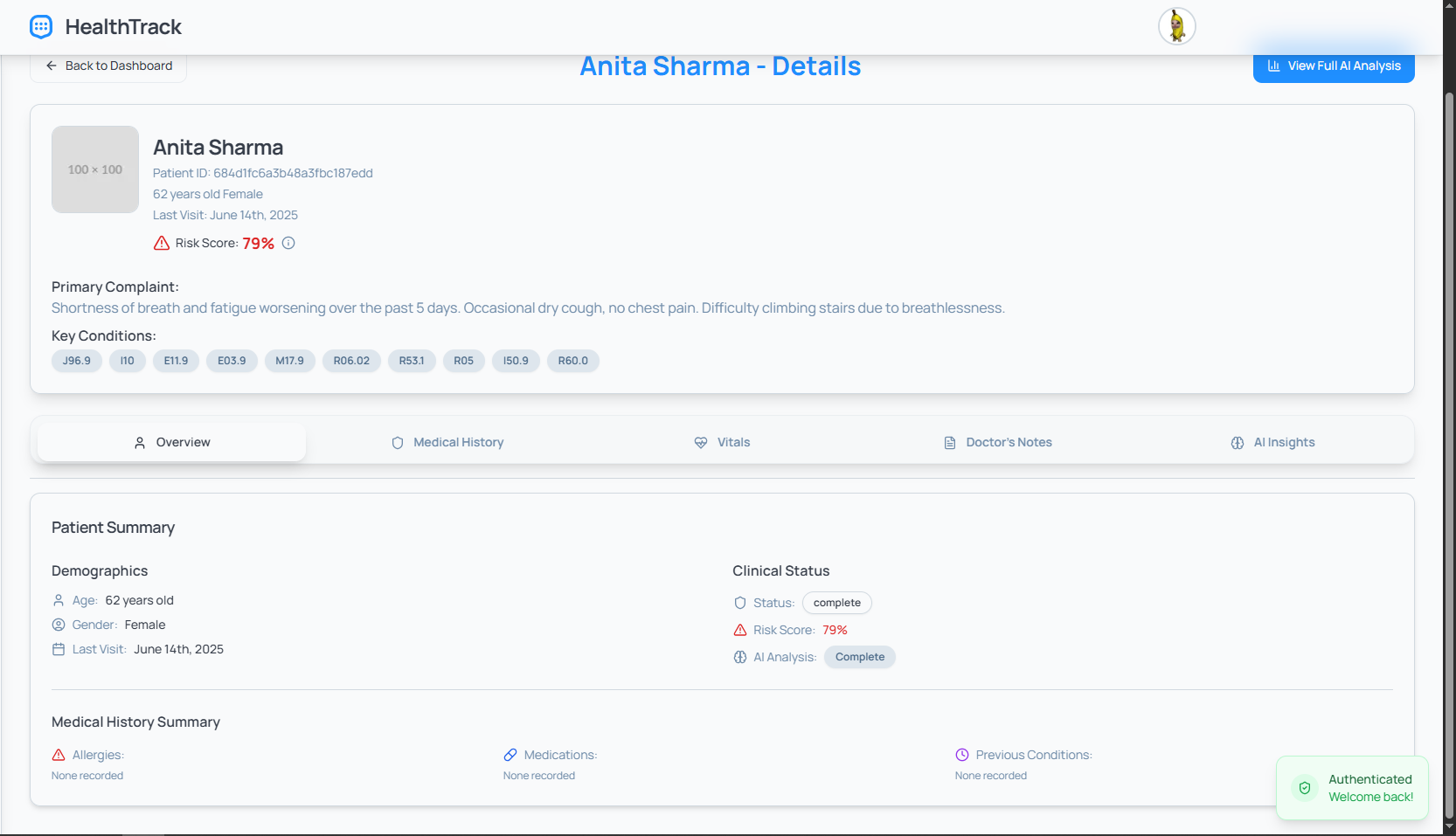
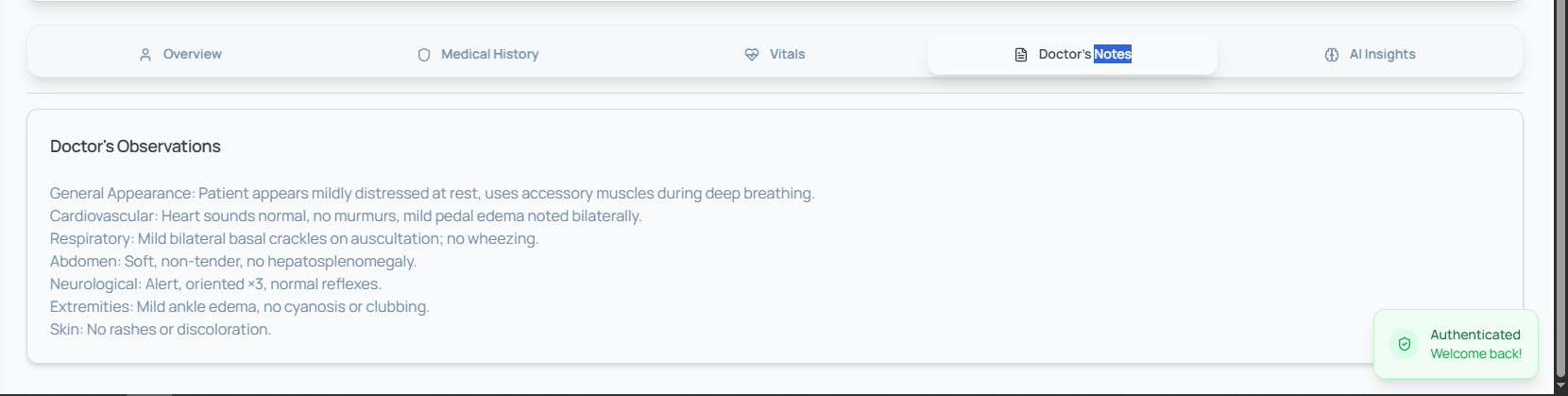
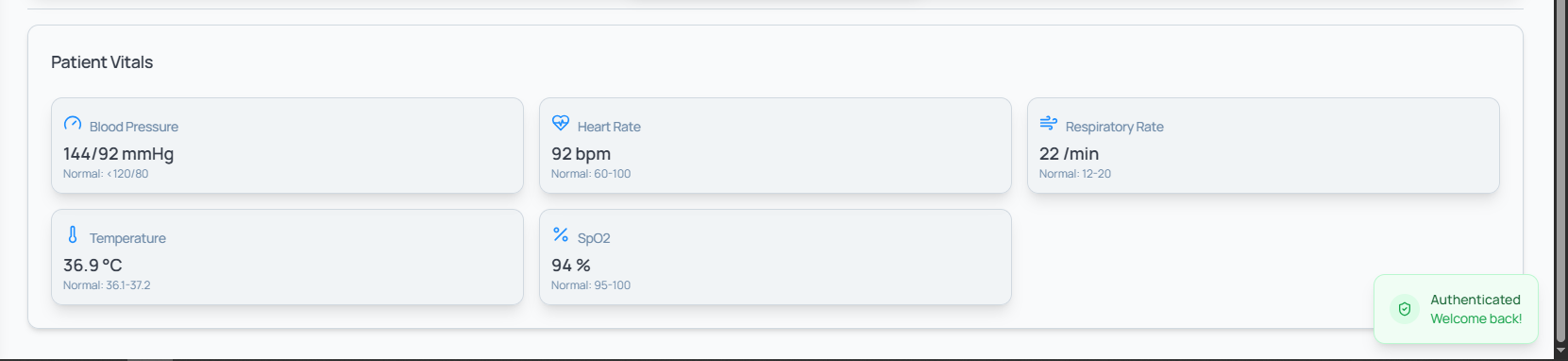
Patient Case File
-
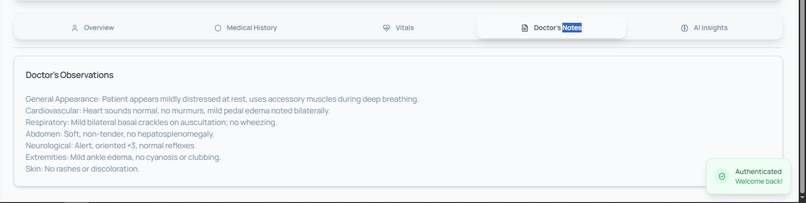
Patient Case File
-
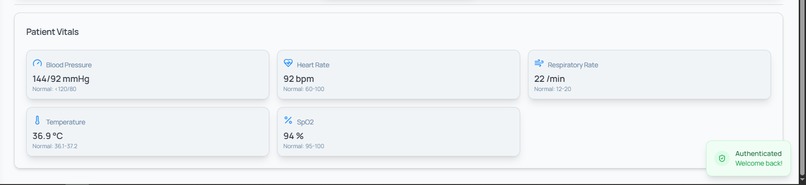
Patient Case File
-
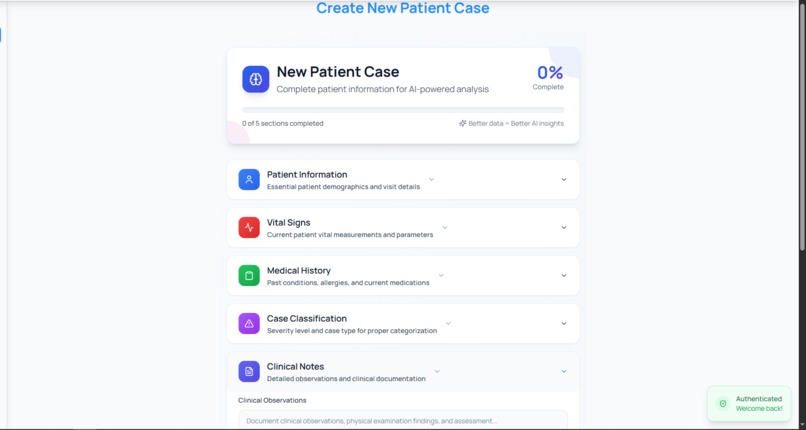
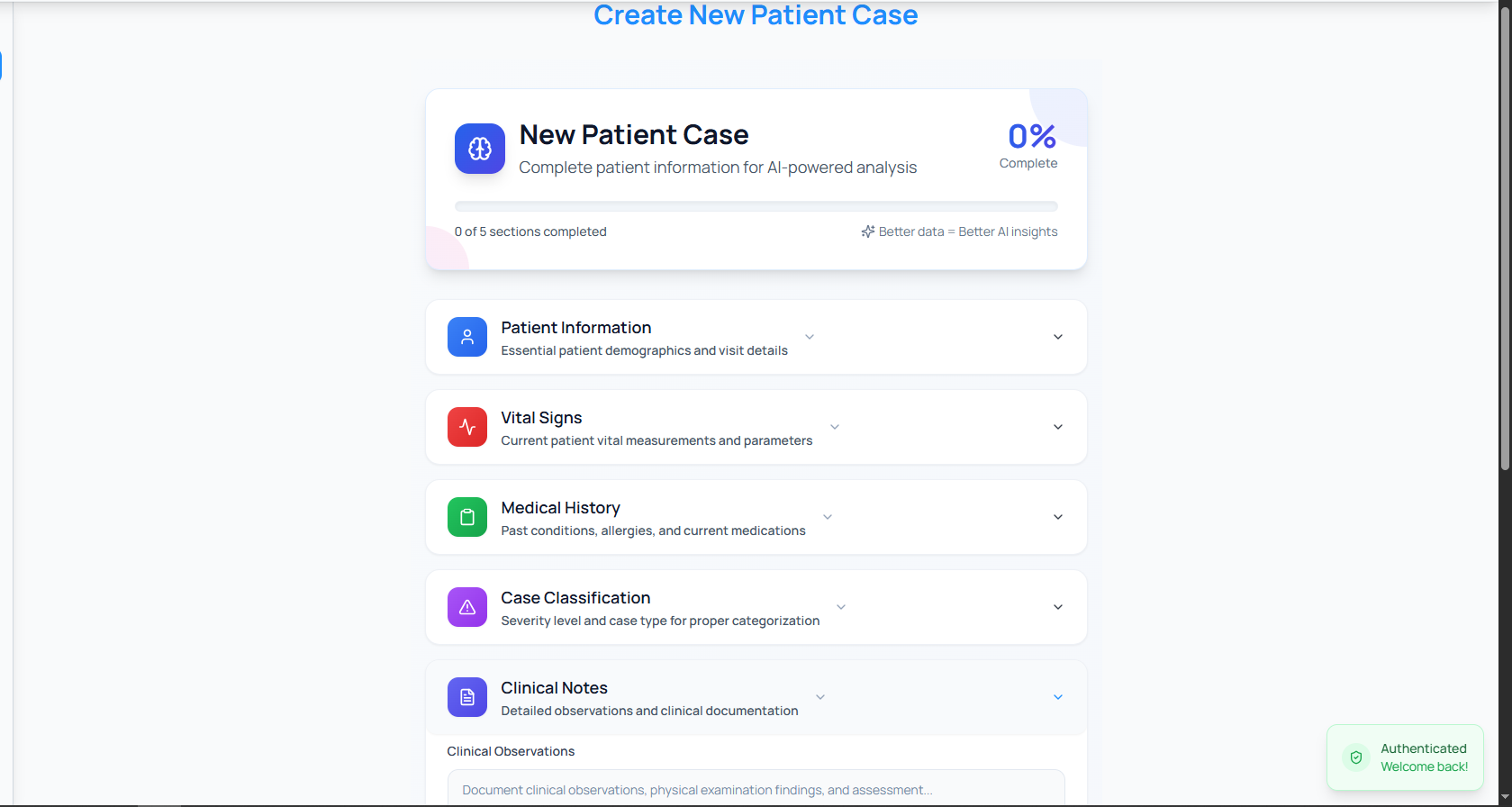
New case form
-
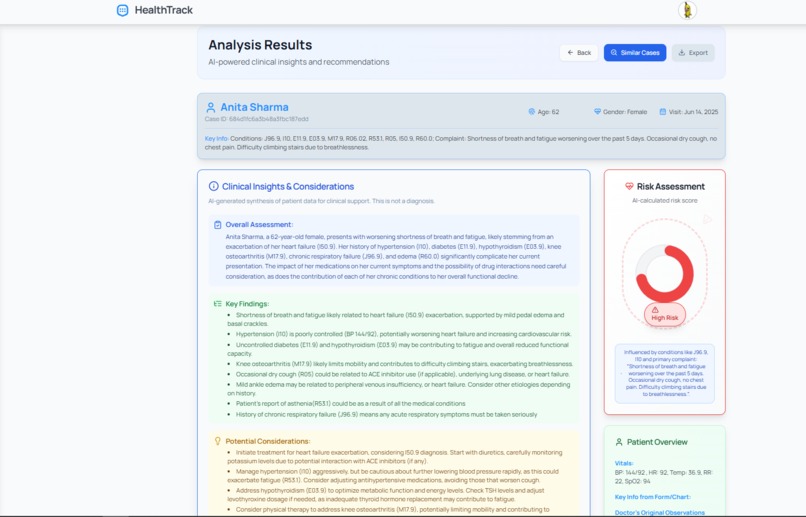
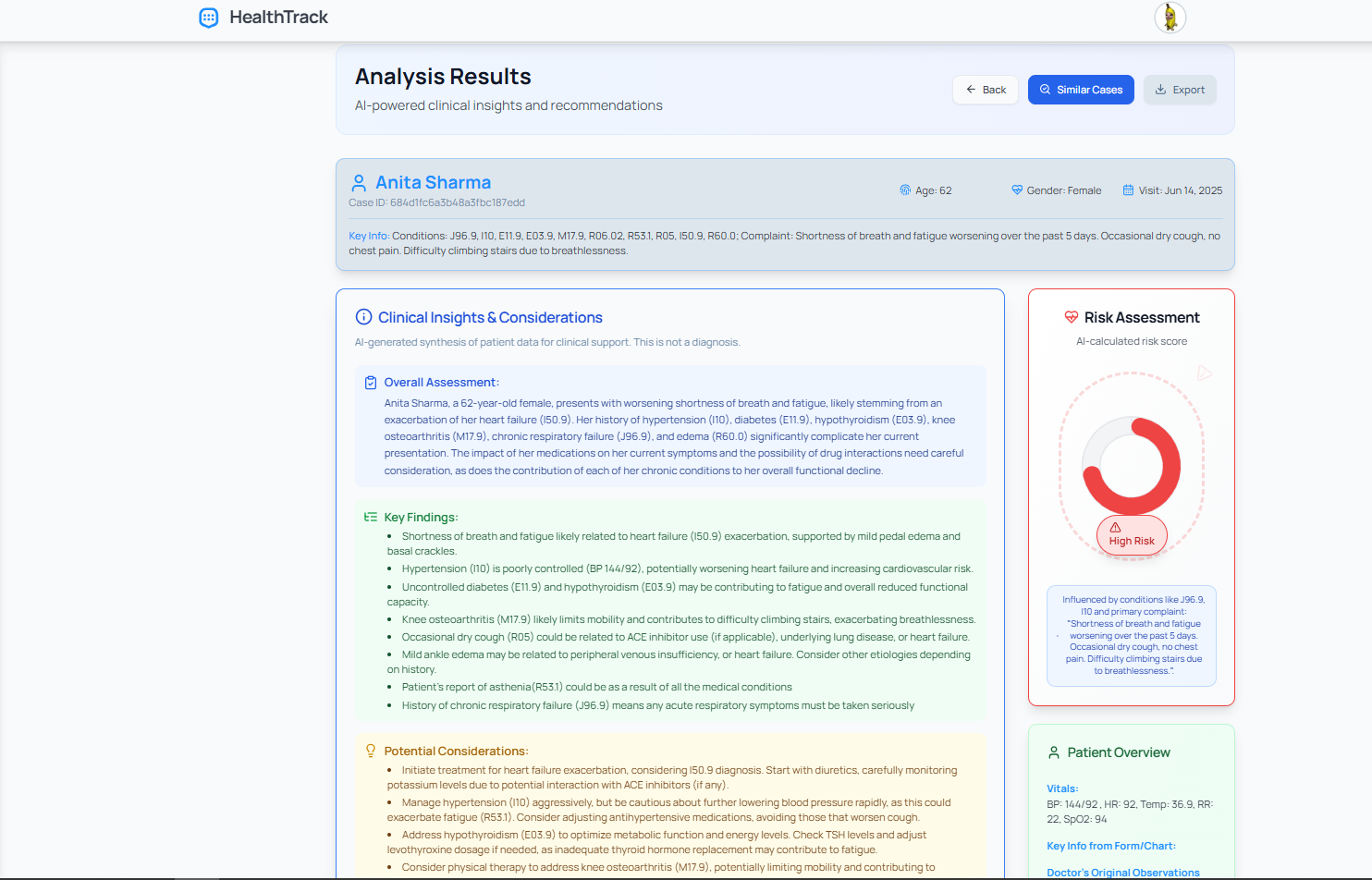
Analysis
-
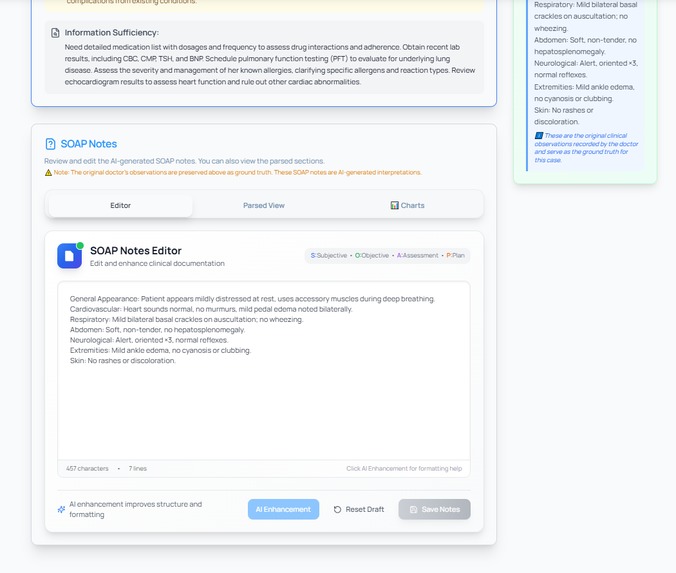
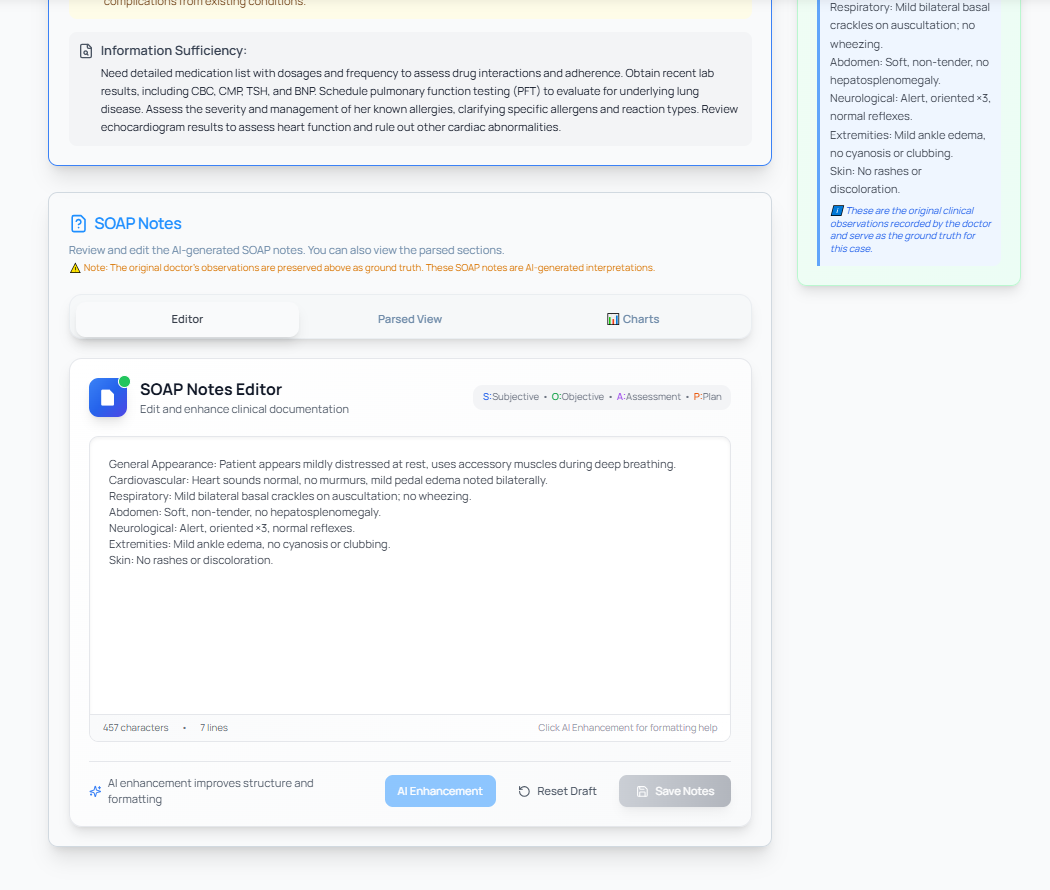
Soap Notes edit
-
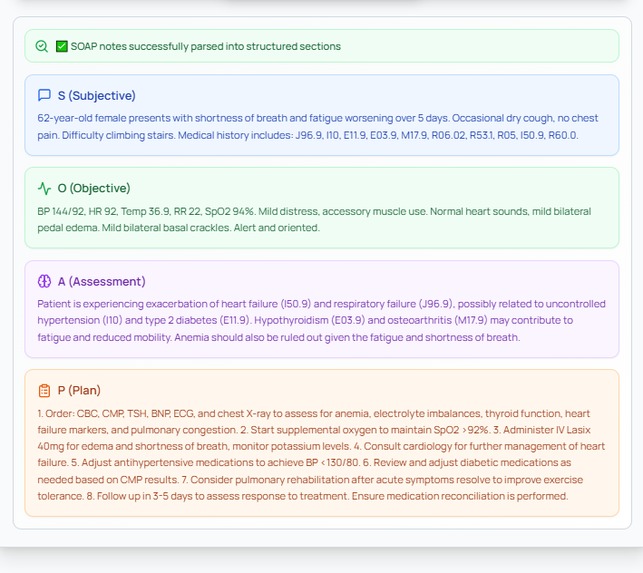
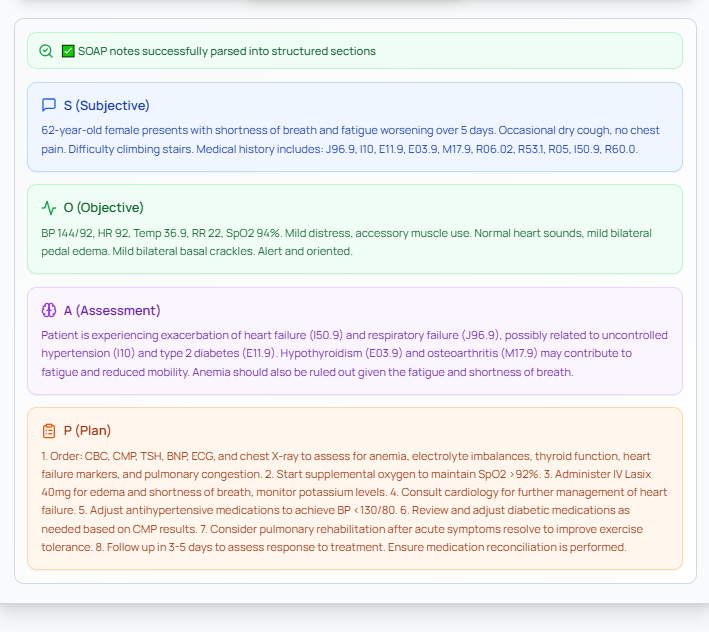
Soap notes generated
-
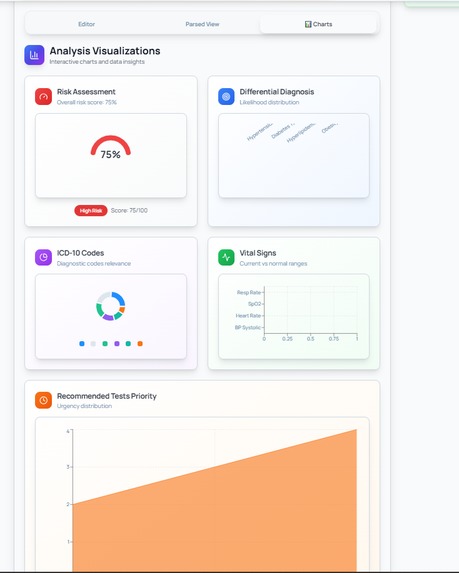
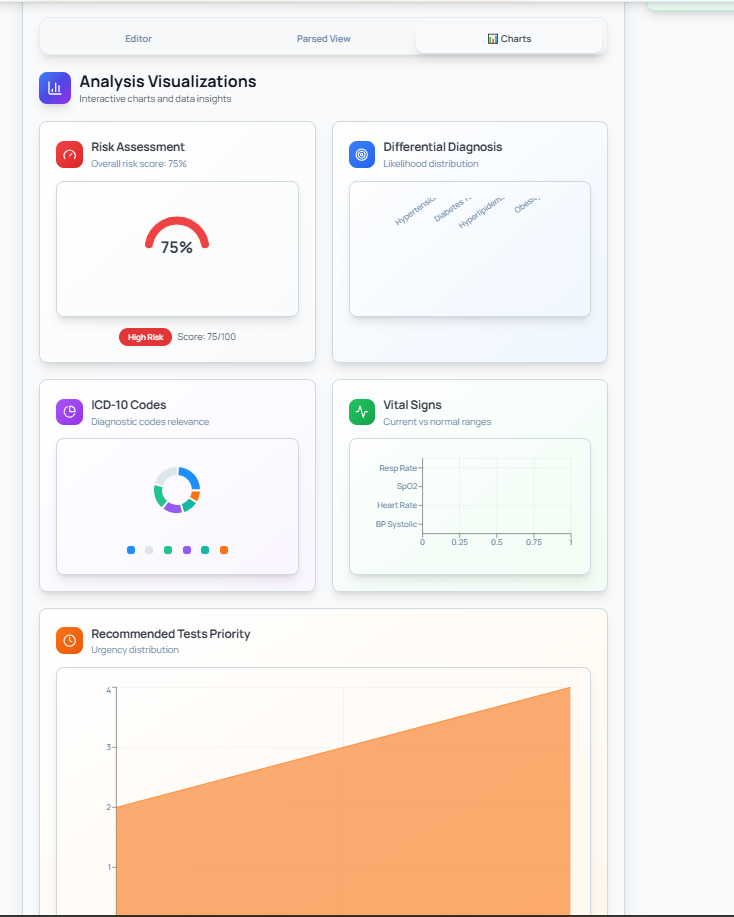
Charts Generated
-
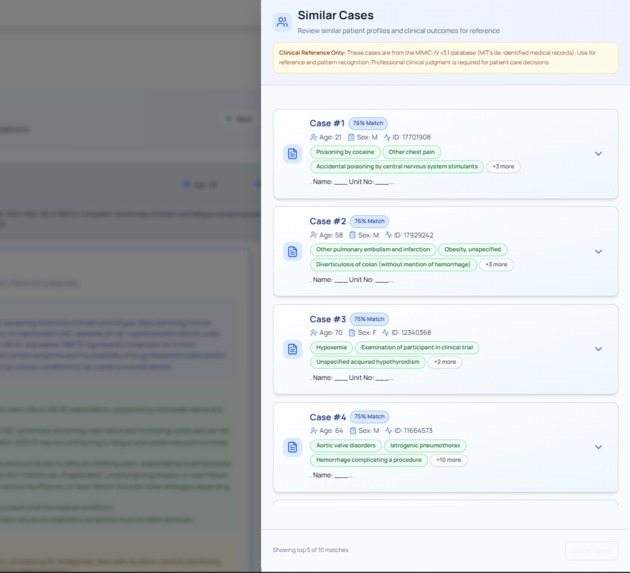
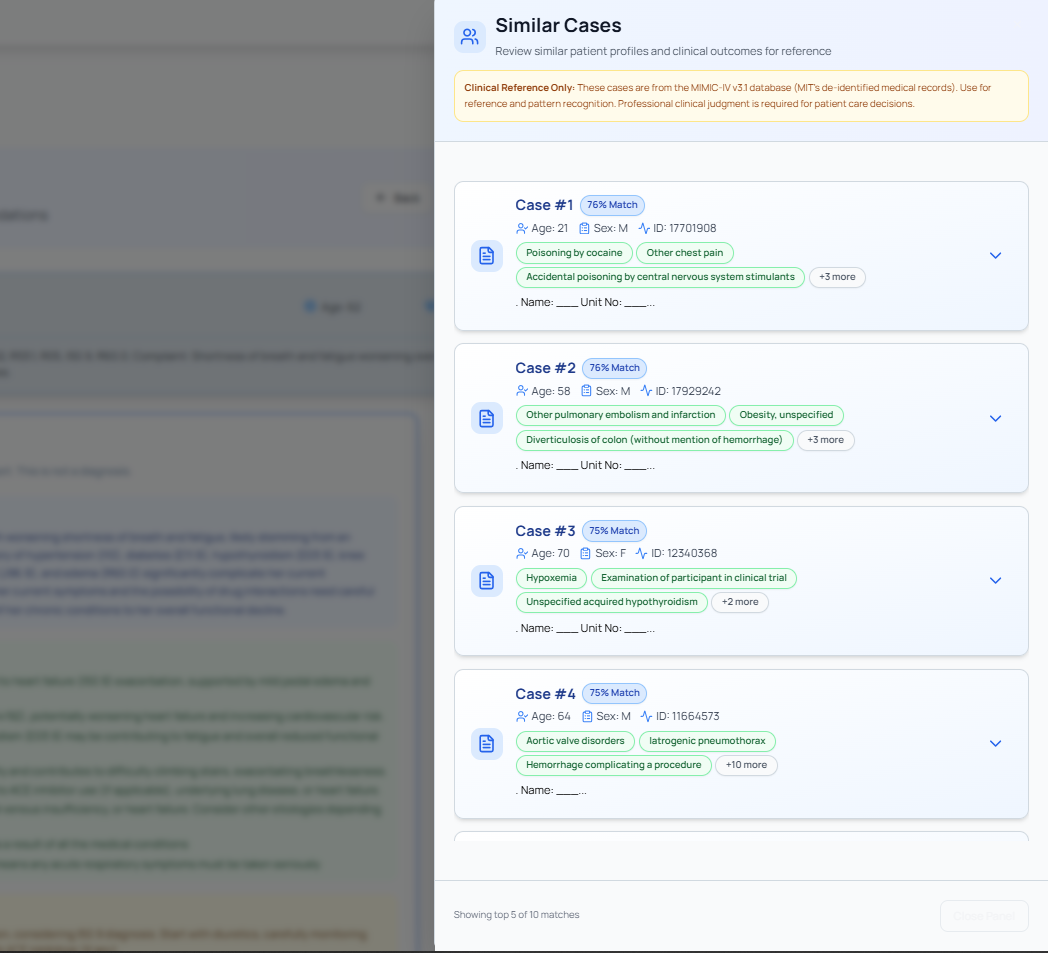
Similar Cases View
🧠 Inspiration
This project honestly comes from a very real place for me.
My uncle is a doctor, and just hearing his stories—about the pressure, the responsibility, the sheer volume of cases they handle—I realized something: doctors don’t really have tools built for them. Everyone talks about AI in healthcare, but no one is building anything that actually helps them where it counts—in the moment, when real decisions have to be made.
That got me thinking. I asked myself: “What can I build that would genuinely make a difference?” Not just another dashboard, not another chatbot, but something real. Something that could help a doctor in the middle of a stressful shift, help them think faster, better, and with confidence—data-backed confidence.
That’s how HealthTrack AI was born. It’s not just a project to me—it’s my way of bringing AI into clinical practice in a way that actually helps. Not replaces. Helps. It’s designed especially for young doctors who are trying to juggle it all—diagnosis, documentation, decision-making—on top of insanely tight schedules. They deserve something that has their back.
This project is my attempt at that. To support the people who support everyone else.
💡 What It Does
HealthTrack AI is a full-stack clinical assistant platform. Think of it as a plug-and-play hospital intelligence system.
Core Capabilities:
✅ Consultation System: Doctors can register new cases or follow-ups via structured forms: -Demographics: Name, Age, Sex, Contact Info -Vitals: BP, HR, SPO2, RR, Temperature -Symptoms, Clinical Notes, Allergies, Previous Diagnoses
✅ AI-Enhanced Risk Analysis:
- Risk Score (0–100): Estimated risk of mortality based on similar cases
- NER Extraction of symptoms from doctor's notes
- ICD-10 Auto-Tagging: Accurate, AI-assisted diagnostic codes with a full database in house for instant ground truth verification
✅ AI Summary:
- Generates a concise, high-context summary of the doctor’s notes for rapid review
✅ Advanced Analysis Panel:
- Diagnostic co-pilot suggestions based on risk + clinical data
- Recommends tests to rule out possibilities
- Performs context-aware hallucination checks engineered into the program
✅ SOAP Notes Generator: -Converts raw notes into Subjective, Objective, Assessment, Plan format with AI
✅ Visual Dashboards:
- Interactive graphs of vitals, symptoms, AI suggestions & risk analytics
✅ Similar Case Retrieval:
- Blazingly fast MongoDB Atlas Vector Search integration
- Pulls Top 10 most similar real patient cases from the MIMIC-IV Dataset (MIT)
- Uses BioBERT Embeddings for most relevant medical embeddings
- Enables doctors to explore differential diagnoses based on real-world data
⚙️ How It’s Built
Architecture:
🎯 Modular Development:
- Local Dev
- AI Inference (Vertex AI)
- Backend (Node.js + Express + MongoDB Atlas)
- MongoDB Atlas + Vector Search
- Firebase Auth
- Google Cloud Console for hosting, logs, and security
🔁 Docker + CI/CD:
- Automated deployment via Cloud Build to Cloud Run
🧠 LLM-Oriented Prompt Engineering:
- Custom dual-step prompts for clinical reasoning and hallucination minimization
- Gemini 2.0 Pro for inference + summaries
💬 Feedback-Driven:
- Regular review and feedback from a real emergency doctor
| Area | Tech |
|---|---|
| Frontend | Next.js, Tailwind CSS, Shadcn UI |
| Backend | Node.js, Express.js |
| Database | MongoDB Atlas + Vector Search |
| AI Inference | Vertex AI (Gemini Pro + Gemini Flash), BioBERT Embeddings |
| Deployment | Google Cloud Run, Docker, Cloud Build |
| Dataset | MIMIC-IV Clinical Dataset |
| Dev Tools | VSCode, Copilot, Firebase Studio (initial scaffolding) |
🚧 Challenges We Faced
🧾 Getting the Dataset: MIMIC-IV is de-identified and requires credentialed access—it was a major early hurdle.
⏱️ Insane Time Crunch: Built everything, front to back, in under a week.
🤯 Prompt Engineering Hell: AI hallucinations were initially rampant. Took dozens of tests to structure prompts properly.
💸 Cost Management: Vertex AI and Atlas are not free, infact they were quite the opposite—optimizing usage is still an ongoing effort.
🧵 Complex State & Cache Management: Coordinating data between frontend, backend, and AI was tricky.
👤 Solo Development: Every line of code, design decision, AI pipeline, and bug fix was done solo.
🏆 Accomplishments
🚀 Fully Working MVP — with real-world utility, deployed live and tested
🧑⚕️ Addresses Real Clinical Needs — not a gimmick, but a practical tool for doctors
🎨 Sleek UI/UX — A beautiful, intuitive dashboard built from scratch
☁️ First-Time GCP Developer — Learned and deployed everything on Google Cloud in one go
🧠 End-to-End AI Integration — hallucination-resistant, structured medical reasoning pipeline
🔎 MIMIC-IV Vector Search Integration — blazing-fast clinical case similarity search engine
What I Learned?
✅ Google Cloud Console (Cloud Run, Vertex AI, IAM, Billing)
✅ Vertex AI Studio Prompt Engineering
✅ MongoDB Atlas and Vector Search
✅ Healthcare data structures and ICD-10 clinical coding
✅ End-to-End system architecture & planning
✅ How to build something truly meaningful, not just cool
🚀 What’s Next?
Plenty of features couldn’t make the cut due to time:
- 🧠 More AI enhancements & guardrails
- 🏥 Department-wise & organization-wise patient management
- 🎙️ Voice input for doctors
- 📤 Export options (PDFs, EHR integrations)
- 💬 Live AI Assistant (real-time case Q&A)
- 🌙 Full dark mode with context-aware theming
💡 How HealthTrack Works – The Full Workflow
Let me walk you through the entire flow of HealthTrack AI, exactly how I built and imagined it to function in a real clinical environment.
When a doctor logs in, they land on a clean, modern dashboard. From here, they can view all existing patient cases or start a new consultation. That’s where the magic begins.
🧾 Step 1: Case Registration
The doctor starts by registering a new patient case. They’re asked to fill out a beautifully structured and intuitive form that includes:
- Patient demographics (name, age, sex)
- Vitals (temp, HR, SpO2, BP, respiratory rate)
- Clinical notes (freeform natural language from the doctor)
- Symptoms (captured both through checklists and open-ended notes)
- Known allergies
- Whether it’s a new consultation or follow-up
- Doctor’s initial assessment
Everything is saved instantly into a MongoDB Atlas database with a custom schema. It’s optimized, indexed, and ready to power our AI pipeline.
🧠 Step 2: Real-Time AI-Powered Analysis
Once the case is submitted, the AI workflow kicks in automatically. This is where Vertex AI and structured prompting do the heavy lifting.
The system:
- Analyzes the doctor’s notes and runs NER (Named Entity Recognition) to extract key symptoms and conditions.
- Tags the consultation with accurate ICD-10 codes based on the context.
- Generates a risk score out of 100, calibrated using similar real-world cases (MIMIC-IV) to estimate mortality/severity.
- Provides an AI-generated summary of the doctor’s input — structured, readable, and fast to scan during emergencies.
This summary is especially helpful for doctors who are reviewing multiple cases quickly.
🔬 Step 3: The Analysis Page (Where It All Comes Together)
The doctor is taken to the Analysis Page, which is probably my favourite part of the app. Here, the software acts like a real diagnostic co-pilot.
- It provides a holistic breakdown of the patient’s condition using the data it gathered.
- Suggests additional diagnostic tests to run — based on what's missing or uncertain.
- Points out inconsistencies or gaps in the information ("clinical nudges"), which helps reduce AI hallucination risks.
- Automatically formats the doctor’s inputs into SOAP Notes (Subjective, Objective, Assessment, Plan) — a standard in medicine, now AI-powered.
It also shows interactive charts and risk visualizations. These help doctors make fast, informed decisions.
🧠💾 Step 4: Similar Cases Retrieval To support differential diagnosis, the app queries MongoDB Atlas Vector Search to fetch the top 10 most similar cases from the MIMIC-IV dataset — these are real anonymized patient records.
This gives the doctor instant access to:
- Similar patients' vitals
- Symptoms
- Final outcomes
- What tests worked
- What diagnoses were made
This feature was made to build trust between doctors and AI, by grounding decisions in real-world precedent.
This system isn’t just about AI — it’s about putting doctors first. Helping them make faster, smarter, and data-backed decisions while minimizing overwhelm.
That was my goal: to build something that can one day sit in real hospitals, help real people, and hopefully — save lives.
Long-Term Vision:
To onboard real doctors and clinics to pilot HealthTrack AI—and turn it into a platform that changes how modern clinical care is delivered.
Final Thoughts:
Whether or not this wins, HealthTrack AI is one of the most meaningful things I’ve ever built. It’s a product of purpose, pain points, and precision. If this even aids and saves one life, it’s already worth it.
Citations:
MLA Johnson, Alistair, et al. "MIMIC-IV" (version 0.4). PhysioNet (2020). RRID:SCR_007345. https://doi.org/10.13026/a3wn-hq05 APA Johnson, A., Bulgarelli, L., Pollard, T., Horng, S., Celi, L. A., & Mark, R. (2020). MIMIC-IV (version 0.4). PhysioNet. RRID:SCR_007345. https://doi.org/10.13026/a3wn-hq05 Chicago Johnson, Alistair, Bulgarelli, Lucas, Pollard, Tom, Horng, Steven, Celi, Leo Anthony, and Roger Mark. "MIMIC-IV" (version 0.4). PhysioNet (2020). RRID:SCR_007345. https://doi.org/10.13026/a3wn-hq05 Harvard Johnson, A., Bulgarelli, L., Pollard, T., Horng, S., Celi, L. A., and Mark, R. (2020) 'MIMIC-IV' (version 0.4), PhysioNet. RRID:SCR_007345. Available at: https://doi.org/10.13026/a3wn-hq05 Vancouver Johnson A, Bulgarelli L, Pollard T, Horng S, Celi L A, Mark R. MIMIC-IV (version 0.4). PhysioNet. 2020. RRID:SCR_007345. Available from: https://doi.org/10.13026/a3wn-hq05
APA Goldberger, A., Amaral, L., Glass, L., Hausdorff, J., Ivanov, P. C., Mark, R., ... & Stanley, H. E. (2000). PhysioBank, PhysioToolkit, and PhysioNet: Components of a new research resource for complex physiologic signals. Circulation [Online]. 101 (23), pp. e215–e220. RRID:SCR_007345. MLA Goldberger, A., et al. "PhysioBank, PhysioToolkit, and PhysioNet: Components of a new research resource for complex physiologic signals. Circulation [Online]. 101 (23), pp. e215–e220." (2000). RRID:SCR_007345. CHICAGO Goldberger, A., L. Amaral, L. Glass, J. Hausdorff, P. C. Ivanov, R. Mark, J. E. Mietus, G. B. Moody, C. K. Peng, and H. E. Stanley. "PhysioBank, PhysioToolkit, and PhysioNet: Components of a new research resource for complex physiologic signals. Circulation [Online]. 101 (23), pp. e215–e220." (2000). RRID:SCR_007345. HARVARD Goldberger, A., Amaral, L., Glass, L., Hausdorff, J., Ivanov, P.C., Mark, R., Mietus, J.E., Moody, G.B., Peng, C.K. and Stanley, H.E., 2000. PhysioBank, PhysioToolkit, and PhysioNet: Components of a new research resource for complex physiologic signals. Circulation [Online]. 101 (23), pp. e215–e220. RRID:SCR_007345. VANCOUVER Goldberger A, Amaral L, Glass L, Hausdorff J, Ivanov PC, Mark R, Mietus JE, Moody GB, Peng CK, Stanley HE. PhysioBank, PhysioToolkit, and PhysioNet: Components of a new research resource for complex physiologic signals. Circulation [Online]. 101 (23), pp. e215–e220. RRID:SCR_007345.
Built With
- cloud
- docker
- express.js
- gcp
- gemini
- genkit
- git
- github
- goolecloudplatform
- llm
- mongodb
- mongodbatlas
- natural-language-processing
- ner
- nextjs
- node.js
- react
- shadcn
- tailwind
- tailwindcss
- typescript
- vertexai


Log in or sign up for Devpost to join the conversation.