-
-

Logo
-
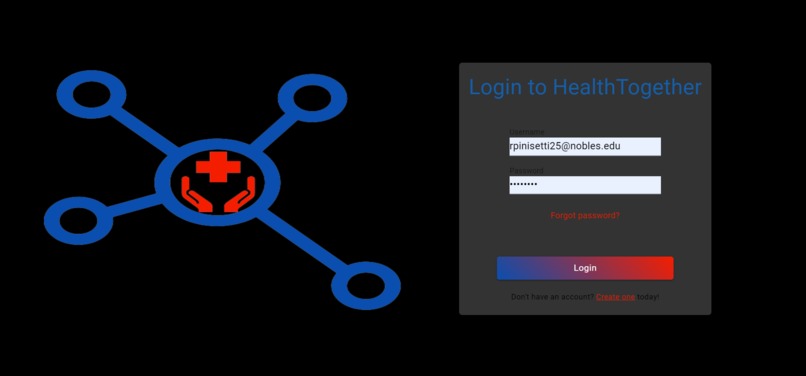
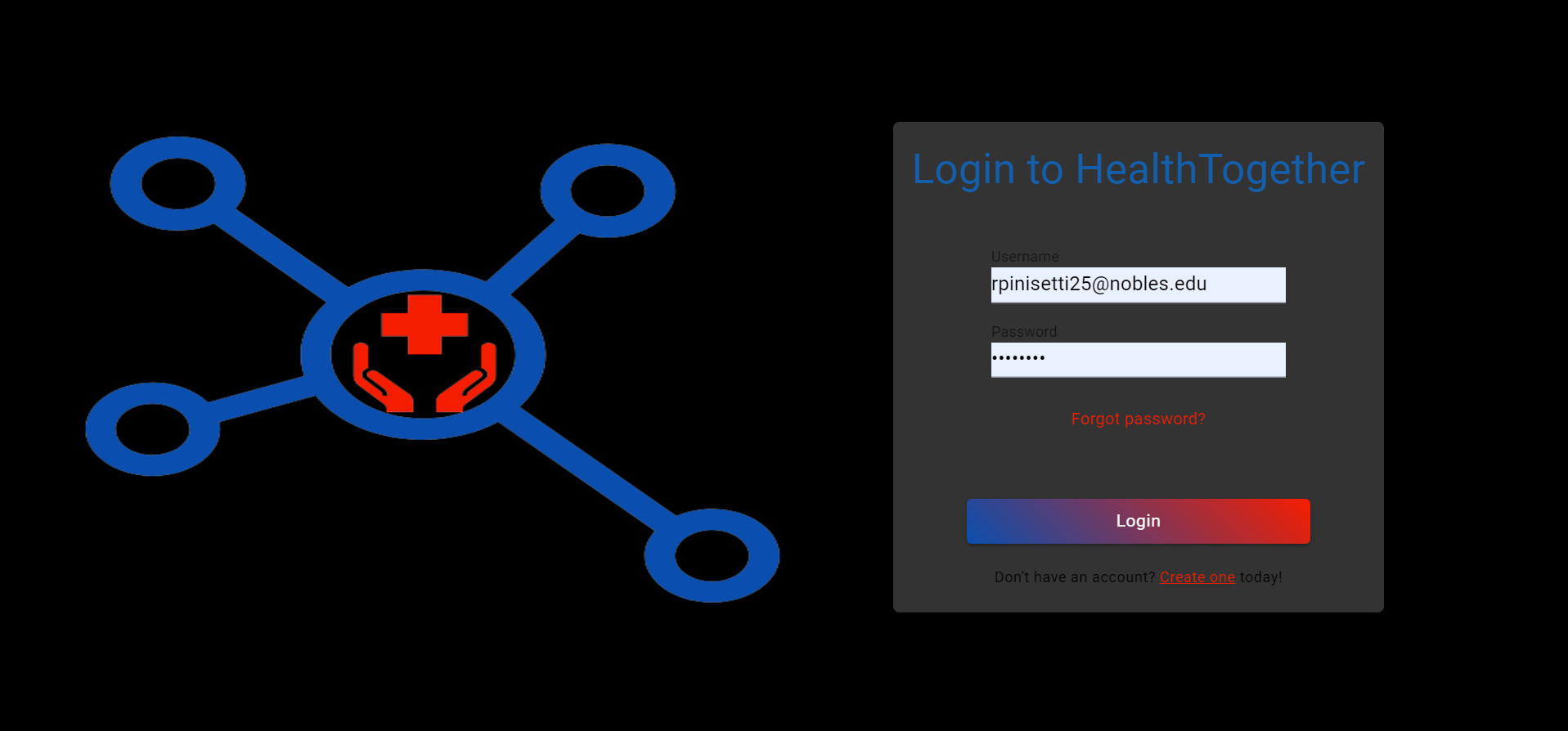
Login page
-
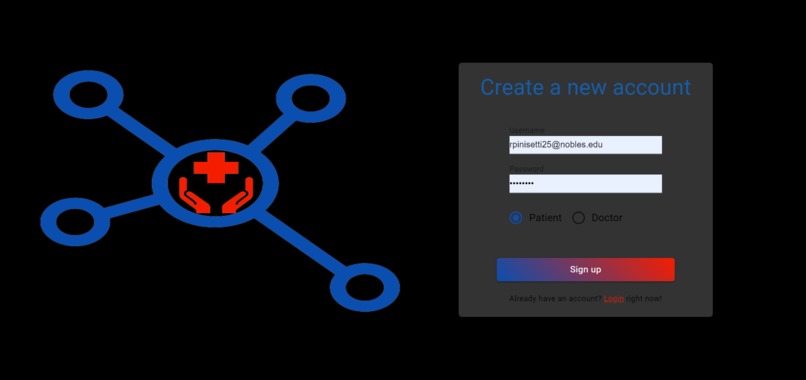
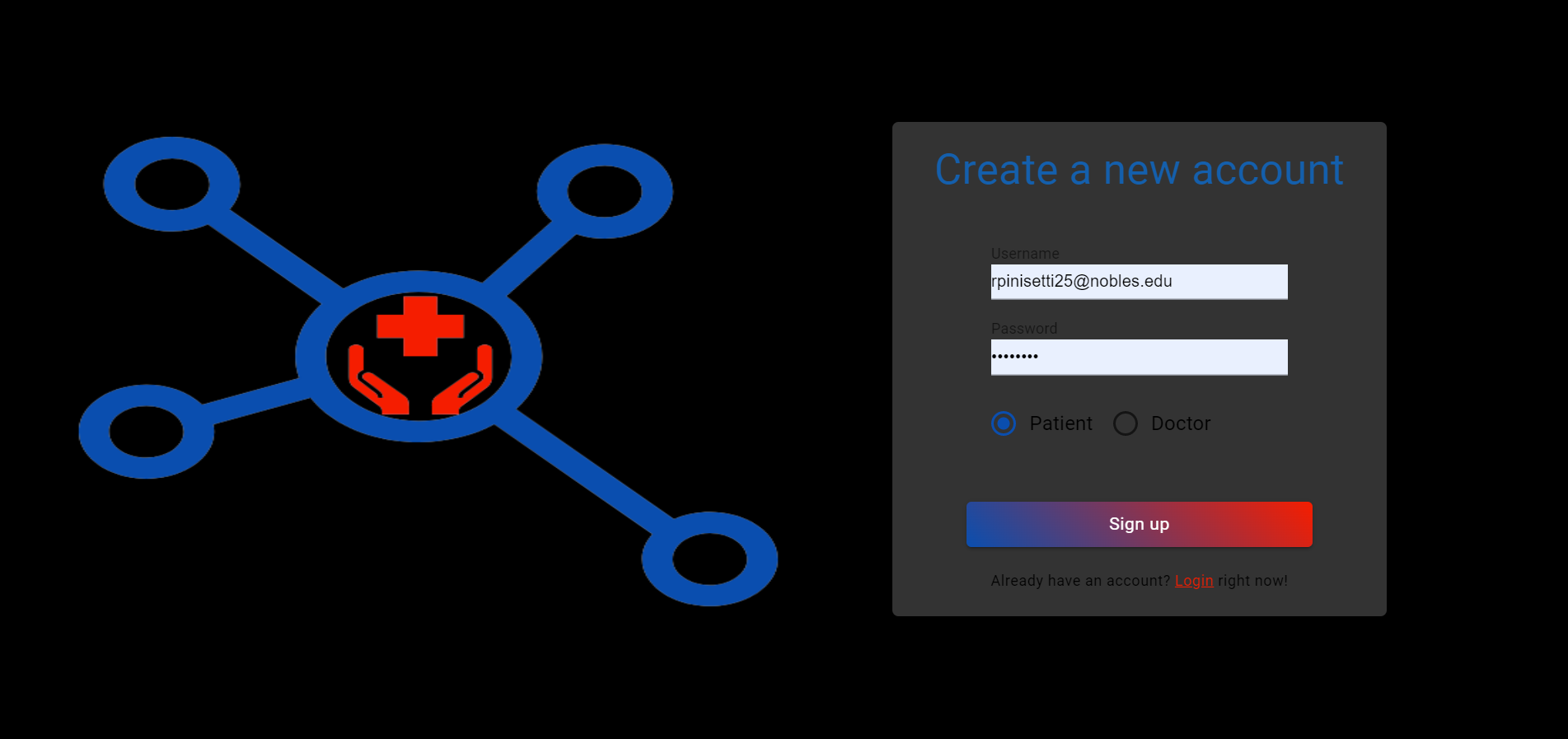
Register new account page
-
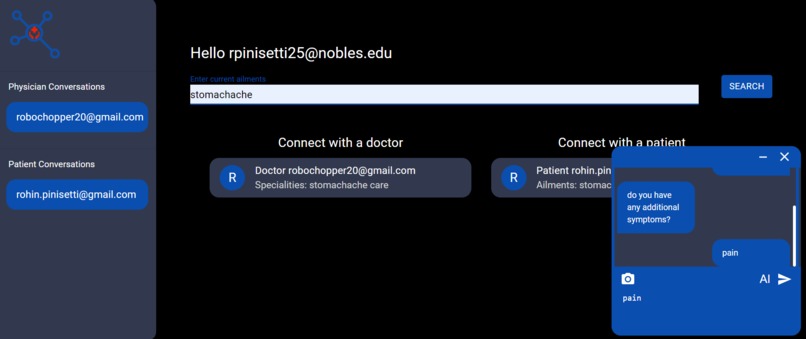
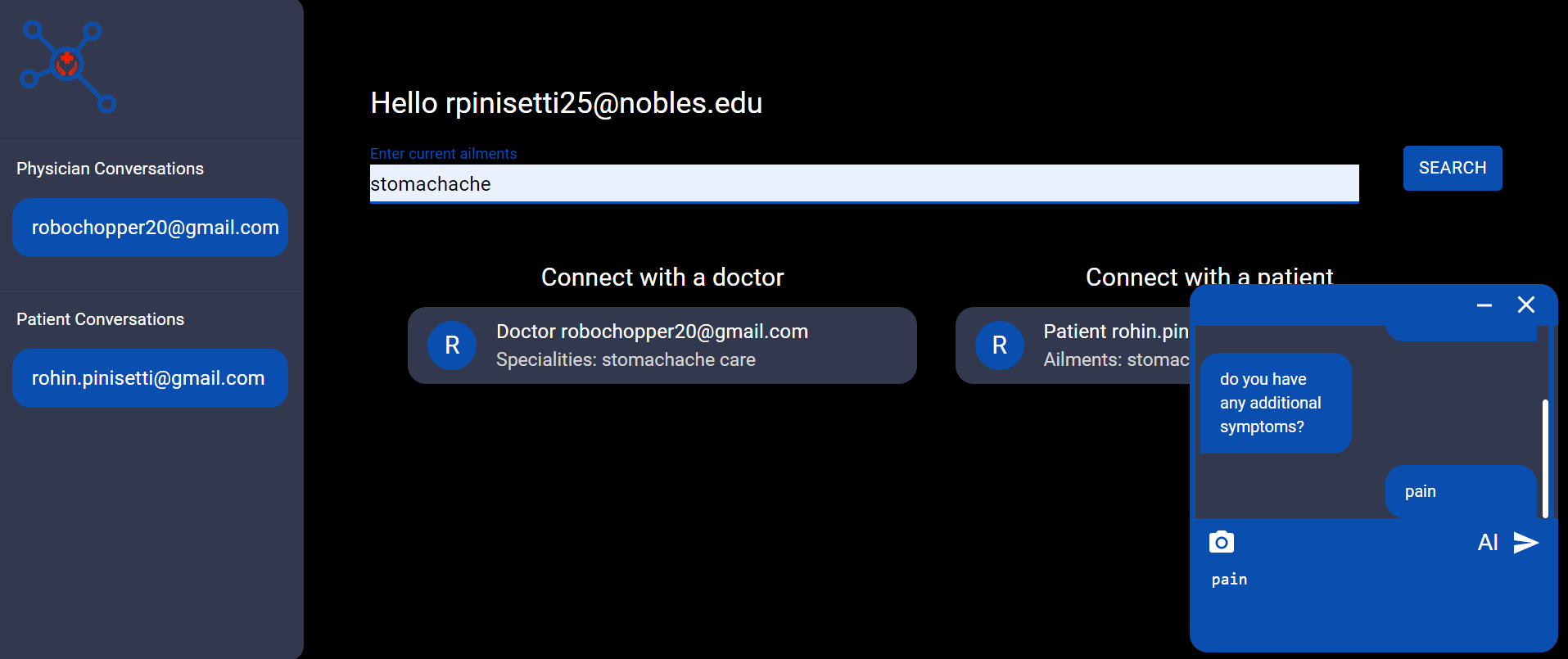
PatientDashboard
-
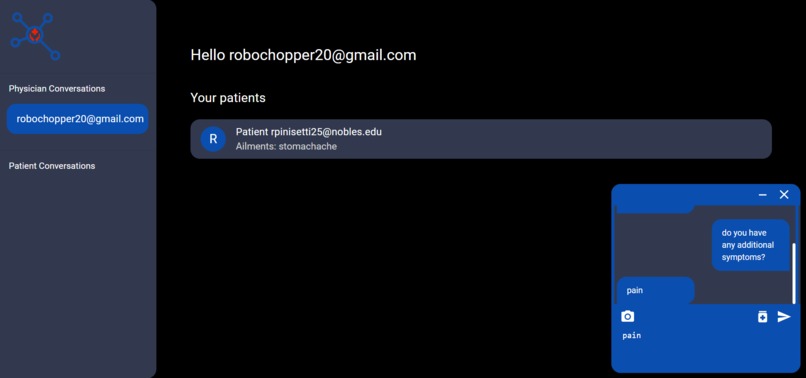
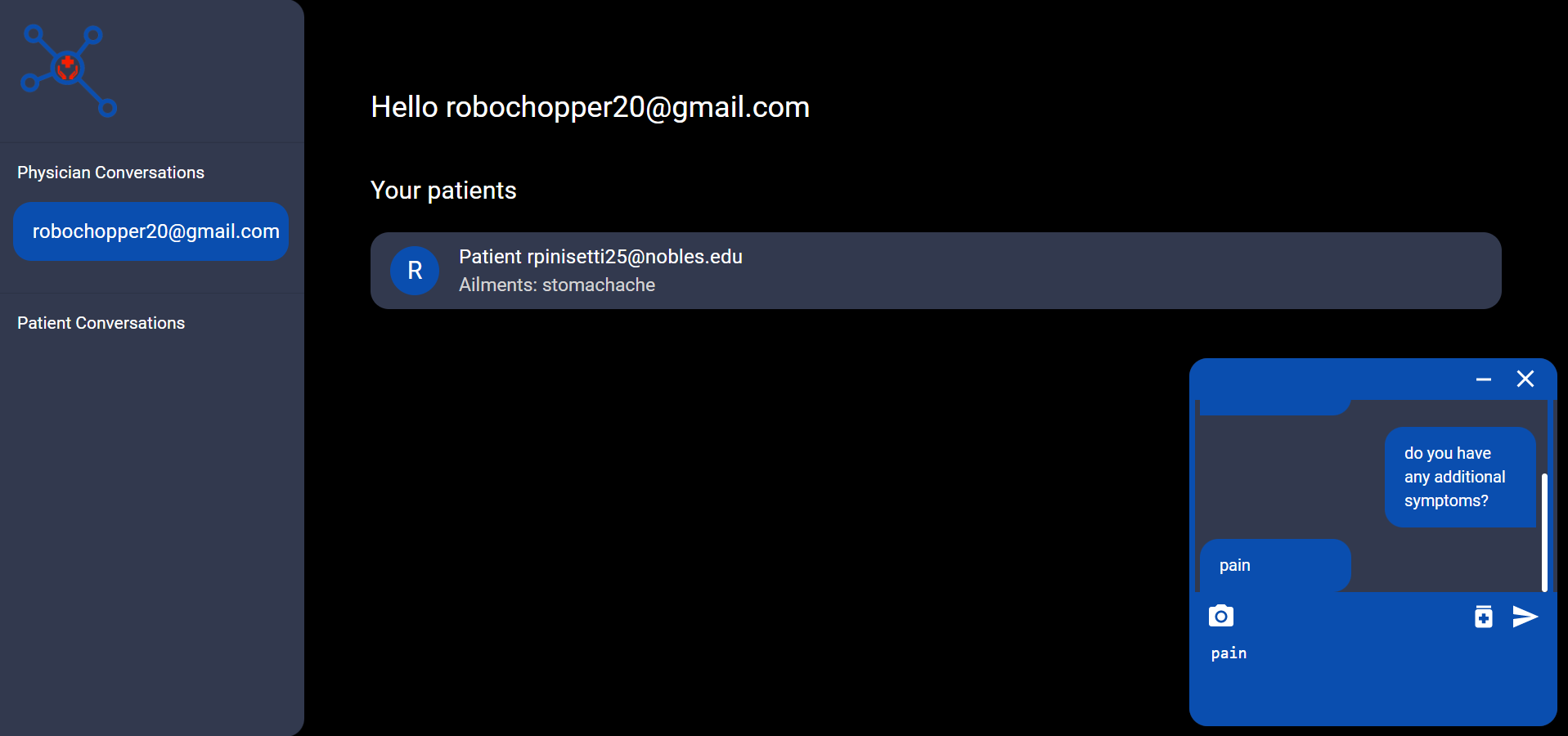
DoctorDashboard

HealthTogether
An efficient online platform that connects doctors and patients
My Inspiration
- Unequal access to health care, especially for those in rural communities
- For instance, those in rural areas sometimes have to travel up to 200 miles to meet a obstetrician or gynecologist AAMC
- The shortage in physicians
- In the next 12 years, the US will have a predicted shortage of between 37,800 and 124,000 physicians AAMC
- Current telehealth systems can cost between $20,000 and $30,000 SOFTERMII, further disadvantaging underfunded hospitals
My Solution
- A simple online platform that matches patients with doctors and one another and allows for efficient and safe communication regarding the patient's condition
- Clean, minimalist Web UI interface allows users to efficiently interact with one another
- Proprietary recommendation engine matches patients with doctors based upon an advanced set of features
- ML algorithm that interacts with patients during off hours, allowing patients to receive feedback and assistance when no doctors are present
- A second recommendation algorithm identifies other patients who have had similar ailments and allows them to chat with one another, providing assistance and comfort from someone who has had a similar condition and allowing for a more intimate and personal connection than with a doctor
- Database of prescription drugs that have successfully combated certain ailments are recommended to the doctor, helping to increase their efficiency
- A toxicity algorithm vetts unproductive and rude conversations between patients, ensuring a kind and comforting online space
Development process
- Utilized ReactJS for the UI interface, and python for the various machine learning components
- Integrated Firebase Realtime database with the UI
- Trained a custom toxicity classification model using Cohere
- Drug recommendation algorithm created - Colab Notebook
- Flask API created to host ML algorithms
- Integrated the APIs into the project
User Experience
- By matching users with others with similar conditions, users can empathize with one another, fostering a comforting online environment
- Simple UI reduces technical complexities and provides users with a more efficient experience
- Chat algorithm allows users to receive feedback whenever they need it
User Privacy
- All data is stored using Firebase, which encrypts data in transit using HTTPS Firebase
- Additional security measures are necessary and I hope to add these in future iterations of this project
Future Improvements
- Adding additional security measures
- Improving the accuracy of the toxicity classifier
- Further streamlining the user experience (from both the patient and physician perspectives)
- Creating an app to provide users with a more native experience on mobile devices
Challenges during development
- Limited time made it difficult to implement all the features that I wanted
- Using many different languages and APIs made development more difficult
Accomplishments
- I'm proud of the UI and how it ensures an efficient user experience
What I learned
- I learned more about designing and creating minimalist UIs
- Additionally, I learned more about firebase and its various real-time capabilities
Sources
Drug Review Dataset
Felix Gräßer, Surya Kallumadi, Hagen Malberg, and Sebastian Zaunseder. 2018. Aspect-Based Sentiment Analysis of Drug Reviews Applying Cross-Domain and Cross-Data Learning. In Proceedings of the 2018 International Conference on Digital Health (DH '18). ACM, New York, NY, USA, 121-125. DOI: [Web Link]

Log in or sign up for Devpost to join the conversation.