-
-
Logo
-
In the login page
Inspiration
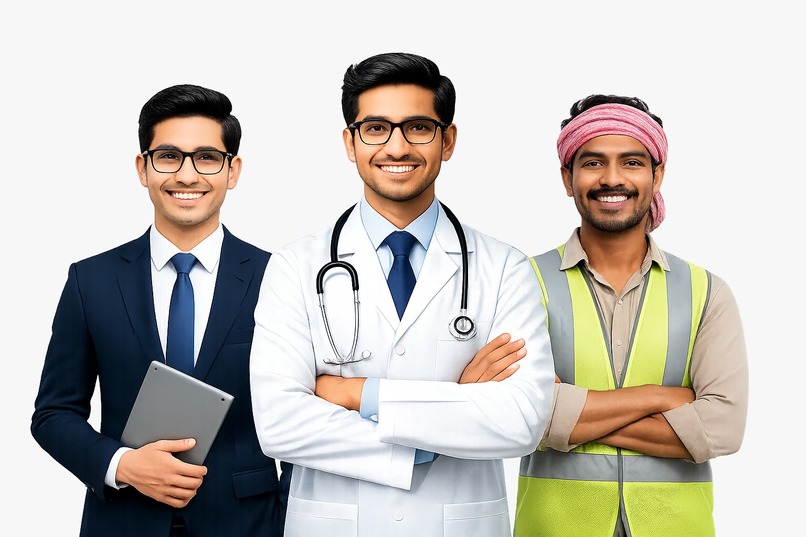
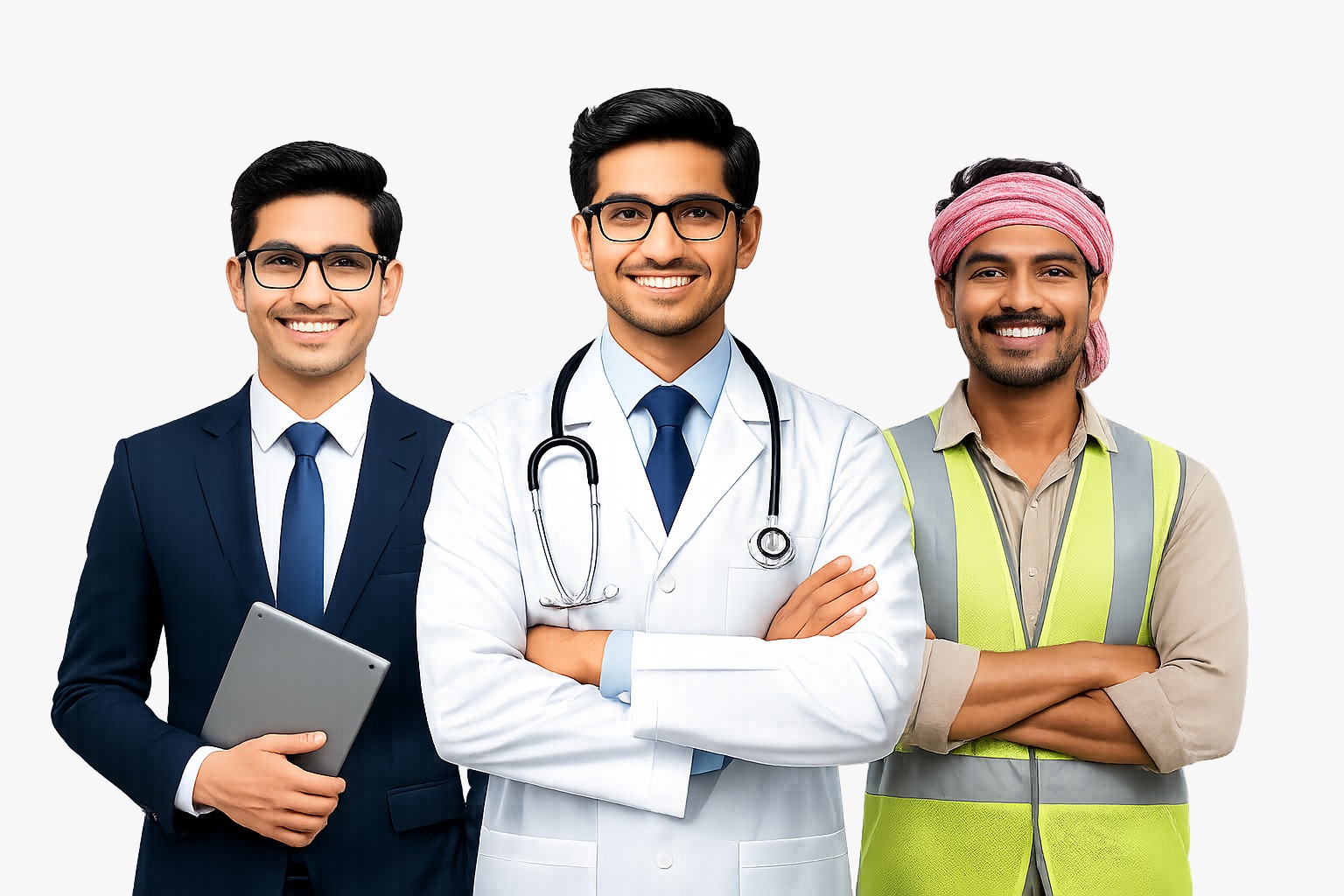
India has an internal migrant worker population of over 100 million people who frequently travel across state borders for work. When a migrant worker falls ill in a new state, they face two massive challenges: a severe language barrier and a complete lack of medical history. A doctor in a new state has no idea what medications were prescribed to this worker in the past, leading to dangerous misdiagnoses, redundant lab tests, and severe adverse drug reactions. We wanted to bridge this healthcare gap and ensure that mobility does not become a barrier to quality medical treatment.
What it does
HealthSync is a centralized, AI-integrated digital health record system designed specifically for the migrant workforce. Every registered worker receives a unique Universal QR Profile. A doctor can scan this code to instantly access the patient's emergency profile, blood group, and medical history, effectively breaking the language barrier. Furthermore, doctors can upload a photo of a physical blood test report, and the system uses Google Gemini AI to run OCR and automatically extract vital parameters into the system. Using these vitals, our Random Forest classifier predicts multi-disease risks for cardiovascular issues, stroke, and diabetes, backed by Explainable AI to show feature importance. Additionally, when a doctor prescribes multiple medicines, our NLP-powered AI Drug Interaction Detector flags potential adverse interactions in real-time, acting as a life-saving second opinion.
How we built it
We engineered HealthSync using a highly scalable microservices architecture. At the forefront, a Node.js API Gateway acts as the reverse proxy to route traffic securely. Our User Service is built with Java Spring Boot and an Oracle Database, handling JWT authentication, doctor approvals, and worker onboarding with strict ACID compliance. The Health Service, also powered by Spring Boot, seamlessly manages unstructured clinical data like prescriptions and health records using a MongoDB NoSQL schema. The brain of our application is the AI/ML Service built with Python and Flask, which hosts our Scikit-Learn machine learning models and handles the integration with the Google Gemini API. Everything is tied together by a mobile-responsive React.js and Vite frontend, designed minimally for busy doctors to get patient context in under three seconds.
Challenges we ran into
One of our biggest hurdles was microservices communication. Integrating a relational Oracle database for user identity and a NoSQL MongoDB database for health records across different Spring Boot services was an architectural challenge. We solved this by enforcing loose coupling via unique reference IDs and secure API Gateway routing. Additionally, bridging our Java backend with our Python ML models required careful handling of JSON payloads and asynchronous requests. Finally, extracting structured data from blurry lab report images proved difficult, but we overcame this by utilizing precise prompt engineering with the Gemini API to enforce strict JSON outputs.
Accomplishments that we're proud of
We are incredibly proud of successfully building an enterprise-grade microservices architecture from scratch as students. Implementing the AI Drug Interaction module was a major milestone, as it realistically prevents fatal medical errors by intercepting conflicting prescriptions in real-time. Most importantly, we are proud to have designed a comprehensive system that genuinely has the potential to impact and improve the lives of millions of underserved migrant workers across the country.
What we learned
Building HealthSync was a massive learning curve. We gained hands-on experience with Docker deployment, securing distributed microservices using stateless JWT authentication, and advanced NoSQL data modeling. We also learned how to deploy machine learning models via REST APIs and successfully utilized TF-IDF vectorization for Natural Language Processing in a real-world healthcare context.
What's next for HealthSync
Moving forward, we plan to implement multilingual support by translating the worker dashboard into multiple regional Indian languages. We also aim to build an offline progressive web app (PWA) mode, allowing doctors in remote medical camps to view cached QR profiles without internet access. Finally, we plan to sync our records with the Ayushman Bharat Digital Mission (ABDM) standards to ensure true nationwide interoperability.
Built With
- flask
- google-gemini
- java
- jwt
- machine-learning
- microservices
- mongodb
- node.js
- oracle
- python
- react
- scikit-learn
- spring-boot
- twilio

Log in or sign up for Devpost to join the conversation.