Inspiration
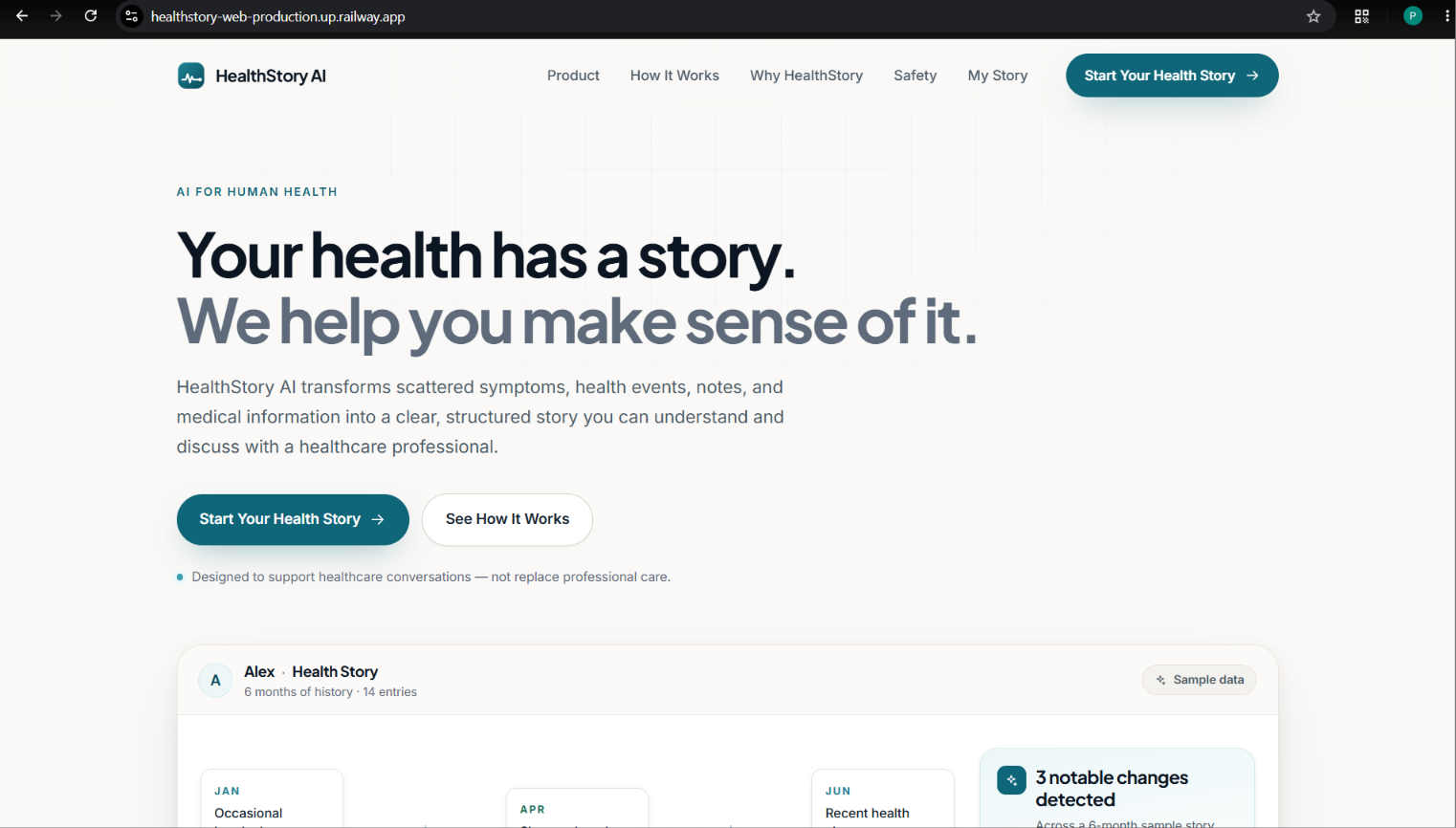
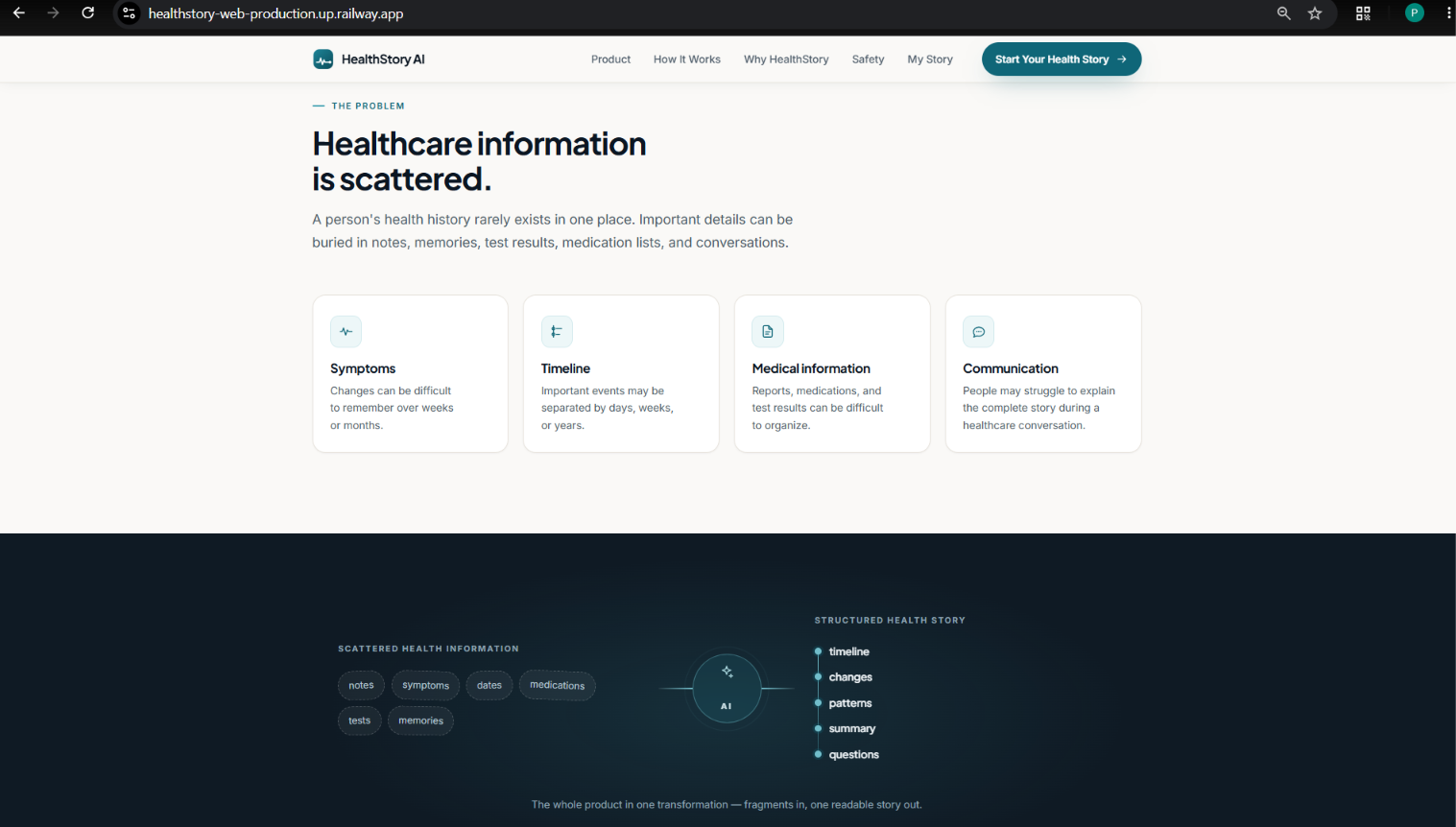
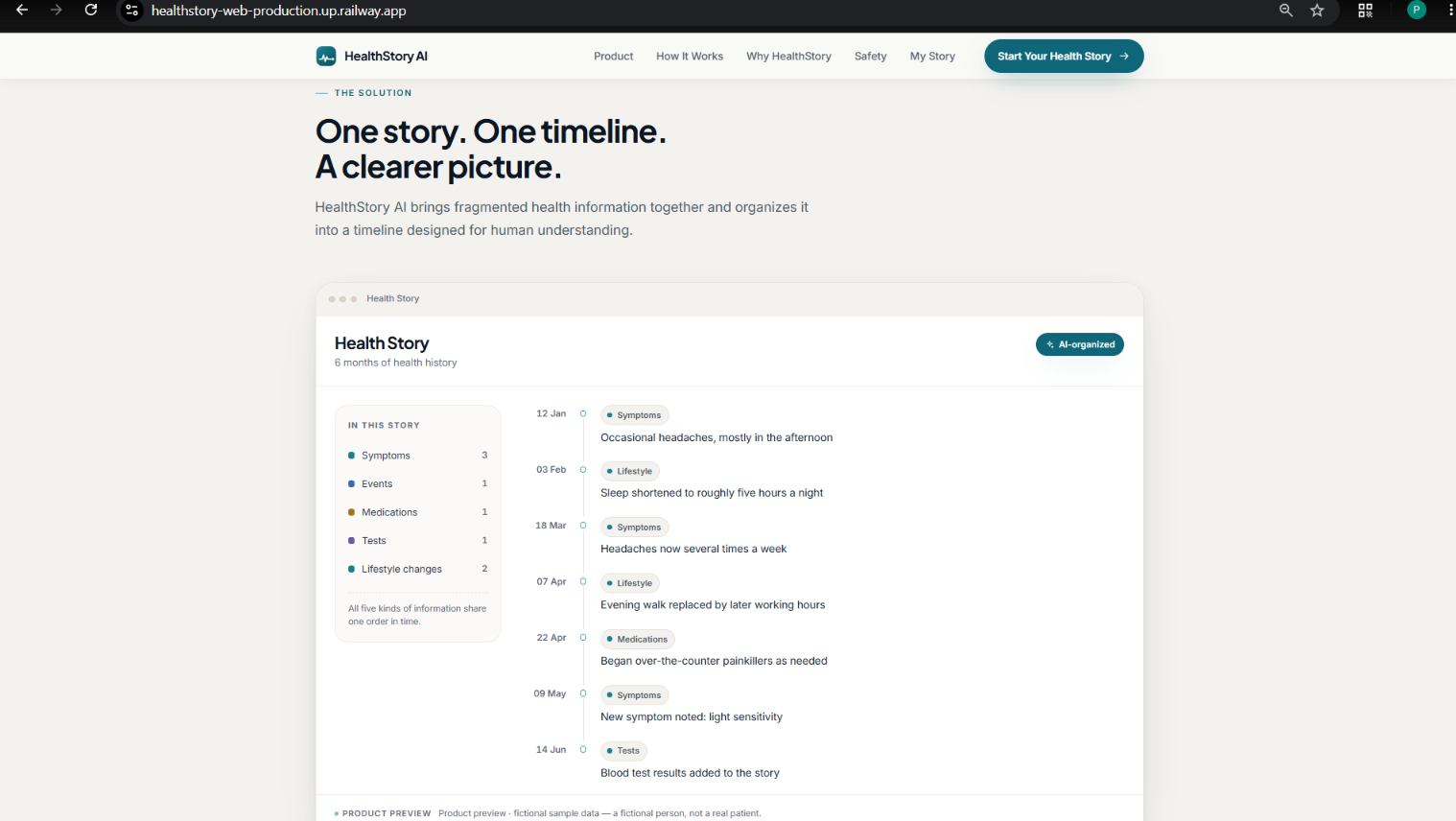
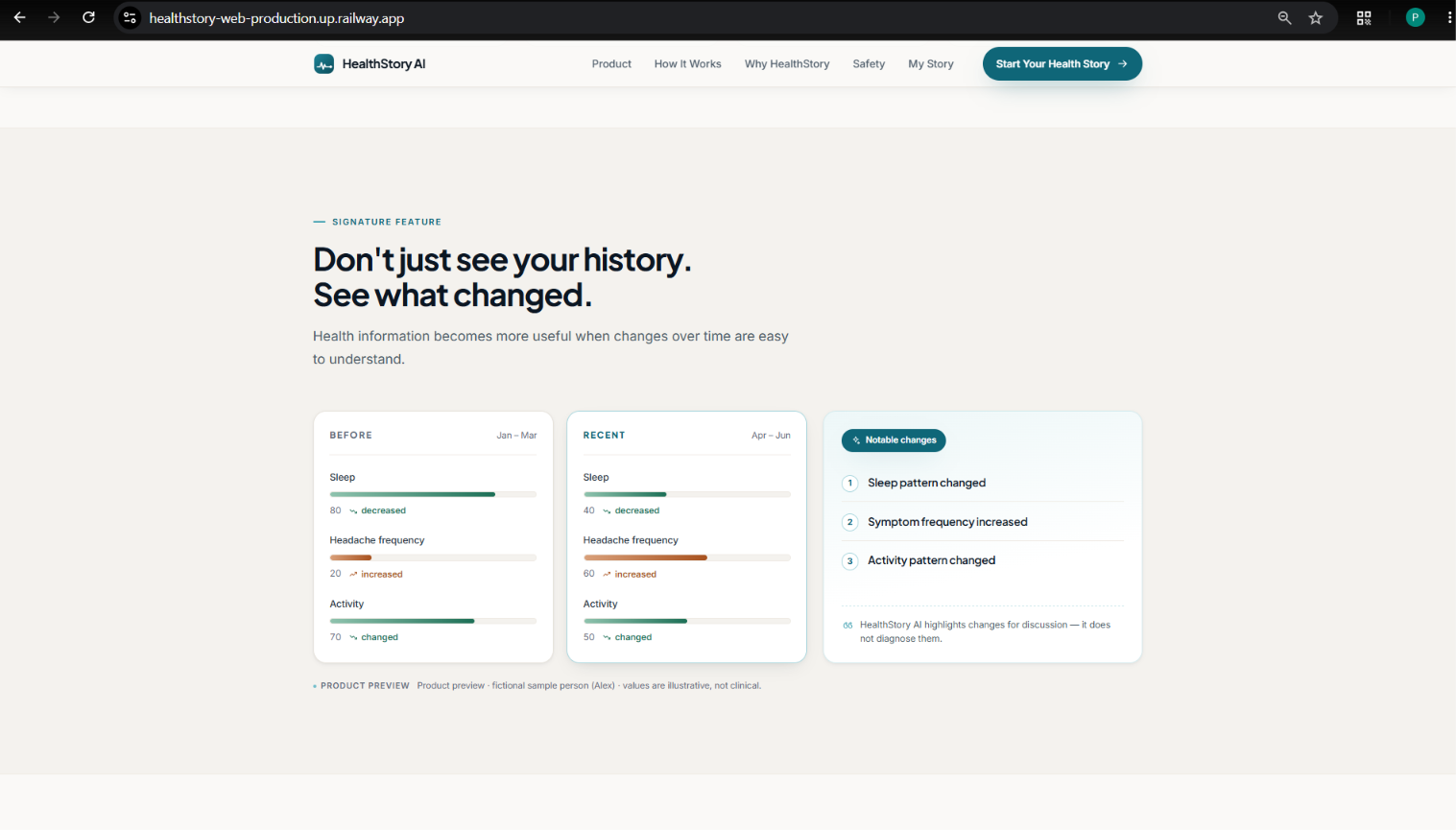
Health information is often spread across lengthy medical reports, prescriptions, laboratory results, and other documents. Understanding this information can be difficult for people without a medical background. We created HealthStory AI to make health information easier to understand, organize, and access. Our goal is to use AI to transform complex health documents into clear, structured summaries while helping users stay informed about their health information.
What it does
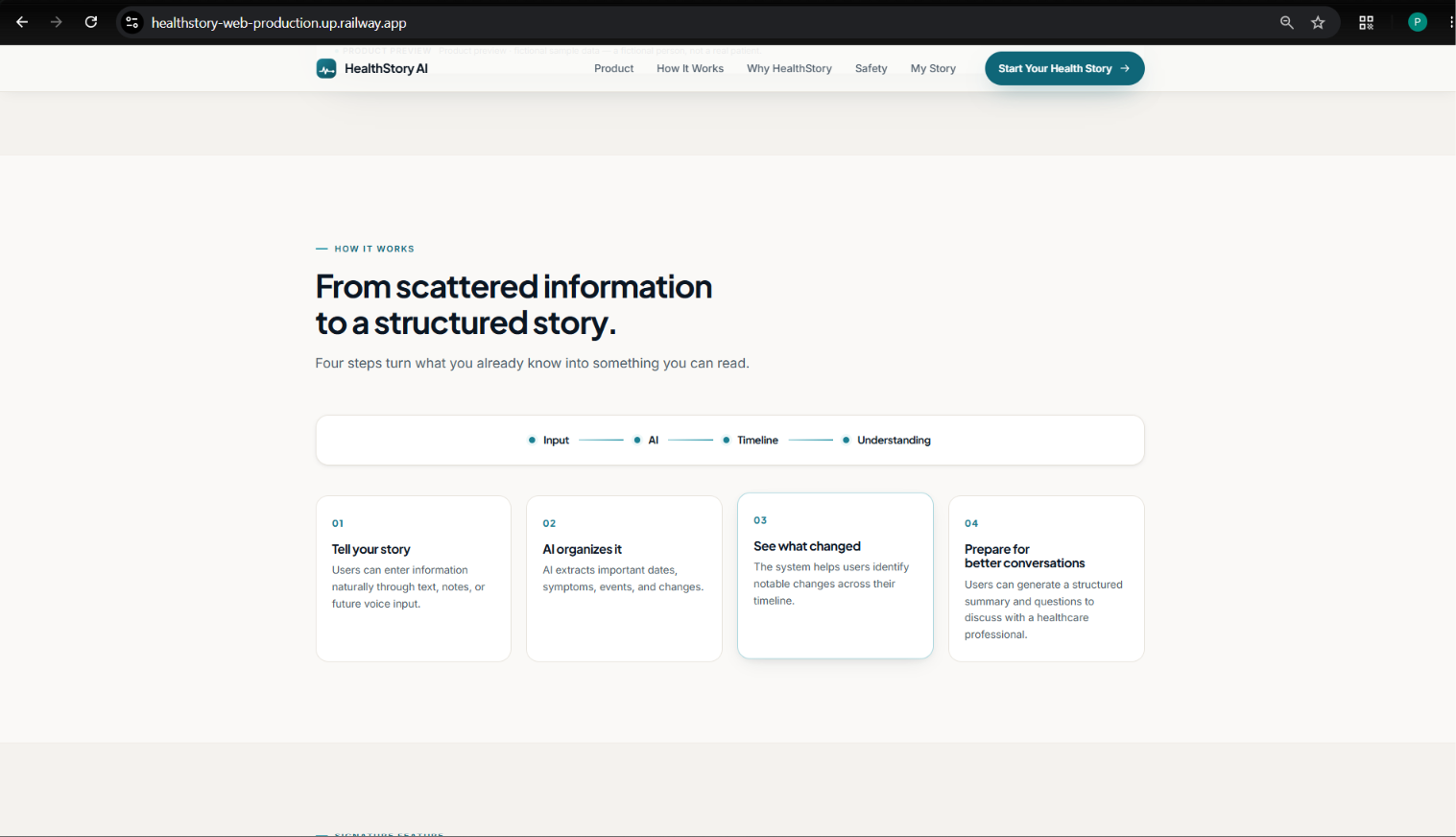
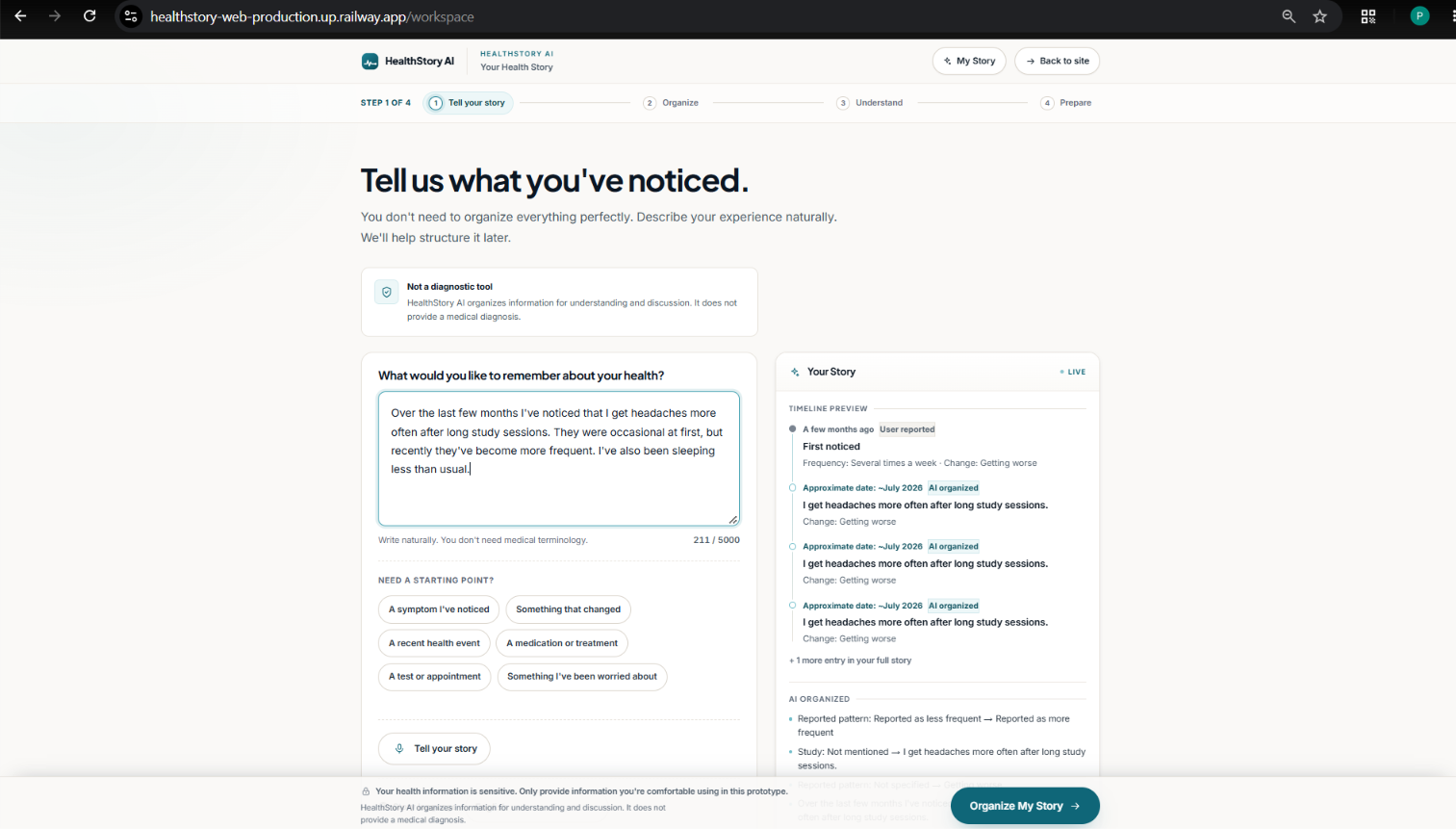
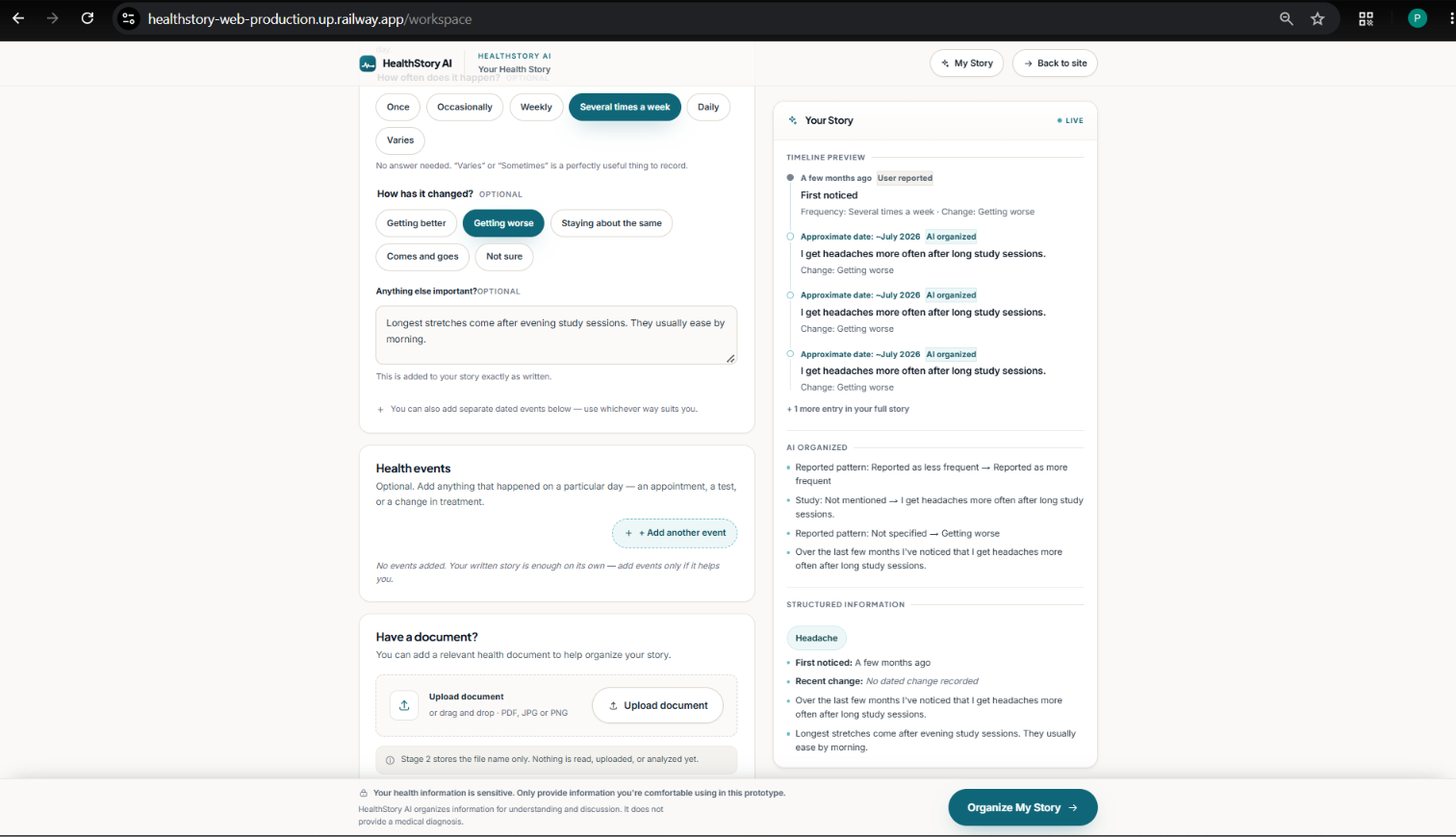
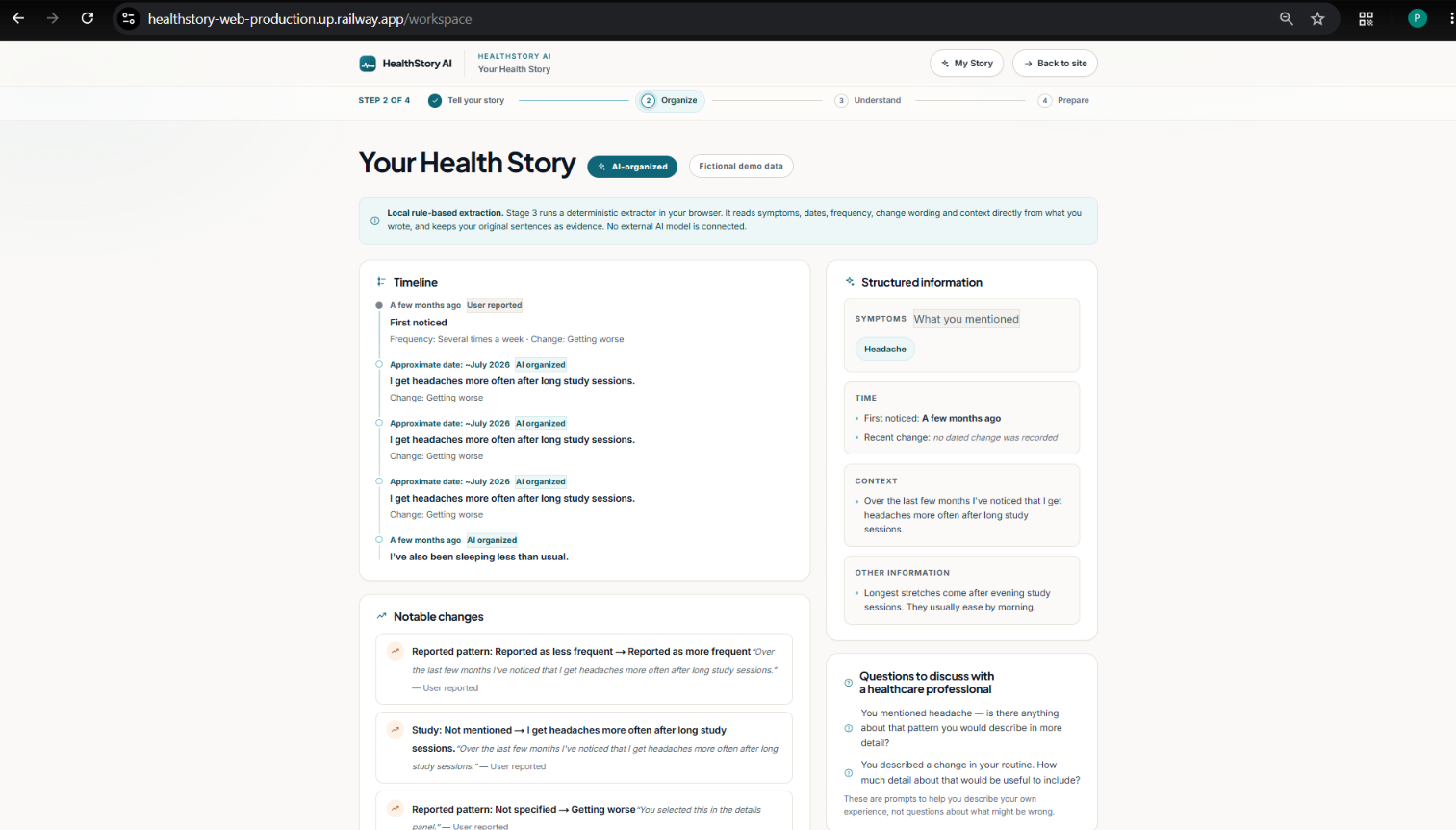
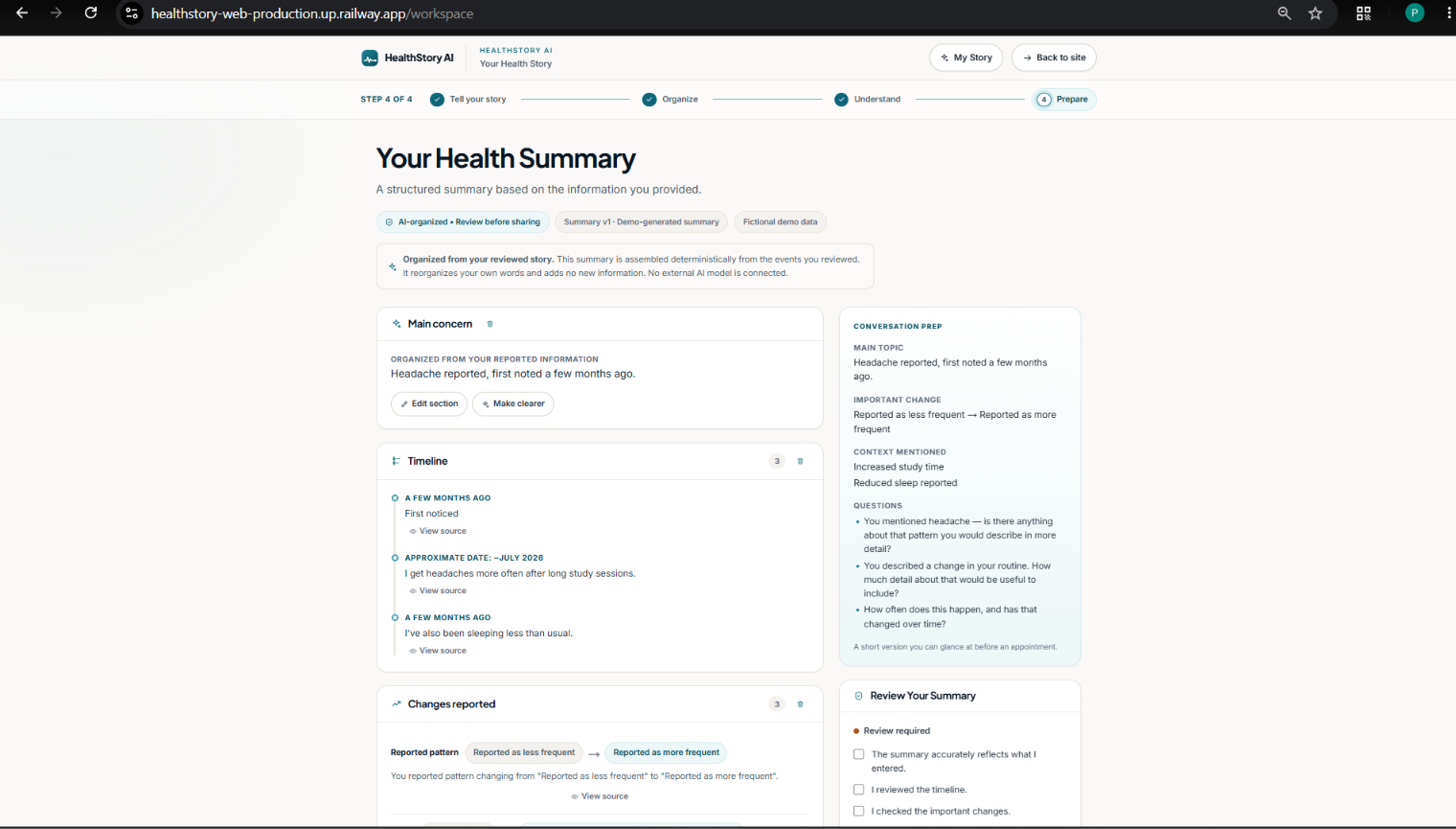
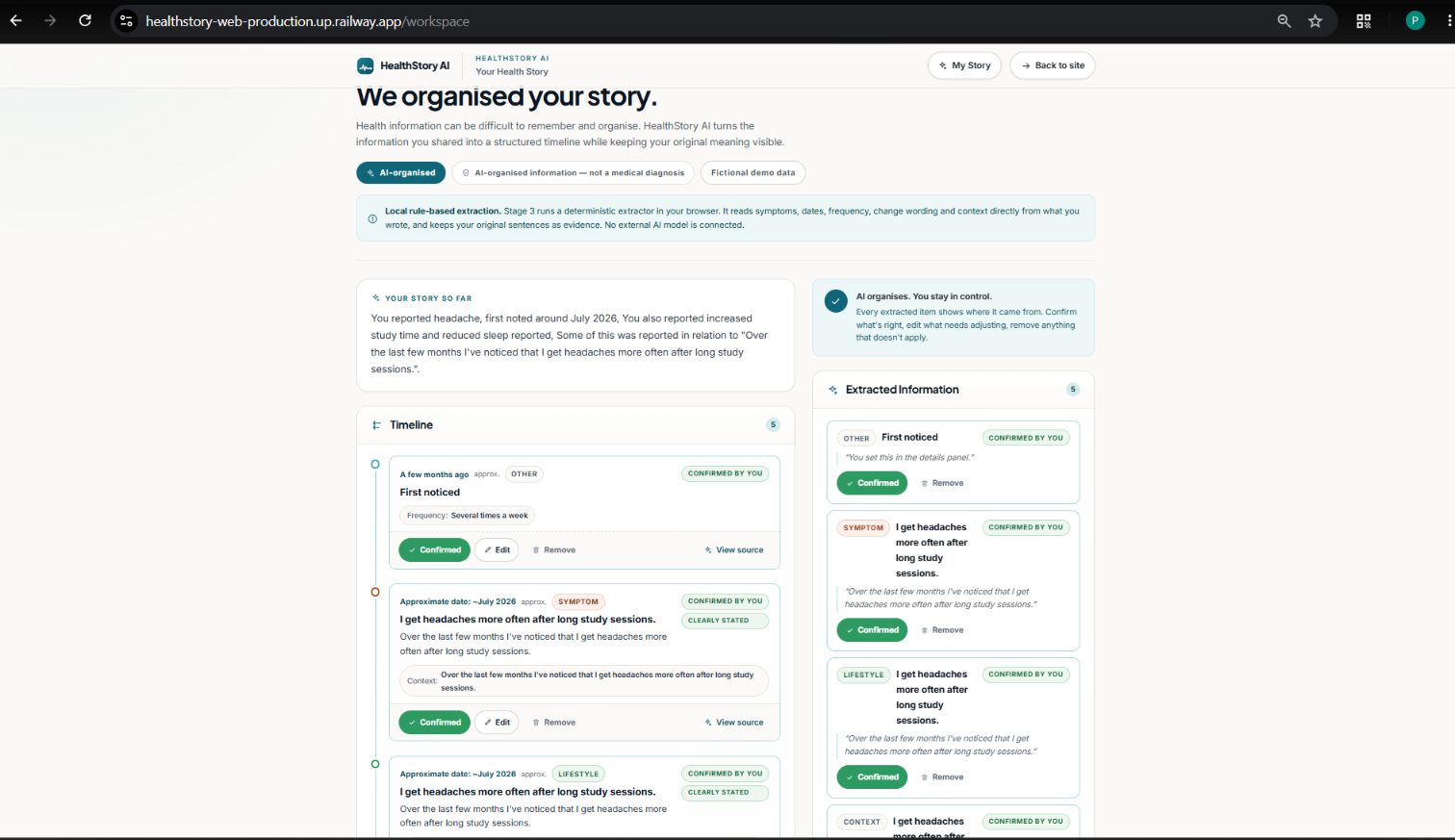
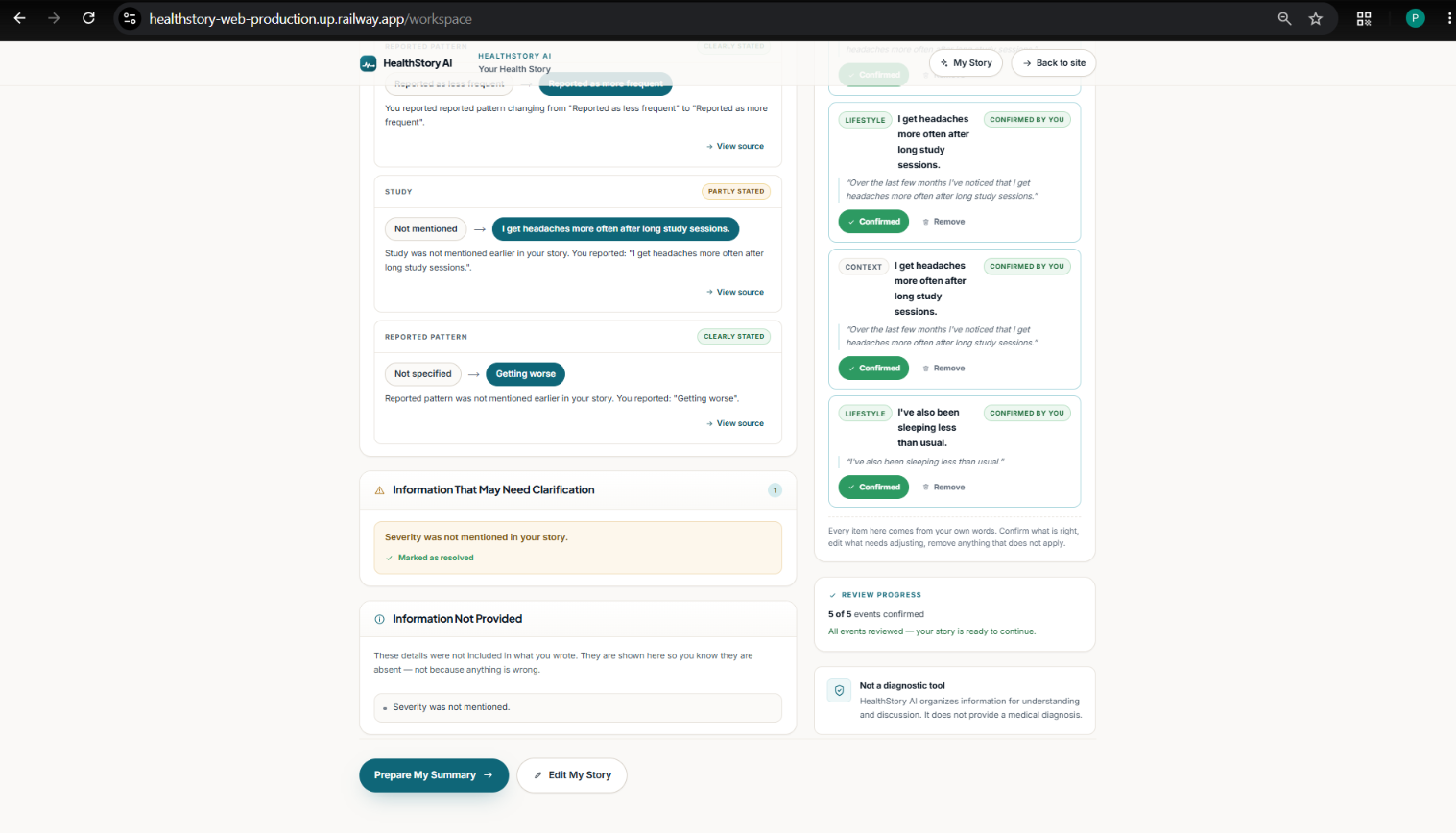
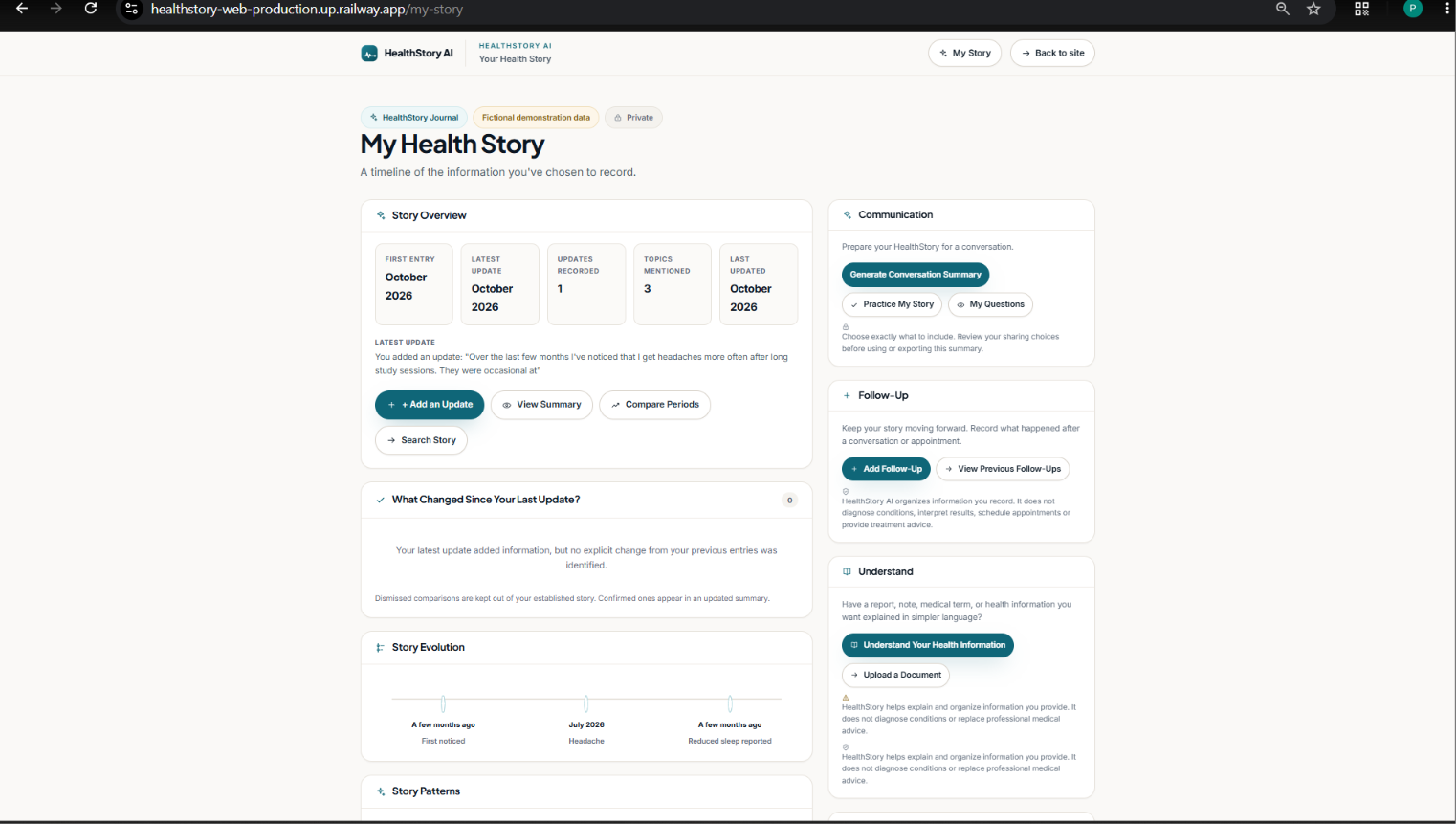
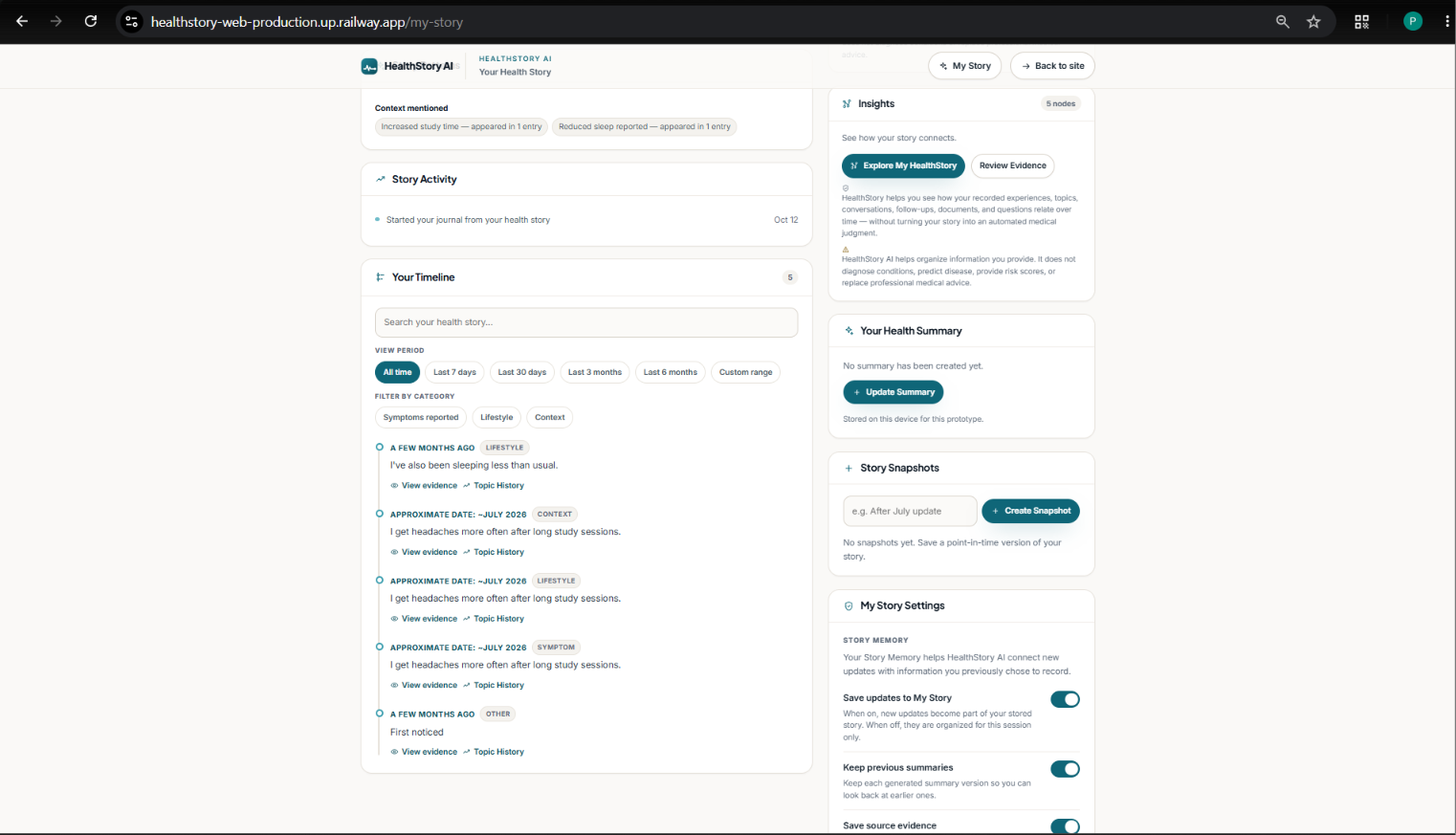
HealthStory AI is an AI-powered health information assistant that helps users organize and understand their health documents. Its key features include:
- AI Summary Generation: Converts lengthy documents into clear, organized summaries.
- Document Upload: Allows users to upload supported health documents for processing.
- Important Information Extraction: Helps identify key points, important dates, findings, and follow-up instructions when they are present in the source document.
- Multiple Summary Styles: Supports quick, standard, and detailed summaries.
- Download and Sharing: Helps users save, copy, and share generated summaries through supported methods.
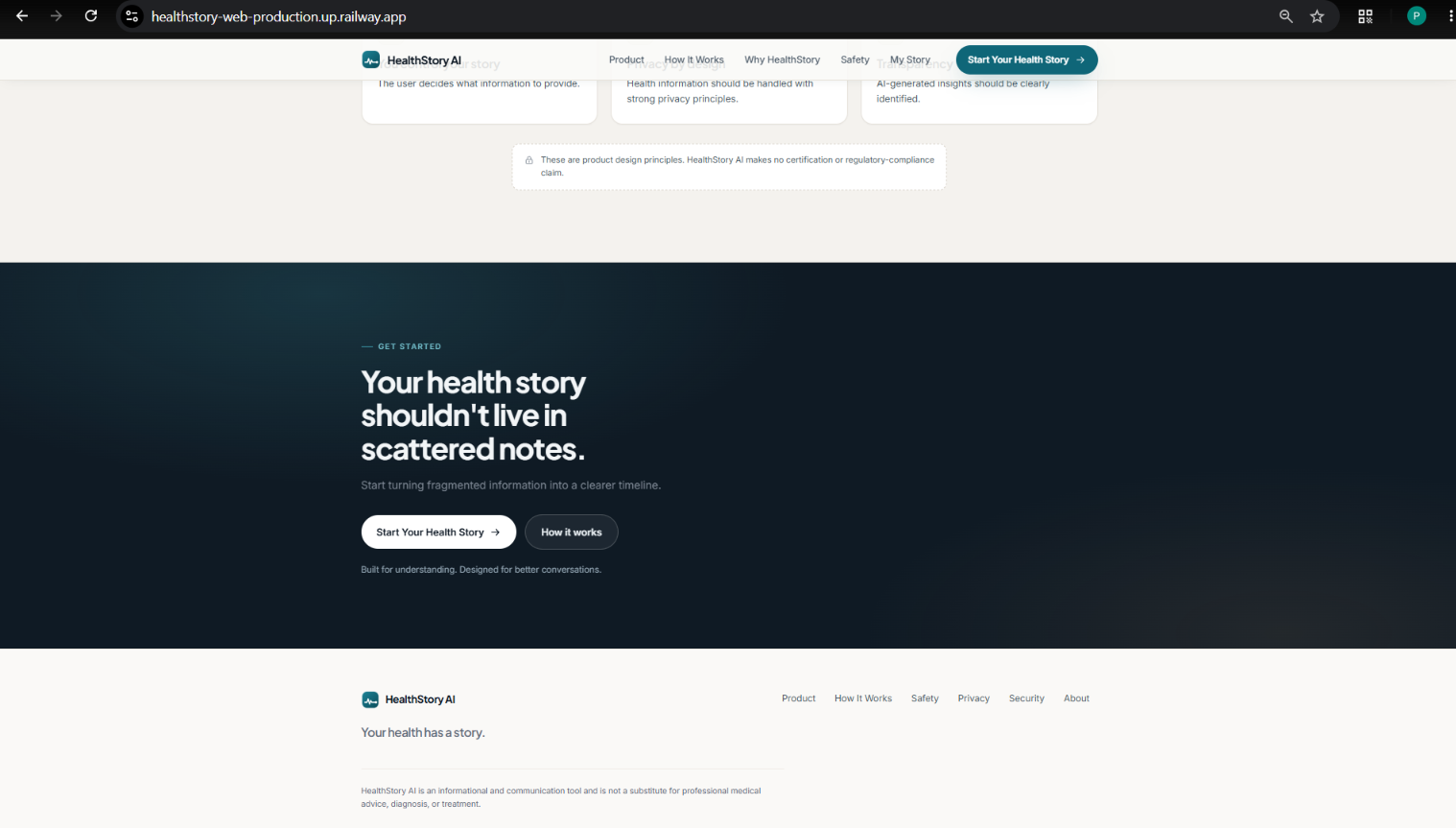
- Privacy-Focused Design: Aims to protect sensitive health information through secure processing and appropriate access controls.
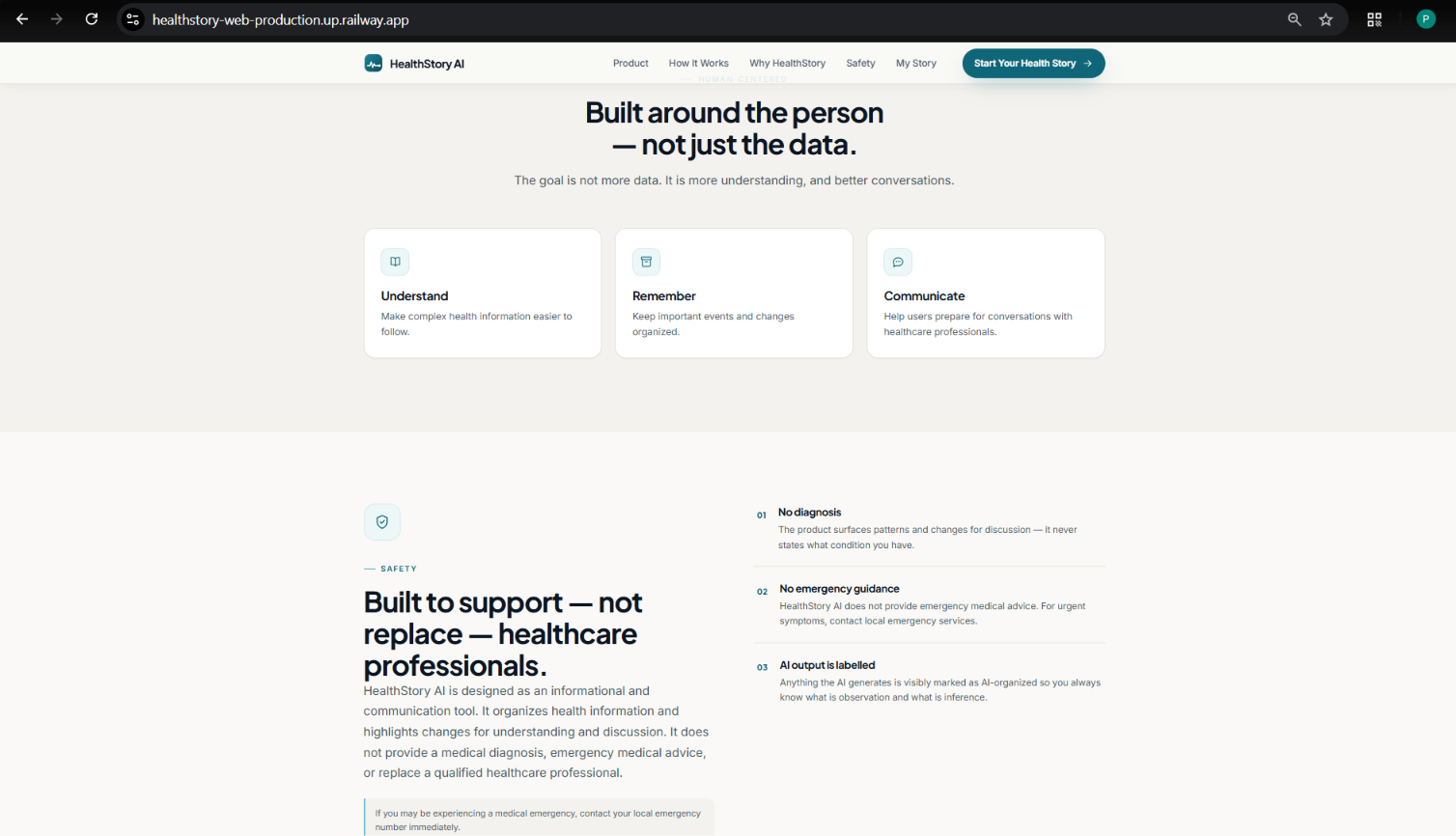
HealthStory AI is designed to organize health information, not to replace professional medical advice or independently diagnose medical conditions.
How we built it
We built HealthStory AI using a modern web application architecture. The project uses Next.js and TypeScript for the application, with a responsive interface designed to provide a smooth user experience.
We use an AI provider integration with Groq to generate summaries from document content. The application is designed to extract text from supported documents, send the relevant content to the AI service through a server-side integration, and present the generated summary in a readable format.
The project also incorporates PostgreSQL database integration through Prisma, rate-limiting support, environment-based configuration, and deployment preparation for Vercel. Our development process focuses on connecting the frontend, backend, document-processing logic, and AI services into one practical application.
Challenges we ran into
One of our biggest challenges was integrating AI into a real document-processing workflow instead of simply displaying sample summaries. We needed to ensure that uploaded documents could be validated, their text could be extracted correctly, and the AI-generated output remained relevant to the source material.
Other challenges included managing API configuration securely, handling invalid or unsupported documents, controlling request limits, designing useful loading and error states, and protecting sensitive health information. We also had to consider how to make complex information understandable without inventing facts or presenting an AI-generated summary as a medical diagnosis.
Accomplishments that we're proud of
We are proud to be building a practical application that applies AI to a meaningful healthcare information problem. HealthStory AI brings document organization, AI-assisted summarization, and a user-friendly interface together in one project.
We have also focused on a modular application structure, server-side AI integration, secure configuration, and deployment readiness. Our goal is not just to build an attractive interface, but to create a foundation for a useful, reliable, and privacy-conscious health information assistant.
What we learned
Through this project, we learned how to connect frontend interfaces with backend services, integrate AI APIs, manage environment variables, process uploaded documents, and structure an application for deployment.
We also learned that building a trustworthy AI application requires more than generating text. It involves validating inputs, handling errors, protecting user data, evaluating output quality, and clearly communicating the limitations of AI-generated information.
What's next for HealthStory AI
Our next steps are to strengthen the complete document-to-summary workflow, improve document extraction, verify real AI integration, and expand testing across different document types and failure scenarios.
We also plan to improve summary exports, add document-based question answering, introduce better source references where available, and strengthen privacy controls. In the long term, we want HealthStory AI to become a dependable tool that helps people organize their health information and prepare for more informed conversations with healthcare professionals.
Built With
- ai
- ai/llm
- css
- git
- github
- html
- javascript
- next.js
- node.js
- postgresql
- react
- rest-api
- tailwind-css
- typescript
- vercel


Log in or sign up for Devpost to join the conversation.