-
-
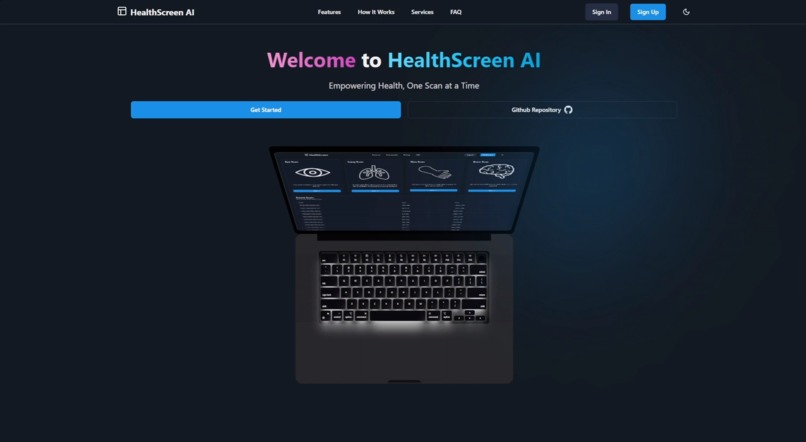
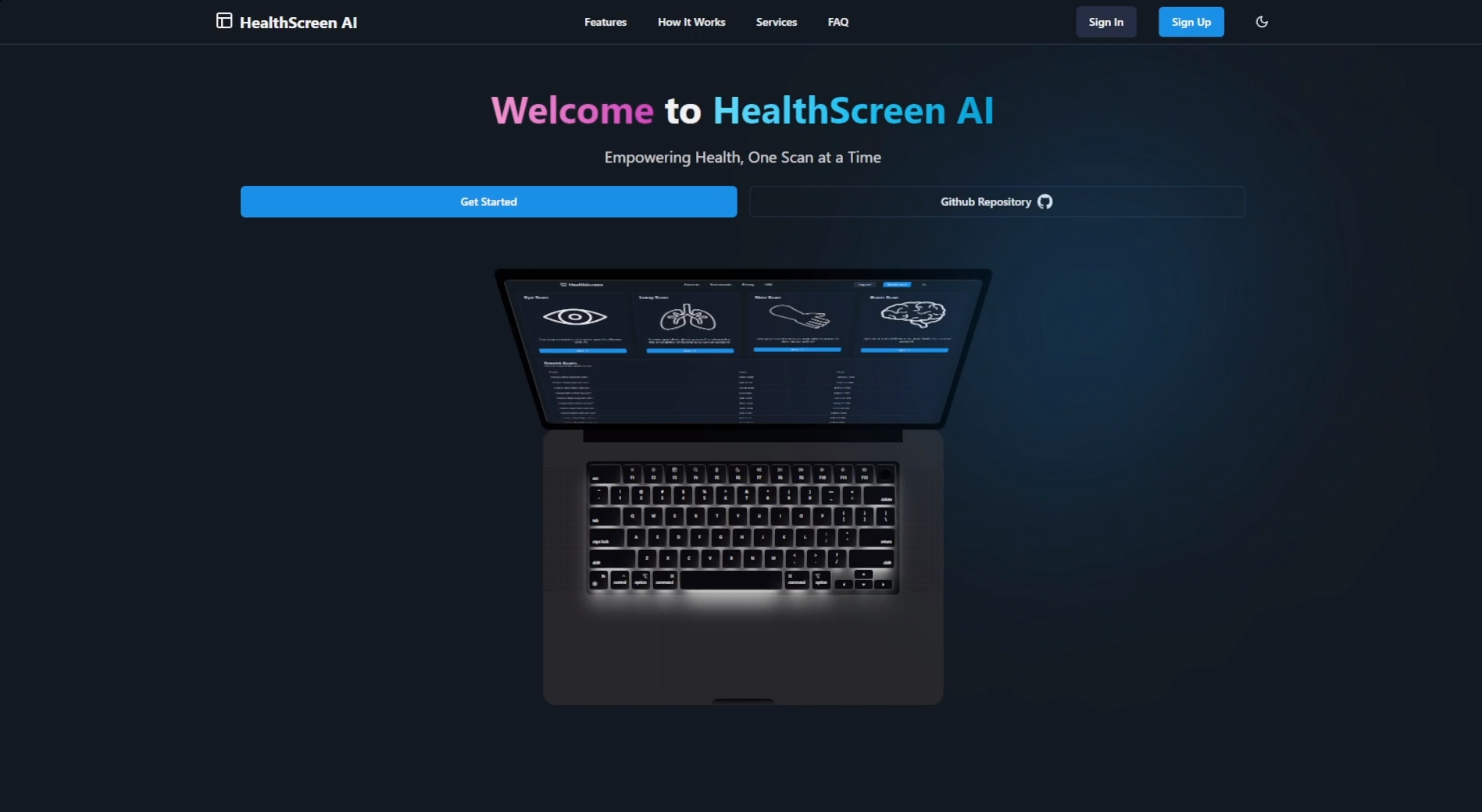
Landing Page
-
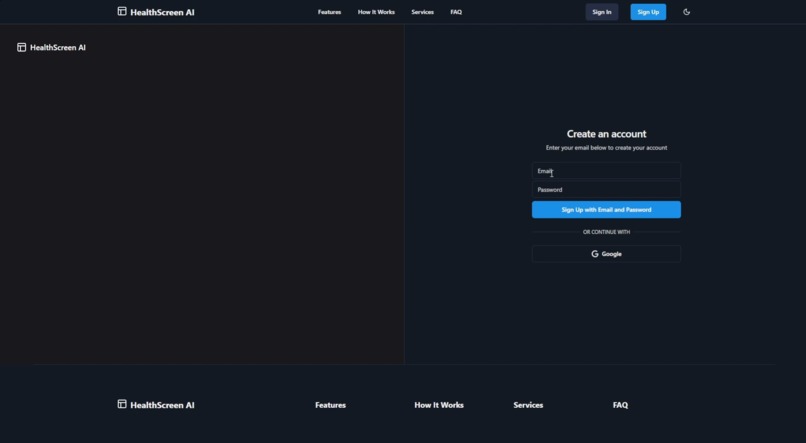
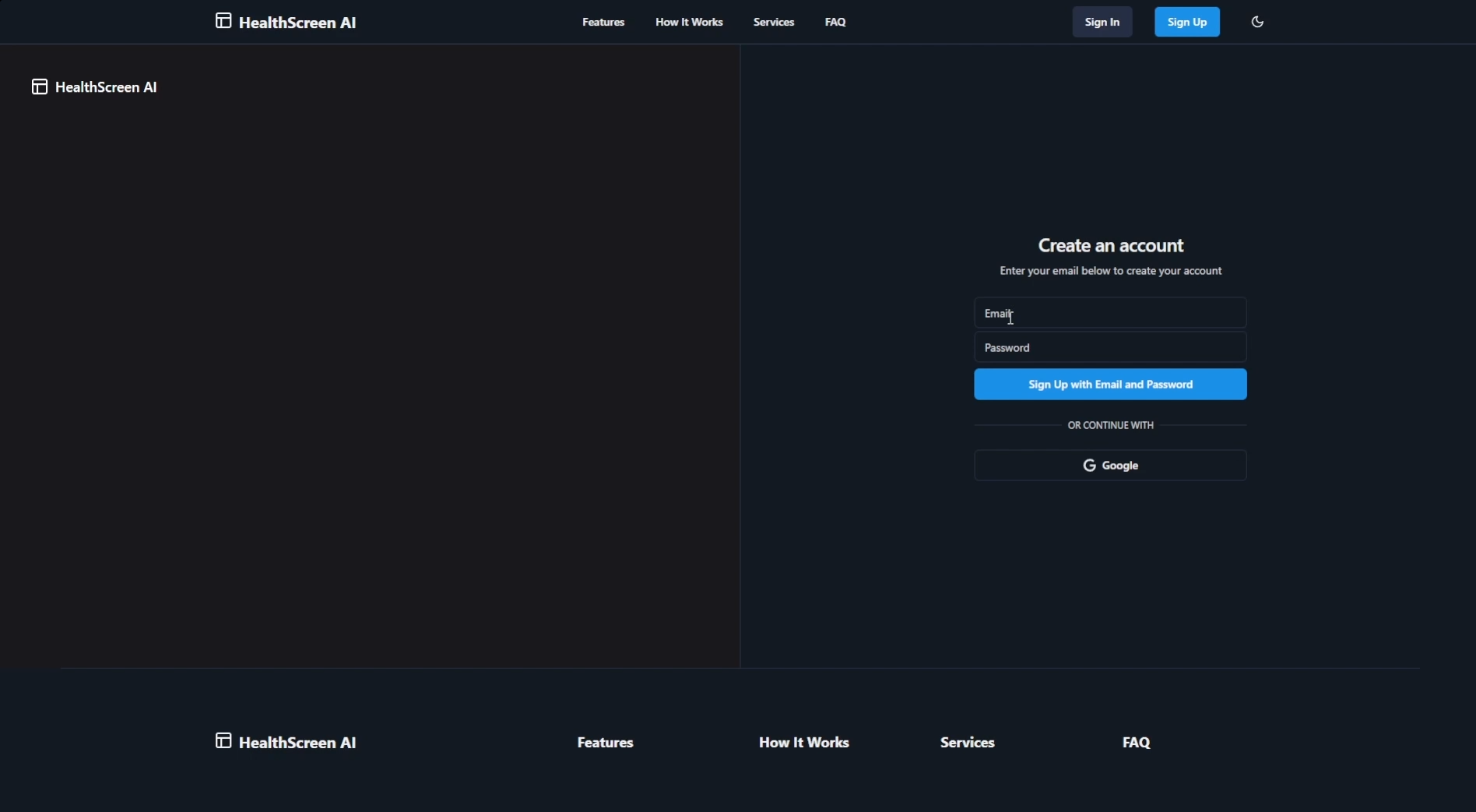
Sign Up Page
-
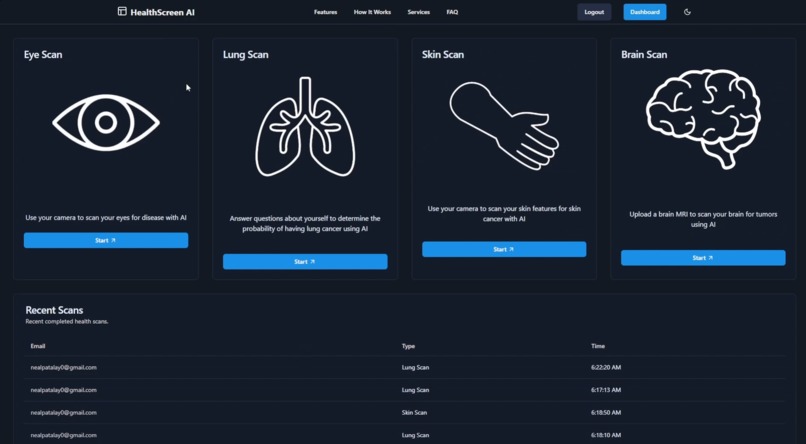
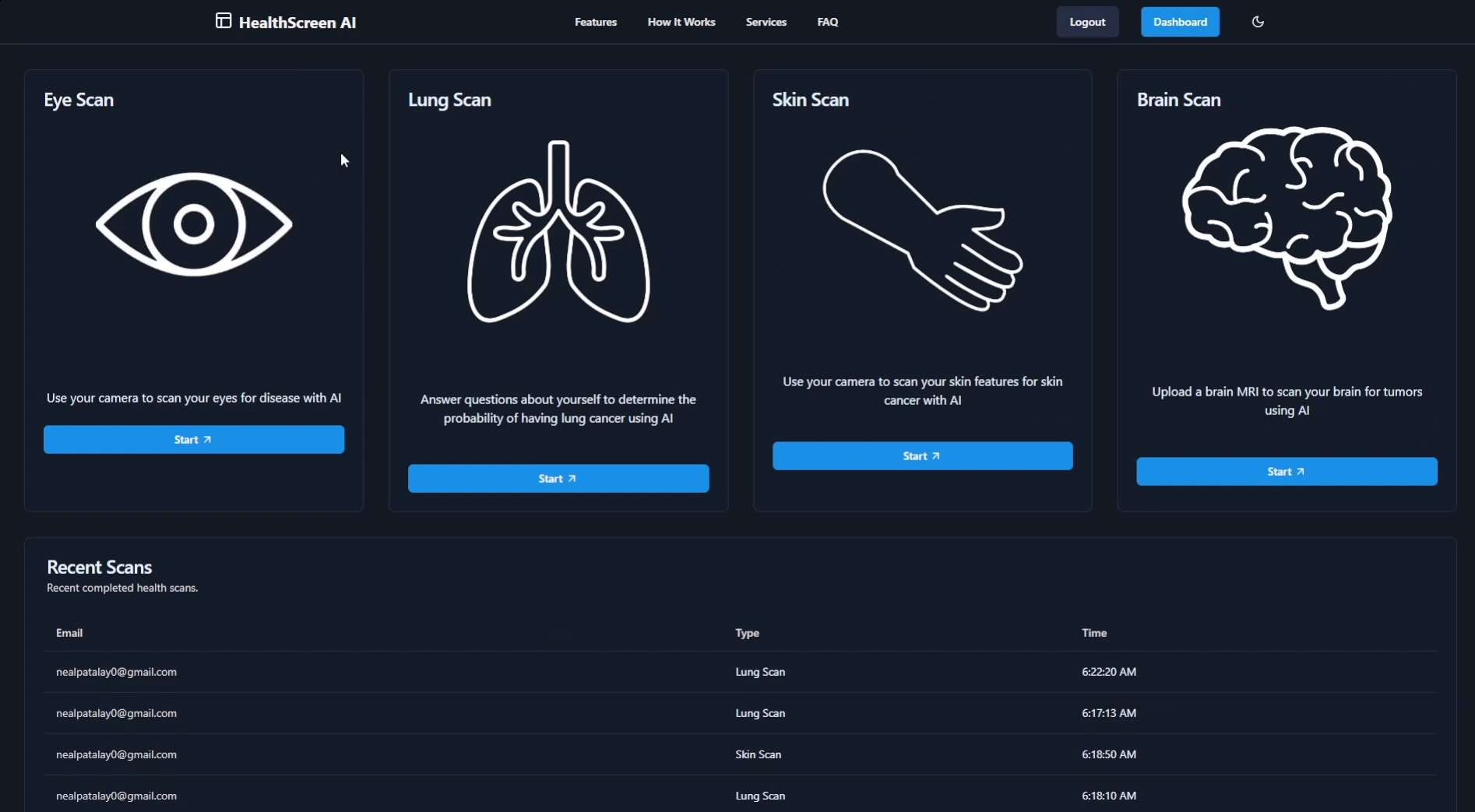
Dashboard
-
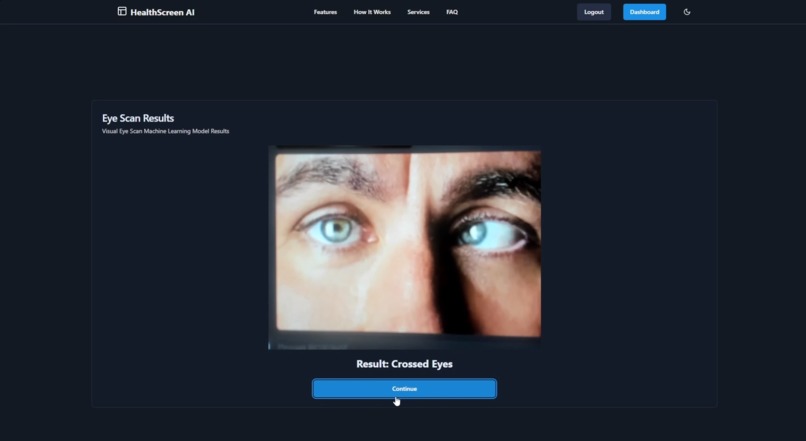
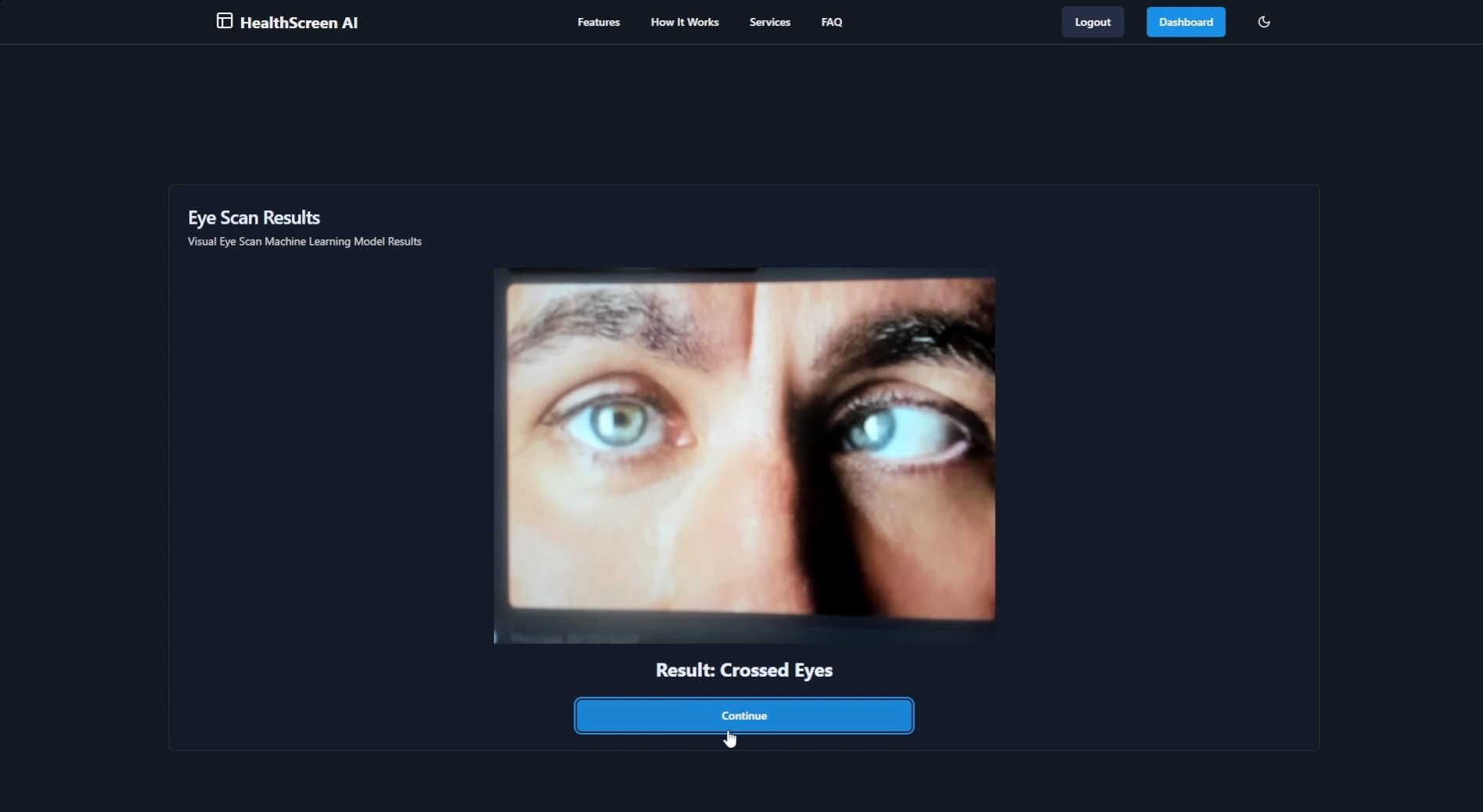
Eye Scan
-
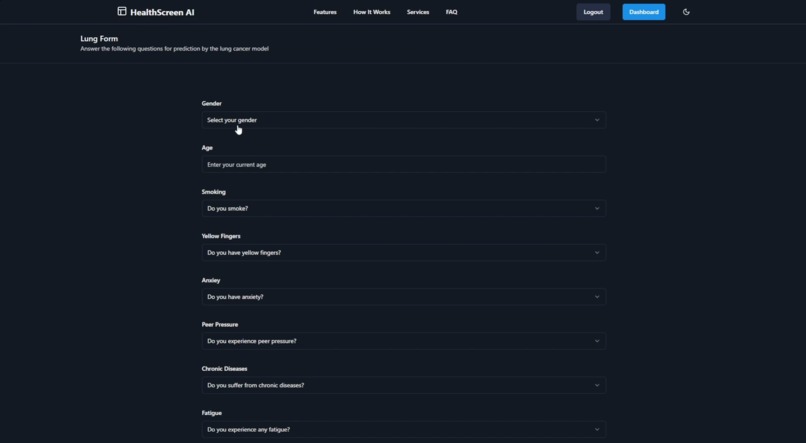
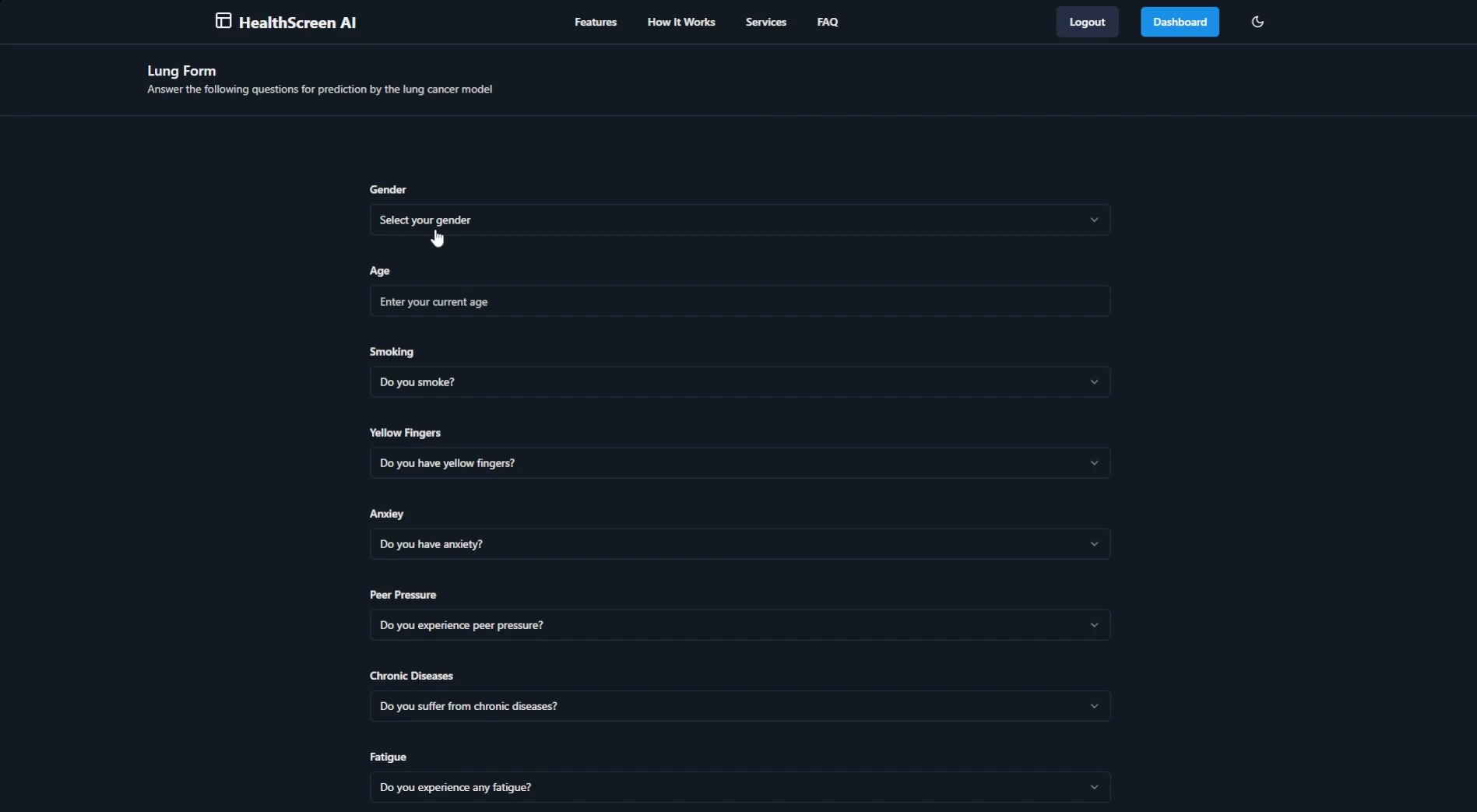
Lung Form
-
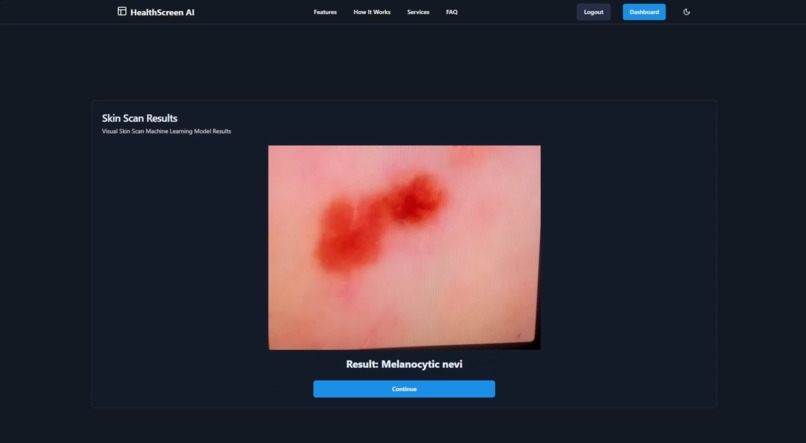
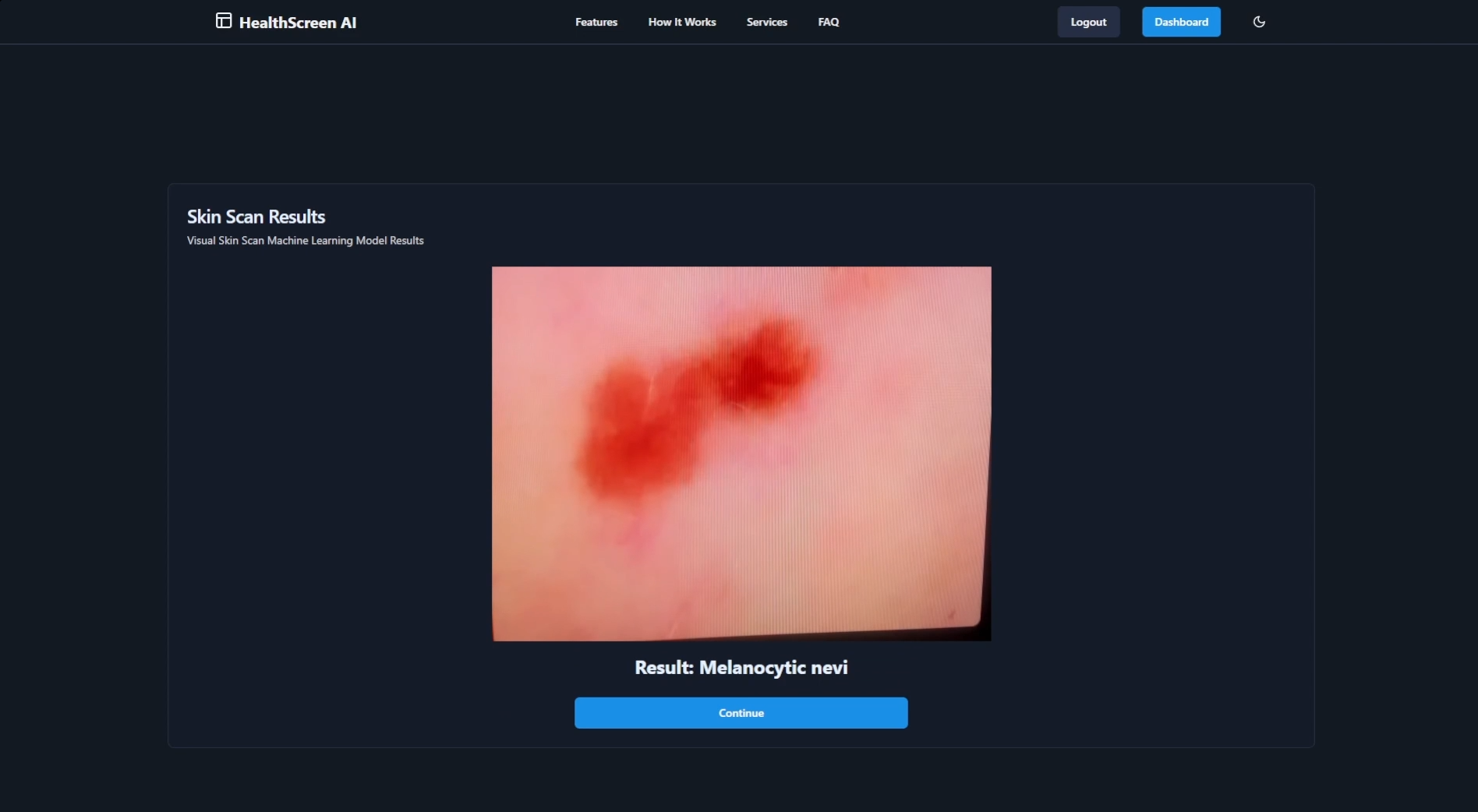
Skin Scan
-
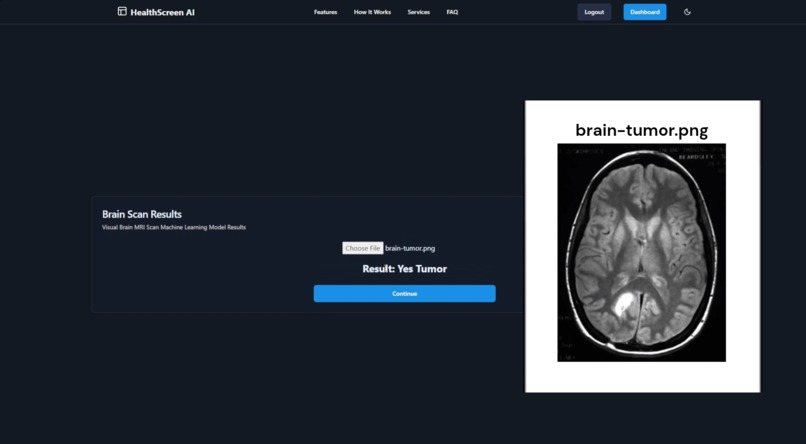
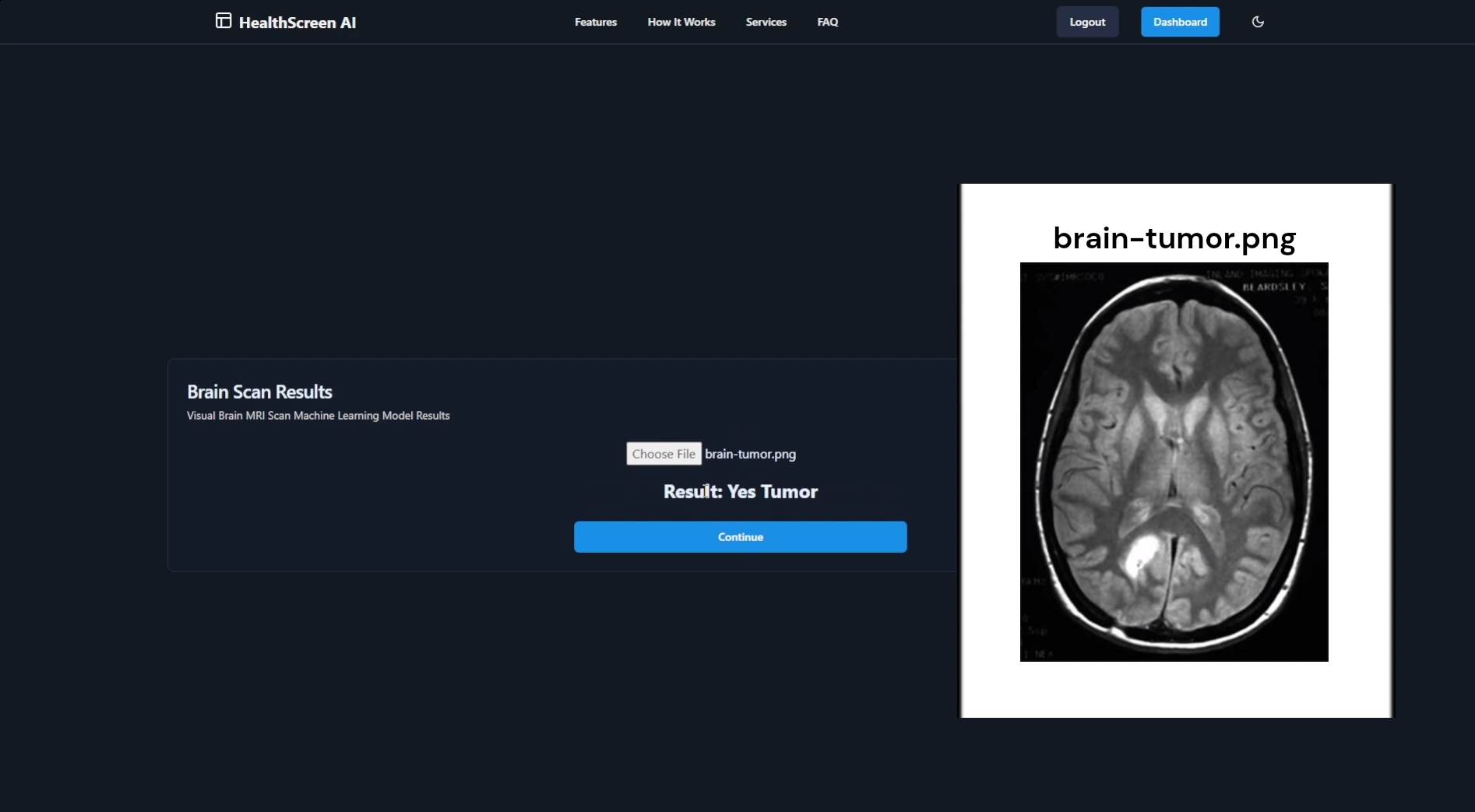
Brain Scan
-
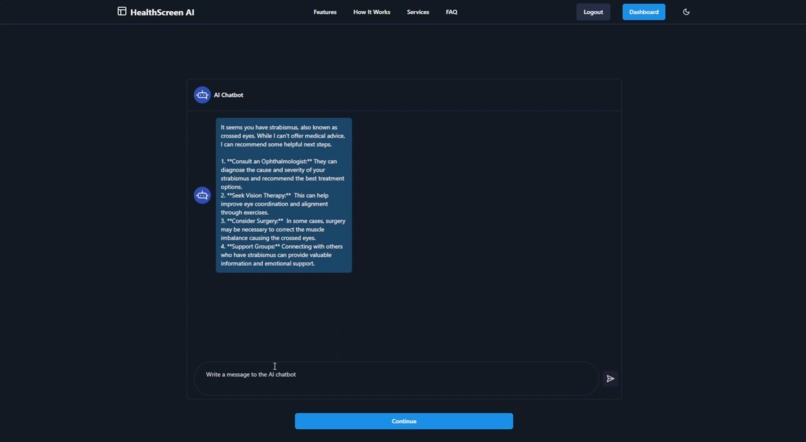
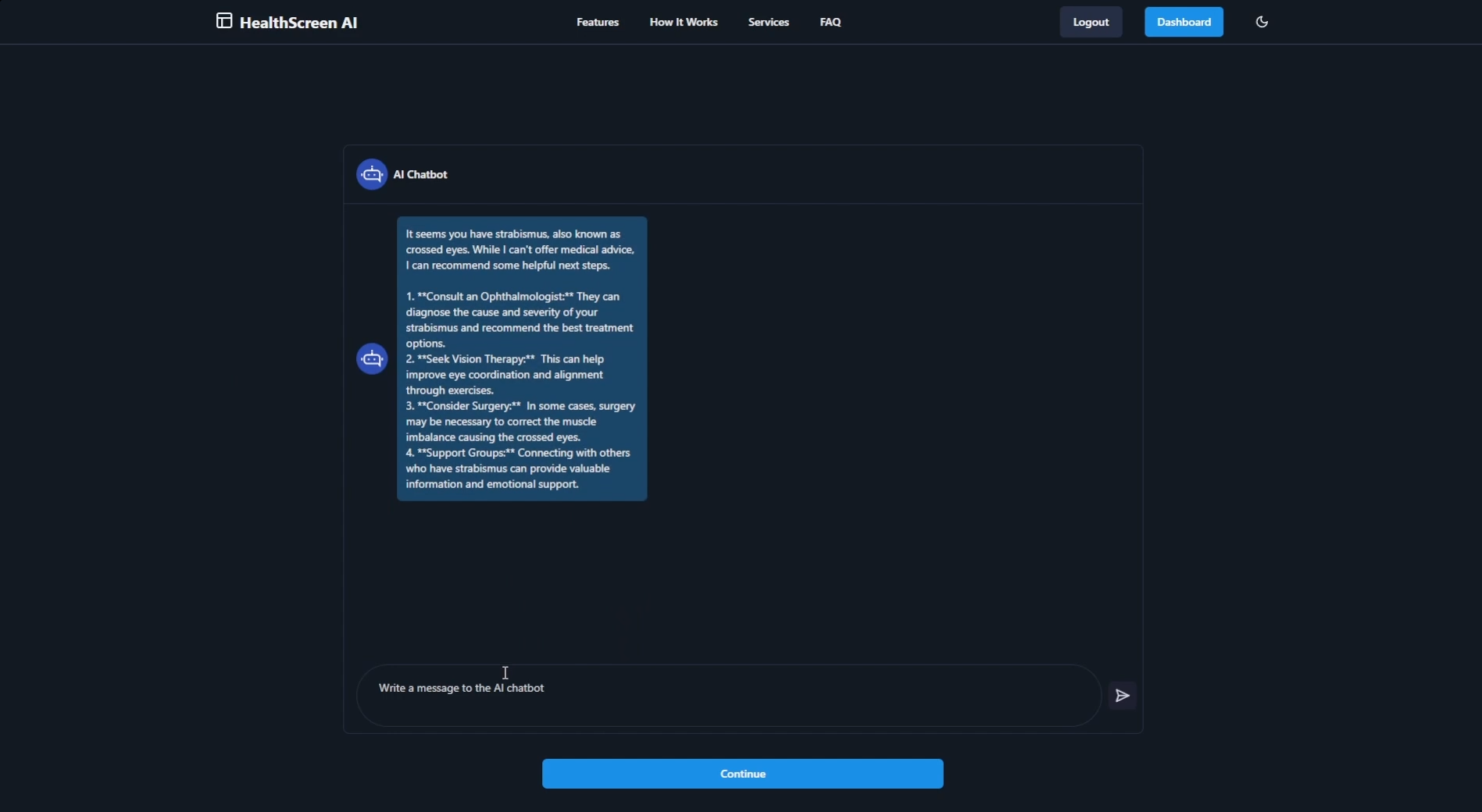
AI Chatbot
Inspiration:
We were motivated by the challenges many people face in getting timely and affordable healthcare. Many communities have limited healthcare access. Our platform seeks to address this by providing a solution that is both easy to use and convenient. By using advanced technology, our platform, HealthScreen, enables users to actively monitor their health and identify potential health issues like diseases, tumors, and cancers from their homes. This not only improves access to essential healthcare services but also gives individuals the power to manage their health proactively. With a commitment to social good, we aim to significantly improve health outcomes and foster a healthier, more equitable society.
What it does:
HealthScreen AI is an innovative healthcare platform designed to enhance the accessibility and convenience of health monitoring from home. By integrating advanced artificial intelligence technologies, HealthScreen AI enables users to proactively detect and manage various health issues including tumors and diseases related to the brain, eyes, lungs, and skin. Here are the core features of the platform:
Disease and Tumor Detection: HealthScreen AI incorporates four sophisticated machine learning models that analyze user-uploaded images to identify signs of brain tumors, eye diseases, lung cancer risk, and skin cancer types. These models utilize state-of-the-art algorithms to provide accurate and timely health assessments.
User-Friendly Interface: The platform offers an intuitive interface that simplifies how users interact with the technology. Whether uploading images for analysis or viewing health reports, users can easily navigate through the system, making it accessible to people with varying levels of tech-savvy.
Personalized Health Insights: Through custom AI-driven chatbots, HealthScreen AI delivers personalized insights and detailed explanations about the health assessments. These chatbots, powered by Google's Large Language Model, provide users with clear, understandable feedback on their condition, helping them make informed decisions about their health.
Secure Data Handling: Ensuring the privacy and security of user data is paramount. HealthScreen AI employs robust data management and security protocols to protect sensitive health information, maintaining user confidentiality and trust.
Accessibility and Social Impact: The platform aims to democratize healthcare by making critical health monitoring tools available to underserved communities. By providing easy access to potentially life-saving diagnostics, HealthScreen AI strives to improve health outcomes and promote equity in healthcare access.
How we built it:
In creating HealthScreen AI, we've harnessed a variety of cutting-edge technologies to bring our vision to life. Our development stack spans multiple languages, including JavaScript, TypeScript, HTML, CSS, and Python, integrated with powerful frameworks and libraries like React, TailwindCSS, Vite, Firebase, TensorFlow, OpenCV, Flask, and Google’s LLMs. At the core of our platform are four distinct machine learning models, the brain tumor detection model, the eye disease classification model, the lung cancer risk model, and the skin cancer classification model. Together, these technologies enable us to provide users with accurate and reliable health screening solutions.
For brain tumor detection, TensorFlow and Keras were used to construct and train a convolutional neural network (CNN) model. This model leveraged OpenCV for image preprocessing, resizing images to a standard size and converting them to the appropriate color space before feeding them into the network.
Similarly, the eye disease classification model utilized a pre-trained CNN architecture implemented in TensorFlow and Keras. Transfer learning techniques were applied to fine-tune the model's weights on the "Eye Disease Dataset". OpenCV aided in image preprocessing, ensuring that input images were appropriately formatted and scaled before inference.
In predicting lung cancer risk, Python and its libraries such as pandas and scikit-learn were utilized for data preprocessing tasks. TensorFlow, along with Keras, facilitated the construction and training of the neural network model. Standardization of features was achieved using scikit-learn's StandardScaler.
Lastly, for skin cancer classification, TensorFlow and Keras were employed to develop a CNN model capable of classifying skin cancer types based on input images. Preprocessing tasks, including image resizing and normalization, were performed using TensorFlow's image processing utilities.
Flask serves as the bridge between the frontend and backend, directing user-uploaded data to the respective machine learning model endpoints for tasks like brain tumor detection, eye disease classification, or lung cancer risk prediction. Utilizing OpenCV for preprocessing, Flask ensures data compatibility with TensorFlow and Keras models. Once processed, Flask formats the results into responses sent back to the frontend, enabling users to receive actionable insights seamlessly within HealthScreen AI.
After completing image preprocessing, model training, and inference, HealthScreen AI offers a user-friendly interface where users engage with custom chatbots tailored for each specific model. Powered by Google’s Large Language Model (LLM), these chatbots respond to user inquiries regarding outcomes of healthcare analyses. Whether querying about brain tumors, skin lesion classification, lung cancer risk, or eye disease diagnosis, users receive detailed explanations and insights. This interaction enhances user experience, providing clarity and guidance throughout their interaction with our platform.

Challenges we ran into:
In our development journey for HealthScreen AI, we faced numerous key challenges. Learning and working with React was essential for making HealthScreen AI’s UI dynamic and responsive, but posed a unique challenge. In addition, reliably connecting the backend and frontend with Flask and requests to allow data transmission and interaction between components of our platform was difficult to troubleshoot and perfect. Participating online required us to communicate and collaborate effectively, which was hard at times. Moreover, we faced time constraints, particularly with frontend development and training four machine learning models, which resulted in us needing to work overnight and plan strategically to finish in time. However, despite all of these setbacks, we were ultimately able to successfully develop our platform in time.
Accomplishments that we’re proud of:
Training four accurate machine learning models within a constrained timeline was a very ambitious task that required overnight work and careful time management. In addition, crafting a visually appealing and responsive React application required careful attention to design and performance. However, overcoming these challenges was very rewarding, as it allowed us to create a versatile platform with real-world applicability. Moreover, collaborating and completing such a complex project online showed us that we were more adaptable and resilient than we previously thought. Together, all of these accomplishments culminated in the successful development of HealthScreen AI, empowering users with access to healthcare insights.
What we learned:
Throughout this section of our project journey, significant steps were made in various areas crucial to our development process. Firstly, we deepened our understanding of training machine learning models more effectively, honing techniques to optimize model performance and streamline the training process. At the same time, our expertise in frontend development, particularly with React and full-stack implementation, expanded substantially. Through hands-on experience and continuous learning, we enhanced our proficiency in developing dynamic and user-friendly interfaces, ensuring a seamless experience for our platform users. Additionally, time management became most important as it allowed us to be able to finish multiple tasks effectively, maximizing productivity and project progress. This growth not only propelled our technical capabilities but also fostered a more efficient and cohesive development workflow, ultimately driving the success of our project.
What’s next for HealthScreen AI:
We plan to make HealthScreen AI into a powerful and impactful platform. Our priority is to enhance the accuracy and efficiency of our machine learning models beyond the constraints of the hackathon timeframe. This requires meticulous refinement and optimization to ensure maximum accuracy in disease detection and classification. Additionally, we aim to broaden our scope by incorporating more disease and cancer scan types, catering to a wider range of healthcare needs. As we progress, securing a domain and hosting on reputable platforms like Google Cloud Platform or Amazon Web Services will provide stability and scalability to our platform. Moreover, our roadmap emphasizes the importance of tracking overall success, with a particular focus on evaluating our impact on providing better medical care access to underprivileged users. This approach will ensure that HealthScreen AI continues to evolve as a reliable and impactful healthcare solution, driving positive change in healthcare accessibility and outcomes.

Built With
- css
- firebase
- flask
- html
- javascript
- llm
- opencv
- python
- react
- tailwindcss
- tensorflow
- typescript
- vite

Log in or sign up for Devpost to join the conversation.