-
-
HealthPrism
-
App
-
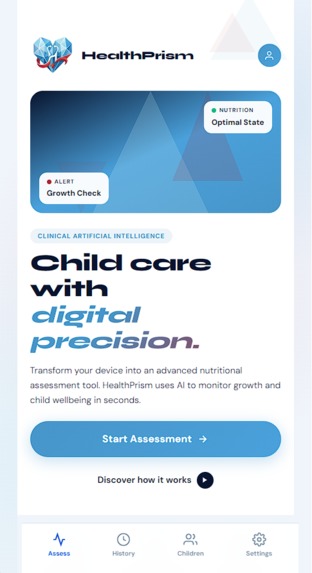
Main
-
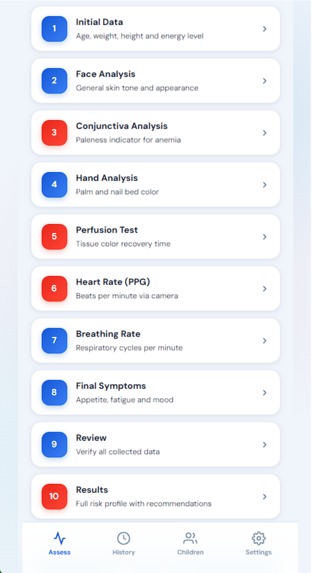
Steps
-
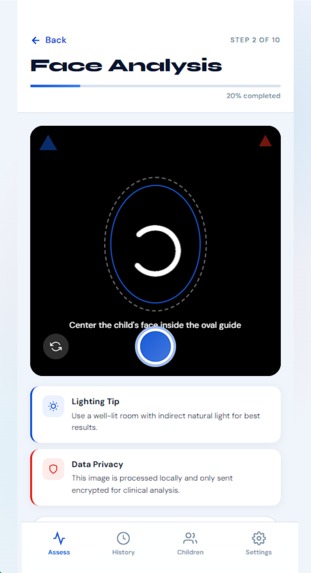
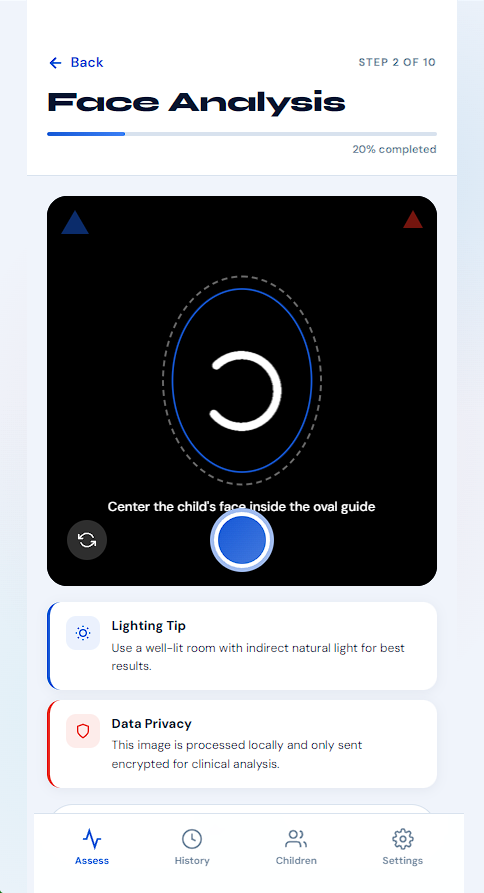
Face analysis
-
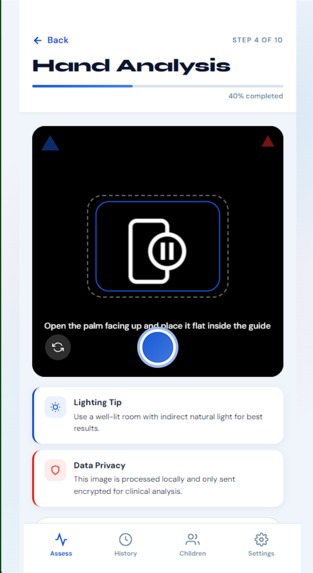
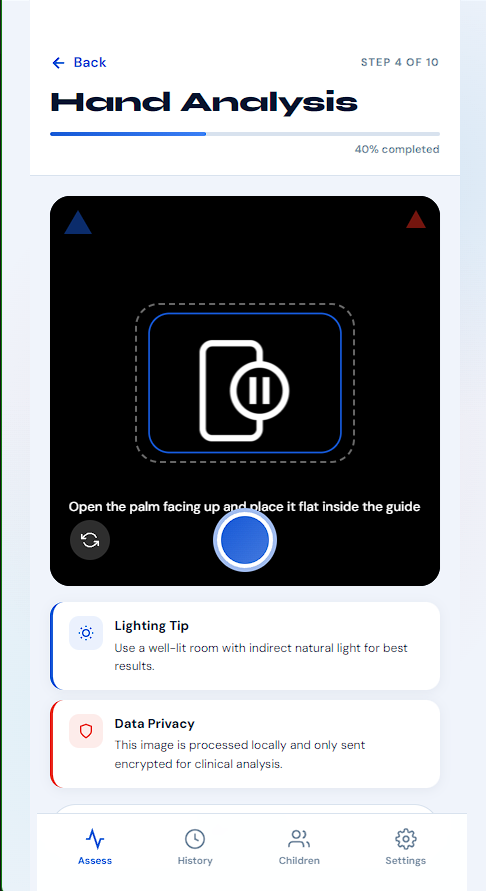
Hand analysis
-
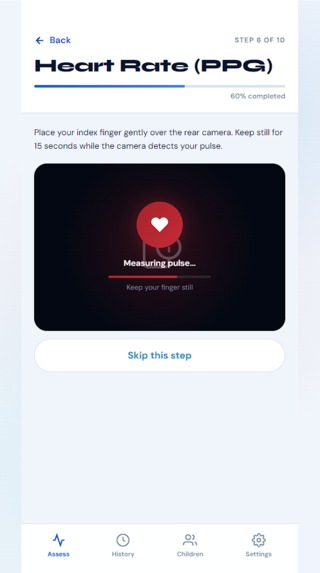
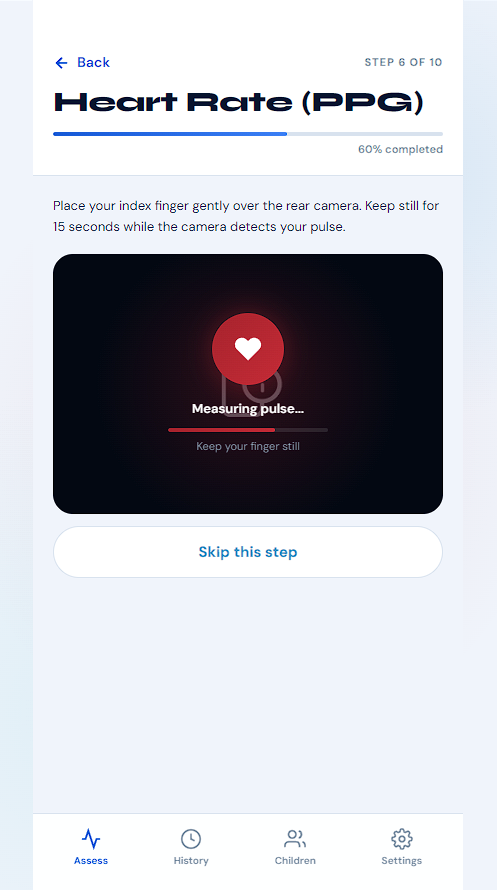
PPG analysis
-
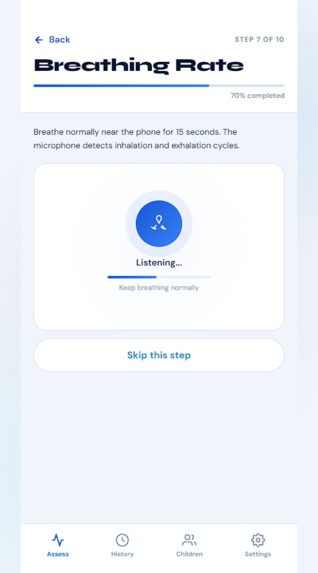
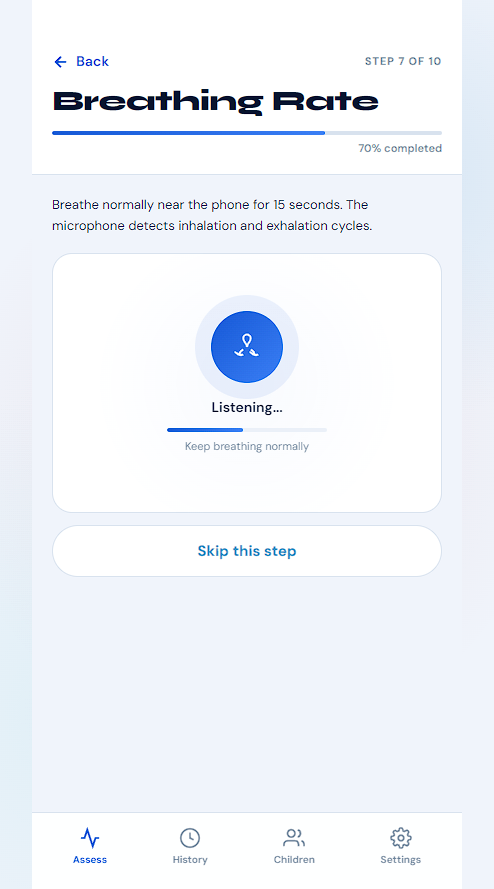
Breathing rate
-
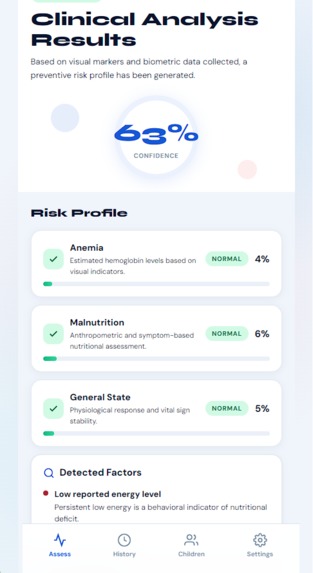
Results
-
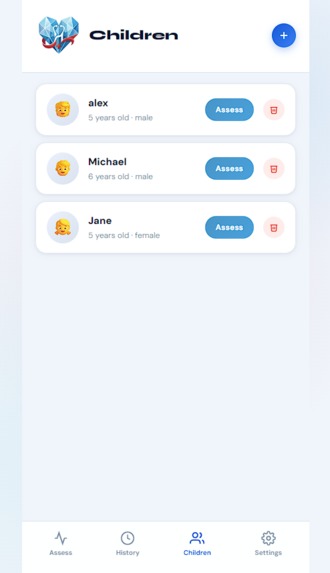
Children's agenda
-
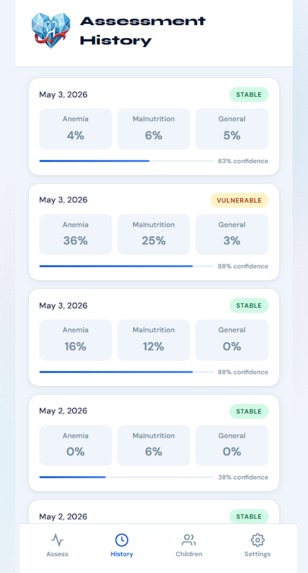
History
-
HealthPrism
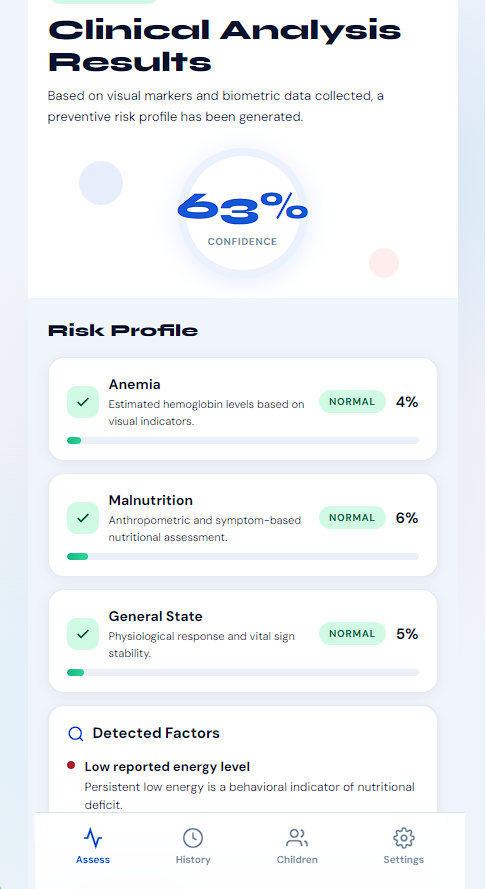
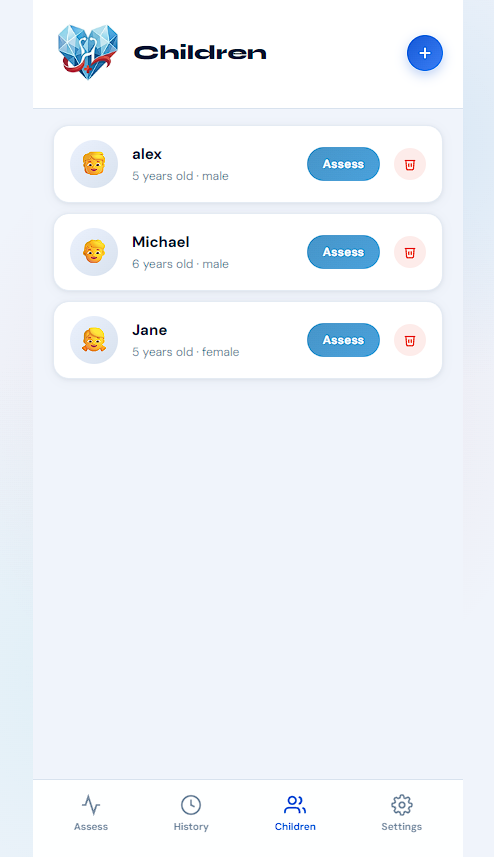
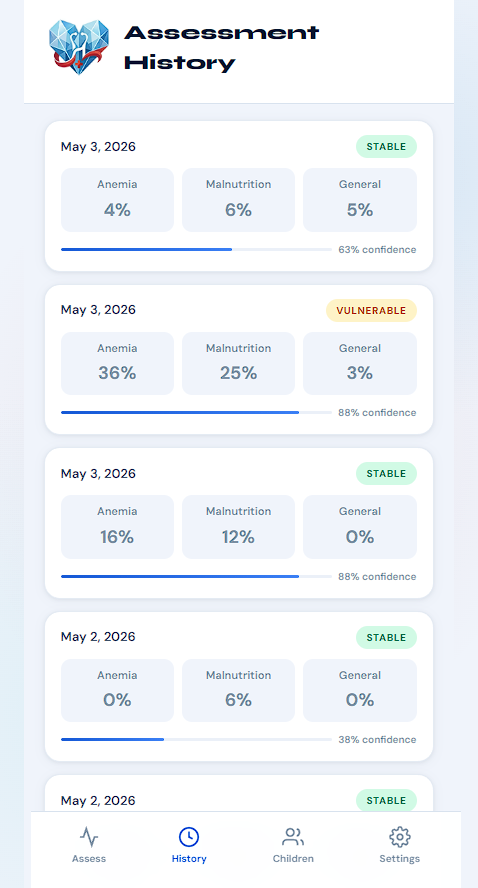
Inspiration
Millions of children worldwide still suffer from anemia and malnutrition without timely detection. In many underserved communities, access to laboratories, blood tests, trained professionals, and healthcare infrastructure remains limited.
We asked a simple question:
What if the smartphone already in a family’s pocket could become an early health screening tool?
HealthPrism was created to bridge the gap between vulnerable populations and early medical attention through AI, mobile technology, and accessible design.
What it does
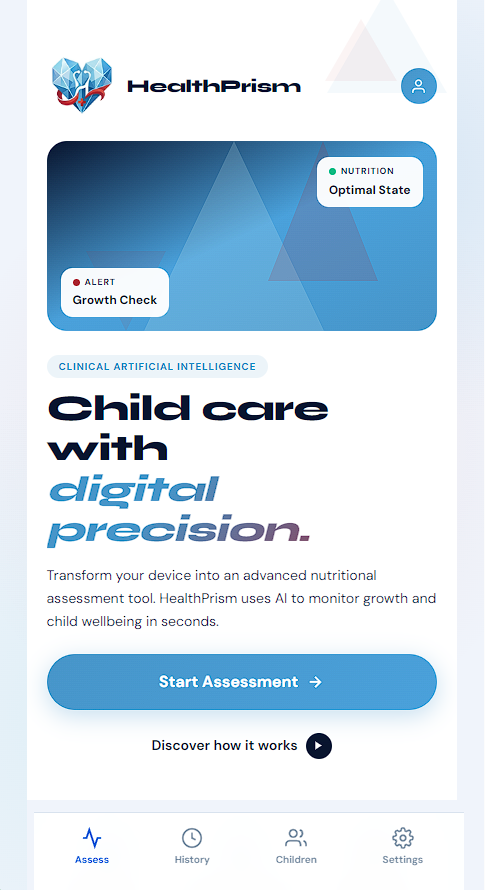
HealthPrism is an AI-powered mobile application that transforms a smartphone into a child health screening platform.
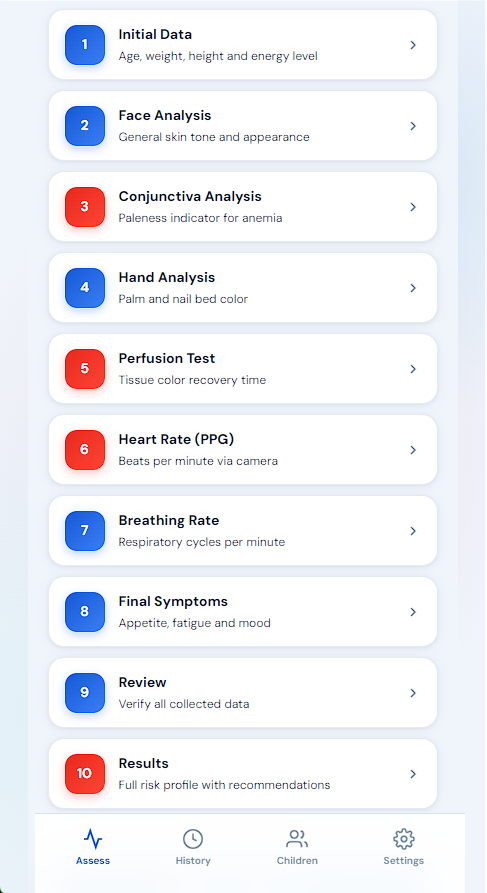
Using only the phone camera, flashlight, microphone, and simple user inputs, the app evaluates:
- Risk of anemia
- Risk of malnutrition
- General physiological stress indicators
The system analyzes:
- Conjunctiva pallor
- Palm pallor
- Nail bed pallor
- Heart rate using PPG
- Respiratory rate using audio processing
- Age, weight, height, and BMI indicators
It then generates a clear risk profile:
- Stable
- Vulnerable
- Critical
When internet is available, AI provides personalized recommendations.
How we built it
HealthPrism was built with a modern full-stack AI architecture.
Mobile App
- React 18
- Vite
- TailwindCSS
- Capacitor for Android/iOS deployment
Machine Learning
We trained lightweight CNN models using:
- Python
- TensorFlow
- Keras
- MobileNetV2
Three models were developed for:
- Eye conjunctiva analysis
- Palm analysis
- Nail analysis
Then exported to TensorFlow.js for on-device inference.
Backend
- FastAPI
- Python 3.11
- Groq API
- Llama 4
Database
- Firebase Firestore
- Local offline storage with Capacitor Preferences
Signal Processing
We implemented:
- PPG heart rate detection from camera frames
- Respiratory cycle estimation from microphone audio
Challenges we ran into
Building HealthPrism required solving multiple real-world challenges:
1. Running AI fully offline
Deploying machine learning models directly on smartphones while keeping them lightweight and fast.
2. Noisy physiological signals
Camera lighting conditions, motion, and microphone noise affected signal quality.
3. Medical uncertainty
No single signal can diagnose anemia reliably, so we needed a multi-signal fusion approach.
4. UX for non-technical users
The app had to be simple enough for anyone to use without medical knowledge.
5. Ethical responsibility
We designed the system as a screening tool, never as a replacement for doctors.
Accomplishments that we're proud of
- Built a working mobile prototype end-to-end
- AI models running directly on-device
- Offline-first healthcare screening system
- Multi-signal risk engine combining vision + physiology
- Cloud-enhanced personalized recommendations
- Scalable architecture for global health deployment
- Meaningful impact aligned with SDG 3 and SDG 10
What we learned
Through this project, we learned that impactful innovation happens when engineering meets real human problems.
We improved our skills in:
- Mobile development
- Embedded AI deployment
- Signal processing
- Full-stack cloud systems
- Applied healthcare technology
- Responsible AI design
Most importantly, we learned that accessibility is as important as accuracy.
What's next for HealthPrism
Future versions of HealthPrism may include:
- Detection of additional diseases
- More biomarkers and clinical signals
- NGO / rural healthcare deployment mode
- Public health dashboards
- Multilingual support
- Federated learning improvements
- Partnerships with healthcare institutions
- Clinical validation studies
- Global scaling for underserved populations
Our vision is clear:
Make early health screening available to every child with access to a smartphone.


Log in or sign up for Devpost to join the conversation.