-
-
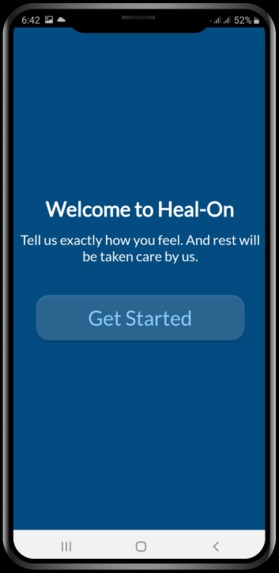
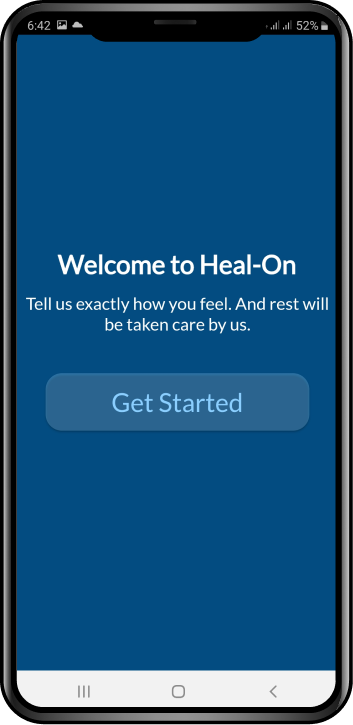
Home Page - Welcomes the user
-
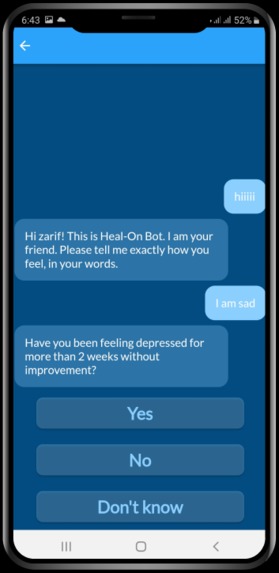
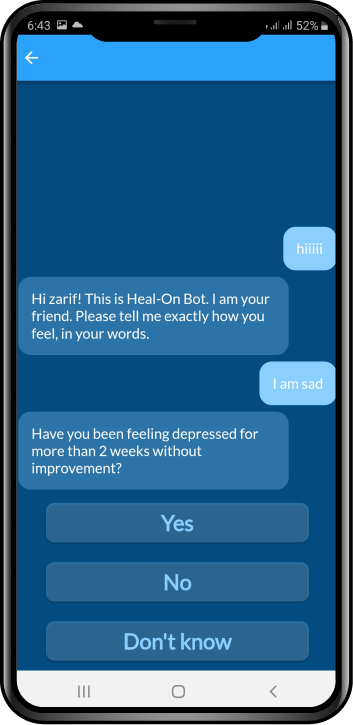
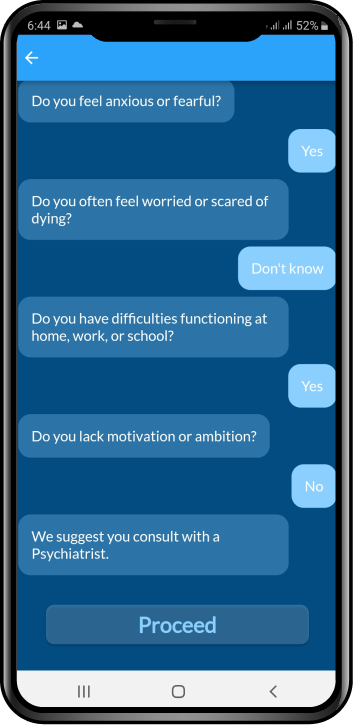
Chat Page - Users can express their feelings in their own words.
-
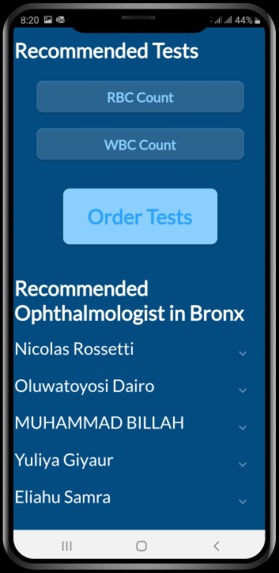
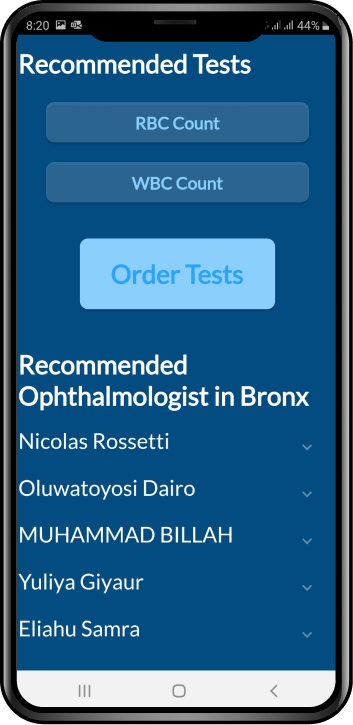
Patient Page - It is suggesting the patient necessary tests and specialists
-
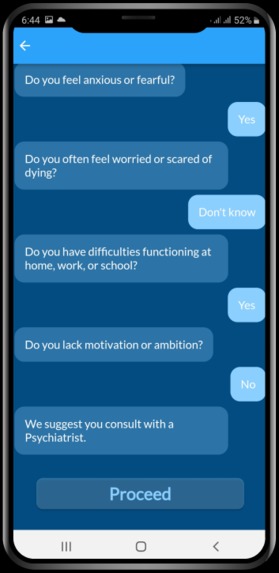
Chat Page - Diagnosis is done
-
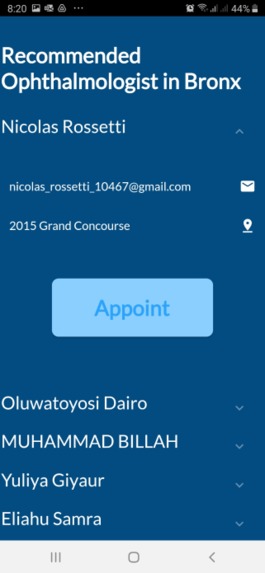
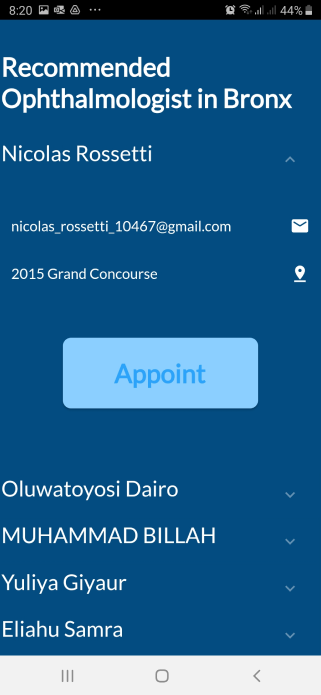
Patient Page - The appoint button can be pressed to get appointed with the doctor
-
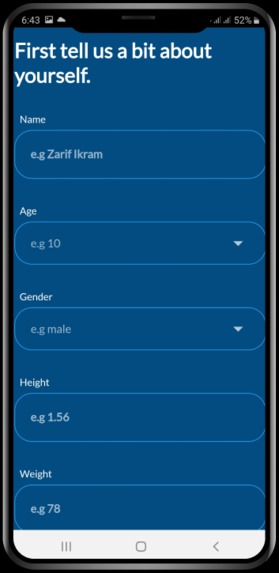
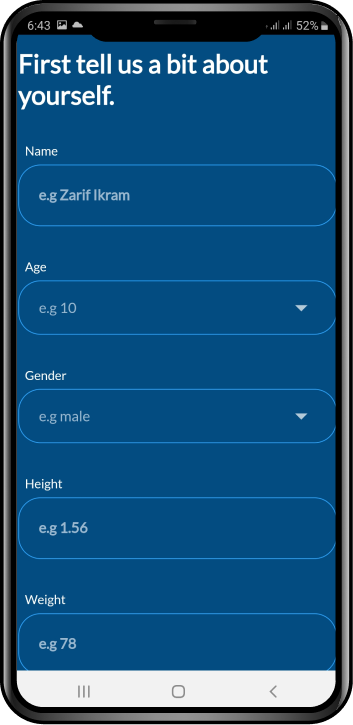
Patient Info Page - Basic Info required to create a medical card.
-
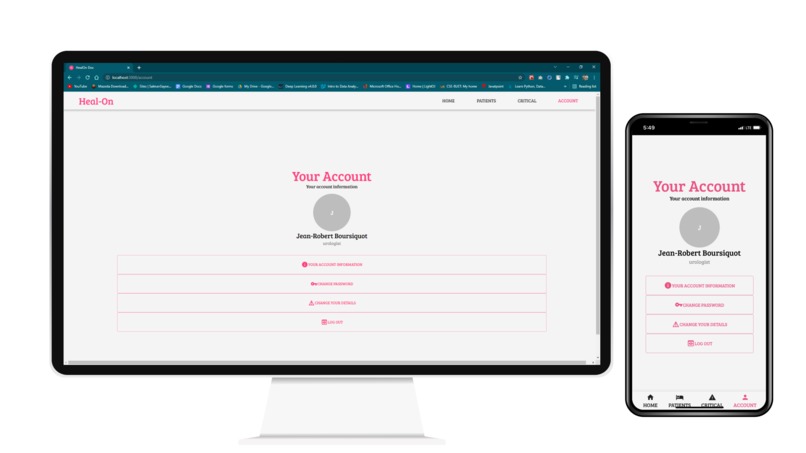
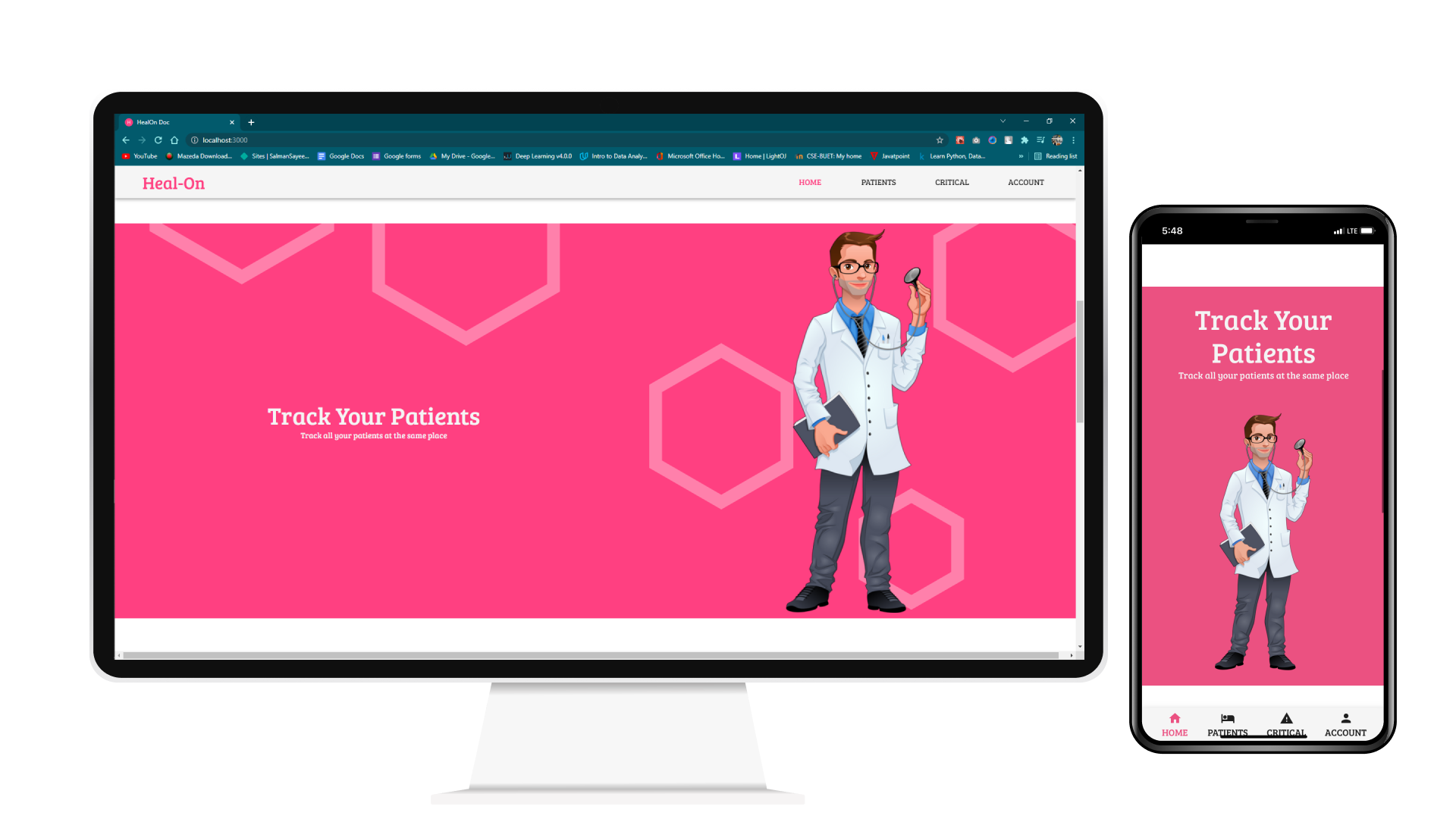
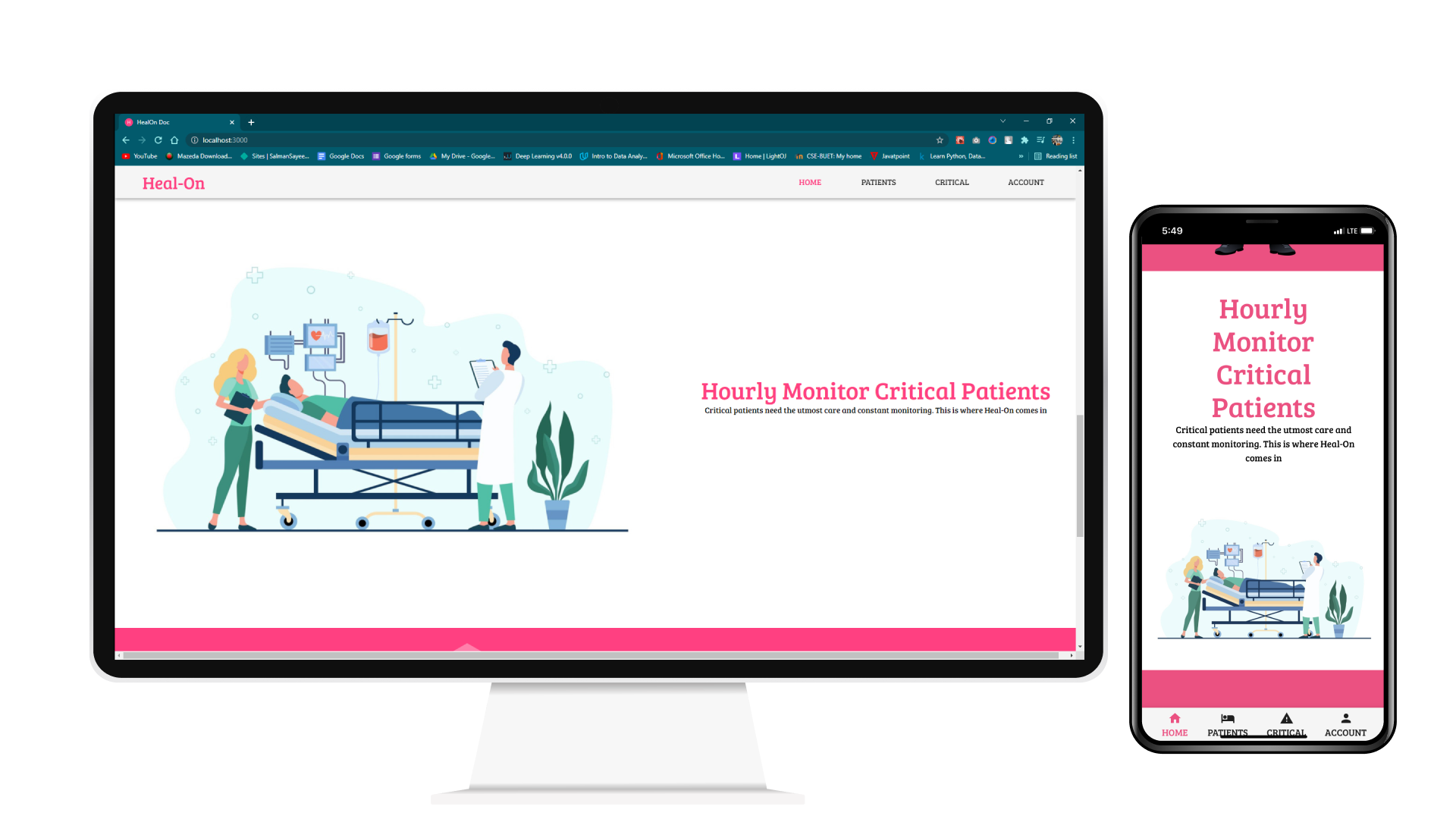
Home Page
-
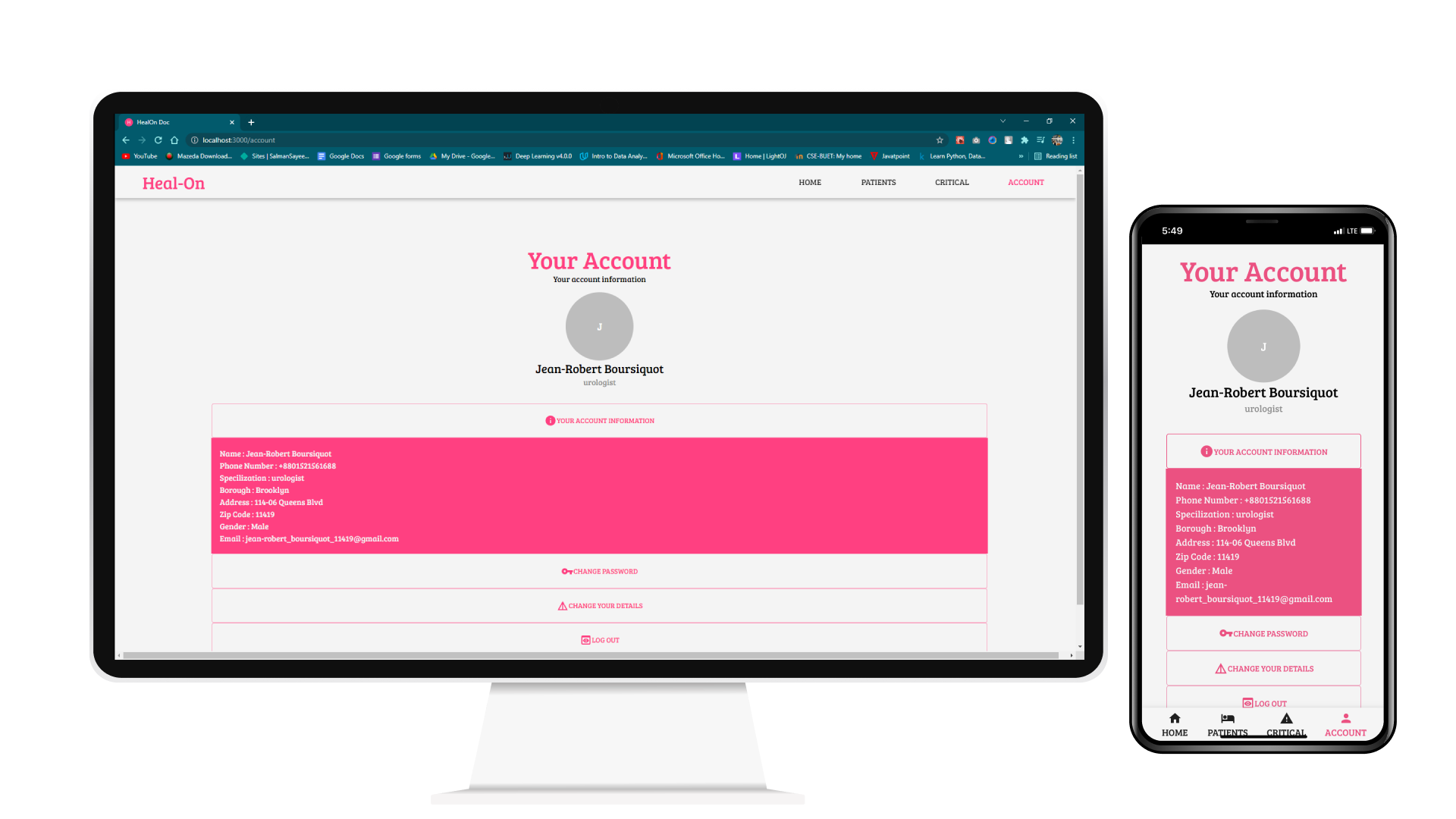
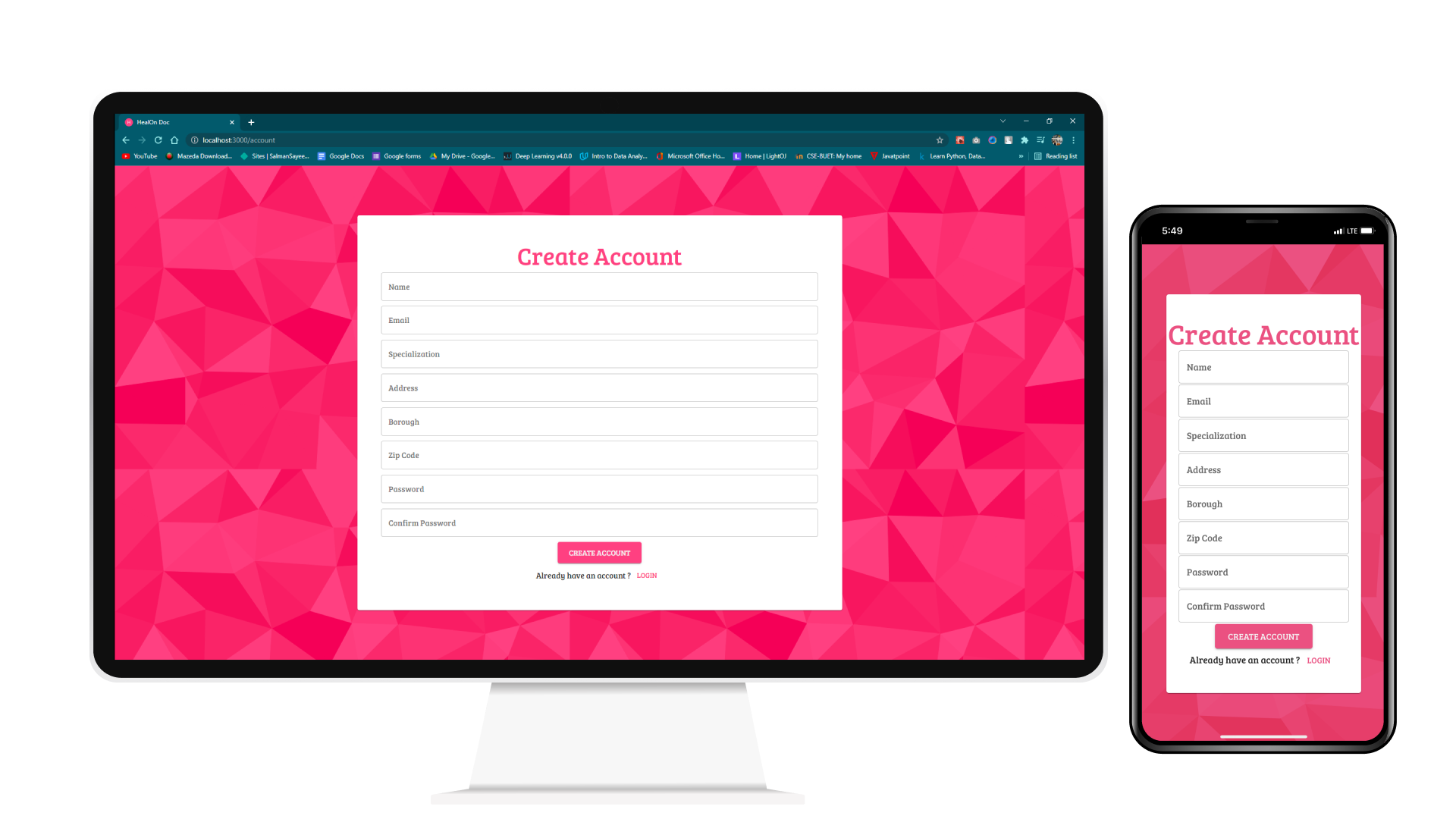
Account Details
-
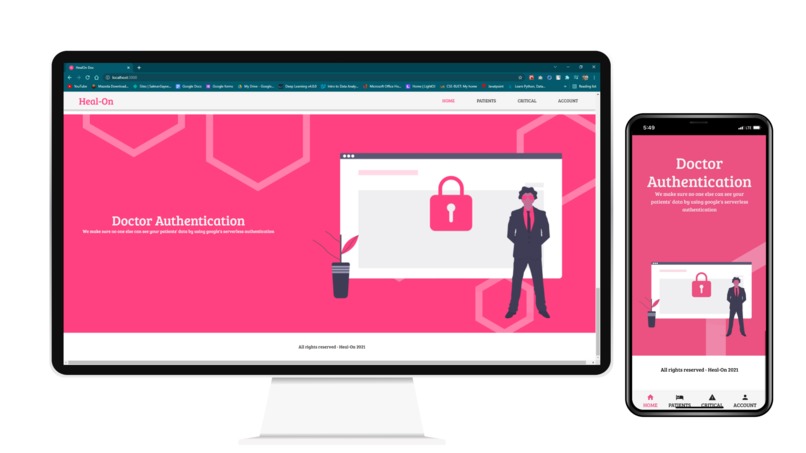
Home Page
-
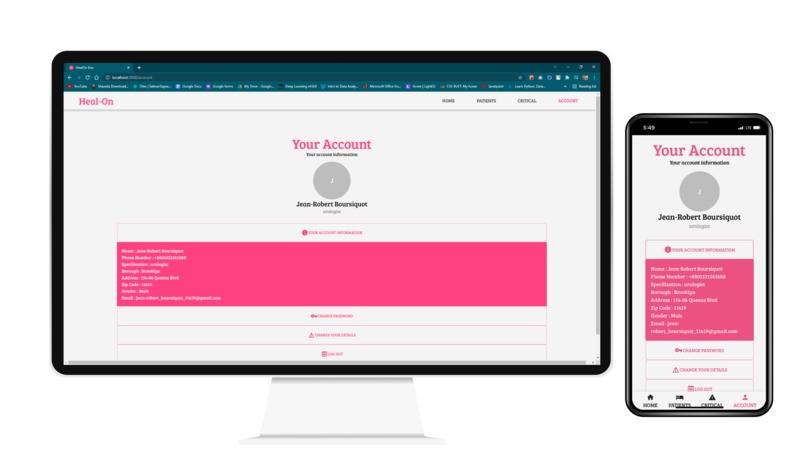
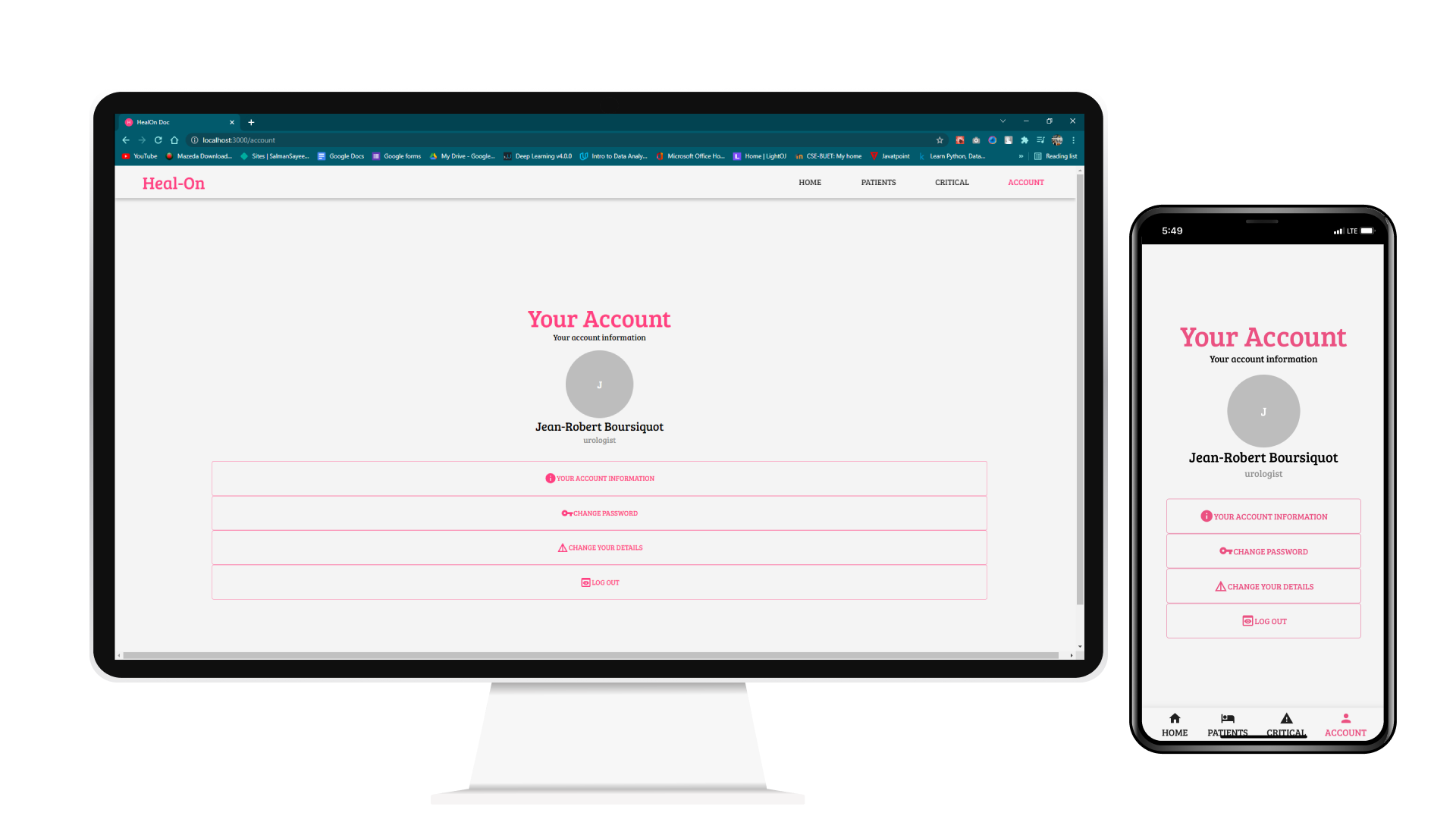
Account Page
-
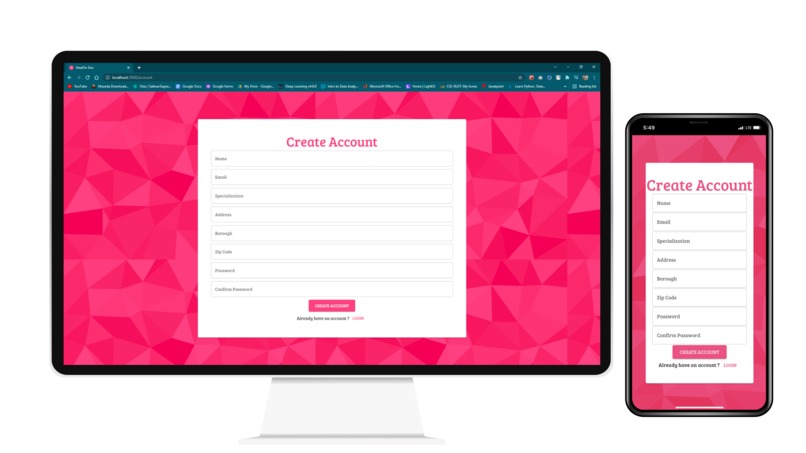
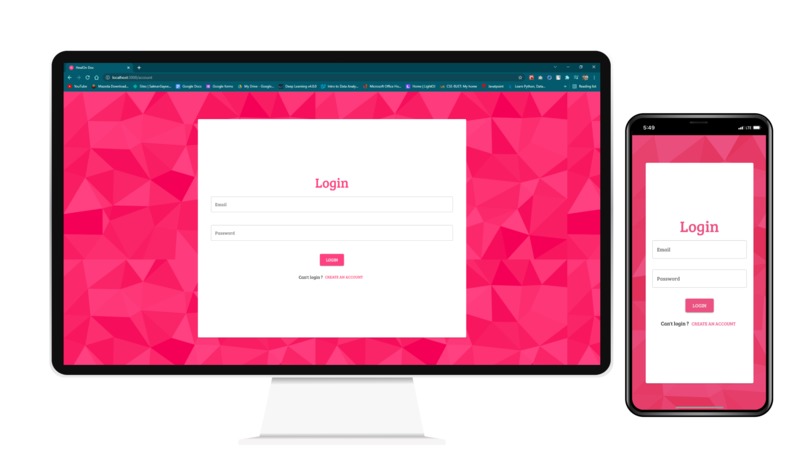
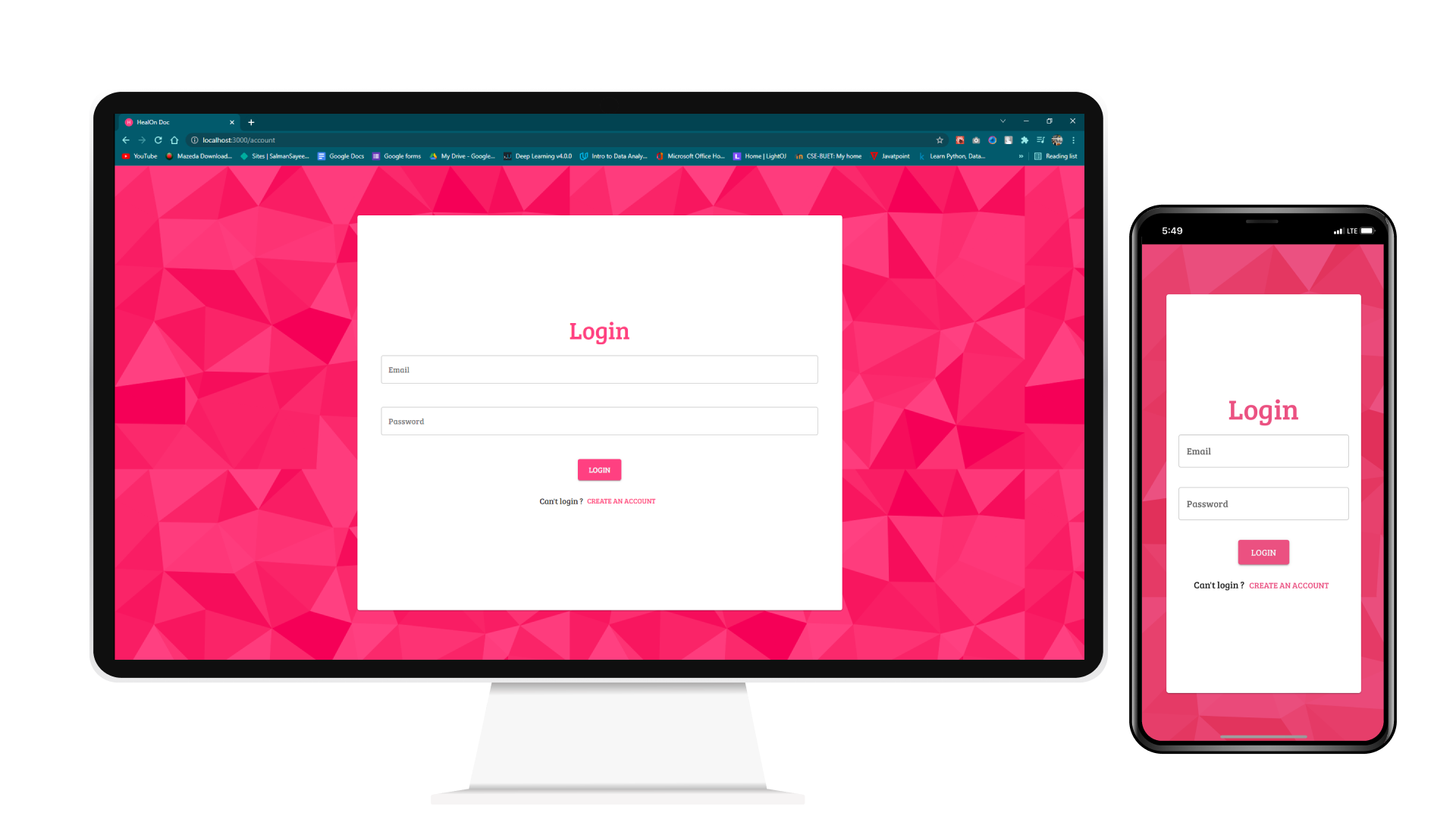
Login Page
-
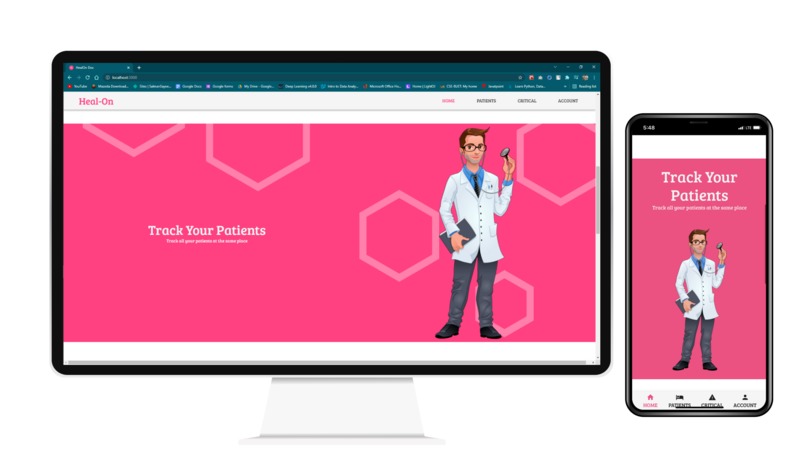
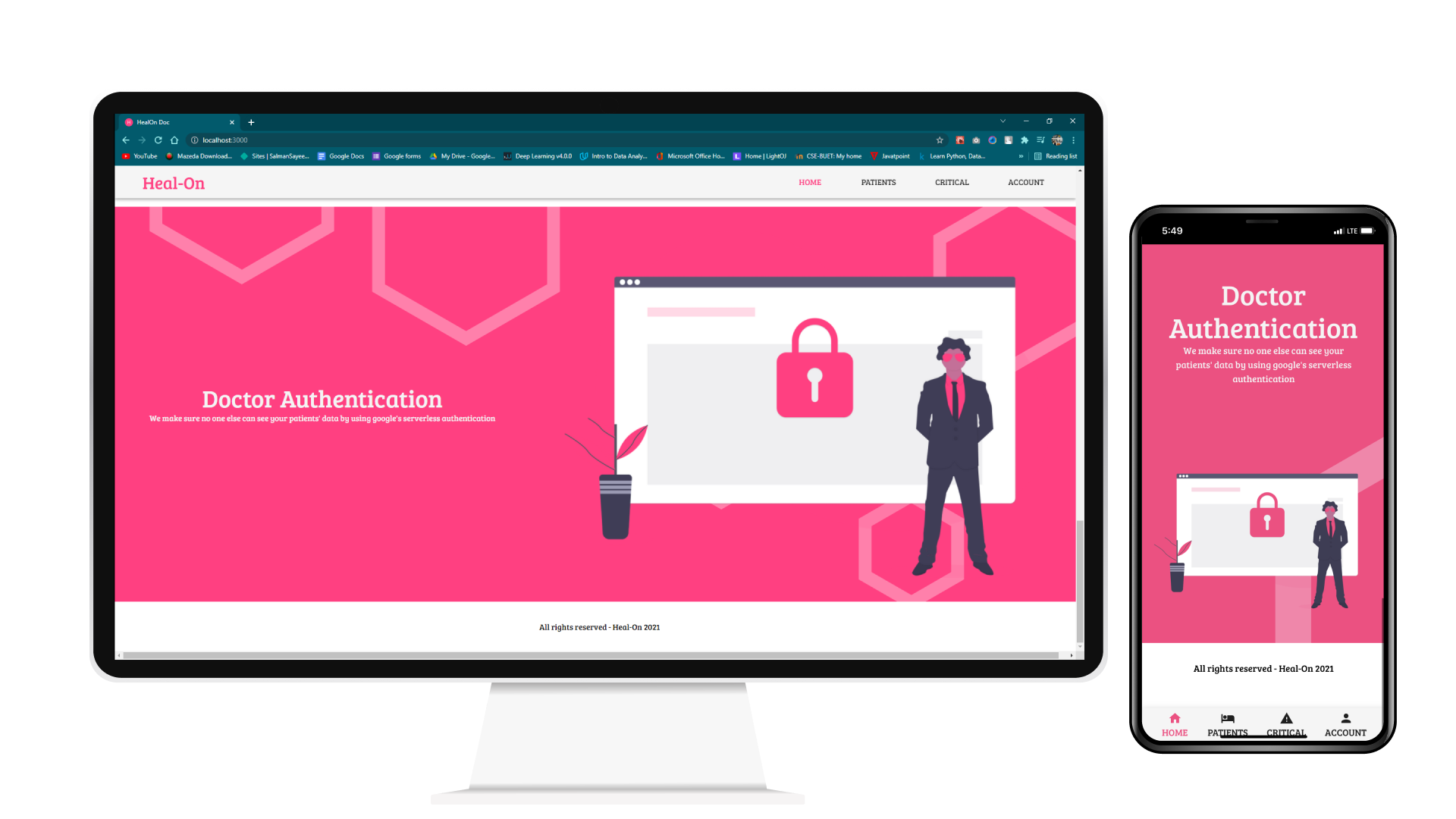
Home Page
-
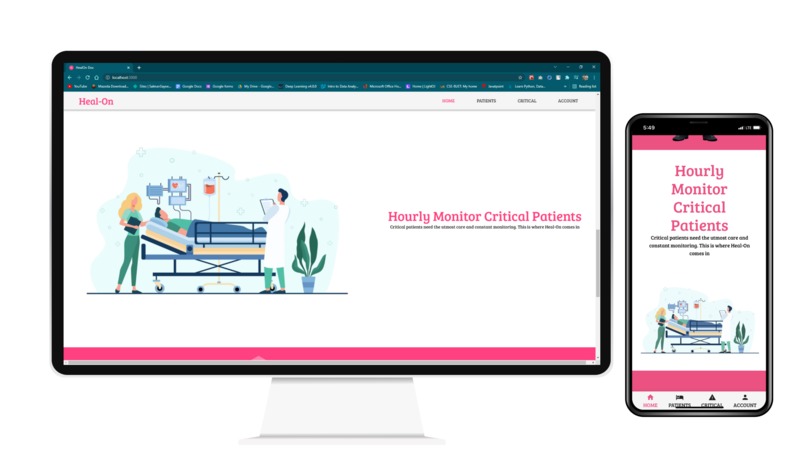
Home Page
-
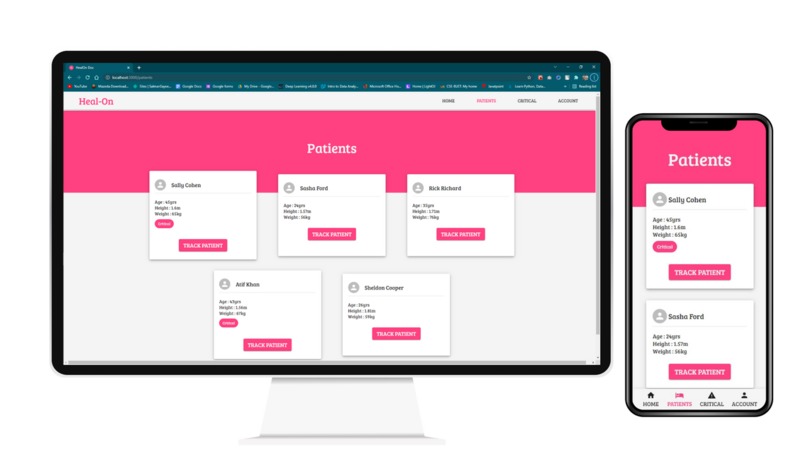
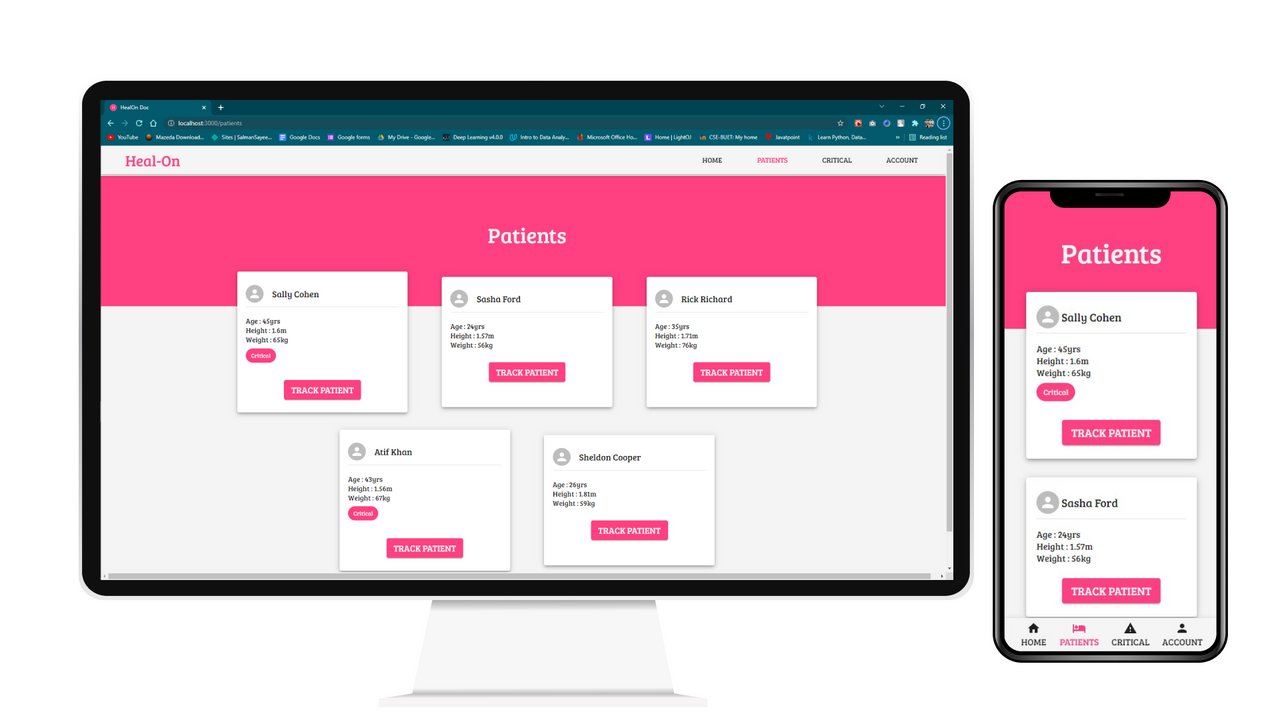
Patient List
-
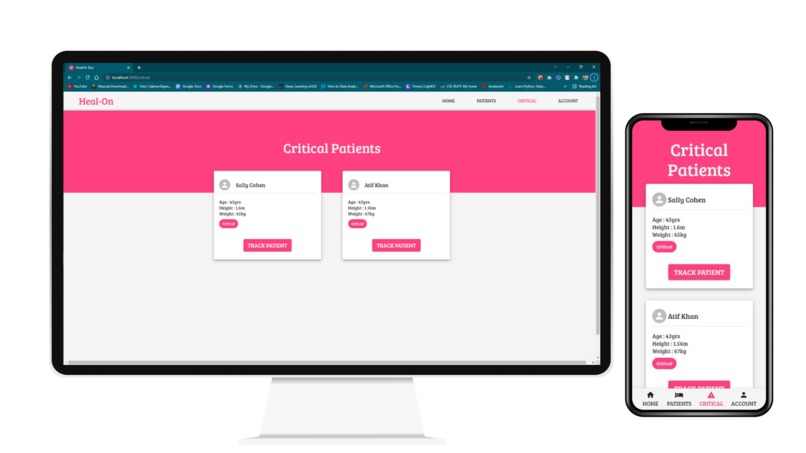
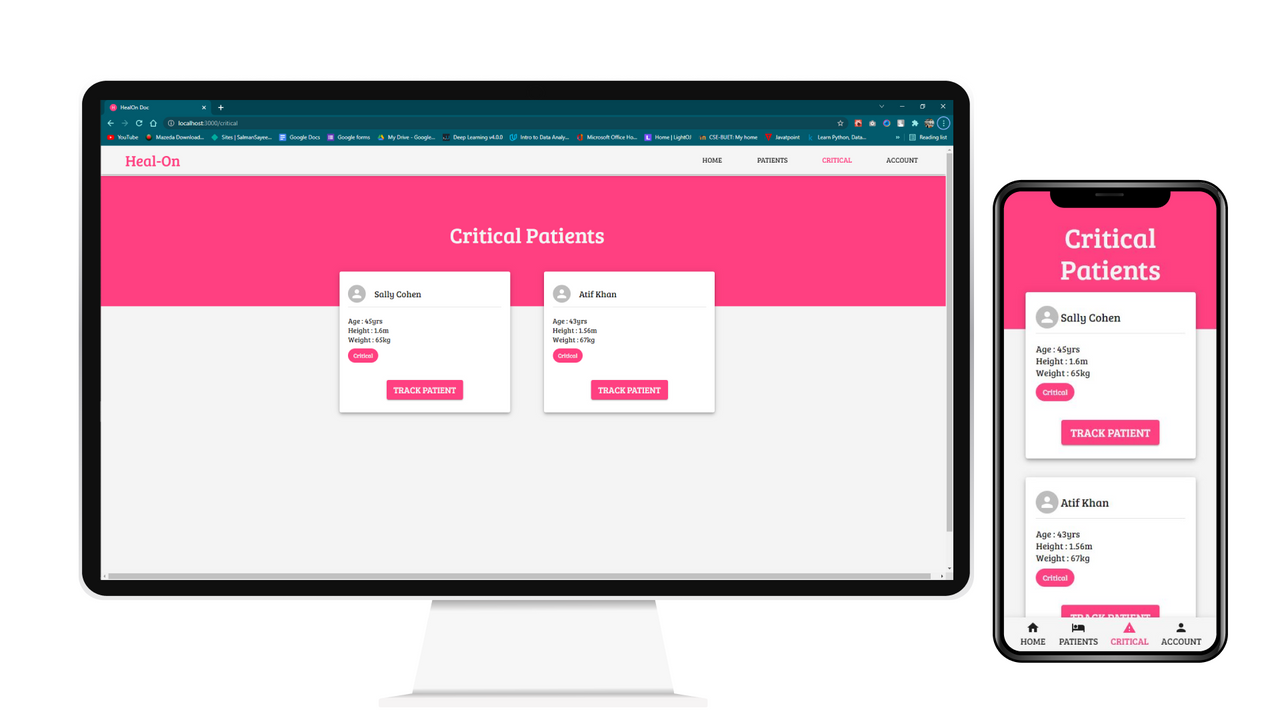
Critical Patients List
-
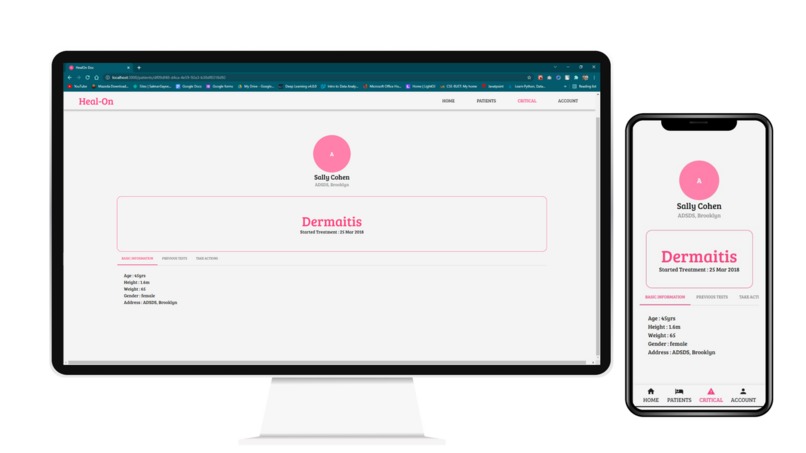
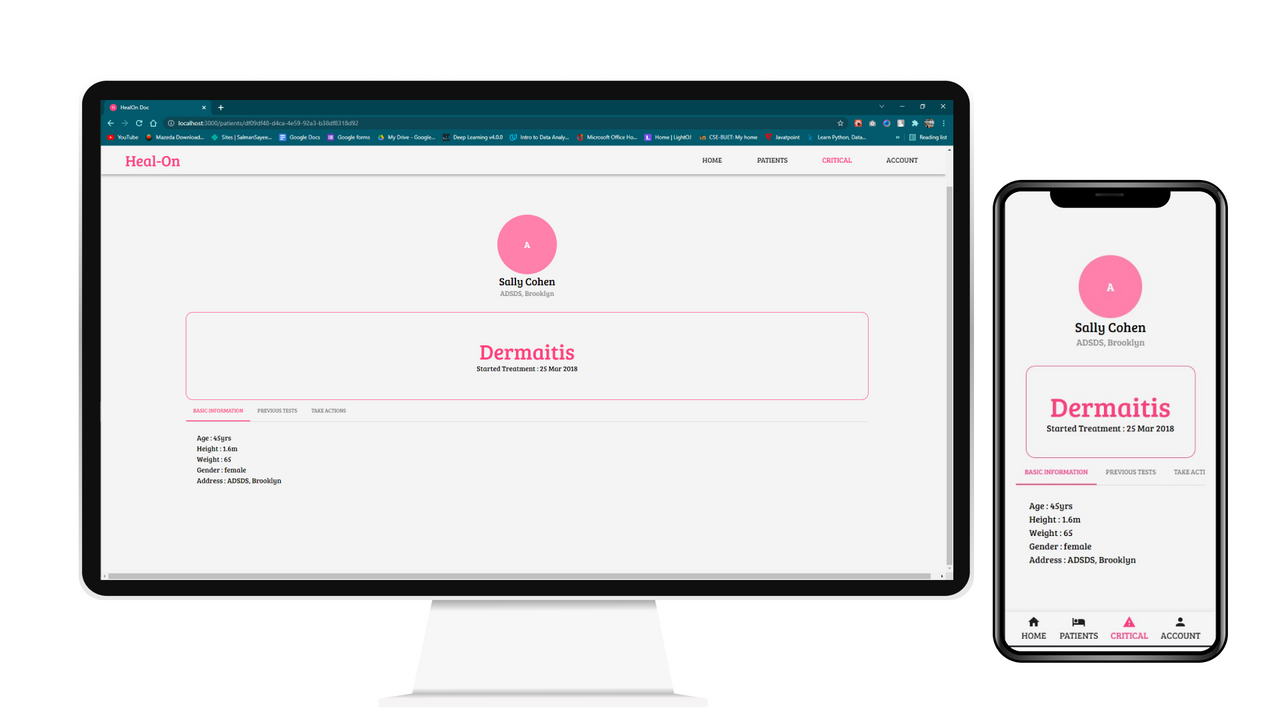
Patient Basic Info
-
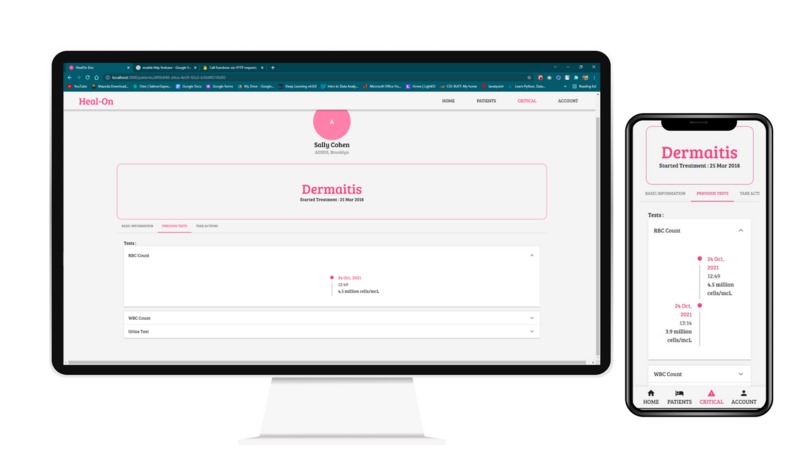
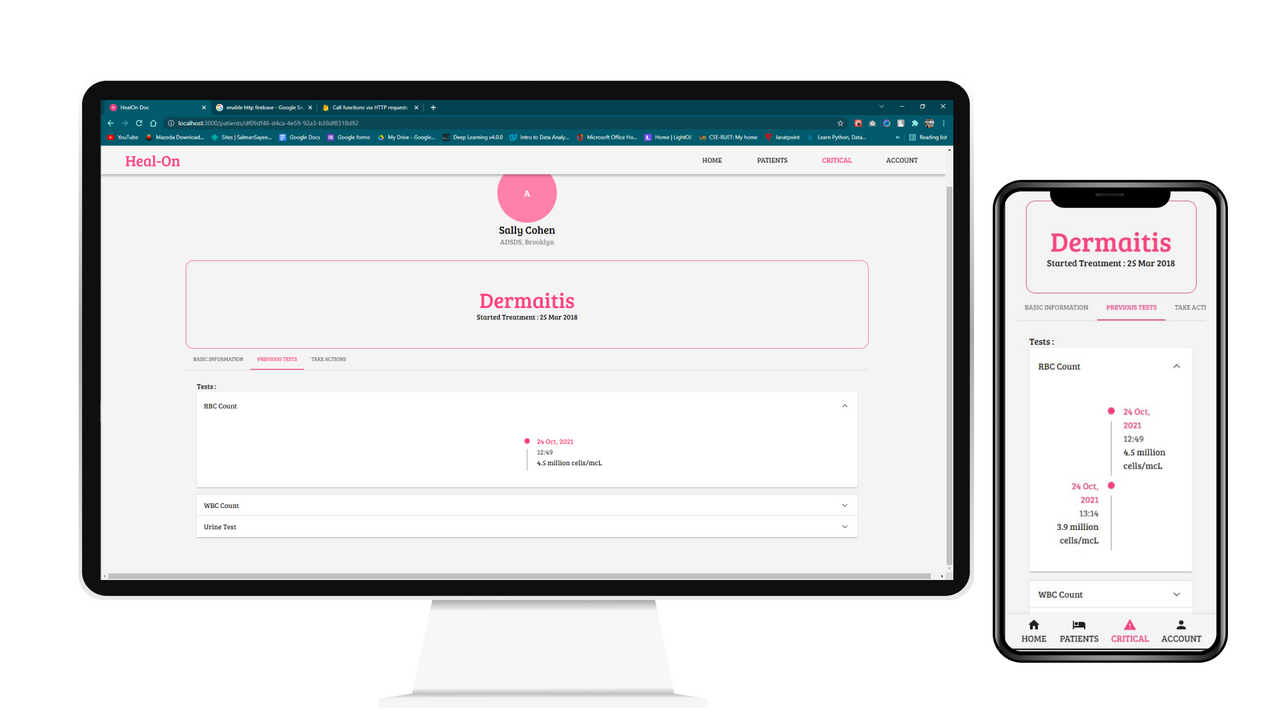
Patient Real Time Data
-
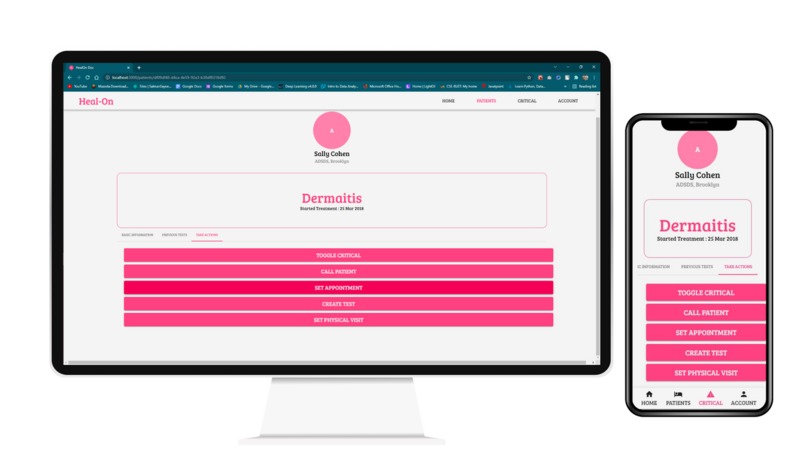
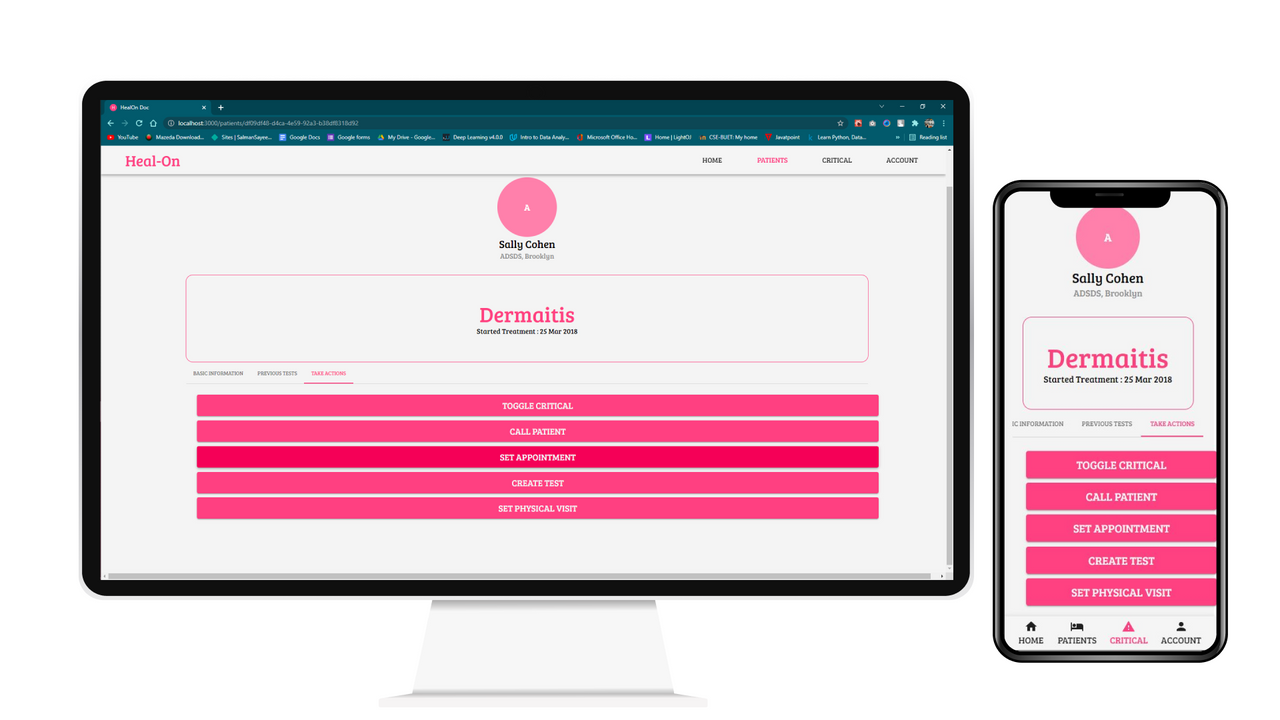
Patient Actions Page
Inspiration
During COVID, we saw thousands of people going in and out of hospitals every day. While some people needed immediate care, some just went to get tested. A lot of patients got into worse situations for not being able to receive treatment early due to hospital wait times and also due to personal hesitancy. As a result, we saw overcrowding and inefficiency in treatment within the hospitals. With the inspiration of creating a personal healthcare service like Baymax, we decided to build an app that could help reduce the patient delay by enabling more accessible patient interaction and treatment delay by allowing doctors to monitor patients' conditions and prioritize them based on their medical needs.
What it does
We have built an app where people can communicate about how they feel or what symptoms they have with a chatbot. The chatbot is intelligent enough to narrow the symptoms down to a few medical specializations that need to be addressed for the patient. In fact, our app can detect 25 different specializations including psychology or psychiatry. It will then provide the patient with a list of diagnostic tests like blood tests, urinalysis, etc, that they can do at home. They will also get a list of all their local doctors so that they can choose which doctor to consult. This way, the patients would not have to visit hospitals to get their basic tests done. Once their sample is collected and tested by labs, our app will then provide the test results directly to the selected doctor. The doctor can then virtually monitor their patients’ records. We have also tried to include a feature where the database that contains patients’ records will arrange the list of patients according to their deviation from normal values for the tests. This will show which patients might need emergency care and will help reduce treatment delays for those patients.
How we built it
Heal-On is an all-around solution for both patients and doctors. We are working on reducing patient delay as well as focusing on health system delay too. Our project has been built upon 3 repositories:
- Patient App [Flutter]
- Doctor Dashboard [React]
- Backend and Database [Django]
Backend and Database: -Supports both Patient App and Doctor Dashboard -Uses Informedica API to communicate with the patients and handle requests. -Takes user’s info and passes it to the database -When the specialist diagnosis is done, it passes the required tests and doctors’ list to the patients -Patients can request appointments -Supports real-time patient track request -Uses database to flag emergency cases for automatic emergency care unit response
Patient Side Application: This side of the system focus on the Patient end of our system where we try to understand our patients’ issues using an intelligent bot and narrow their issues down to more than 25 different specializations.
-Takes basic user info to supply to doctors virtually -Intelligent chatbot that uses Natural Language Processing to understand patients’ symptoms -Detects specializations from patient’s symptoms -Returns recommended tests for specific patients -Returns specialist list for specific patients -Option to appoint specific specialist
Doctor Side Application: This side of the system focuses on the Doctor's end of our system where we let our doctors monitor their patients on a live feed and also show them the medical history of each of the patients. The key features of this end are given below -Live Tracking Patients We let our doctors track their patients in a live feed. This live feed updates each time the patient does a test or any sort of action. This will let our doctors track their users more efficiently and take actions necessarily -Storing Test History One of the key features of "Heal-On Doc" is to be able to store the medical history of a patient in an intuitive UI. This lets our doctors easily get an overview of the patient that they are working on
-Sort Critical Patients The main problem with the traditional treatment method is that we cannot easily sort our critical patients from normal ones. And often the health officers are too late to know about a patient who has an emergency. We let our doctors decide who is a critical patient and sort them to a different section of the page. This allows us to get better monitoring of critical patients.
-Important Actions On the patients' page, our doctor can take action on a certain patient. These actions contain: 1. Toggling Emergency 2. Calling a Patient 3. Setting up a test 4. Setting an appointment -Doctor Authentication We also have authentication for doctors so that the data of their patients remains confidential and no one other than authorized personnel can access that data
Challenges we ran into
The biggest challenge we ran into was to build a prototype for our wide idea. Since our solution consists of two different parts, we had to implement the prototype for both of them. Besides, gathering the medical data and building the backend was time-consuming as well. Thankfully, our team had 4 members each with different expertise. Three developers and one pre-med student -- we had to work simultaneously to make sure our prototype sees the light of the day within just 48 hours.
Accomplishments that we're proud of
We let our parents try out our app, and they said it felt natural to talk to the bot about their symptoms. Besides, they have expressed that they are more inclined to virtually interact with Doctors with our solution since it has little to no delay.
What we learned
While working on the project, we saw that an increasing amount of healthcare problems, especially in developing countries, could be solved using a well-made virtual healthcare service. Although the telemedicine service currently exists in those areas, it takes time and money. Therefore, our end-to-end solution could effectively solve those problems.
What's next for Heal-On
Heal-On is incomplete without its partnering labs and doctors. So our primary goal is to partner with testing labs and facilities. Besides, we can also work with health officials to improve our Physicians' side application. Also, the chatbot can be improved to detect symptoms more accurately.
Built With
- dart
- django
- flutter
- informedica
- javascript
- react


Log in or sign up for Devpost to join the conversation.