-
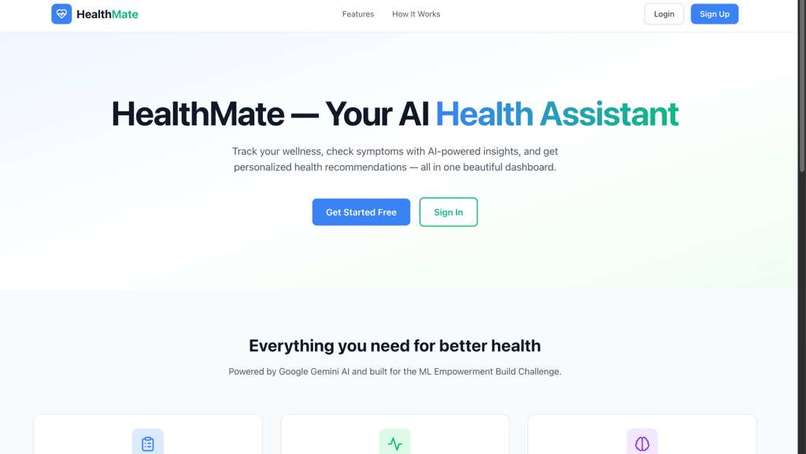
login
-
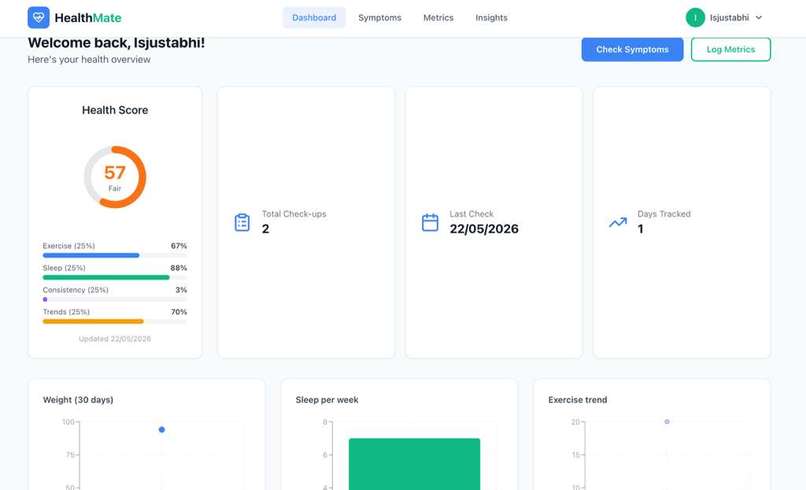
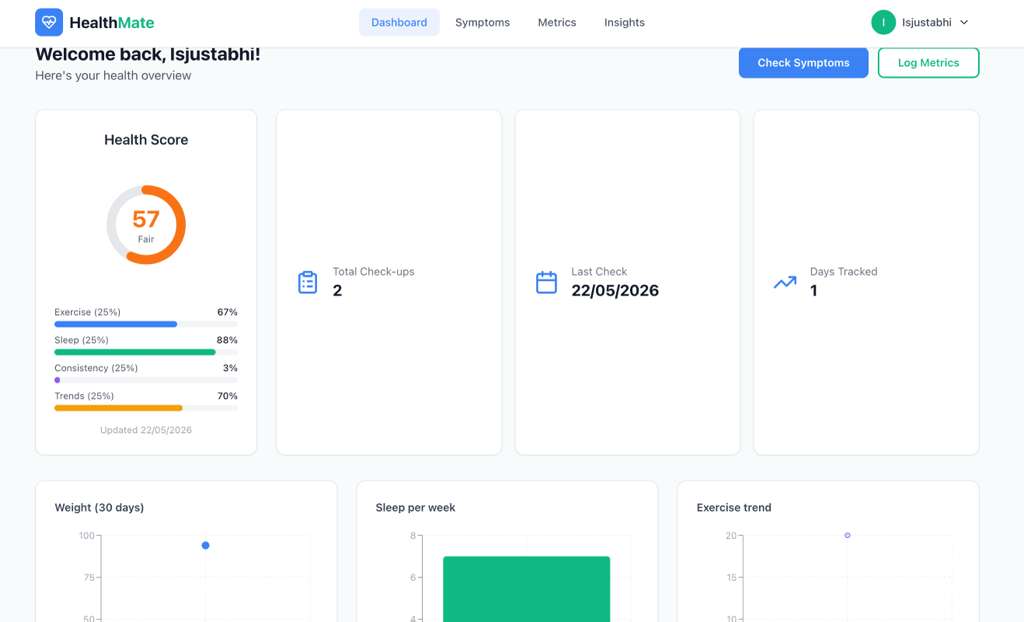
dasboard
-
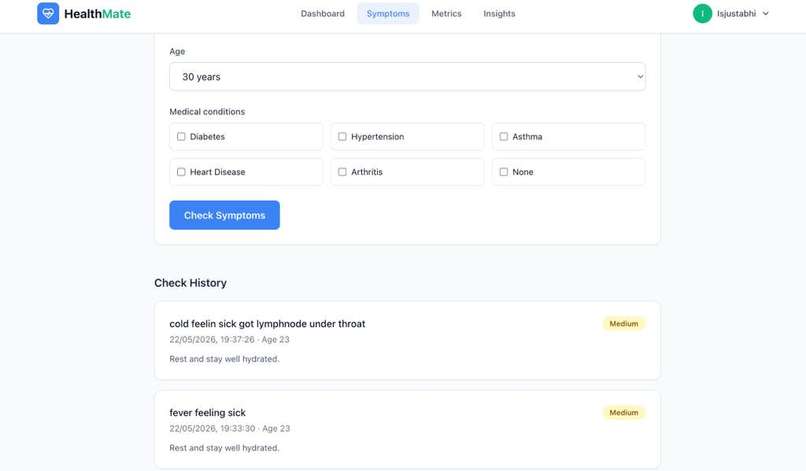
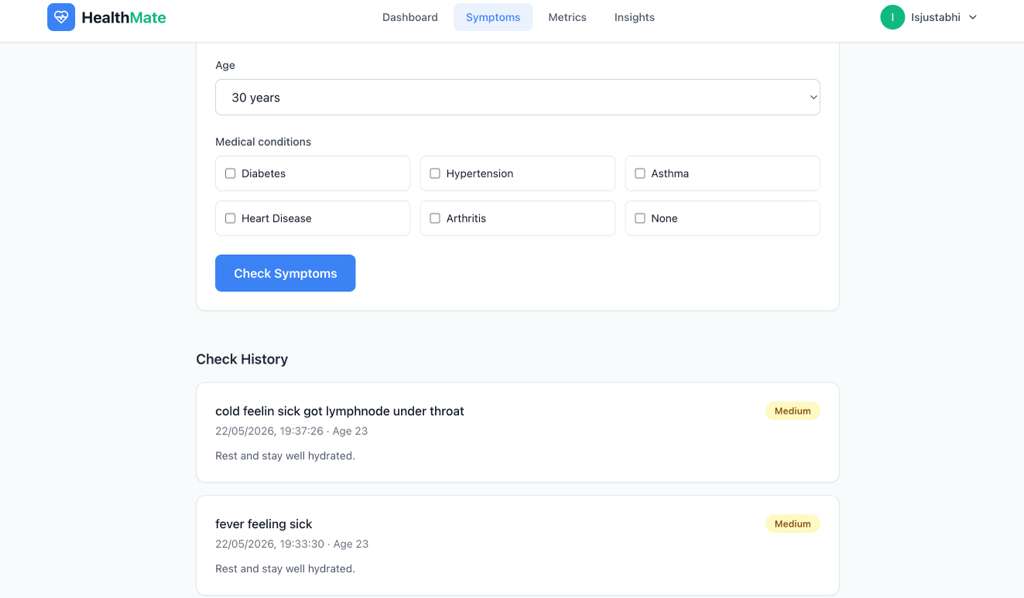
symptoms
-
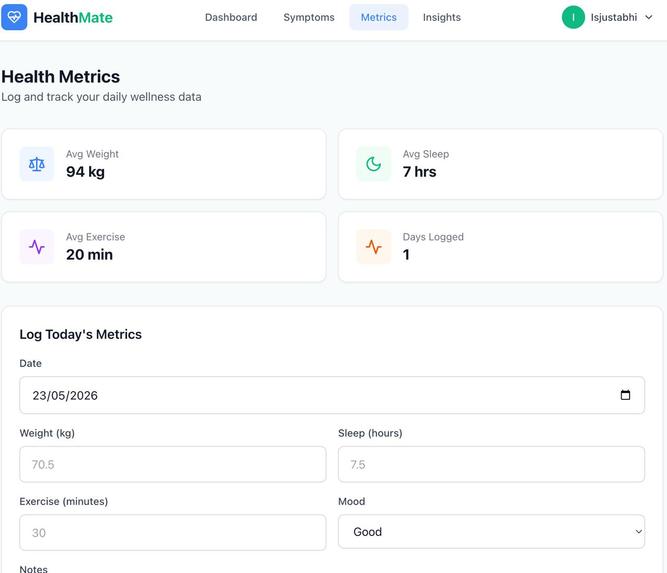
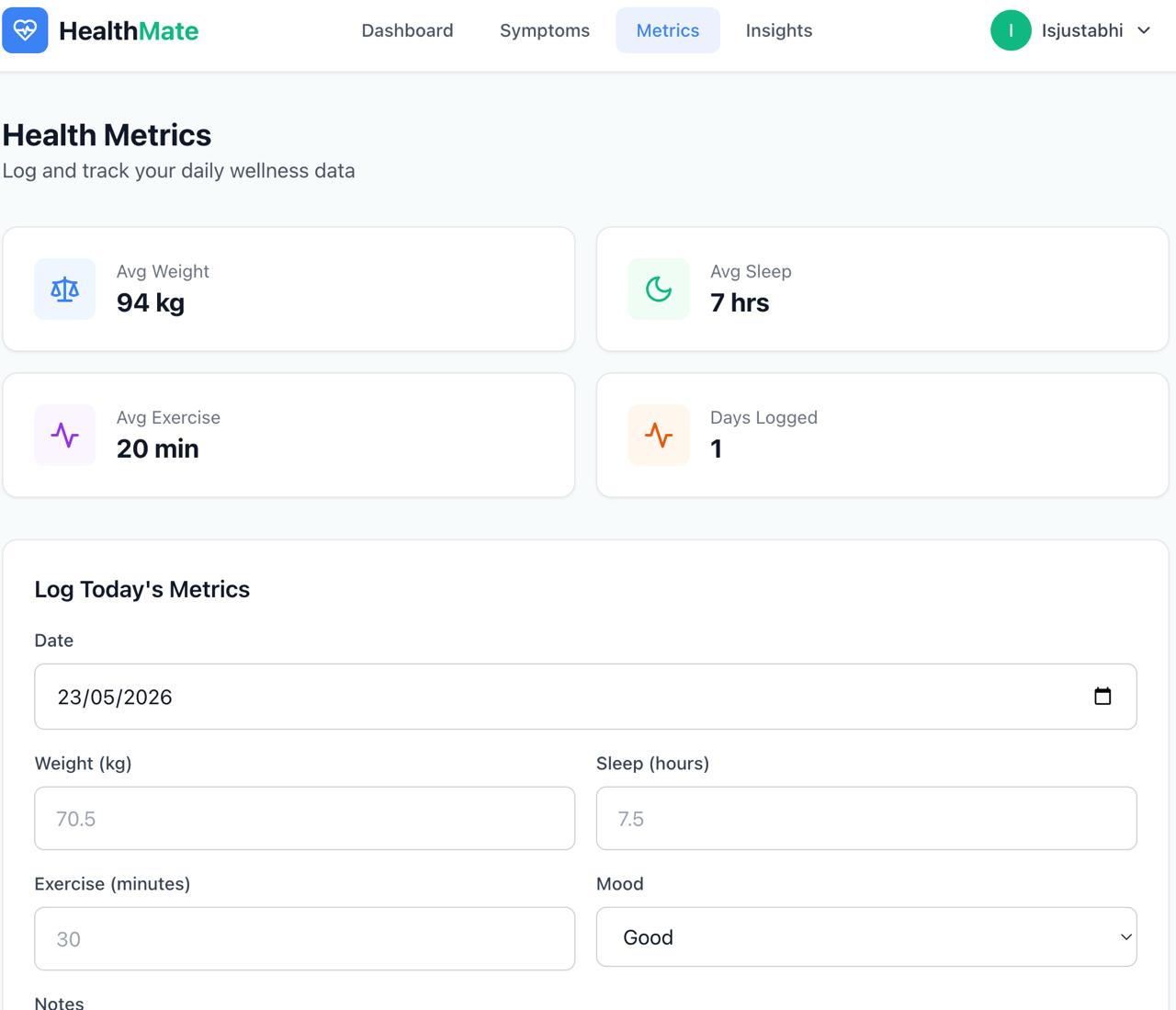
metrics
-
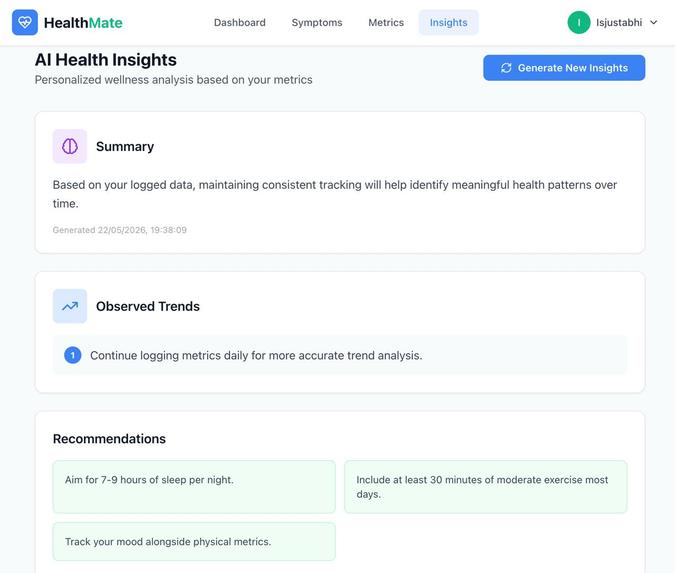
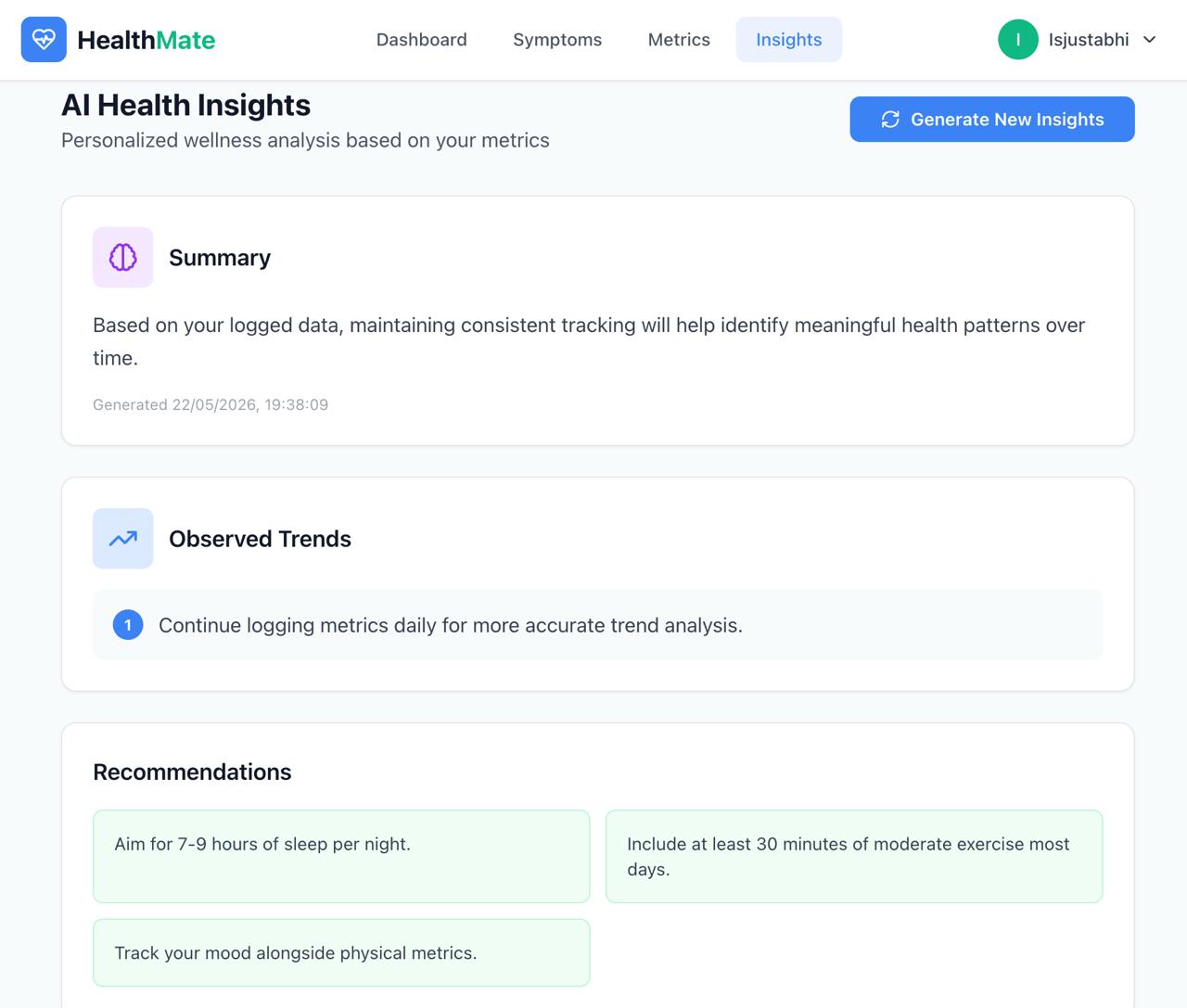
ai powered insights
Inspiration
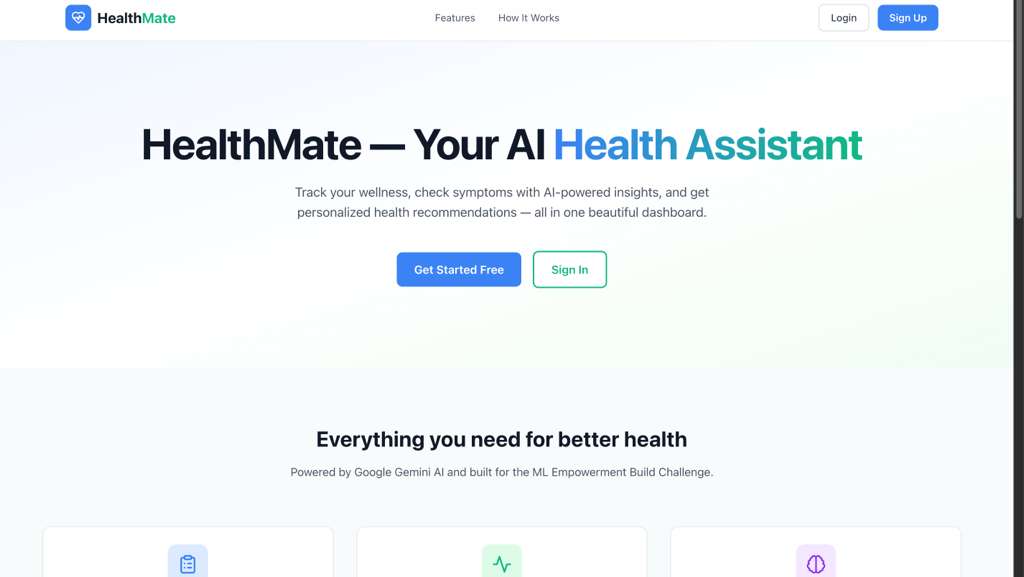
Many people want to improve their health day to day, but wellness data lives in notes and apps, and symptom questions often go unanswered between doctor visits. We built HealthMate to combine simple daily tracking with AI-powered guidance—so users can spot patterns, check symptoms responsibly, and get personalized wellness tips in one place.
What it does
HealthMate is a full-stack web application that helps users:
- Track wellness metrics — weight, sleep, exercise, mood, and notes
- Visualize trends — line, bar, and area charts over 30 days
- Check symptoms with AI — describe how they feel and receive severity-aware recommendations and health tips (with clear guidance to see a doctor when appropriate)
- Generate AI insights — personalized analysis based on logged metrics
- See a health score — a 0–100 score with breakdown across exercise, sleep, consistency, and trends
Disclaimer: HealthMate provides general wellness information only. It does not diagnose conditions or replace professional medical advice.
How we built it
We used a modern full-stack architecture:
- Frontend: Next.js 14, React, TypeScript, Tailwind CSS, and Recharts for interactive dashboards
- Backend: Node.js and Express with JWT authentication and REST APIs
- Database: Supabase (PostgreSQL) for users, metrics, symptom history, and insights
- AI / ML: Google Gemini (generative AI) via the Generative AI API—used to analyze symptom descriptions and health metric trends, returning structured JSON (recommendations, severity, tips, and insights)
- Deployment: Vercel (frontend) and Railway (backend)
The AI layer uses carefully designed prompts so the model focuses on wellness support, never disease diagnosis, and always encourages professional care for serious symptoms.
What we learned
- How to integrate LLM-based machine learning into a real product with structured prompts and validated JSON responses
- Designing secure APIs with bcrypt password hashing, JWT tokens, parameterized SQL, and CORS for production
- Connecting cloud services (Supabase session pooler, Railway, Vercel) and fixing deployment issues (CORS, database URLs, environment variables)
- Building accessible UX for health data—loading states, protected routes, and mobile-responsive layouts
Challenges we faced
- Database connectivity: Supabase’s direct host was IPv6-only on our network; we fixed it using the session pooler connection string and URL-encoding special characters in passwords
- Production CORS: Aligning Railway
FRONTEND_URLwith our Vercel deployment (https://healthmate-abhi.vercel.app) - AI reliability: Parsing Gemini responses safely with fallbacks when the API returns unexpected formats
Impact
HealthMate targets students and everyday users who want a free, approachable tool to build healthier habits and understand wellness trends—with AI that turns raw logs into actionable, data-driven insights for AI for Health.
Built With
- api
- artificial
- css
- express.js
- gemini
- intelligence
- jwt
- learning
- machine
- next.js
- node.js
- postgresql
- railway
- react
- recharts
- supabase
- tailwind
- typescript
- vercel


