

Inspiration/Introduction
Pulmonary Diseases are a major health threat for people. In fact, Chronic Obstructive Pulmonary Disease (COPD) alone affects tens of millions of people: 11.7M+ people (4.6% of total US population) have physician-diagnosed COPD, making it the 6th leading cause of death with over 138K+ annual deaths.
Air quality is a major COPD exacerbation trigger, with PM2.5 and PM10 directly linked to respiratory mortality, responsible for 4.2M+ premature deaths annually. Most workout apps like Strava, however, are one-size-fits all workout apps; they only care about how much you run; they don’t care about whether you have COPD, asthma, cardiac cancer, pollen allergies or other cardiovascular diseases that can be severely impacted by air quality.
To address this issue, we built Healthmap AI, a digital health app that analyzes individual’s digital data including but not limited to wearable data (e.g. Apple watch, Fitbit, Garmin, etc. ) and air quality data (e.g. PM2.5, PM10, O₃, NO₂, etc.) to provide minimal pollutant exposure and workout/running optimization using advanced algorithms such as Multi-Objective Pareto Optimization algorithm and Spatiotemporal Pollution Modeling using geospatial data NASA and Google.
What it does
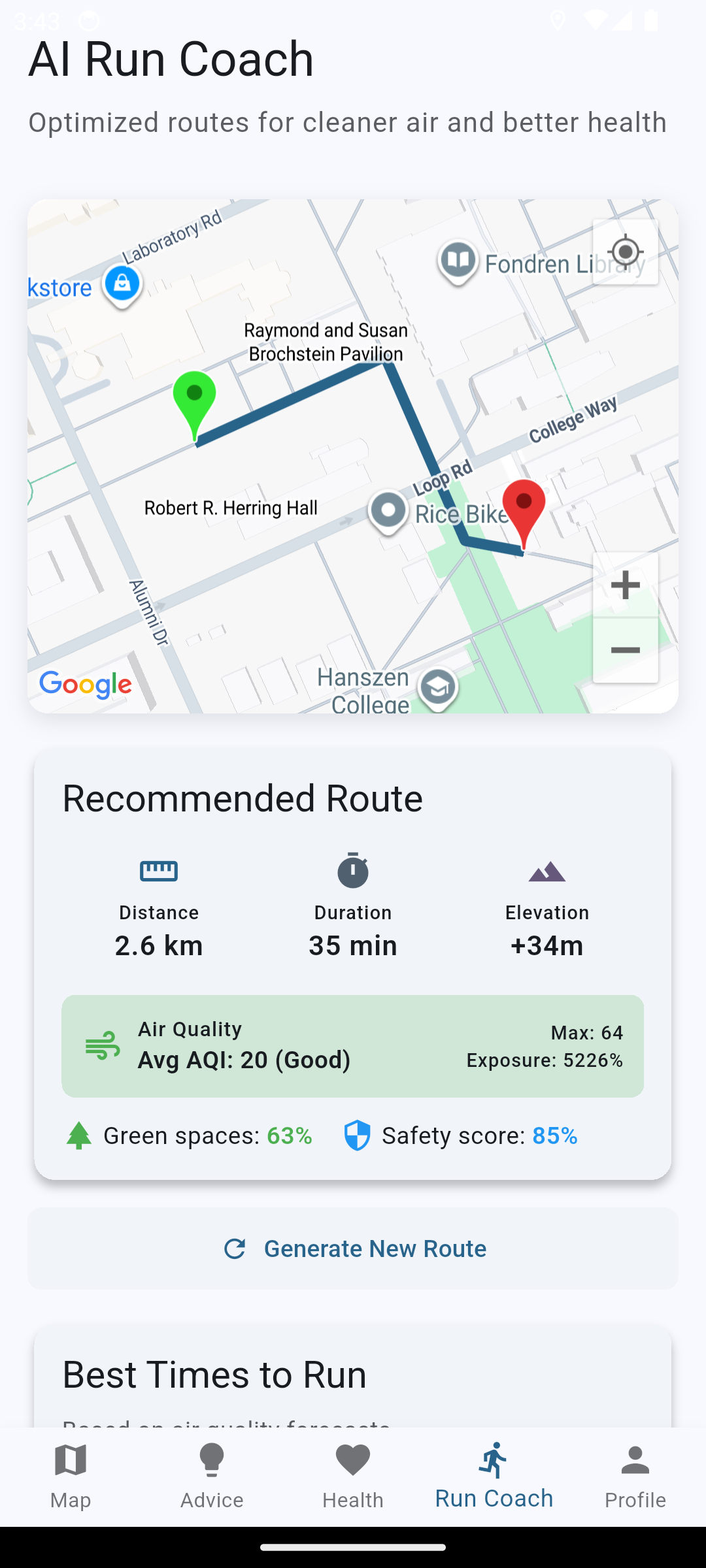
- AI-Powered Run Coach: The intelligent route optimization system analyzes air quality, weather conditions, and user preferences to generate personalized running routes. It considers factors like pollution levels, temperature, humidity, and user fitness levels to recommend the safest and most enjoyable paths for outdoor exercise.
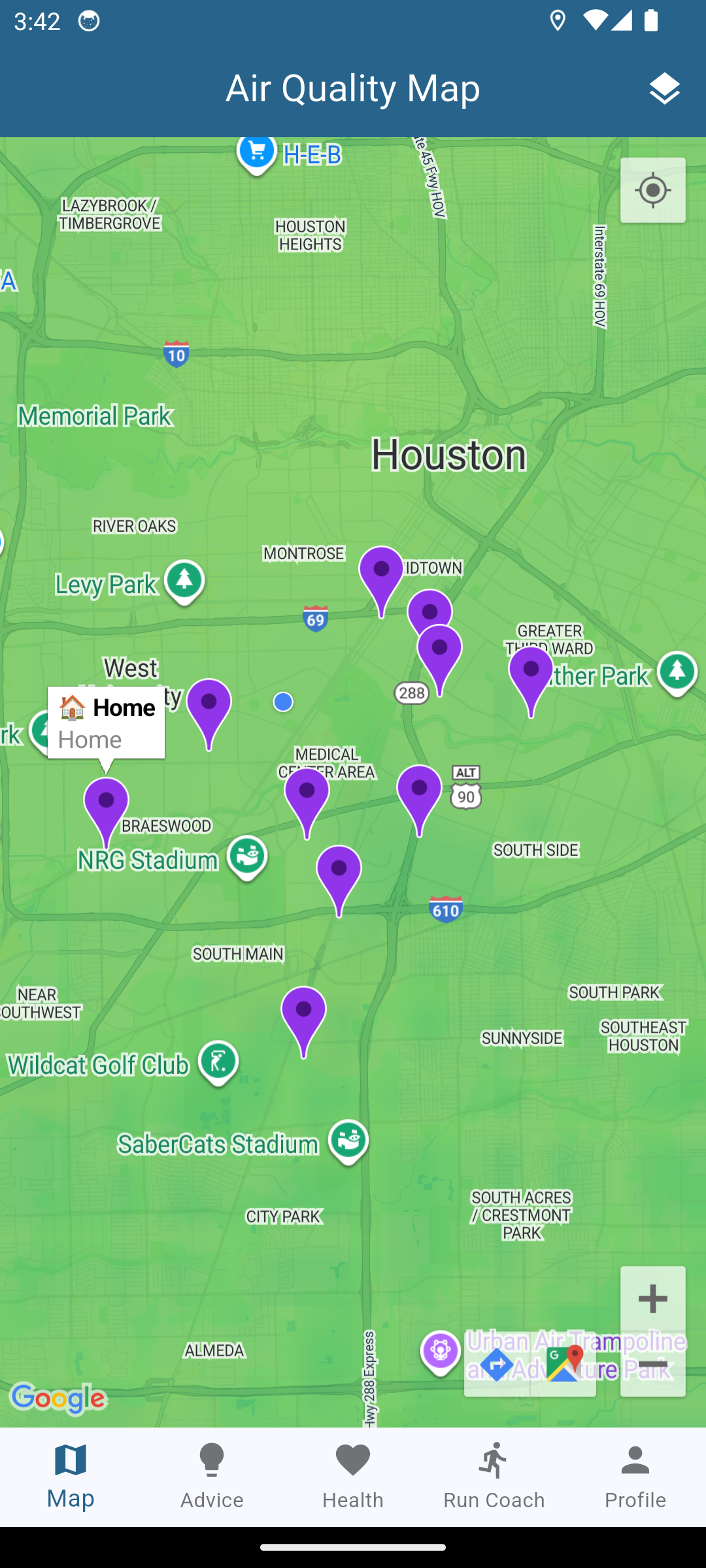
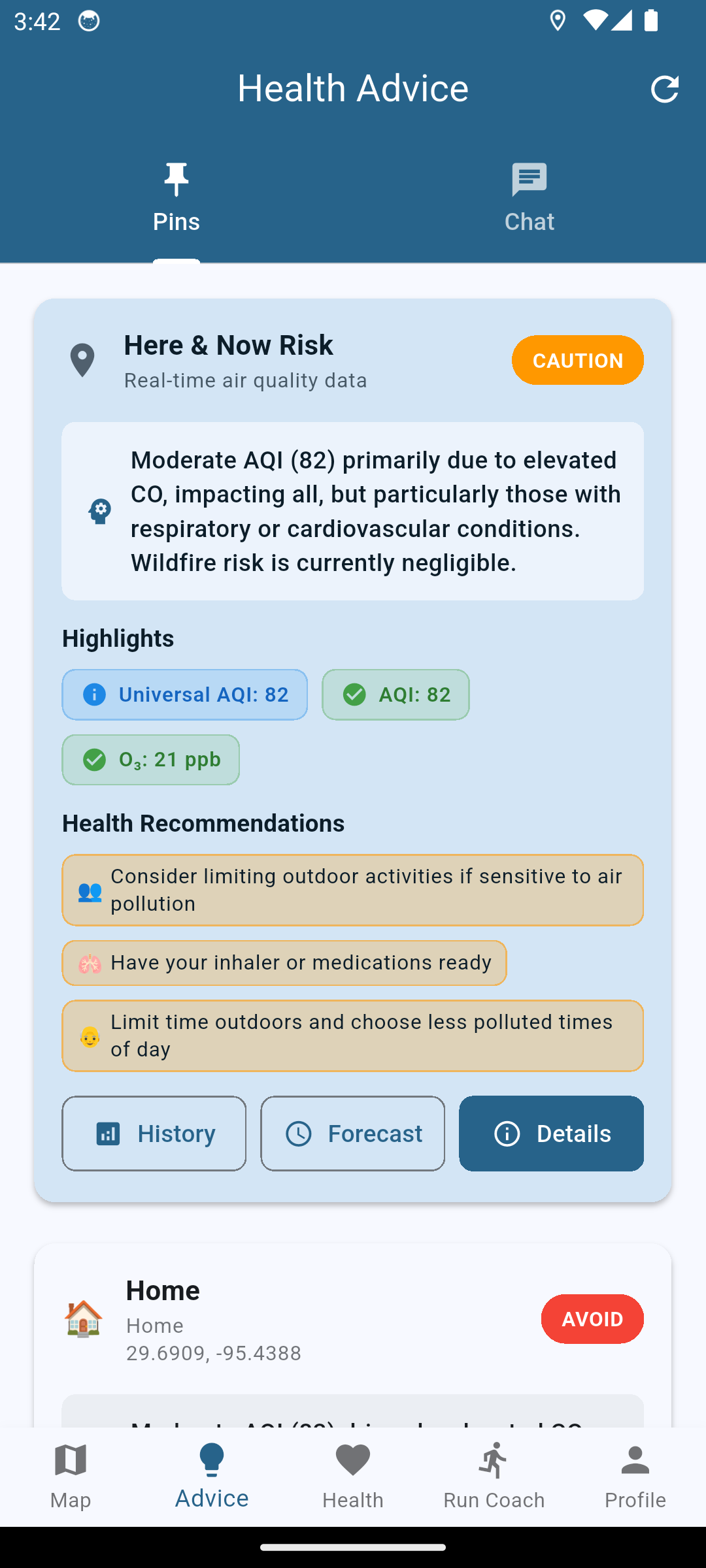
- Real-time Environmental Health Monitoring: HealthMap AI provides comprehensive air quality, pollen, and weather data for any location (we use a total of 30 different data categories including even wildfire data), giving users instant access to environmental conditions that affect their health and daily activities.
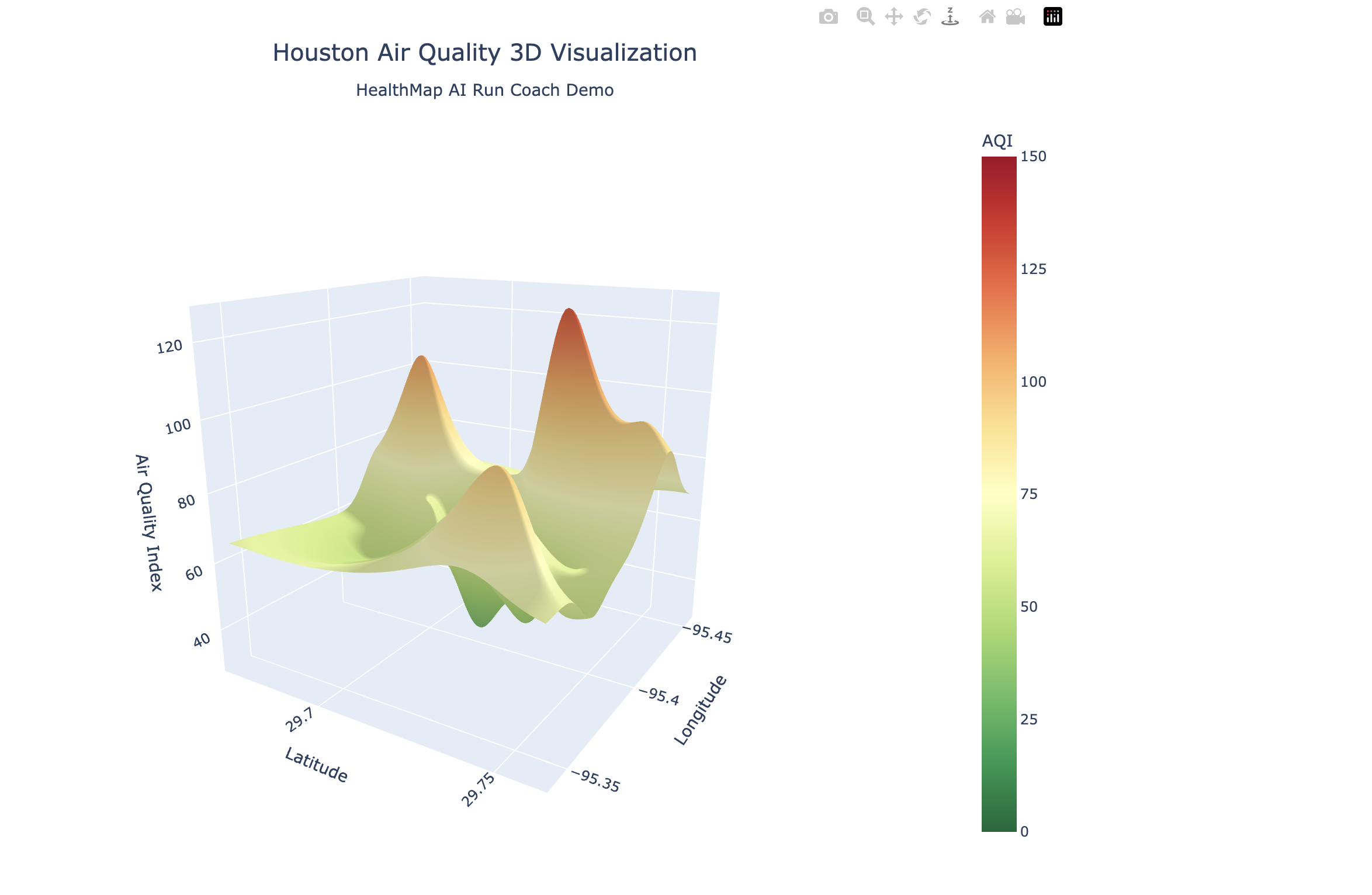
- Interactive 3D Pollution Heatmap: Instead of traditional 2D maps, users can explore a dynamic 3D visualization of pollution levels across their area. The heatmap displays PM2.5, PM10, and other pollutant concentrations with elevation data, providing an intuitive understanding of air quality distribution patterns.
- Personalized Health Recommendations. Based on current conditions and user health profiles, the AI generates tailored advice for outdoor activities, suggesting optimal times for exercise, when to wear masks, or when to stay indoors.
- Multi-Source Data Integration: The platform aggregates data from multiple trusted sources including EPA sensors, OpenWeather API, and local monitoring stations, ensuring comprehensive and reliable environmental information.
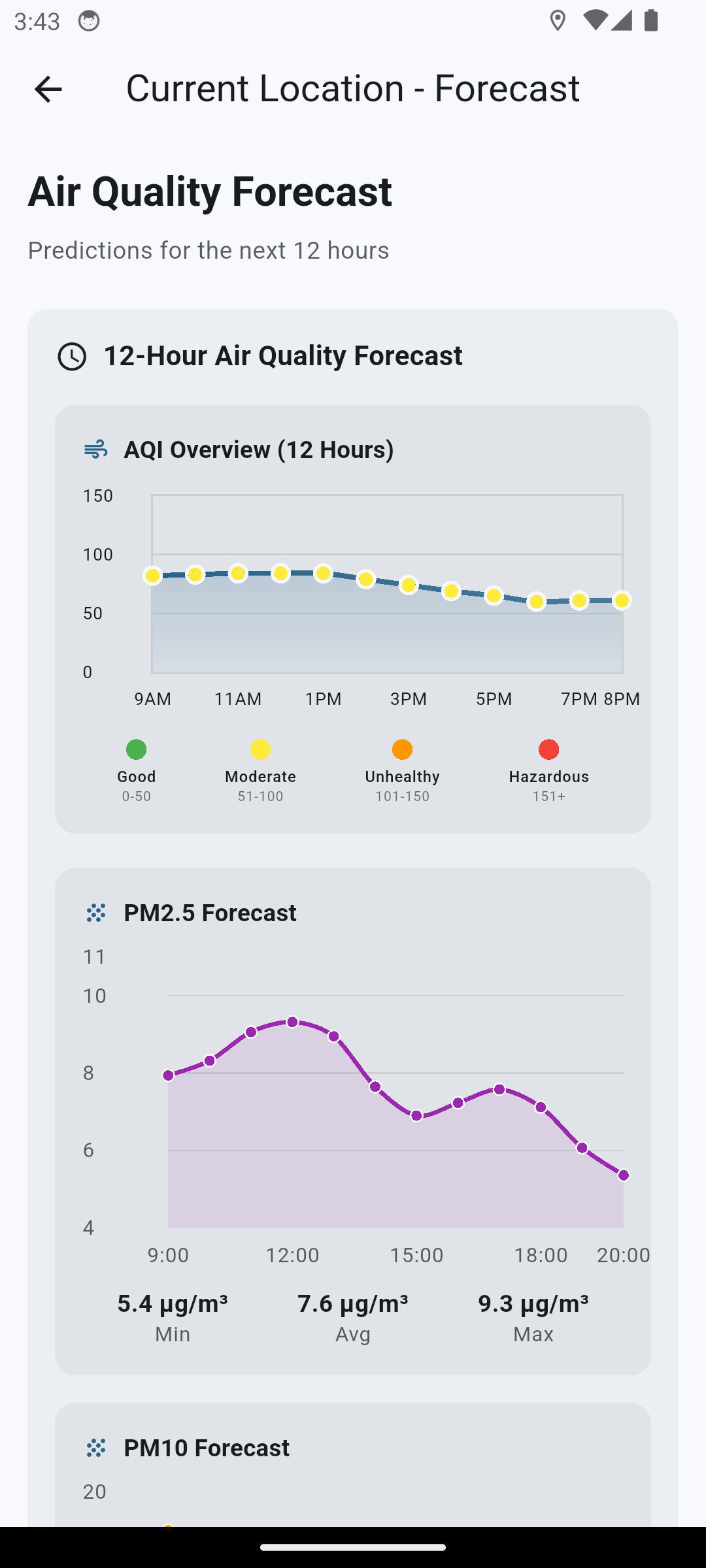
- Historical & Forecast Data Analysis: Users can view trends and patterns in air quality and pollen levels over time, helping them understand seasonal variations and make informed long-term health decisions.
- Location Management System: Save and monitor multiple locations - home, work, gym, or favorite running spots - with instant access to environmental conditions for each saved location.
How we built it
We used the U.S. EPA AirNow API for official government-monitored pollutant concentrations detections; OpenWeatherMap Air Pollution API for real-time AQI data; Tomorrow.io Weather API for Hyperlocal meteorological data including pollen counts; Wearipedia API for high-granularity wearable data extractions (e.g. 1-sec heart rate intraday data); Google Gemini 2.5 Pro API for generating personalized health insights and recommendations; PostgreSQL for persistent data storage and TTL caching for performance optimization; Scikit-Learn for ML algorithm-based health pattern analysis and heatmap visualizations of local AQ mapping. Using the Google Maps API, we generate optimized running routes for the users in the map overview. With Persona, we created a validation step before connecting the FitBit data since it is more personal health data. For the Map and Pin features, we created an EXPRESS server that uses NASA FIRMS API for wildfire data and also the Goole API's for Pollen, Air Quality, and Weather Data. It also stores the user accounts and the user pins. The purpose of having our own API is for greater control of data and to potentially turn our tool into an API which other companies can use.
Challenges we ran into
The geospatial data collected from various APIs were quite verbose so parsing the relevant bits of data and cleaning was challenging.
In addition, we had to collect data from multiple api’s so we decided to create our own REST API using EXPRESS that fetches from Google and NASA, which took a lot of effort.
Accomplishments that we're proud of
We are most proud of our AI Run Coach feature to generate optimal running routes and advanced visualization like the 3D heatmap.
What's next for HealthMap AI
We plan to transform HealthMap AI from a proof-of-concept into a clinically validated health management platform that delivers measurable improvements in respiratory health outcomes and overall quality of life for our users. Here’s some actionable steps for us to focus on:
- Real-Time Health Data Integration: We will develop a robust real-time data pipeline leveraging the Wearipedia API to continuously stream health metrics from multiple wearable devices including Fitbit, Apple Watch, Garmin, and Whoop. This pipeline will process heart rate variability, respiratory rate, SpO2 levels, and activity patterns in real-time, enabling our AI models to detect early warning signs of respiratory distress and provide immediate alerts when users enter high-pollution zones.
- HIPAA-Compliance with Advanced Security Measures: We plan to add data from other AoT devices to create an even more personalized experience. Through Persona, we also hope to become HIPAA compliant and let users connect their actual FHIR medical records to our AI Coach.
- Clinical Research Validation Post-deployment: we aim to conduct clinical trials in collaboration with pulmonology researchers and respiratory therapy departments at major medical institutions. These studies will focus on validating the clinical significance of our environmental exposure predictions and health recommendations specifically for COPD patients, asthma sufferers, and individuals recovering from respiratory infections. We plan to measure key outcomes including reduction in exacerbation events, improvement in exercise tolerance, and overall quality of life metrics to demonstrate real-world health benefits.
Our long term vision is to turn HealthMap AI into a full health dashboard that empowers doctors to recognize early signs of different conditions and risk factors through analyzing patients data, assisting them to find the right treatments and diagnosis.
Built With
- express.js
- flask
- flutter
- gemini-api
- google-maps
- plotly
- postgresql
- scikit-learn
- seaborn
- wearipedia-api


Log in or sign up for Devpost to join the conversation.