-
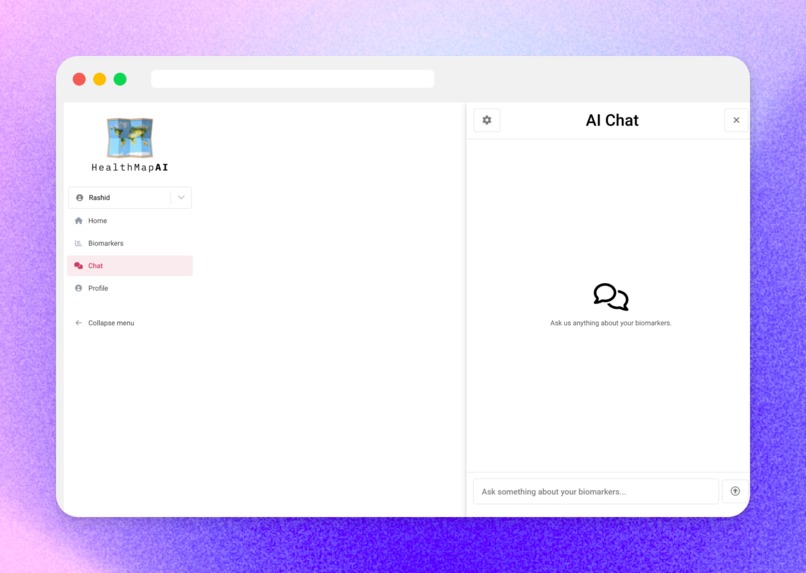
Leverage Artificial Intelligence to Understand Biomarkers
-
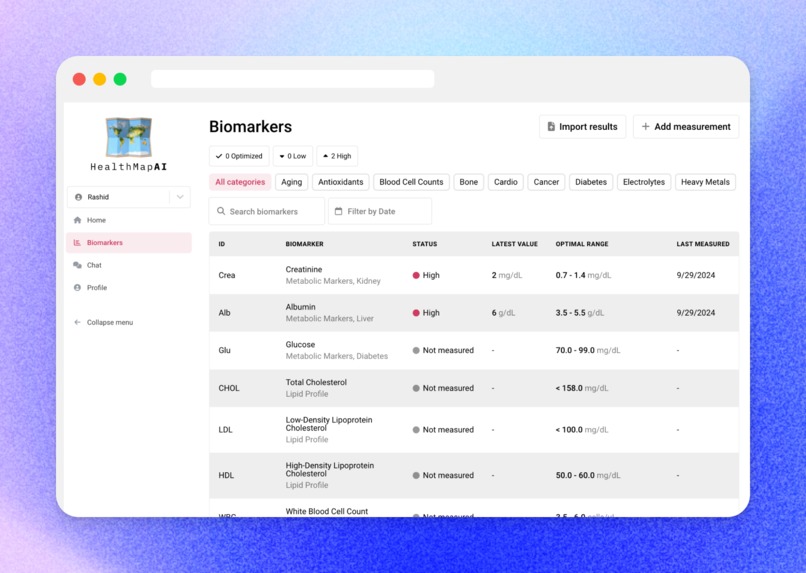
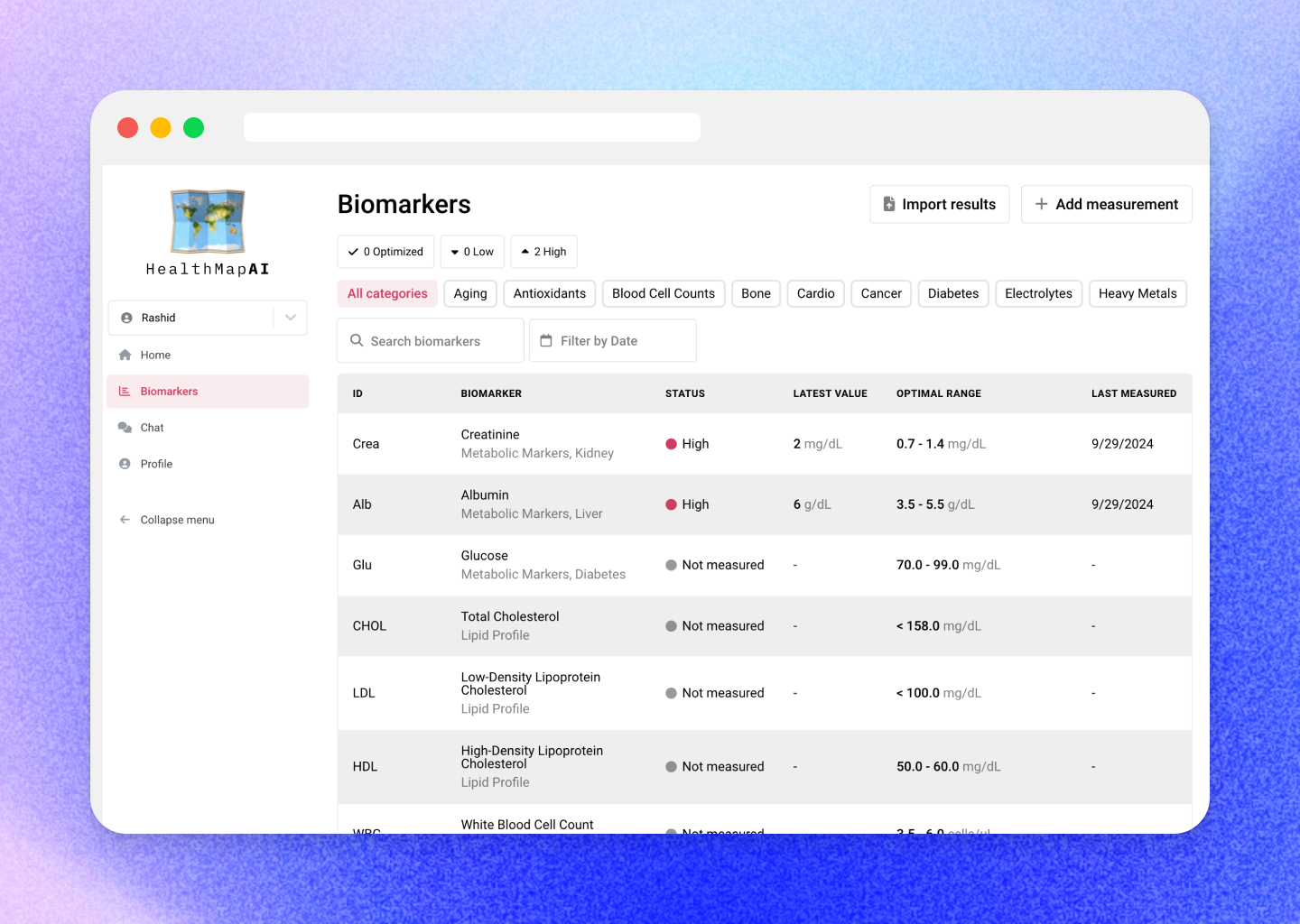
Biomarkers Tab
-
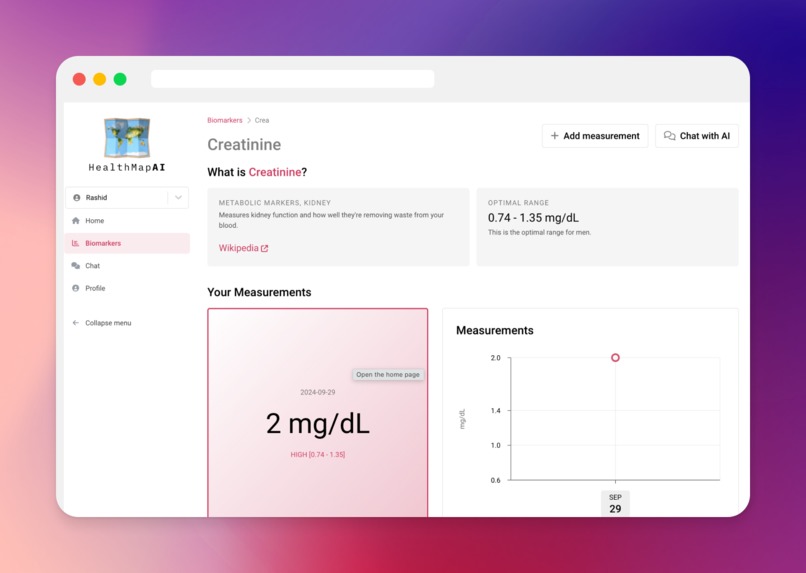
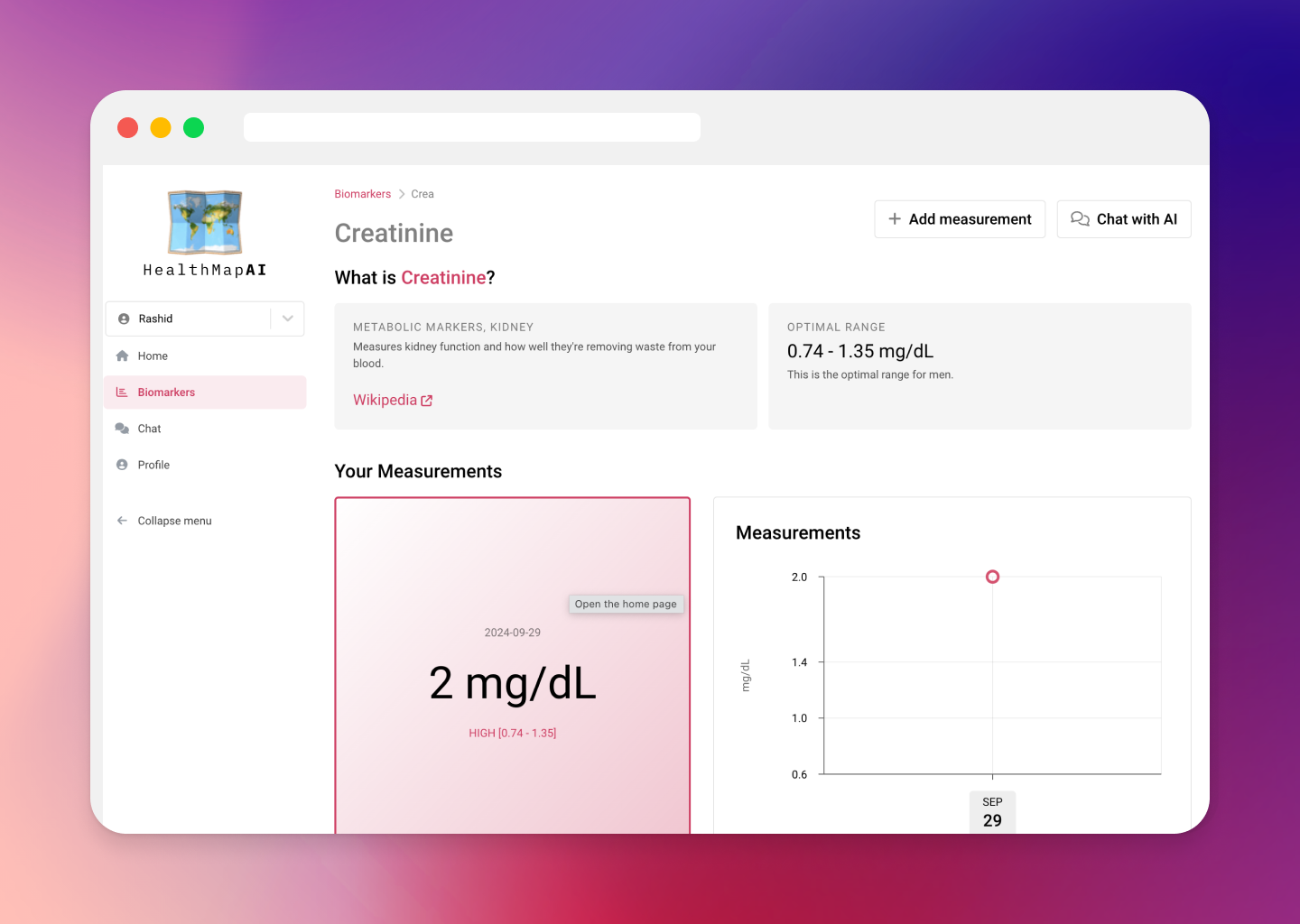
Individual Breakdown of a Specific Biomarker
Inspiration
Many common medications, like Accutane, require regular blood tests to determine compatibility and monitor health impacts. Athletes frequently track their biomarkers to optimize performance, and individuals with chronic conditions like diabetes or heart disease rely on lab tests to make informed decisions. However, interpreting blood test results can be confusing and time-consuming. We thought it would be helpful to develop a tool that not only tracks biomarkers over time but also uses AI to provide context and advice based on these readings, making health tracking accessible and easy to understand for everyone.
What it does
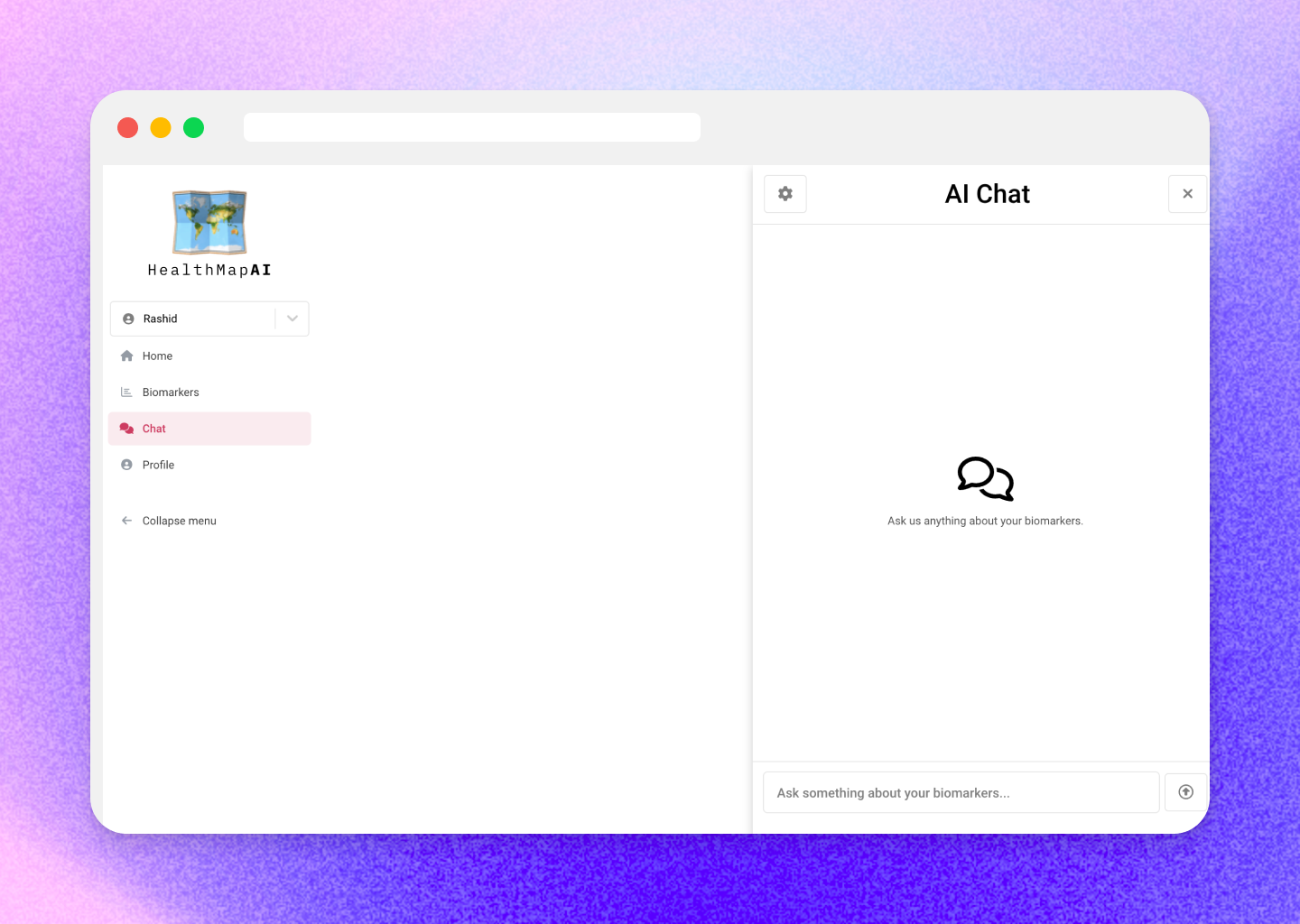
HealthMap AI is an open-source tool that allows users to track over 75 different biomarkers using blood test data. With HealthMap AI, users can visualize changes in biomarkers like glucose, cholesterol, liver enzymes, and more. The platform features an AI chatbot that interprets results, offers tailored health insights, and provides advice based on the user's health history. This tool helps users understand how their biomarkers relate to their overall health and suggests actions they can take to optimize well-being.
How we built it
We used a modern tech stack including:
- TypeScript for creating a reliable codebase.
- React and Redux Toolkit for building a responsive front-end interface.
- Google API for secure data handling.
- OpenAI API to power the chatbot that interprets blood test results.
- IndexDB to store biomarker data locally, ensuring user privacy.
- SCSS for styling the application to create an intuitive user experience
Challenges we ran into
One major challenge was ensuring the protection of sensitive health data. To address this, we implemented a local AI model that performs computations and data analysis without transmitting information to external servers. This approach ensures compliance with data privacy regulations like HIPAA, using the same security principles employed by top healthcare institutions.
Accomplishments that we're proud of
We’re especially proud of integrating an AI chatbot capable of interpreting biomarker data and offering personalized health insights. This feature empowers users to understand their health at a deeper level and make informed decisions without needing to consult a doctor for every minor concern.
What we learned
Through the workshops we attended during the hackathon, we learned about topics such as web development, database management, AI model integration, and cybersecurity. We applied these skills in our project by using TypeScript and React for the web interface, leveraging IndexDB for local data storage, and integrating the OpenAI API to wrap our chatbot functionality. Additionally, we explored new ways to safeguard sensitive data, which informed our approach to securing the platform and maintaining user trust.
What's next for HealthMap AI
Our next steps for HealthMap AI include expanding the range of biomarkers tracked, integrating additional health data like physical activity and nutrition, and enhancing the AI model to offer even more accurate and comprehensive health assessments. We also plan to collaborate with healthcare providers to ensure our tool aligns with clinical standards and provides value to a broader audience. Ultimately, we aim to become a trusted, open-source resource for health monitoring and education.
Link to Video Demonstration: https://streamable.com/p9zz3g
Built With
- index
- openai
- react
- redux
- scss
- typescript


Log in or sign up for Devpost to join the conversation.