-
-
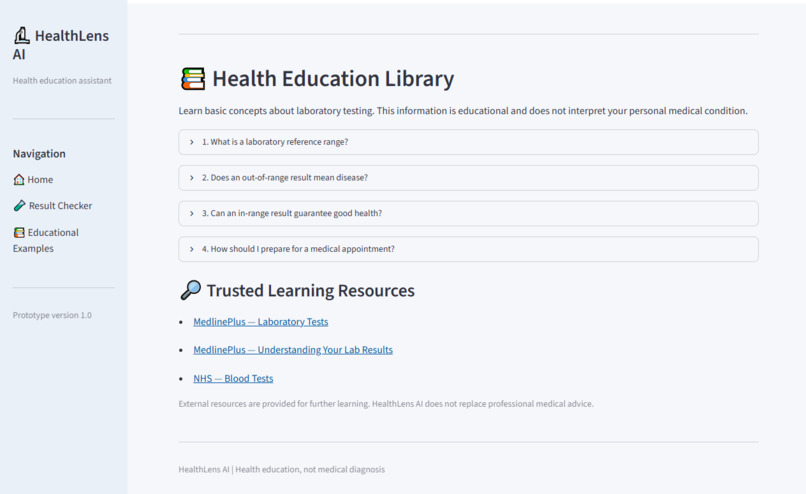
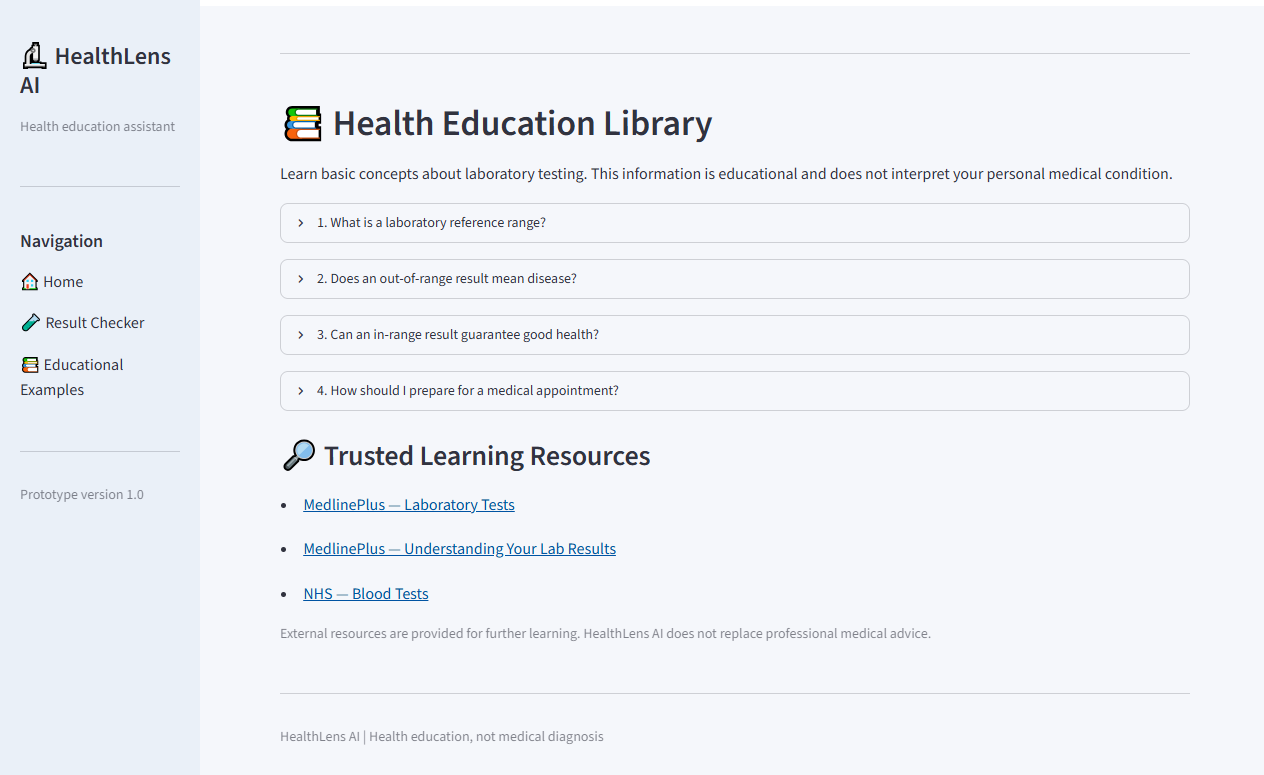
Educational explanations and links help users explore health information.
-
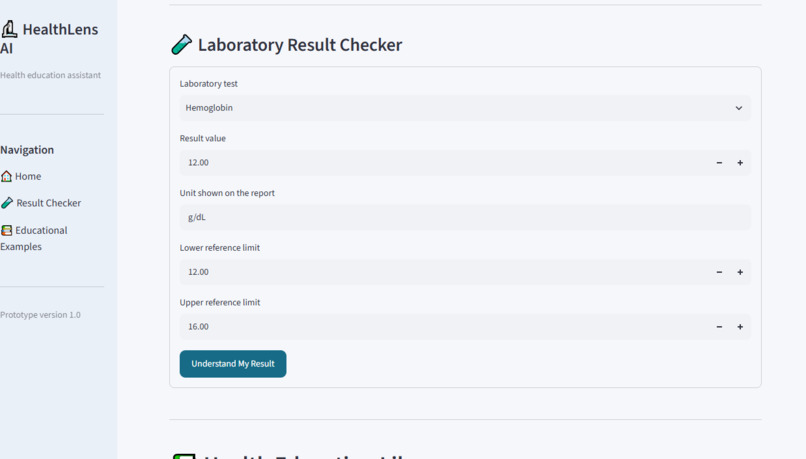
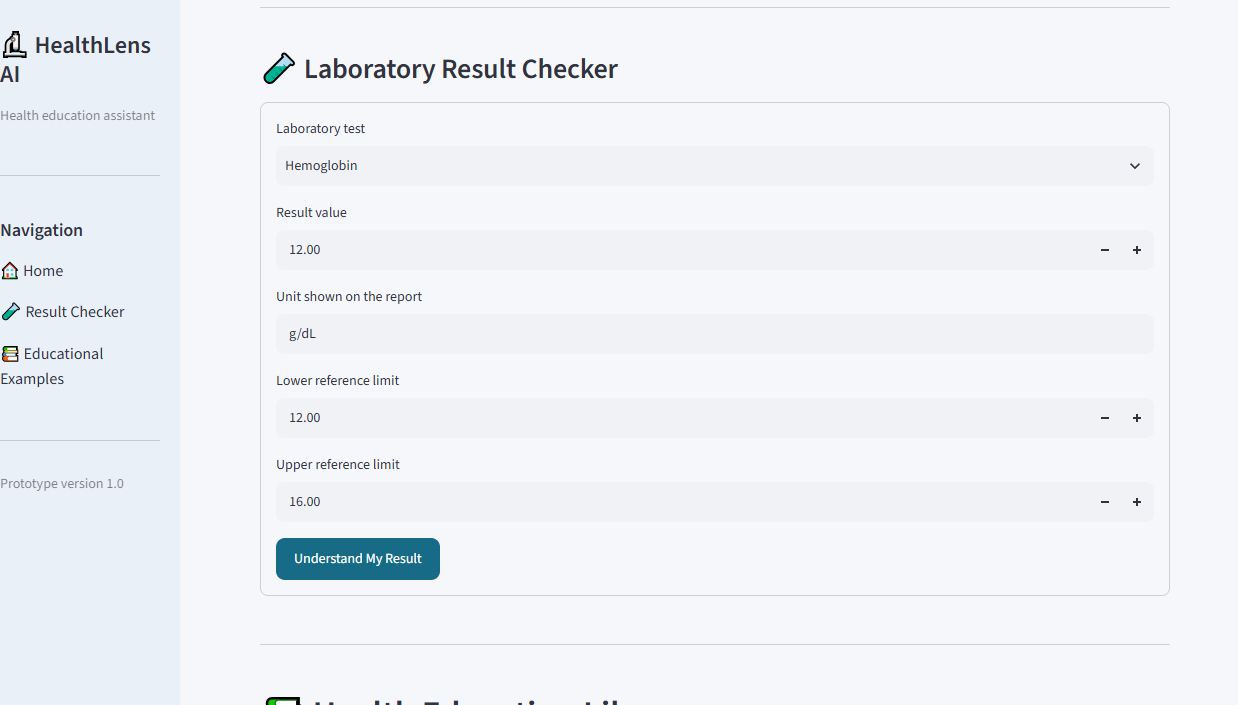
Users compare a laboratory value with a supplied reference range.
-
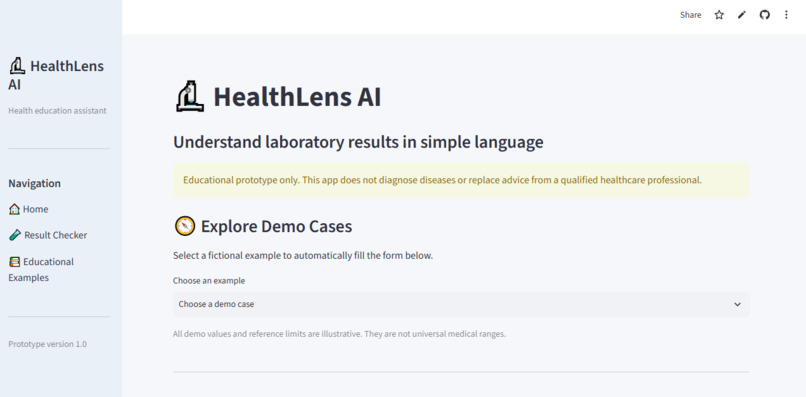
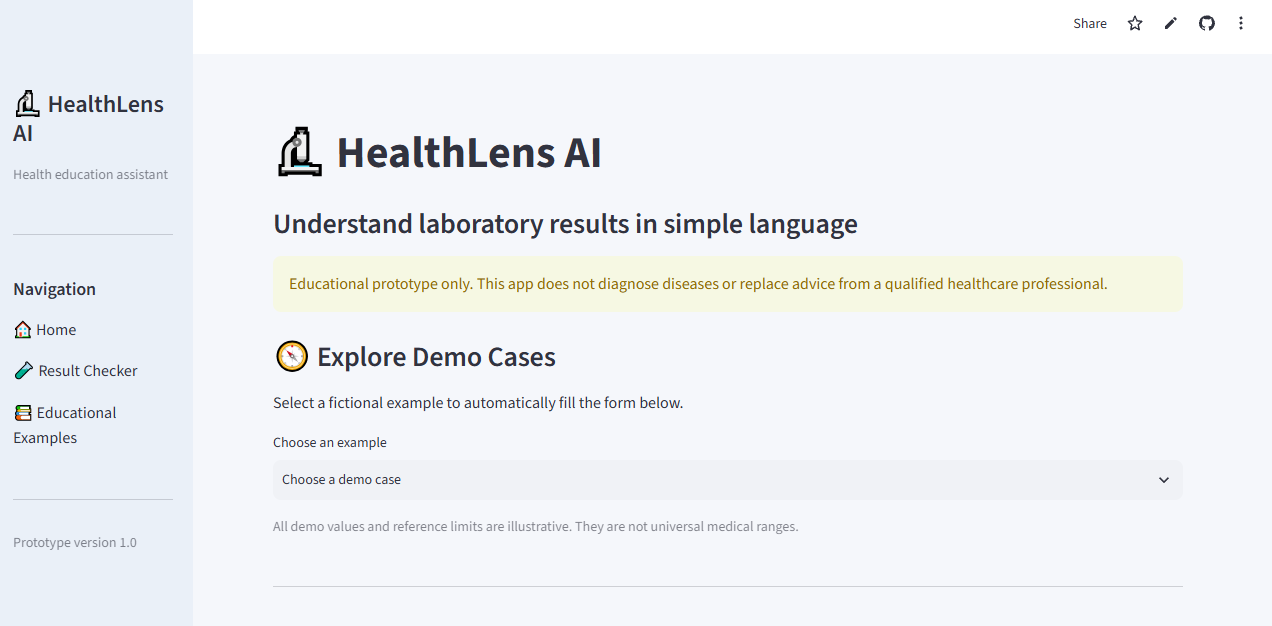
The home screen introduces HealthLens AI and its fictional laboratory demo cases.
Inspiration
I created HealthLens AI to make health information easier to understand and more accessible. Laboratory results can be confusing for people who are unfamiliar with reference ranges, so I wanted to build a simple educational tool that helps users explore their results responsibly.
What It Does
HealthLens AI allows users to enter laboratory values, compare them with supplied reference ranges, and explore health education resources. It uses a simple, user-friendly interface to make the information easier to understand.
How I Built It
I built HealthLens AI using Python and Streamlit. I developed a laboratory result checker, created an educational resource library, and designed the interface to make the experience straightforward for users.
Challenges I Faced
One of my main challenges was presenting laboratory results responsibly without making medical diagnoses. I focused on clear explanations, appropriate disclaimers, and educational resources. I also worked on making the interface simple and easy to navigate.
What I Learned
Through this project, I improved my practical Python and Streamlit skills, learned more about building user-focused technology, and understood the importance of responsible communication in health-related applications.
What's Next
I hope to improve HealthLens AI with more educational resources, better usability, and additional features while maintaining a clear distinction between health education and professional medical advice.
HealthLens AI is an educational prototype, not a diagnostic tool. Laboratory results should be interpreted by a qualified healthcare professional in the appropriate clinical context.
Built With
- ai
- artificial-intelligence
- educational-tool
- health-education
- healthcare
- healthlens
- healthtech
- laboratory-results
- medical-technology
- python
- social-good
- streamlit
- student-innovation


Log in or sign up for Devpost to join the conversation.