-
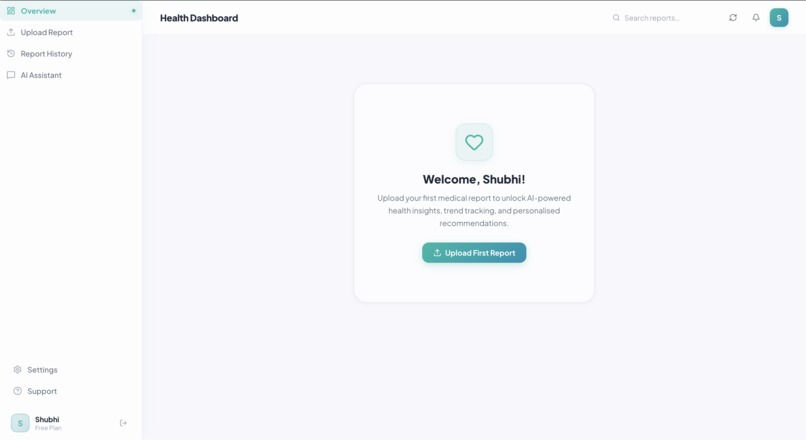
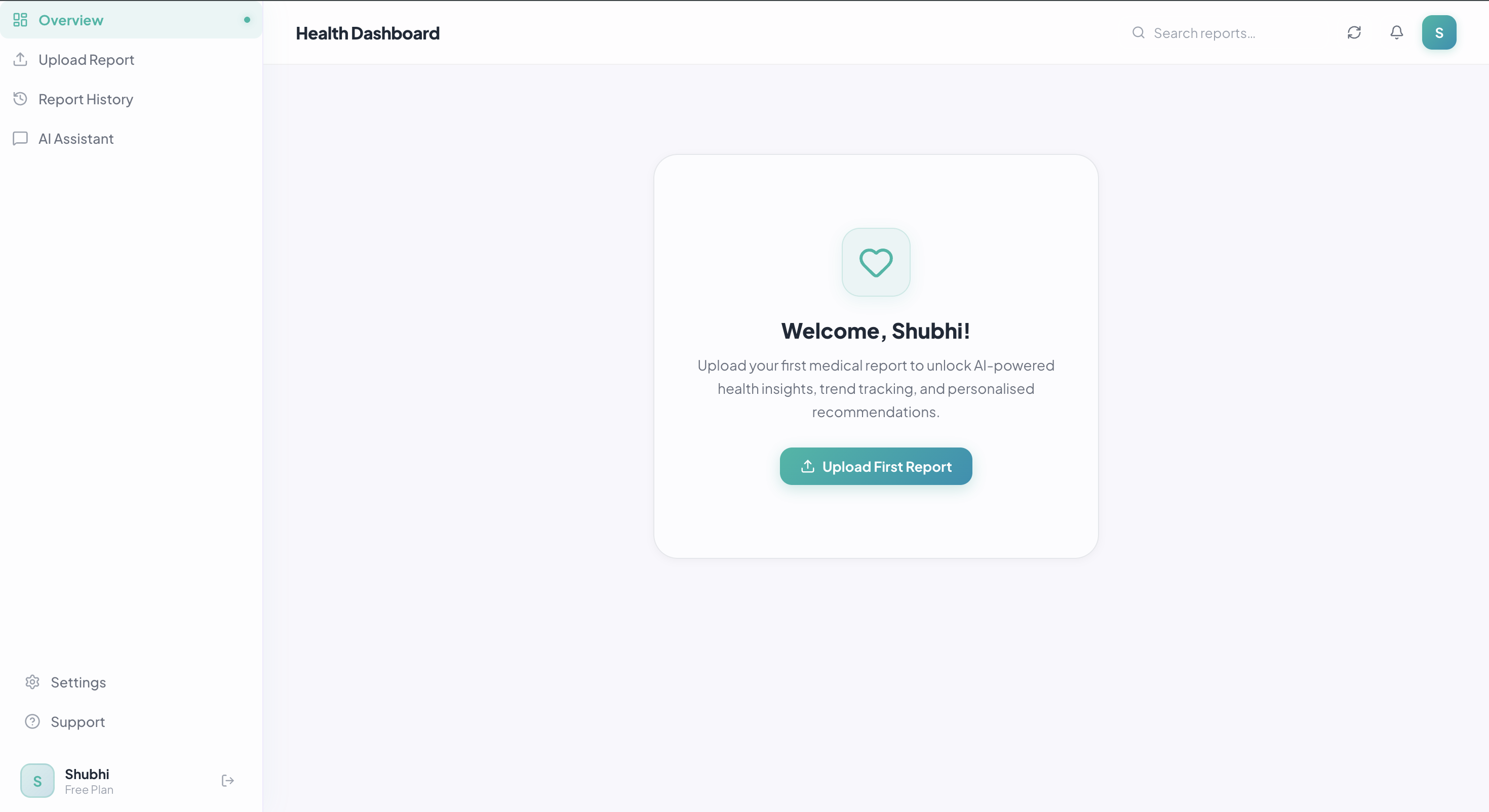
Dashboard ( fresh user )
-
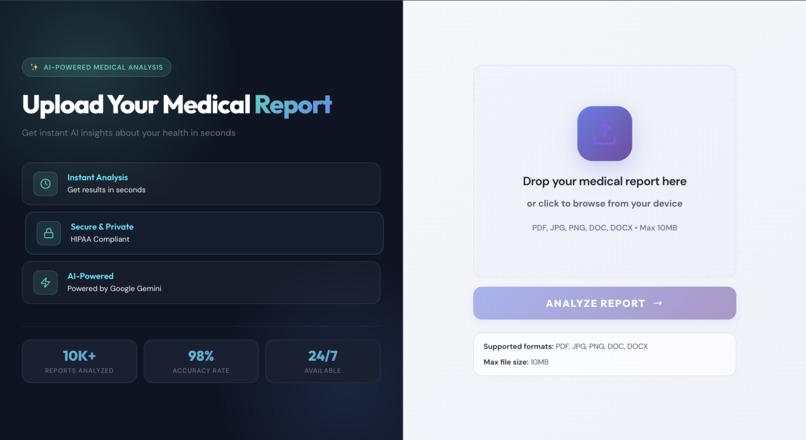
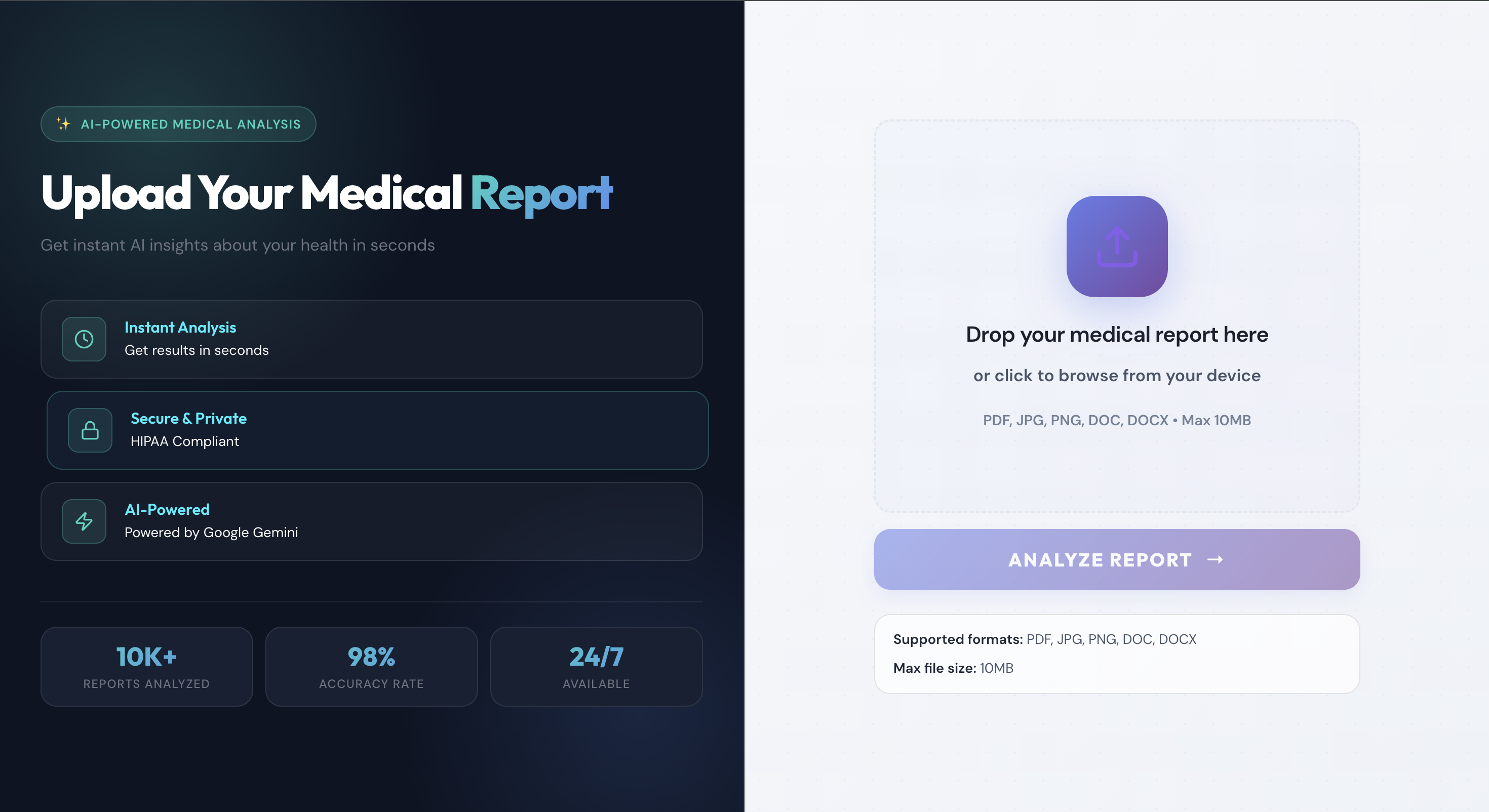
upload page
-
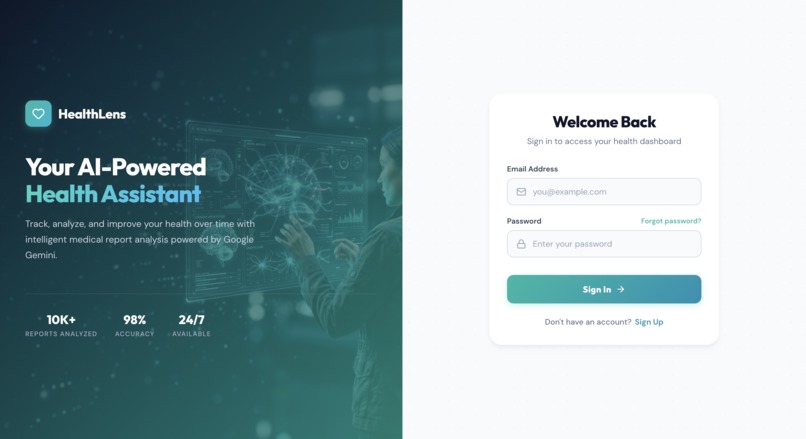
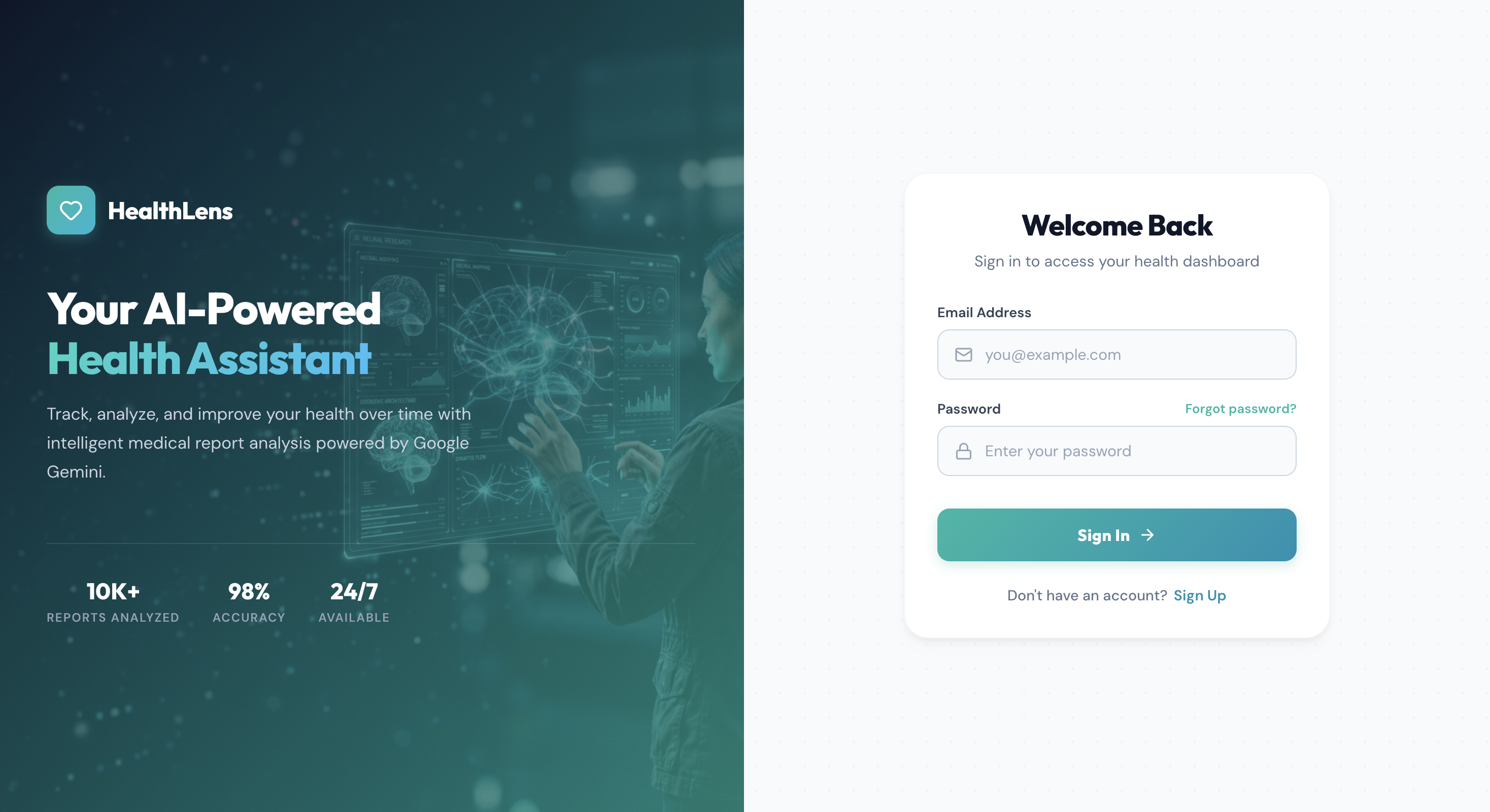
Authentication Page
-
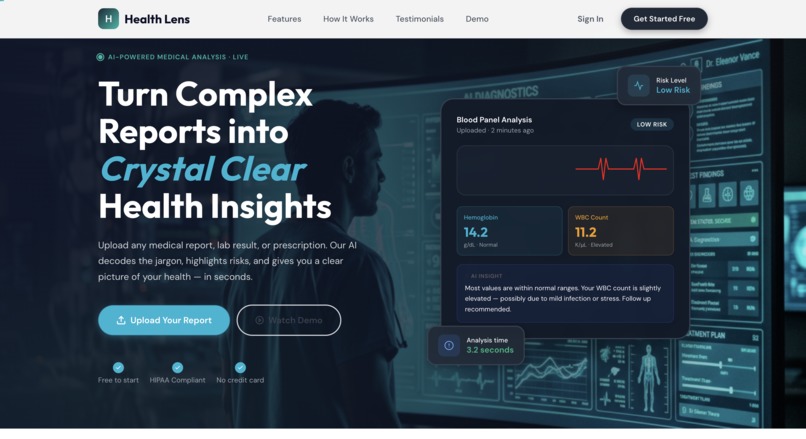
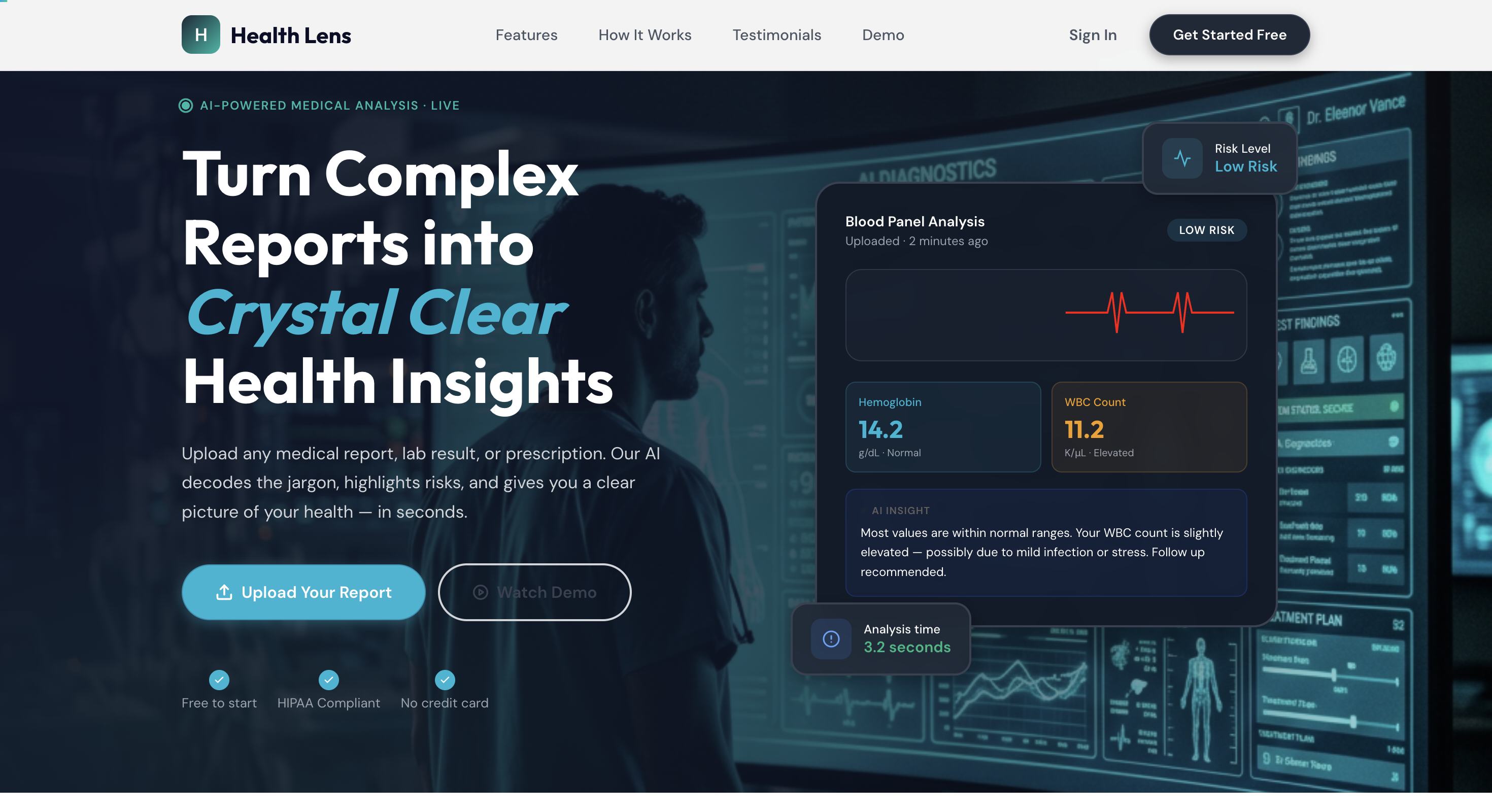
Landing Page
-
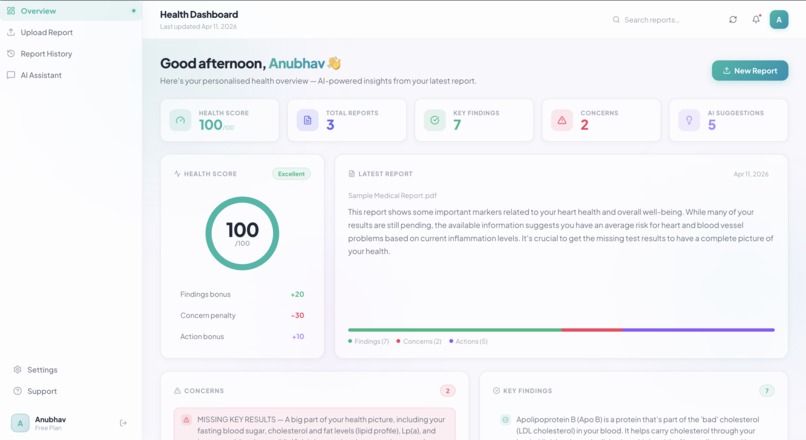
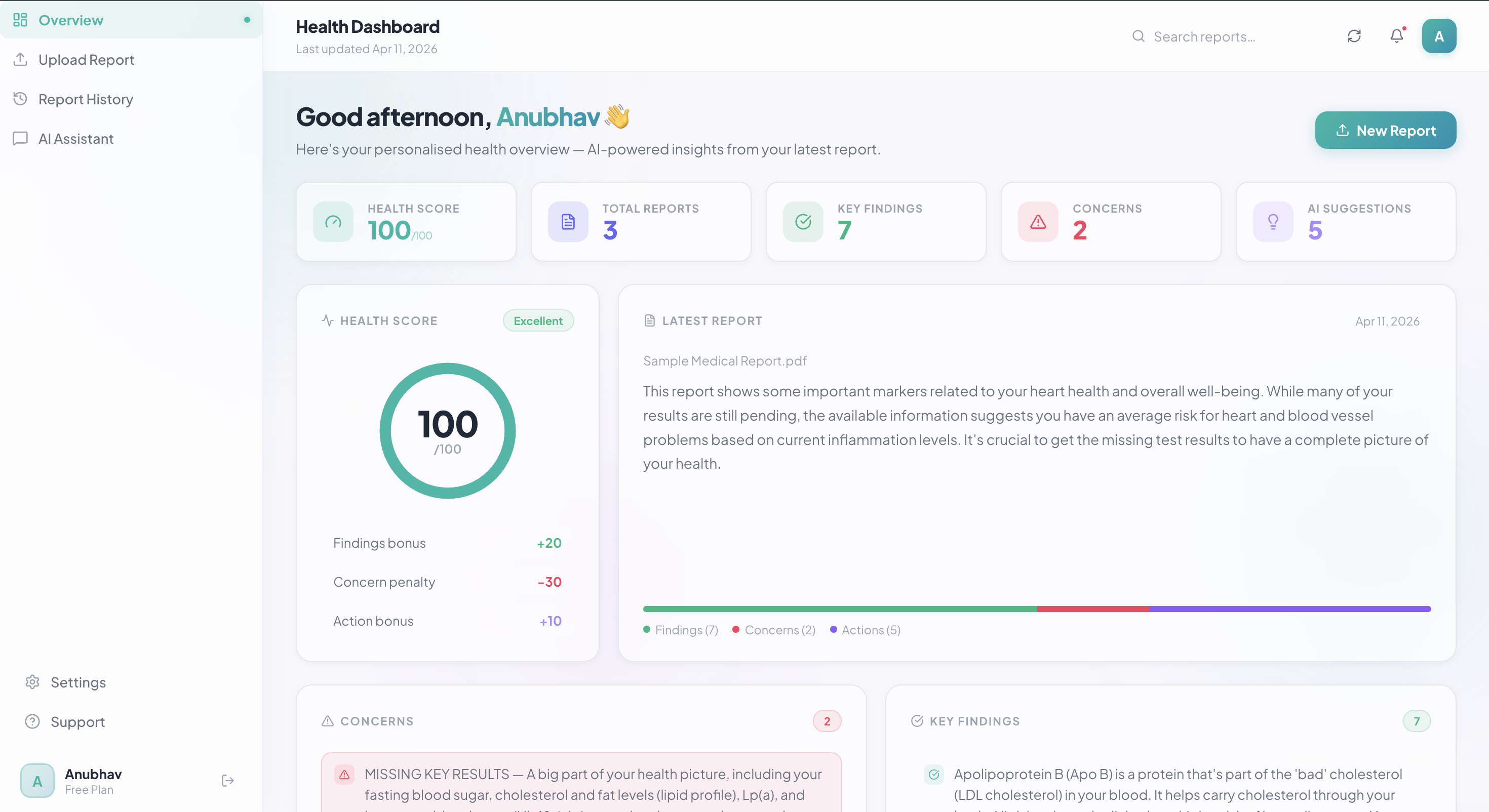
Dashboard ( existing user )
-
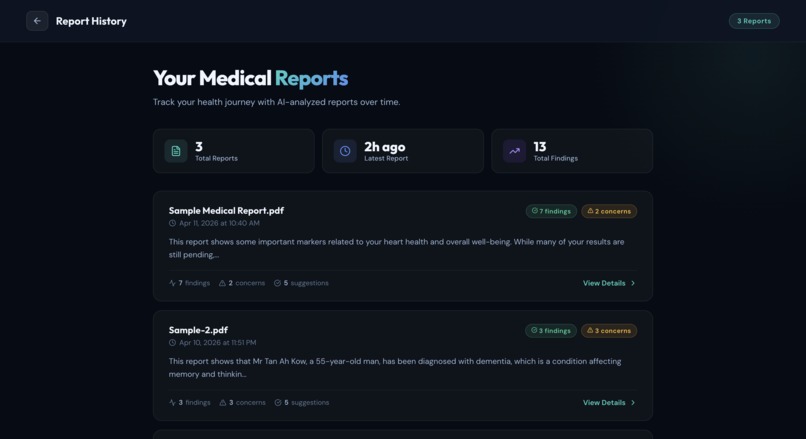
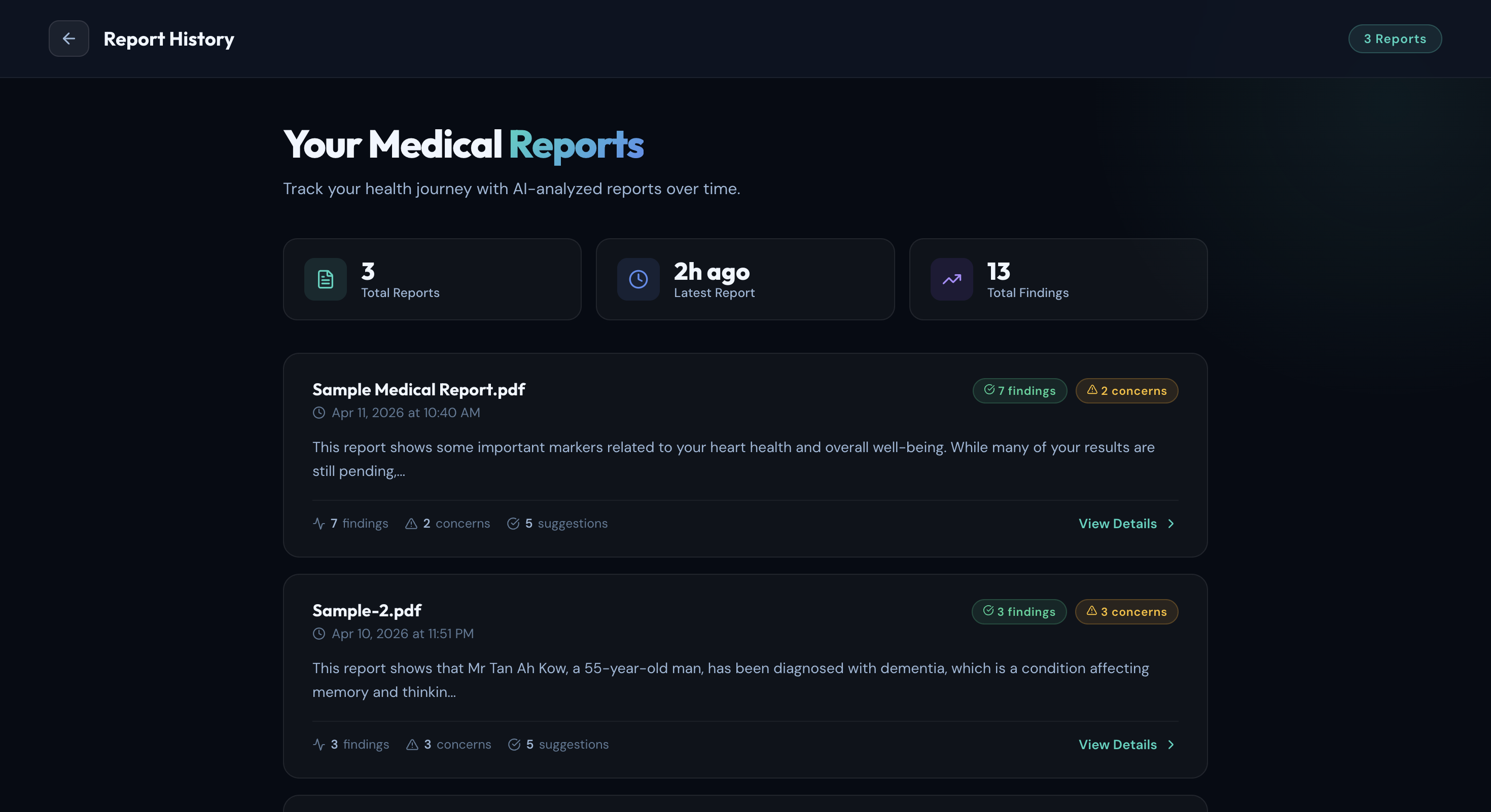
Medical History Page
-
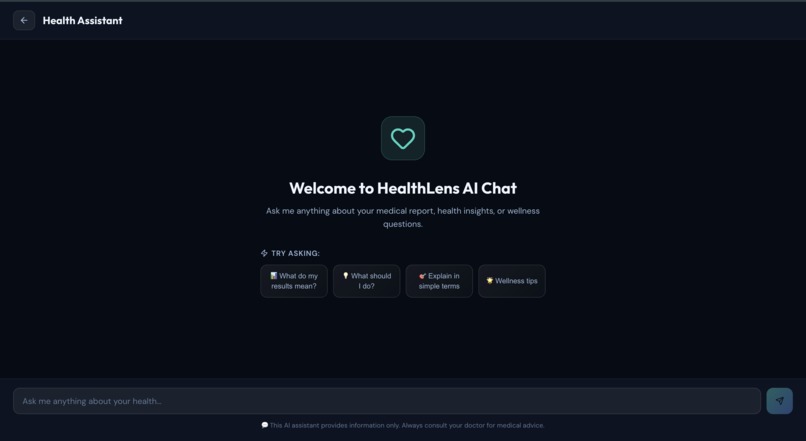
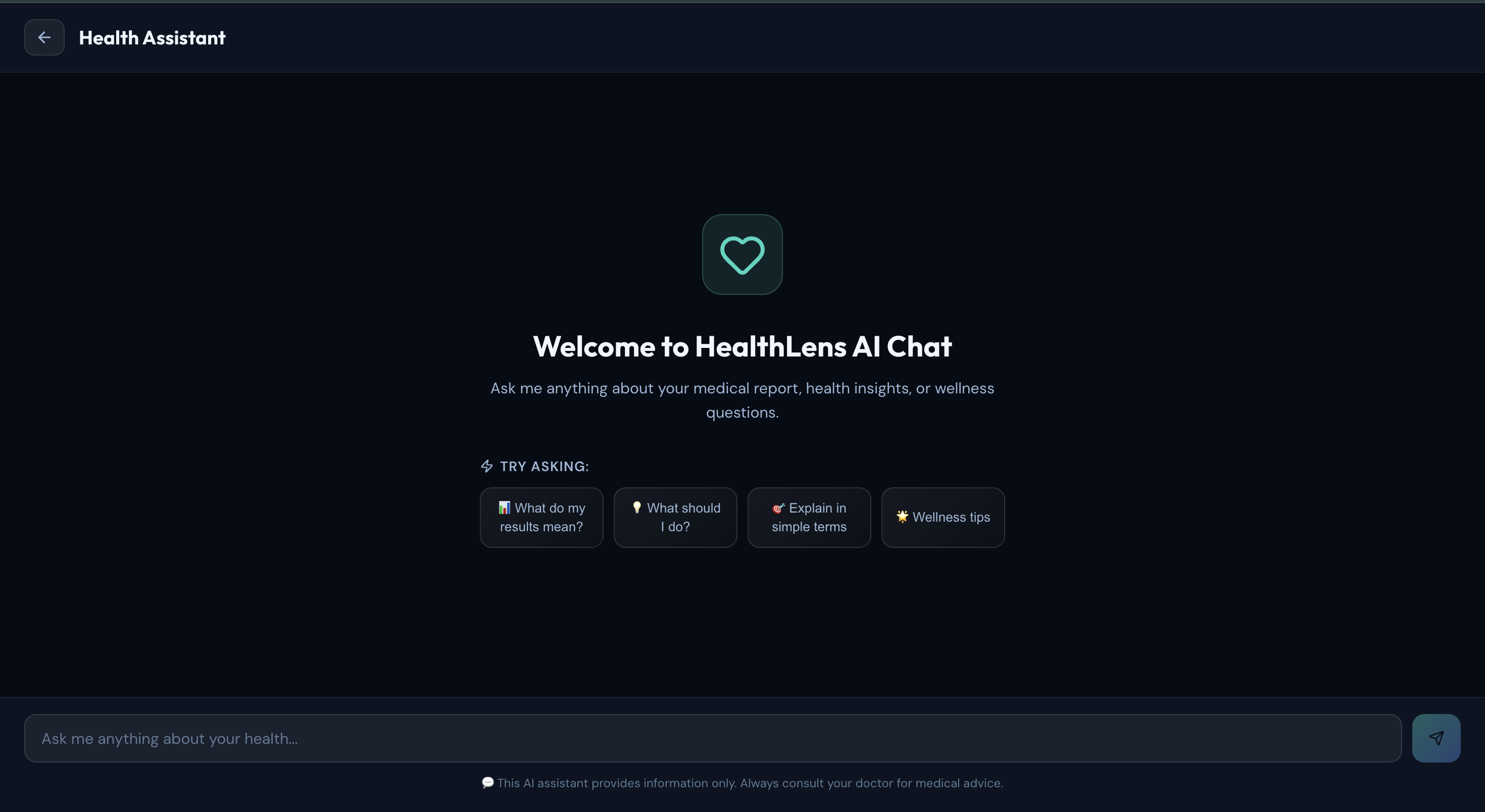
Ai Assistant ( Gemini Powered )
Inspiration
HealthLens was inspired by my father’s struggle to understand his medical report. He had to wait hours for his doctor’s response just to ask simple questions like, “Is my report better than the previous one?” and “Should I be worried?” That moment made us realize patients have access to reports, but not clear understanding.
What it does
HealthLens uses AI to simplify medical reports, explain health metrics in easy language, compare past reports, and provide actionable insights instantly.
HealthLens MVP Dashboard
1.) Tracks complete user medical report history in one place 2.) Stores past analyses for easy future reference 3.) Provides organized dashboard view of all uploaded reports 4.) Lets users monitor health trends over time 5.) Maintains doctor consultation/chat history linked to reports 6.) Creates a centralized medical record hub for better healthcare management 7.) Enables quick access to previous diagnoses and recommendations
How we built it
We built HealthLens using React/Next.js for frontend, TypeScript backend, OCR for report extraction, AI/LLM integration for analysis, and database storage for report history.
Challenges we ran into
Handling different report formats, ensuring AI explanations stayed simple yet accurate, and building meaningful report comparison logic were our biggest challenges.
Accomplishments that we're proud of
We turned a real-life problem into a working MVP that can analyze reports, compare health progress, and reduce patient confusion.
What we learned
We learned how to build AI responsibly in healthcare, simplify complex medical data, and create empathetic user-first healthcare solutions.
What's next for HealthLens
We plan to add wearable integrations, predictive health analytics, multilingual support, and doctor collaboration features to make HealthLens a complete AI healthcare assistant.
Built With
- api
- express.js
- gemini
- mongodb
- node.js
- react.js


Log in or sign up for Devpost to join the conversation.