-
-
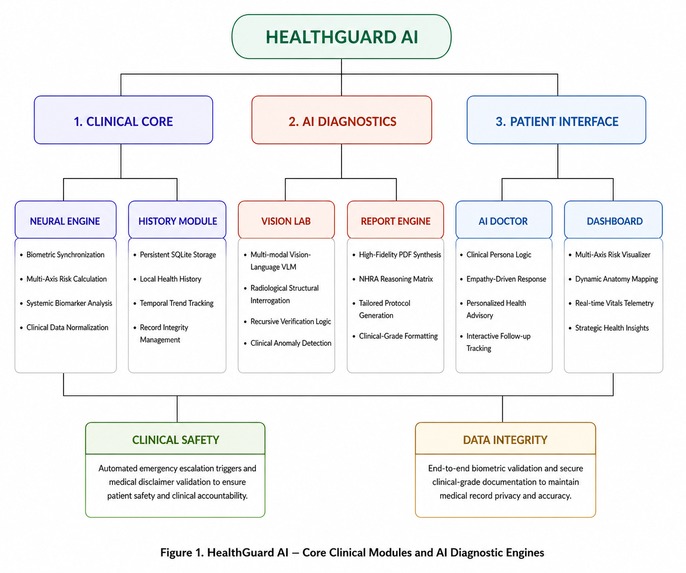
Workflow
-
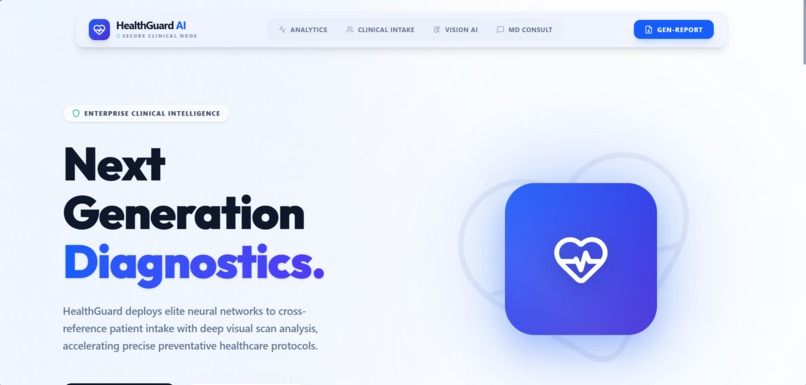
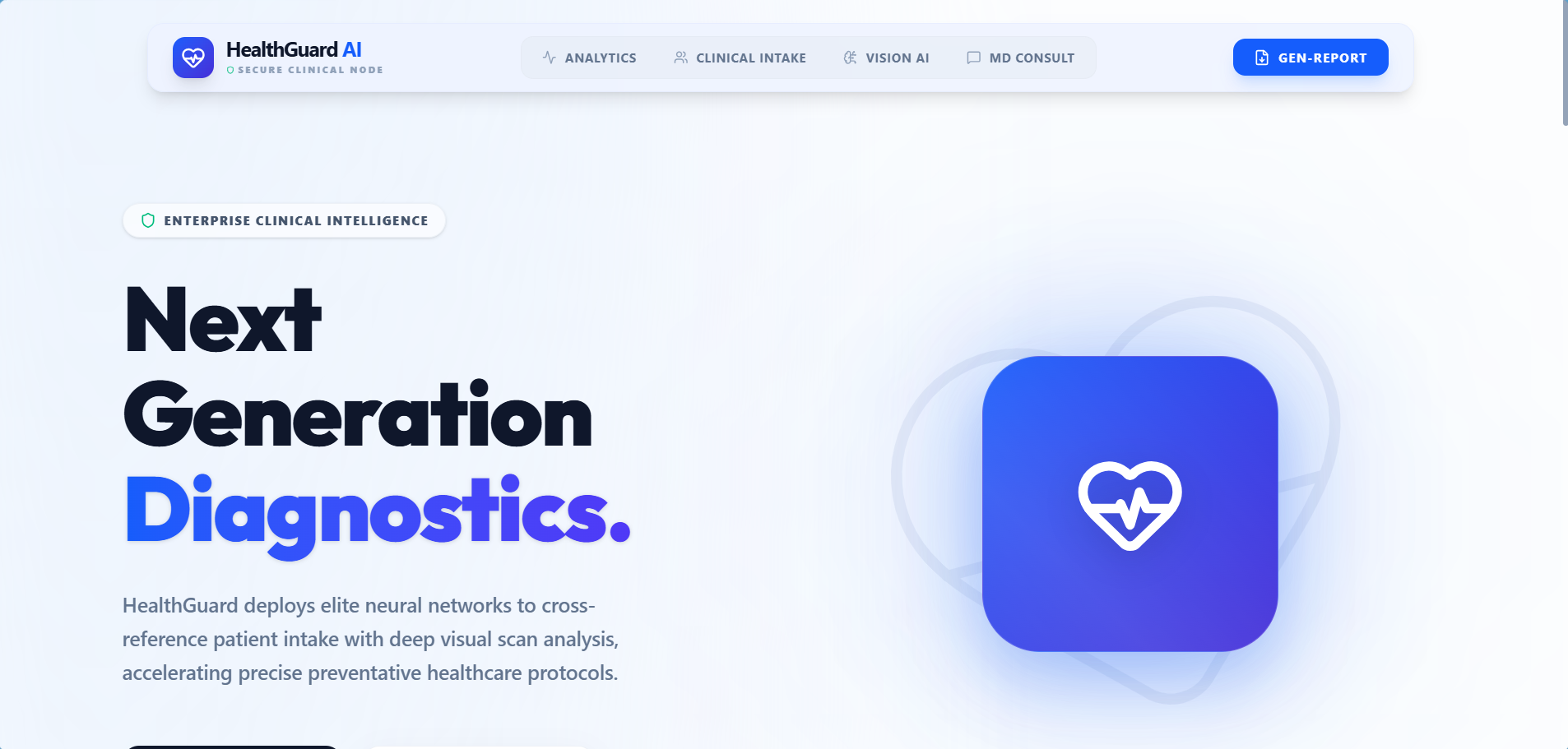
Landing Page
-
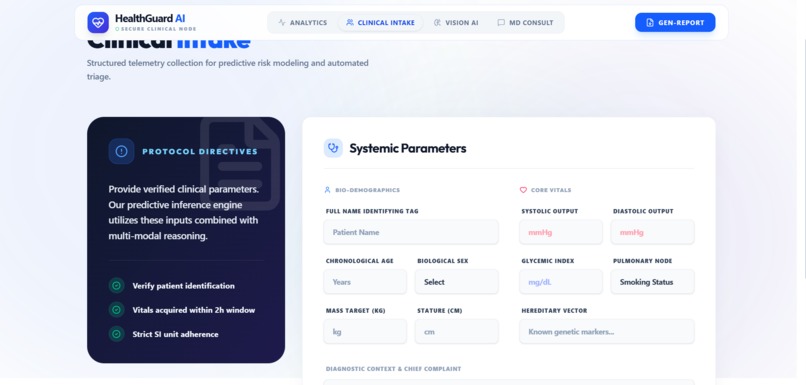
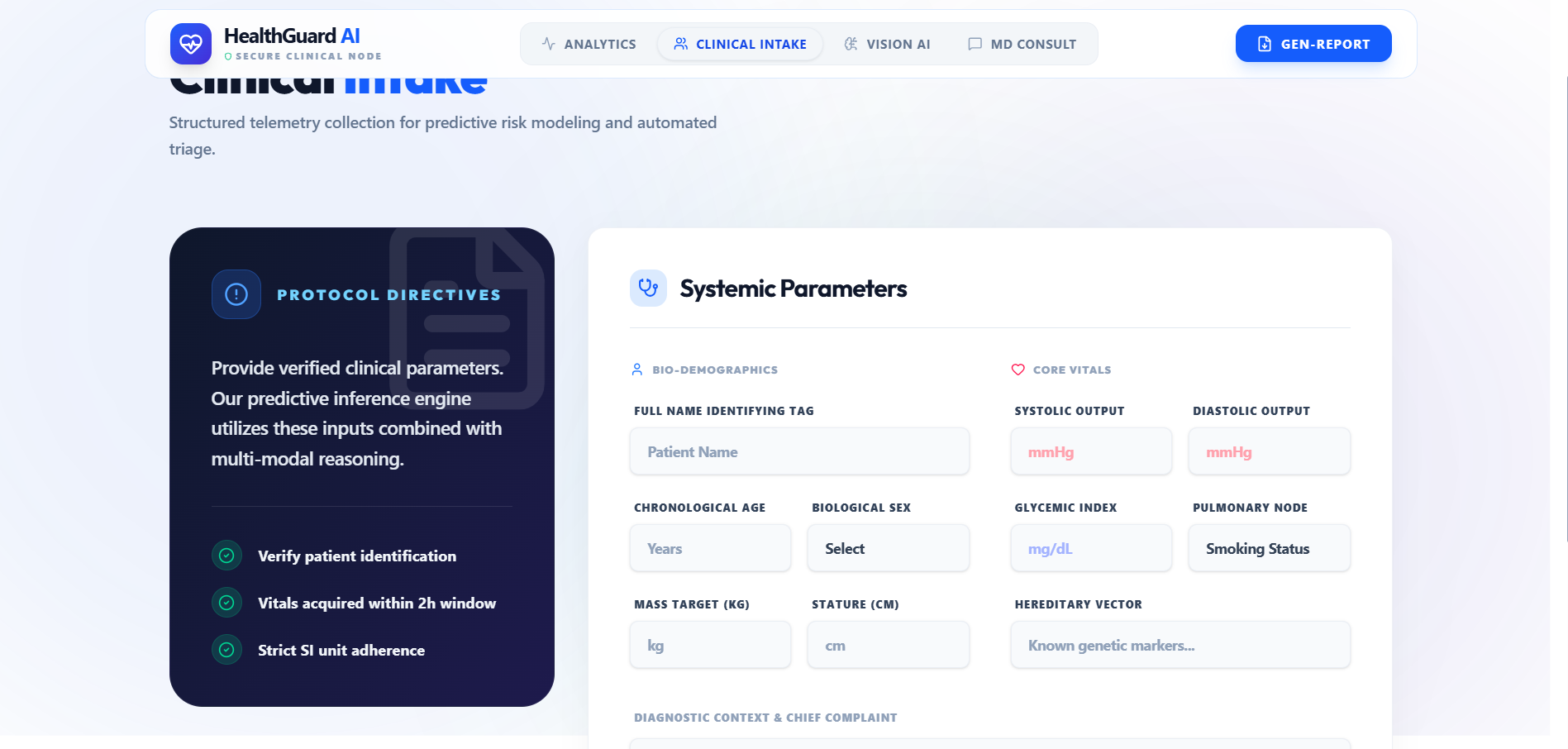
Clinical Intake
-
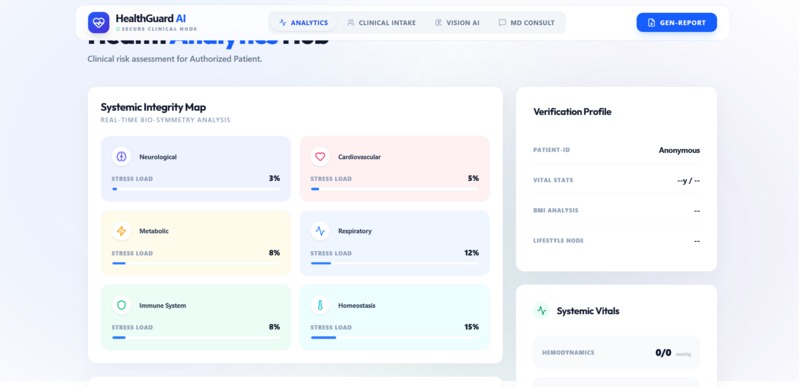
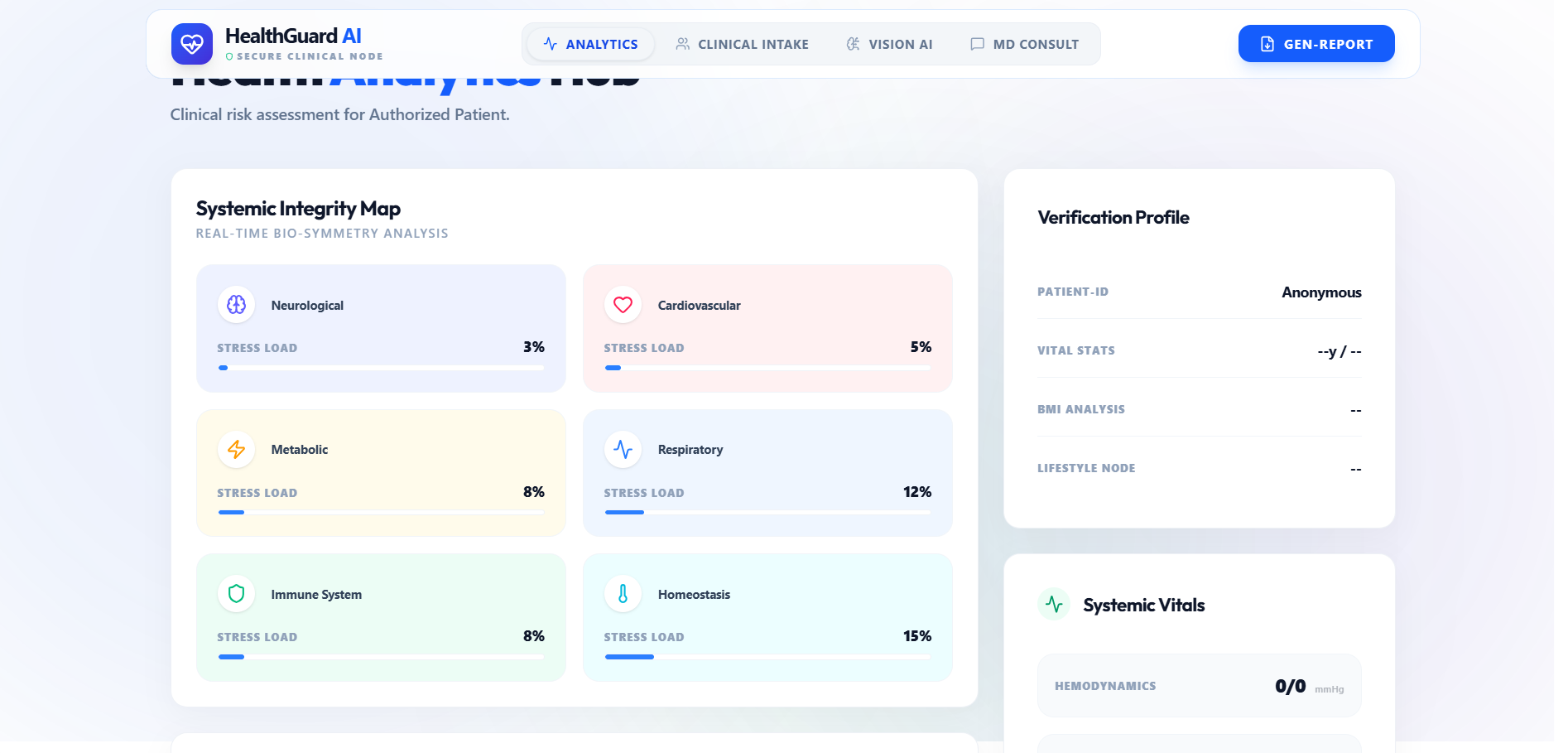
Dashboard
-
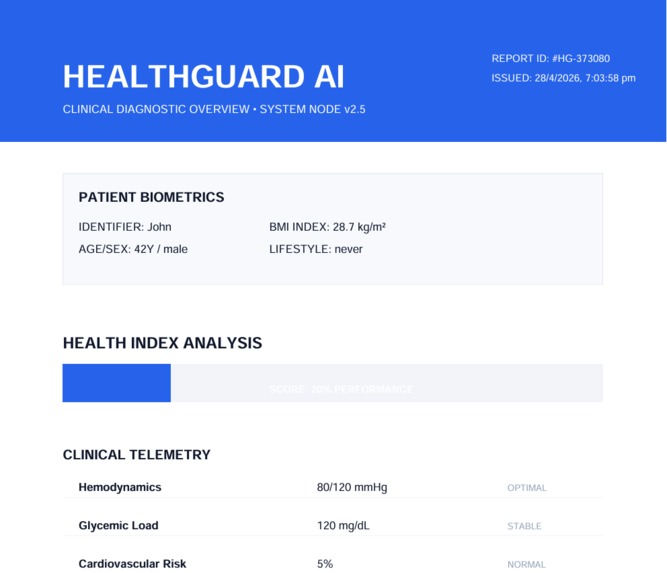
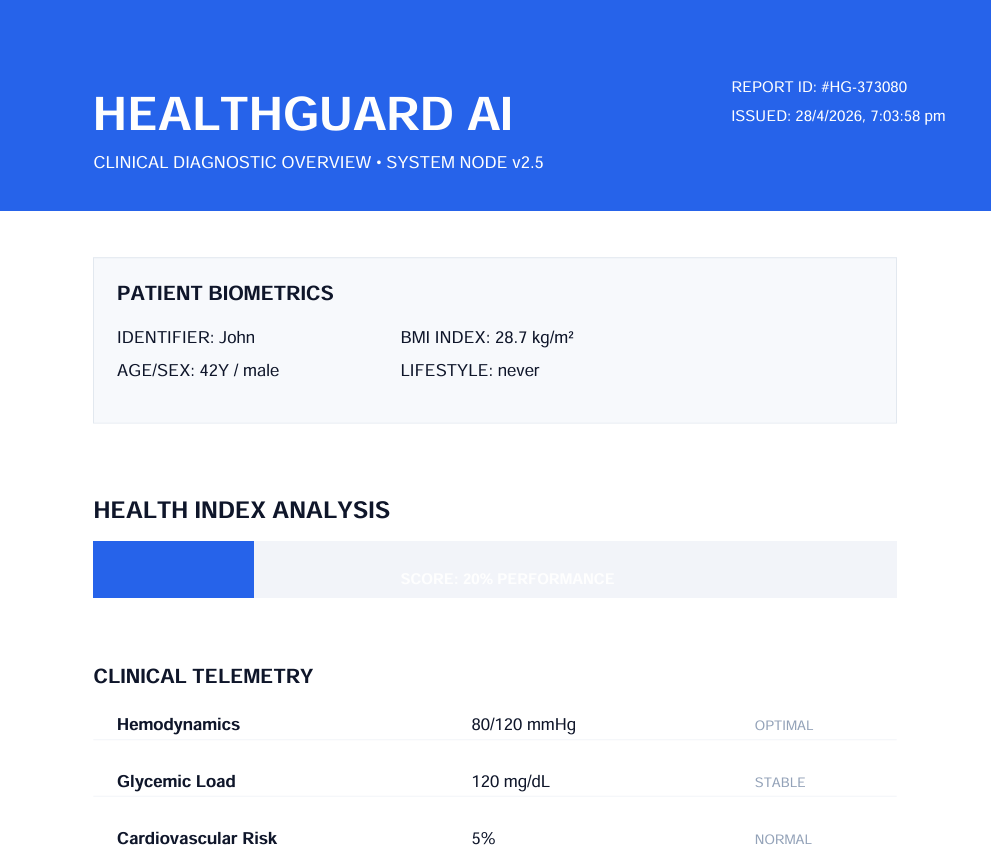
Generated report
-
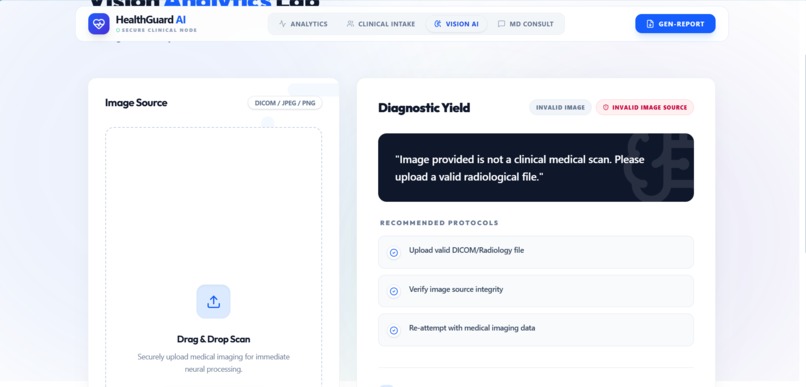
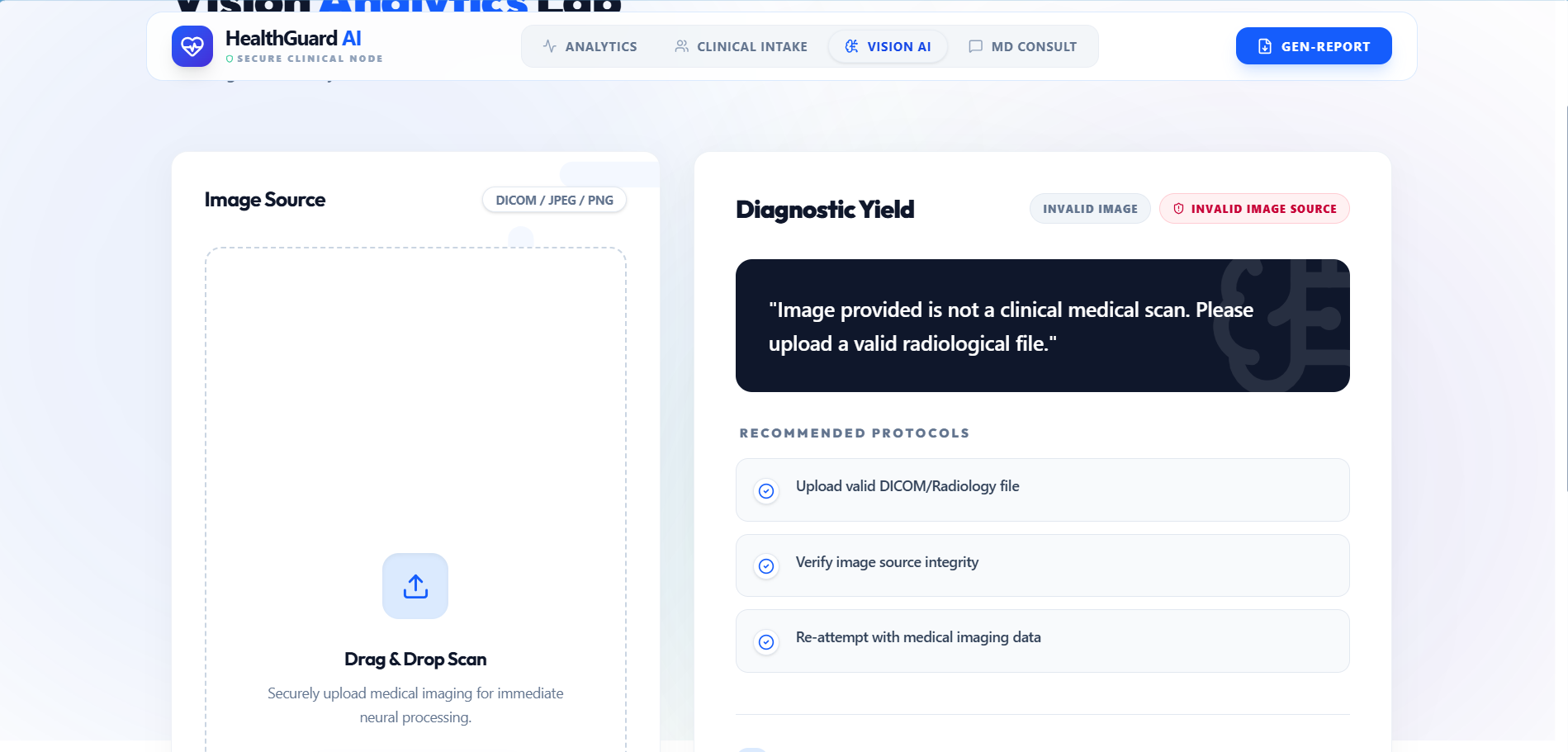
Vision Lab
-
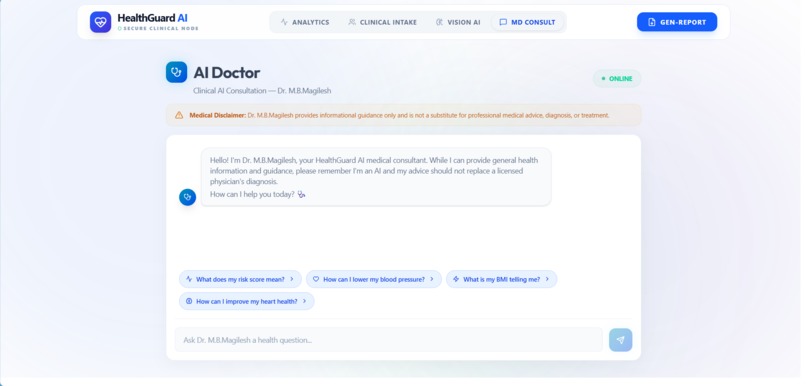
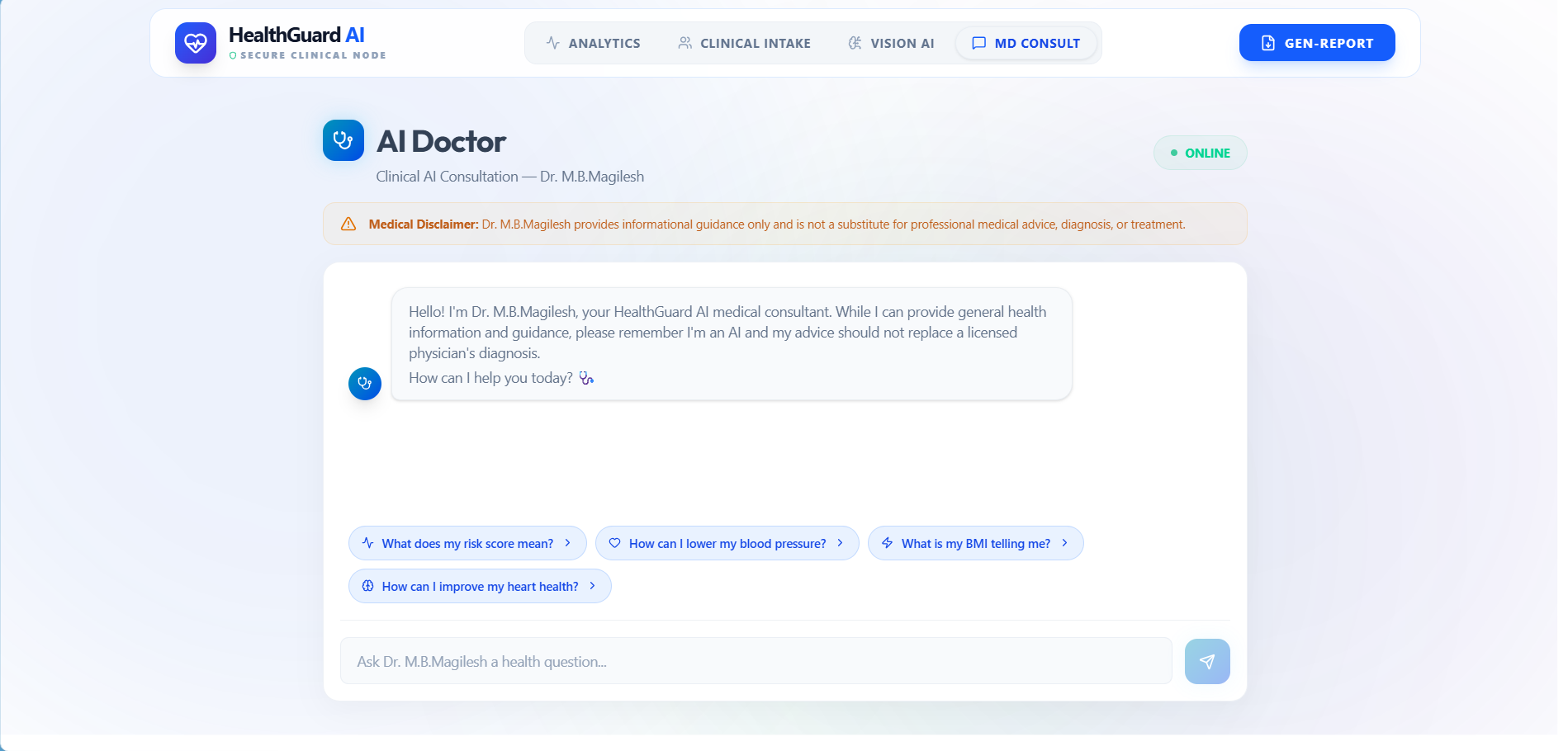
MD Consultant
Inspiration
Modern healthcare systems are often reactive rather than preventive. Most existing health applications focus only on symptom identification or isolated data analysis, lacking a unified approach to early risk detection. This inspired the development of HealthGuard AI — a system designed to shift healthcare from reactive treatment to proactive prevention.
What it does
HealthGuard AI is an AI-powered multi-modal clinical decision system that integrates patient vitals, medical imaging, and conversational intelligence to provide early risk detection and personalized health insights.
The system performs:
- Structured patient intake and biometric analysis
- Multi-axis health risk prediction (cardiovascular, metabolic, etc.)
- Specialized medical vision AI for radiological scan interpretation
- Automated clinical-grade report generation
- AI-powered doctor chatbot for personalized consultation
- Interactive dashboard for visualizing health risks and trends
How we built it
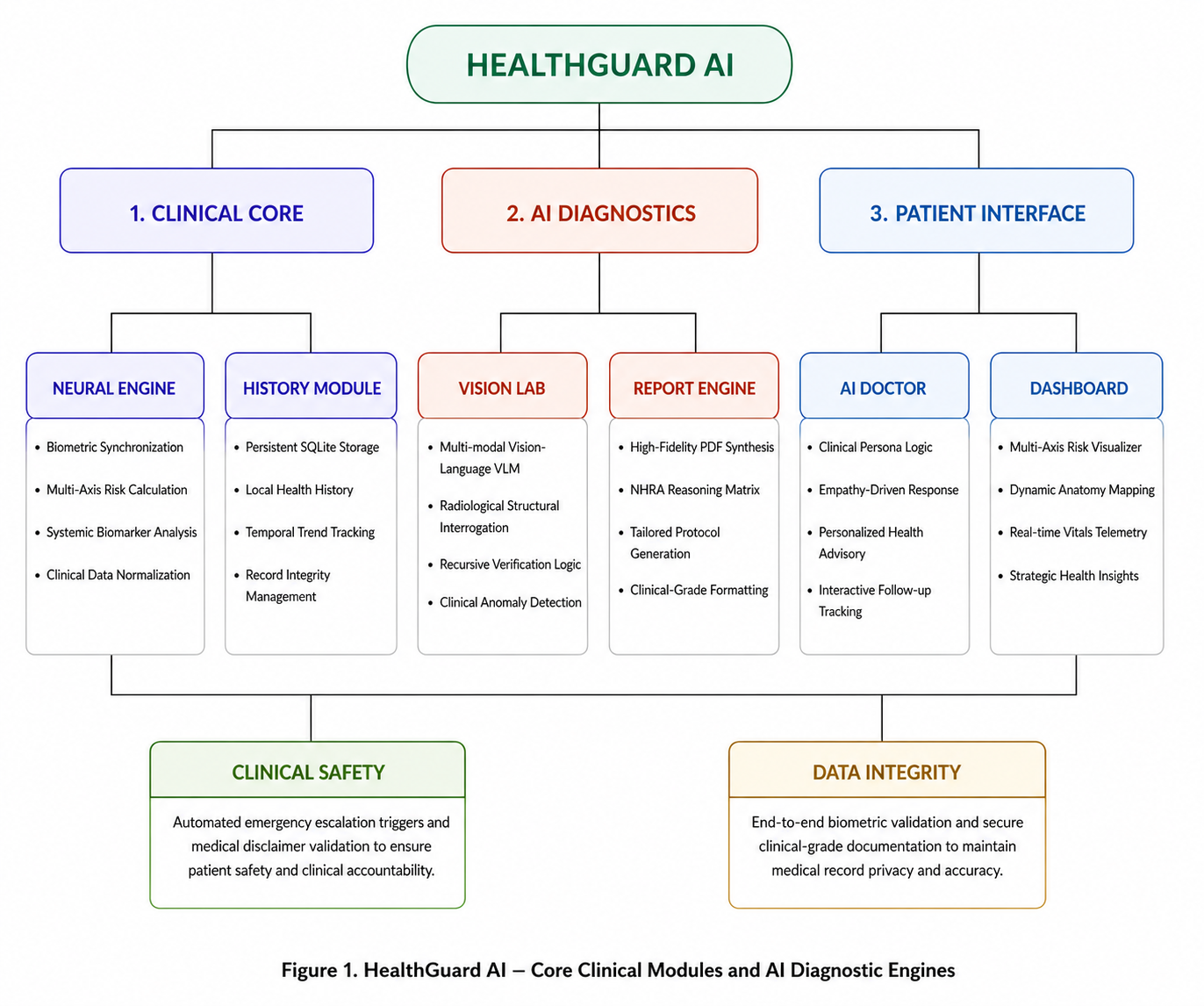
The system is built using a modular architecture:
- A Neural Risk Assessment Engine processes vitals like BP, BMI, and glucose
- A Vision-Language AI model analyzes radiological images (X-ray, MRI, CT)
- A validation layer ensures only medical images are processed
- A structured database stores patient history for longitudinal analysis
- A Report Engine generates professional diagnostic summaries
- A conversational AI module provides personalized clinical guidance
All components are integrated into a unified pipeline for real-time clinical insights.
Challenges we ran into
- Designing a system that integrates both biometric data and medical imaging
- Ensuring accuracy while reducing false positives in risk prediction
- Creating a reliable validation mechanism for medical vs non-medical images
- Maintaining clarity and explainability in AI-generated results
- Structuring patient data for meaningful long-term tracking
Accomplishments that we're proud of
- Built a complete end-to-end clinical AI system
- Successfully integrated multi-modal AI (data + vision)
- Developed a domain-restricted medical imaging analysis system
- Created a working prototype with real-time report generation
- Designed a clean and intuitive health risk visualization dashboard
What we learned
- Importance of multi-modal data in improving healthcare accuracy
- Challenges in balancing AI performance with explainability
- Real-world healthcare problems require system-level solutions
- Data structuring is as important as AI modeling
- User trust depends on transparency and clarity
What's next for HealthGuard AI
- Enhancing predictive accuracy using longitudinal patient data
- Adding real-time monitoring and alert systems
- Expanding support for more medical imaging types
- Improving AI doctor interaction with deeper personalization
- Preparing for real-world clinical validation and deployment

