-
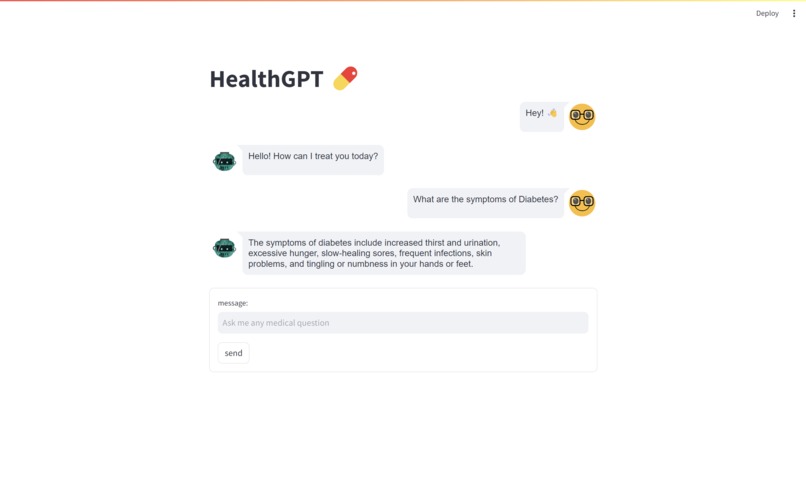
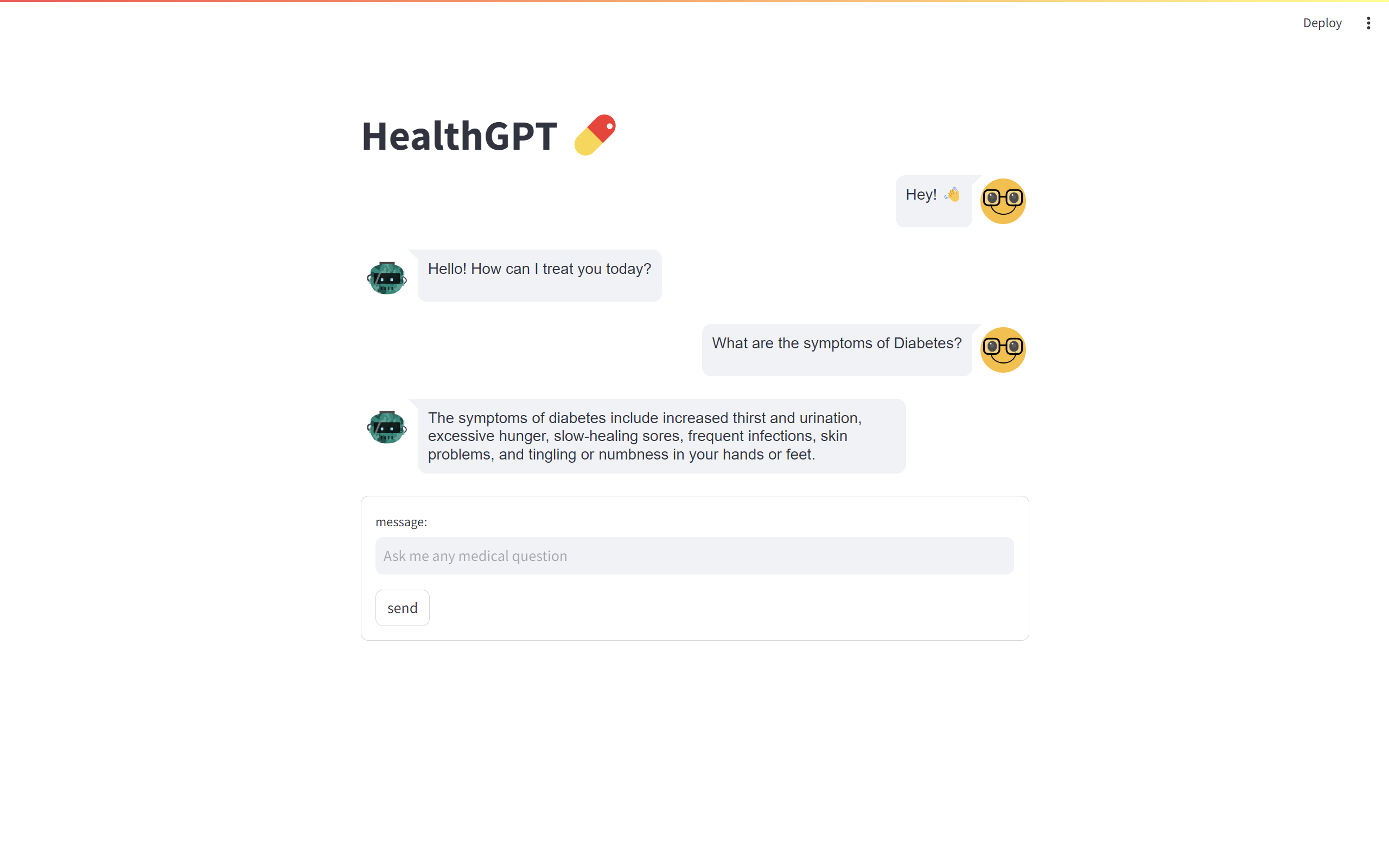
User Interface
HealthGPT: Democratizing Healthcare Access through Generative AI
Inspiration
The dream of universal healthcare, enshrined in the UN's 17th Sustainable Development Goal (access to good health and well-being), remains an elusive one for many around the world. Limited resources, geographical barriers, and a shortage of qualified personnel often create a significant gap between those who need medical attention and those who can receive it. HealthGPT was born from the desire to bridge this gap by leveraging the power of generative AI to democratize access to healthcare information and potentially even basic medical consultations.
What it Does
HealthGPT is a generative AI model trained on a massive dataset of medical information, enabling it to:
Provide patients with comprehensive and up-to-date information on a wide range of medical conditions, symptoms, and treatments. Simulate basic medical consultations, allowing users to describe their symptoms and receive potential causes and guidance on next steps (e.g., suggesting whether they should see a doctor). (Consider adding if applicable) Translate medical information into different languages, further breaking down barriers to healthcare access. How We Built It
Building HealthGPT involved:
Curating a vast dataset of medical text and code, including medical journals, textbooks, and clinical databases. Training a large language model on this data, enabling it to learn the intricacies of medical language and generate human-quality text related to healthcare. Developing a user-friendly interface that allows users to interact with HealthGPT and receive the information they need in a clear and concise manner.
Challenges We Ran Into
Training a large language model on a complex and ever-evolving domain like medicine requires significant computational resources. Ensuring the accuracy and reliability of the information generated by HealthGPT is paramount. We implemented rigorous fact-checking procedures and designed the system to emphasize that it cannot replace professional medical advice. Maintaining patient privacy and security is a top priority. We employed strong data encryption methods and designed the system to comply with all relevant healthcare data privacy regulations.
Accomplishments That We're Proud Of
HealthGPT has the potential to empower individuals to take a more proactive role in managing their health by providing them with easily accessible and understandable medical information. The ability to simulate basic consultations can be particularly valuable in underserved areas or for those who may face challenges accessing traditional healthcare services. By making medical information more accessible in different languages, HealthGPT can bridge the gap for non-native speakers.
What We Learned
The development of HealthGPT has underscored the immense potential of generative AI to revolutionize healthcare access. It has also highlighted the importance of responsible development and deployment, ensuring accuracy, privacy, and ethical considerations are at the forefront.
What's Next for HealthGPT
We envision continuous improvement of HealthGPT through: Expanding the medical knowledge base it is trained on. Refining the model's ability to understand natural language and generate even more comprehensive and informative responses. Exploring the potential for AI-powered chatbots to provide basic medical consultations and triage under the supervision of licensed healthcare professionals. We believe HealthGPT represents a significant step towards achieving the UN's Sustainable Development Goal of ensuring access to good health and well-being for all.
Built With
- hugging-face
- langchain
- llama-2
- python
- streamlit

Log in or sign up for Devpost to join the conversation.