-
-
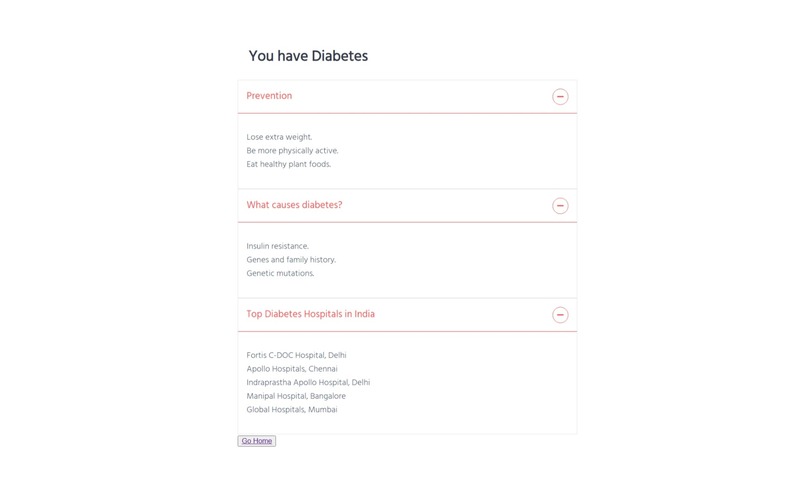
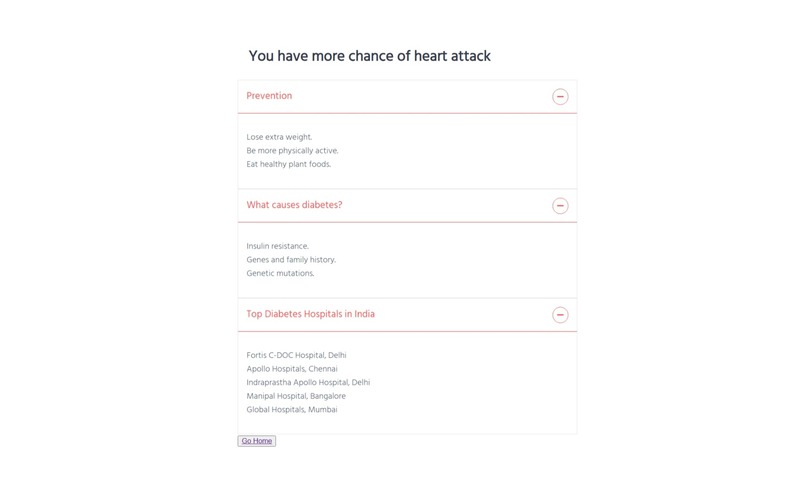
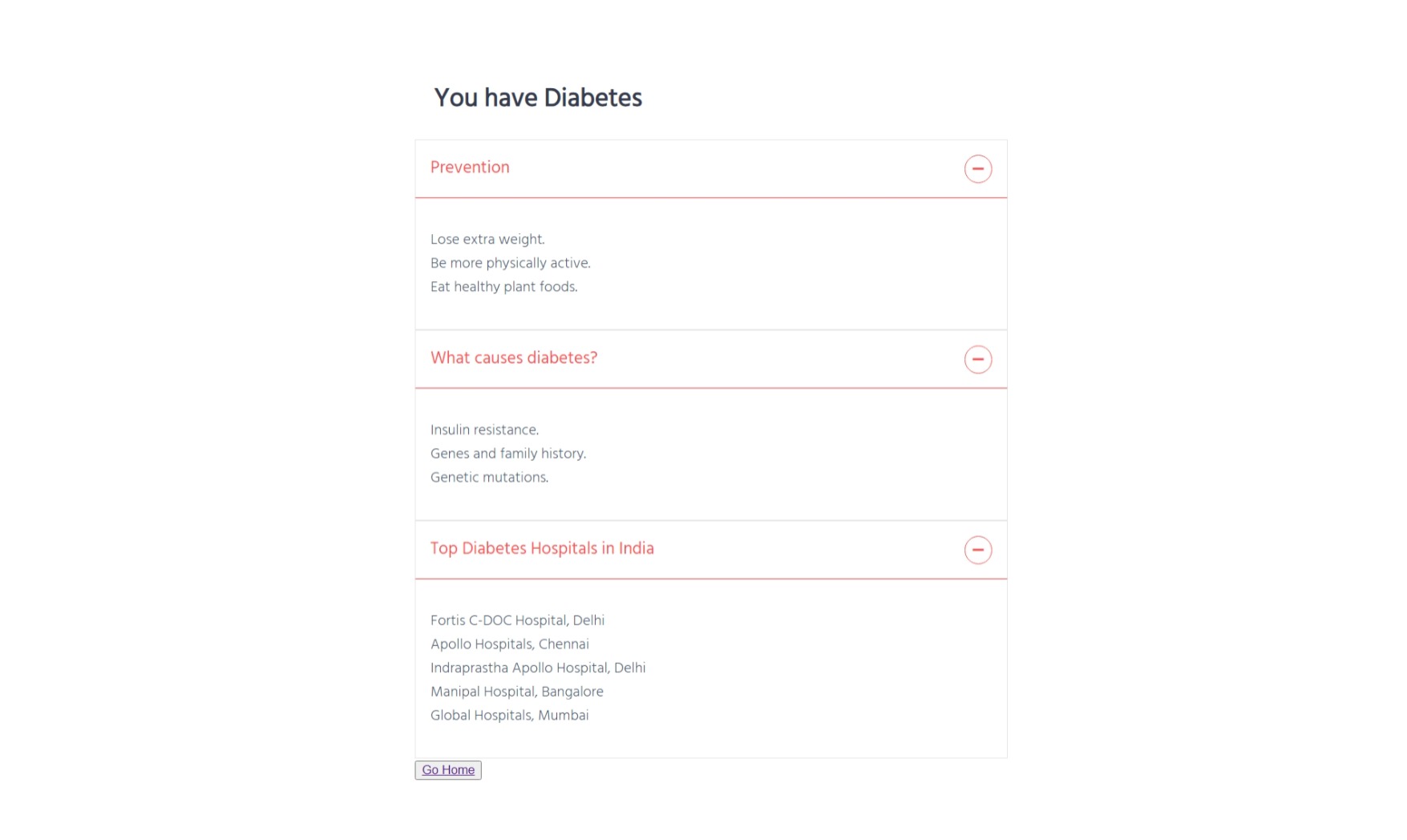
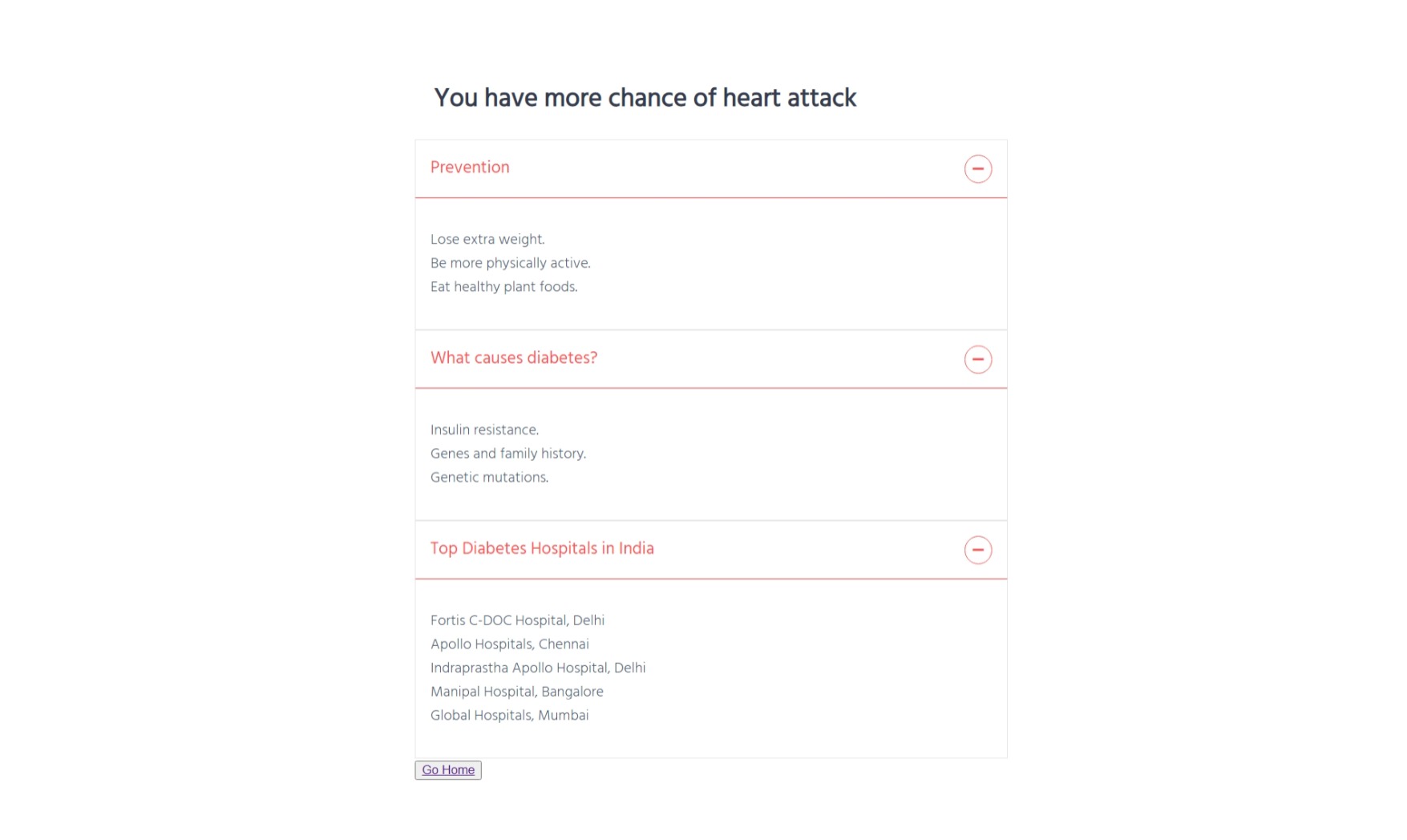
Result Page
-
-
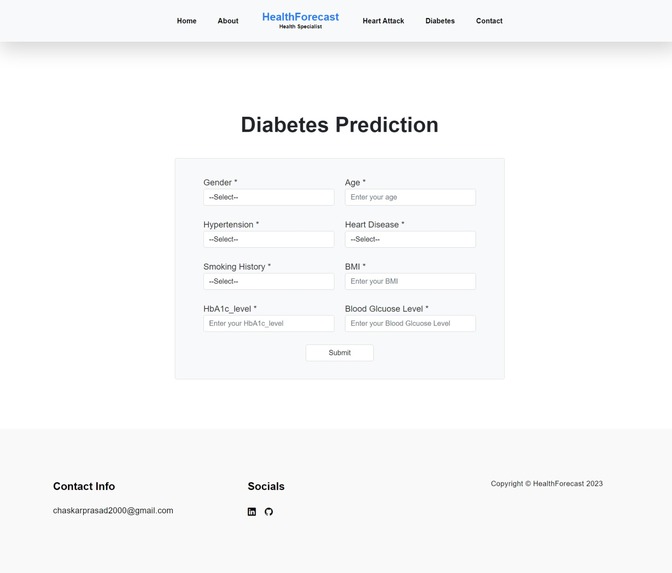
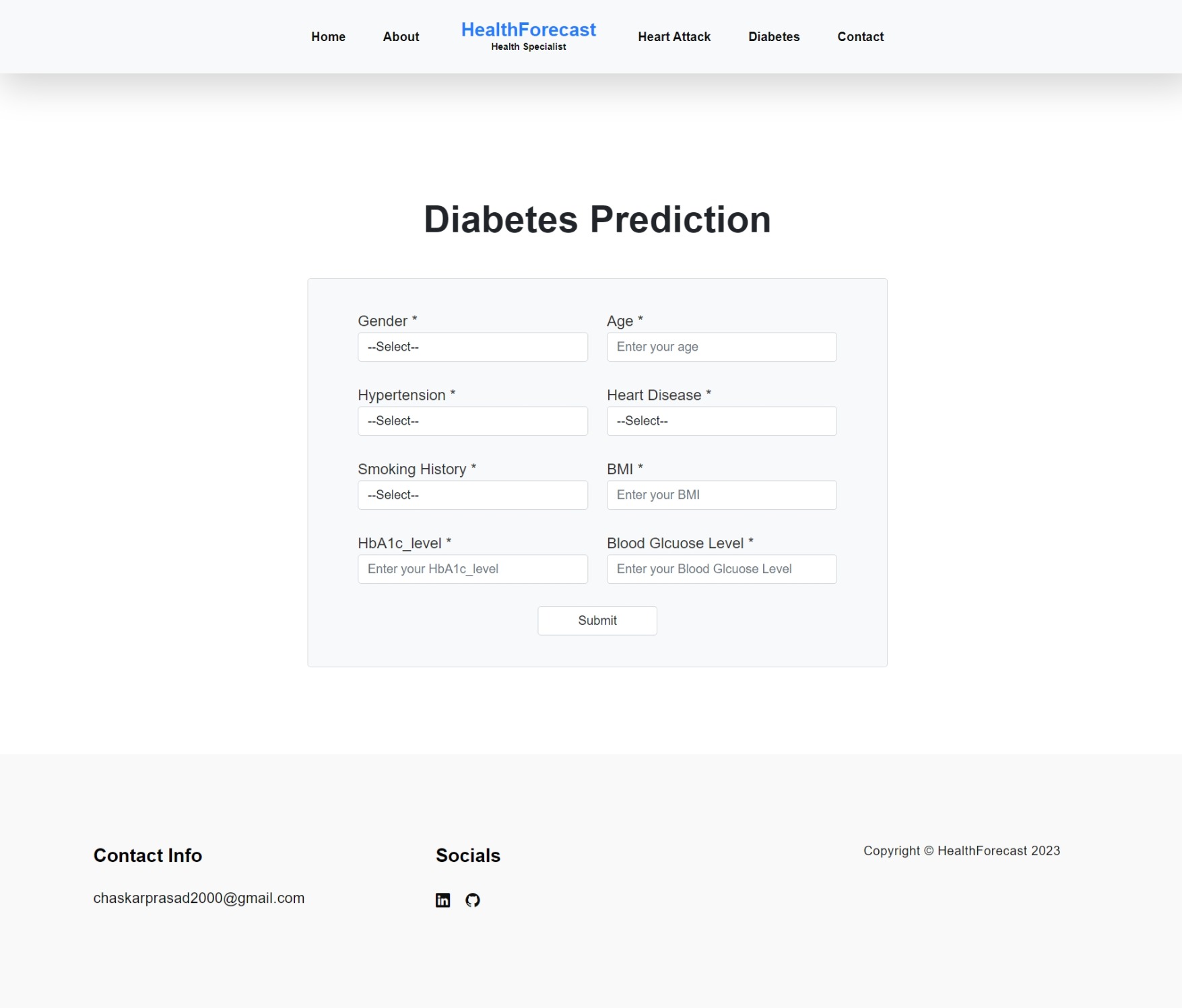
Diabetes Prediction Form
-
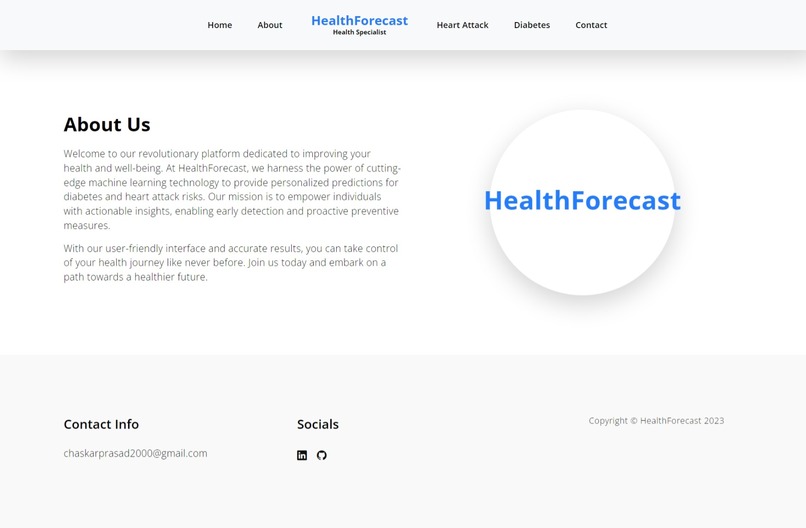
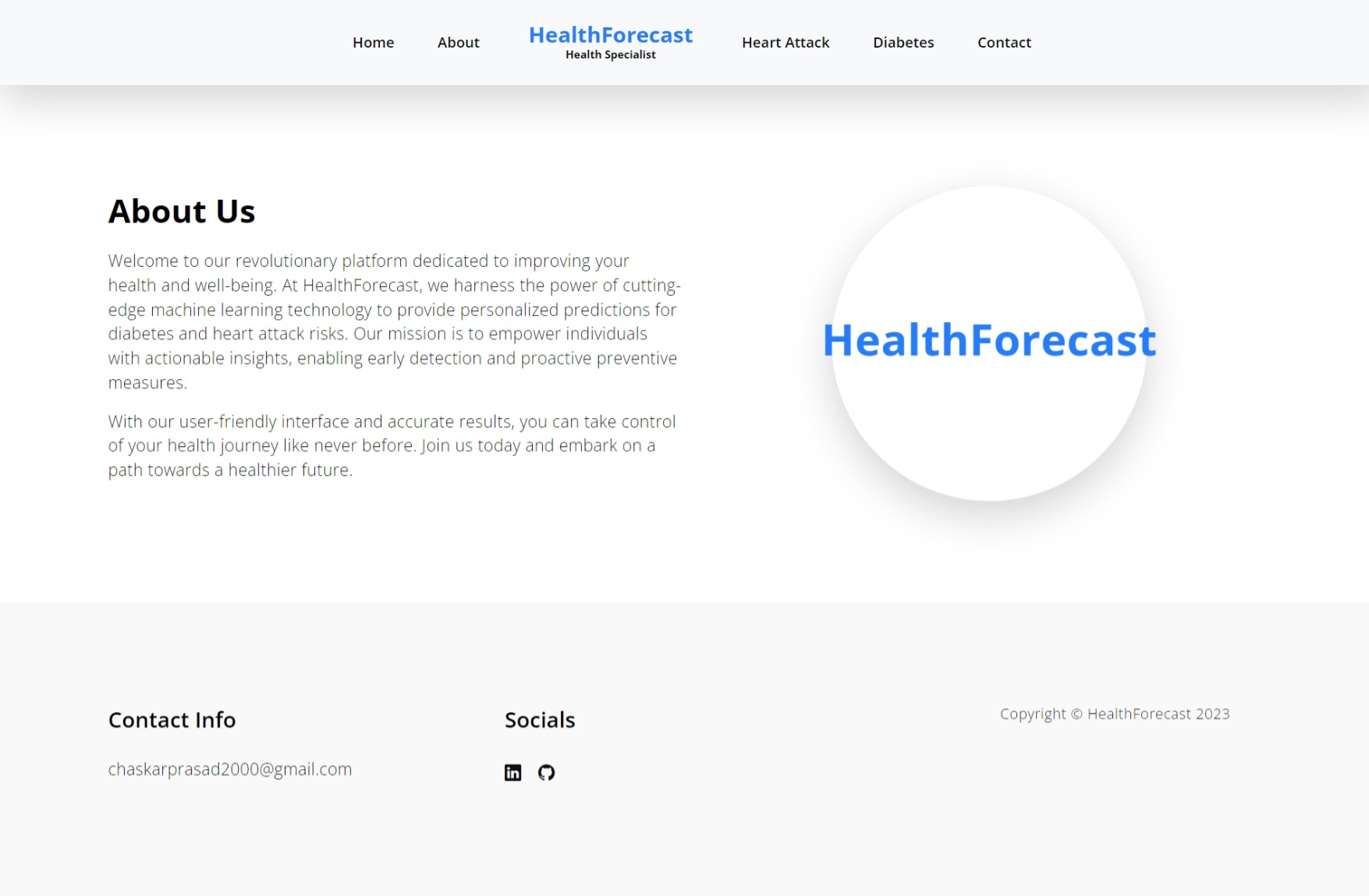
About Us Page
-
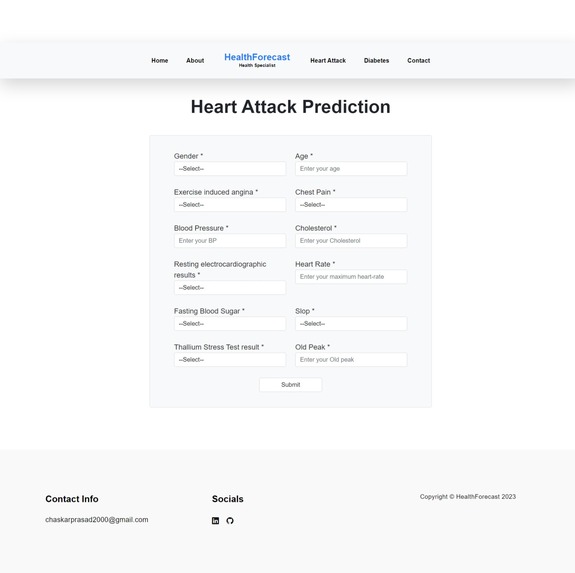
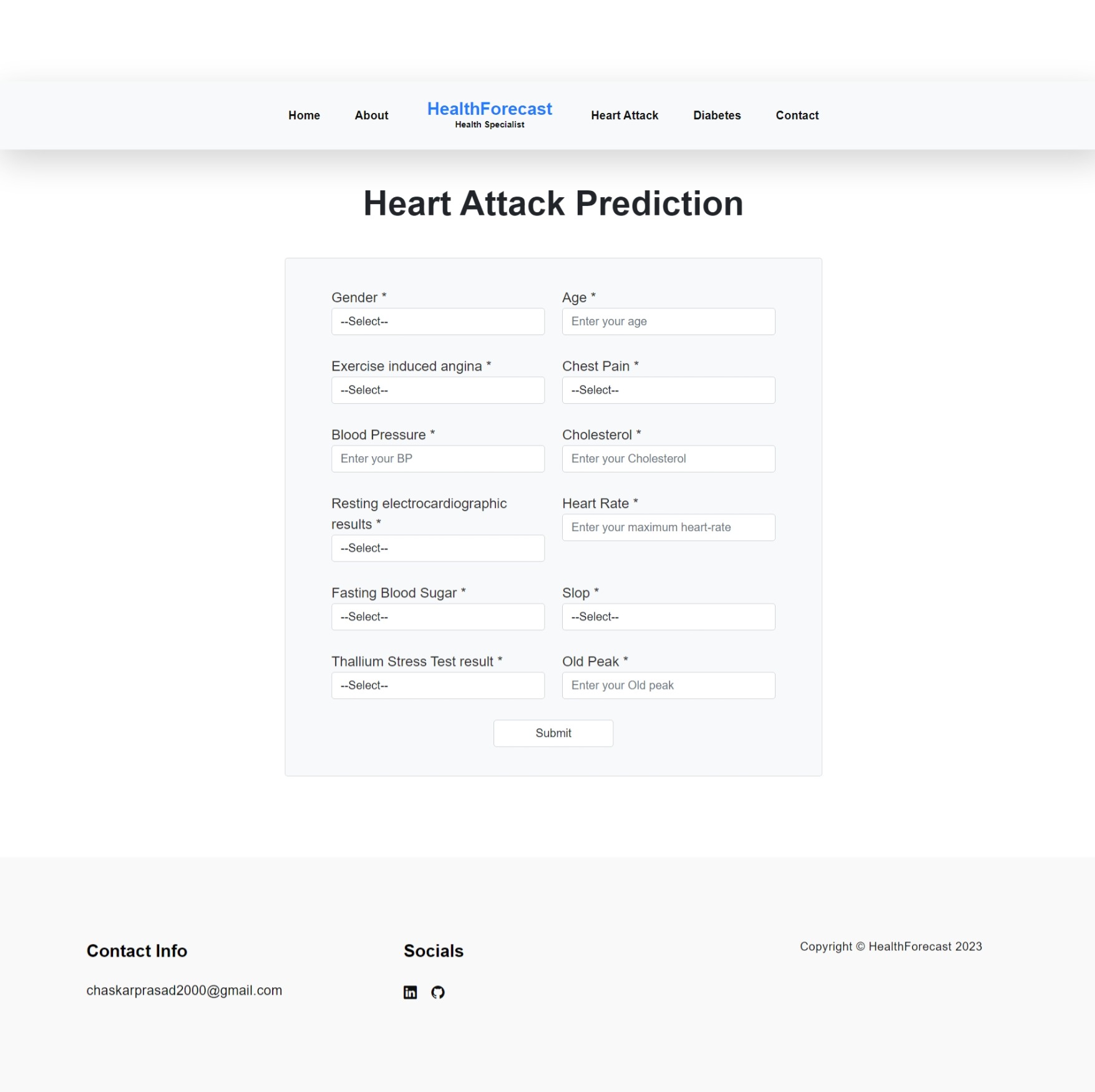
Heart Attack Form
-
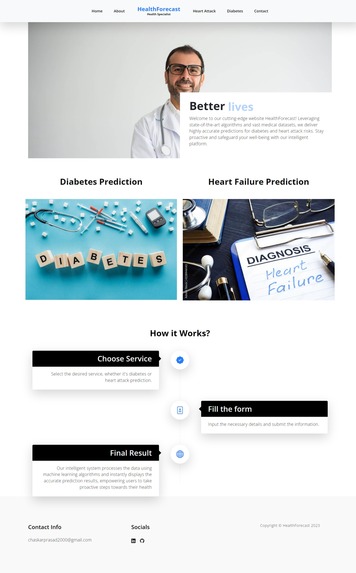
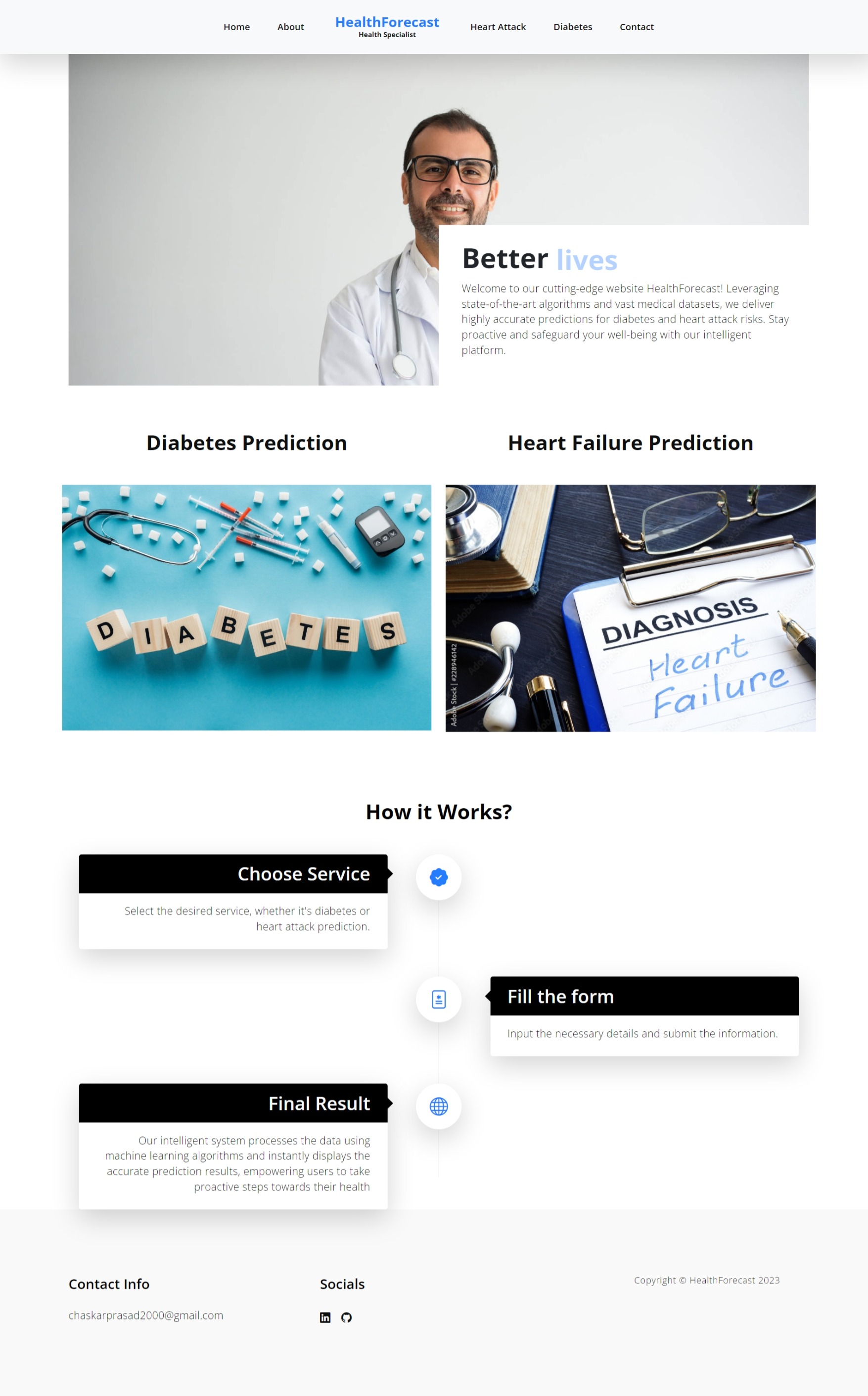
Home Page
Inspiration
At the core of our project lies a deep motivation to revolutionize healthcare and empower individuals in their journey towards better health. We believe that prevention is the key to combating diseases like diabetes and heart attacks, and early detection can save lives. Our motivation stems from the understanding that these conditions can have a significant impact on individuals and their loved ones. By harnessing the power of machine learning algorithms, we aim to provide a proactive solution that empowers people to take charge of their health and make informed decisions. We are driven by the vision of a world where individuals have the tools and knowledge to assess their risk, prioritize preventive measures, and seek timely medical assistance. By offering accurate predictions, valuable insights, and access to relevant healthcare resources, we strive to make a positive impact on the lives of our users. Through our project, we aspire to bridge the gap between technology and healthcare, combining the expertise of machine learning with the need for personalized, accessible, and preventive healthcare solutions. Our motivation is fueled by the belief that everyone deserves the opportunity to lead a healthy and fulfilling life, and we are committed to facilitating that journey through our innovative web application.
What it does
The purpose of this web application is to provide users with an accessible and efficient means of predicting the risk of diabetes and heart attacks using advanced machine learning techniques. By leveraging the power of Django, a robust web framework, we have developed a user-friendly and interactive platform that combines the principles of data science and medical expertise. Our application not only enables users to input relevant information but also utilizes machine learning algorithms to generate accurate predictions regarding the probability of developing diabetes or experiencing a heart attack. The incorporation of these algorithms allows for an evidence-based approach, helping individuals to identify potential risks and take appropriate preventive measures. The web application employs a range of state-of-the-art machine learning algorithms tailored specifically for diabetes and heart attack prediction. These algorithms, such as logistic regression, random forests, or neural networks, have been selected for their ability to handle complex medical datasets and provide accurate predictions. Through an extensive training process using labeled datasets and rigorous validation techniques, our models are equipped to deliver reliable results.
How we built it
The web application is designed as a client-server architecture, with the client side responsible for the user interface and interaction, and the serverside handling data processing, machine learning prediction, and result generation. The application is built using Django, a high-level Python web framework known for its scalability, security, and ease of development. The client side of the application is implemented using HTML, CSS, and JavaScript, providing an intuitive and responsive user interface. Django’s template engine seamlessly integrates with the front end, enabling dynamic content rendering and efficient data communication between the client and server. The machine learning algorithms used for diabetes and heart attack prediction are integrated into the server side of the application. Python libraries such as scikit-learn, Pandas, NumPy, and others are employed to train and deploy the machine learning models. These models are trained on labeled datasets, using various features and risk factors known to be associated with diabetes and heart attacks. Overall, the web application seamlessly integrates the client-side interface with the server-side processing and machine learning algorithms. It provides users with an intuitive and efficient platform for predicting the likelihood of diabetes and heart attacks, enhancing early detection and preventive measures.
Challenges we ran into
Throughout the development of our web application, we encountered several challenges that required innovative solutions and perseverance. These challenges included:
Data Availability: Acquiring high-quality and comprehensive datasets for diabetes and heart attack prediction was a significant challenge. Ensuring data reliability, completeness, and relevance required extensive research and careful selection from trusted sources such as Kaggle.
Data Preprocessing: Preparing the collected data for analysis posed its own set of challenges. Dealing with missing values, handling outliers, and normalizing features required thoughtful consideration and implementation of appropriate techniques to ensure accurate predictions.
Model Selection: Choosing the most suitable machine learning algorithms for heart attack and diabetes prediction was a complex task. Extensive experimentation and evaluation were carried out to identify the best-performing models, balancing accuracy, interpretability, and computational efficiency. Performance Optimization: Processing large volumes of data and running complex machine learning algorithms necessitated optimizing the performance of our web application. We had to carefully tune the algorithms, implement parallel processing techniques, and optimize resource utilization to ensure optimal user experience and response times. User Interface Design: Designing an intuitive and user-friendly interface that seamlessly guides users through the input process and presents the prediction results required thoughtful planning and iterative design iterations. We faced challenges in ensuring compatibility across different devices and browsers while maintaining a visually appealing and responsive design. Validation and Accuracy: Ensuring the accuracy and reliability of our predictions was a crucial challenge. Rigorous validation techniques, including cross-validation and performance metrics analysis, were employed to assess the robustness and generalization capability of our machine learning models. Despite these challenges, our team remained committed and dedicated to overcoming each obstacle. Through meticulous research, innovative problem-solving, and collaboration, we were able to address these challenges and deliver a high-quality web application that provides accurate predictions and valuable insights to our users.
Accomplishments that we're proud of
Throughout the development and implementation of our web application, we have achieved several significant accomplishments that fill us with pride. These accomplishments include:
Accurate Predictions: We have successfully trained machine learning models, such as logistic regression for heart attack prediction and K-Nearest Neighbors (KNN) for diabetes prediction, that have demonstrated impressive accuracy rates of 92% for heart attack prediction and 94% for diabetes prediction. These accurate predictions validate the effectiveness of our algorithms in assessing health risks.
Comprehensive Feature Set: We have curated and incorporated a wide range of relevant features into our models, considering various factors such as demographic information, medical history, lifestyle choices, and diagnostic measurements. This comprehensive feature set enables a holistic evaluation of the risk factors associated with diabetes and heart attacks, leading to more informed predictions.
User-Friendly Interface: We have designed and developed a user-friendly interface that simplifies the input process for users. Our interface provides clear instructions, intuitive form fields, and validation checks to ensure accurate data entry. This accomplishment allows users to seamlessly navigate through the web application and obtain their predictions effortlessly.
Supplementary Information: In addition to prediction outcomes, we provide valuable supplementary information to users. This information includes explanations of risk factors, their impact on predictions, preventive measures, and suggestions for leading a healthier lifestyle. By offering comprehensive insights, we empower users to make informed decisions about their health and well-being.
Data Privacy and Security: We have implemented stringent data privacy and security measures to protect user information. By adhering to industry best practices and data protection regulations, we ensure that user data remains confidential and secure. This accomplishment instills trust and confidence in our users, encouraging them to utilize our web application.
Performance Optimization: We have optimized the performance of our web application to provide a seamless and responsive user experience. By employing techniques such as algorithm optimization, parallel processing, and resource management, we have achieved optimal processing times and minimized latency.
Impact on Healthcare: By providing accurate predictions and valuable insights, our web application has the potential to positively impact healthcare outcomes. Early detection of diabetes and heart attack risks can enable individuals to take preventive measures, seek timely medical assistance, and make lifestyle modifications. This accomplishment aligns with our mission of promoting proactive healthcare and improving overall well-being.
What we learned
Throughout the development and implementation of our web application, we have gained valuable insights and learned important lessons that have contributed to our growth and improvement. Here are some key lessons we have learned:
Data Quality is Crucial: The quality and reliability of the data used for training machine learning models significantly impact the accuracy and performance of the predictions. We have learned the importance of carefully curating datasets from reputable sources, ensuring data completeness, handling missing values effectively, and performing thorough data preprocessing to enhance the quality of the input data.
Model Selection and Evaluation: Choosing the right machine-learning algorithms for specific prediction tasks requires careful consideration. We have learned the importance of exploring and evaluating different algorithms, understanding their strengths and limitations, and selecting the most appropriate models based on the nature of the problem, available data, and performance metrics.
Balancing Accuracy and Interpretability: While striving for high prediction accuracy, we have also recognized the importance of model interpretability. Transparent and interpretable models allow users to understand the reasoning behind the predictions, build trust, and make informed decisions. We have learned to strike a balance between accuracy and interpretability, depending on the specific requirements of the application.
User-Centric Design: Designing a user-friendly interface is crucial for an intuitive user experience. We have learned the importance of gathering user feedback, conducting usability tests, and iterating on the design to ensure ease of use and seamless navigation. User feedback has helped us identify pain points and make necessary improvements to enhance user satisfaction.
What's next for Healthforecast
Having achieved significant milestones with our current web application, we are excited to outline the next steps and future plans for our project. Here are the key areas we will focus on:
Model Refinement: We will continue refining our machine learning models by incorporating additional data, exploring new features, and fine-tuning hyperparameters. This iterative process will improve the accuracy and robustness of our predictions, allowing for more precise risk assessments for diabetes and heart attacks.
Expansion of Predictive Capabilities: While our current application focuses on diabetes and heart attack prediction, we aim to expand its predictive capabilities to include other relevant health conditions. By leveraging the knowledge and expertise gained from our existing models, we can develop new models for predicting additional diseases, empowering users with a broader understanding of their health risks.
Integration of Real-Time Data: To enhance the timeliness and relevance of our predictions, we plan to integrate real-time data sources. By incorporating up-to-date medical research, epidemiological data, and user feedback, we can continuously improve the accuracy and applicability of our predictions, ensuring users receive the most relevant and informed insights.
Enhanced User Experience: We are committed to enhancing the user experience of our web application. This includes implementing a more intuitive and visually appealing interface, optimizing performance for faster response times, and incorporating user feedback to address any usability issues. Our goal is to provide a seamless and enjoyable experience for users, making the process of risk assessment and accessing healthcare information effortless.
Collaboration with Healthcare Professionals: We recognize the importance of collaboration with healthcare professionals to enrich the functionality and value of our web application. We plan to establish partnerships with medical experts, hospitals, and research institutions to validate our models, gather expert insights, and incorporate clinical expertise into our predictive algorithms. This collaboration will ensure that our application aligns with the latest medical knowledge and best practices.
Mobile Application Development: To cater to the growing demand for mobile accessibility, we aim to develop a companion mobile application for our web-based platform. This will enable users to access the prediction services, health information, and personalized recommendations conveniently from their smartphones, further extending the reach and usability of our application.
Community Engagement and Education: We are dedicated to raising awareness about the importance of early disease detection and prevention. Through community engagement initiatives, educational content, and partnerships with healthcare organizations, we aim to empower individuals to take proactive steps towards their health and well-being. We will conduct awareness campaigns, workshops, and webinars to disseminate valuable information and promote healthy lifestyles


Log in or sign up for Devpost to join the conversation.