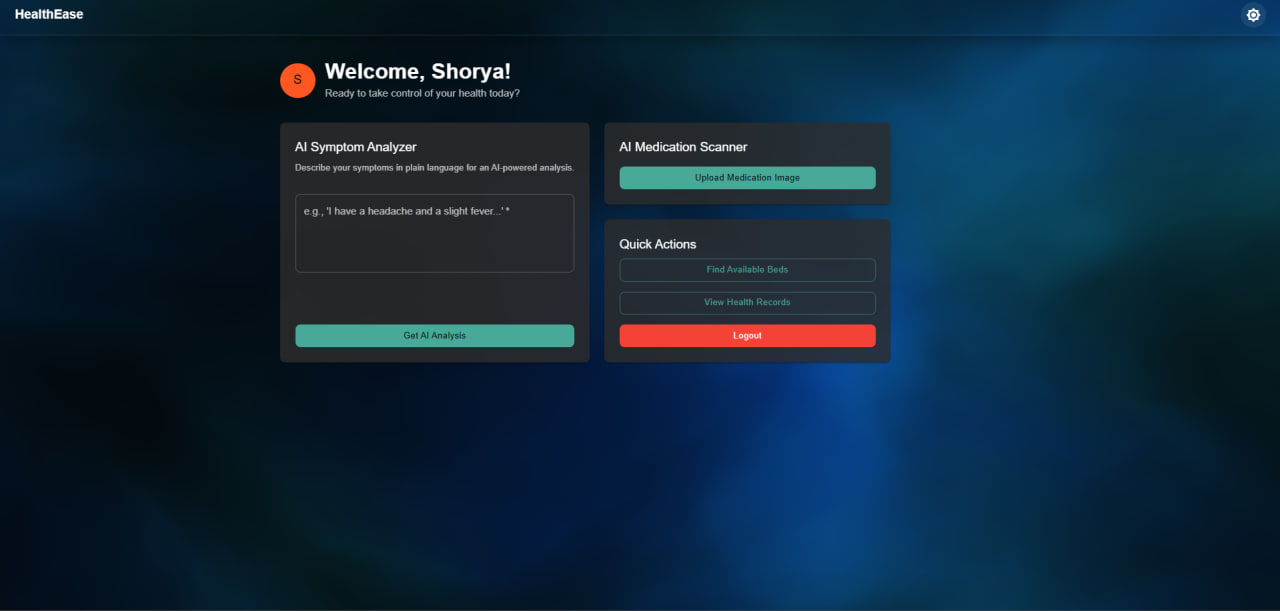
HealthEase came about because of a personal and very frustrating experience that happened right here in Surat. Last year, a family member got sick, and it was hard to get through the hospital system. Finding the correct doctor, waiting for hours in a busy OPD with no real sense of progress, and then trying to find a specialist hospital with an available bed were all stressful and confusing. I figured out that the problem wasn't that there wasn't enough good healthcare, but that there was a huge gap in information and access. I saw what millions of people see every day and thought, "Technology can help us fix this."
How We Made It We designed HealthEase as a full-stack application with a MERN-style architecture, focused on making a strong and scalable platform from the start.
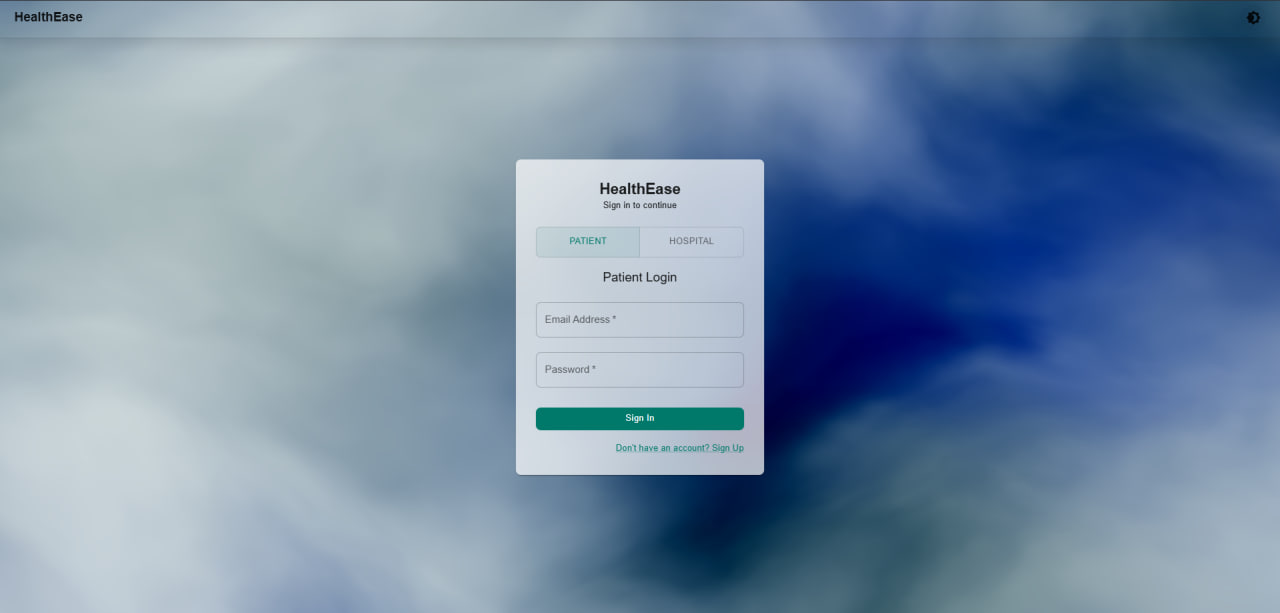
Backend Foundation: We began by creating a safe backend with Node.js and Express. We created a dual-role authentication system that works for both Patients and Hospital managers. It uses bcryptjs to encrypt passwords and JWT to manage sessions. We came up with a creative "demo mode" API for the hackathon that leverages in-memory data. This lets us create and test the whole application flow without having to connect to a live database.
Building the core features: We constructed the most important features one at a time.
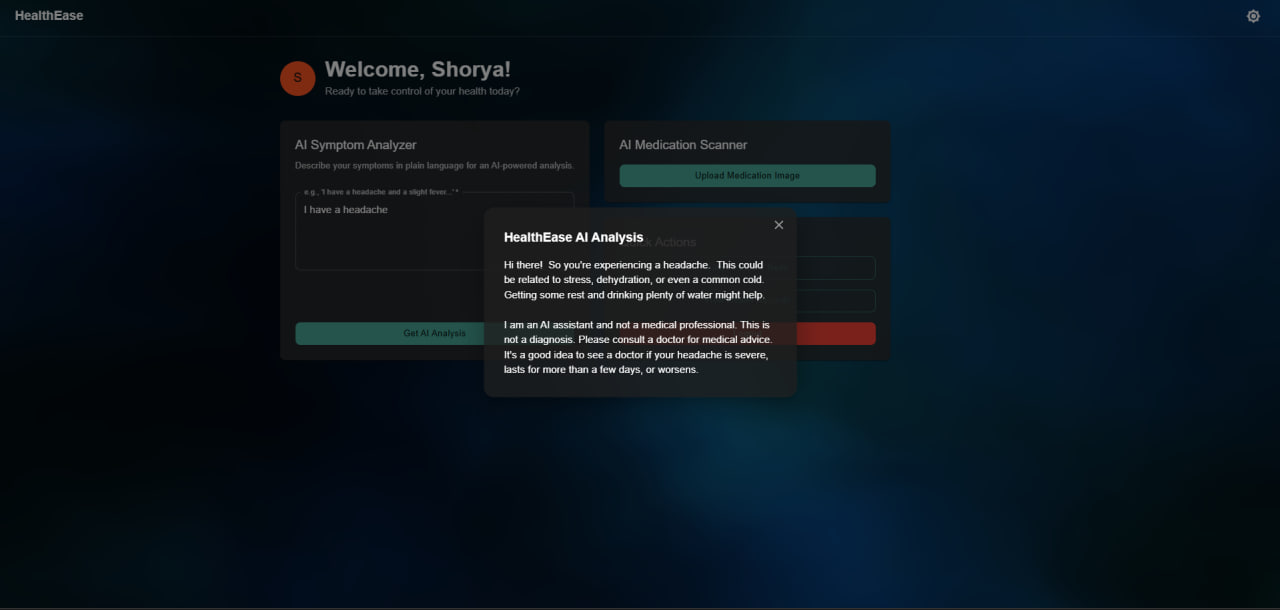
The AI Symptom Analyzer was a big step forward. We added the Google Gemini API, putting a lot of work into "prompt engineering" to make a prompt that tells the AI how to give safe, helpful, and reassuring answers without making a medical diagnosis.
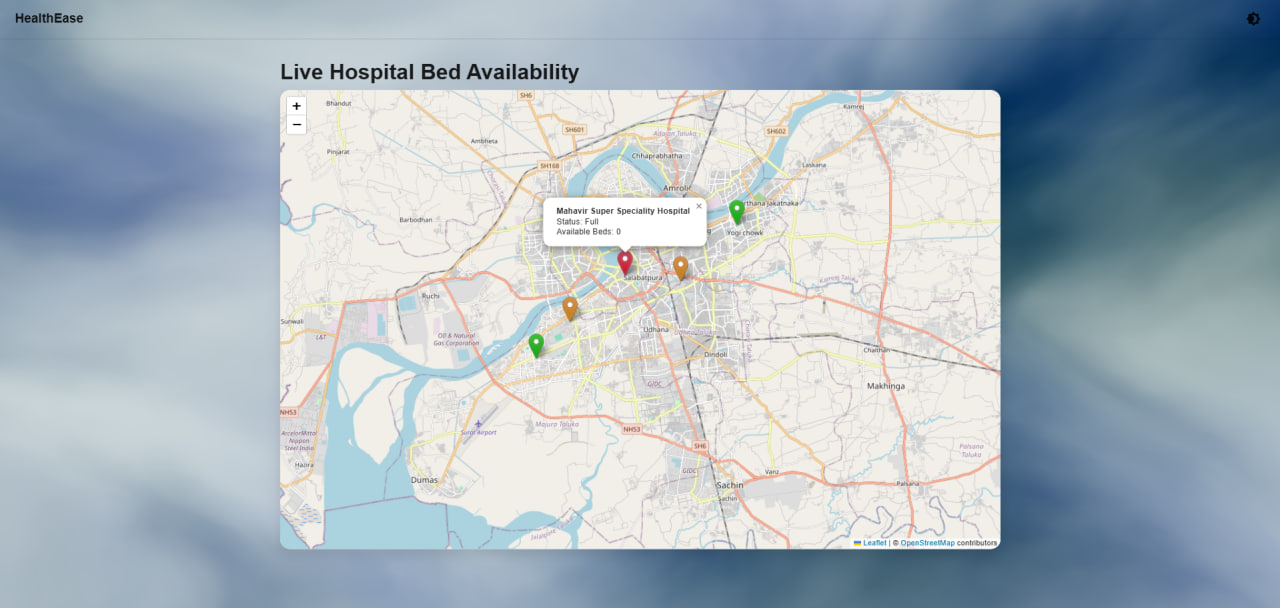
We used the react-leaflet package, which is powerful but small, to render OpenStreetMap tiles for the Live Bed Map. We filled it using genuine hospital coordinates from Surat to make the demo seem legitimate and have an effect.
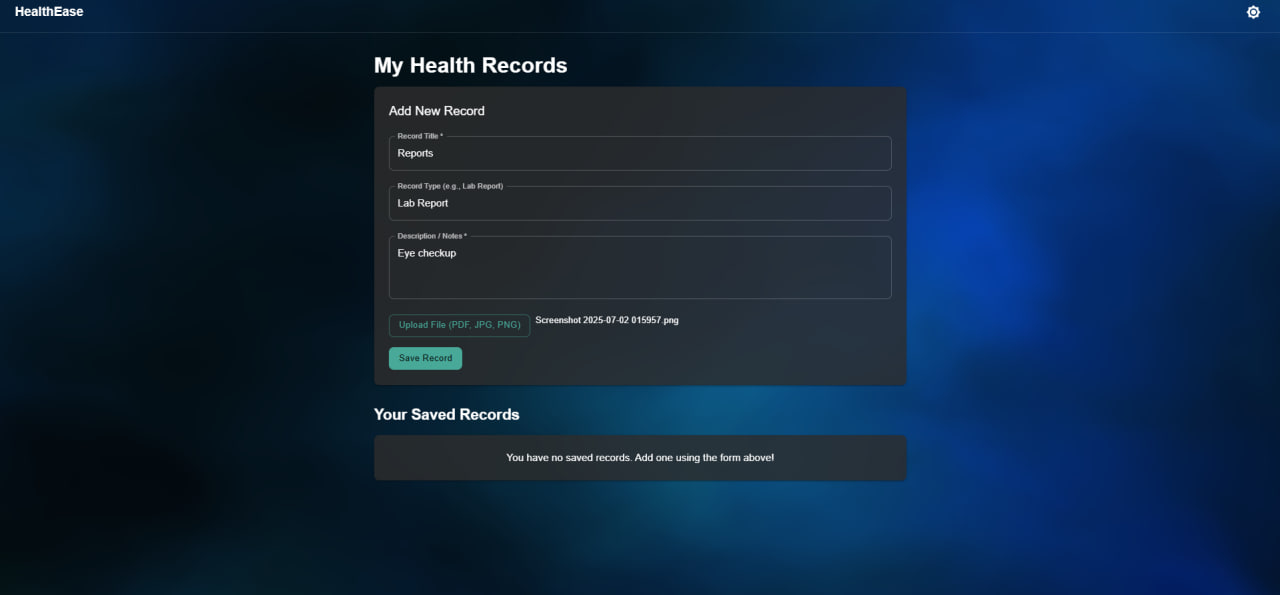
The Health Records feature is a comprehensive CRUD app with a Multer-based backend that lets users submit medical files.
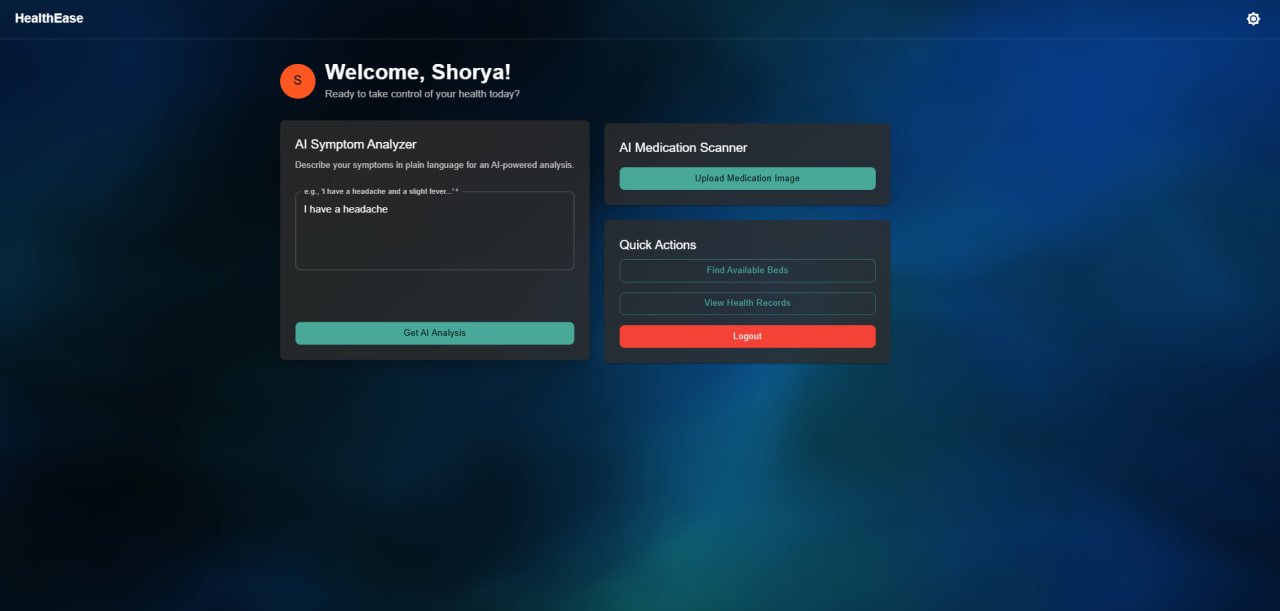
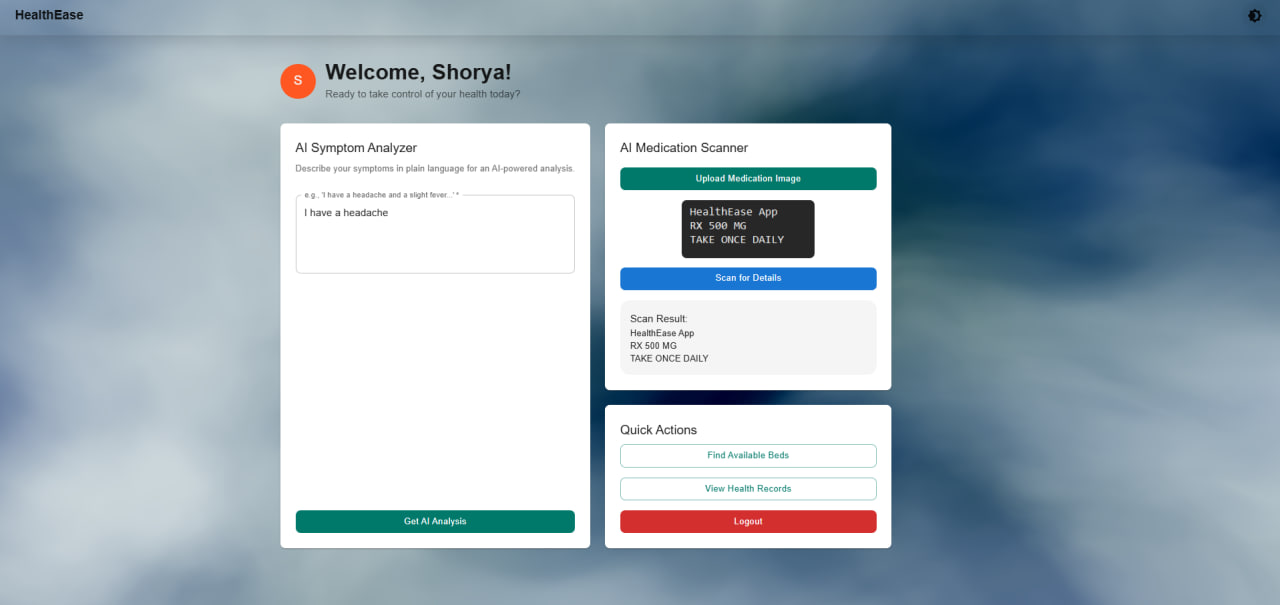
The polish on the UI/UX: We didn't simply want it to work; we wanted it to look nice too. We used Material-UI to make a bespoke UI that works with themes and supports both light and dark modes. We used Vanta.js to make a beautiful, unobtrusive 3D animated background that flows across the whole program. This gives users a modern and seamless experience.
Problems We Had: 3D Libraries That Were Not Stable When we first tried to use a complicated 3D library for the background, we were running into versioning problems that were hard to fix. This was an important lesson in hackathon development: you have to be flexible when a feature that isn't necessary becomes a big problem. We quickly switched to the Vanta.js package, which was more stable and faster. It offered us the gorgeous effect we sought without the technical hassle.
Simulating a Real-World System: It was hard to show off a dynamic system without access to live hospital APIs. We got around this by making our demo-mode backend act like a genuine system would, which showed that the idea might work.
What We Found Out This project was a deep dive into how to make a comprehensive product from start to finish. We learnt how to design a safe backend that can do two things at once, how to use and use a powerful LLM like Gemini, and how to mix several complicated libraries like Leaflet and Vanta.js into a single, smooth user experience. Most importantly, we learned how to build a solution that we think can really help our community.


Log in or sign up for Devpost to join the conversation.