Inspiration
Prior authorization delays are one of the most frustrating bottlenecks in U.S. healthcare, slowing patient care and adding significant administrative burden for providers. We wanted to rethink this process using modern, serverless AI to make prior authorizations faster, more transparent, and more reliable.
What We Built
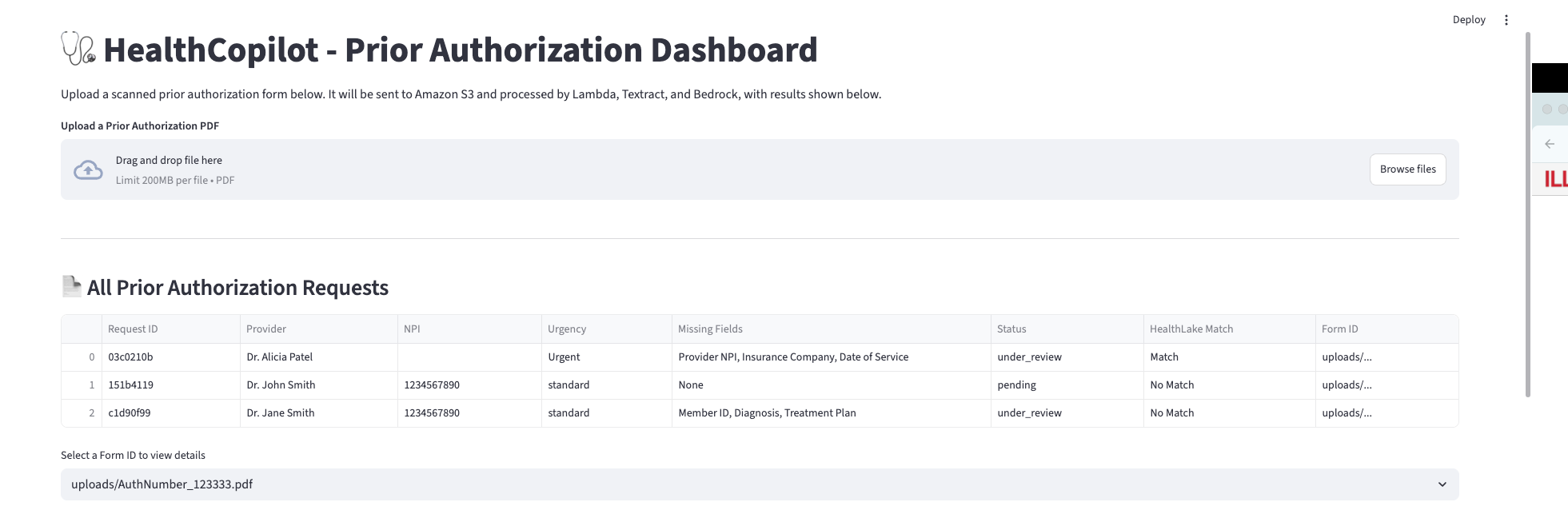
HealthCopilot is an AI-powered, fully serverless prior authorization tracker with a streamlined Streamlit interface. It automates the end-to-end workflow of reviewing, tracking, and verifying prior authorization requests.
Key workflow steps:
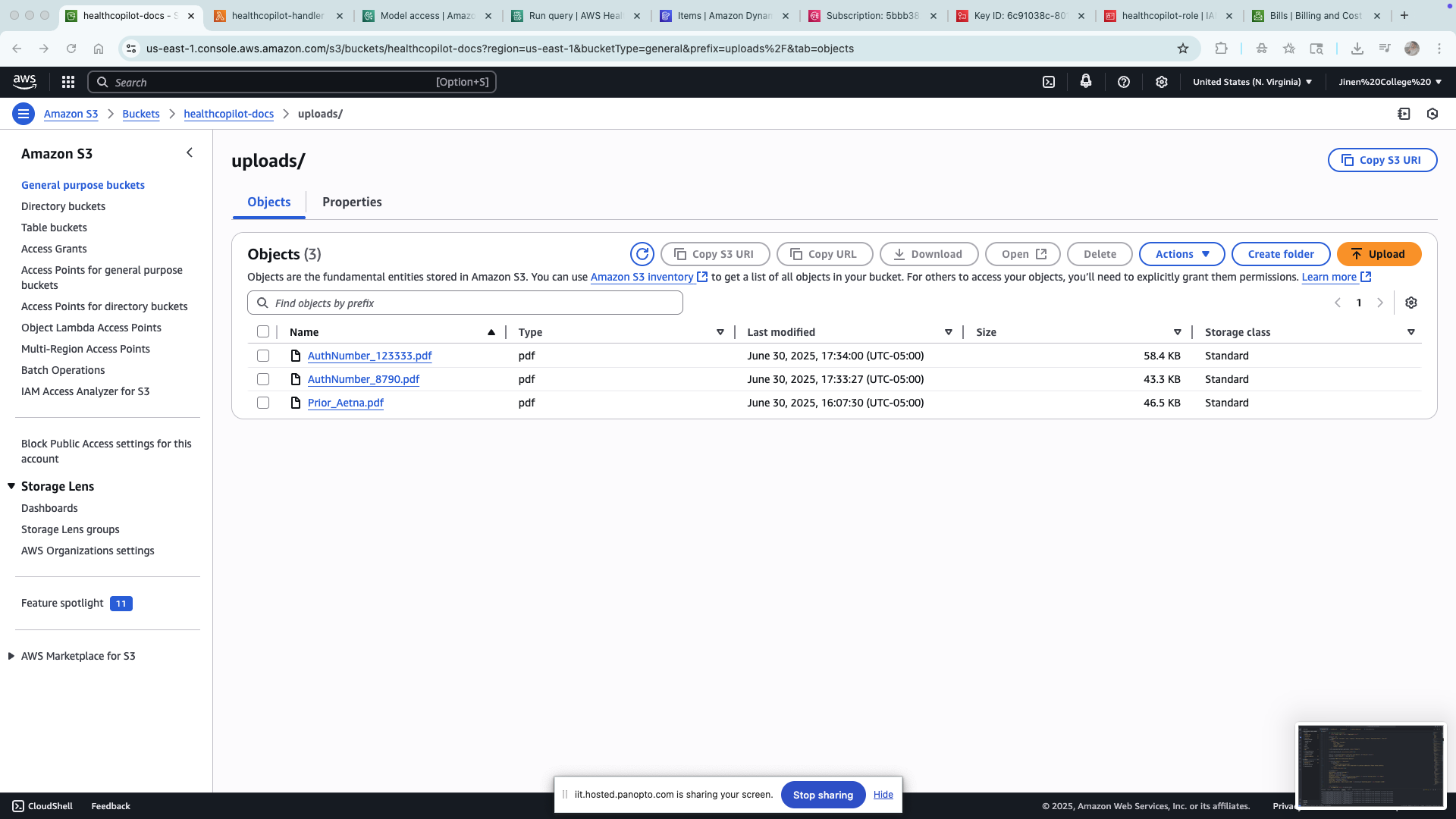
- Upload – Providers upload prior authorization PDFs through the Streamlit dashboard
- Storage – Files are securely stored in an Amazon S3 bucket (
healthcopilot-docs) - Trigger – An S3 event activates an AWS Lambda function (
handler.py) - Text Extraction – Lambda invokes Amazon Textract to extract text from the document
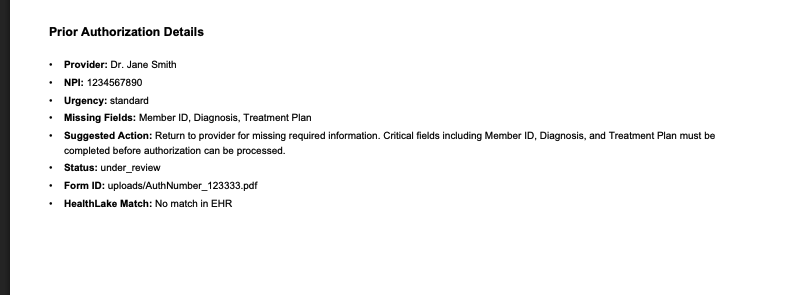
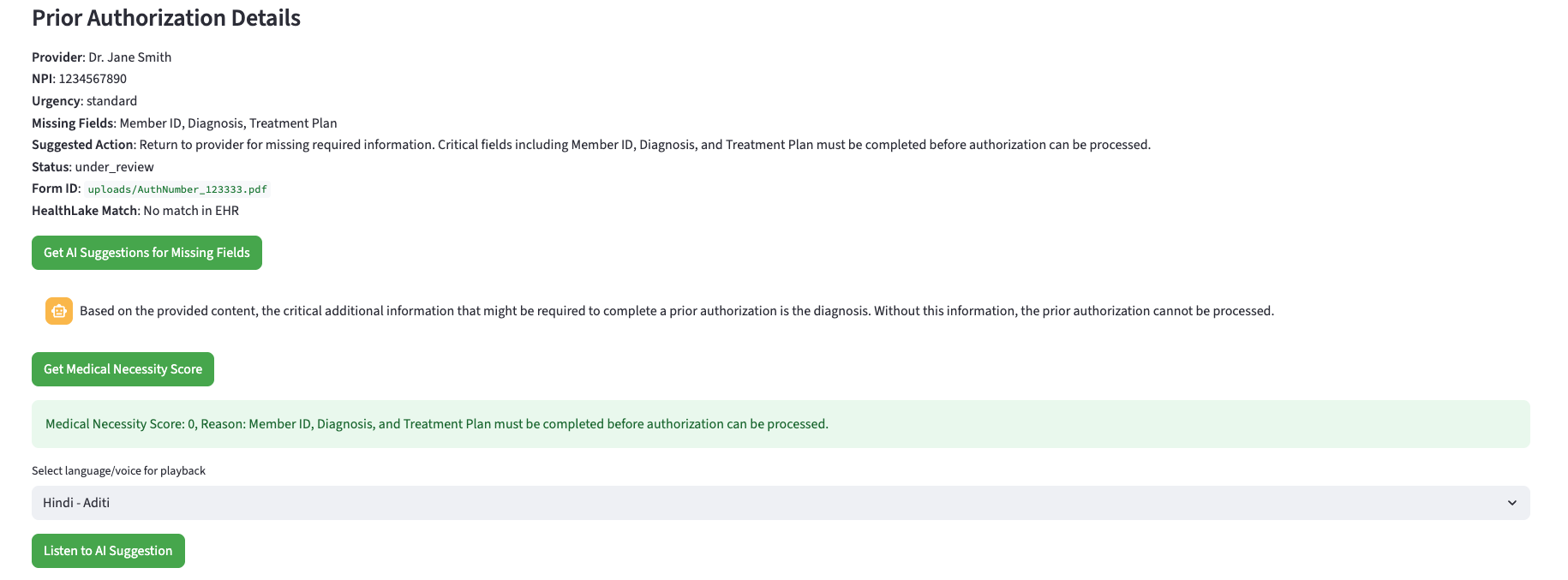
- Analysis – Extracted text is sent to Amazon Bedrock (Claude or Mistral) to identify missing fields, urgency, and next steps
- Data Storage – Results are persisted in Amazon DynamoDB (
prior_auth_requeststable) - Alerts – If missing fields are found, Amazon SNS sends email or SMS alerts to the provider
- Verification – Bedrock queries Amazon HealthLake to cross-check patient details against EHR data
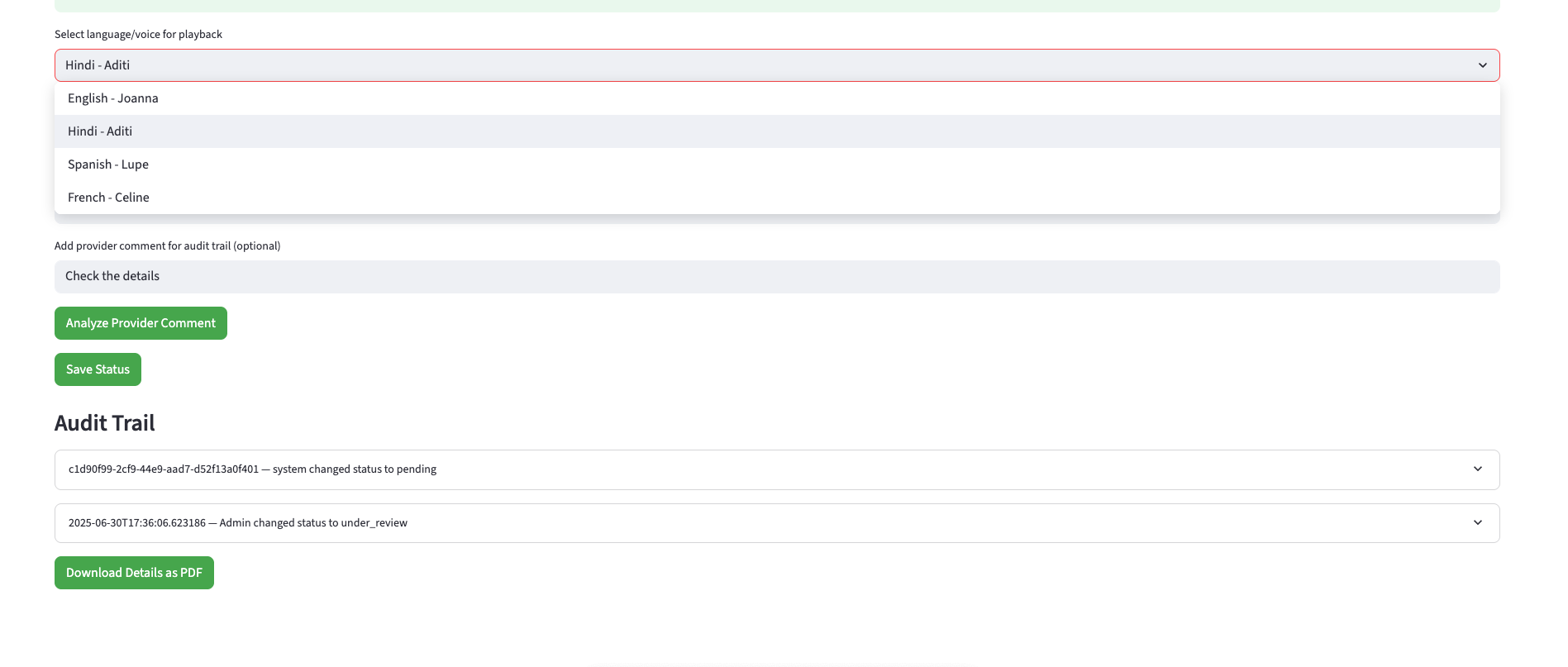
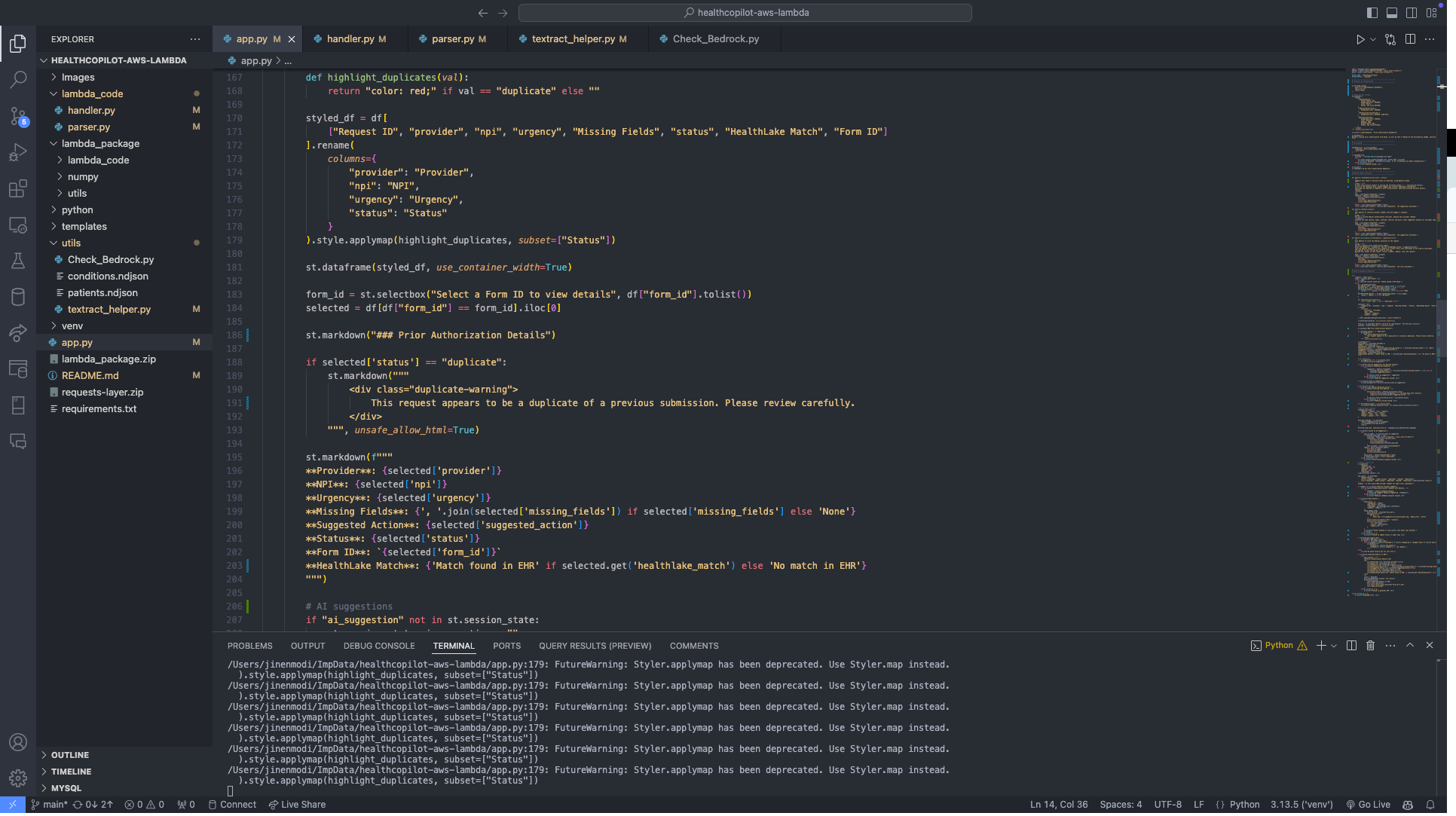
- Display – The Streamlit dashboard reads from DynamoDB to display authorization status, with multilingual playback supported by Amazon Polly and Amazon Translate
Architecture Overview
Key AWS components:
- Amazon S3 (document storage)
- AWS Lambda (serverless compute)
- Amazon Textract (OCR text extraction)
- Amazon Bedrock (large language model processing)
- Amazon DynamoDB (status tracking)
- Amazon HealthLake (EHR verification)
- Amazon SNS (notifications)
- Amazon Polly + Amazon Translate (multilingual accessibility)
- Streamlit (front-end interface)
This event-driven, fully serverless architecture ensures a highly scalable, cost-efficient, and low-maintenance solution.
Challenges
- Parsing inconsistent, unstructured prior authorization PDFs with Textract
- Designing robust Bedrock prompts to reliably detect missing fields and urgency
- Coordinating multiple AWS services with low latency requirements
- Maintaining data security and compliance for sensitive health information
- Incorporating multilingual, voice-enabled playback for accessibility
- Ensuring SNS notifications are actionable yet non-intrusive
- Delivering a robust solution within a short hackathon timeframe
What We Learned
- Serverless architectures are exceptionally well-suited for healthcare workflows, offering scalability and cost-effectiveness
- Large language models (Bedrock) demand thoughtful prompt design to ensure quality outputs
- Voice features through Polly and Translate greatly improve accessibility
- Proactive alerts reduce missed or incomplete submissions
- Integrating diverse AWS services in real time requires thoughtful architecture and error handling
- AI solutions can have a measurable impact on improving patient outcomes
Accomplishments
- Automated a complex, high-friction prior authorization workflow
- Successfully handled real-world, unstructured healthcare documents
- Integrated large language models with voice technologies
- Provided an end-to-end, production-grade, serverless solution
- Delivered the entire project within the hackathon time constraints
What’s Next
- Expand support for multiple payer formats and document classifications
- Add additional languages and dialects
- Personalize dashboards by user roles (provider, payer, patient)
- Provide analytics on prior authorization turnaround times
- Enhance compliance reporting and audit trails
- Further EHR integrations via FHIR APIs for seamless clinical interoperability
Conclusion
HealthCopilot demonstrates that a fully serverless, AI-powered prior authorization system is not only possible but transformative. By reducing delays and improving transparency, HealthCopilot empowers providers to focus on what matters most — delivering better patient care.
Built With
- amazon
- amazon-dynamodb
- amazon-sns
- amazon-web-services
- bedrock
- healthalake
- lamba
- polly
- python
- s3
- textract
- translate

Log in or sign up for Devpost to join the conversation.