-
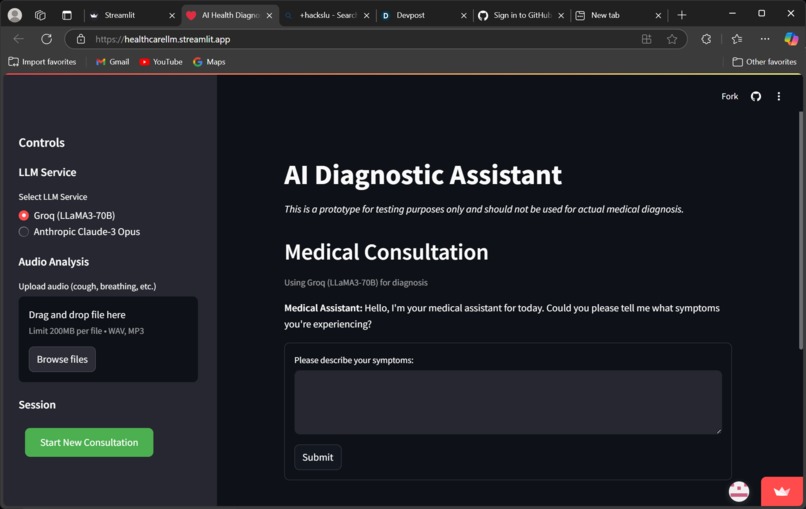
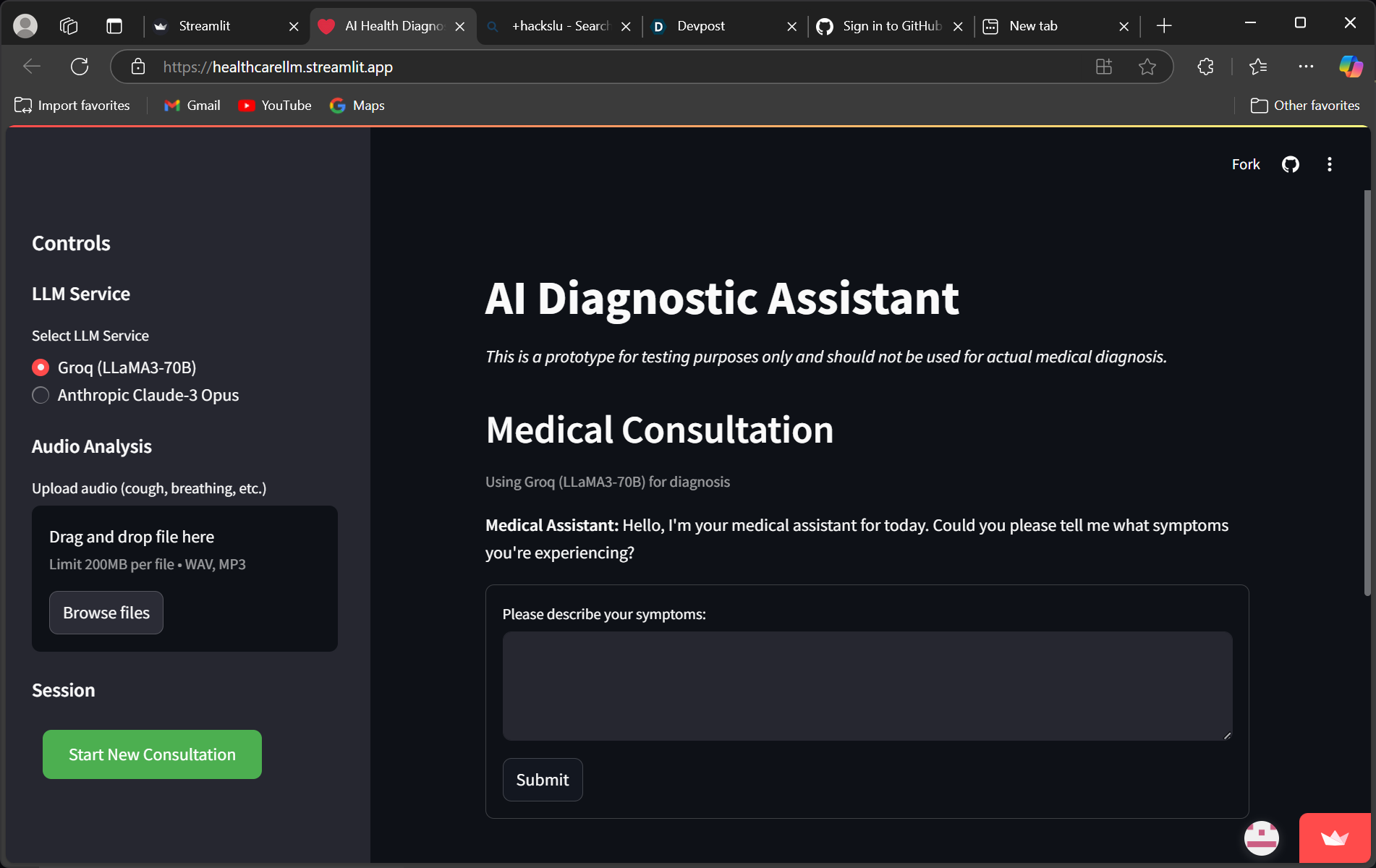
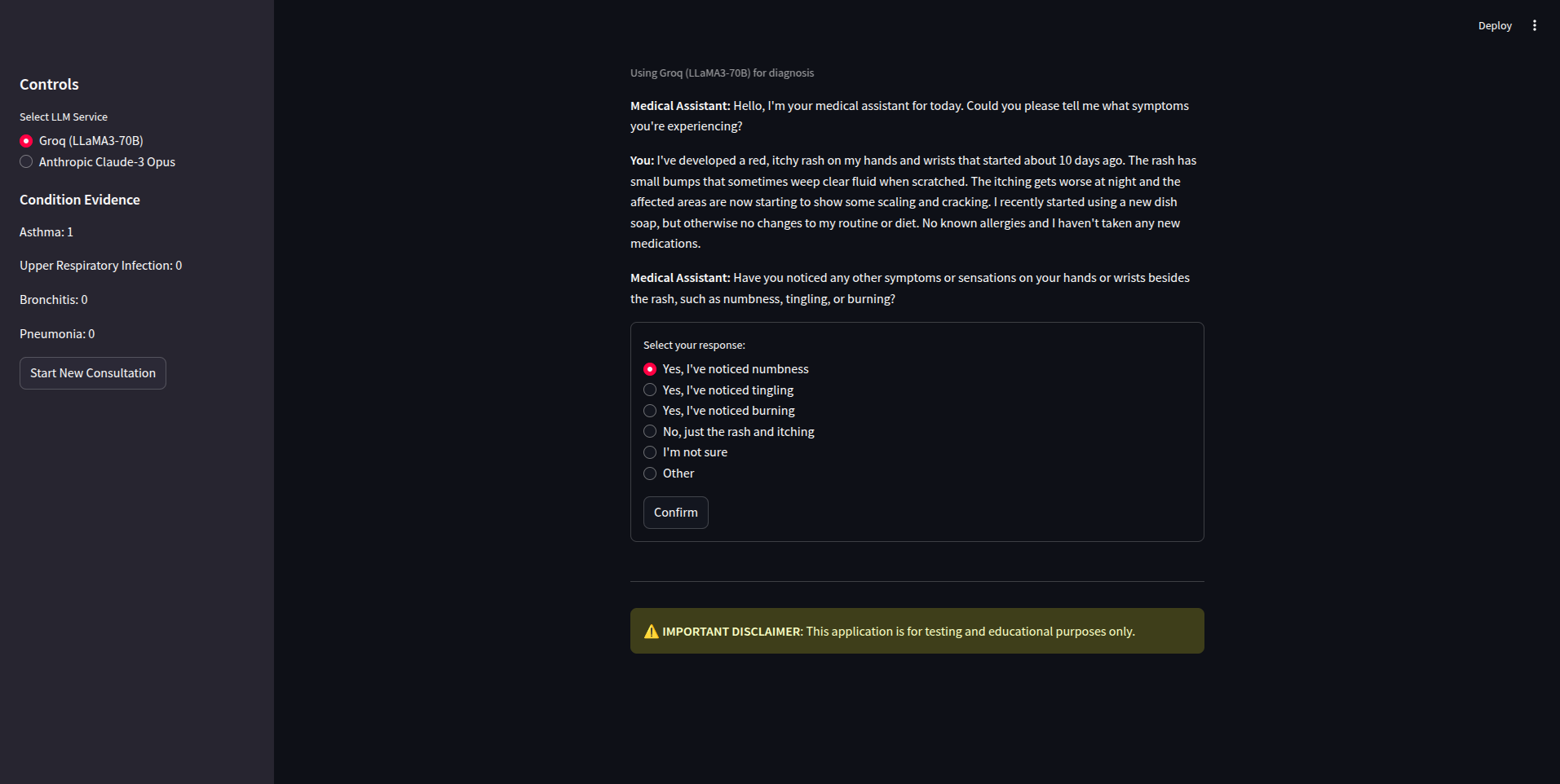
Medical Diagnostic Assistant
-
-
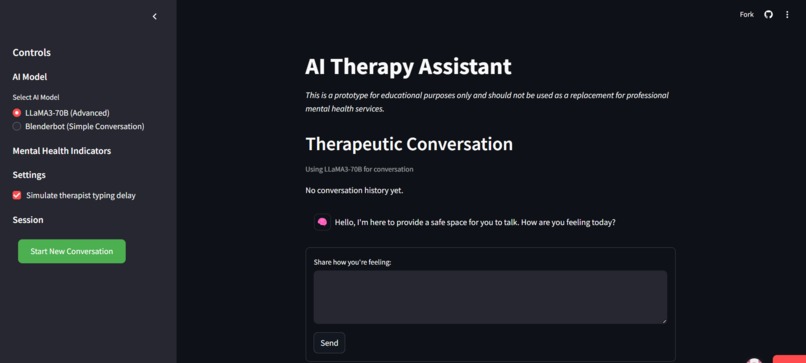
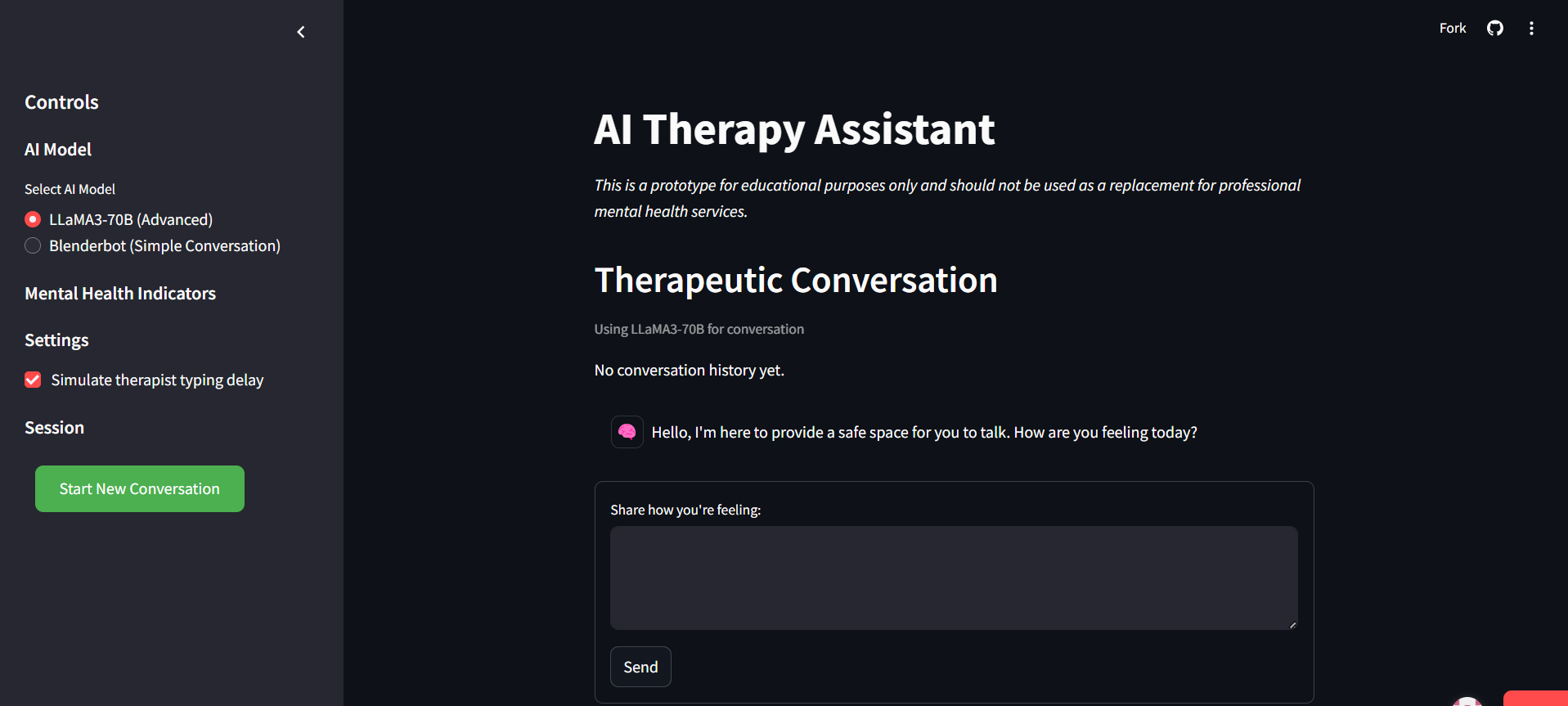
Mental Health Therapy Assistant
-
AI Health Assistant: Reducing Wait Times for Mental & Physical Health Support
Project Overview
This project consists of two complementary AI-powered health assistants: a Mental Health Therapy Assistant and a Medical Diagnostic Assistant. Both applications use advanced language models (LLaMA3-70B, Claude-3 Opus) to provide accessible preliminary health consultations.
Motivation
The primary motivation is to address the challenges of healthcare accessibility:
- Reduce wait times for initial consultations
- Provide immediate preliminary guidance before professional visits
- Help users understand potential conditions before symptoms worsen
- Offer support during times when immediate professional care isn't available
- Prevent conditions from becoming severe due to delayed care
Key Components
Mental Health Therapy Assistant
- Conducts supportive therapeutic conversations
- Analyzes user responses to identify potential mental health concerns
- Tracks indicators for anxiety, depression, stress, and other conditions
- Provides personalized resources and coping strategies
- Offers interactive summaries of the conversation
- Maintains a compassionate, supportive conversational approach
Medical Diagnostic Assistant
- Gathers physical symptom information through text-based conversations
- Optionally analyzes audio samples (breathing, cough) for additional insights
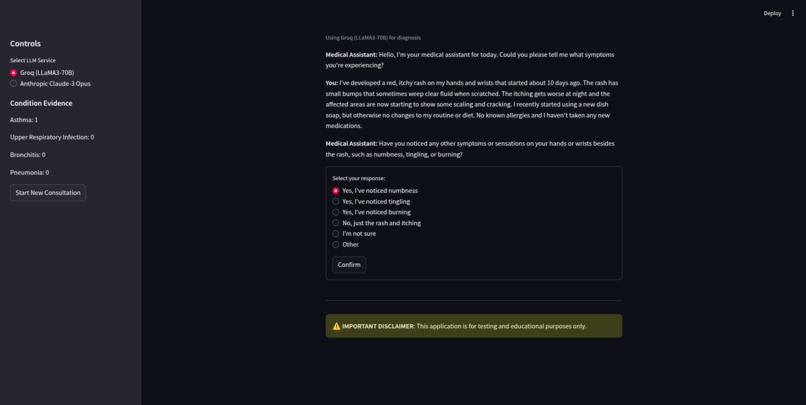
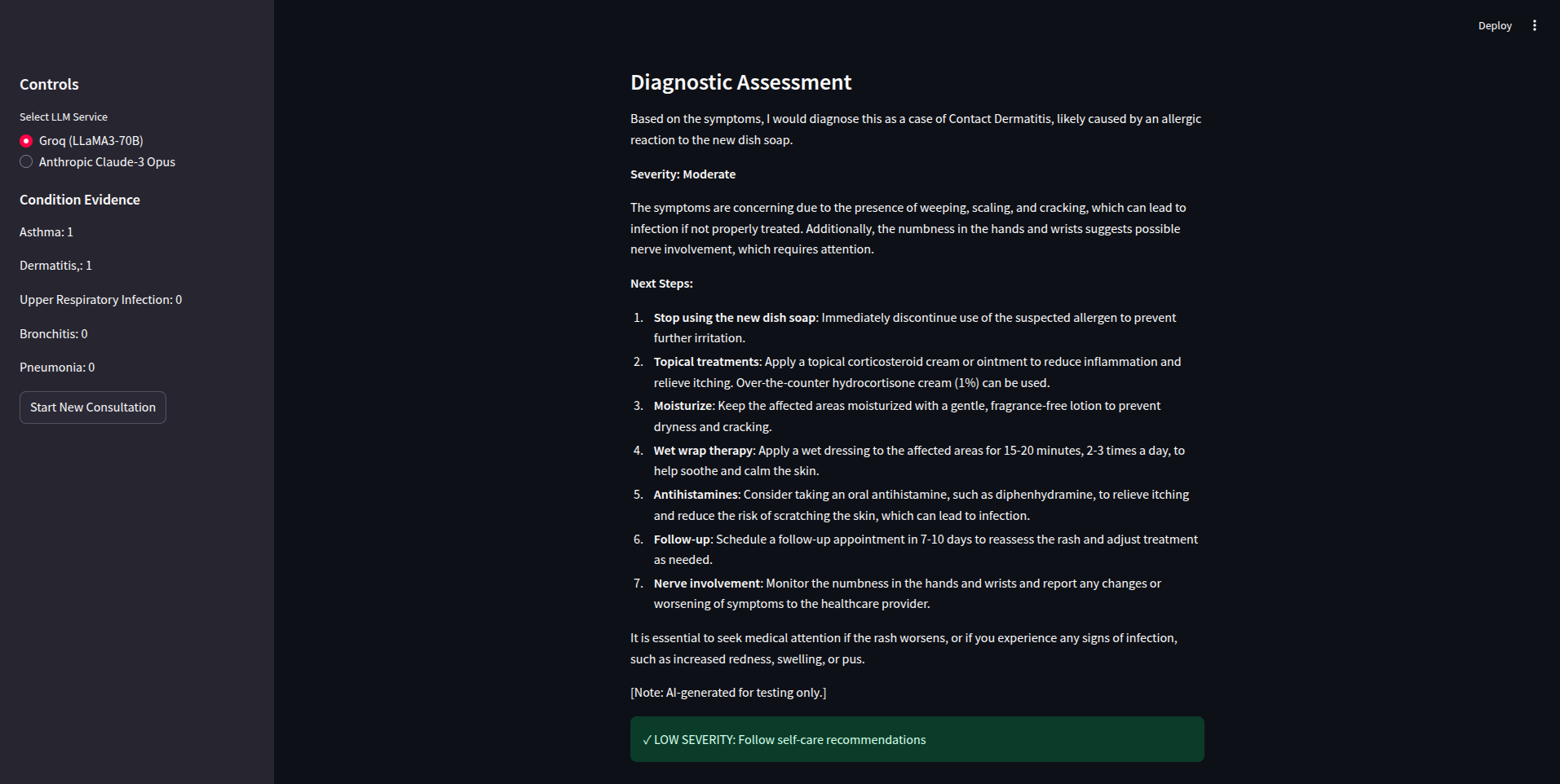
- Maps symptoms to potential conditions with evidence scoring
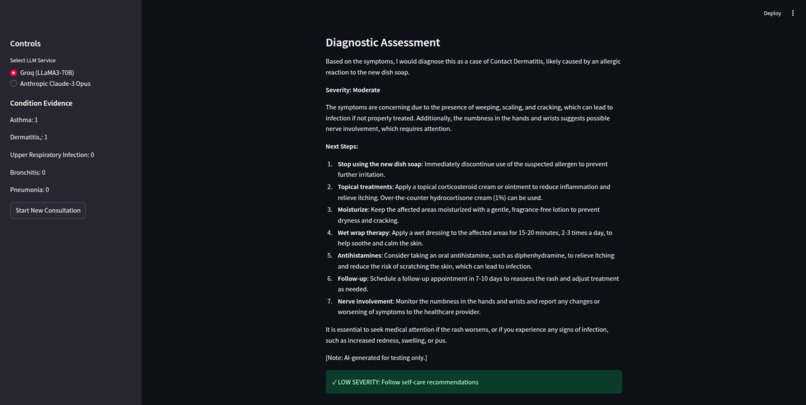
- Provides preliminary assessments with severity ratings
- Offers educational content about possible conditions
- Maintains a professional medical consultation format
Technical Implementation
- Streamlit-based web interface for both applications
- Integration with multiple LLM providers (Groq, Anthropic)
- State management for conversation flow and data collection
- Interactive visualization of health indicators and condition evidence
- Customizable user interface with options for different models
Important Limitations
Both applications include prominent disclaimers emphasizing that they are for educational purposes only and not substitutes for professional healthcare. They are designed as preliminary assessment tools to bridge gaps in care, not to replace qualified medical or mental health professionals.
Expected Benefits
- Reduced anxiety while waiting for professional appointments
- Better preparation for professional consultations
- Early awareness of potential health concerns
- Improved health literacy through educational content
- Accessible support during times when professional care isn't immediately available
This project aims to address the critical gap between needing health support and accessing professional care, potentially preventing conditions from worsening during wait times.
Built With
- python
- streamlit


Log in or sign up for Devpost to join the conversation.