-
-
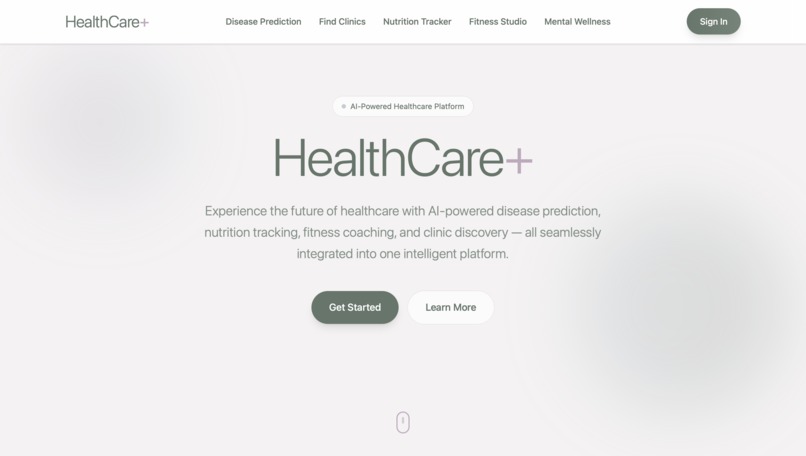
landing Page
-
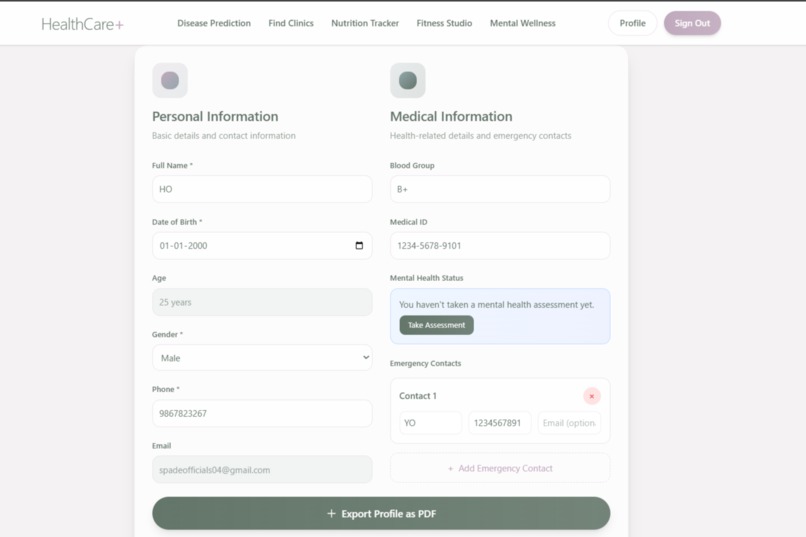
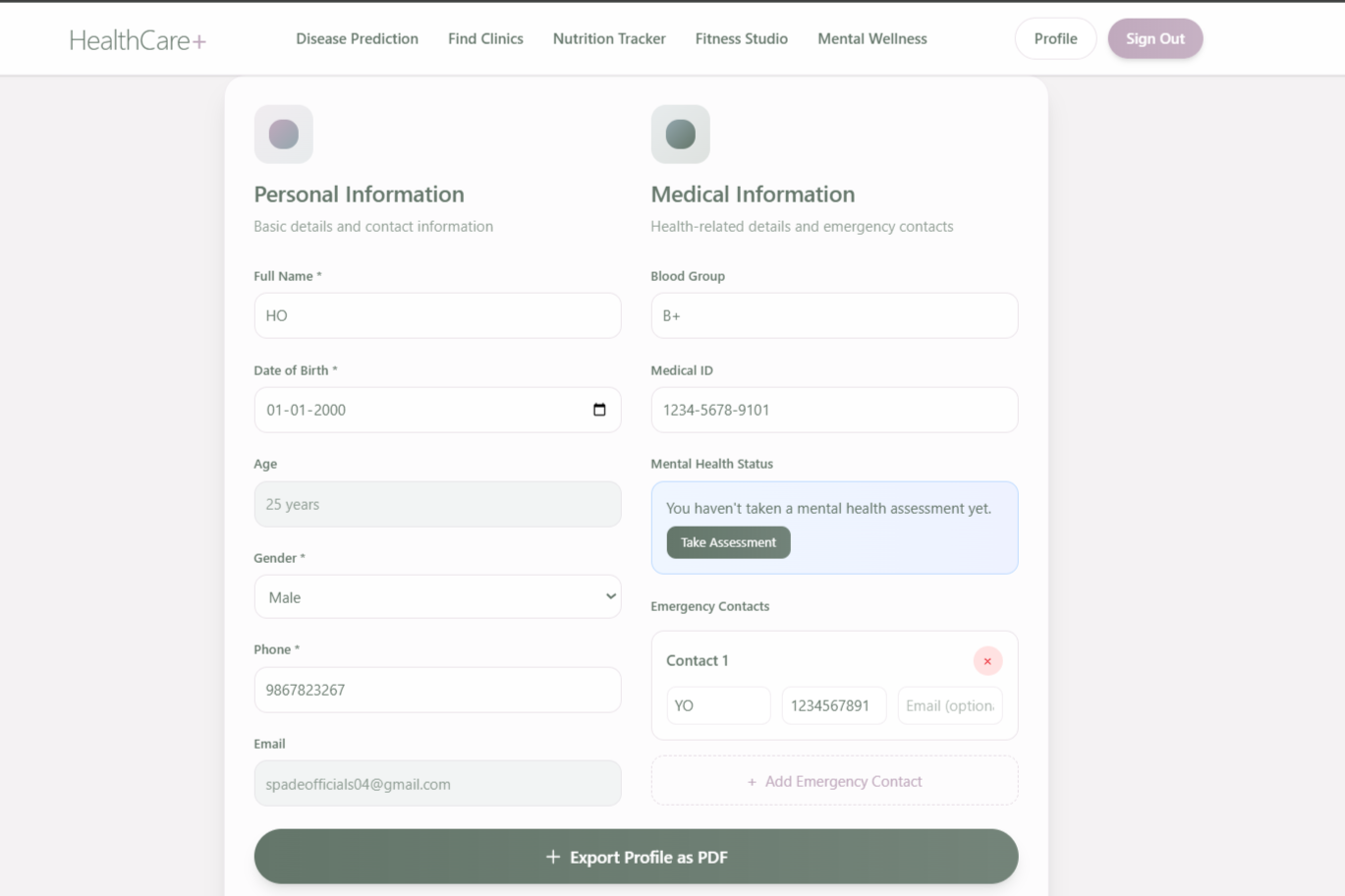
Profile Page
-
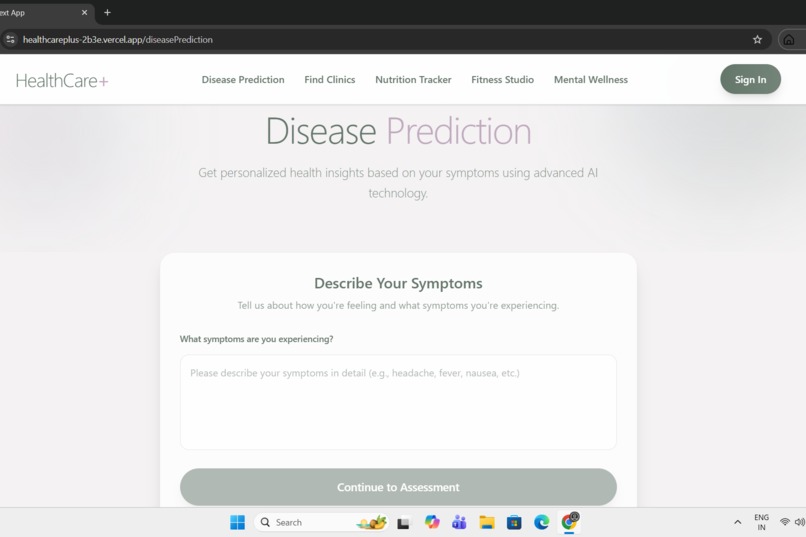
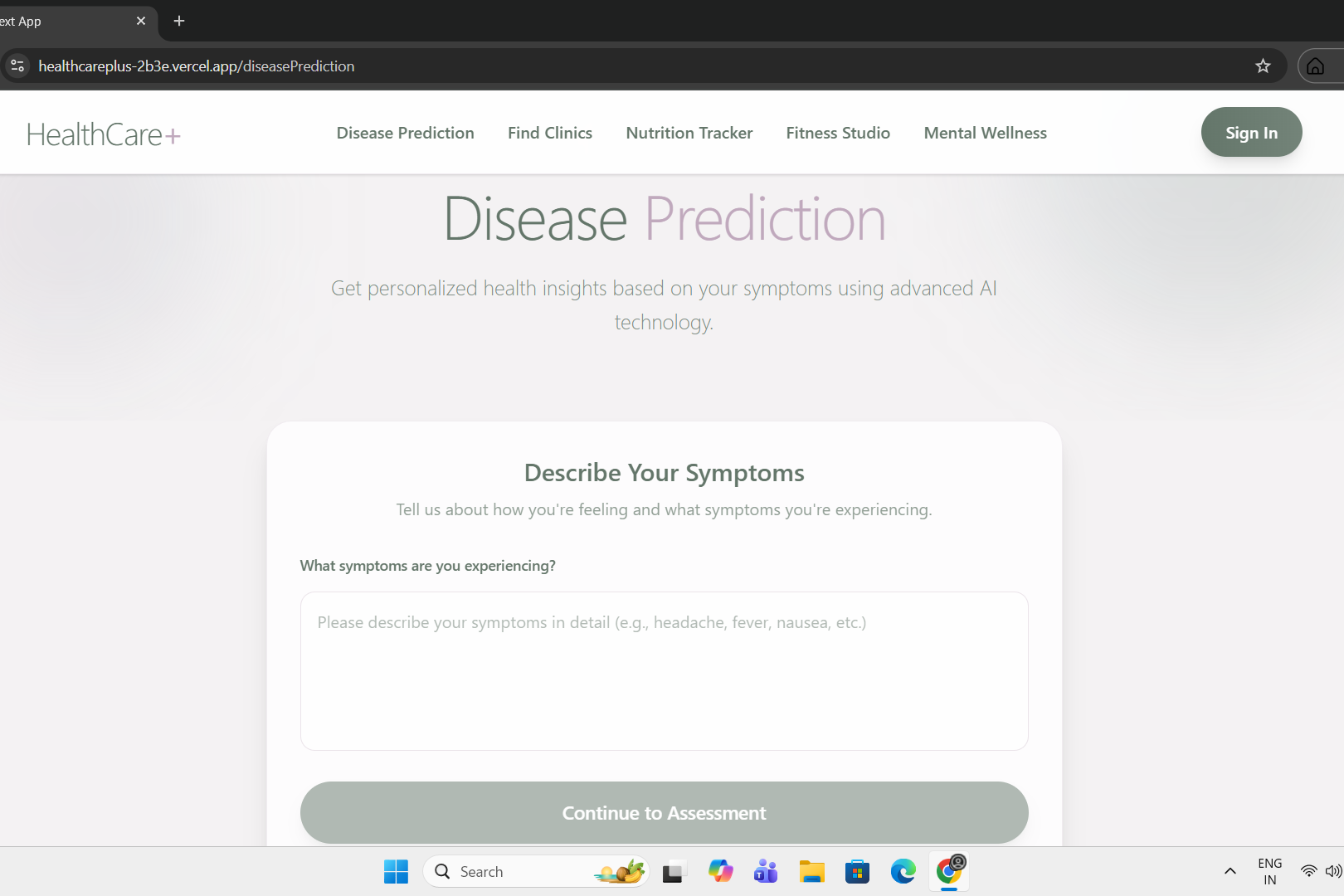
Disease Predicition
-
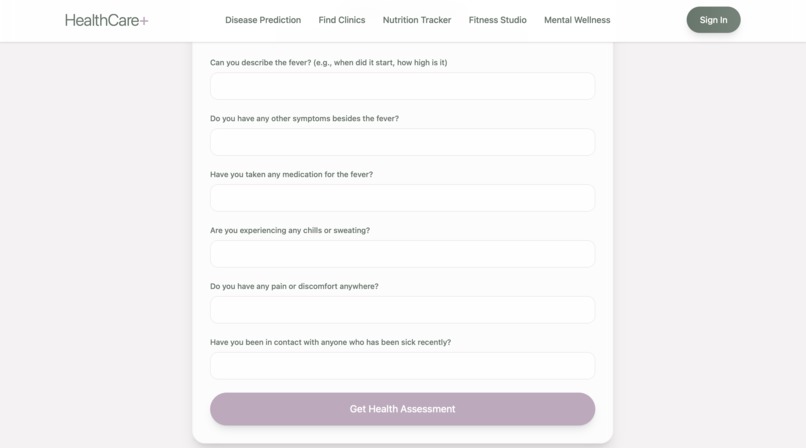
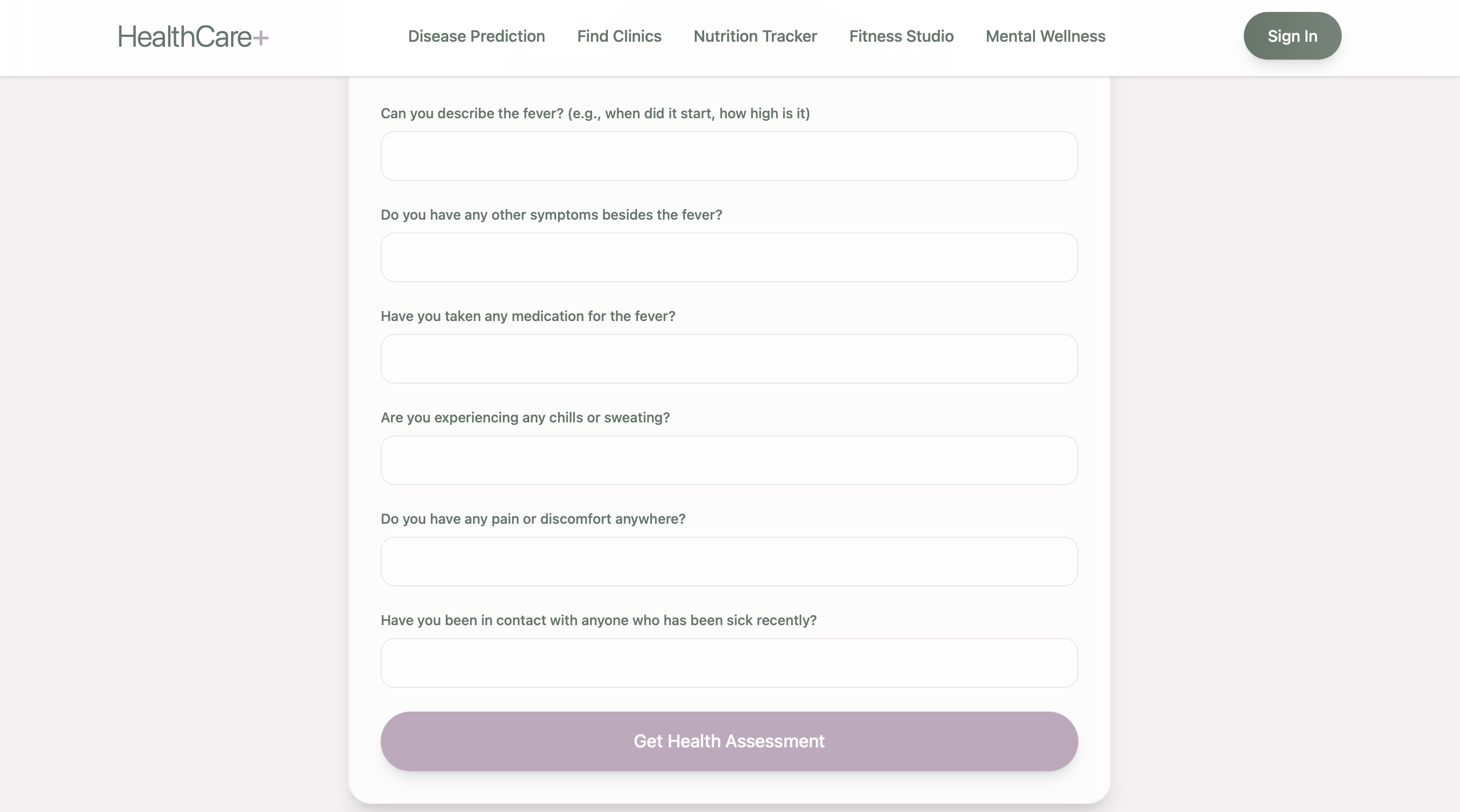
Disease Prediction
-
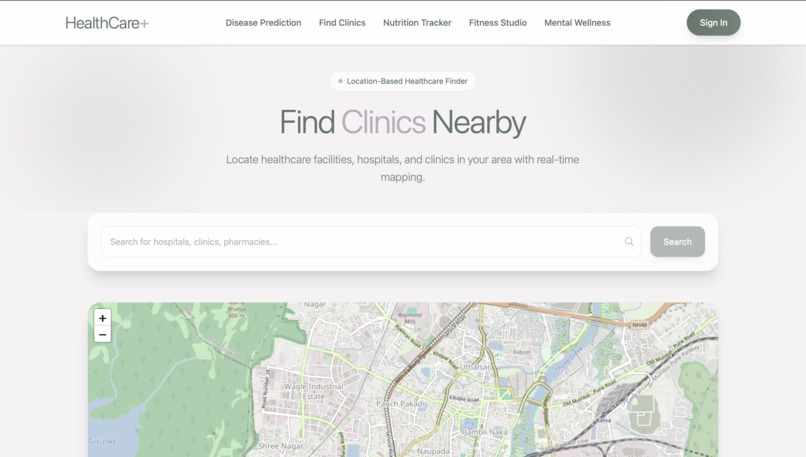
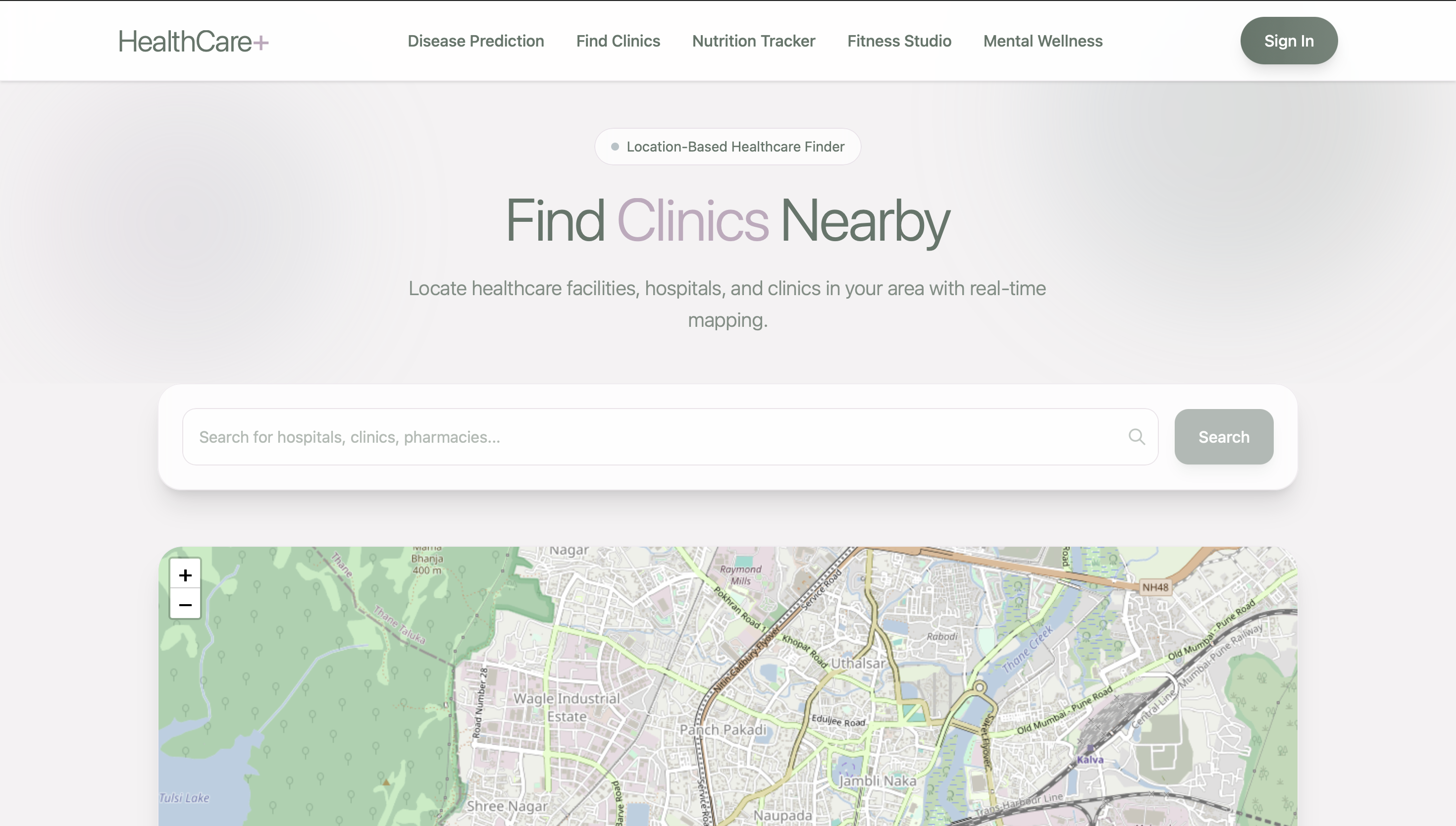
Nearby clinics
-
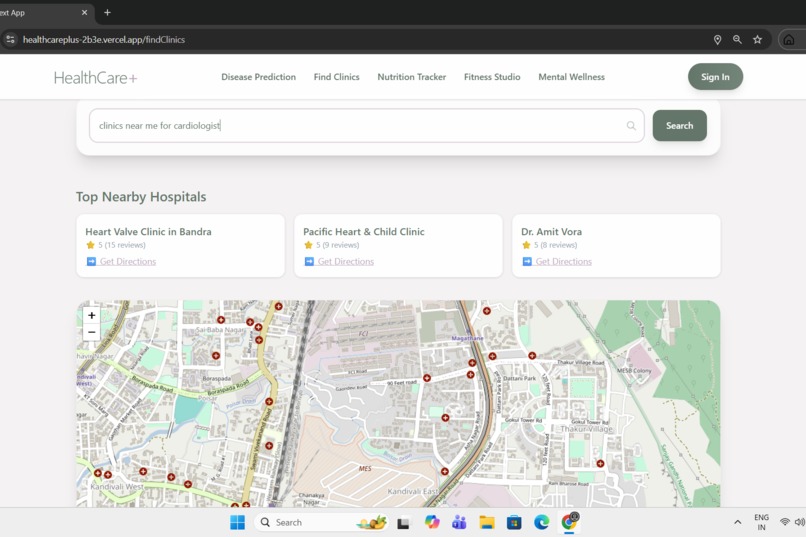
Maps Integration
-
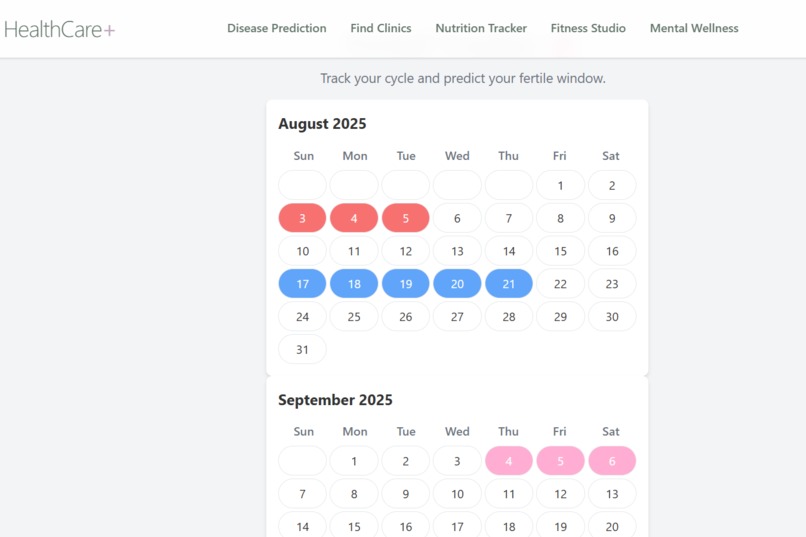
Menstrual Cycle Tracker and Predicitor
-
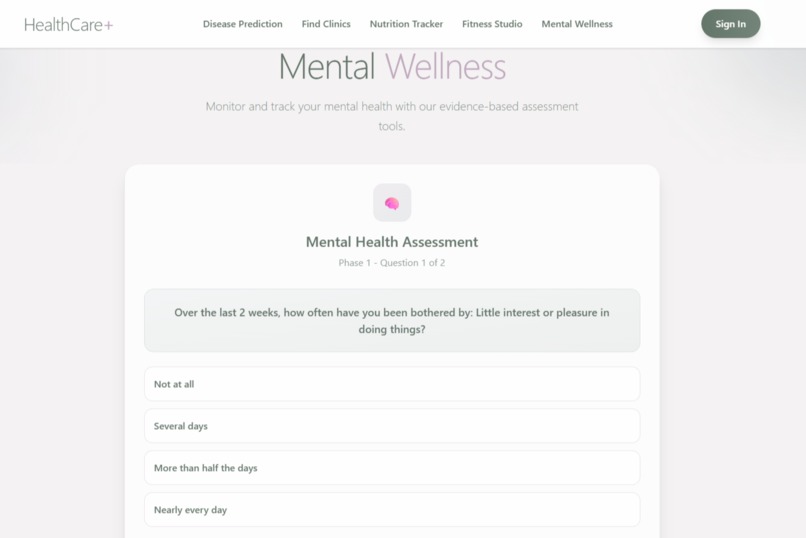
Mental Wellness
-
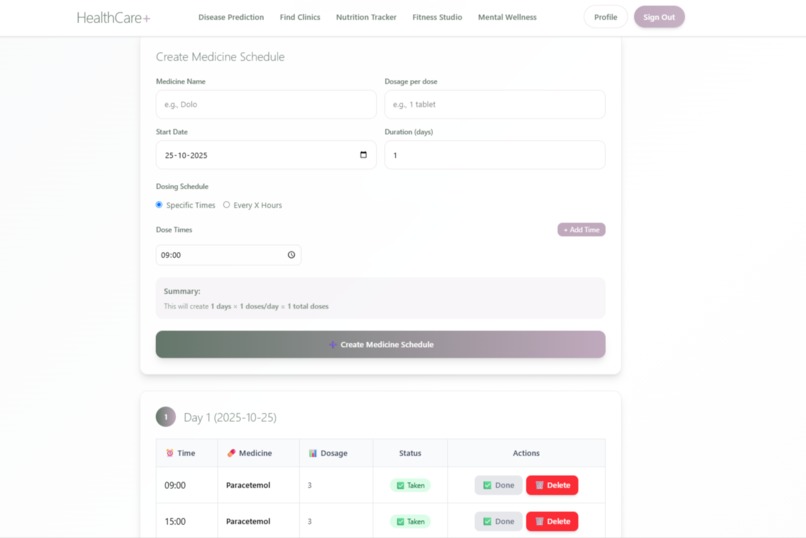
Medicine Tracker
-
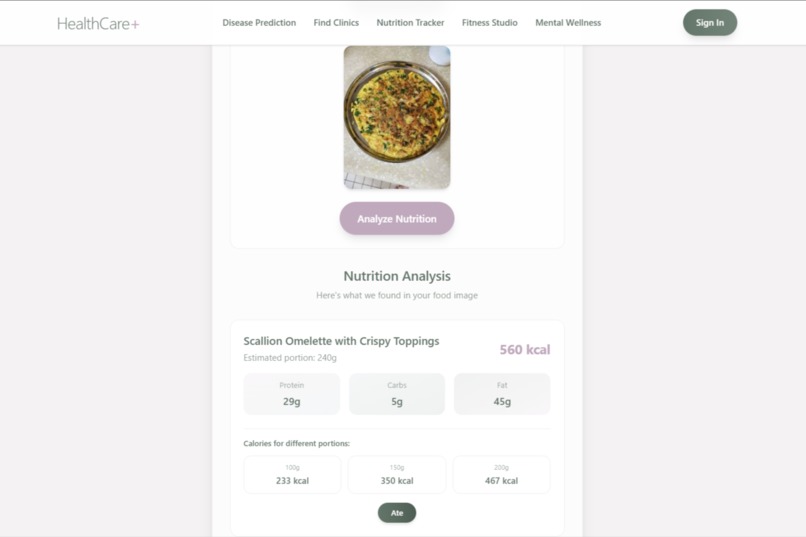
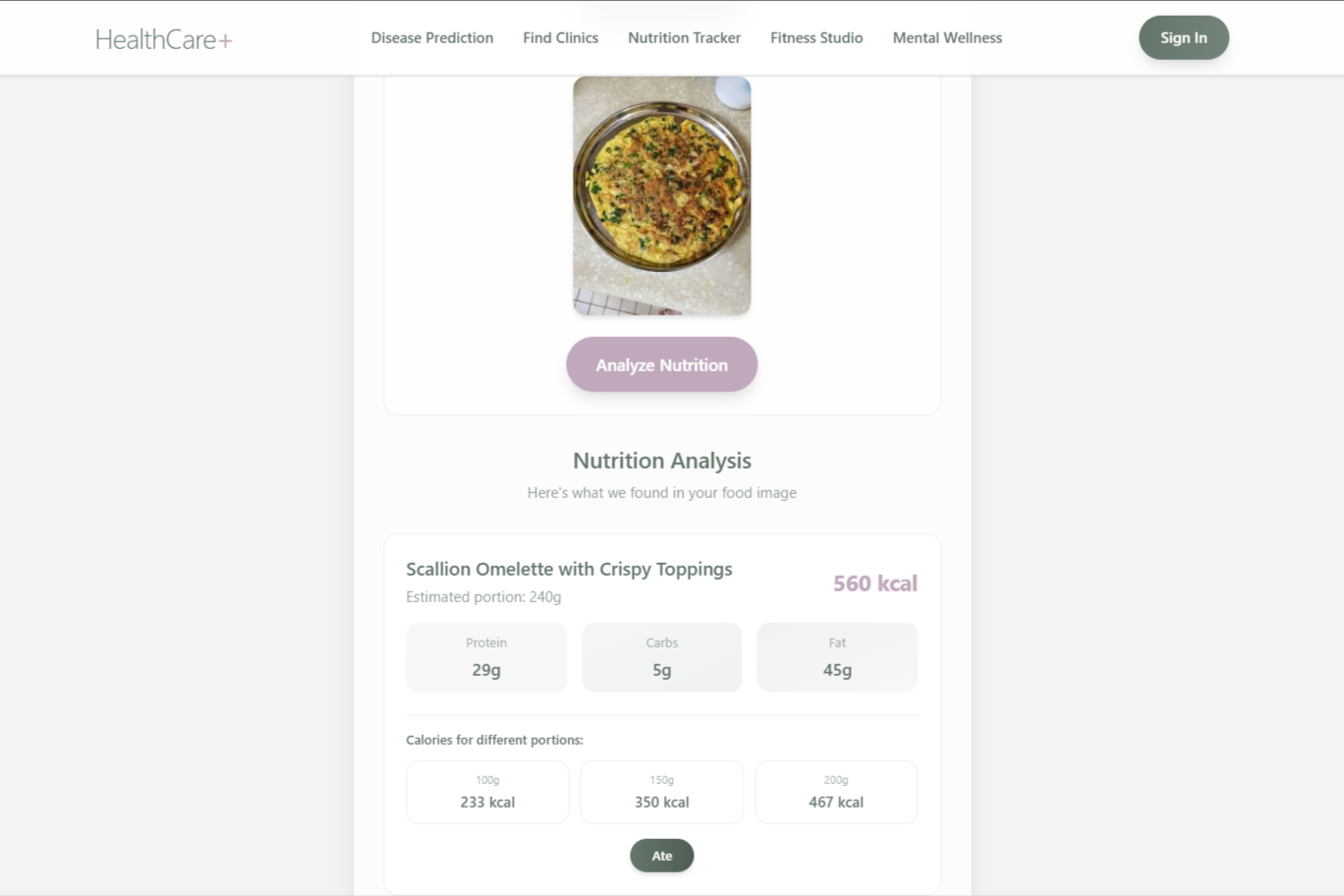
Nutrition Tracker
-
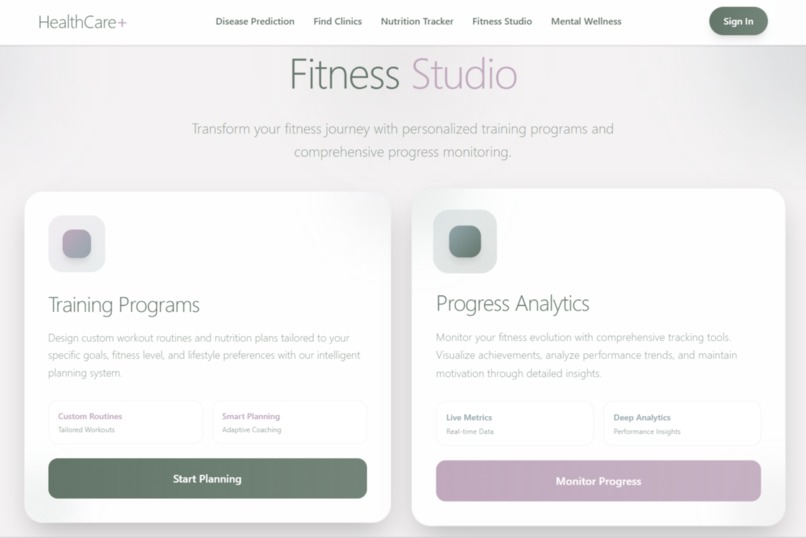
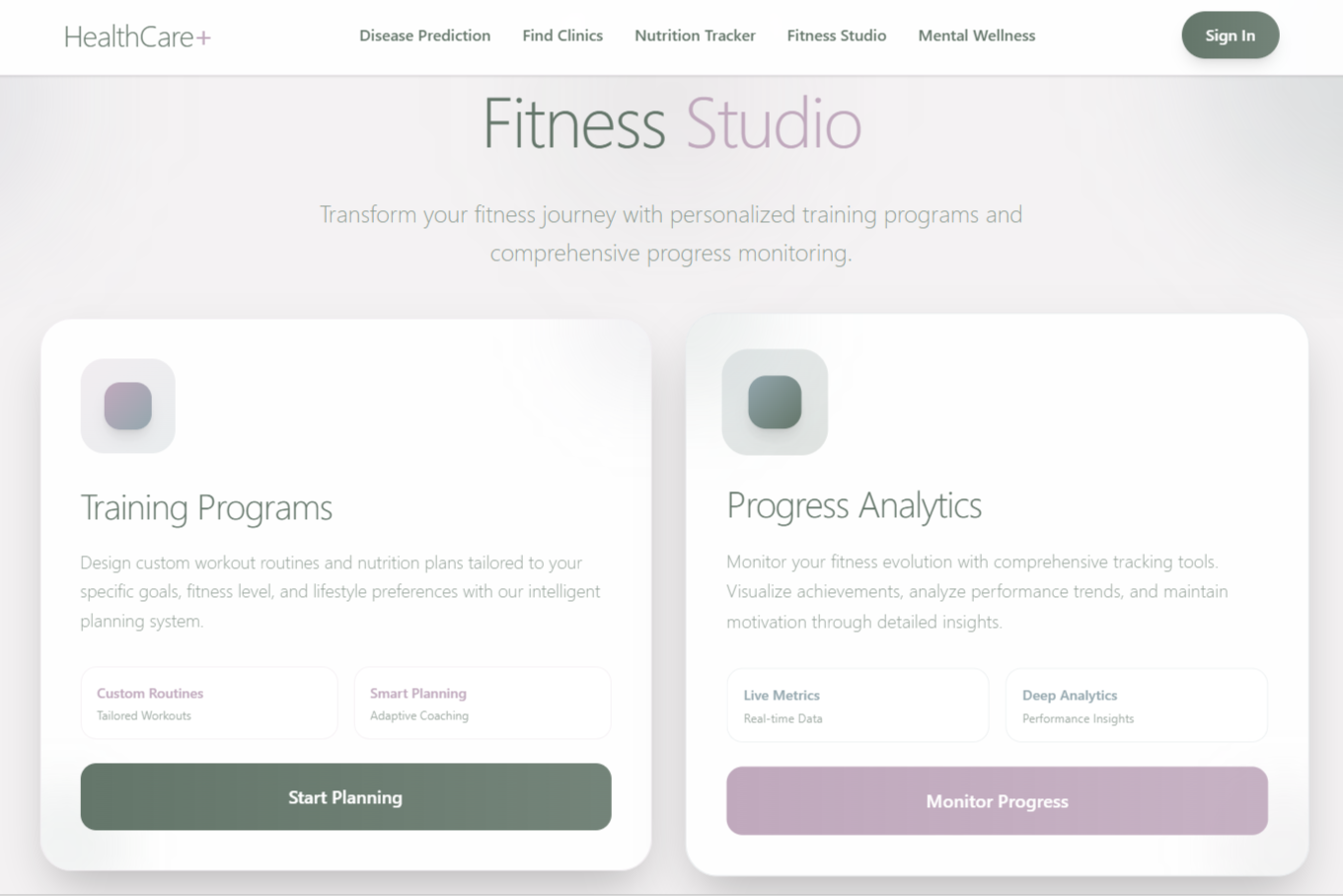
Fitness Studio
Healthcare+ : An AI-Powered Health Companion
Inspiration
Modern healthcare is often fragmented. Patients use multiple apps for tracking fitness, nutrition, mental health, and medical conditions. We wanted to create a single ecosystem that unifies all of these under one intelligent platform.
The idea for Healthcare+ came from the vision of an AI-driven companion that not only diagnoses but also predicts, guides, and supports users in maintaining their overall well-being. Our goal was to move from reactive treatment to proactive care using AI.
What it does
Healthcare+ is a multimodal, AI-based healthcare ecosystem that combines predictive analytics, computer vision, NLP, and digital health management into a unified platform.
It includes the following core modules:
- Disease Prediction: Users enter symptoms to receive AI-based diagnostic insights.
- Calorie Tracker: Upload a food image to estimate calories, proteins, carbs, and nutrients using image captioning.
- AI Fitness Coach: Generates personalized meal and workout plans, tracks progress, and adapts over time.
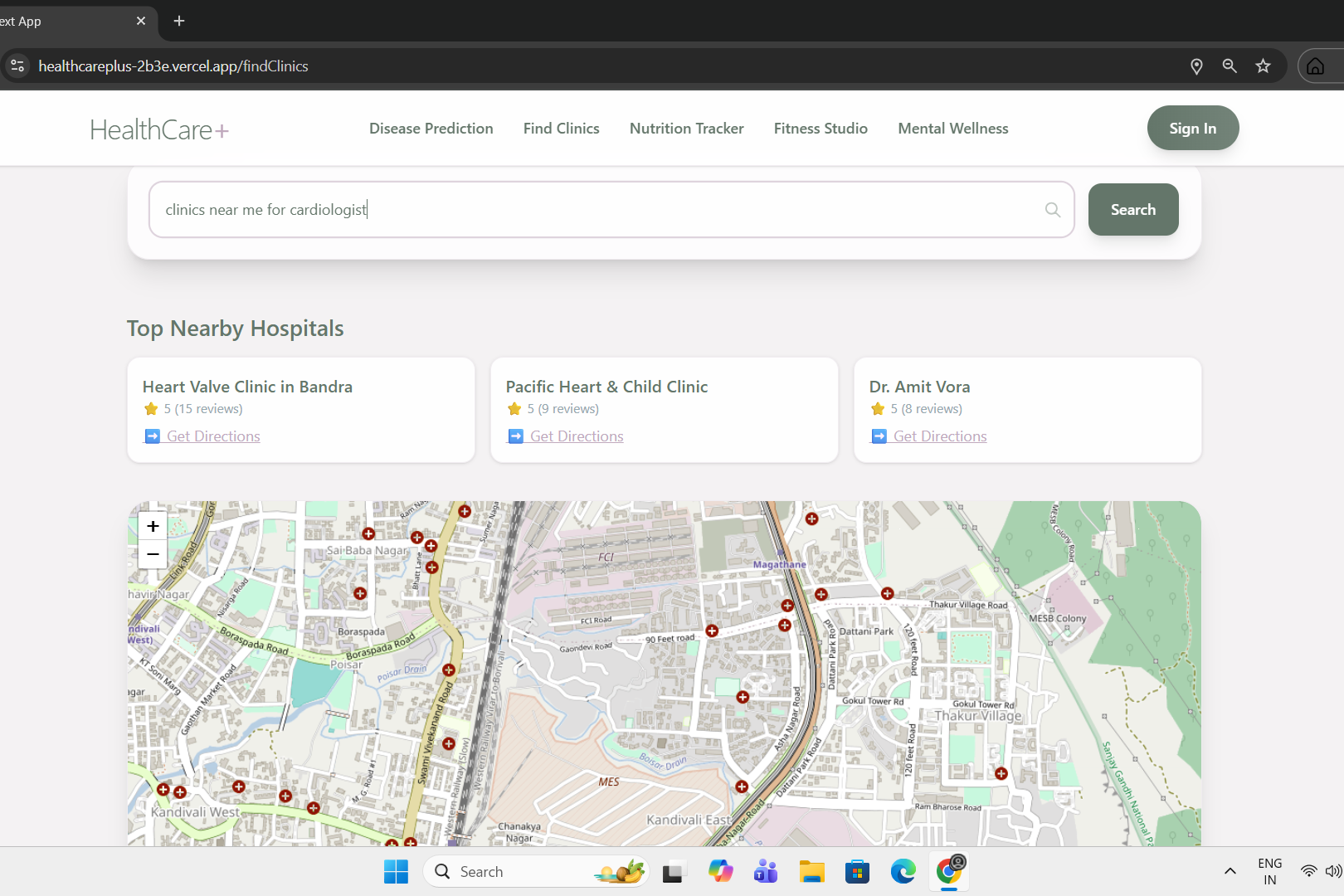
- Nearby Clinics: Detects clinics related to the predicted condition and maps the shortest route.
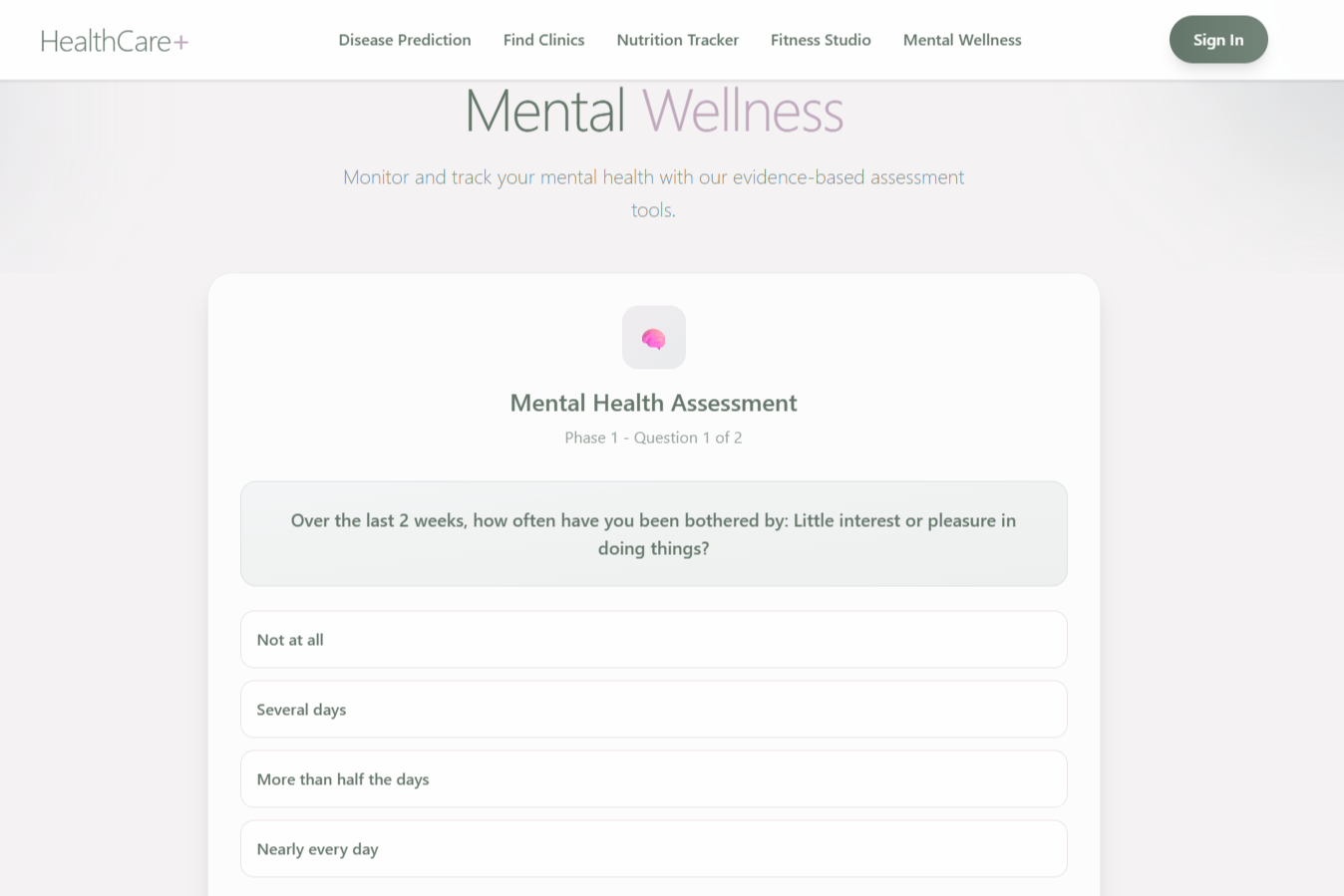
- Mental Health Assessment: Uses PHQ-based evaluation to gauge emotional well-being.
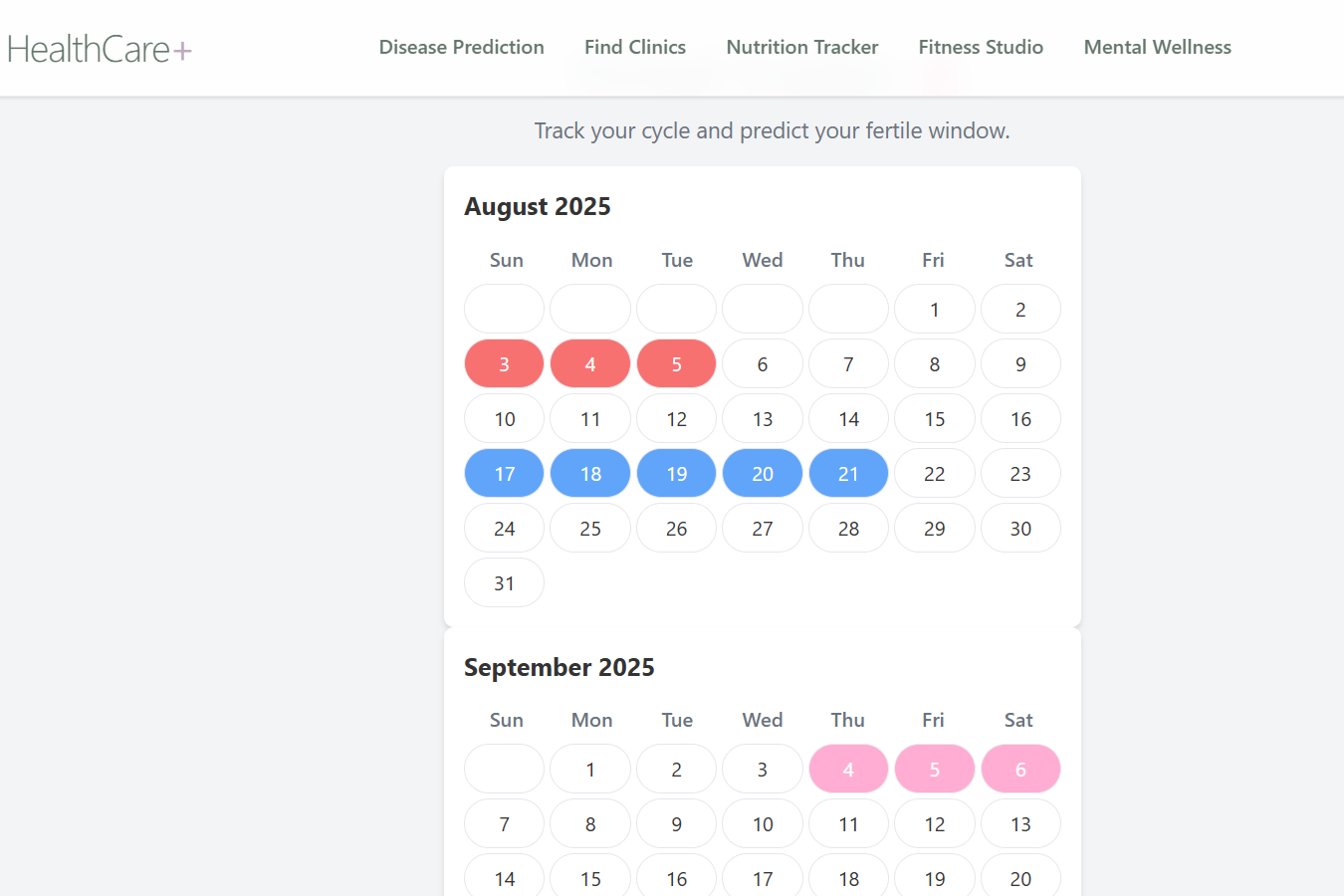
- Menstrual Cycle Tracker: Predicts and monitors menstrual cycles.
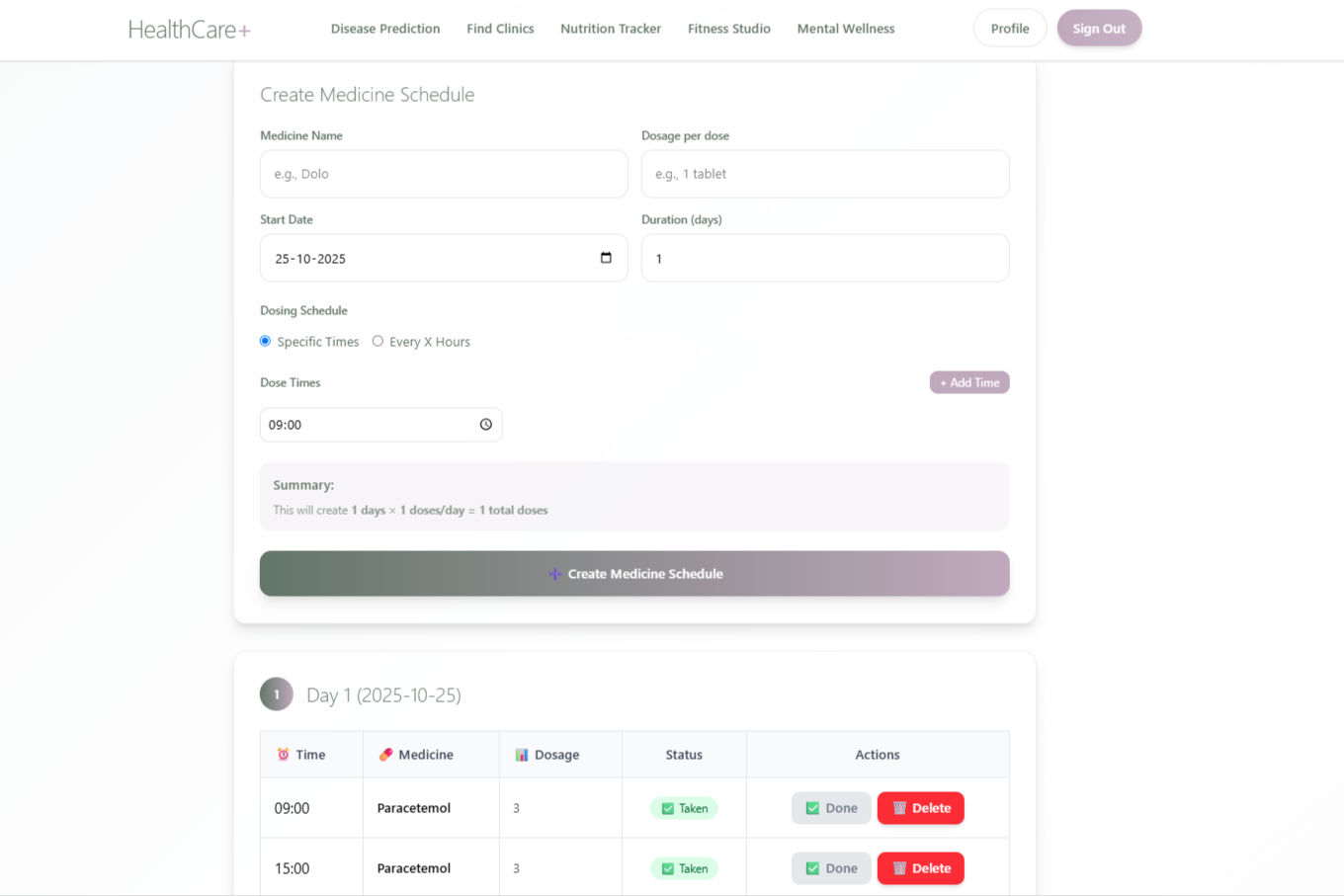
- Medicine Tracker: Records prescribed medications, dosage history, and reminders.
Healthcare+ serves as an all-in-one digital health assistant that integrates preventive, diagnostic, and lifestyle healthcare.
How we built it
We designed Healthcare+ as a modular, scalable system integrating multiple AI components and APIs.
- Frontend: Built with Next.js and Tailwind CSS for a responsive interface.
- Backend: Implemented using Node.js and Express.js for API communication.
- Database: Supabase for user data, health records, and progress tracking.
- AI Components:
- Disease prediction model trained on symptom datasets.
- CNN-based image captioning model for food and calorie estimation.
- Gemini Generative AI for personalized fitness and diet plans.
- PHQ-based statistical models for mental health and menstrual analysis.
- Geolocation and routing APIs for clinic detection.
- Disease prediction model trained on symptom datasets.
Challenges we ran into
- Integrating diverse AI models without increasing latency.
- Achieving reliable predictions from limited health data.
- Synchronizing real-time data across modules like fitness and diet.
- Ensuring an intuitive user interface for non-technical users.
- Handling privacy, data security, and API limitations.
Accomplishments that we're proud of
- Built a working prototype of an AI-powered multimodal healthcare platform.
- Successfully combined computer vision, NLP, and LLM reasoning in one system.
- Designed a unified user experience across multiple health modules.
- Developed an adaptive fitness and nutrition recommendation engine.
What we learned
- How to design and deploy multimodal AI systems that integrate text, image, and structured data.
- Practical experience in using generative AI for contextual, domain-specific tasks.
- The importance of clean, secure data management in health applications.
What’s next for Healthcare+
- Integrate speech-to-text interaction for hands-free operation.
- Add wearable device integration for real-time vitals monitoring.
- Extend mental health support using emotionally aware conversational models.
- Deploy the platform with secure authentication and data privacy compliance.
- Implement proactive agentic AI to adjust plans and reminders based on context.
Built With
- api
- auth0
- gemini
- image-captioning
- next.js
- supabase
- typescript


Log in or sign up for Devpost to join the conversation.