-
-
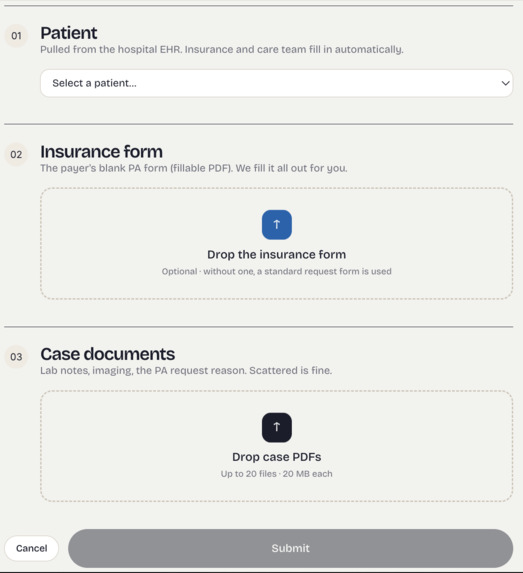
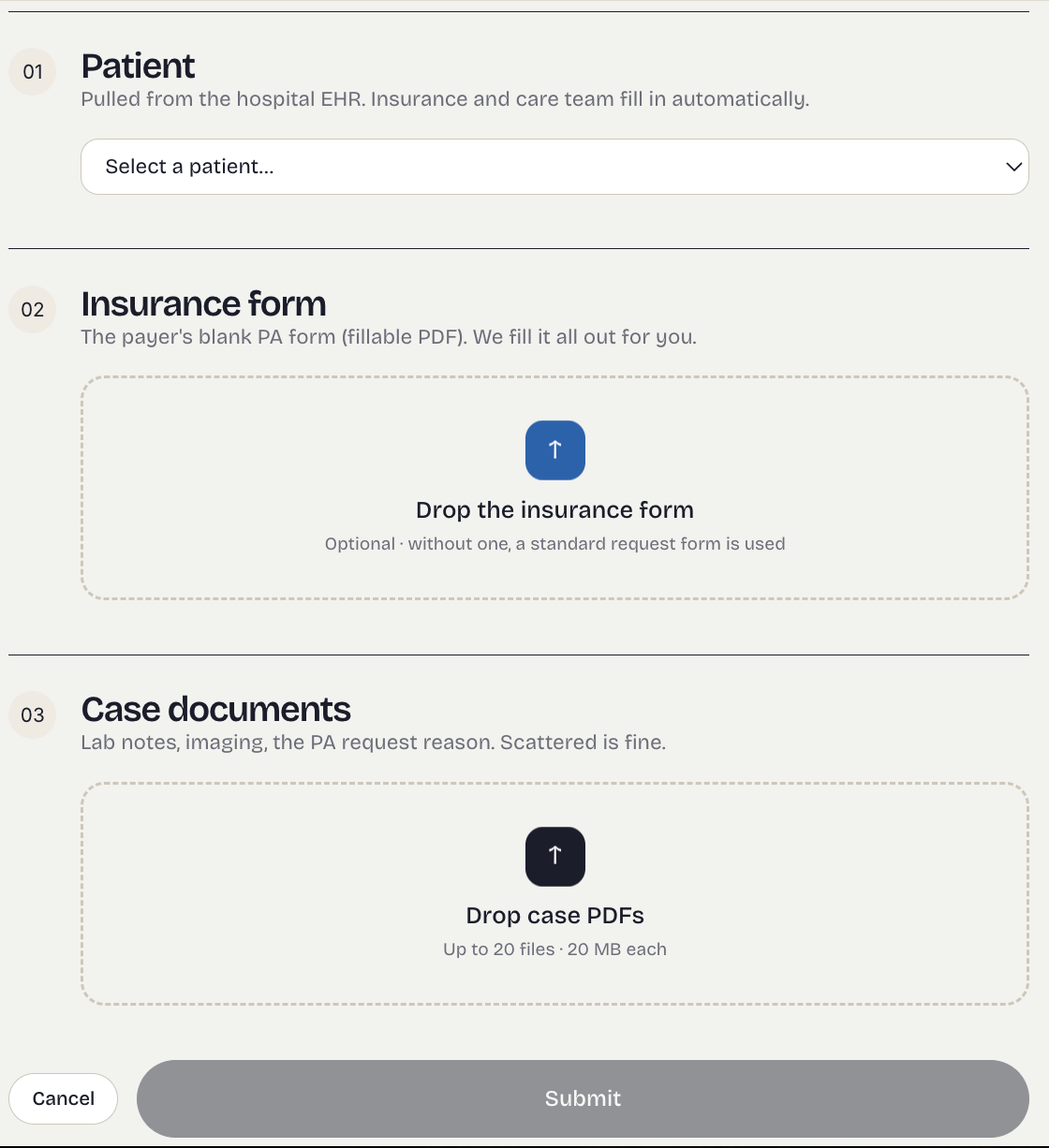
new case upload
-
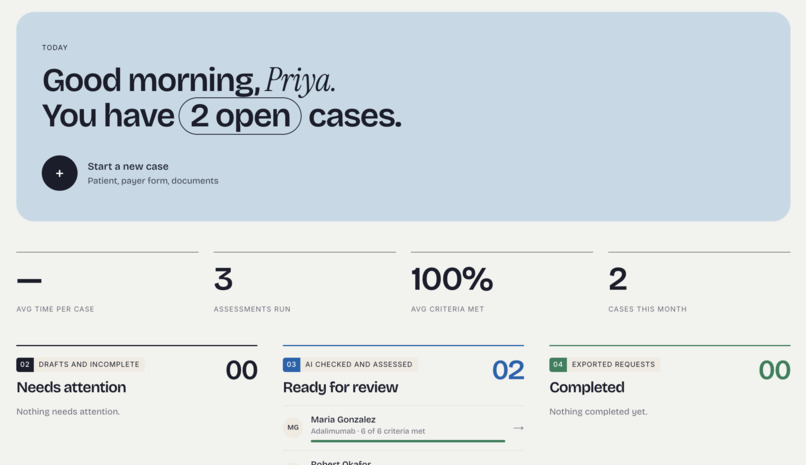
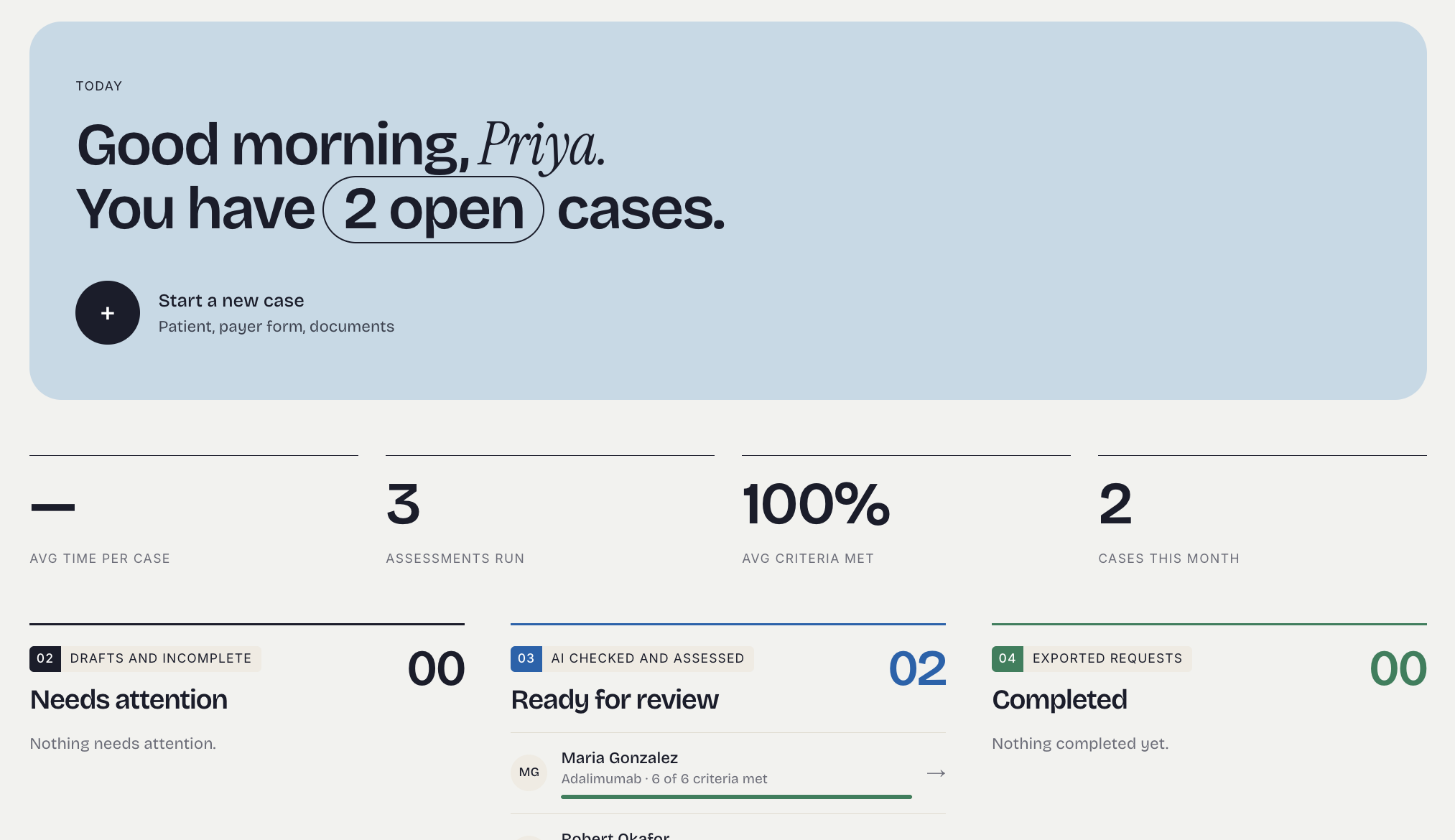
main clinician dashboard
-
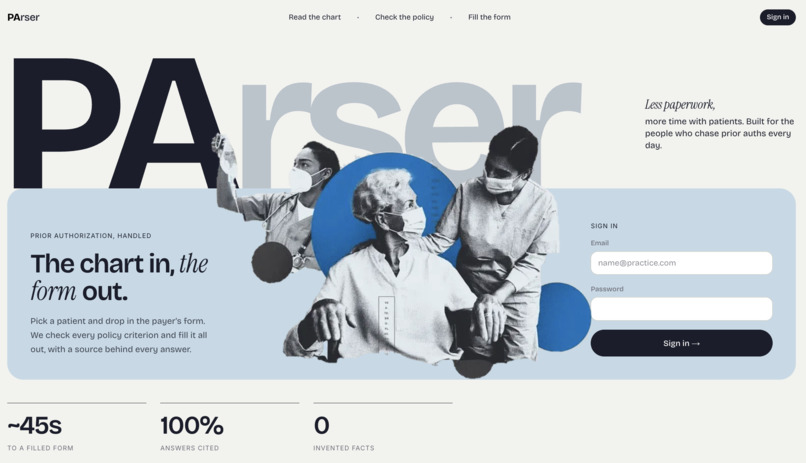
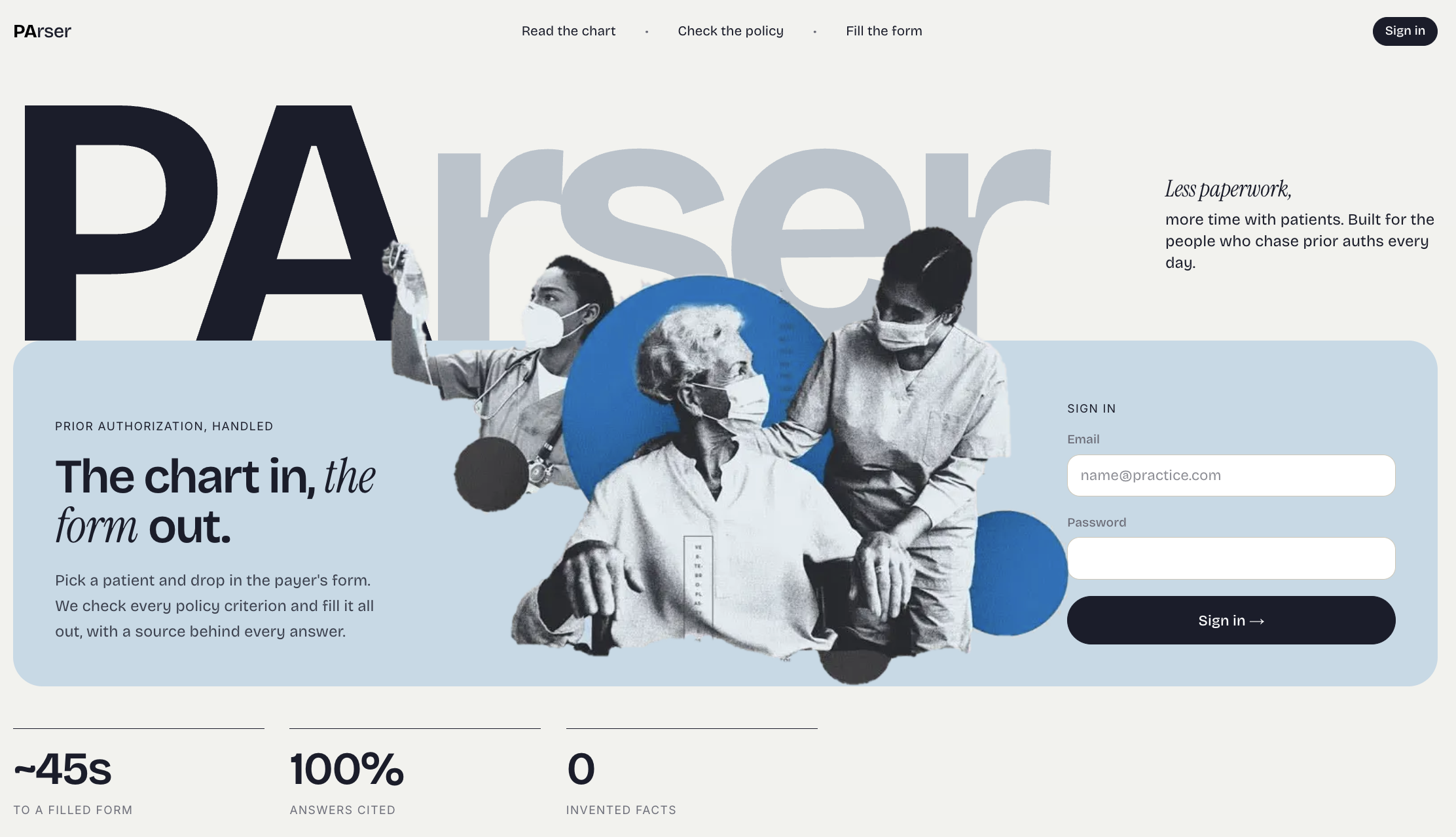
landing page
-
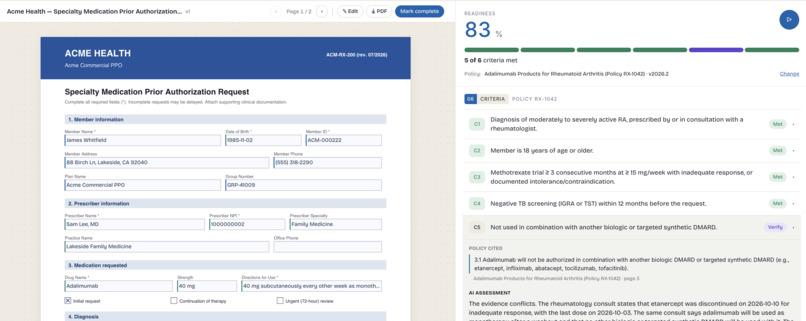
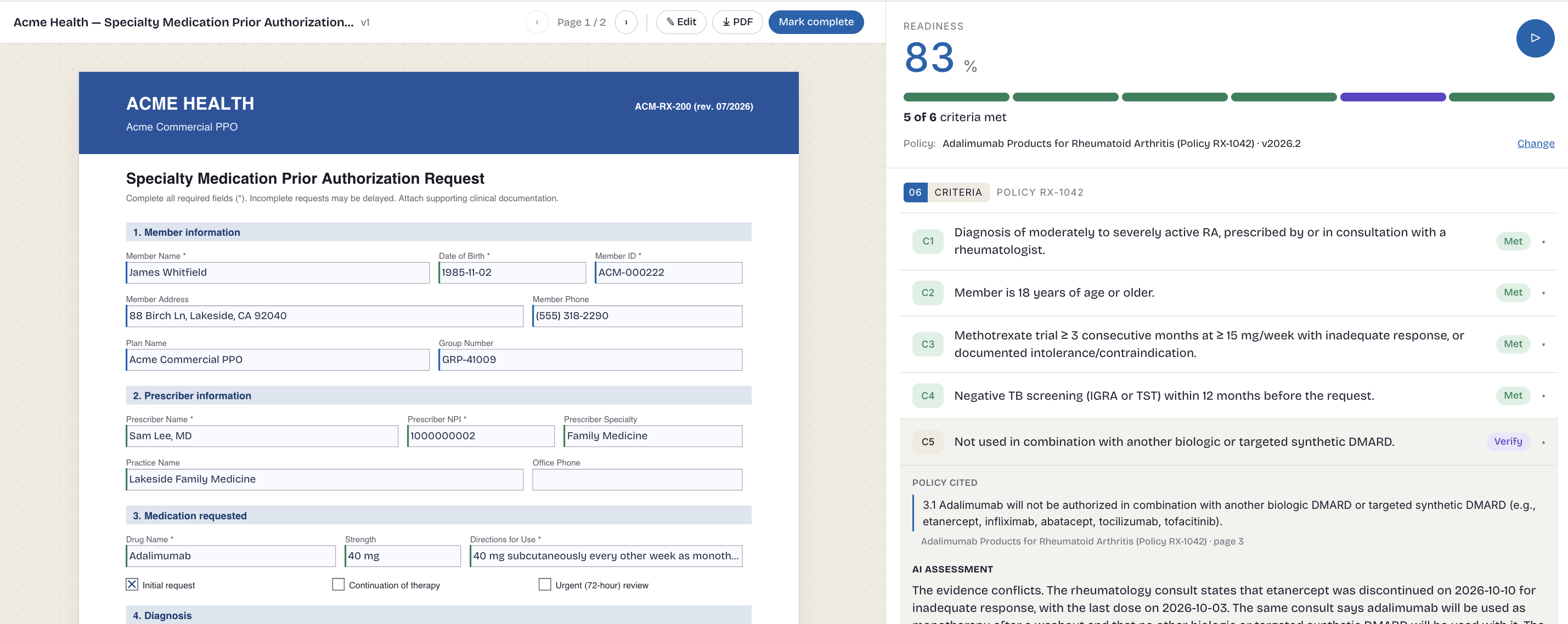
draft review and checklist
Inspiration
Prior authorization is one of the biggest hidden bottlenecks in patient care. Before a doctor can order many procedures or prescribe certain medications, they need approval from the patient’s insurer. When that approval is delayed, the patient’s care is delayed, and these delays usually come from avoidable paperwork problems: forms filled out incorrectly, missing documentation, expired forms, and different insurers requiring different information. Patients are often left in the dark about what’s holding things up, and doctors lose hours to administrative work that pulls them away from care. We built PArser so the paperwork stops standing between patients and treatment.
What it does
- Automates prior authorization drafting: doctor uploads the patient’s EHR, notes, the procedure or medication being requested, and the appropriate PA form.
- Reads through given documentation and drafts the PA.
- Generates a checklist for a quick human review: cites every piece of data pulled and where in the EHR it came from.
- Flags missing or required data before submission.
- Warns the doctor if the insurance won’t cover the requested procedure or medication and recommends how else to proceed.
How we built it
Challenges we ran into
- Since the PA process has many steps, we had to choose one small part to make a meaningful solution
- Accounting for clinical data being messy (shorthand, conflicting values, and scattered info)
- We had no open database of insurer PA forms like a hospital system would, so we created our own sample forms and test cases
- Getting the agent to cite its sources and flag gaps, rather than confidently filling them in, took careful iteration
Accomplishments that we're proud of
- A source-cited checklist that shows the AI’s work, making output easy for doctors to verify in a high-stakes setting.
- A clean, intuitive website designed for busy clinicians.
- Taking a problem with real consequences for patients and building a working solution in a short time.
What we learned
- Delays in care aren’t always medical; documentation takes up a large share of a clinician’s time.
- Learned how to design and build based off user trust (made sure that users can double check accuracy)
What's next for PArser
Currently, PArser parses through medical insurance documents, fills out needed fields, and gives a summary back of what’s missing. Next steps include being able to write and submit appeals for insurance claims that have been delayed/denied and integration into existing electronic PA portals like CoverMyMeds, which automatically identifies a patient’s health plan or PBM and pulls up the correct plan-specific form.
Built With
- api
- claude
- next.js
- pdf.js
- react
- supabase
- tailwind
- vercel
