-
-
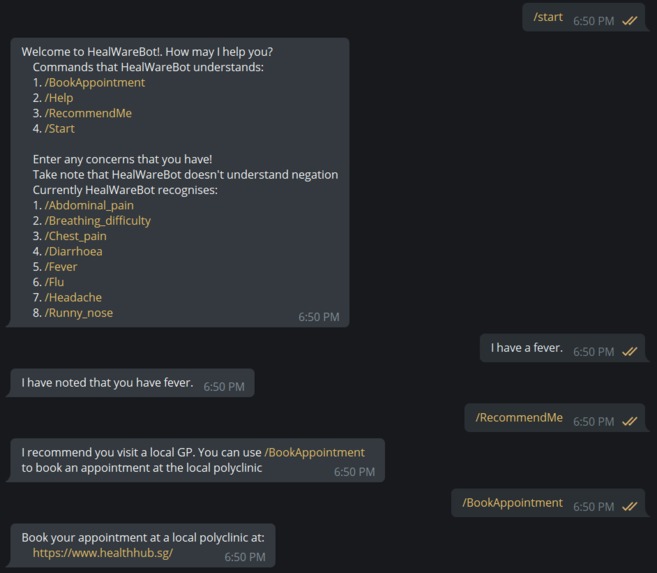
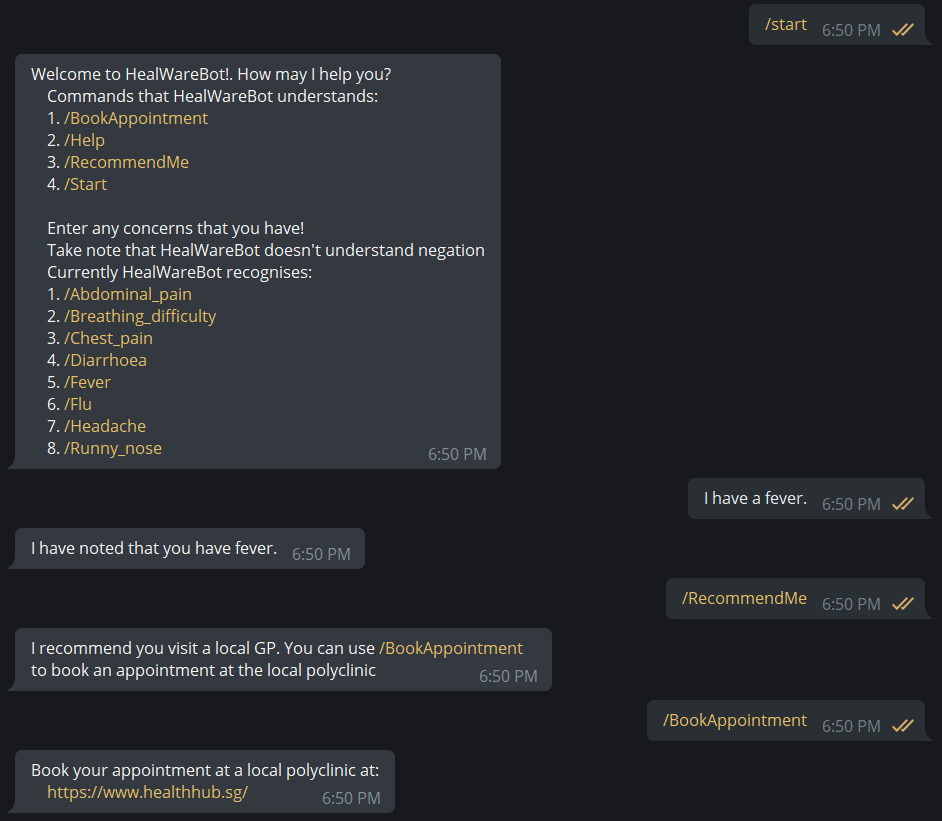
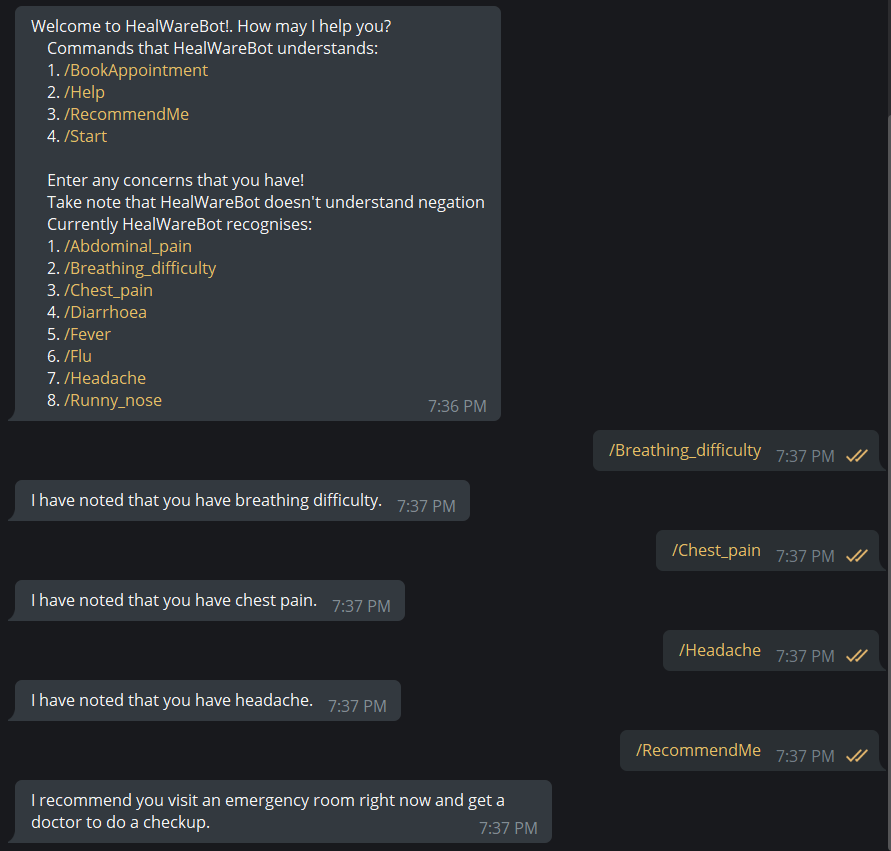
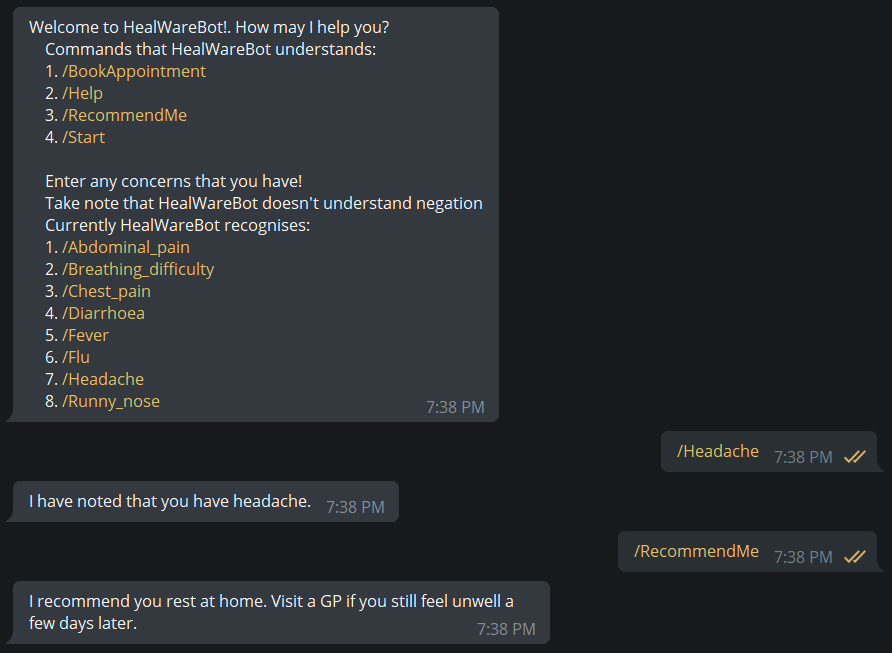
Local GP suggestion
-
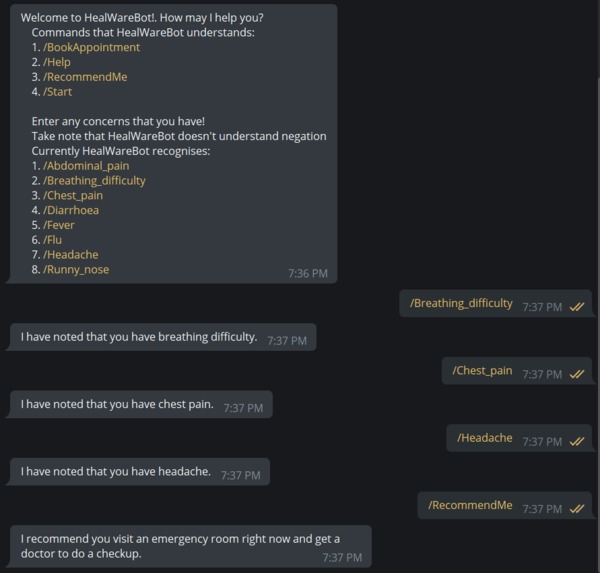
Emergency room
-
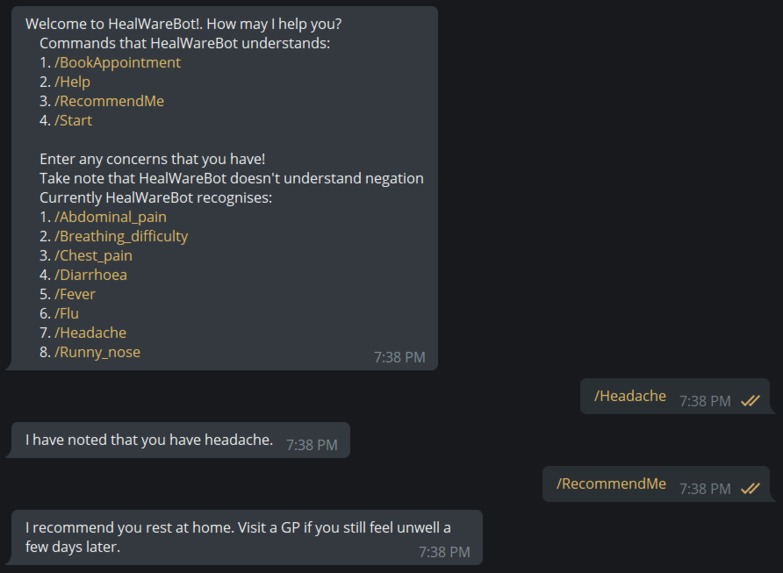
Rest at home
Inspiration
One of our teammates visited the polyclinic for his simple rash, and was quite appalled by how disjoint the healthcare applications are. Despite feeling relatively well-read about the applications necessary to access the healthcare services in Singapore, the fact that the different healthcare groups were creating their own applications caught him off-guard. For most people, the existence of HealthHub is common knowledge. On the other hand, upon visiting Choa Chu Kang Polyclinic, it turns out that National University Polyclinics had their own app. One of the nurses was roaming around the polyclinic to share with the patients who were waiting for their consultations about the application.
It is in their best interest to create application to increase the convenience of their patients. However, a multitude of applications that have been spawned to fulfil this purpose has increased in the midst of the pandemic. This is because each individual healthcare provider would create an application for their patients. Yet, rather paradoxically, the sheer number of applications makes this relatively straightforward process become even more complex. However, we reasoned that there is very little incentive for various healthcare groups to come together to collaborate and create a middleman app that would serve as the bridging point to the separate groups.
Furthermore, there is very little incentive for these polyclinic groups to invest in programs to improve or even have social media presence, as healthcare is ultimately a necessary service, and subsidies are relatively standardised across Singapore. This reduces awareness in these healthcare services, which makes healthcare services more confusing to navigate. We wanted to create a simple and accessible Telegram Bot that would integrate the various healthcare solutions and improve the accessibility of healthcare services that dot Singapore.
What it does
Our Telegram Bot has two primary functions. It checks the symptoms and health concerns. The symptoms are checked via natural language processing of the patient's inputs. This produces an interpretation of the symptoms of the patients, which is then processed by the bot and therefore produces adaptive actions that should be taken.
How we built it
Telegram is a communication platform with supported chatbot functionalities. We used Python as the language to code for the bot, whilst using Telegram built-in bot handling systems as the API. We used snippets of code that involved Object Oriented Programming, and also used simple natural language processing to modify the inputs and extract the keywords (the symptoms) as data to further process it. We have a numerical categorisation system, which determines the severity of the symptom, and returns a recommendation. Telegram has provided a good application programming interface (API) and the native chat function allows the user to interact with the chatbot.
Challenges we ran into
It was difficult to brainstorm an idea in healthcare that was not already in place. Many healthcare groups have applications of varying extensiveness in terms of functionality. However, we eventually realised that the primary problem was in fact the numerousness of the applications, and we used that as our direction of our bot.
We underestimated the learning curve of creating a Telegram bot and integrating Python with Telegram as an API seamlessly. Furthermore, building the bot from the ground up produced a steep learning curve. Ultimately, we managed to overcome it through our teamwork and approaching the problem via "divide and conquer" methodology, with each teammate being tasked with a separate job to maximise our efficiency. This allowed us to clear the hurdle much quicker after we properly organised ourselves.
Accomplishments that we're proud of
Telegram is an existing software with a new set of syntaxes and functionalities that took us a while to understand. We are proud that we were able to overcome the inertia of the learning curve, and apply what we learnt in such a short duration of time. Furthermore, we are proud that our bot is functionally successful. We believe that this bot is a relatively simple yet monumental step in the right direction of the integration and unification of our healthcare systems.
What we learned
We learnt that trial and error is an essential part of the process to project development. We initially used standard templates, but it did not function as planned, and had to play around with various other methods. We settled on saving our data in the form of Objects via OOP. We were also able to expand our understanding and extend our appreciation for the implementation of Python, especially the real world use case for Python as a backend programming language. We also gained a better appreciation of the challenges faced in natural language processing, due to subtle contextual details like negations (such as "I do not have a fever").
Besides programming, we also gained valuable insights as to how to properly manage a group programming project, ranging from brainstorming, to sample data, to proper implementation and testing of our application.
What's next for Healthcare
Diagnostics of patients can be systemised and supported by the use of AI to allow for ease of classification of health concerns, both in terms of severity and type. Currently, the healthcare system is flooded, in lieu of the pandemic. While it is pivotal to evaluate the patients' symptoms very clearly before arriving by a comprehensive diagnosis, this process can be streamlined and assisted by the use of AI and existing technologies to bolster the efficiency of our healthcare system. In short, doctors will be able to focus on curing the illnesses, rather than diagnosing. Of course, with better learning models through machine learning and artificial intelligence, these systems would become increasingly accurate to the point that doctors can focus on tending to patients and treatment. This would reduce the burden on the healthcare system, which is highly susceptible to stresses and changes, especially in pandemics like this.
Furthermore, through bioinformatics, better information sharing and more extensive databases, these solutions can become even more efficient and allow a patient to receive effective treatment as quickly as possible. This would also allow us to conserve precious resources by reassuring individuals whom are low-risk that they are able to recuperate without further evaluation from doctors. Our hope is that our bot is a step in the correct direction of piecing together our relatively fragmented healthcare services and promote the above points to provide patients the maximum convenience, with the maximum efficiency and the minimum amount of effort required to navigate the web of healthcare services.

Log in or sign up for Devpost to join the conversation.