-
-
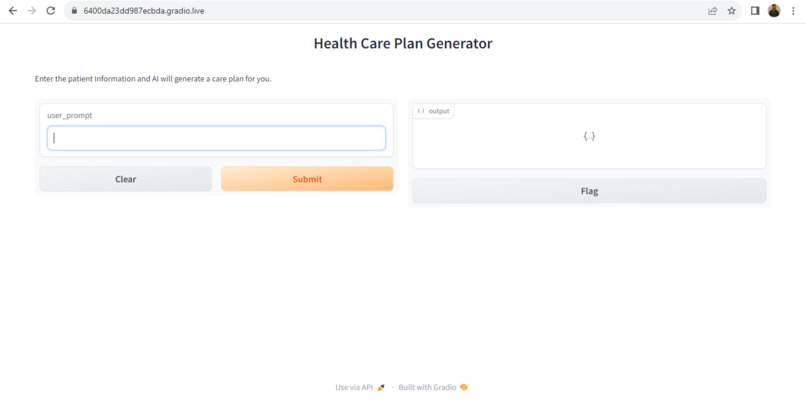
Witout input and result
-
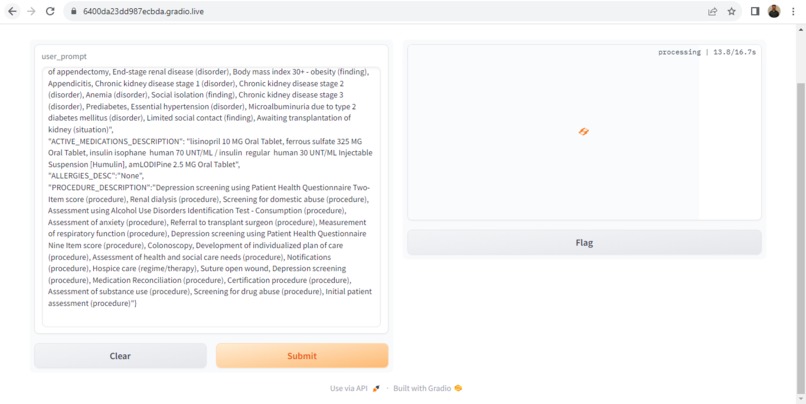
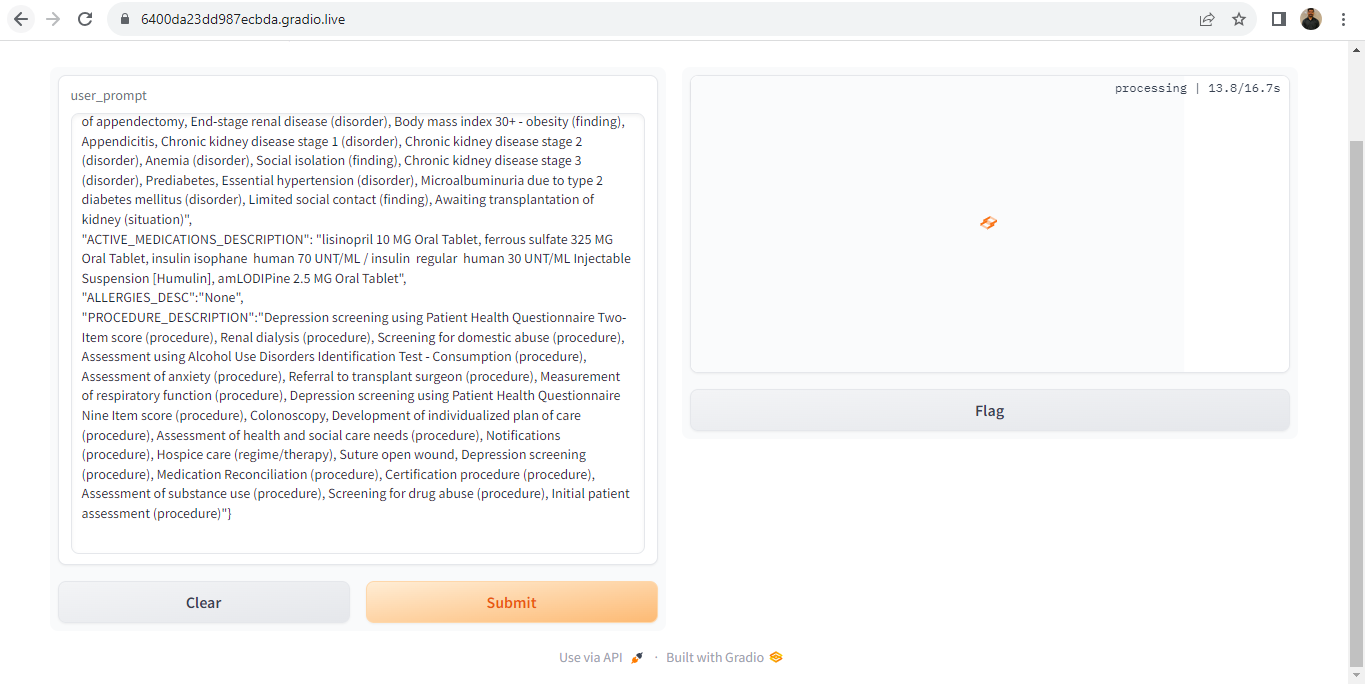
With input
-
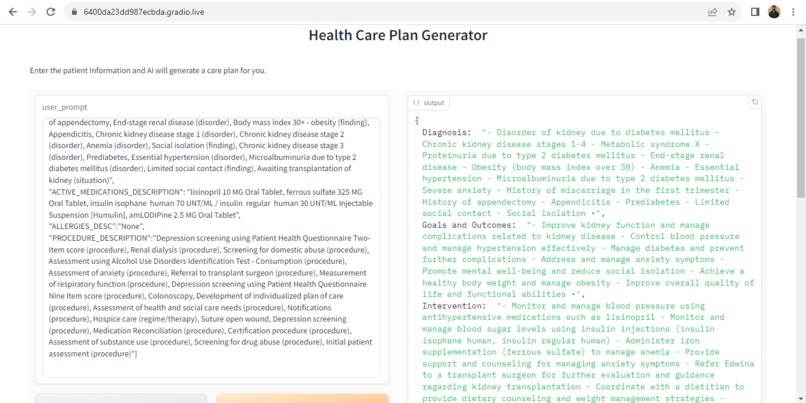
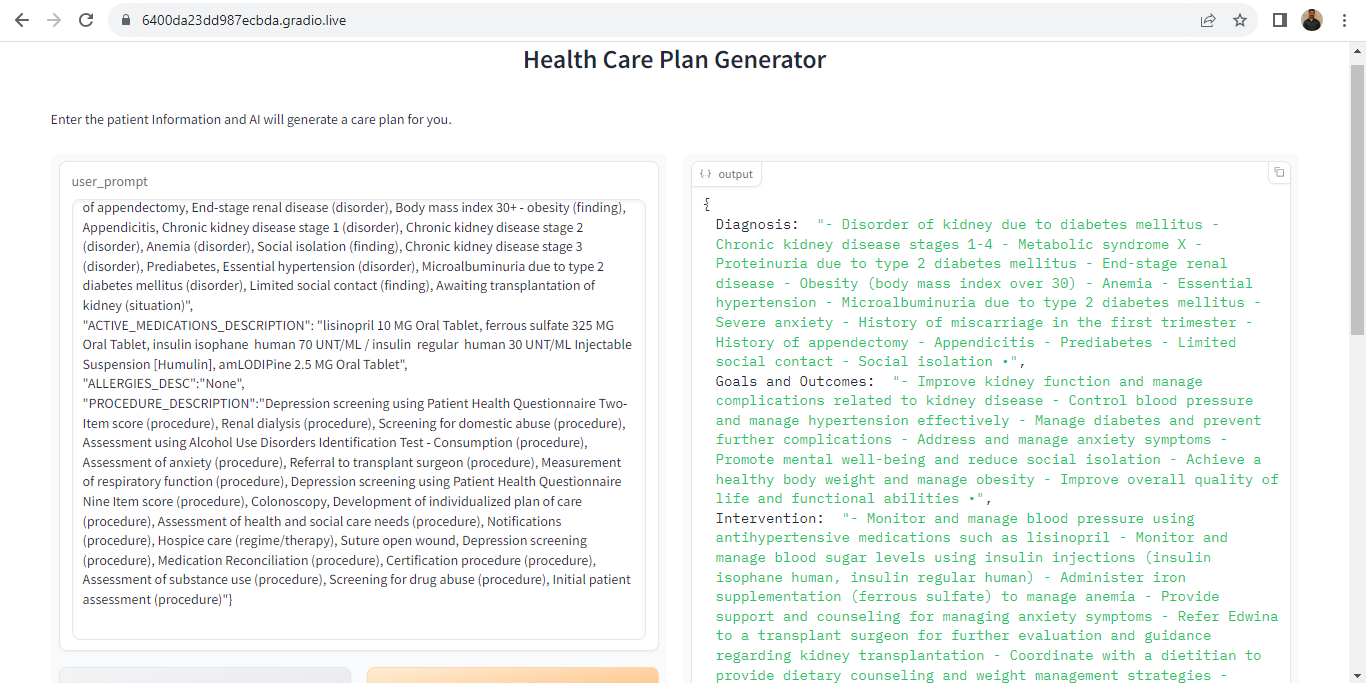
With generated Health Care Plan
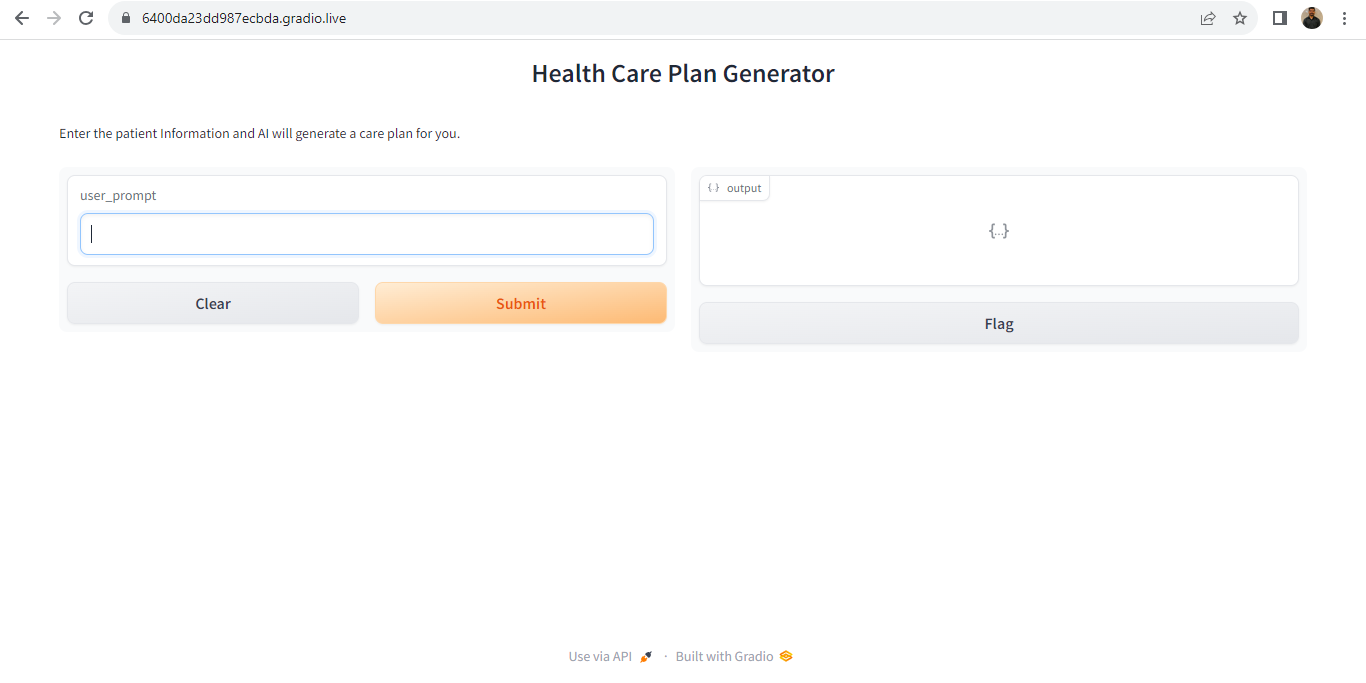
Inspiration
The inspiration for our Health Care Plan Generator stemmed from a collective desire to leverage technology for the betterment of healthcare. We were motivated by the potential to streamline and personalize patient care through innovative solutions. Witnessing the challenges in managing diverse medical histories and the need for efficient care planning fueled our determination to create a tool that could make a significant impact on patient outcomes. We thought that GenAI can identify potential risks that practioners might have forgot about and suggest strategies to mitigate them, improving patient safety. This in-turn will be an additional helping hand to the medical practitioners and an impactful tool for any user.
What it does
The Health Care Plan Generator is a groundbreaking application designed to transform patient medical histories into comprehensive and personalized care plans. It takes in user-provided medical information, such as patient details, active conditions, allergies, and procedure descriptions. Effective healthcare plans help manage healthcare costs by optimizing the use of resources, reducing unnecessary tests or treatments, and avoiding hospital readmissions. Leveraging the vast knowledge available on the internet through Google Programmable Search Engine, the application extracts relevant information about diseases and conditions. The gathered data is then processed using advanced prompt engineering techniques to generate a holistic care plan for the individual patient. The Care Plan includes Diagnosis, Goals & Outcomes, Intervention, Long-term Evaluation, Short-term Evaluation and Reference Links. Links are provided so that user can verify if the source of generated Care Plan is legit or not.
How we built it
Building the Health Care Plan Generator involved a multidisciplinary approach, combining expertise in healthcare, natural language processing, prompt engineering and web scraping. We developed a user-friendly interface using Gradio library which collects and organize patient data. The integration of Google Programmable Search Engine enabled us to access reliable medical information from online sources. Utilizing state-of-the-art prompt engineering techniques along with Azure OpenAI LLM model and Langchain, we built a generator that understand and interpret the user's input, generating detailed care plans that encompass diagnosis, goals, interventions, and long-term and short-term evaluations.
Challenges we ran into
The journey was not without its challenges. One major hurdle was ensuring the accuracy and reliability of the extracted information from online sources. Dealing with diverse and sometimes inconsistent data required meticulous handling. Additionally, role-based prompts and template prompting has to be correct to generate data in a consistent pattern with relevant information posed a significant challenge. Also summarizing the vast information in few pointers that are related to care plan, was a tedious task to accomplish
Accomplishments that we're proud of
Despite the challenges, we are immensely proud of the Health Care Plan Generator we have created. The application successfully translates user input into actionable care plans, providing a valuable tool for healthcare professionals. Our achievement lies not only in the technical aspects but also in contributing to more personalized and efficient healthcare delivery. The users can also use this at their initial stage of conditions or diseases to get a clear idea of what type of plan they can consider. The positive feedback from early users and healthcare practitioners has been a testament to the impact of our innovation, with a remarkable 75% reduction in time involvement for creating a Care Plan.
What we learned
The development of the Health Care Plan Generator taught us valuable lessons about the complexities of healthcare data integration, the importance of ethical considerations in health tech, and the power of collaboration between medical professionals and technology experts. We gained insights into the intricacies of prompt engineering and the challenges associated with synthesizing information from diverse sources into a cohesive output. Above all, as a Software Engineer, I got to have some dive into the Medical domain for gaining some knowledge.
What's next for Healthcare Plan
Looking ahead, we envision continuous refinement and expansion of the Health Care Plan Generator. We aim to incorporate more advanced machine learning techniques to enhance the accuracy of care plans. Collaboration with healthcare institutions and professionals will be a priority to ensure the tool aligns with evolving medical practices. Additionally, we plan to explore mobile applications and interoperability with existing electronic health record systems, further facilitating seamless integration into the healthcare workflow. Our commitment remains steadfast in advancing patient-centric care through the ongoing evolution of the Health Care Plan Generator.
Built With
- azure-openai
- google-custom-search
- langchain
- prompt-engineernig
- python


Log in or sign up for Devpost to join the conversation.