-
-
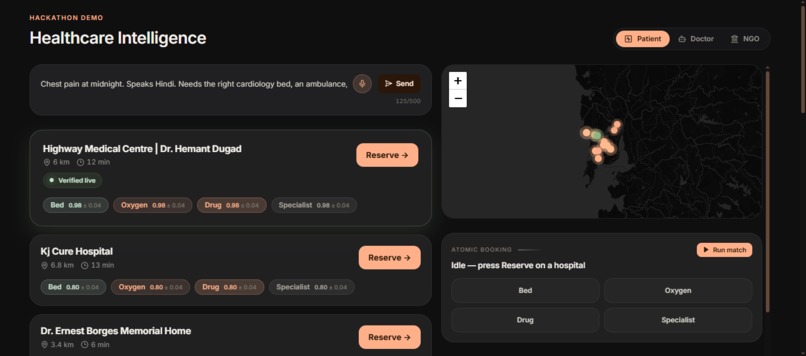
Home Page
-
-
-
Inspiration
The inspiration behind AarogyaNet came from a critical gap in healthcare systems: “Nearest hospital is not always the best hospital.” In real-life emergencies like heart attacks, every minute increases mortality risk (~1% per minute). Yet, existing platforms only provide distance-based recommendations, ignoring: Hospital capacity (beds, oxygen, doctors) Real-time availability Trustworthiness of data Outcome-based learning We wanted to build a system that doesn’t just map hospitals, but actually guides patients to the right care.
What it does
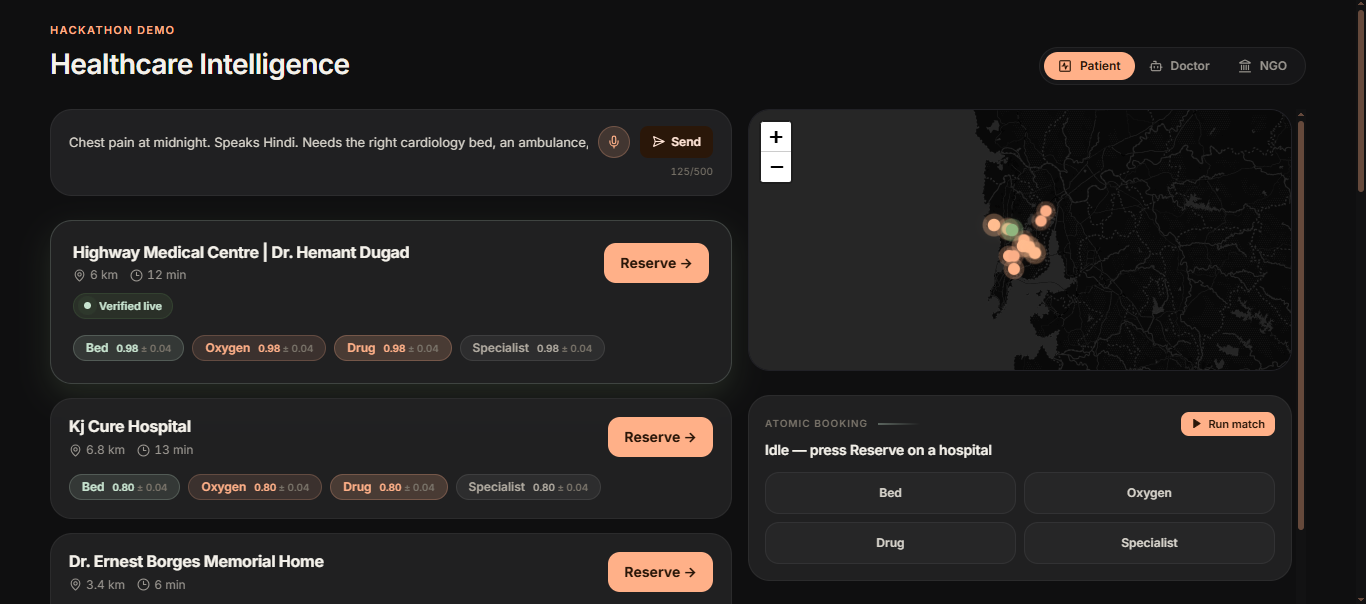
Healthcare Intelligence is a multi-agent healthcare intelligence system that: 🧠 Triages patients using voice/text (Hindi, Urdu, English) 🏥 Ranks hospitals using a dynamic trust score 🔄 Uses a two-model LLM consensus system
📦 Performs atomic booking: Bed Ambulance Doctor Medicine 📊 Learns continuously using patient outcomes 🔬 Trust Learning (Key Concept) Trustnew =f(Trustold ,Outcomes) Example: Initial Trust = 0.831 After negative outcomes → 0.350 👉 This ensures the system improves over time
How we built it
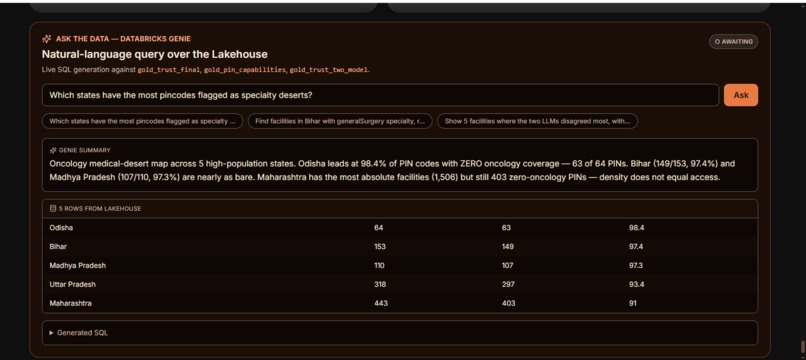
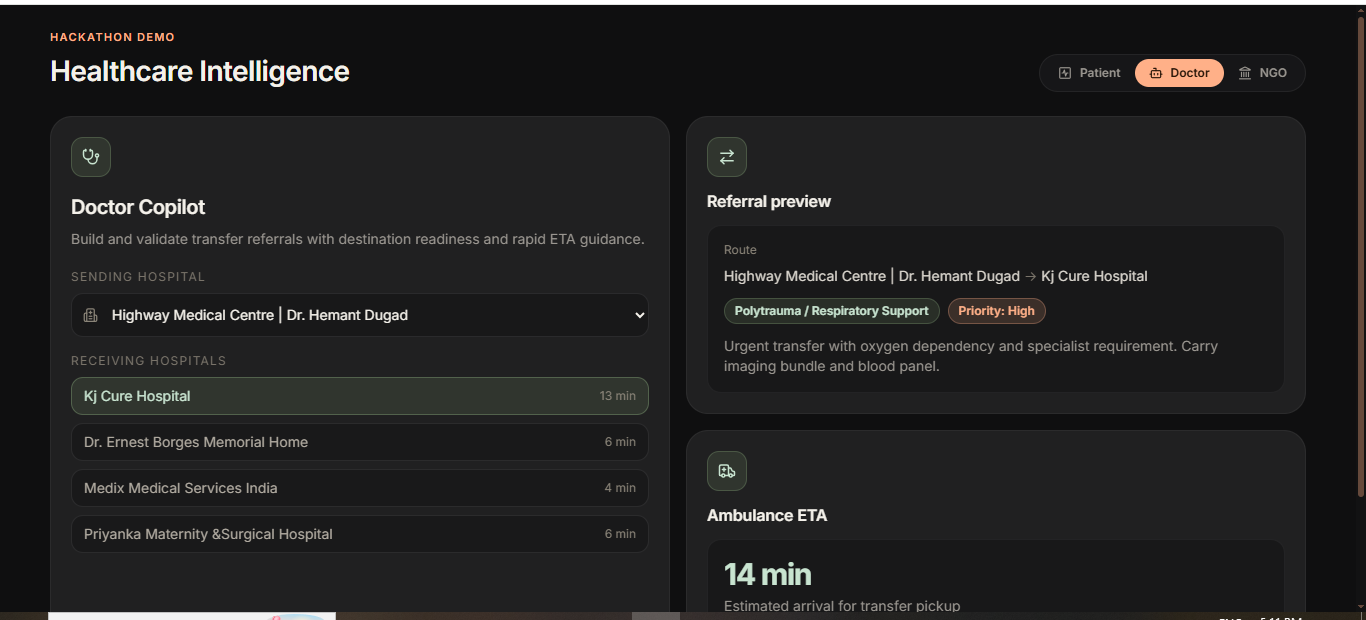
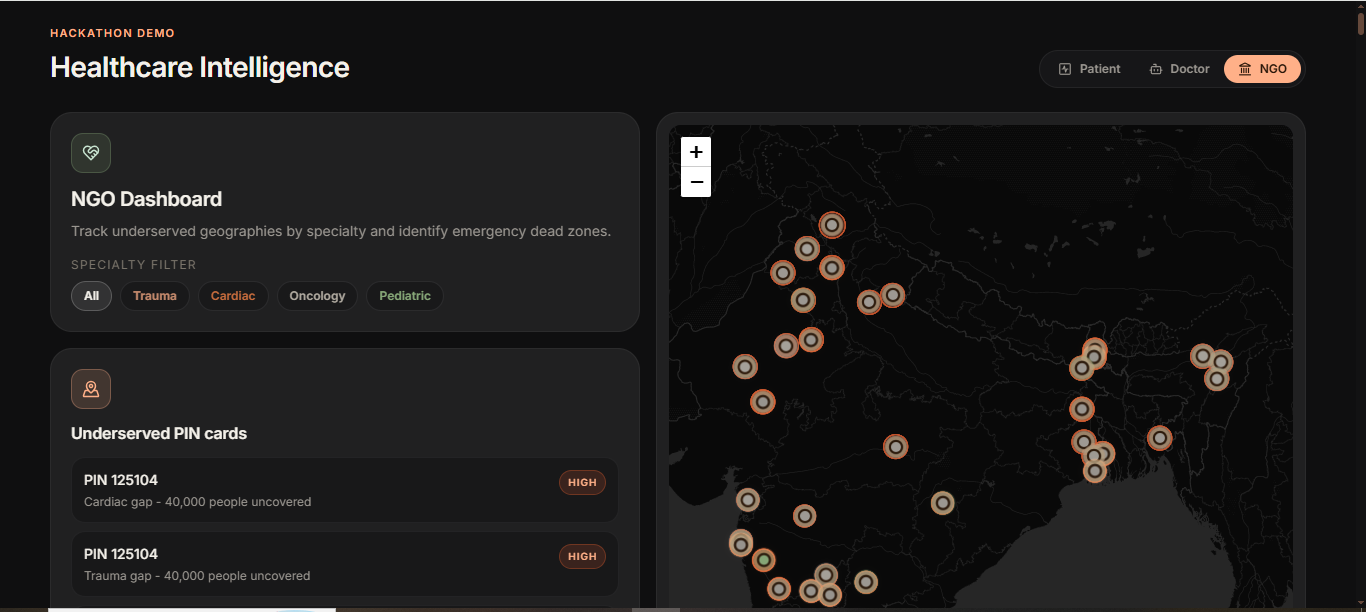
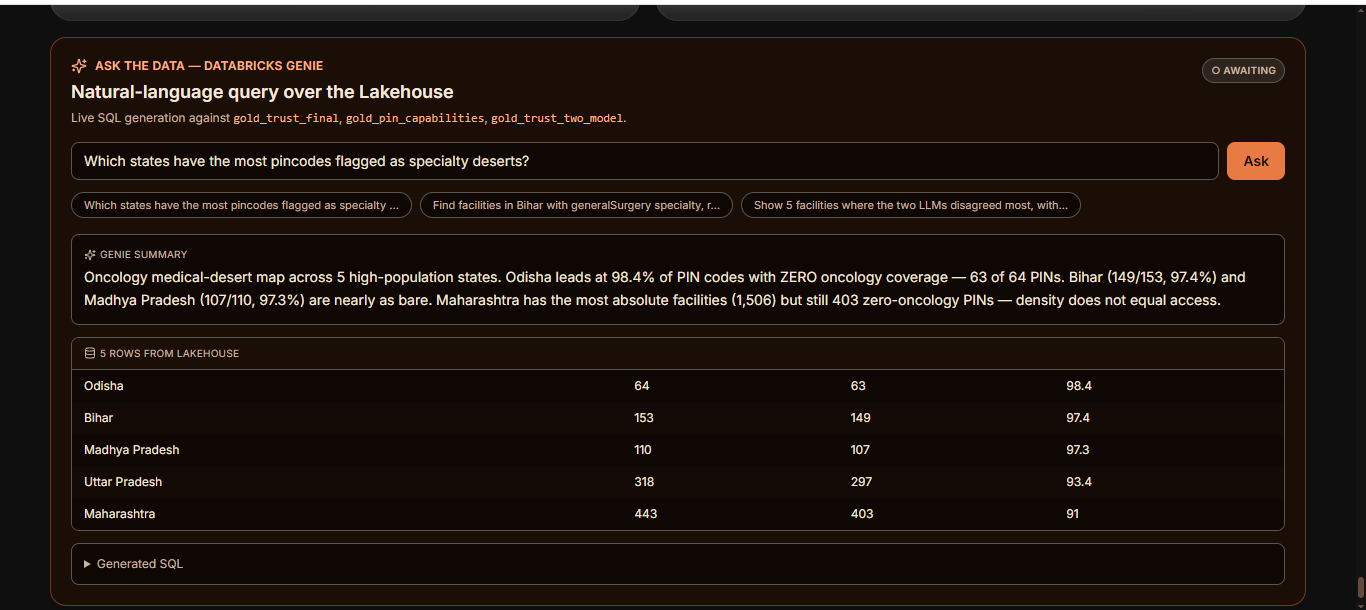
How we built it: We built Healthcare Intelligence as a full-stack, production-like system: Architecture Flow /triage → Detect symptoms & urgency /recommend → Rank hospitals using: Distance Specialty Trust score /book → Atomic transaction system /outcome → Feedback loop updates trust ⚙️ Tech Stack Frontend: React, TypeScript, Tailwind, Leaflet Backend: FastAPI, SSE (real-time streaming) Data: Databricks SQL Warehouse + Vector Search AI Models: Llama 3.3 (Extractor) Llama 4 Maverick (Validator) Agent System: MLflow Agent Bricks NL→SQL: Databricks Genie Voice: Input: Web Speech API Output: Fish Audio TTS Deployment: Backend: Railway Frontend: Vercel
Challenges we ran into
Challenges we ran into ⚠️ 1. Trust is not trivial Single LLM outputs were unreliable Solution → Two-model consensus system ⚠️ 2. Booking reliability Traditional systems book only a bed Problem → incomplete care delivery Solution → Atomic 4-resource booking system ⚠️ 3. No feedback loop in healthcare systems Most platforms don’t learn from outcomes Solution → Real-time trust recalibration ⚠️ 4. Data inconsistency Hospital records were messy and outdated Solution → cleaning + validation pipeline (10,000+ facilities) ⚠️ 5. Demo reliability Hackathon demos often fail live Solution: SAFE_DEMO mode Pre-recorded SSE streams Fallback APIs
Accomplishments that we're proud of
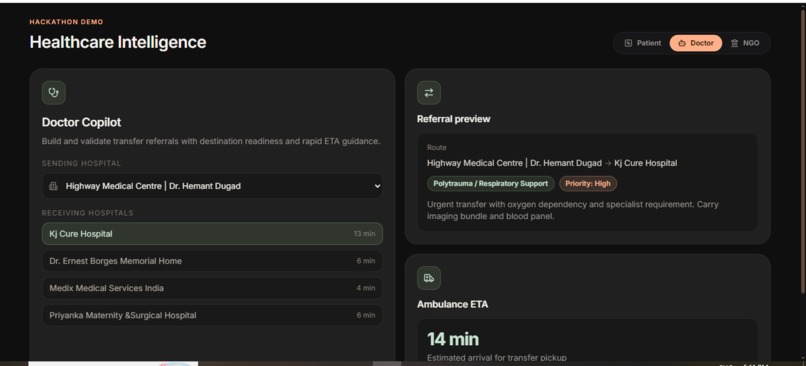
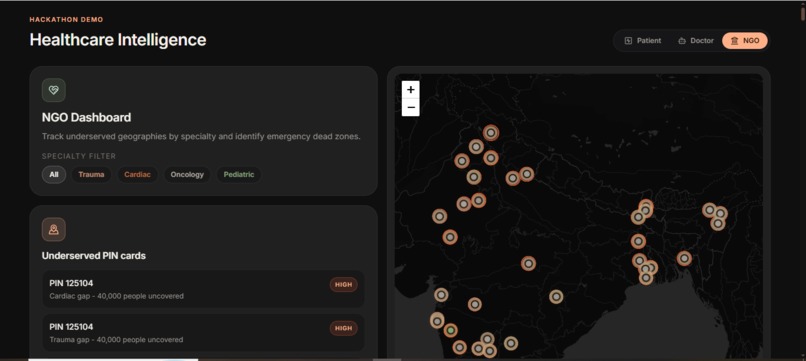
Accomplishments that we're proud of ✅ Built a closed-loop healthcare system (triage → rank → book → learn) ✅ Processed 10,000+ healthcare facilities ✅ Mapped 3,736 regions (PIN codes) ✅ Implemented real-time trust learning ✅ Achieved $0.30 cost for 256 LLM evaluations ✅ Built 3 products in one system: Patient App Doctor Copilot NGO Dashboard
What we learned
💡 AI alone is not enough → systems design matters 💡 Trust must be calculated, not assumed 💡 Real-world problems need: Feedback loops Fault tolerance Multi-agent coordination 💡 Healthcare requires atomic reliability, not partial success 💡 Data quality is more important than model complexity
What's next for Healthcare Intelligence
What's next for Healthcare Intelligence 🌍 Expand beyond India → global healthcare mapping 📡 Integrate real-time IoT hospital data 🤖 Improve agent autonomy (fully automated decision pipelines) 📈 Advanced predictive analytics for disease outbreaks 🏥 Partnerships with hospitals for live data feeds 📱 Mobile app with offline support
Final Line: “Guide care, don’t just map it.”
Built With
- 4
- agent
- api
- audio
- bricksdatabricks
- cssdatabricks
- fish
- genie
- languages-python
- llama
- maverick
- mlflow
- railway
- react
- search
- speech
- sql
- sqlfastapi
- tailwind
- tts
- typescript
- vector
- vercelllama-3.3
- warehouse
- web

Log in or sign up for Devpost to join the conversation.