-
-
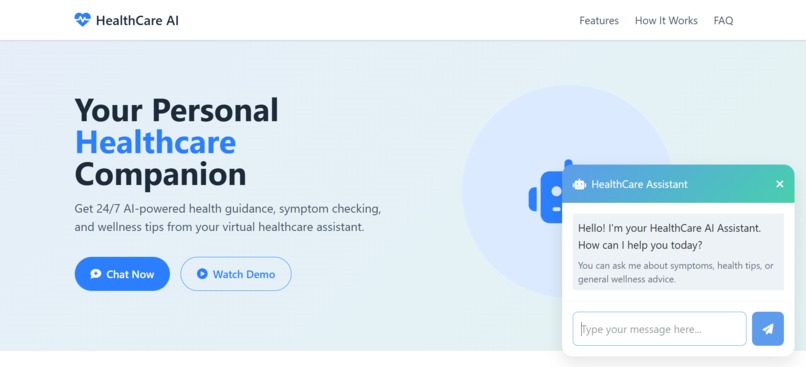
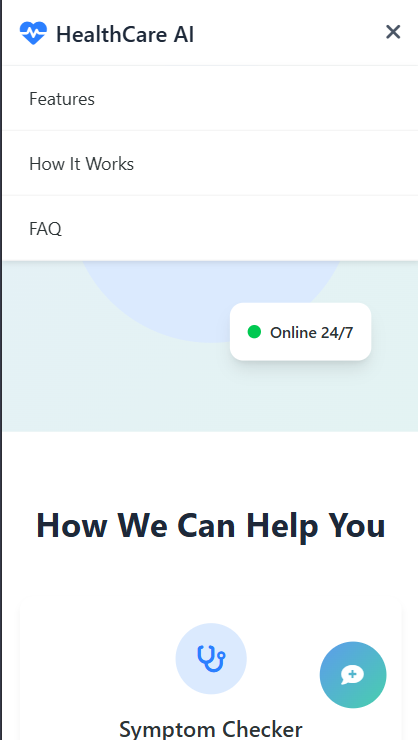
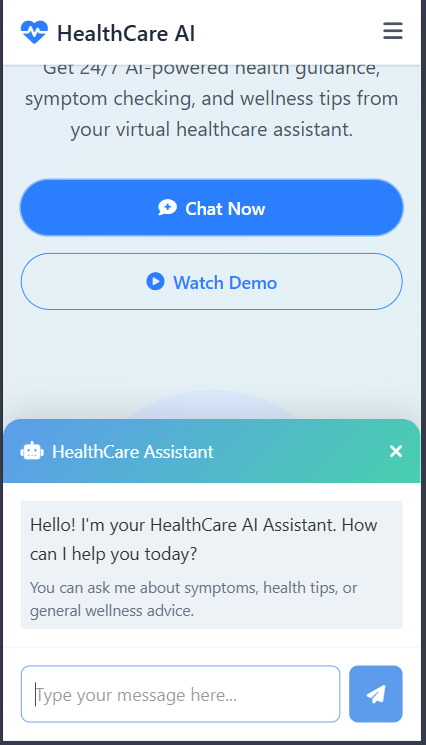
Landing page of the Healthcare AI Assistant
-
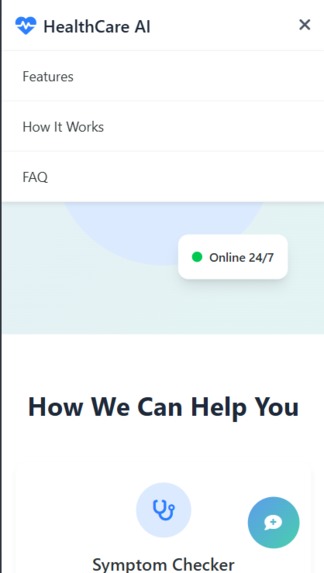
Responsive landing page of the Healthcare AI Assistant
-
Inspiration
In today’s fast-paced world, many people experience health symptoms but don’t know whether they’re serious or what first steps to take. Visiting a doctor isn’t always immediate or accessible. I was inspired to build an AI Health Chatbot that offers instant, reliable, and empathetic first-step health guidance — anytime, anywhere. I wanted to build a system that responds calmly, and nudges users toward taking the right steps without diagnosing — acting as a bridge between concern and care.
What it does
The Healthcare AI Assistant provides quick relief suggestions for common health issues like dizziness, headaches, fatigue, anxiety, or a racing heart. Instead of diagnosing, it offers practical first steps — such as hydration, breathing exercises, or rest — and encourages users to seek medical help if symptoms persist. It’s designed to be a calm, supportive first point of contact for everyday health concerns.
How we built it
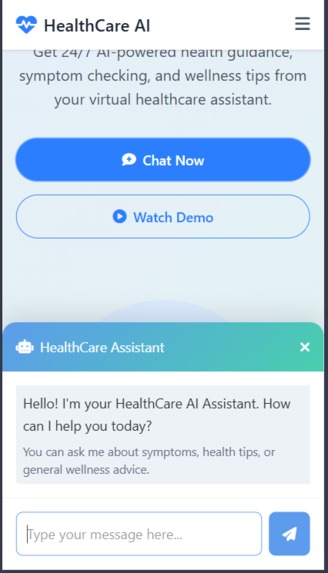
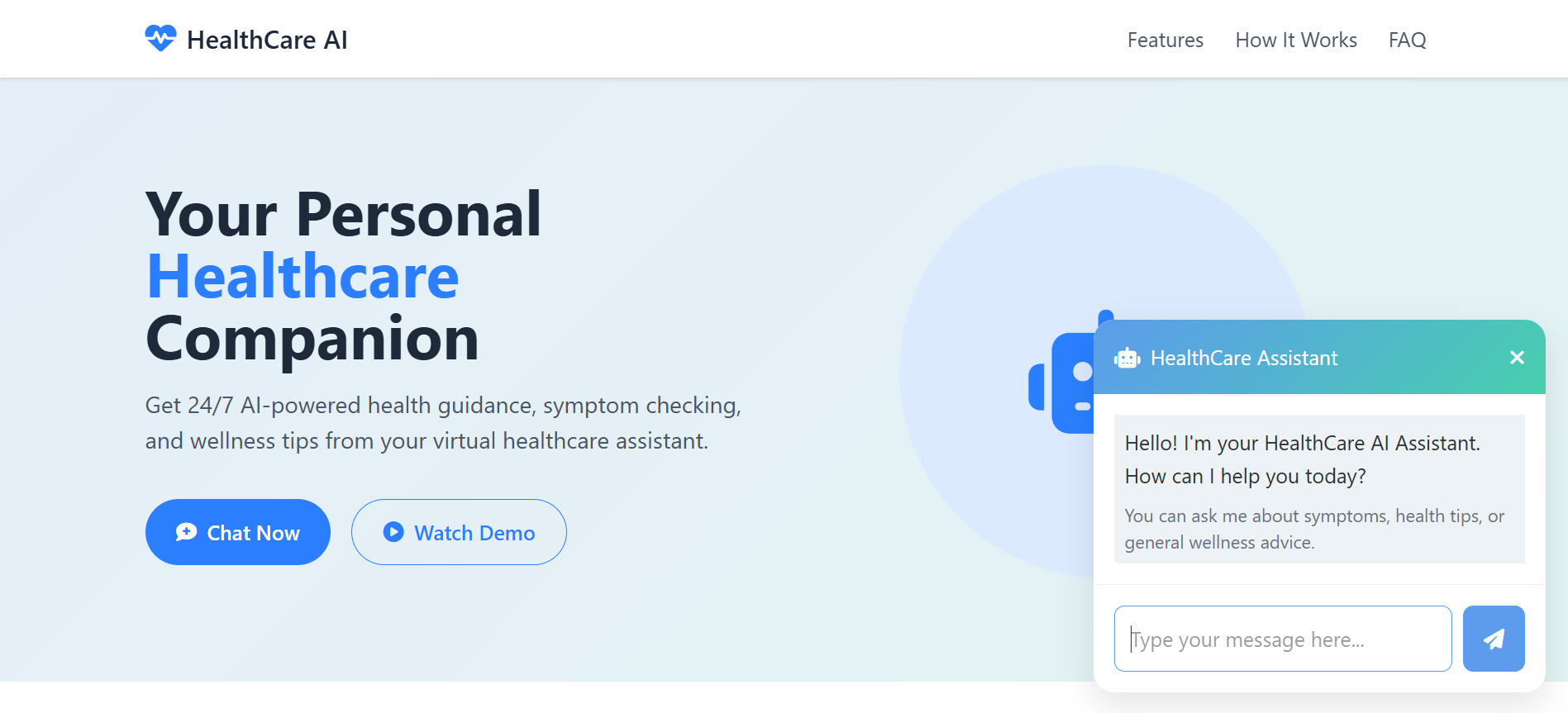
I built the Healthcare AI Assistant using HTML, CSS, and JavaScript to create a clean and responsive web interface. The AI functionality was powered by Lyzr AI, which was integrated into the website to handle natural language processing and provide smart health suggestions based on user input. The chatbot responds in real-time, simulating a friendly and helpful conversation experience.
Challenges we ran into
Prompt Tuning: Crafting prompts that guide the AI to offer helpful, non-critical suggestions — especially for sensitive health topics. User Experience: Designing a simple yet intuitive interface that works smoothly across devices. Integration: Connecting AI and ensuring real-time responses without delays or errors.
Accomplishments that we're proud of
Created a functional AI chatbot that responds instantly to real-time user queries. Designed an empathetic, clear user experience that works on both desktop and mobile. Maintained responsible AI use by focusing on first-step care, not diagnosis.
What we learned
How to use AI prompts responsibly in a health-related context. Importance of user-centered design in sensitive domains like healthcare. How to create a meaningful experience using minimal but focused features.
What's next for Healthcare AI Assistant
Add multilingual support to reach a wider audience. Integrate symptom tracking and emergency contact features. Work with medical advisors to expand the scope of general advice while staying compliant. Deploy on WhatsApp and other platforms for greater accessibility.


Log in or sign up for Devpost to join the conversation.