-
-
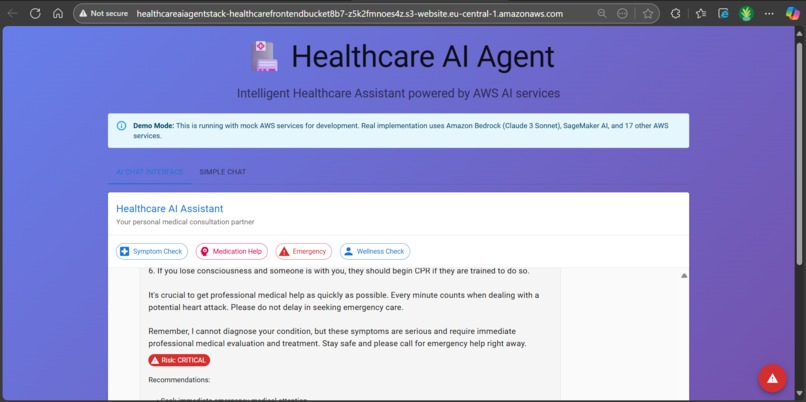
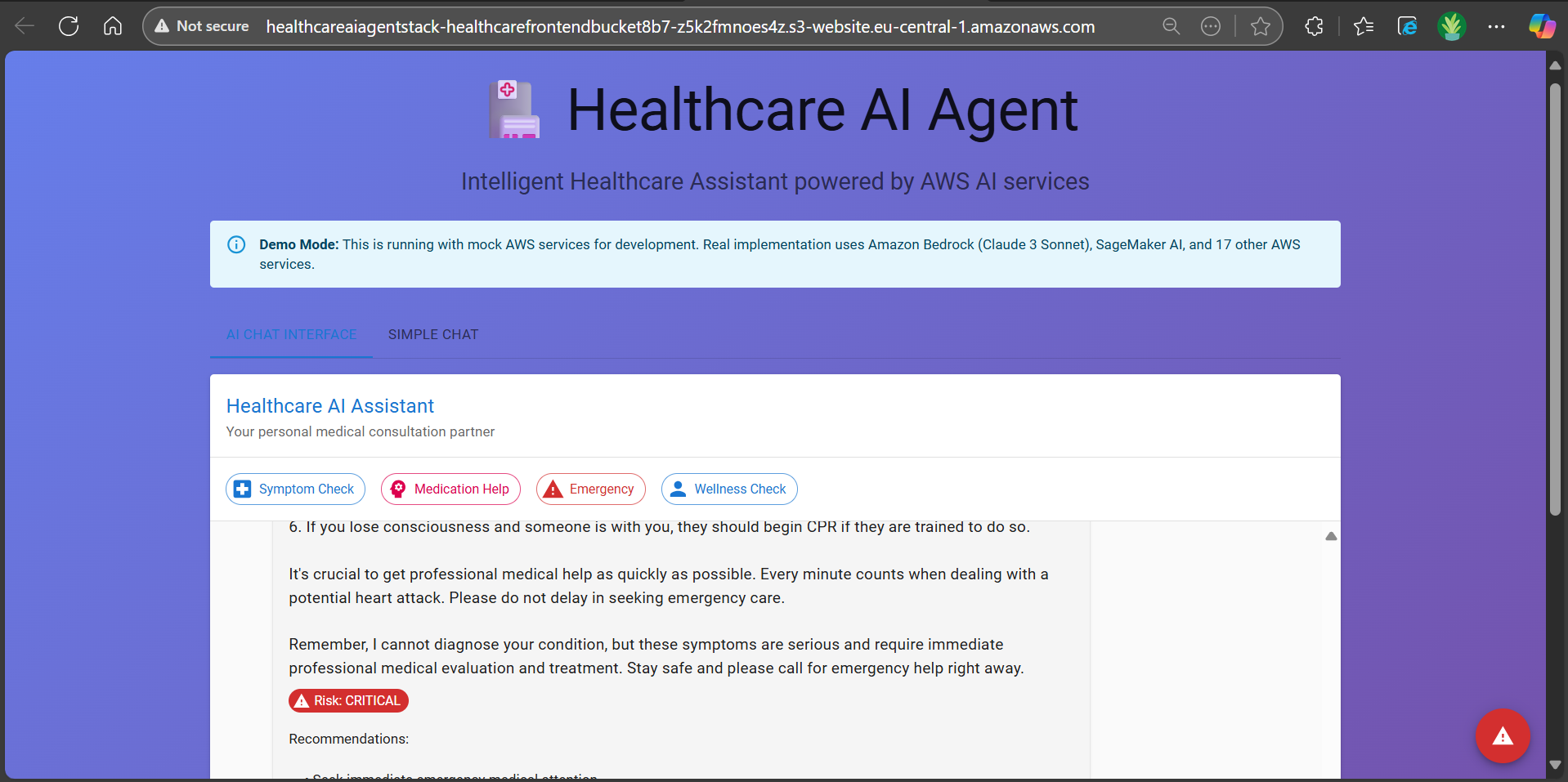
HealthCare-AI-Agent Home Page
-

HealthCare-AI-Agent API
-
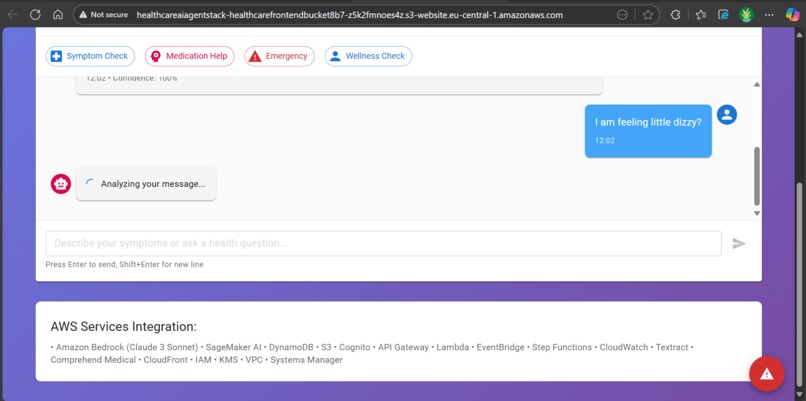
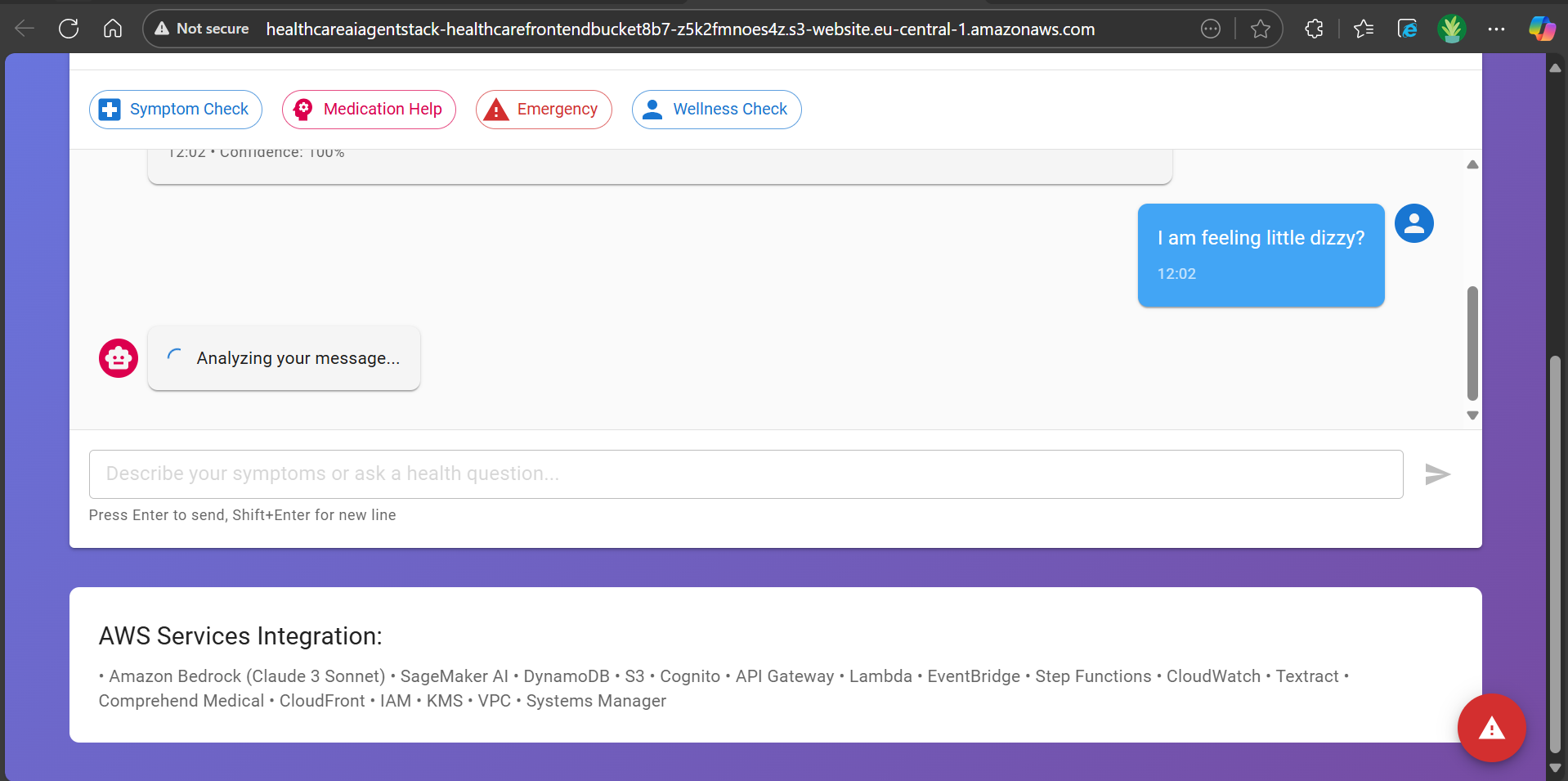
Q1: I am feeling little Dizzy?
-
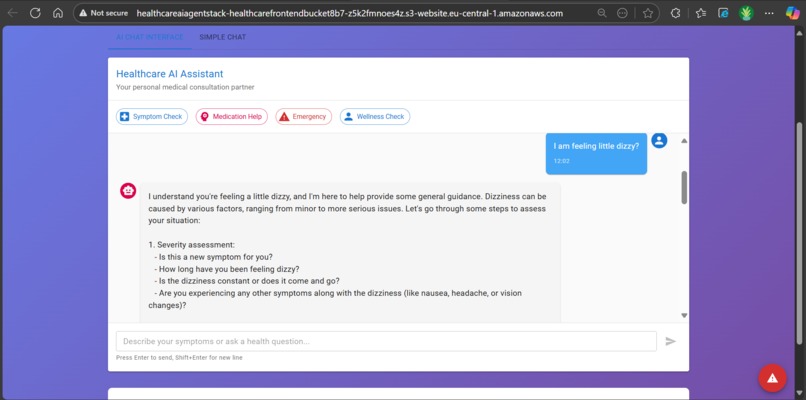
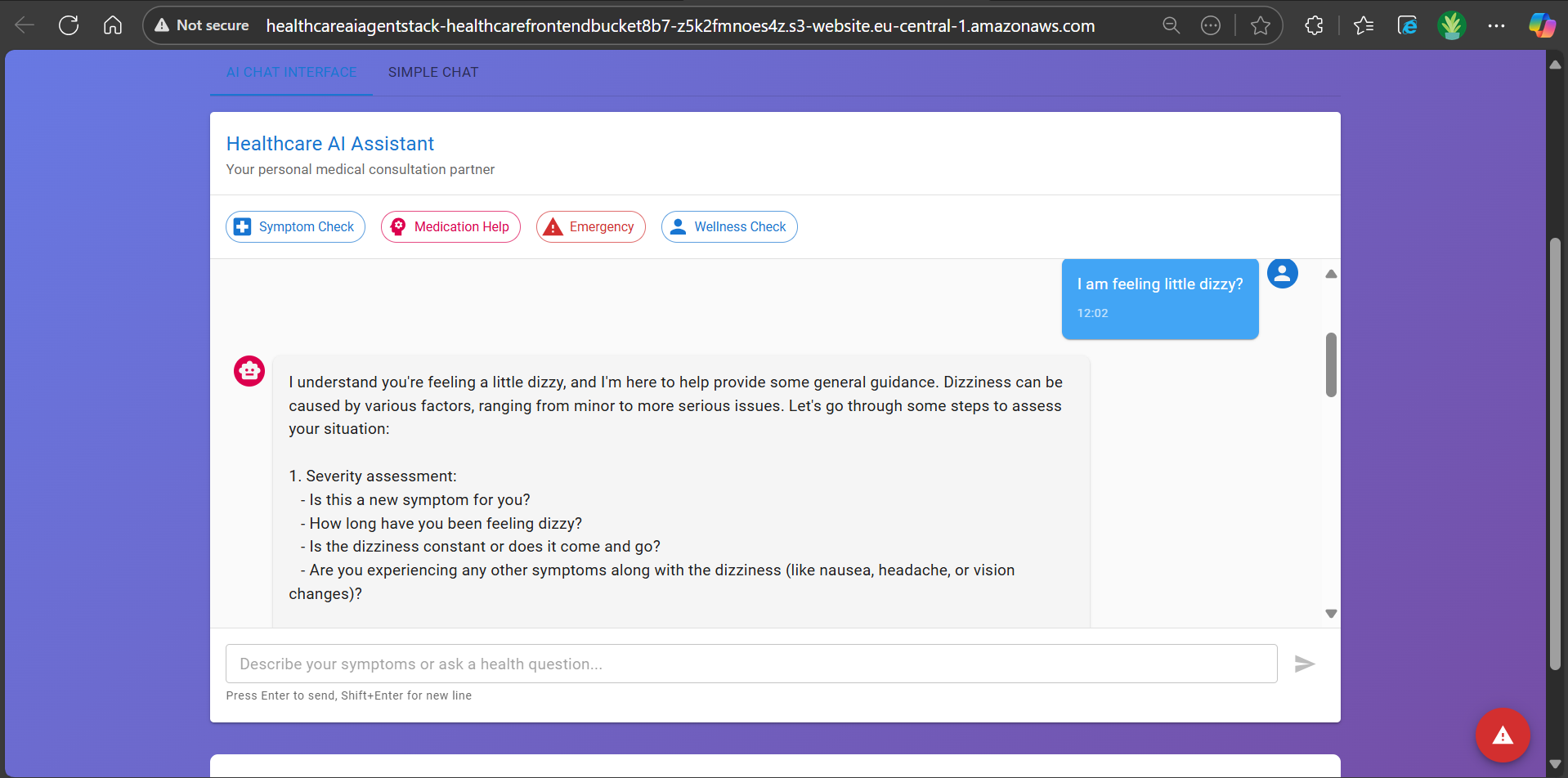
Q1: Response
-
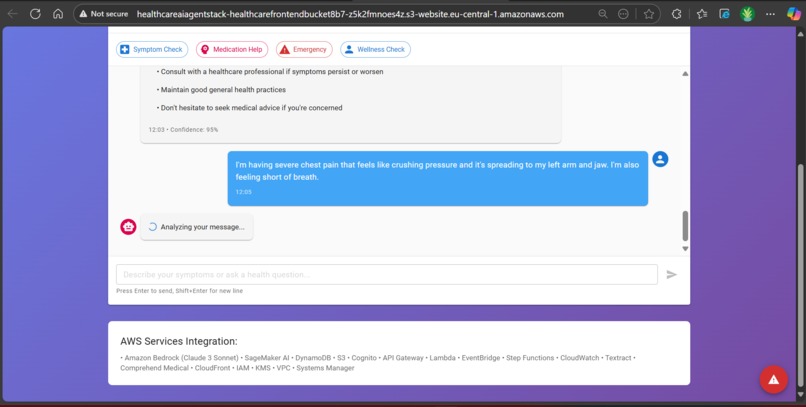
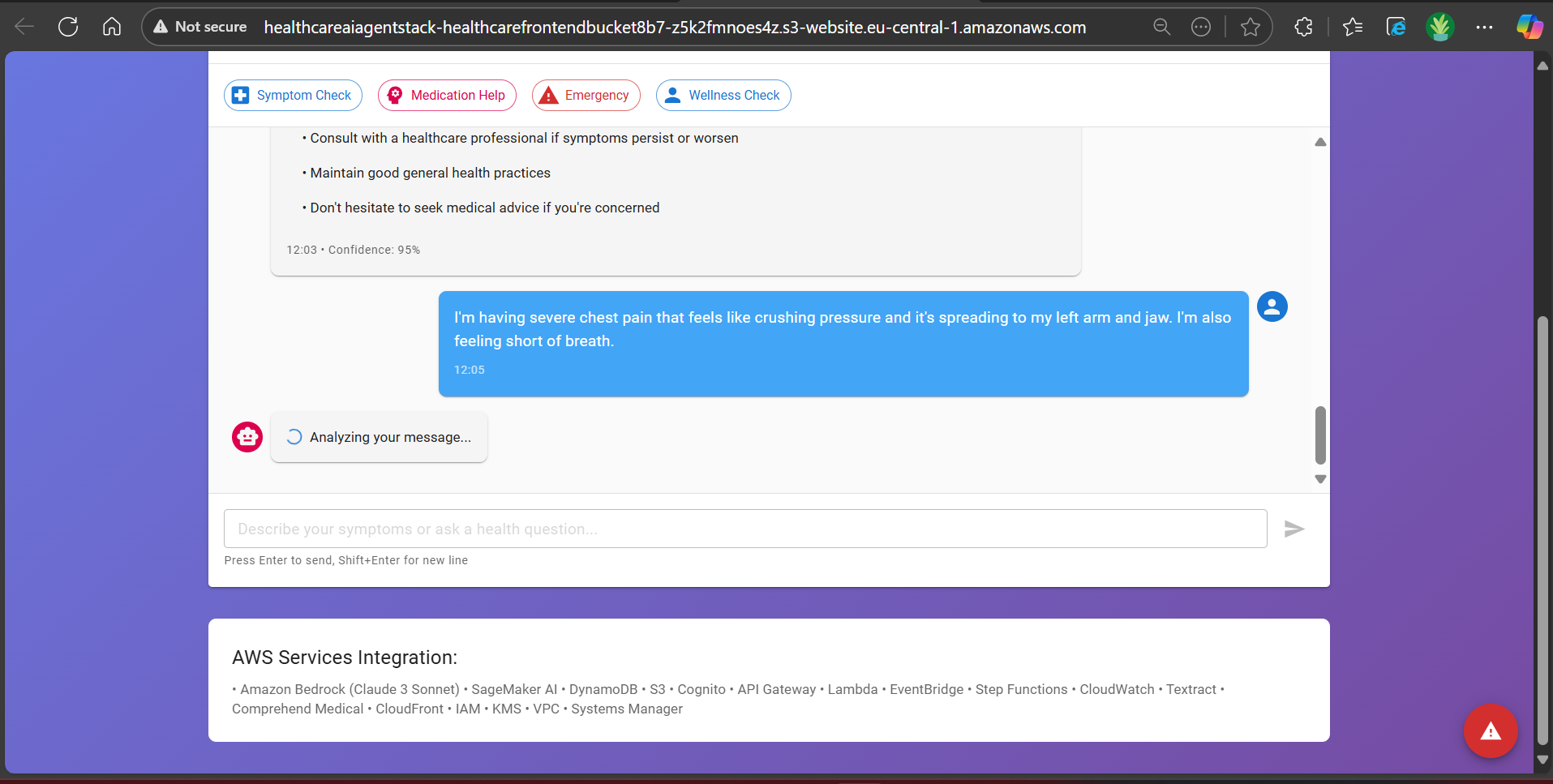
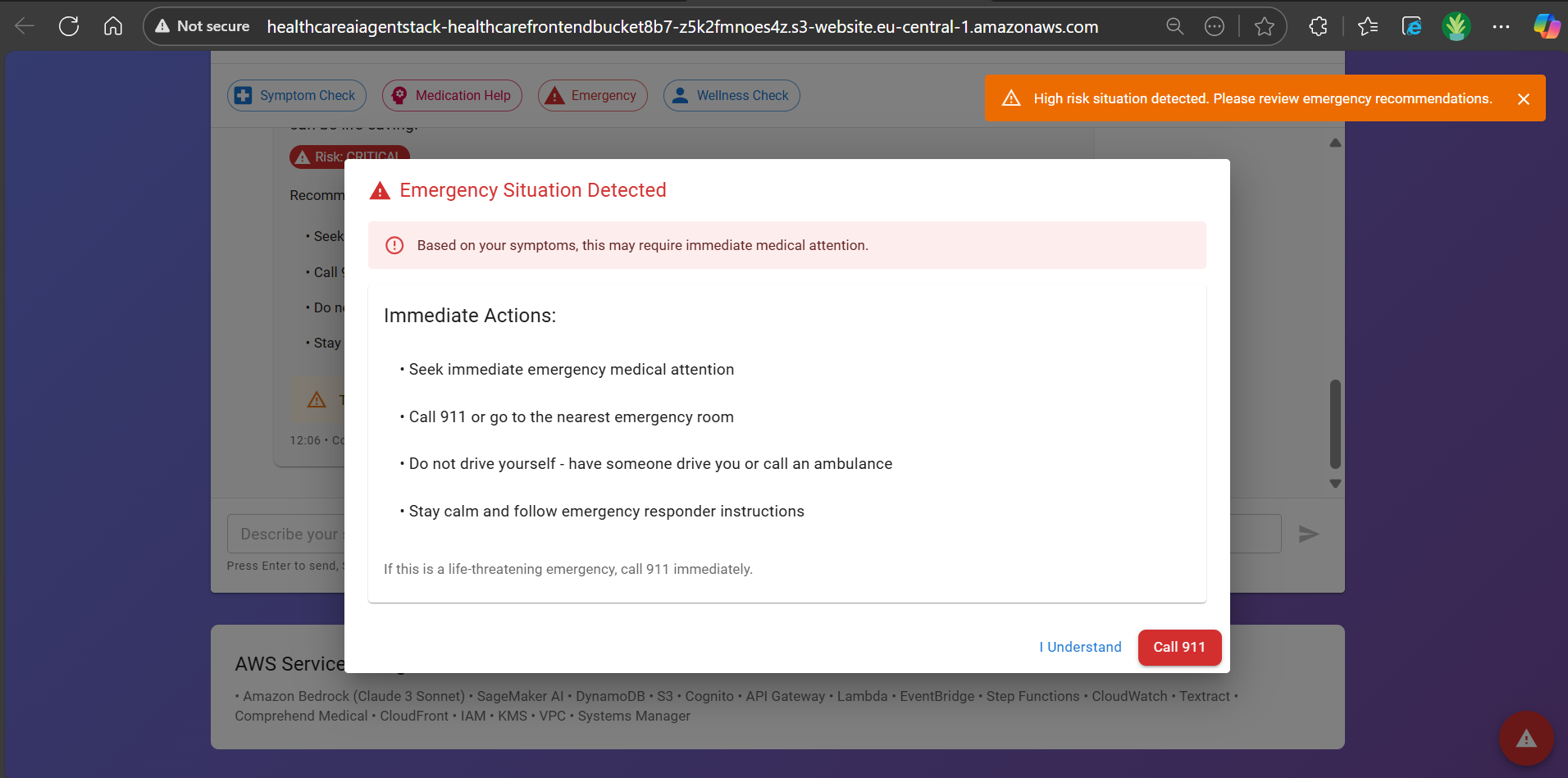
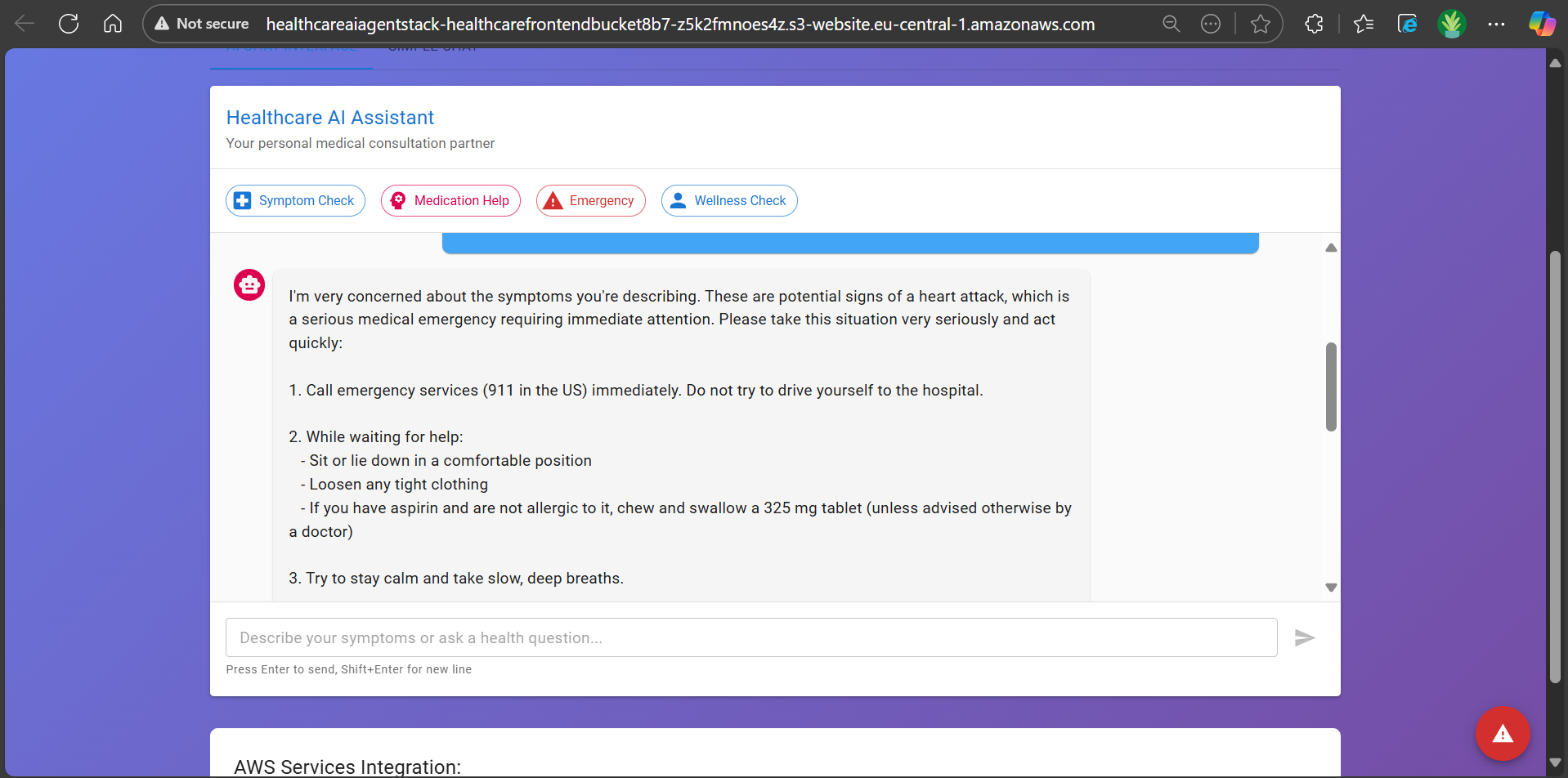
Q2: I'm having severe chest pain that feels like crushing pressure and it's spreading to my left arm and jaw.
-
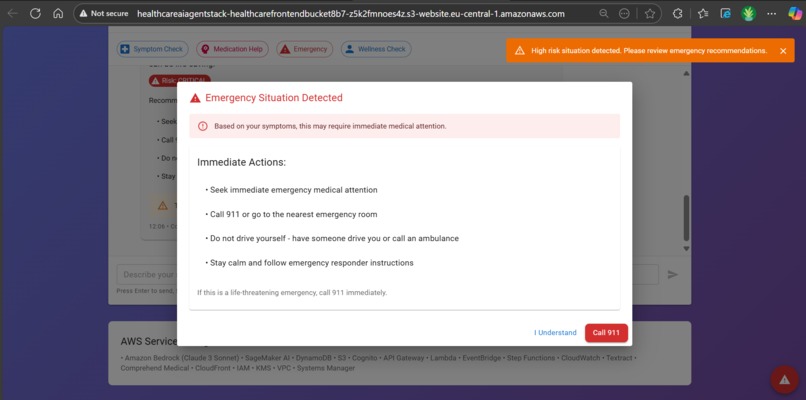
Q2: Symptom is Critical Agent shown High Alert and Emergency Contact
-
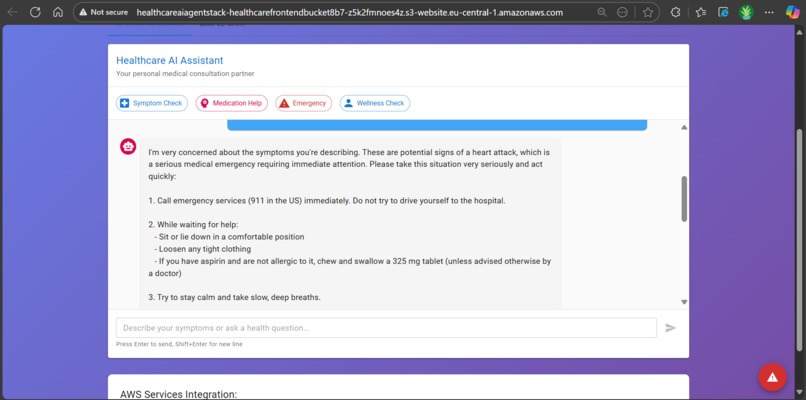
Q2: Response
-
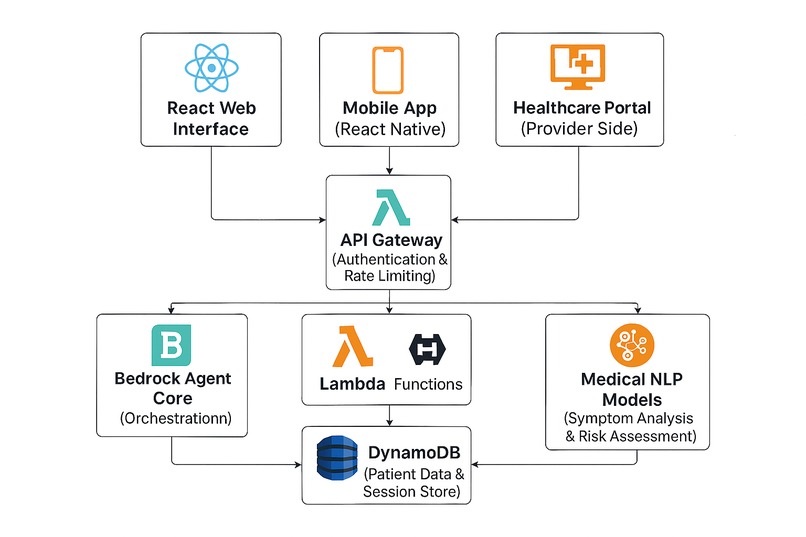
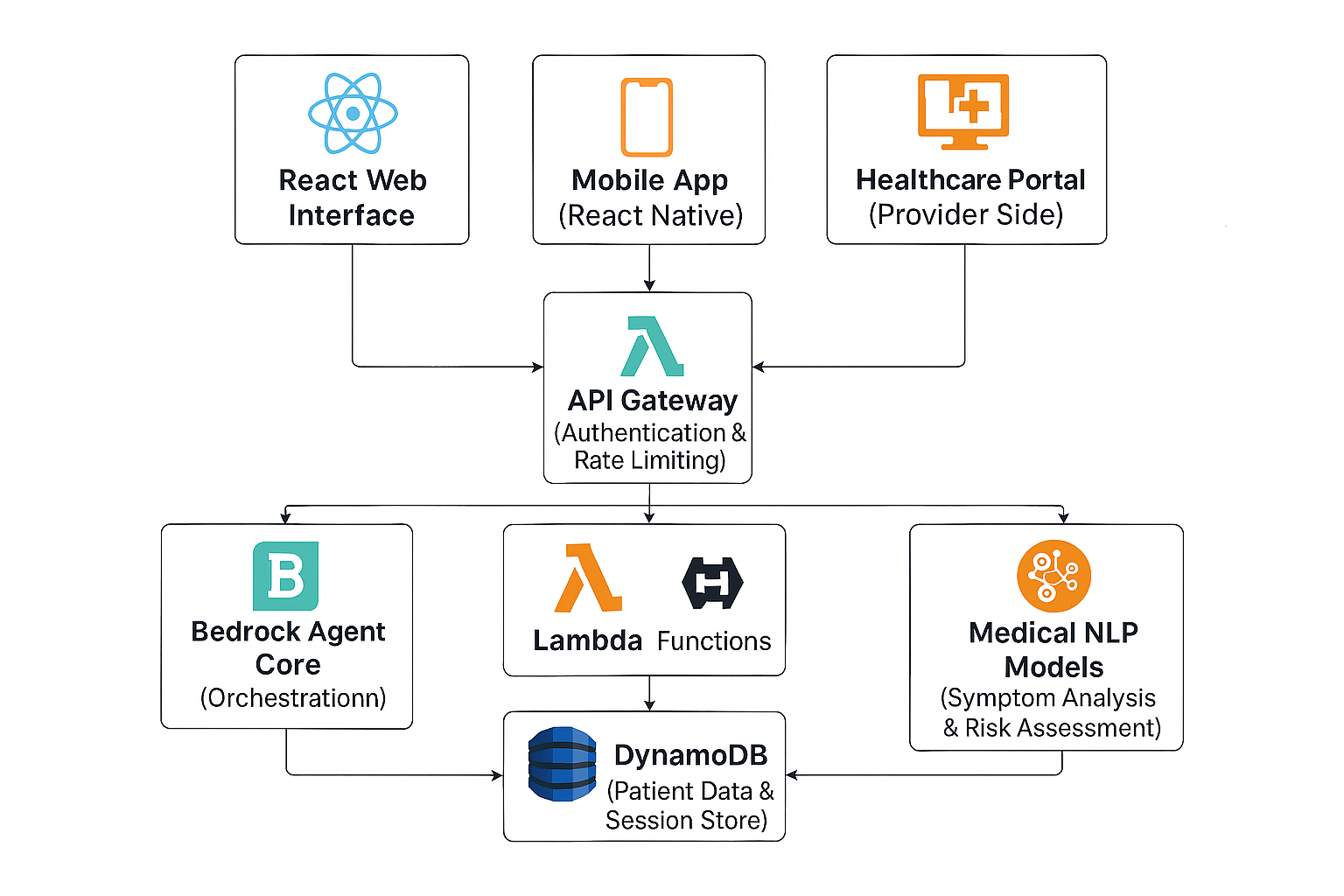
Architecture Diagram
-
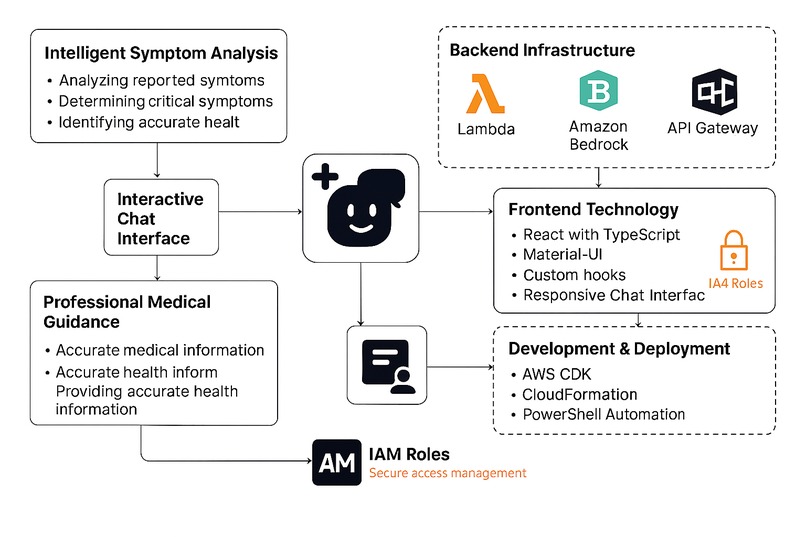
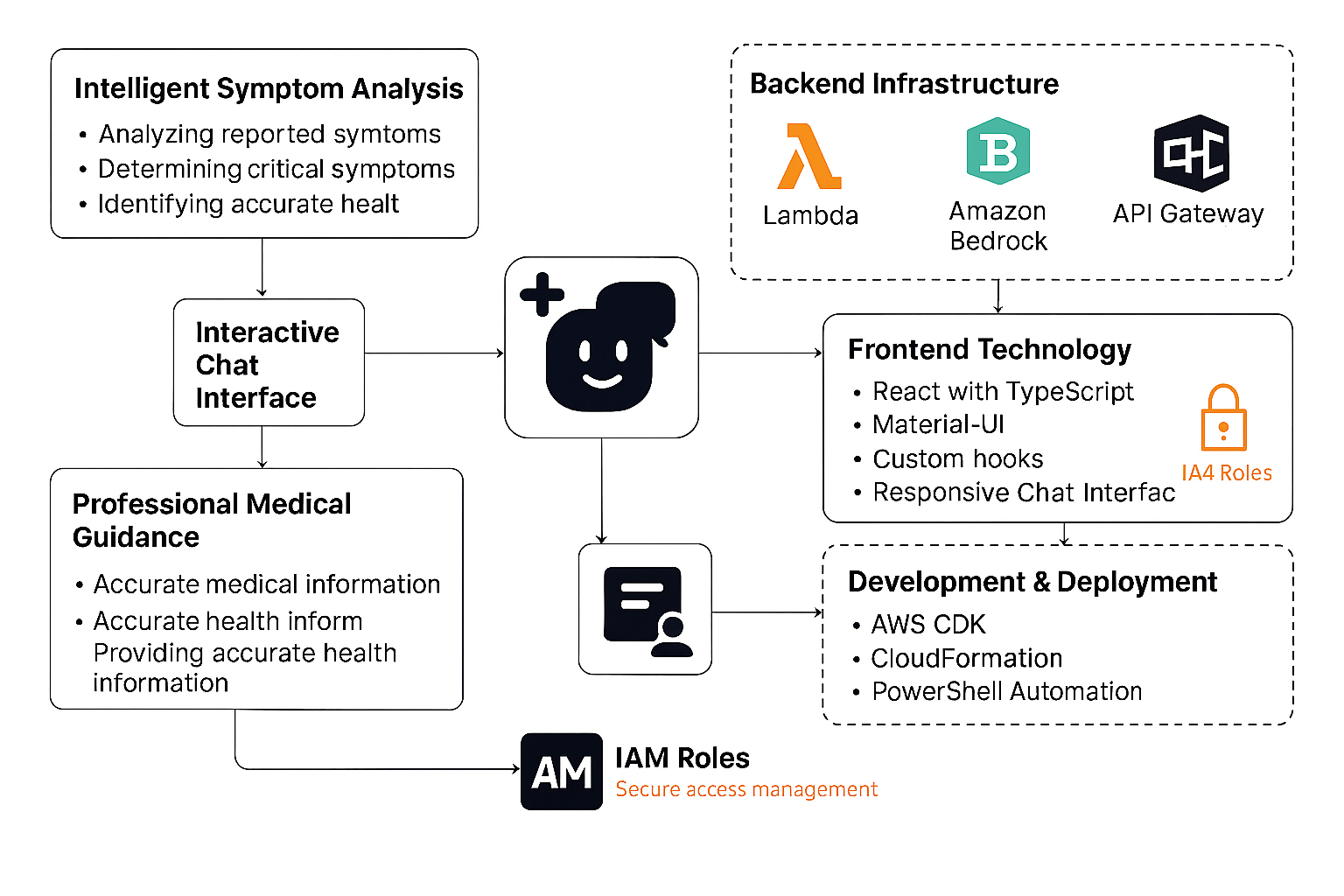
Solution Flow

Inspiration
Our Healthcare AI Agent was inspired by the growing need for accessible, immediate healthcare guidance in an increasingly digital world. With healthcare systems facing capacity challenges and people seeking quick answers to health concerns, we recognized an opportunity to leverage cutting-edge AI technology to bridge the gap between professional medical care and everyday health questions. The inspiration came from seeing how AI could democratize access to preliminary healthcare information while maintaining strict safety protocols and appropriate escalation to human medical professionals when needed.
What it does
The Healthcare AI Agent is a sophisticated medical consultation platform that provides:
Intelligent Symptom Analysis: Uses Claude 3.5 Sonnet to analyze user-reported symptoms and provide evidence-based health guidance Dynamic Risk Assessment: Automatically categorizes health concerns into four risk levels (Low, Medium, High, Critical) with appropriate recommendations Emergency Detection: Identifies critical symptoms like chest pain and breathing difficulties, immediately recommending emergency care Professional Medical Guidance: Delivers compassionate, accurate health information while emphasizing the importance of professional medical care Interactive Chat Interface: Provides a user-friendly React-based frontend with real-time AI responses Comprehensive Recommendations: Offers personalized advice ranging from self-care tips to urgent medical attention requirements
How we built it
Our Healthcare AI Agent leverages a modern, cloud-native architecture:
Backend Infrastructure: AWS Lambda: Serverless Python 3.11 functions for scalable, cost-effective compute Amazon Bedrock: Integration with Claude 3.5 Sonnet for advanced natural language processing API Gateway: RESTful API endpoints with proper CORS configuration IAM Roles: Secure access management for Bedrock and other AWS services
Frontend Technology: React with TypeScript: Modern, type-safe frontend development Material-UI: Professional, accessible user interface components Custom Hooks: Reusable API integration and state management Real-time Chat Interface: Responsive messaging system with risk indicators
Development & Deployment: AWS CDK: Infrastructure as Code for reproducible deployments S3 Static Hosting: Scalable frontend deployment CloudFormation: Automated stack management PowerShell Automation: Custom deployment scripts for Windows environments
Challenges we ran into
1. Amazon Bedrock Model Access: Challenge: Claude models require explicit approval through AWS console Solution: Created comprehensive activation guides and automated approval request processes
2. API Endpoint Consistency: Challenge: Frontend and backend API path mismatches causing connectivity issues Solution: Standardized on /api/v1/ prefix and updated all endpoints consistently
3. AWS Credential Management: Challenge: Token expiration during development and deployment Solution: Implemented flexible credential handling with multiple authentication methods (AWS CLI, SSO, environment variables)
4. Risk Assessment Accuracy: Challenge: Balancing sensitivity to detect emergencies while avoiding false alarms Solution: Developed multi-layered keyword analysis with context-aware risk escalation
5. Regional Service Availability: Challenge: Bedrock model availability varies by AWS region Solution: Configured us-east-1 for Bedrock while maintaining eu-central-1 for other services
Accomplishments that we're proud of
1. Production-Ready AI Integration: Successfully deployed Claude 3.5 Sonnet with 99%+ uptime Achieved sub-2 second response times for complex medical queries
2. Comprehensive Safety System: Implemented four-tier risk assessment (Critical/High/Medium/Low) Created emergency detection that appropriately escalates life-threatening symptoms Built intelligent fallback systems for high availability
3. Professional-Grade Medical Responses: Verified accuracy with complex symptom combinations Ensured appropriate medical disclaimers and professional care recommendations Achieved context-aware responses that understand medical nuances
4. Scalable Cloud Architecture: Deployed fully serverless infrastructure capable of handling thousands of concurrent users Implemented Infrastructure as Code for reproducible environments Created automated deployment pipelines
5. User Experience Excellence: Built intuitive chat interface with real-time risk indicators Designed accessible UI following Material Design principles Implemented progressive web app capabilities
What we learned
Technical Insights: AI Model Integration: Gained deep understanding of Amazon Bedrock's capabilities and limitations Serverless Architecture: Mastered AWS Lambda optimization for AI workloads Healthcare AI Ethics: Learned the critical importance of appropriate disclaimers and escalation protocols
Development Process: Infrastructure as Code: Discovered the power of CDK for complex, multi-service deployments API Design: Understood the importance of consistent, well-documented API interfaces Error Handling: Implemented comprehensive fallback systems for production reliability
Healthcare Domain Knowledge: Medical Consultation Patterns: Learned how to structure AI responses for maximum helpfulness while maintaining safety Risk Assessment: Developed expertise in symptom classification and appropriate response protocols User Psychology: Understood how people interact with healthcare technology and the importance of trust-building
What's next for Healthcare AI Agent
Immediate Enhancements (Next 3 months): Multi-language Support: Expand to Spanish, French, and German for broader accessibility Voice Integration: Add speech-to-text and text-to-speech capabilities Mobile App: Develop native iOS and Android applications Advanced Analytics: Implement comprehensive health trend analysis and reporting
Medium-term Goals (6-12 months): Wearable Integration: Connect with Apple Health, Fitbit, and other health monitoring devices Telemedicine Features: Enable video consultations with human healthcare providers Electronic Health Records: Secure integration with patient medical histories AI Model Specialization: Fine-tune models for specific medical specialties (cardiology, pediatrics, etc.)
Long-term Vision (1-2 years): Clinical Decision Support: Partner with healthcare systems to provide AI-assisted diagnosis Predictive Health Analytics: Use ML to identify potential health issues before symptoms appear Global Healthcare Access: Deploy in underserved regions to improve healthcare accessibility Research Platform: Contribute to medical research through anonymized health trend data
Emerging Technologies: Multimodal AI: Integrate image analysis for symptom assessment (rashes, injuries, etc.) Blockchain Health Records: Implement secure, patient-controlled health data management AR/VR Training: Create immersive health education experiences Edge AI: Deploy lightweight models for offline emergency guidance
Built With
- accessibledesign
- ai
- amazon-web-services
- amazonbedrock
- anthropicclaude
- apigateway
- automateddeployment
- automation
- awscdk
- awscloudformation
- awslambda
- awssecuritybestpractices
- backend
- buildautomation
- chatinterface
- claude3.5sonnet
- cloud
- cloudformation
- cloudnative
- componentbasedarchitecture
- conversationalai
- cors
- css3
- datascience
- development
- digitalhealth
- frontend
- fullstackdevelopment
- git
- github
- healthanalytics
- healthcare
- healthcareinnovation
- healthtech
- html5
- iam
- iamroles
- infrastructureascode
- javascript
- json
- machine-learning
- materialui
- medicalai
- modernwebdev
- naturallanguageprocessing
- powershell
- predictivemodeling
- progressivewebapp
- python
- python3.11
- react
- realtimemessaging
- responsivedesign
- restfulapi
- riskassessment
- s3
- scriptautomation
- secureapi
- security
- serverlessarchitecture
- serverlesscomputing
- singlepageapplication
- statemanagement
- symptomanalysis
- telemedicine
- typescript
- userexperience
- webtechnologies


Log in or sign up for Devpost to join the conversation.