-
-
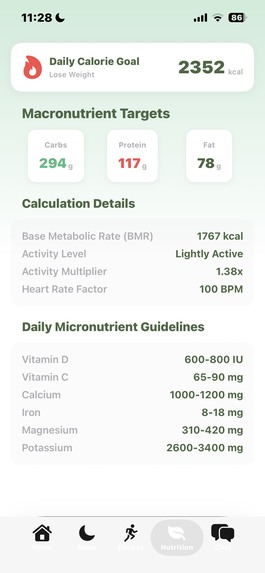
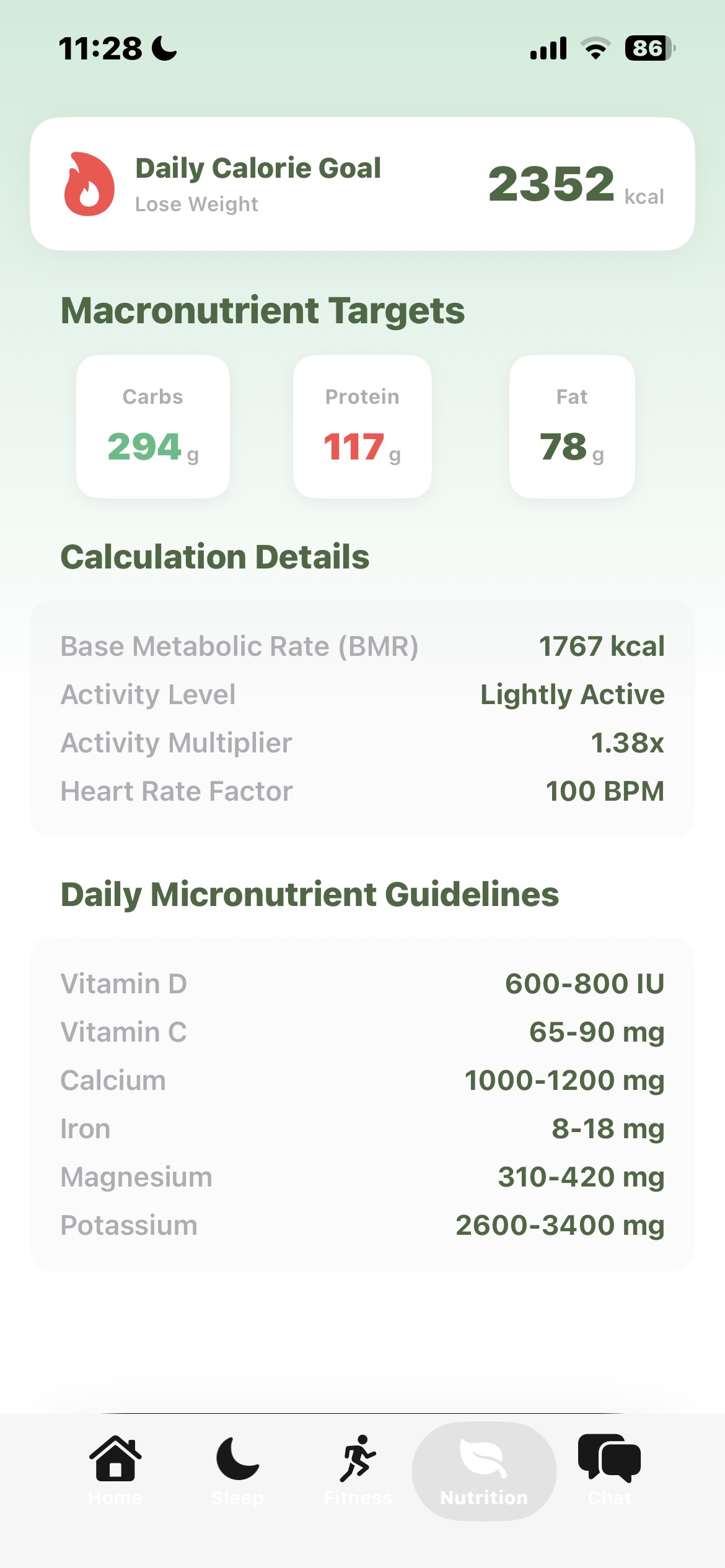
Nutrition Tab
-
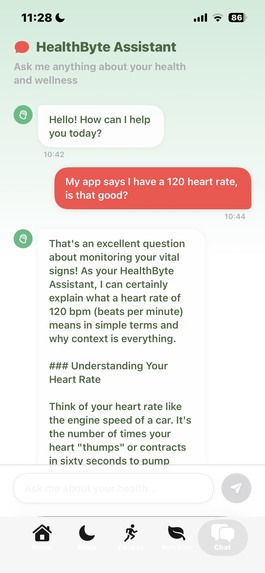
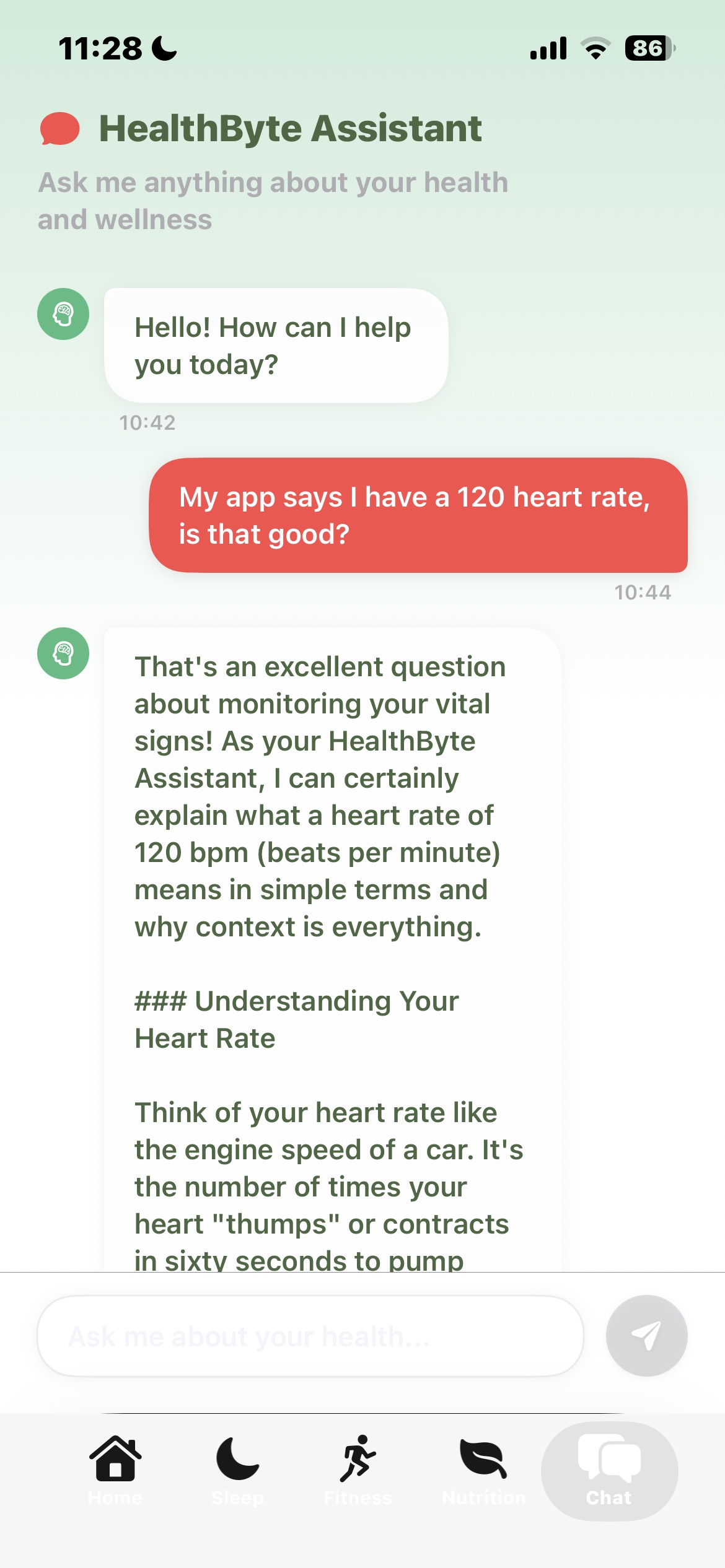
AI Helper Chatbot
-
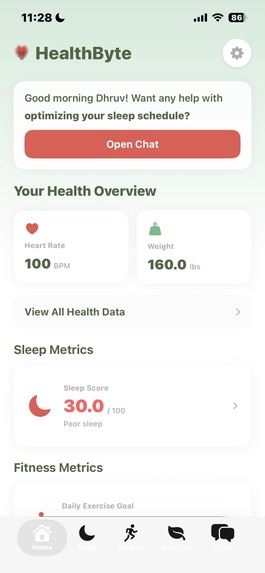
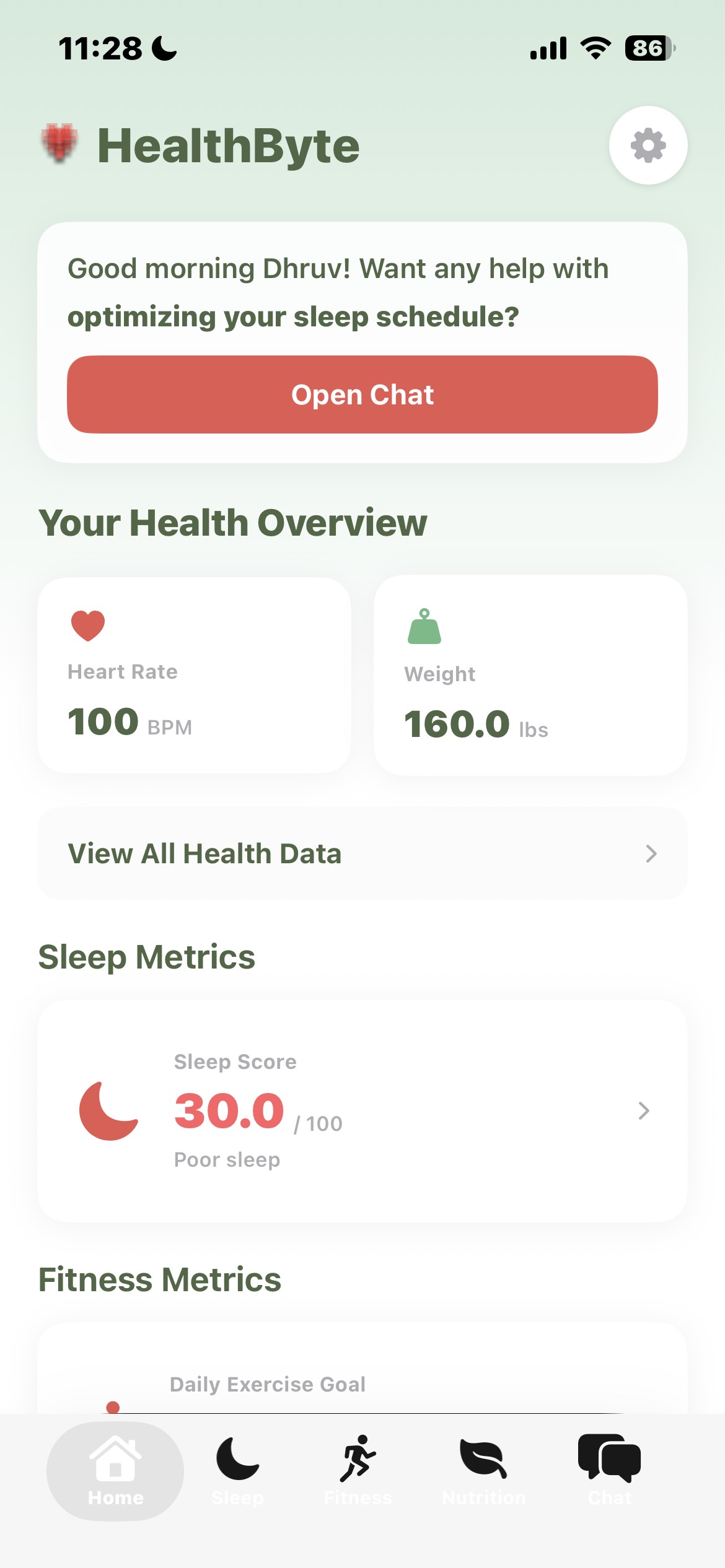
Home Page
-
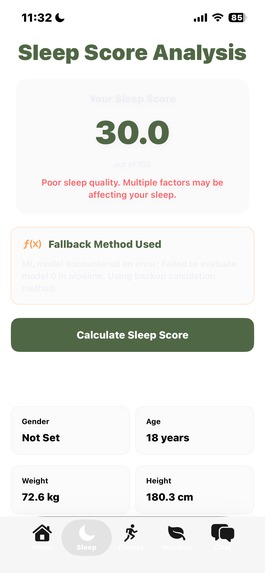
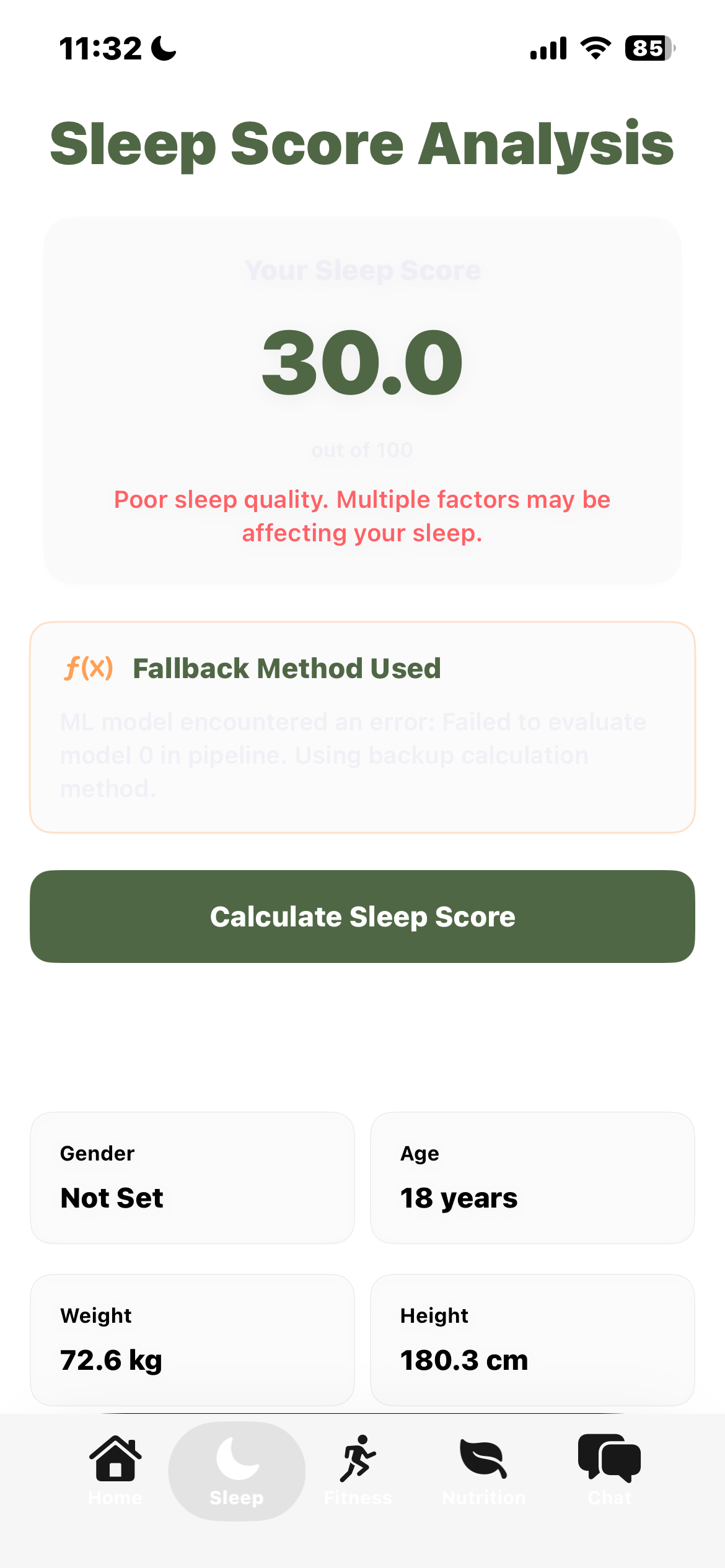
Sleep Tab
-
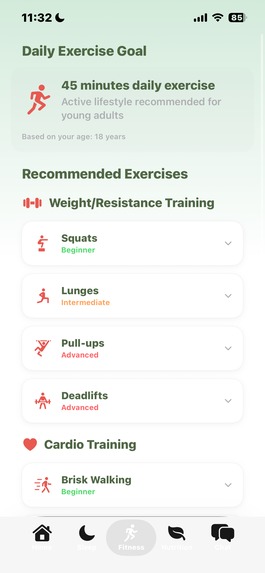
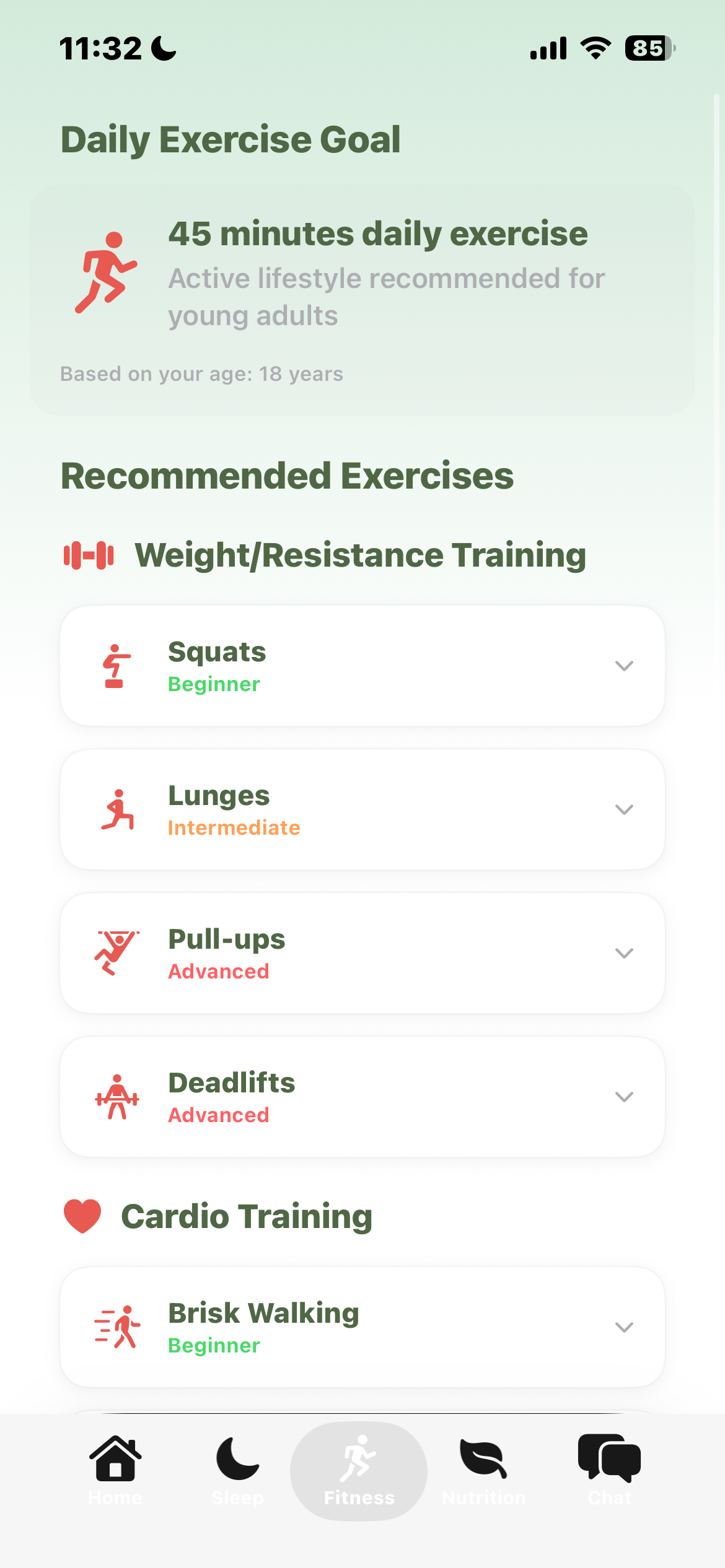
Fitness Tab
Business and Marketability
What are we trying to solve? In modern society, the average person’s health has declined in comparison to decades or even centuries past. Reasons for this include an increasingly sedentary lifestyle, lack of proper nutrition, and inadequate recovery. Unfortunately, many people fall into this familiar lifestyle with the fleeting notion of ‘changing something tomorrow'. However, tomorrow never comes. With HealthByte, we plan to fix this by providing users with easily actionable steps to fix their sleep, fitness, and nutrition under changeable circumstances and minimal maintenance.
How is this issue relevant? With shifting social media trends, people are more concerned with their health far more than the past decade. Additionally, a person’s health is forever a relevant issue, as it is possibly the only thing someone can fully control in life! Any other issue can be viewed as frivolous in comparison, as an individual’s health is the only thing they will truly carry around with them for the entirety of their time on Earth, solidifying its relevance across all age groups.
Who is this geared toward? There are three distinct age groups that this product is geared toward.
- Teenagers and Young Adults: In recent years, teenagers and young adults have become increasingly concerned with their physical health and well-being through new social media trends. In particular, gym culture has become increasingly mainstream in the young teenage male space (13-16), motivating more constituents of this age bracket to optimize their health further.
- Middle Aged Adults: Middle-aged adults are concerned with their health for the purpose of staying in good physical condition as they transition into old age. As many of these individuals are still working, they may not be getting adequate sleep, physical training, or even nutrition. Pressing conditions such as sarcopenia (age-based muscle atrophy) or even declining health due to inadequate recovery keep this issue quite relevant in this age bracket.
- Older Adults Most older adults are retired individuals who want to support their leisurely lifestyle for as long as possible. Doing so requires breaking free of the sedentary lifestyle they have become accustomed to and optimizing exercise, recovery, and nutrition to combat the aforementioned conditions 1such as sarcopenia to live a mobile and healthy life for as long as possible, keeping this issue of utmost importance.
What is our path to revenue? Our product will be marketed in two main formats.
- B2C: The primary method of revenue generation will be via business to consumer marketing, where the consumer can install our mobile application.
- B2B: A secondary method of revenue generation will be via business to business marketing, where we can monetize API access to our DNN for other institutions (such as medical institutions). Finally, our exit strategy would be selling the software to a health company that is more experienced in this domain.
Technical Implementation
Feature Selection Below are the primary features we will be utilizing for data evaluation. • Age [8, 7] • Sex [8, 7] • BMI/Adiposity Measures [2, 3, 6] • Blood Pressure (Systolic and Diastolic) [4, 10, 6] • Cardiovascular Biomarkers (CDP, HDL, LDL, triglycerides) [4, 1, 6] • Metabolic Markers (glucose, HbA1c, insulin/HOMA-IR) [1, 6] • Physical Activity Level [9, 5, 11, 12] These features were chosen based on research findings.
Neural Net Training We convert the categorical variables into a binary representation. Then, we take our training data and feed it through the neural net, training it to reach the target output of x hours of sleep using Mean Squared Error for the loss function and using Adam for backpropogation and blame assignment. At the end of training, we will have neuron weights corresponding to ideal sleep duration based on inputted features, ready for use.
Functionality
Now that we’ve gone over all technical and business-oriented details, we detail the actual functionality of this app.
Sleep Optimizer Given user-inputted data (or health metrics from an Apple Watch, Fitbit, or Whoop), the app runs the data through our neural net, outputting recommended sleep hours and duration for the user. Furthermore, the user can interact with an AI agent to alter the sleep recommendations. For example, the user can tell it about a future event that would conflict with the recommended sleep pattern, allowing the AI to recalibrate future days to ease the user back into their optimal schedule. Retrospective optimization is also possible, wherein the user can describe a past event for the AI to optimize future nights on.
Physical Activity Optimizer Given user-inputted data (or health metrics from a fitness device), the app runs a deterministic algorithm to return a heuristic on the amount of physical activity recommended for the individual based on their personal goals (shared during onboarding). User fulfillment of these benchmarks will dynamically alter the sleep optimizer as well.
Nutrition Checklist Given user-inputted data (or health metrics from a fitness device), the app runs a deterministic algorithm to return a heuristic on the amount of calories, macronutrients, and micronutrients needed for user consumption along with recommendations of potential food choices. API integration of scan-to-macro programs are present, allowing for seamless daily progression.
Built With
- python
- swiftui

Log in or sign up for Devpost to join the conversation.