About the Project
Inspiration
HealthBridge was inspired by my experience of being asked to buy medicine for my family. There are many brands, strengths, forms, and pack sizes that I do not immediately recognize. Even when two medicines appear similar, I still need to know:
- Are they truly comparable?
- What is the actual price difference?
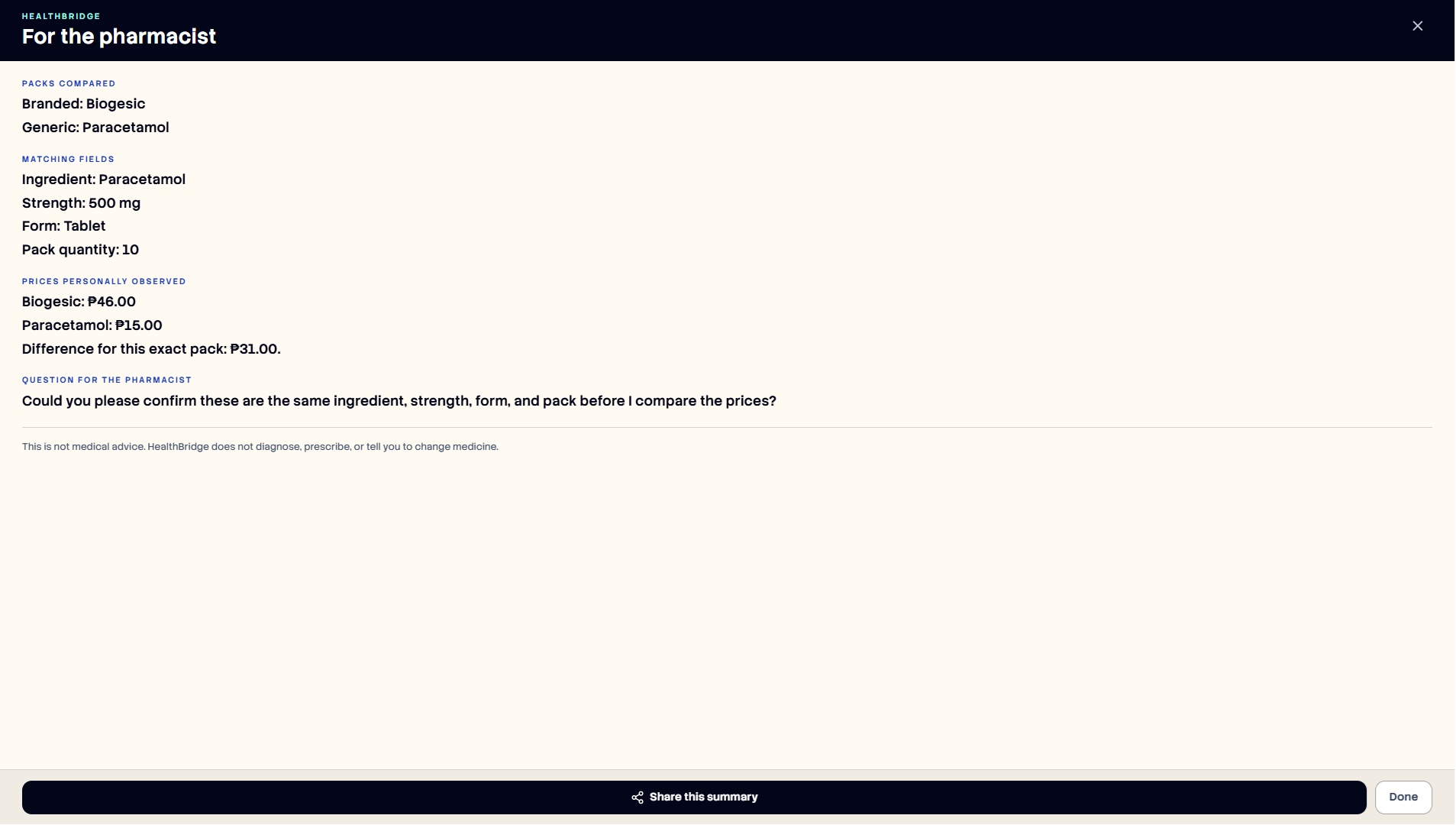
- What should I confirm with a pharmacist or healthcare professional?
This made me curious about how technology could help people prepare for these conversations without making medical decisions for them.
What We Built
HealthBridge is a privacy-first care preparation tool for Filipino families.
It helps users:
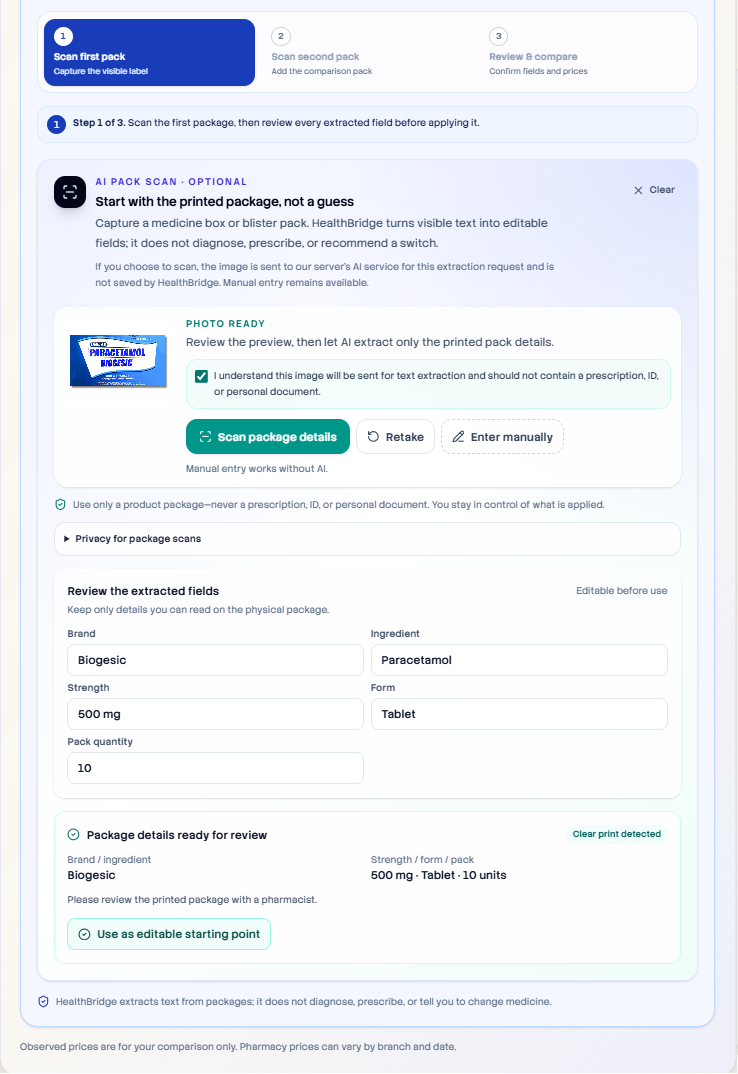
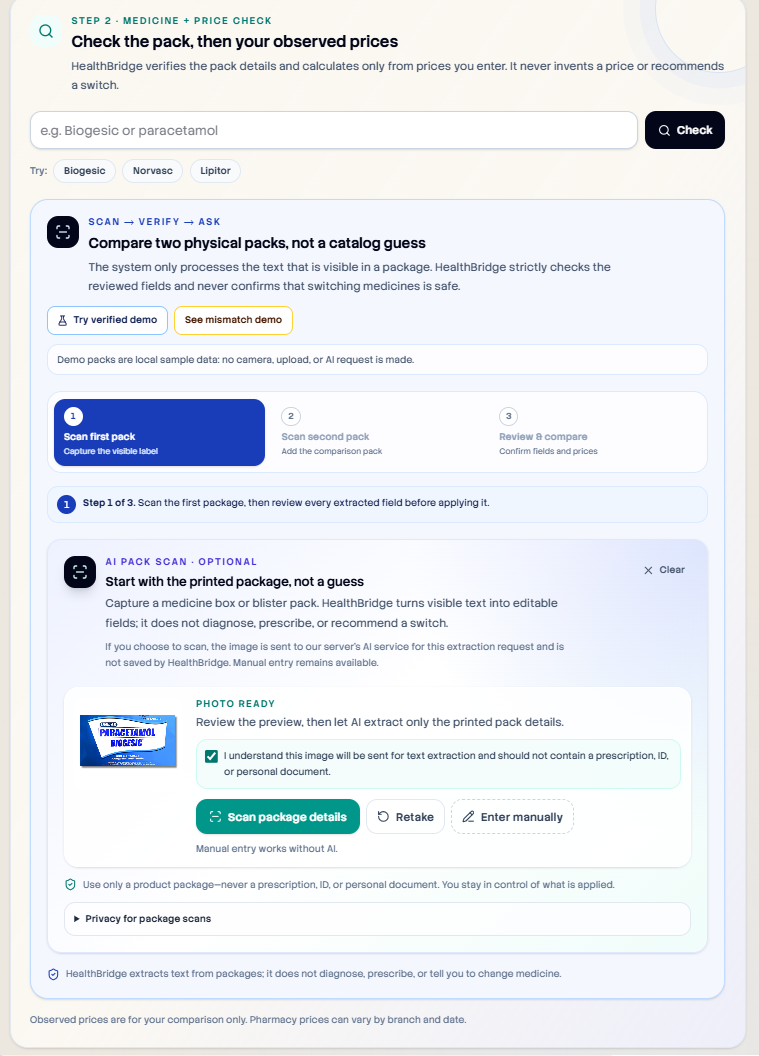
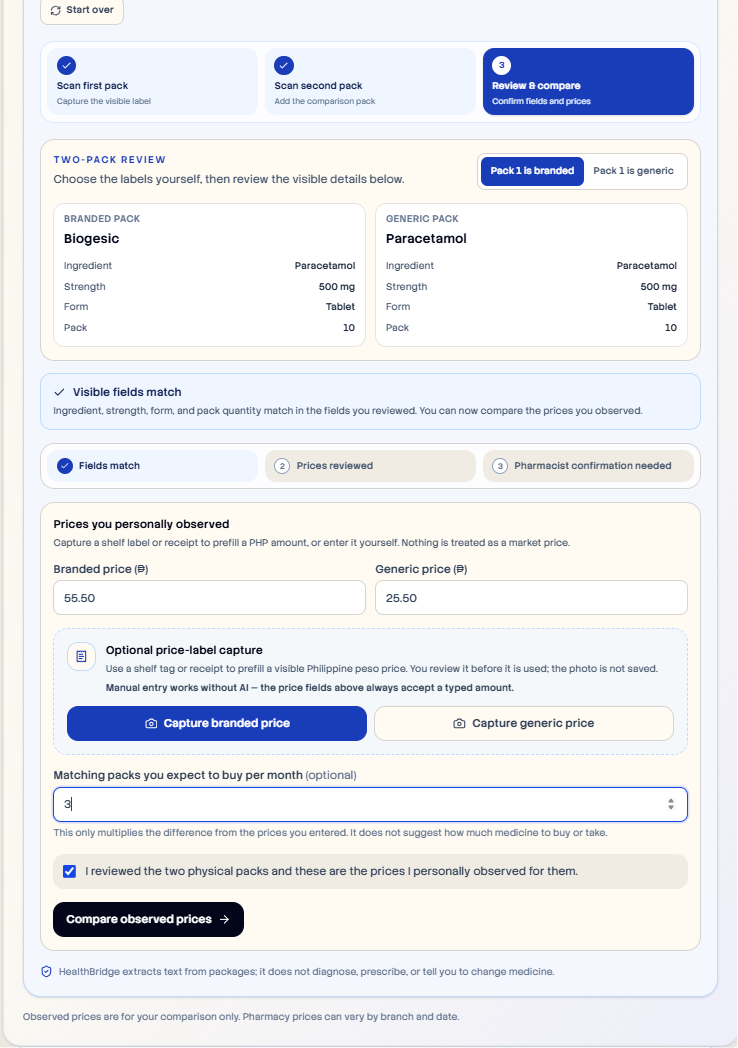
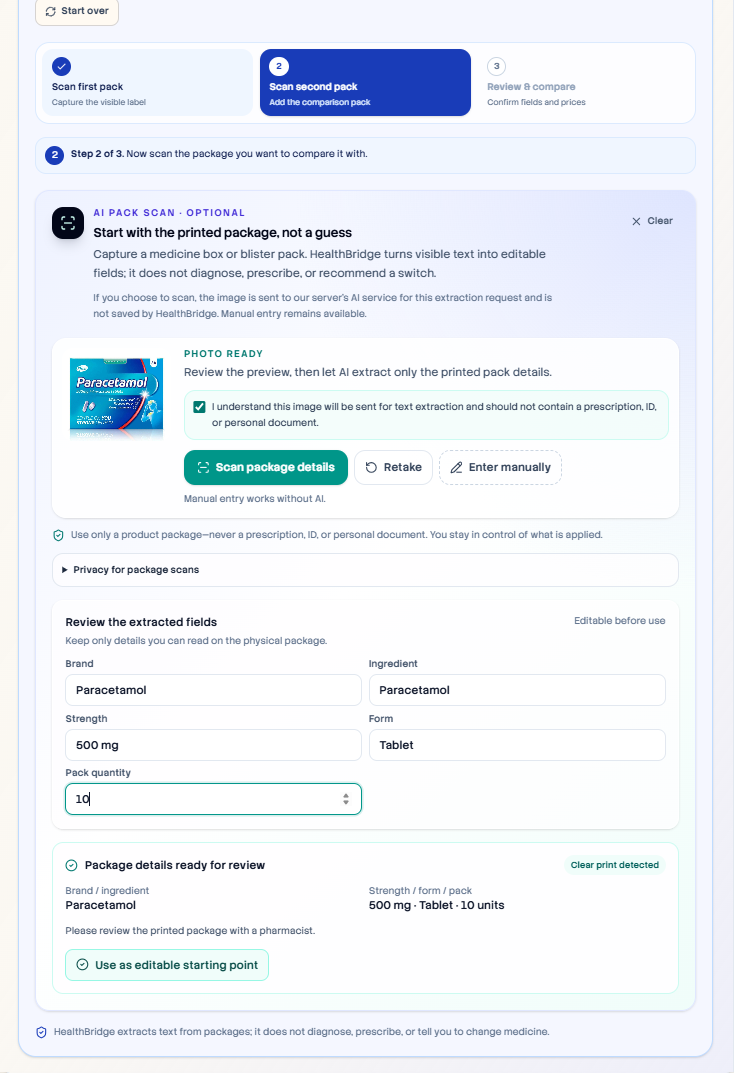
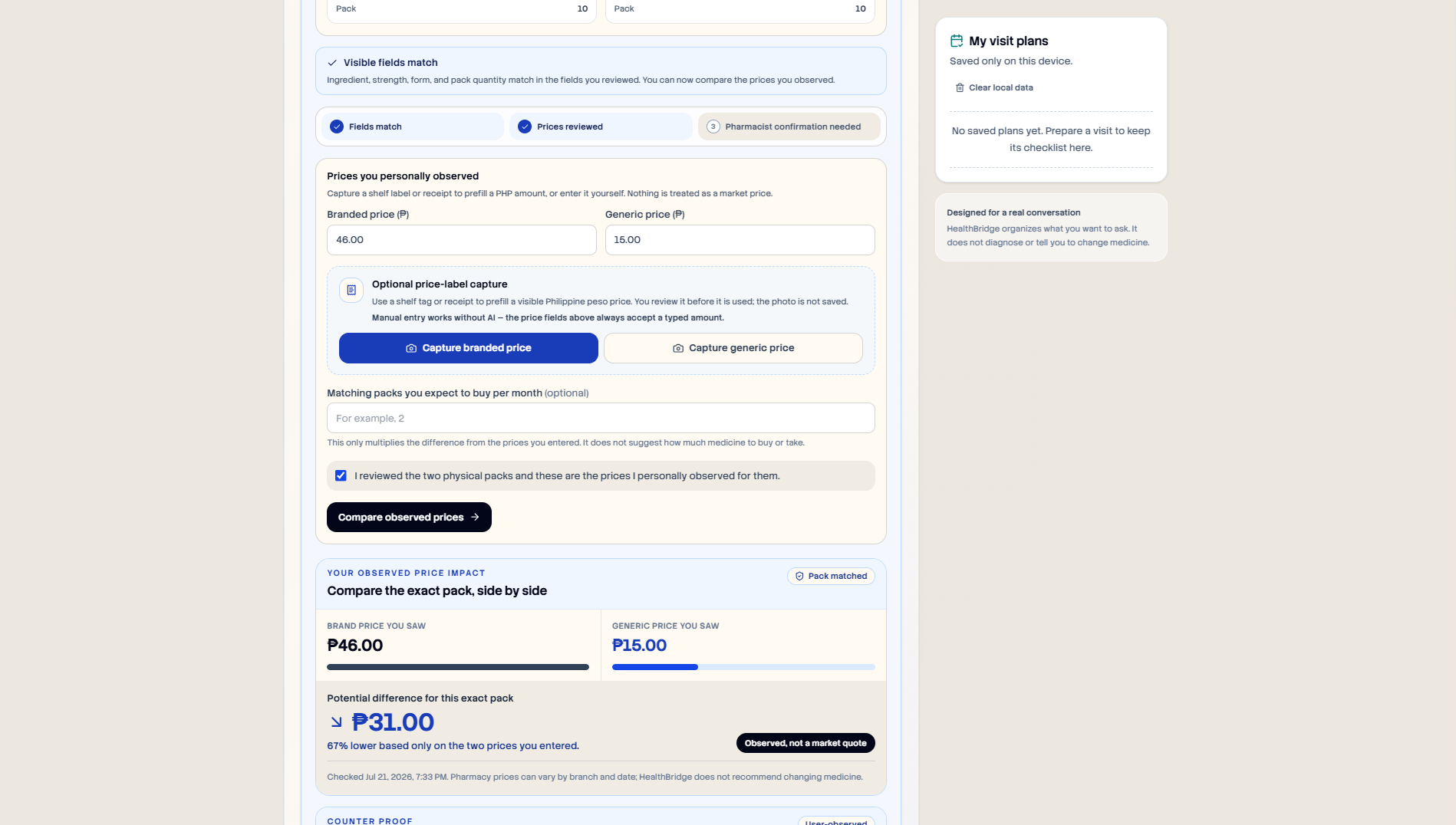
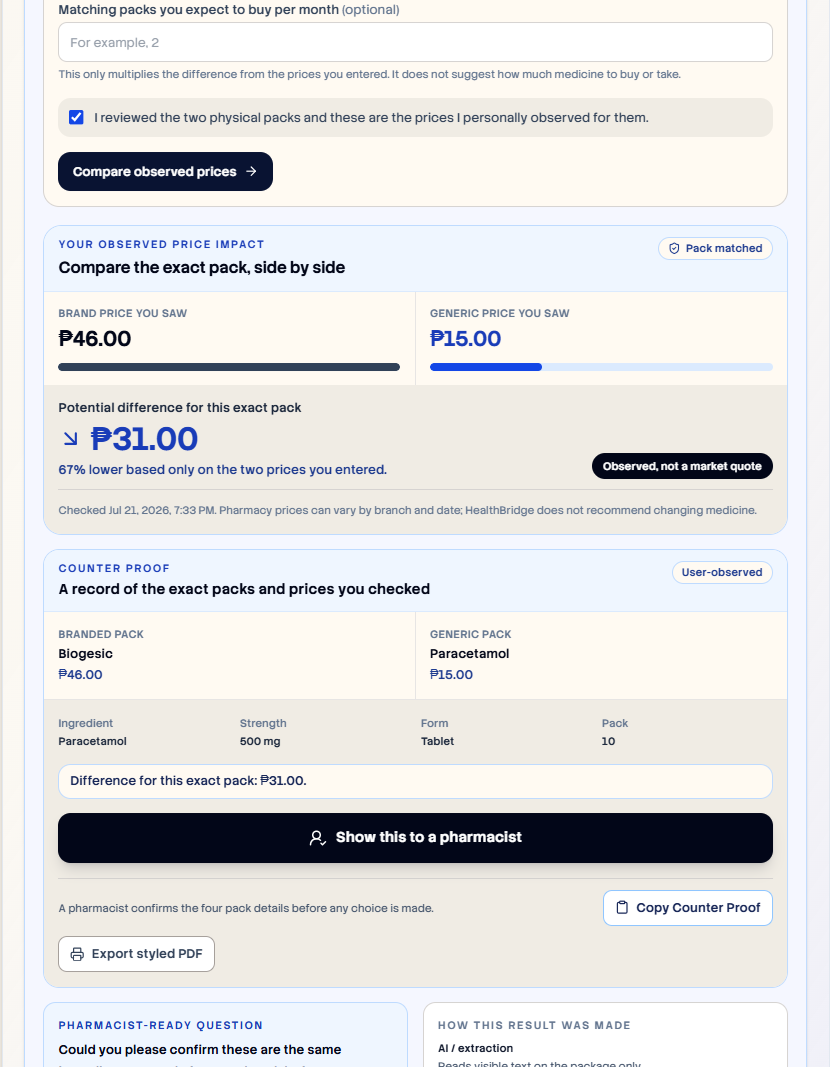
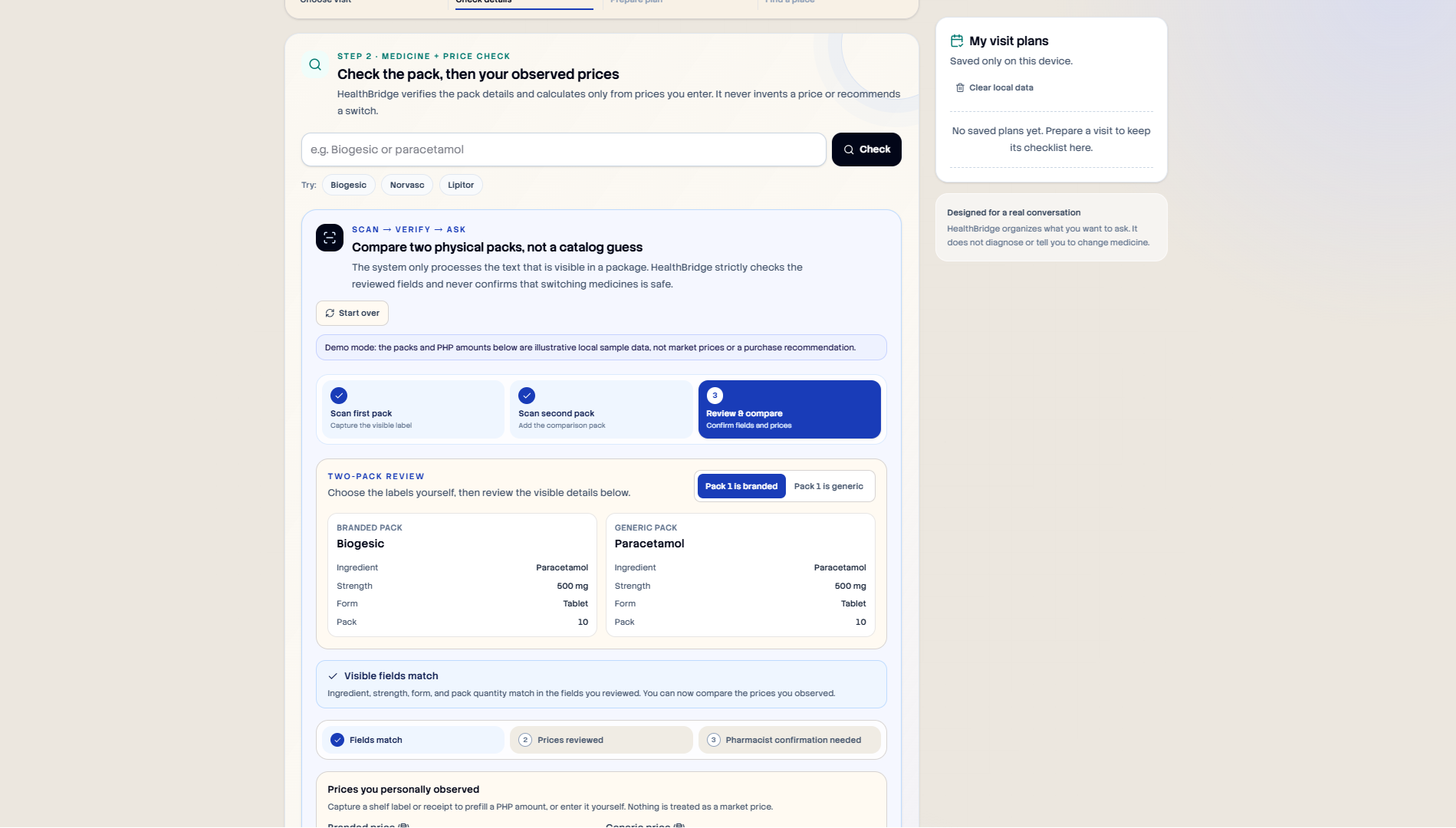
- Compare medicine packs only when the ingredient, strength, form, and pack quantity match.
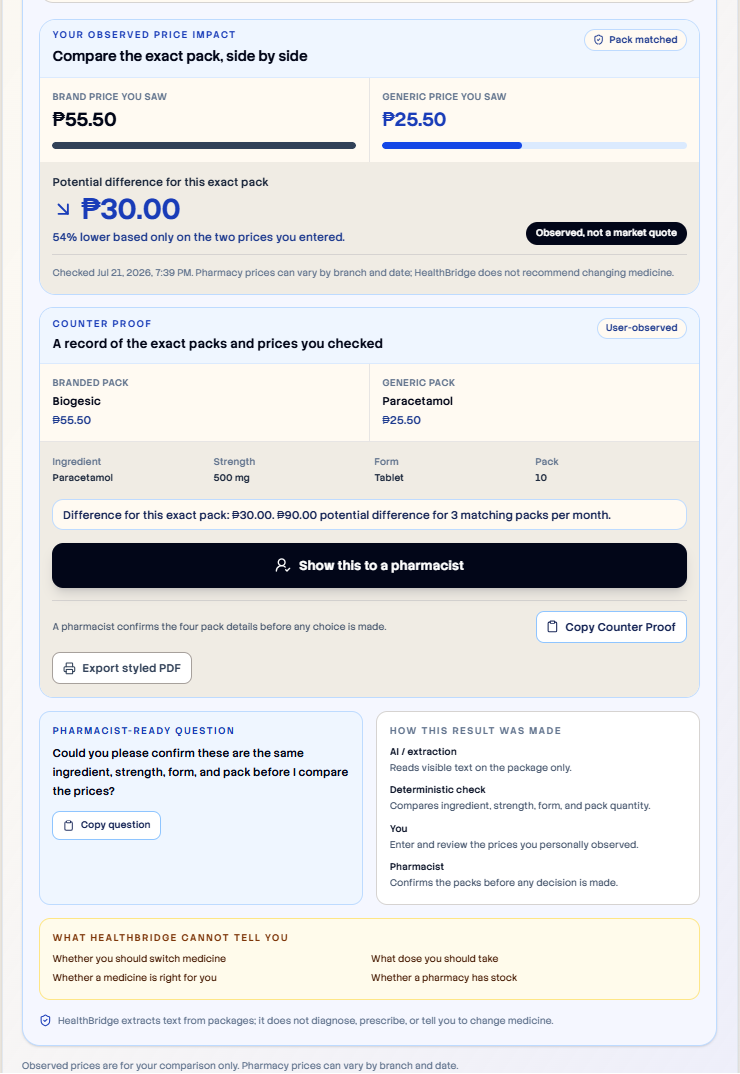
- Calculate savings from prices the user personally observes.
- Block unsafe comparisons when any matching field differs.
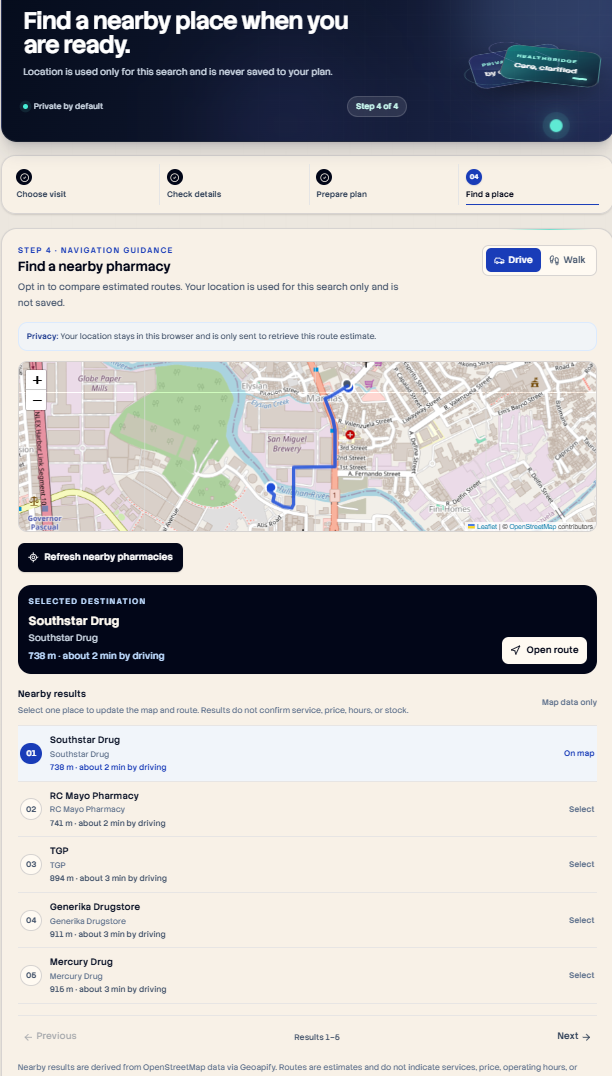
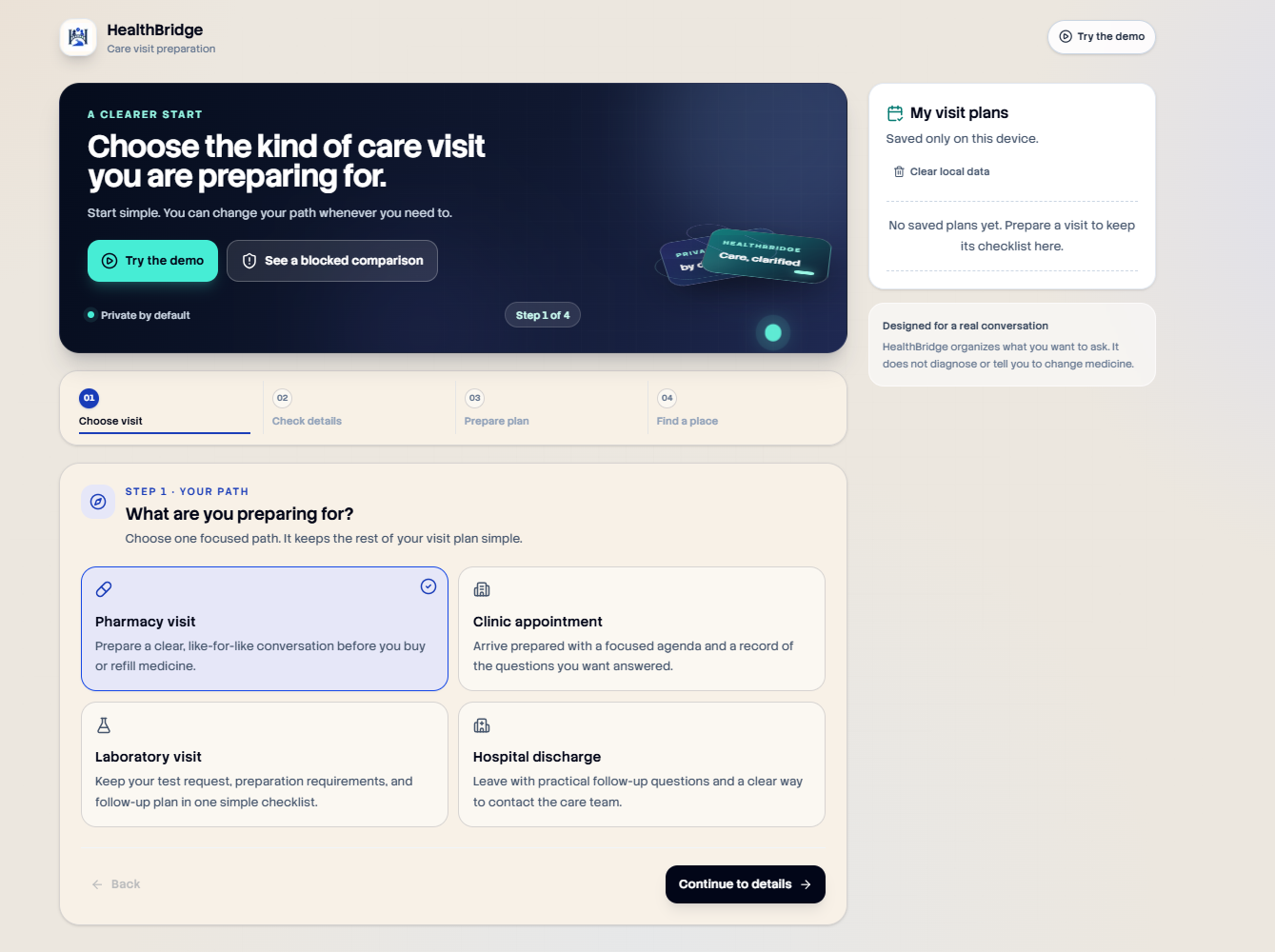
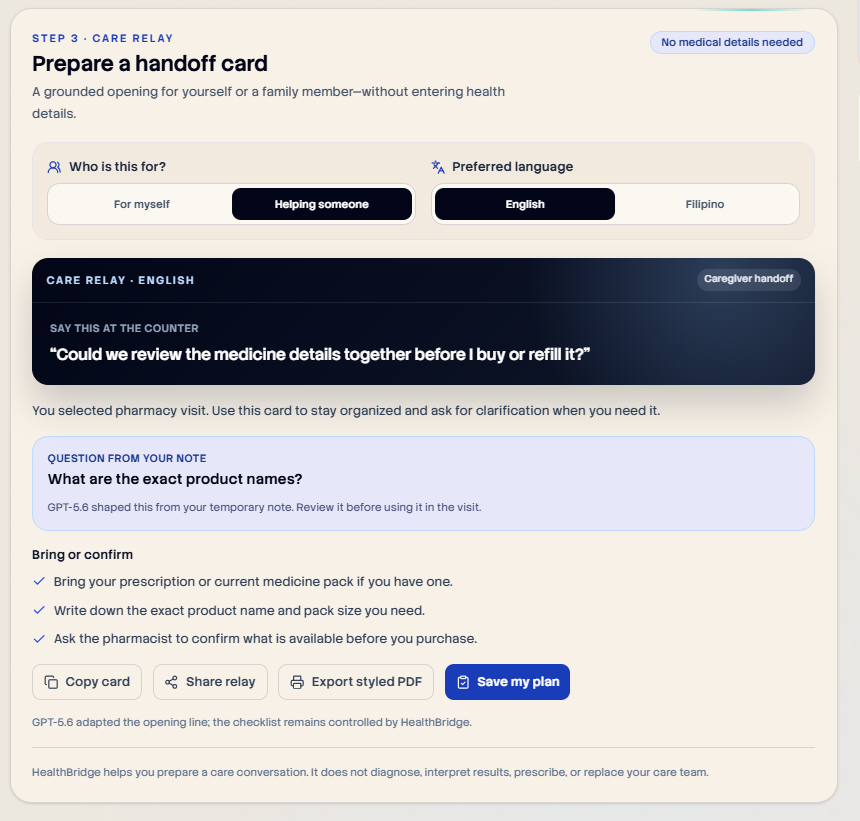
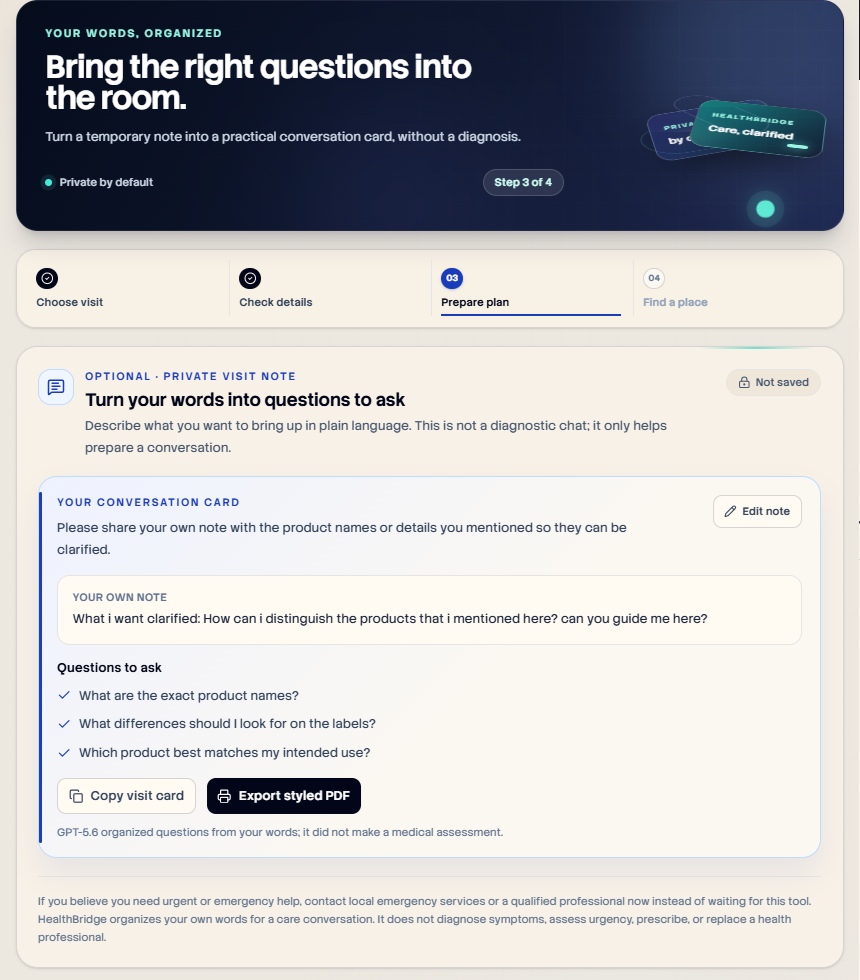
- Prepare questions for pharmacy, clinic, laboratory, and hospital discharge visits.
- Create a shareable and printable Care Relay handoff.
- Continue using the core experience with local demo data, even without API keys or camera access.
The observed price difference is calculated as:
[ \Delta P = P_{\text{brand}} - P_{\text{alternative}} ]
HealthBridge presents this as evidence for discussion—not as a recommendation to switch medicines.
How We Built It
We built the project with Next.js, React, TypeScript, and Tailwind CSS.
Codex helped us implement and refine:
- The responsive product interface.
- The one-click local demo journey.
- Deterministic medicine matching.
- Safety fallbacks and privacy controls.
- Care Relay flows for clinic, laboratory, and discharge visits.
- Automated tests and evaluation fixtures.
GPT-5.6 is used to organize user-provided notes into practical questions and opening lines. Its output is validated before reaching the interface. If AI is unavailable or produces unsafe content, HealthBridge falls back to a deterministic template.
What We Learned
Our biggest lesson was that AI should support a healthcare conversation, not replace the healthcare professional.
A trustworthy experience needs to show:
- What information was used.
- What the system verified.
- What the user must confirm.
- What the system cannot tell the user.
We also learned that fallback behavior is part of the product, not an afterthought. A demo or real user should never be blocked just because an API, camera, browser feature, or network connection is unavailable.
Challenges
The main challenges were:
- Preventing visually similar medicine packs from being treated as equivalent.
- Keeping AI outputs non-clinical and free from diagnosis, dosage, or switching advice.
- Designing a useful experience for pharmacy, clinic, laboratory, and discharge contexts without overwhelming users.
- Making the experience work on small mobile screens and in reduced-motion mode.
- Protecting privacy by keeping temporary data local and clearly explaining what is sent for AI processing.
HealthBridge is designed to help people arrive better prepared, ask clearer questions, and make safer decisions together with qualified healthcare professionals.
Built With
- gpt-5.6
- javascript
- localstorage
- lucidereact
- motion
- next.js
- openai
- react
- tailwindcss
- typescript
- webspeechapi


Log in or sign up for Devpost to join the conversation.