-
-
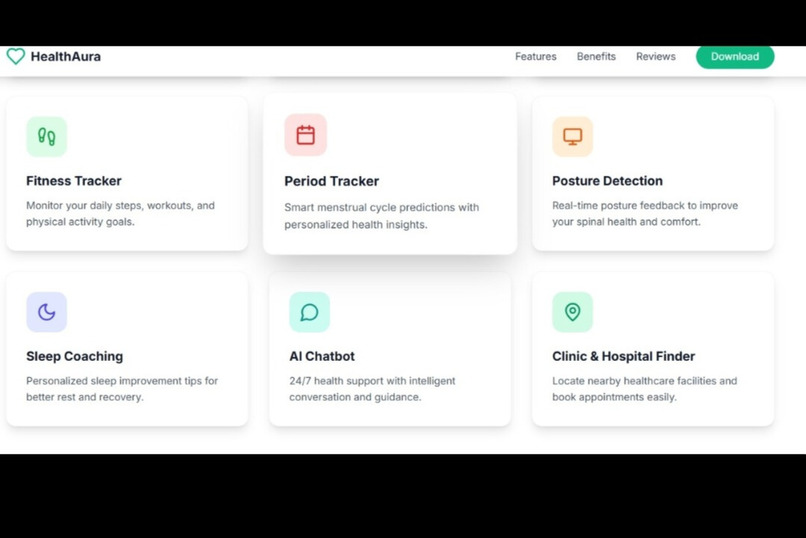
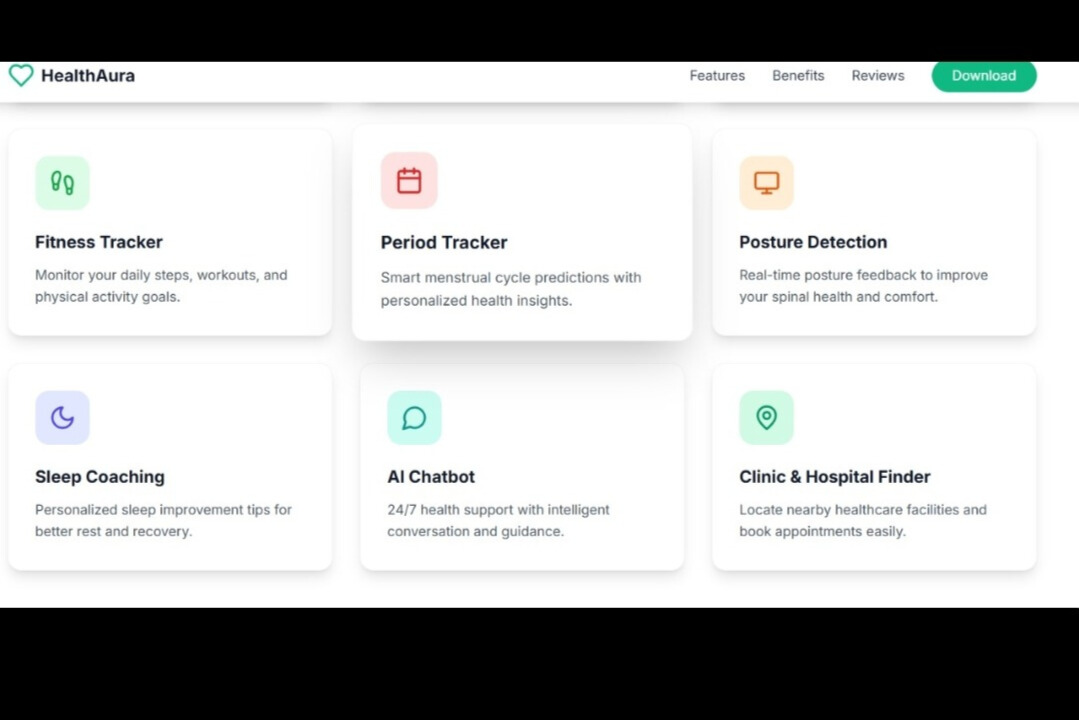
Features designed
-
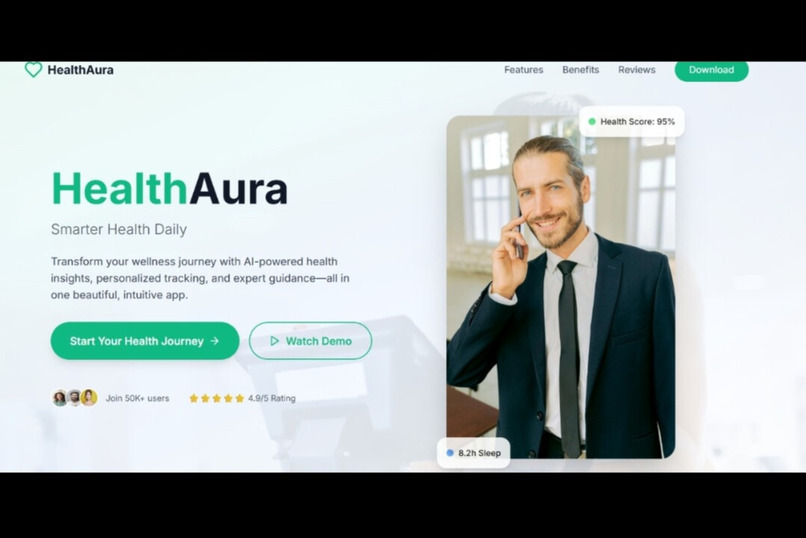
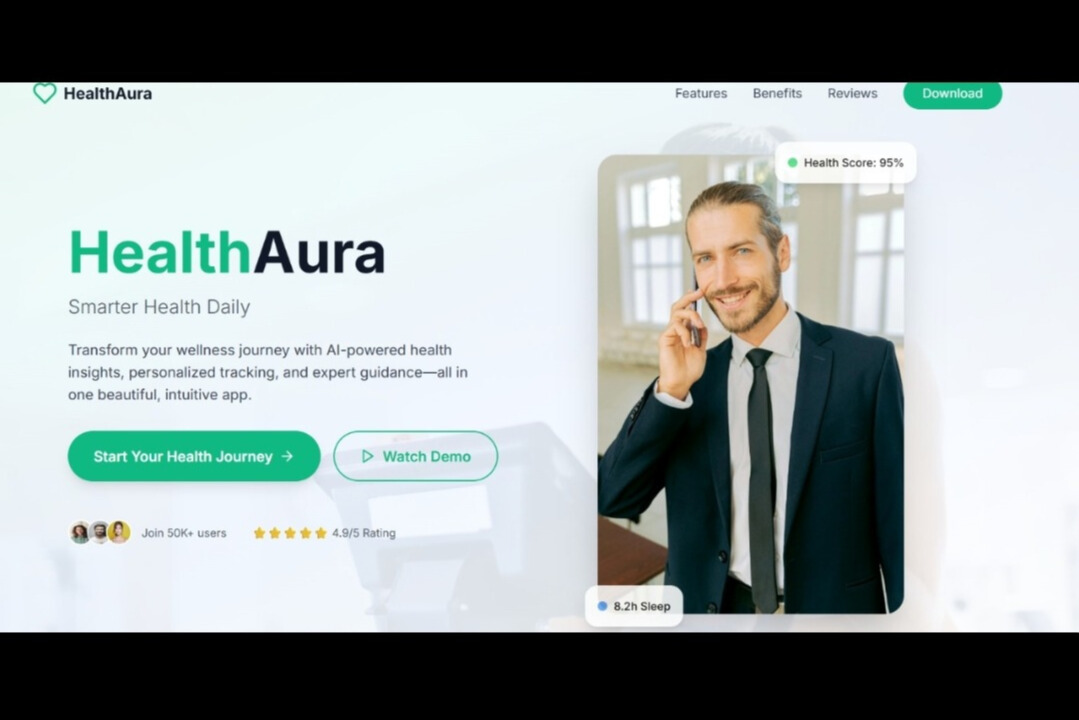
Homepage
Inspiration
In today's fast-paced world, many people—especially students and young professionals—struggle to track their health consistently. We noticed that while many apps focus on fitness, very few offer a complete wellness solution that includes mental health, posture, sleep, AI insights, and clinic discovery all in one place.
This inspired us to build HealthAura — an intelligent health assistant that supports everyday wellness through AI-powered tools, designed for accessibility, simplicity, and real impact
What it does
The app allows users to:
- ✅ Track their daily mood and emotional well-being through simple check-ins.
- 🩺 Check symptoms with an AI-based symptom checker for early insights and health suggestions.
- 🧘♀️ Receive personalized sleep coaching based on sleep patterns and habits.
- 🏃♂️ Monitor fitness activity, including steps, movement, and exercise progress.
- 🌸 Track menstrual cycles with period predictions and reminders.
- 🧍 Detect poor posture and provide real-time posture improvement tips.
- 🤖 Chat with a smart AI health assistant to ask questions, get advice, or resolve doubts instantly.
- 🏥 Find nearby hospitals and clinics based on their location and get directions.
- 📊 View personalized health summaries based on user-entered data and trends over time. All of this is delivered through a clean, modern interface that makes wellness support easy, insightful, and accessible to everyone — from beginners to health-conscious users.
How we built it
We built HealthAura using a combination of beginner-friendly tools and AI platforms. The main features were created with the help of no-code/low-code tools like Framer for the user interface and Bolt AI for integrating smart health assistant features. We used ChatGPT to generate symptom-checking responses and health tips, and we added custom logic for tracking mood, sleep, and basic health goals. The visual design and branding were created using Canva, focusing on simplicity and accessibility for all users.
Challenges we ran into
Bringing multiple health features together without overwhelming the user. We had to iterate many times to keep the experience smooth and focused. Learning curve with APIs (especially integrating location-based clinic finders and chatbot services). Time constraints during the hackathon pushed us to prioritize core features over extras. Balancing technical implementation with appealing design, especially for users unfamiliar with health tech.
Accomplishments that we're proud of
Built a fully functional MVP in a short timeframe, combining design, AI, and health-tracking logic. Designed a clean and calming user interface that feels professional yet beginner-friendly. Integrated an AI chatbot to support real-time health-related queries—making the app feel smart and helpful. Implemented a location-based clinic finder, giving users access to real, nearby healthcare options. Blended physical and mental health tools into one seamless experience—mood, sleep, posture, and more.
What we learned
Throughout the project, we gained valuable insights into: User-centric design – creating an intuitive, calming, and modern UI that makes users feel at ease. AI integration – using intelligent tools for mood analysis, symptom prediction, and chatbot support. Location-based services – enabling users to discover nearby clinics and hospitals with real-time access. Wellness UX – balancing features like period tracking, posture detection, and sleep coaching under one clean experience. We also learned how to design for trust—especially in the health space, where clarity and data privacy matter deeply.
What's next for HealthAura
We're planning to:
Add real-time health alerts and analytics dashboards. Partner with local clinics for in-app booking. Integrate wearable data from smartwatches. Improve chatbot intelligence using more advanced AI models.
Built With
- bolt.ai
- chatgpt
- clipchamp
- gamma


Log in or sign up for Devpost to join the conversation.