-
-
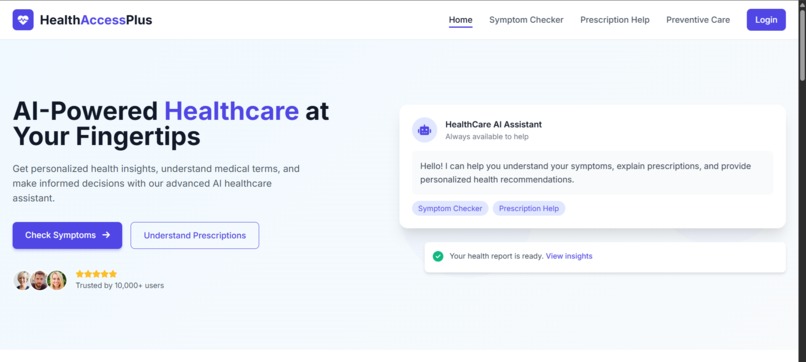
HomePage
-
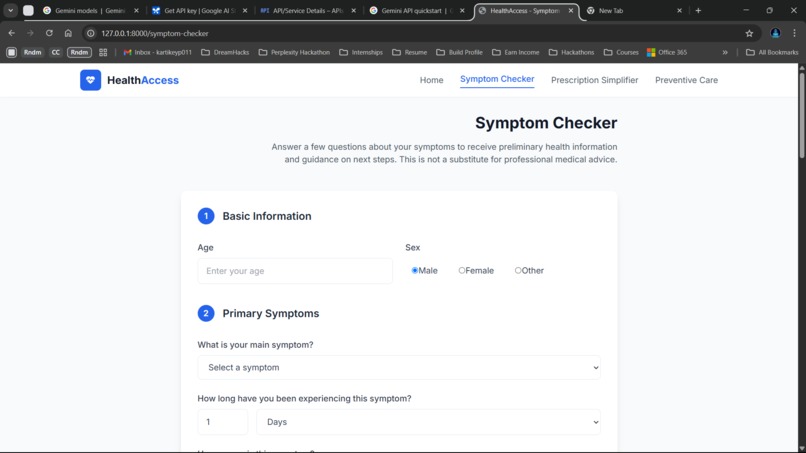
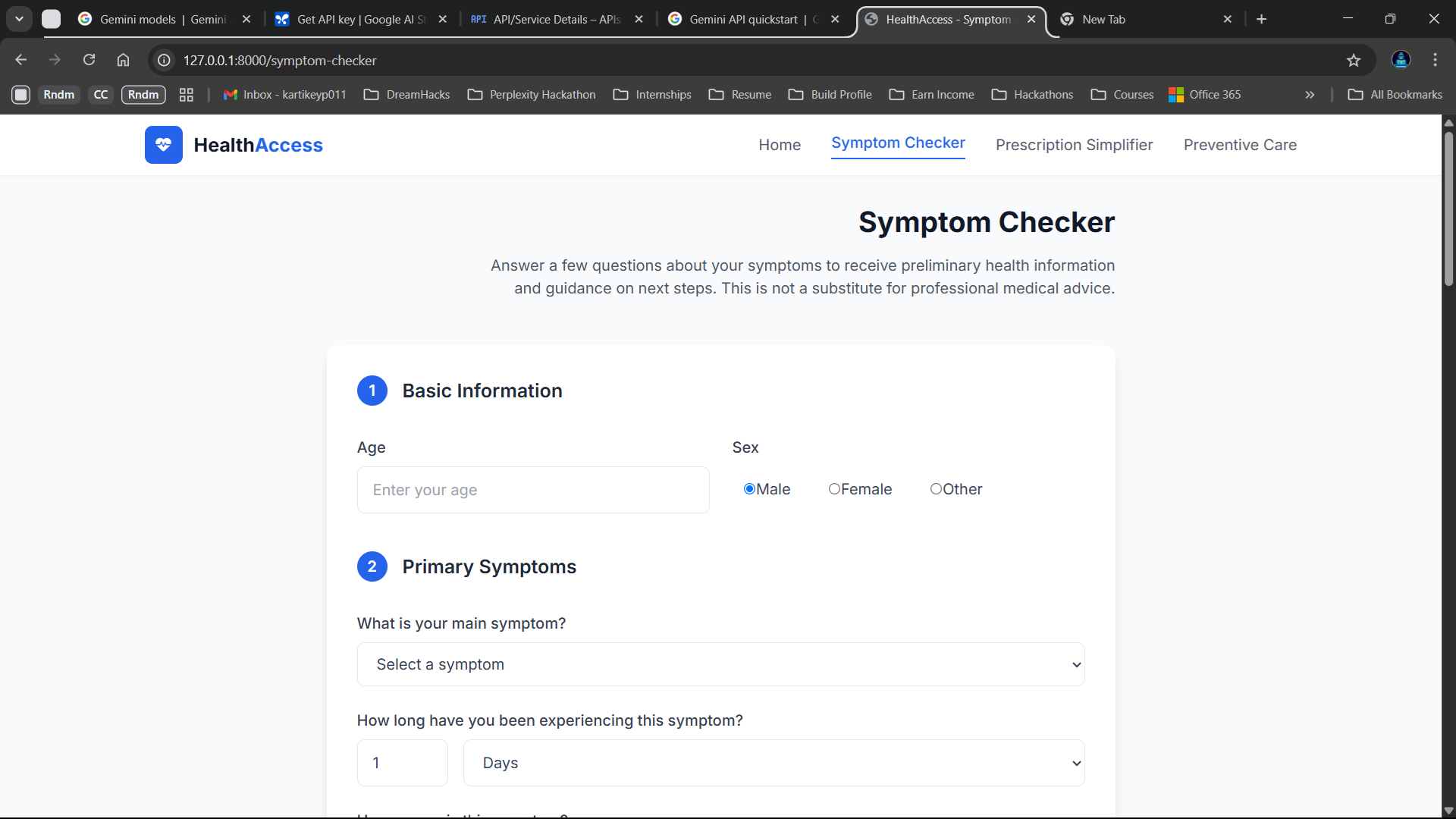
Symptom Page
-
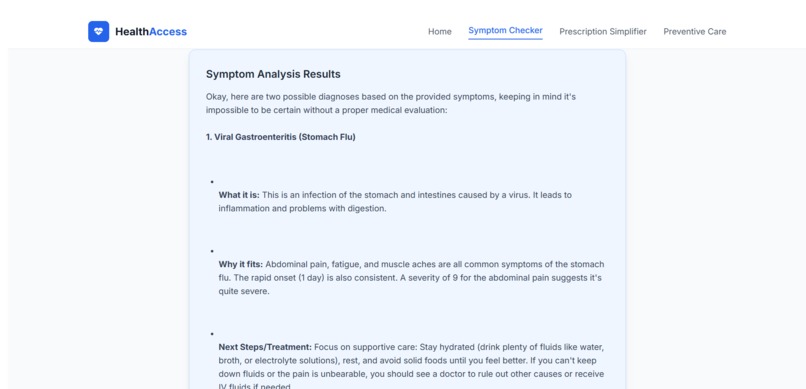
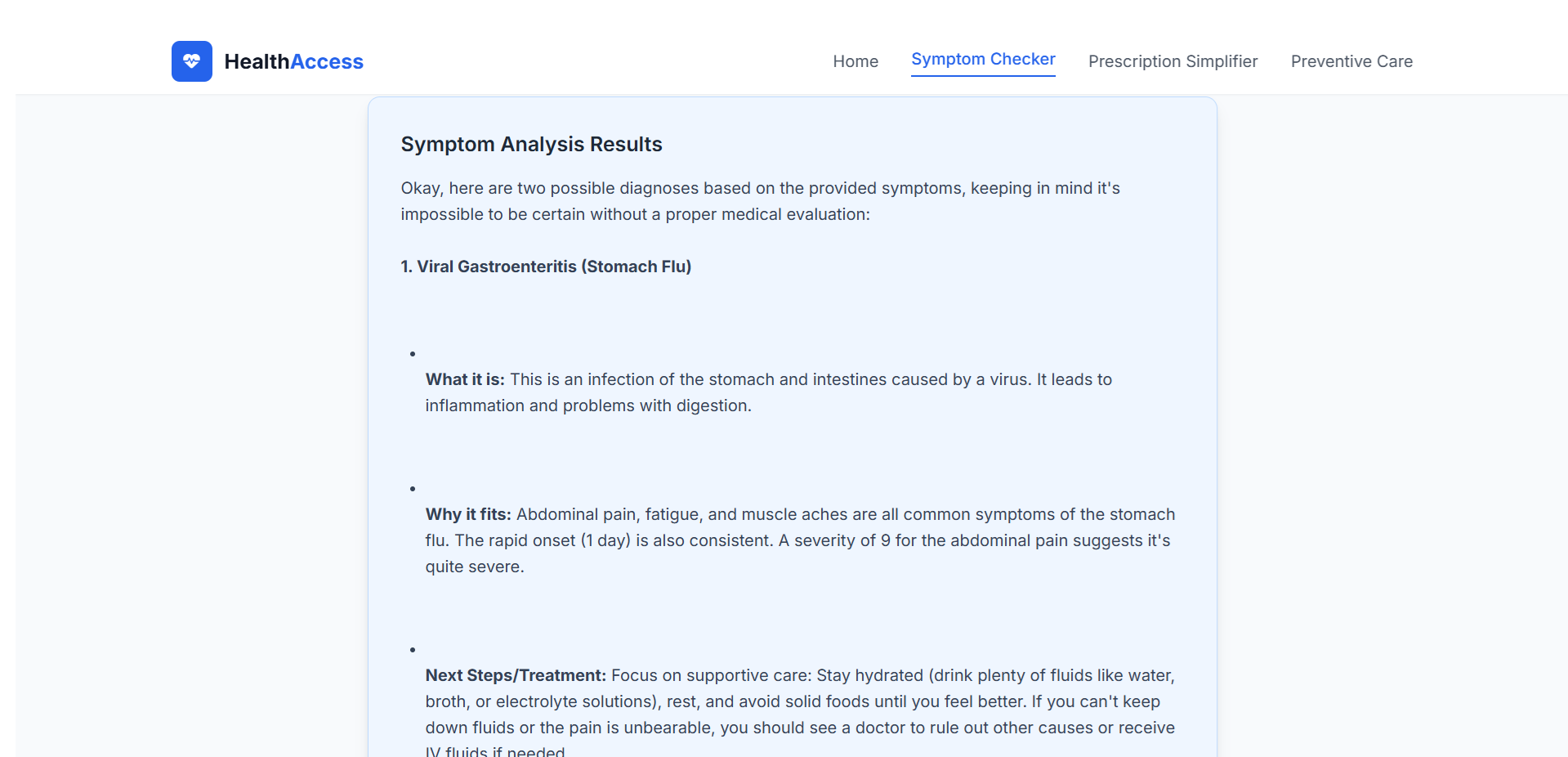
Symptom Result
-
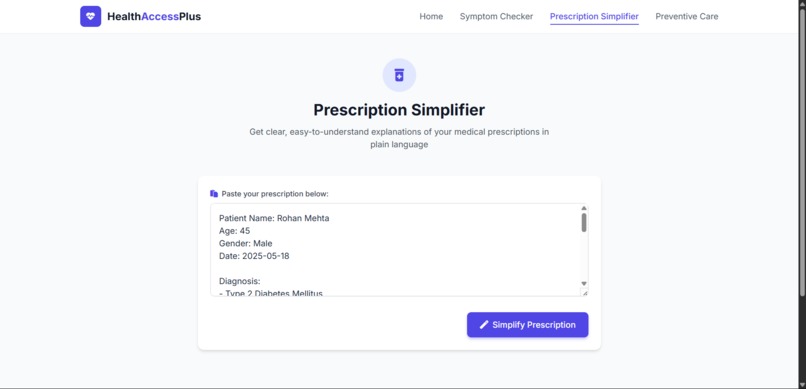
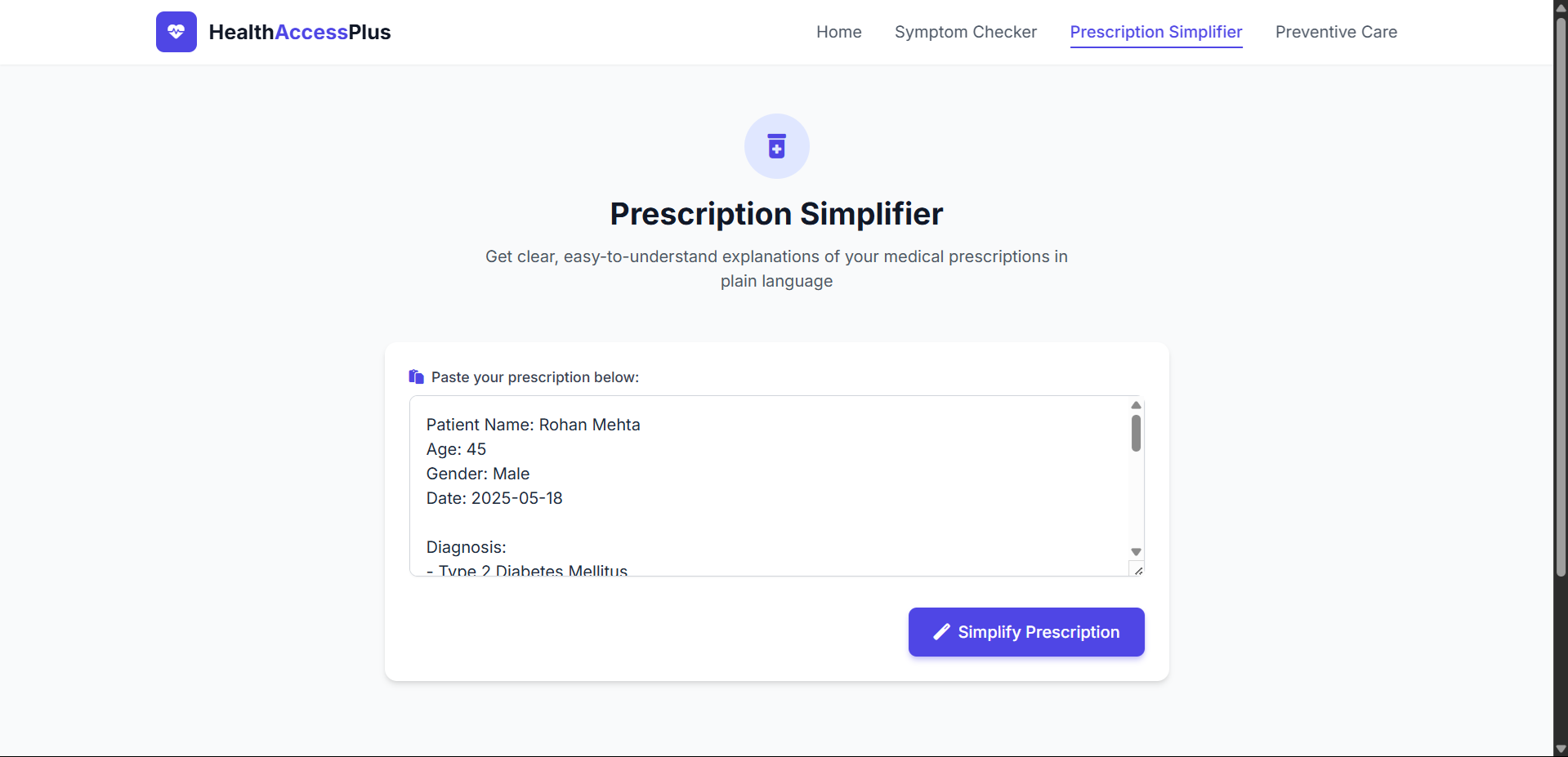
Prescription Simplifier
-
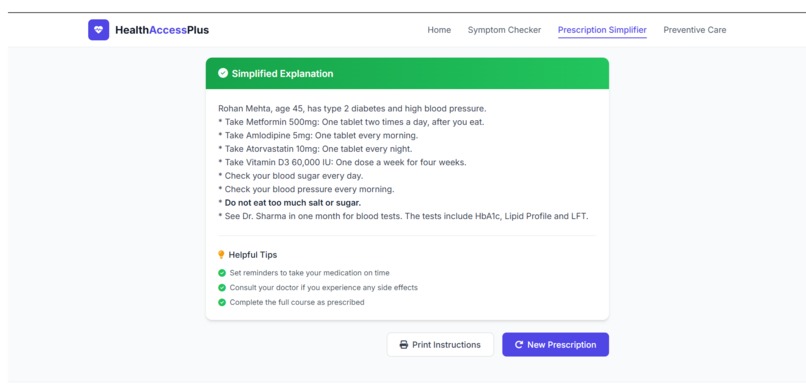
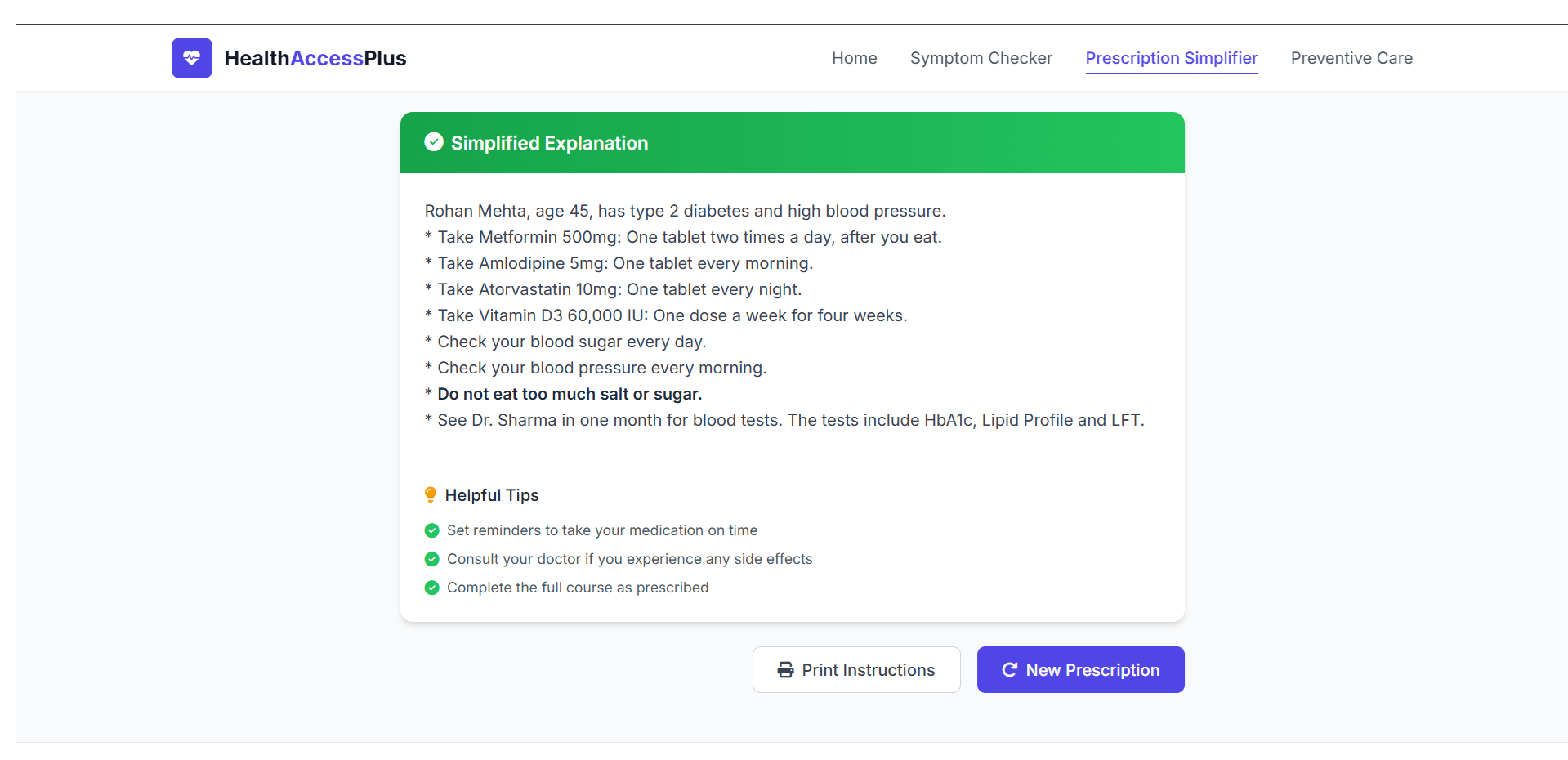
Prescription Result
-
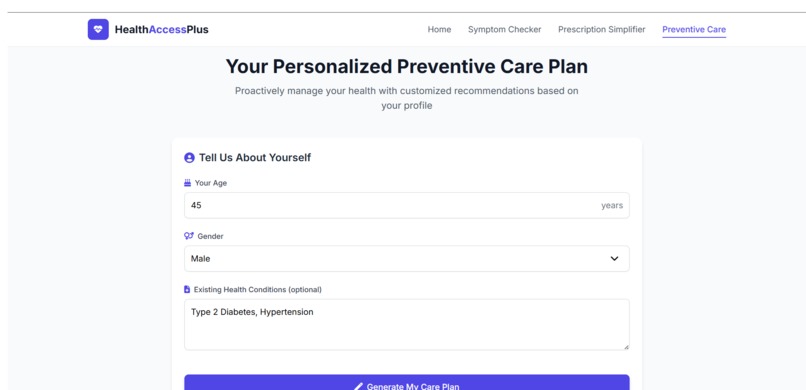
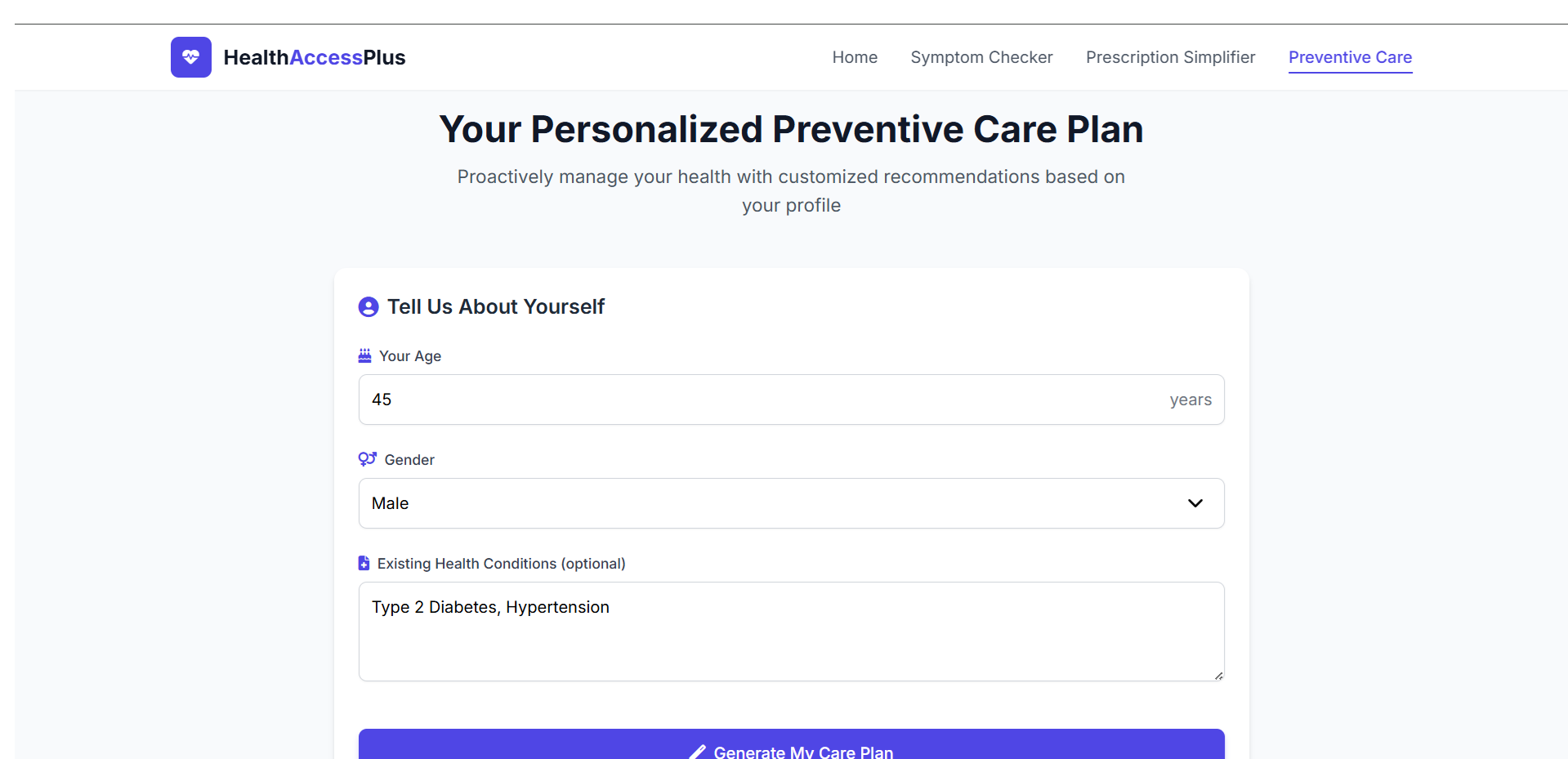
Preventive Care Planner
-
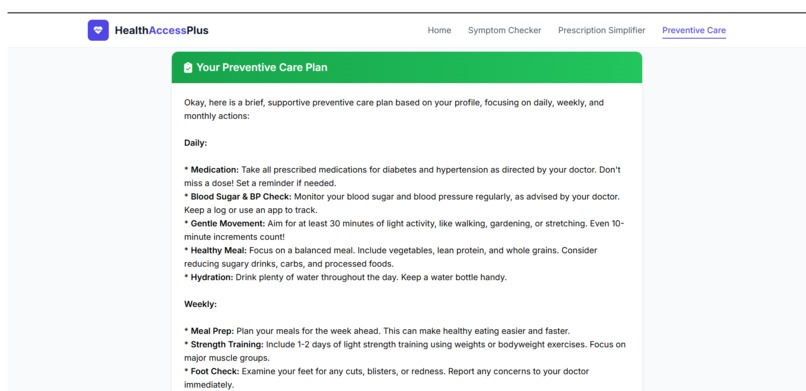
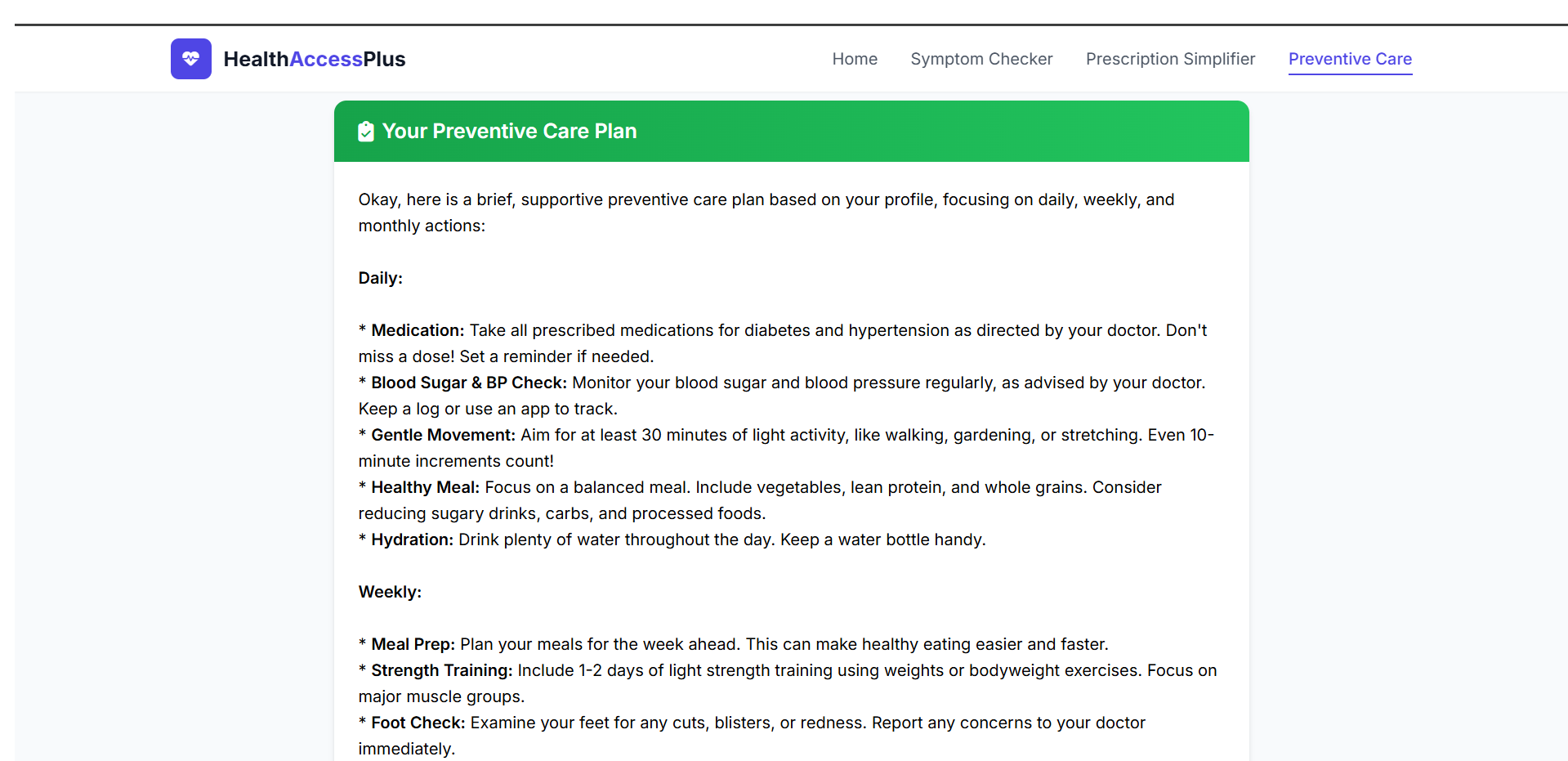
Preventive Care Result
Inspiration
While reading about rural healthcare gaps in India, I realized that millions still struggle to get timely medical advice. I wanted to build something that could help bridge that gap using accessible tech.
What it does
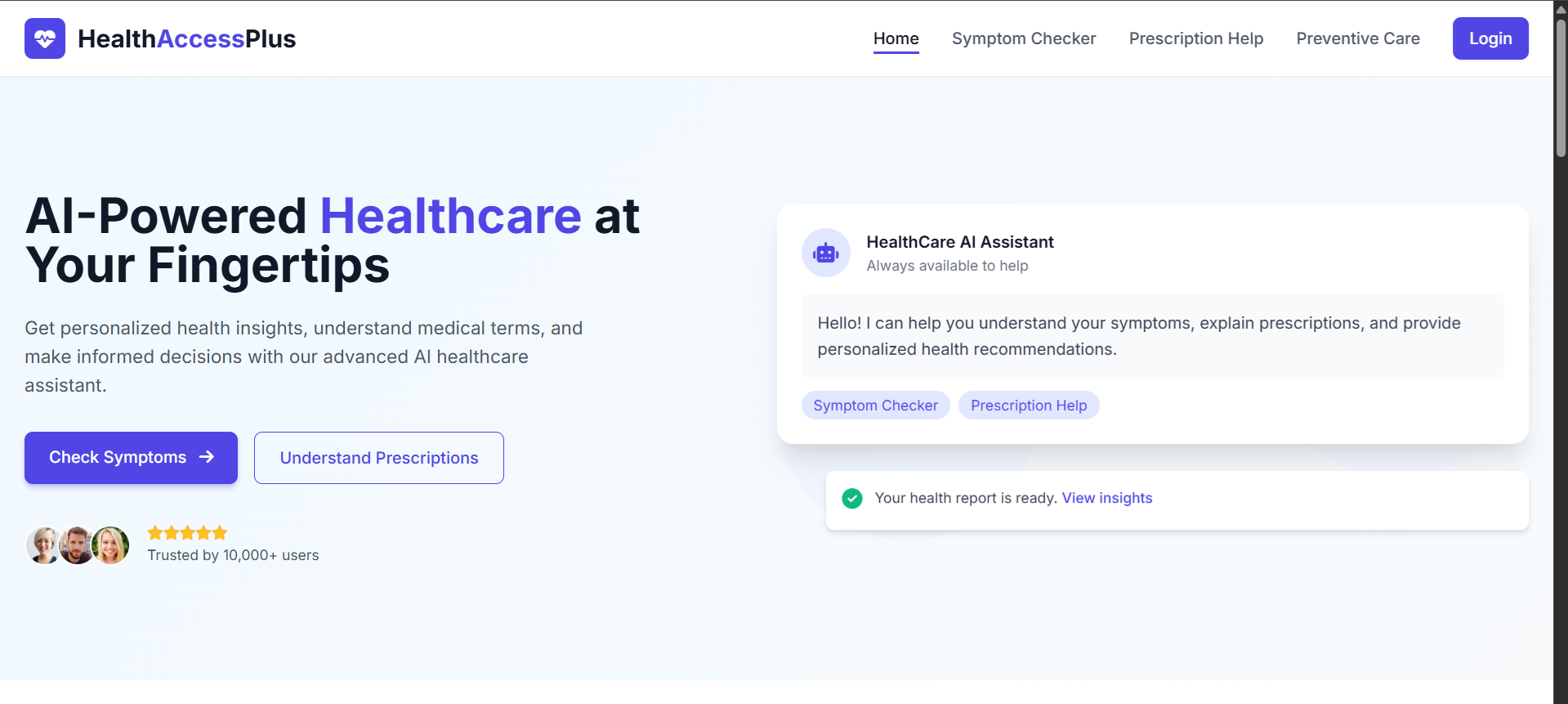
HealthAccess+ is an AI-powered digital health assistant. It lets users check symptoms, get basic care tips, and find local health resources—all with a lightweight, easy-to-use interface that works even on slow networks.
How I built it
I used FastAPI for the backend, along with a local MongoDB instance to store user interactions. The frontend is built using Next.js, designed for speed and simplicity. I integrated a symptom-checking model to give relevant health advice.
Challenges I ran into
Working solo meant handling everything—from backend APIs to frontend design. Getting accurate symptom triaging, optimizing for low bandwidth, and ensuring accessibility were some tough but rewarding challenges.
Accomplishments that I'm proud of
I’m proud that I built a working MVP on my own that’s not just functional but also accessible to users with limited digital resources. It’s fast, responsive, and focused on real-world impact.
What I learned
I learned how to connect AI with real user needs, optimize full-stack applications for performance, and design with inclusivity in mind. Managing time and scope during a solo build was also a big learning experience.
What's next for HealthAccess+
I plan to add multilingual support, offline functionality, and possibly a chatbot for personalized interactions. I also want to integrate with real public health APIs to expand its usefulness.
Built With
- fastapi
- html
- javascript
- tailwind

Log in or sign up for Devpost to join the conversation.