-
-
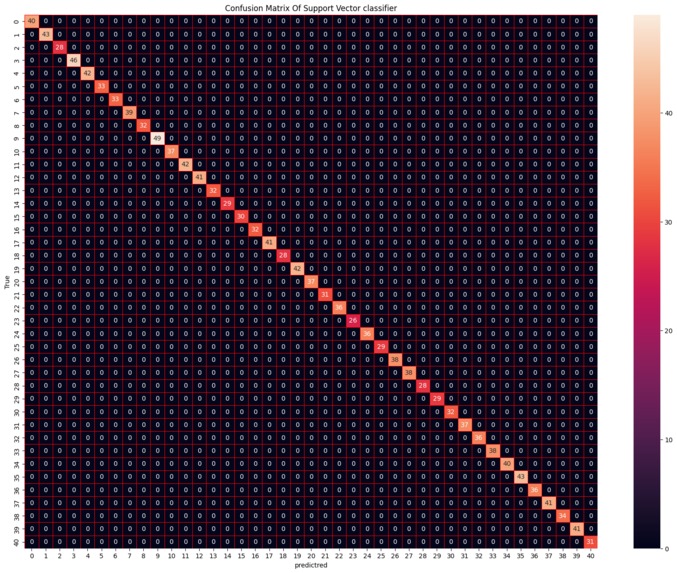
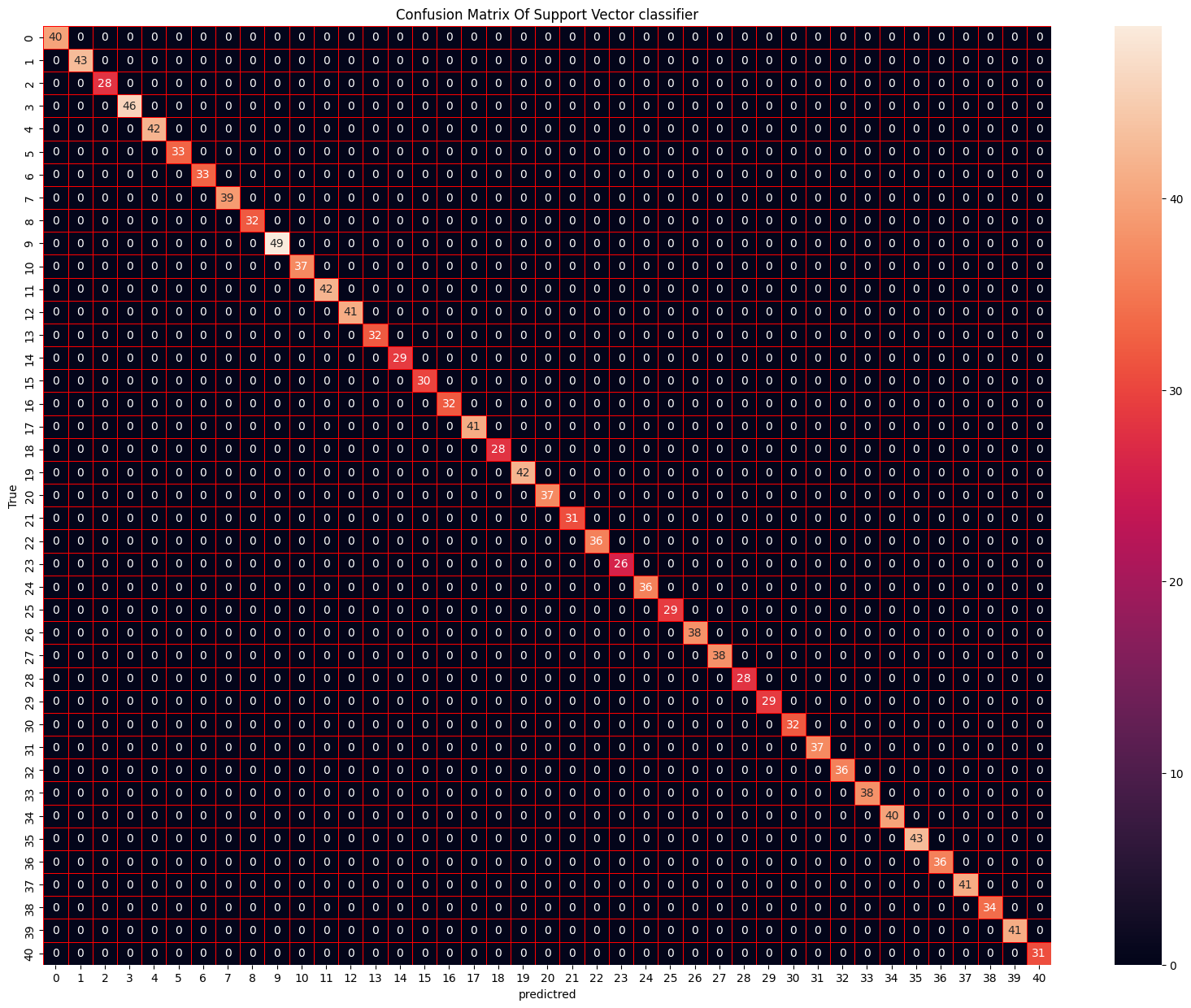
Confusion Matrix Of Our SVC Model
-
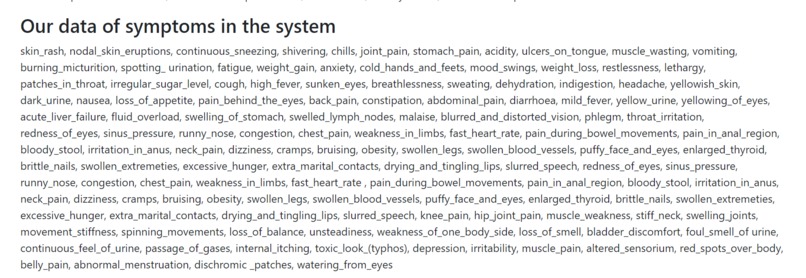
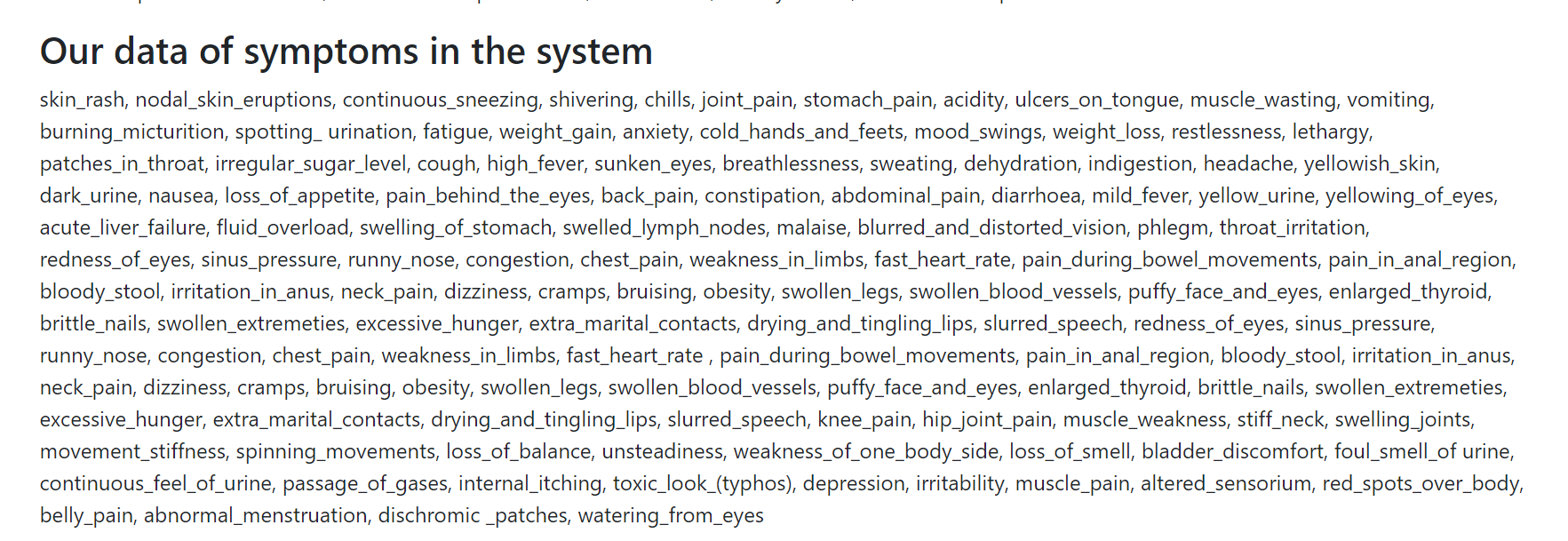
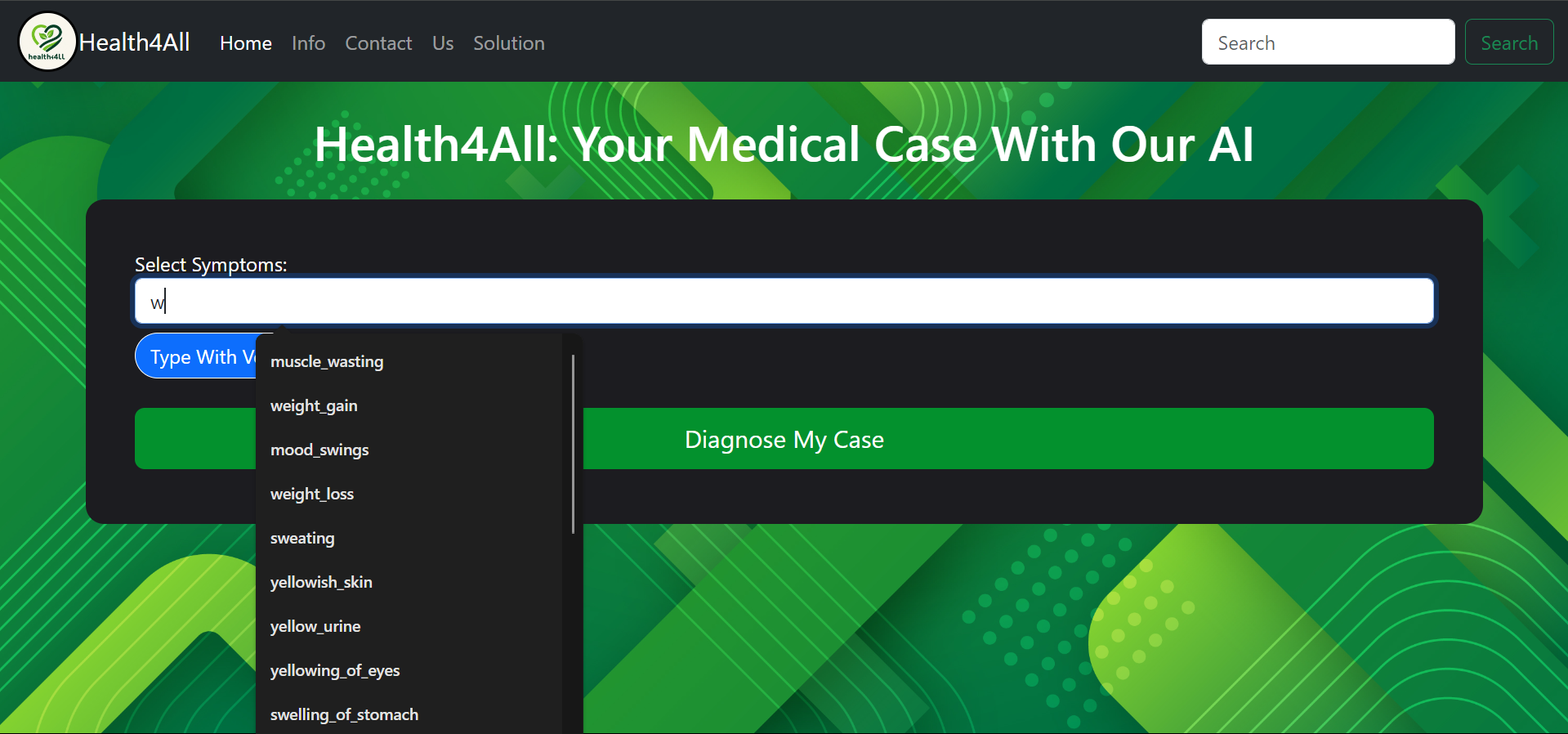
Screenshot from "Info" page
-
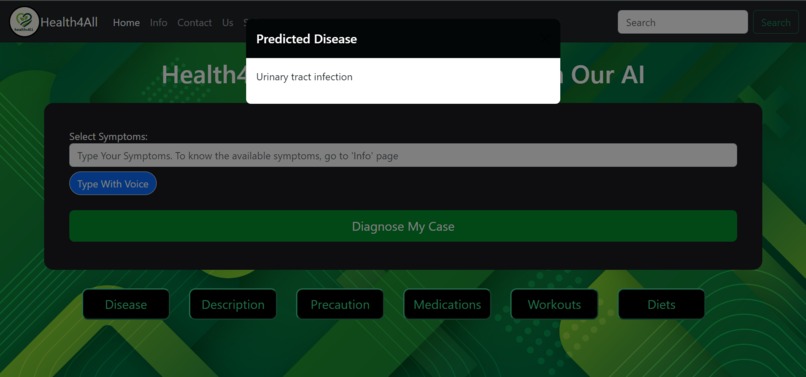
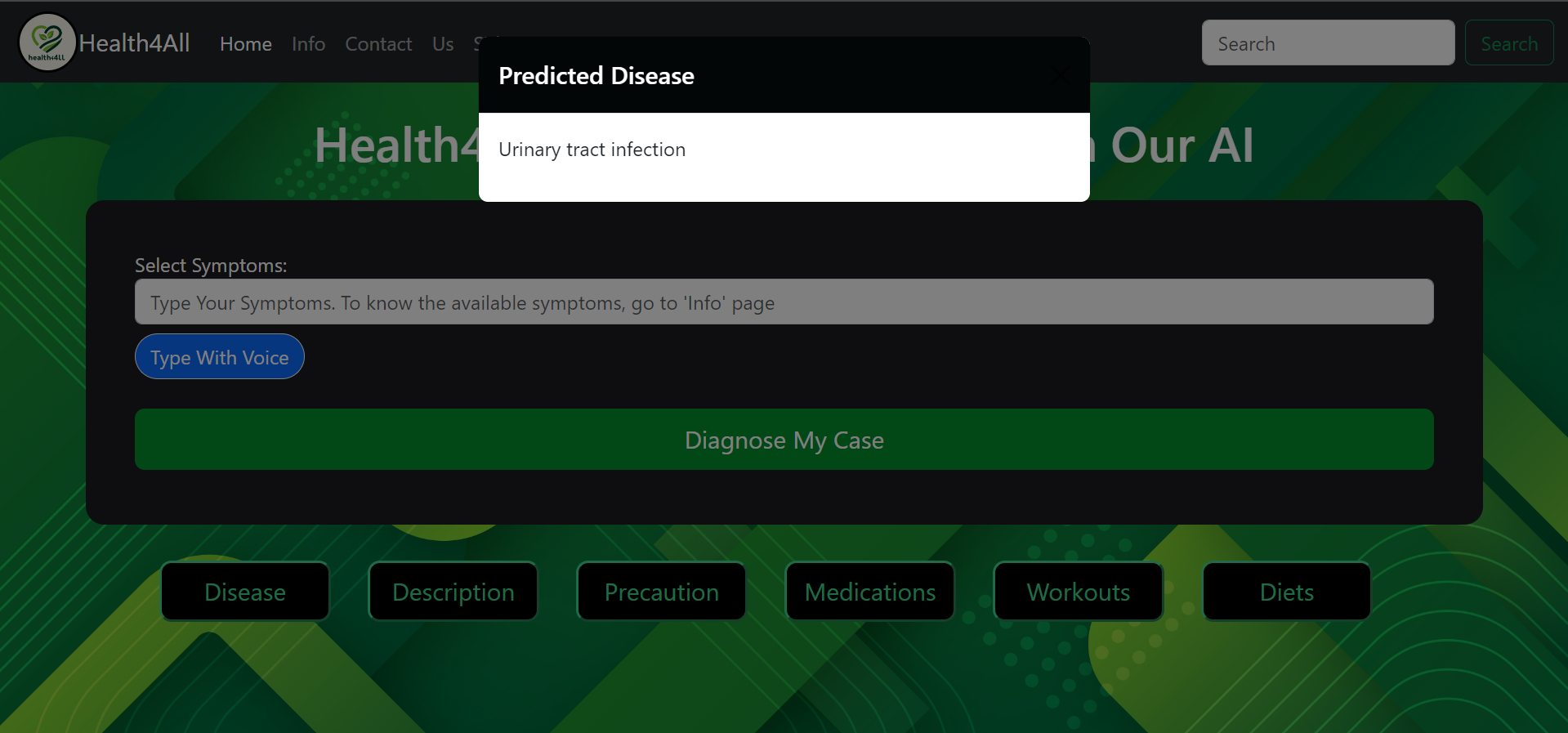
Predicted Disease
-
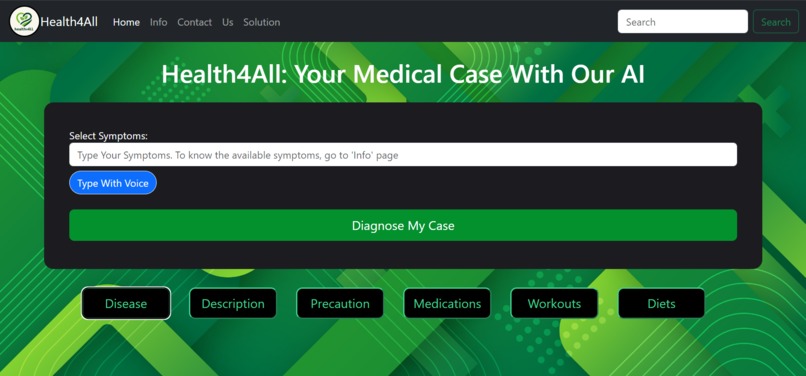
After Inputting symptoms and click "Diagnose my case"
-
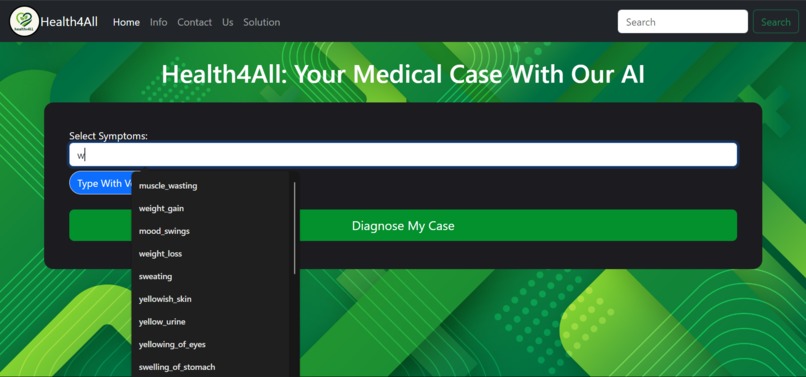
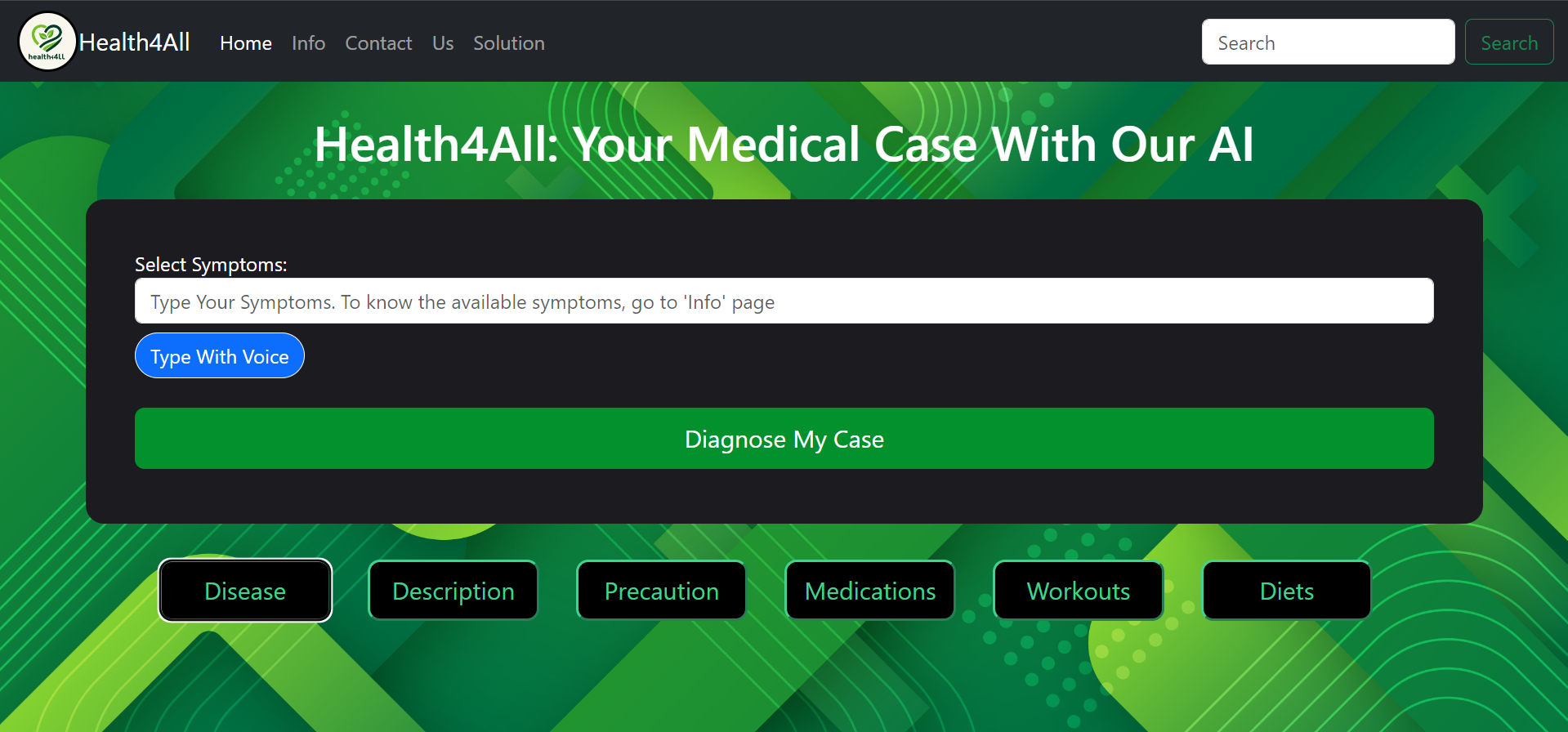
Web App
-
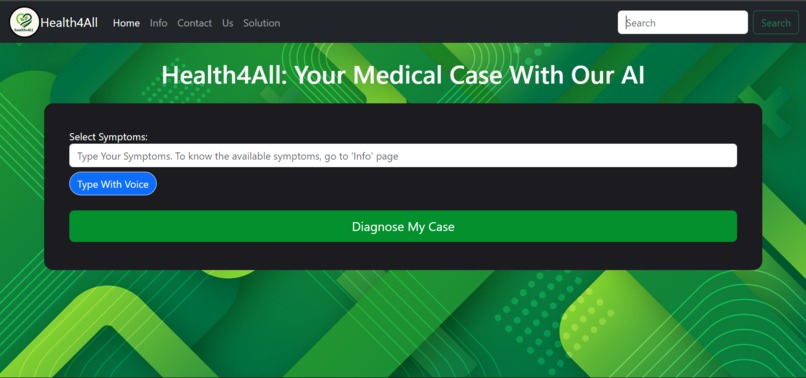
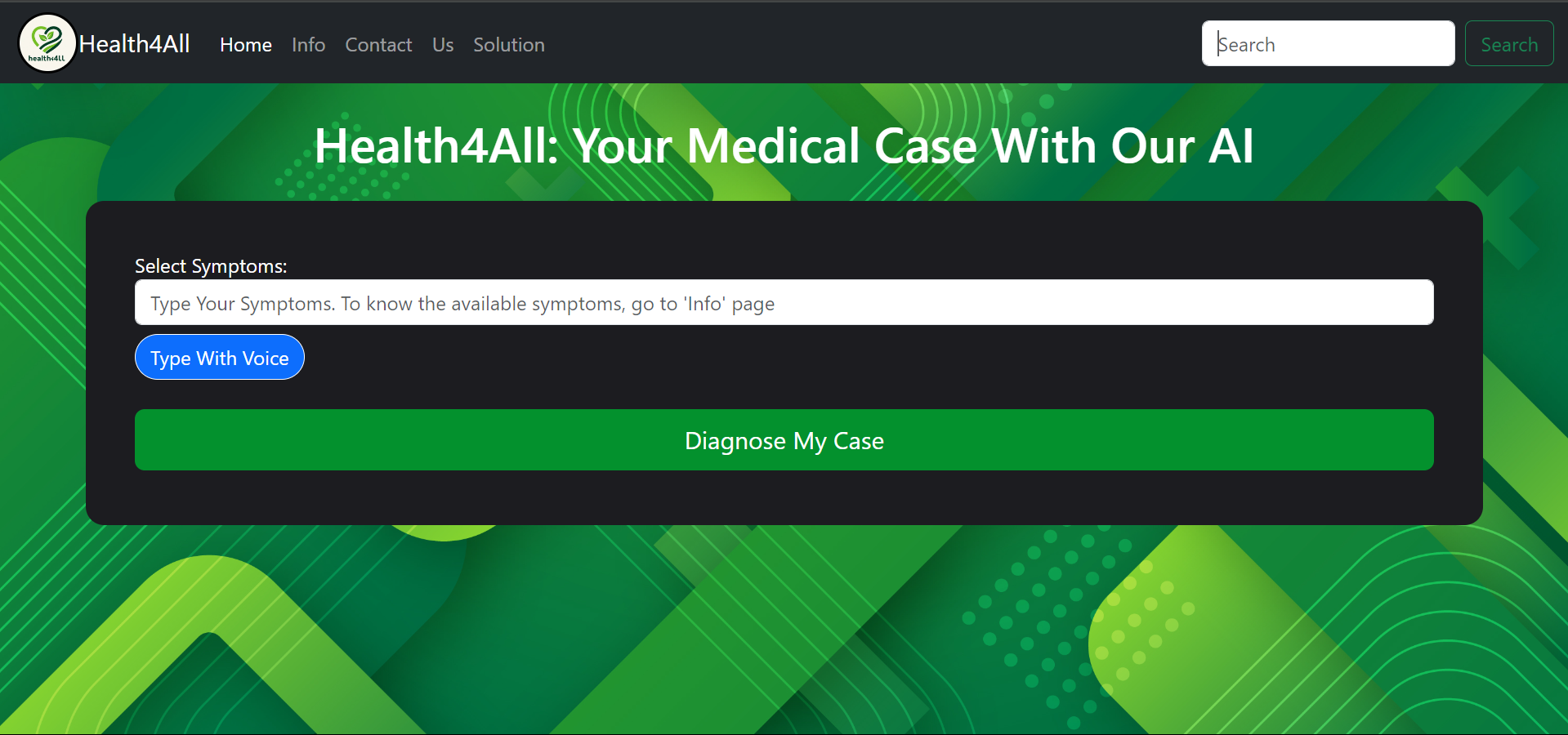
Web App interface
Inspiration
The health of people with low incomes often suffers because they can't afford adequate housing, food, or child care. Such living conditions, and the stress they cause, can lead to higher rates of health problems developing over time. The project contribute to solve and recognize a common issue in which the public often experience symptoms and want quick answers about their medical case. It can be challenging to differentiate between various diseases, especially when symptoms overlap.
What it does
To meet our objective, we developed a web app which enables the user to directly input symptoms that are being felt. The app next applies an algorithm of Support Vector Classifier (SVC) model trained for diagnosing the probable disease from the symptoms. Here's how it works:
- Symptom Input: Patient data is fed into the system through an interface in which patient input pertains to their symptoms. The web supports great amounts of symptoms data.
- Machine Learning Model: We trained SVC model based on vast datasets involving the symptoms and their corresponding diseases. The model can predict diseases based on input symptoms.
- Prediction: It then uses the model to predict the most probable disease and as a result, the users get instant information on possible problems that they can acquire.
- Recommendations: To further improve the functionality of the app for better awareness, information about the designated disease is also offered. This involves description, precautions, medications, diets and exercise.
How we built it
The datasets was collected from public sources on the Internet. We have trained top machine learning models including SVC, RandomForest, KNeighbor, GradientBoosting, etc. The SVC model gives the best performance among all those models. Then we integrated our model and data into a web app utilizing HTML and Bootstrap. The app was developed with an interactive and responsive interface to be fed with the user symptoms.
Challenges we ran into
Collecting the datasets was daunting process, especially, when it comes to searching for various medical data including diseases with its corresponding symptoms. The other data involve description of the disease, precautions that should be taken, medications and drugs, the kind of foods to take and exercise that is good for the patients. All of these data are considered for each disease in our dataset.
What's next for Health4All
- Addition of more datasets to enable more symptoms and diseases.
- Making Health4All more comprehensive by enabling other input features for the user including medical imaging and body analysis.
- Enabling a dropdown list for showing symptoms suggestions based on the user input.


Log in or sign up for Devpost to join the conversation.