-
-
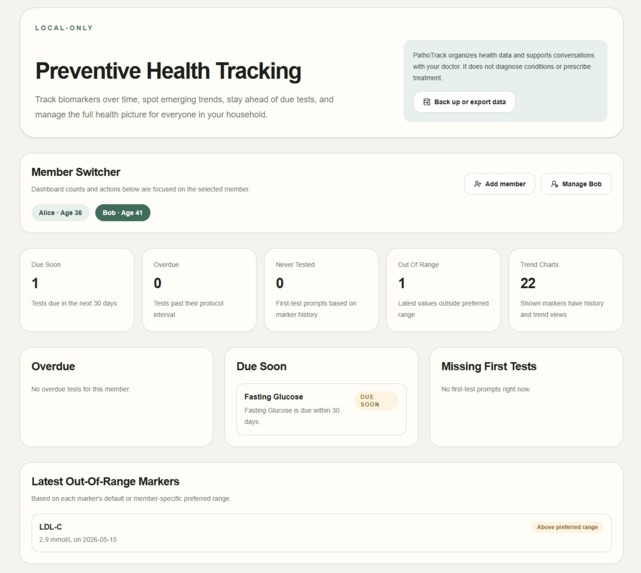
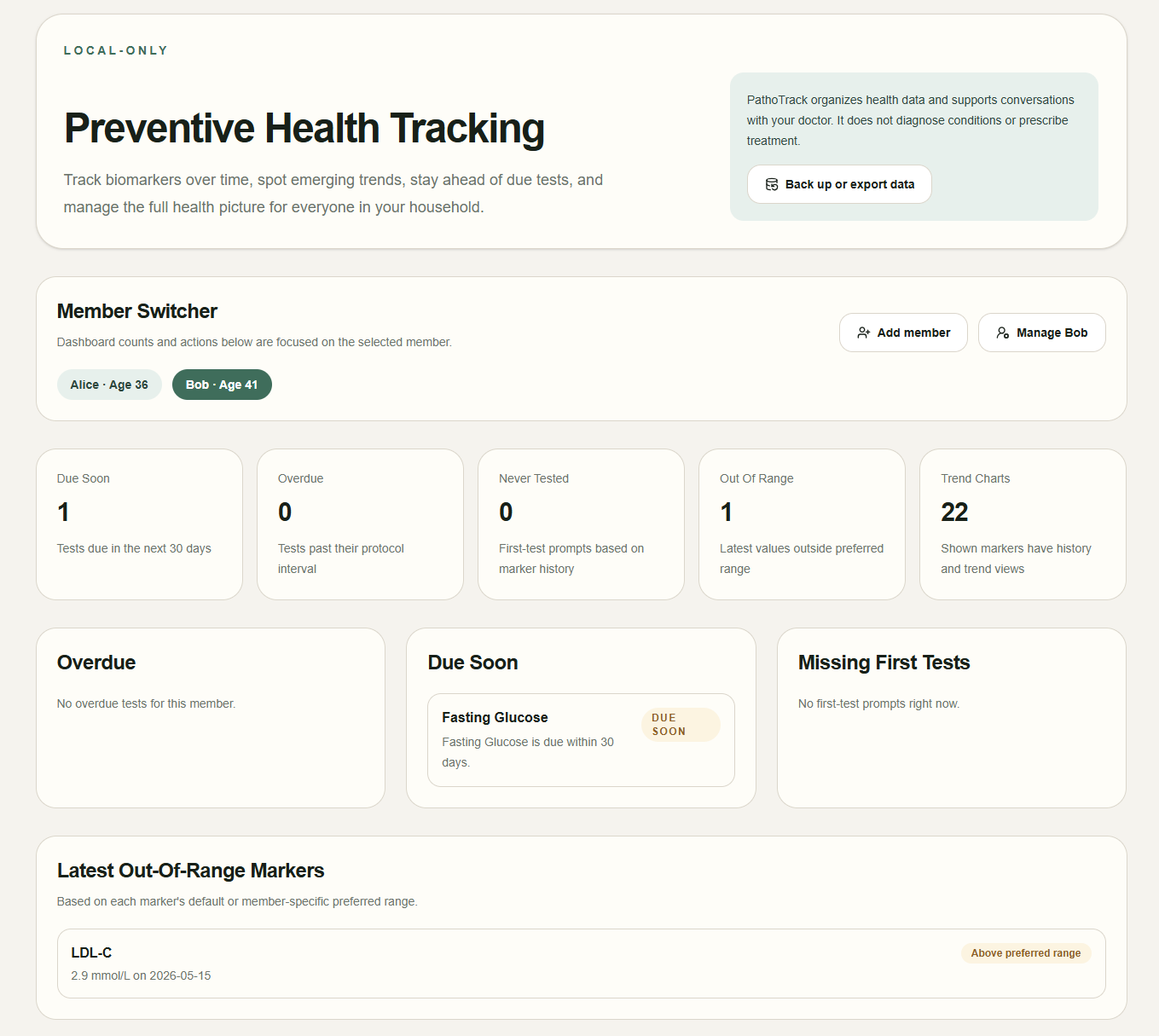
Hompage-upper
-
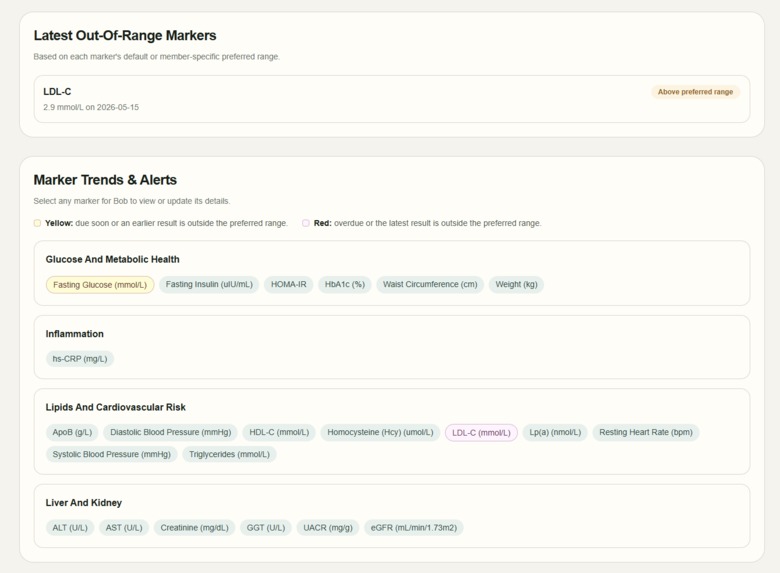
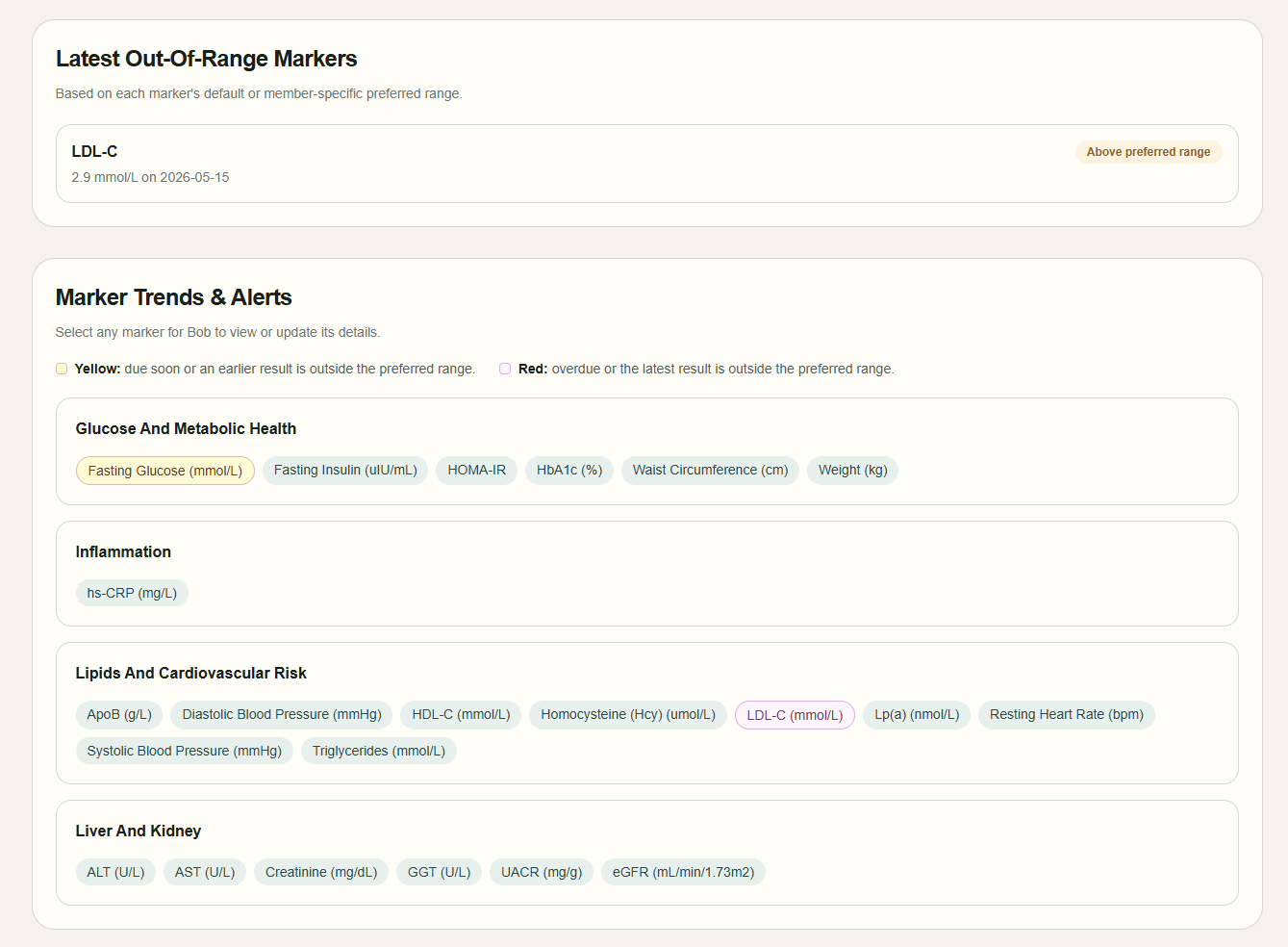
Homepage-lower
-
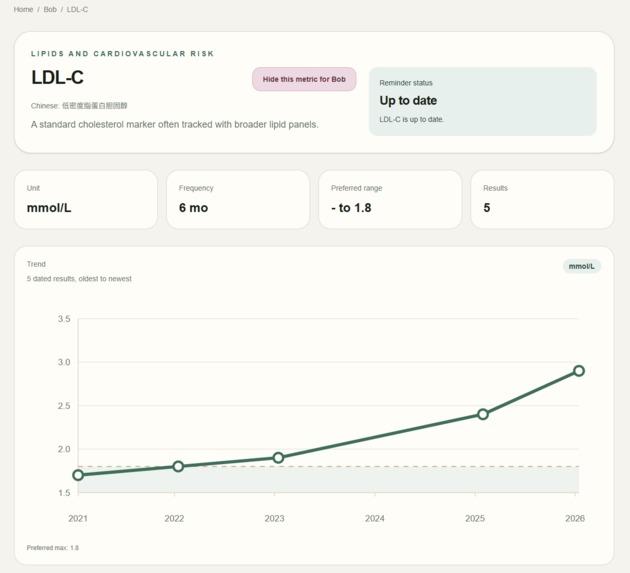
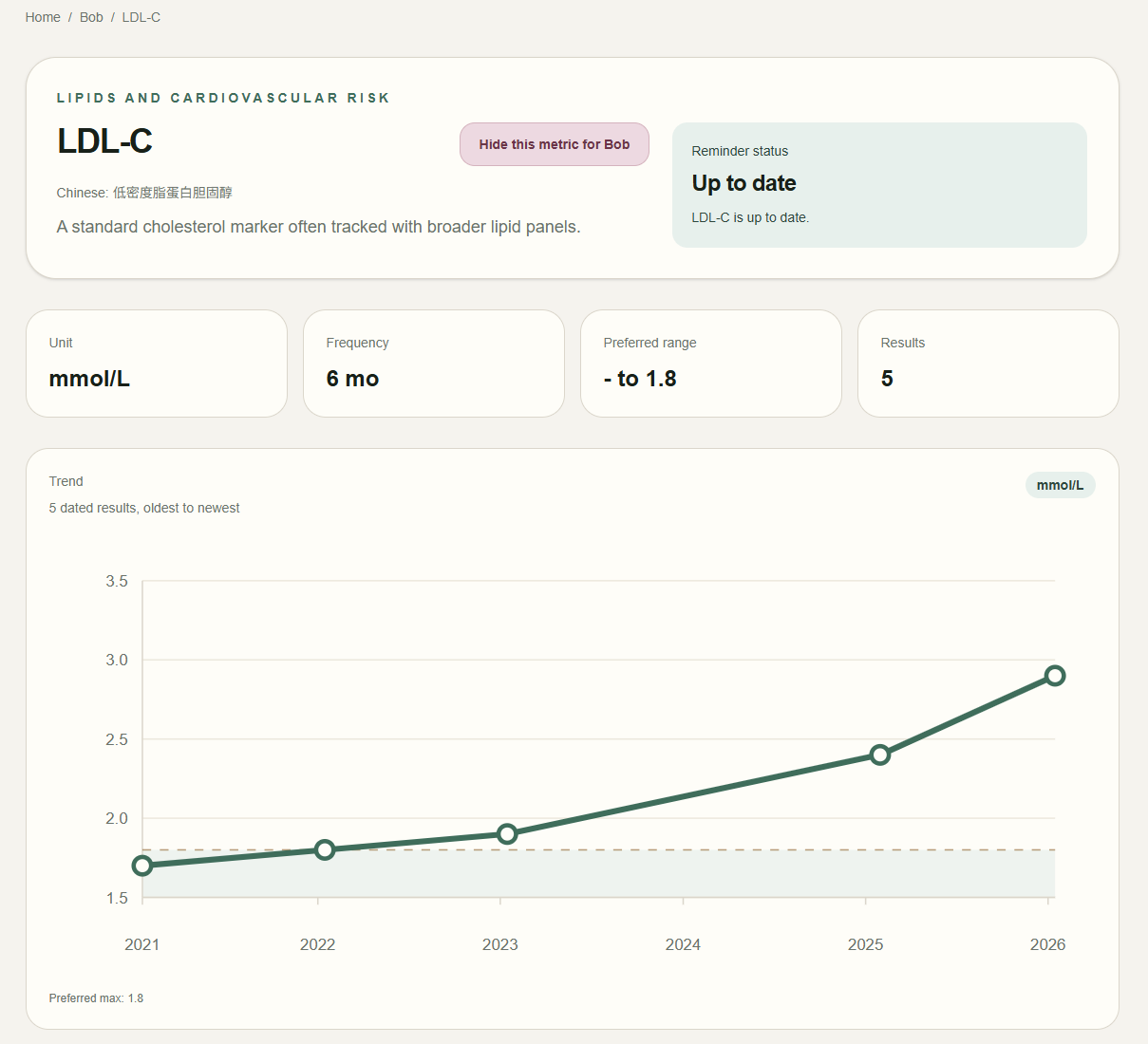
Biomarker-page-upper
-
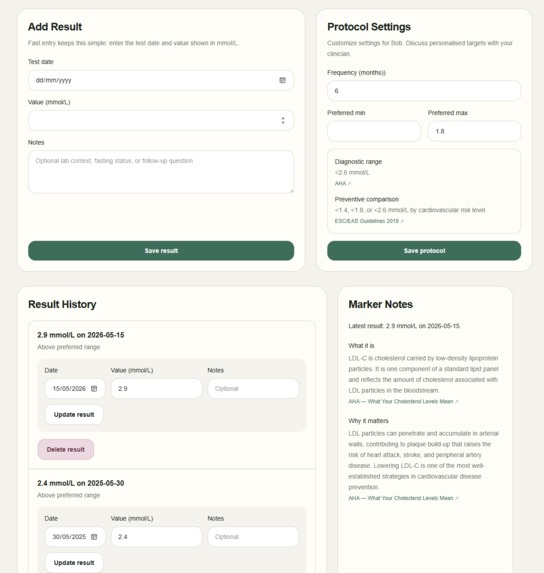
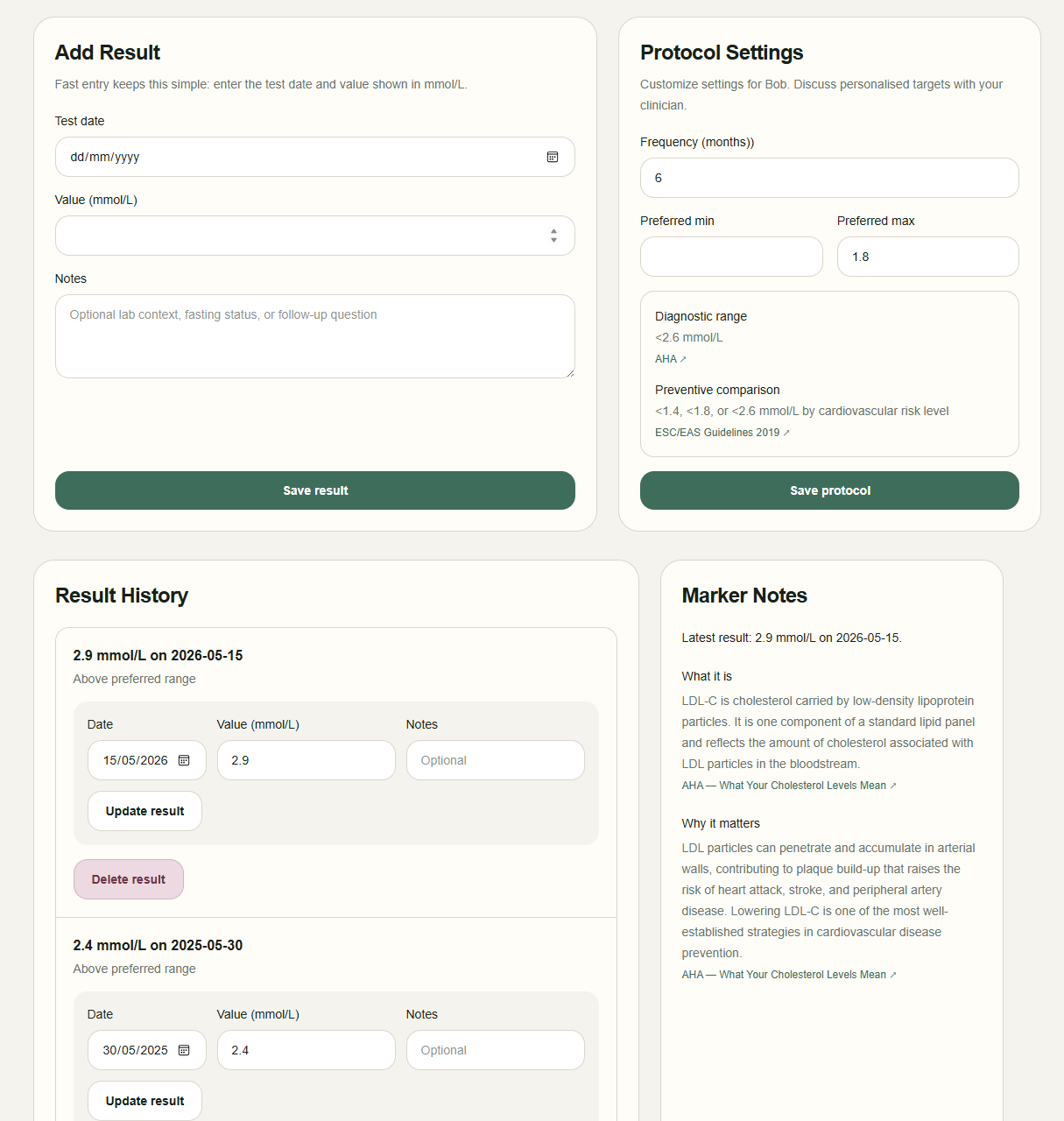
Biomarker-page-lower
🌱 Why This Exists
This is the app that I have wanted for years to track pathology tests and keep ahead of my health.
Way too often, when it comes to health, we are alerted when it is already too late.
It’s not because we don't care about our health, but because the information is too scattered and overwhelming. Take me, for example: I try to get tested on key markers about once a year, and sometimes in between as well. Yet, I usually have little idea whether a marker is trending up or down, or I've simply lost track because it's long overdue. Deep down, I know that if this goes on, the only time I will be alerted about a health metric is probably when a long-neglected marker finally shoots out of range and appears red on my lab report. By then, it has probably been affecting my body for a long time, like rising LDL cholesterol quietly building up plaque in blood vessels. From a preventive health perspective, that is simply too late.
I knew I needed to take action, but I wasn't sure how.
Well not until recently did I realize that, empowered by coding agents, I could develop an app for this myself!
Enter PathoTrack.
I built it to simplify things, which is why PathoTrack is intentionally focused and easy to use. Due to the sensitive nature of health data, this app is built to be strictly local-only for now: it runs entirely on your machine and keeps 100% of your data safely on your own device, with no network tracking or cloud dependencies.
🔧 How I Built This
I started the App using Next.js, TypeScript, and SQLite, an entirely new stack for me. Initially, I tried tweaking the code directly in an IDE, just as I would with Python and my usual data science projects, but I quickly realized this was not the right workflow.
That was when my 16-year-old son stepped in to graciously pass down his tech wisdom: "Trust me, mom, try Codex with GPT-5.6 Sol. It is sol good."
So I did.
I have only been using Codex for a week, but it has been an absolute game-changer.
I started small, assigning Codex simple research tasks on biomarkers and requesting source links for verification. I was half-expecting hallucinations, but the research came back thorough, precise, and all the links worked as expected. From there, our collaboration skyrocketed. Together, we tackled stubborn bugs and executed a monumental overhaul of the database infrastructure, seamlessly migrating to Drizzle ORM to give PathoTrack the robust, scalable backbone it deserved.
With Codex's help, I am committed to delivering PathoTrack as a standalone desktop app to help people better track their biomarkers and partner more proactively with their doctors. I plan to open source the code to offer full transparency, giving every user the confidence that their data stays strictly theirs.
Built With
- drizzle
- next.js
- sqlite
- typescript

Log in or sign up for Devpost to join the conversation.