Inspiration
What it does
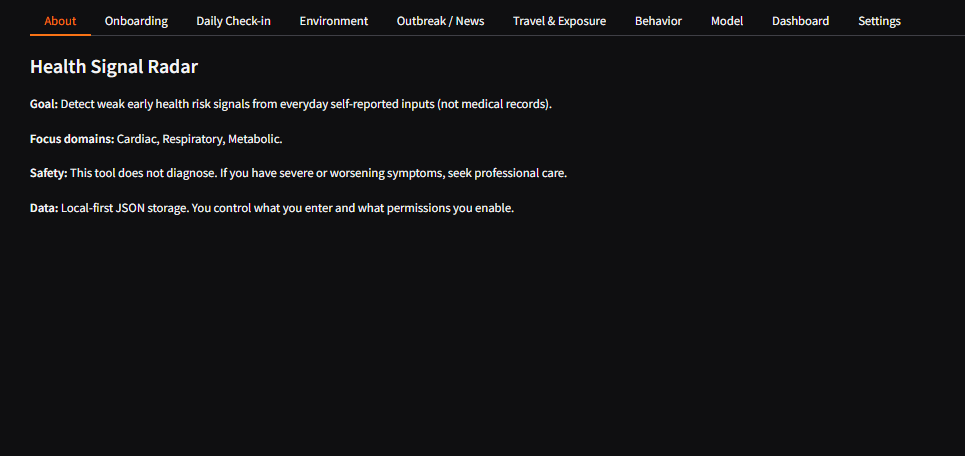
🌍 About the Project — Health Signal Radar
Many health risks don’t start with a medical emergency. They start quietly — a mild cough after a crowded event, unusual fatigue after several stressful days, dehydration during a heatwave, or stomach symptoms after food exposure. In many cases, people ignore these weak early signals until they become serious.
As a public health professional working in real-world settings, I’ve seen how outbreaks and health crises often begin with small, scattered symptoms that go unrecognized. I wanted to build a tool that helps individuals and communities detect those early patterns sooner — using everyday self-reported information, not medical records.
That idea became Health Signal Radar: an AI-powered platform designed to detect weak health risk signals by analyzing daily check-ins, environmental context, and community trend signals.
💡 What Inspired Me
The inspiration came from a simple observation: people already know when something feels “off,” but they often can’t interpret it.
Most health apps focus on fitness tracking or formal clinical data. But in reality, the most valuable information is often the simplest:
- “I feel tired for no reason.”
- “My throat hurts after the party.”
- “It’s dusty and I’m coughing.”
- “Everyone is searching flu symptoms this week.”
These are early signals — and in public health, early detection is everything.
🧠 What the Project Does
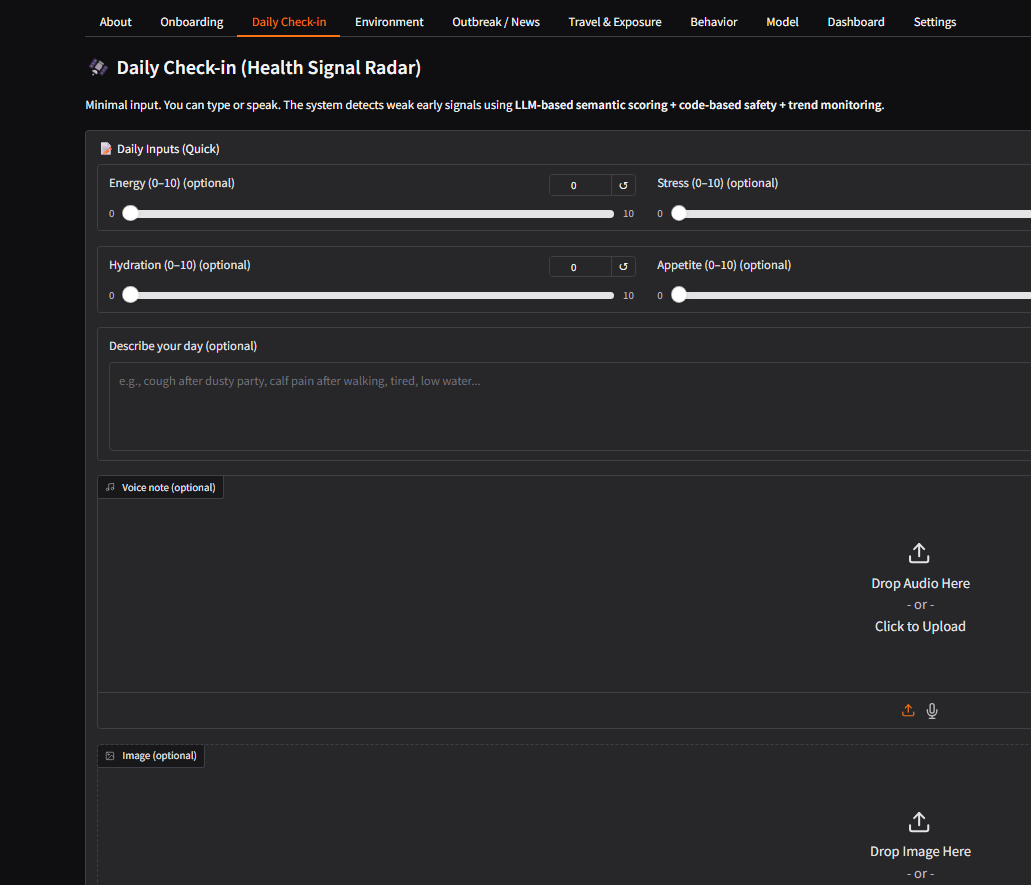
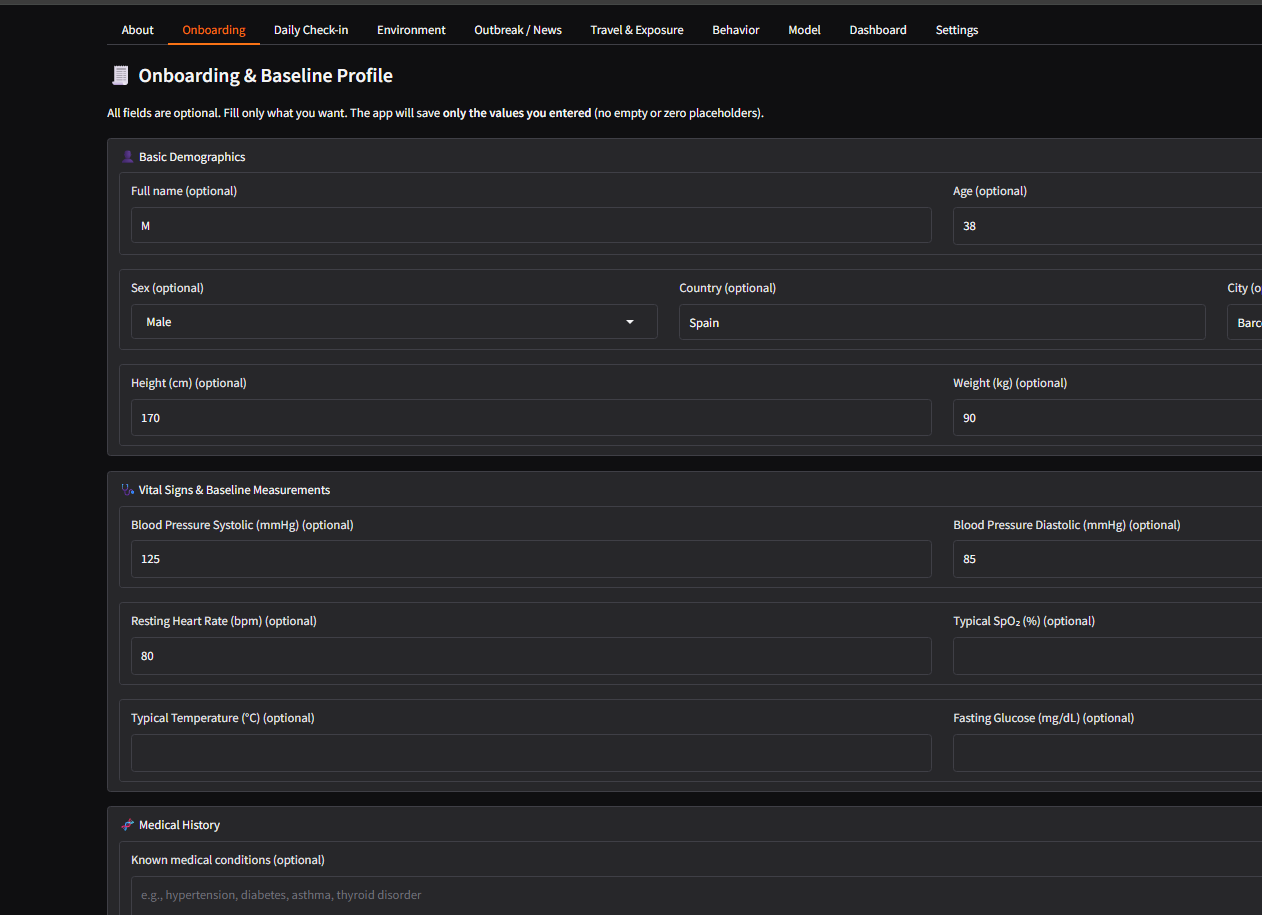
Health Signal Radar helps users log minimal daily inputs such as:
- Energy, sleep, stress, hydration, appetite
- Short symptom notes (text or voice)
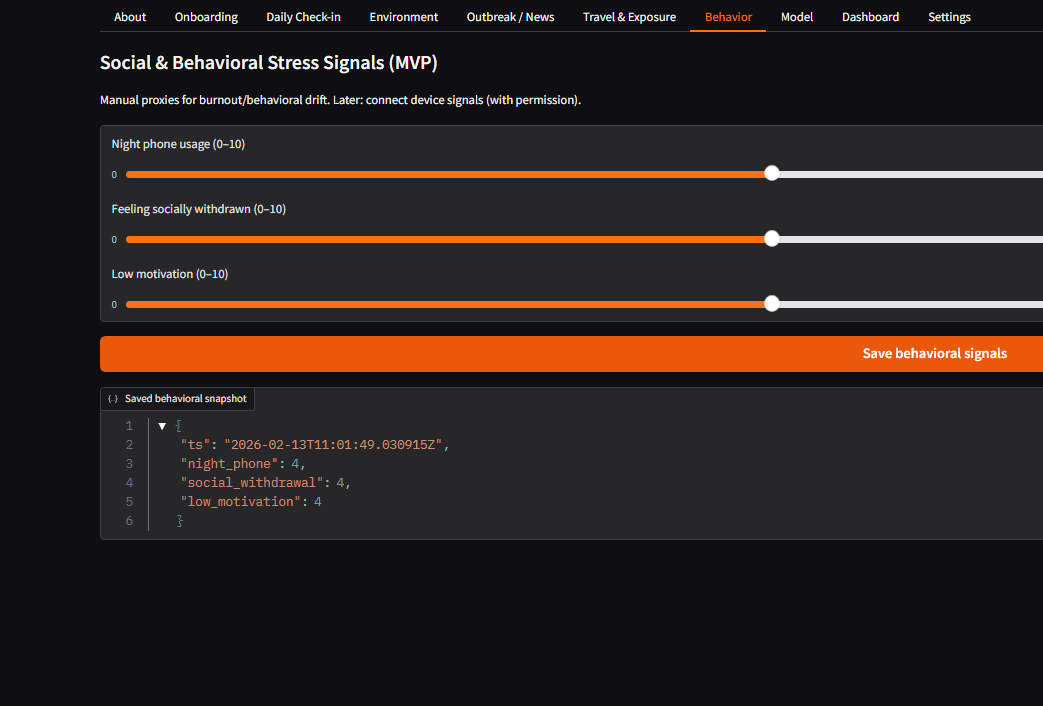
- Exposures like crowds, travel, dust/smoke, or long work hours
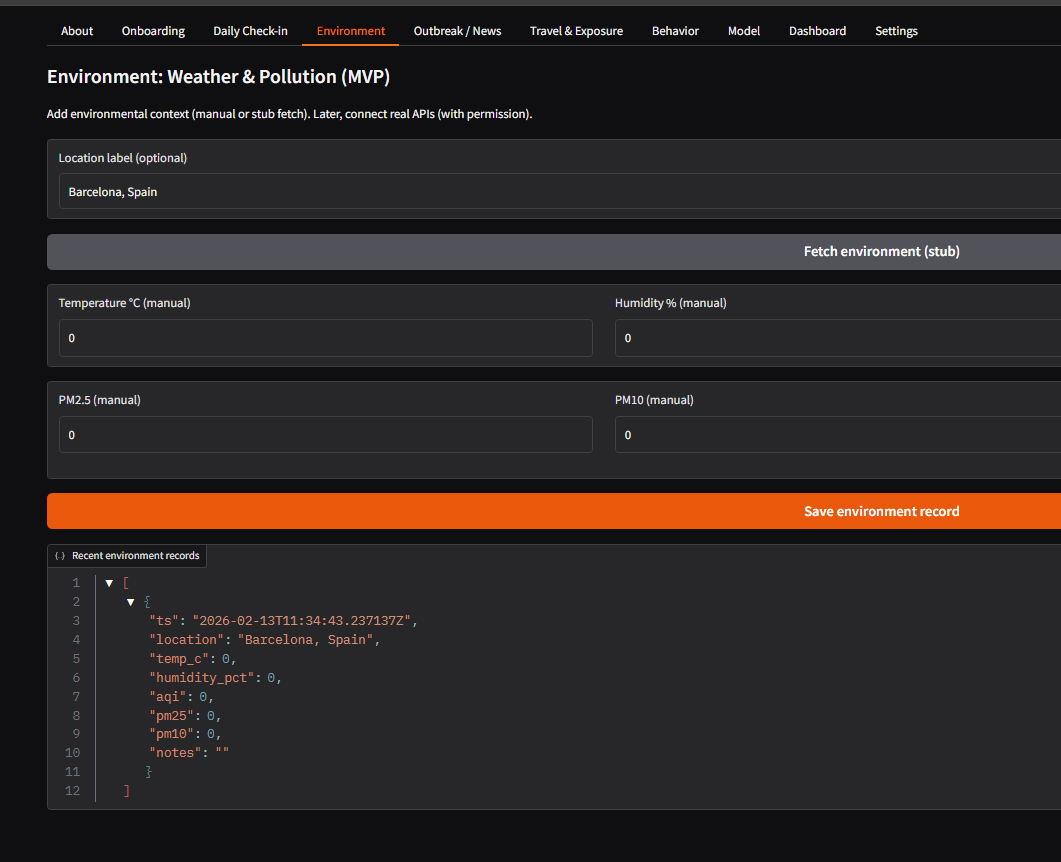
- Optional environmental indicators (temperature, humidity, PM2.5/PM10)
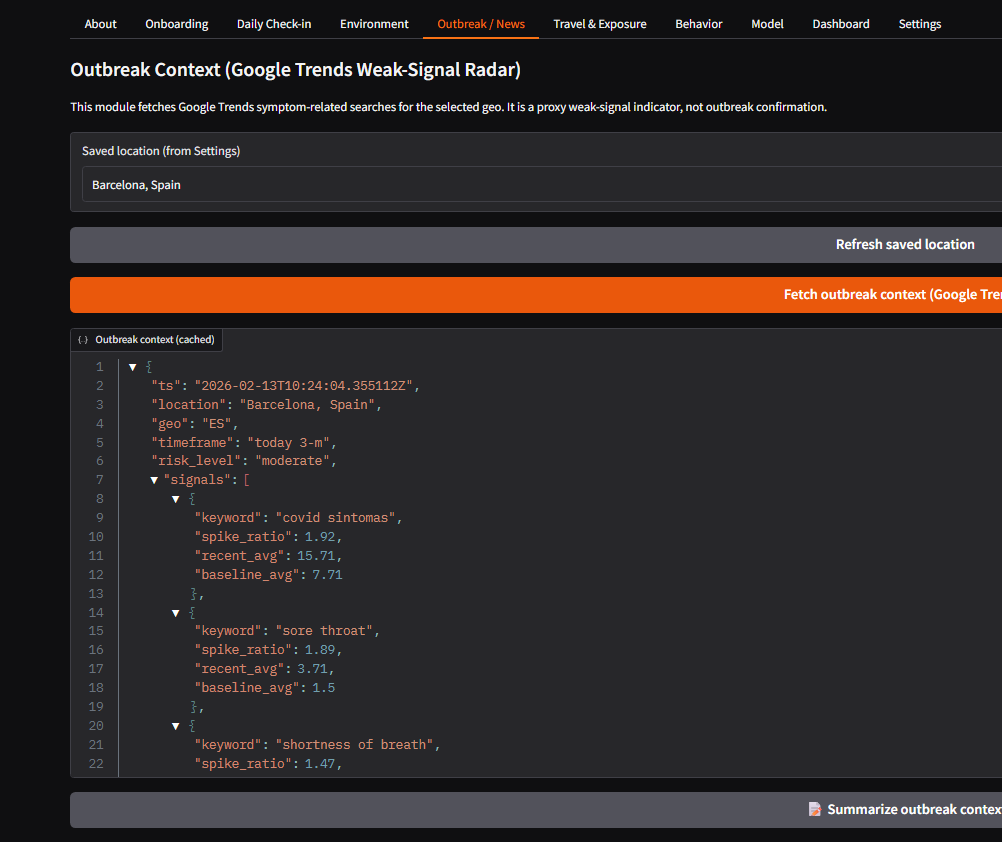
- Outbreak proxy signals using Google Trends
The system then produces a Health Radar Summary showing:
- Primary and secondary risk signals
- Trend analysis over time
- Weak-signal risk level (Low / Moderate / High / Critical)
- Safe recommendations and watch-out warnings
This is not a diagnostic tool — it is an early warning and awareness platform.
🛠️ How I Built It
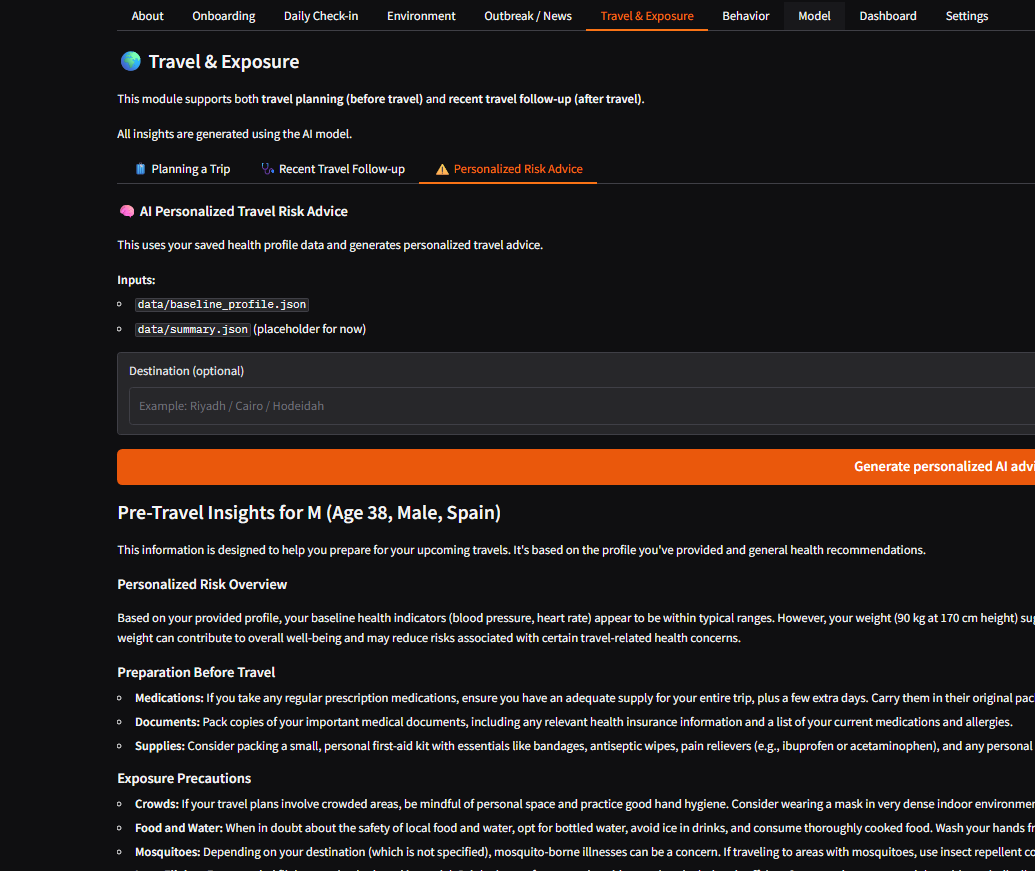
I built the project as a modular Gradio multi-tab web application, designed for fast iteration and real-world scalability.
Key technical components include:
- Daily Check-in Engine: minimal input UI + narrative processing
- Hybrid AI Pipeline: AI extracts meaning from free text while the system enforces structured outputs
- Local-first storage using JSON (no database needed for MVP)
- Environment module (ready to connect Open-Meteo APIs)
- Outbreak context module using Google Trends symptom search spikes (Spain/Barcelona demo)
- Model routing system supporting local Ollama models first, then cloud models (OpenAI/Gemini/Groq)
The app architecture was intentionally built so that each tab is a standalone module — allowing future development without breaking the whole system.
📚 What I Learned
Building this project taught me several important lessons:
- AI is powerful, but guardrails are essential — especially for health-related interpretation.
Weak-signal detection works best when combining:
- structured numeric inputs
- narrative text understanding
- trend detection over time
- environmental context
The best health AI systems should be assistive, explainable, and non-alarming.
I also learned how to design for reliability by supporting local AI inference through Ollama, ensuring the tool can work even in low-connectivity environments.
🚧 Challenges I Faced
One of the biggest challenges was balancing simplicity with meaningful insight.
I wanted the user experience to stay minimal — but still capture enough information for useful detection. I also faced technical challenges around:
- ensuring consistent structured outputs from LLMs
- avoiding misleading medical classifications
- designing a modular architecture (tabs + independent logic)
- handling unstable data sources like Google Trends scraping
Each challenge improved the final design and made the system more robust.
🚀 What’s Next
This prototype is only the beginning.
Future development plans include:
- integrating real-time environmental APIs (weather + AQI)
- improving trend analysis with rolling baselines
- adding multilingual support (Arabic/Spanish/English)
- creating a community-level dashboard for aggregated early warning signals
- building a lightweight mobile version for wider accessibility
🎯 Vision
Health Signal Radar is designed to help people recognize what their body is already trying to tell them — early, safely, and intelligently.
In public health, early signals save lives. This project aims to bring that early-warning mindset to everyday life.
How we built it
Challenges we ran into
Accomplishments that we're proud of
What we learned
What's next for Health Signal Radar
Built With
- gradio
- python

Log in or sign up for Devpost to join the conversation.